Pawprint (operating under Green Pet Care) presents a concise 14-slide deck focused on the logistical friction of pet ownership. The narrative centers on the fact that while human healthcare has digitized, pet records remain trapped in paper files and siloed vet offices. The deck excels at market sizing, using a memorable comparison of 185 million pets versus the number of children in the US. Most impressively, the startup demonstrates significant supply-side traction, having already sourced records from 4,600 of the 30,000 US veterinarians (15% of the market). While the deck is light on finan…
Key takeaways
- The company positions itself as 'The Official Pet Medical Record' to establish authority on slide 1.
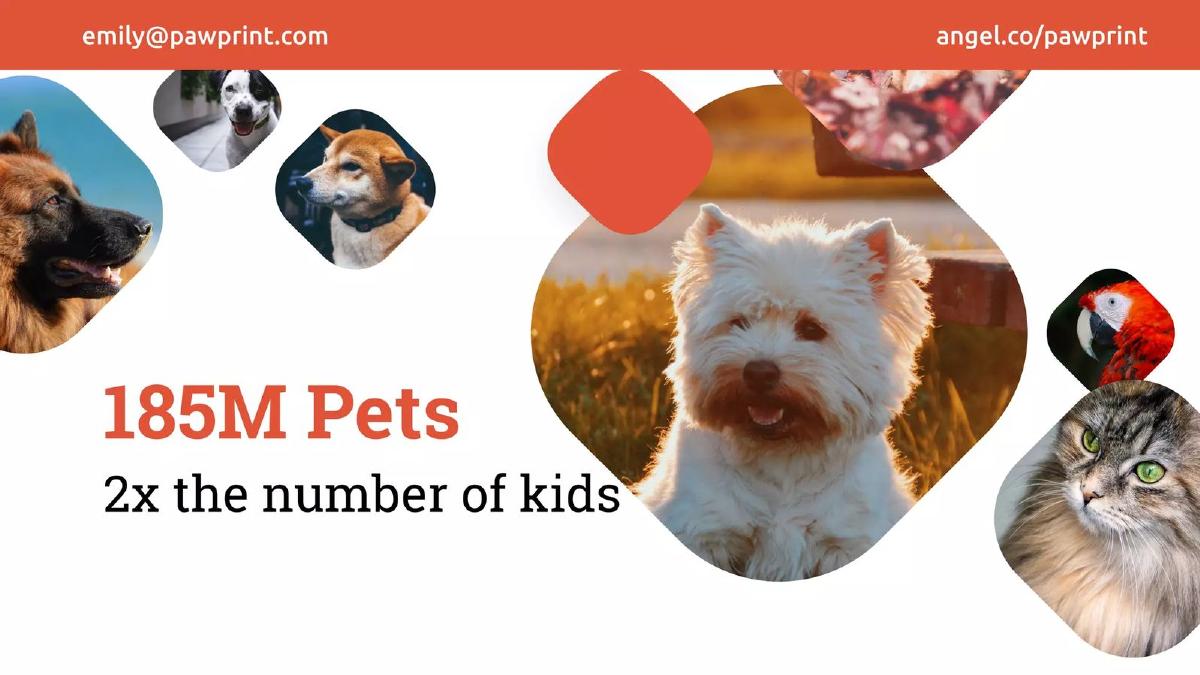
- Market scale is validated by the fact that there are 185 million pets in the US, which is double the number of children (slide 4).
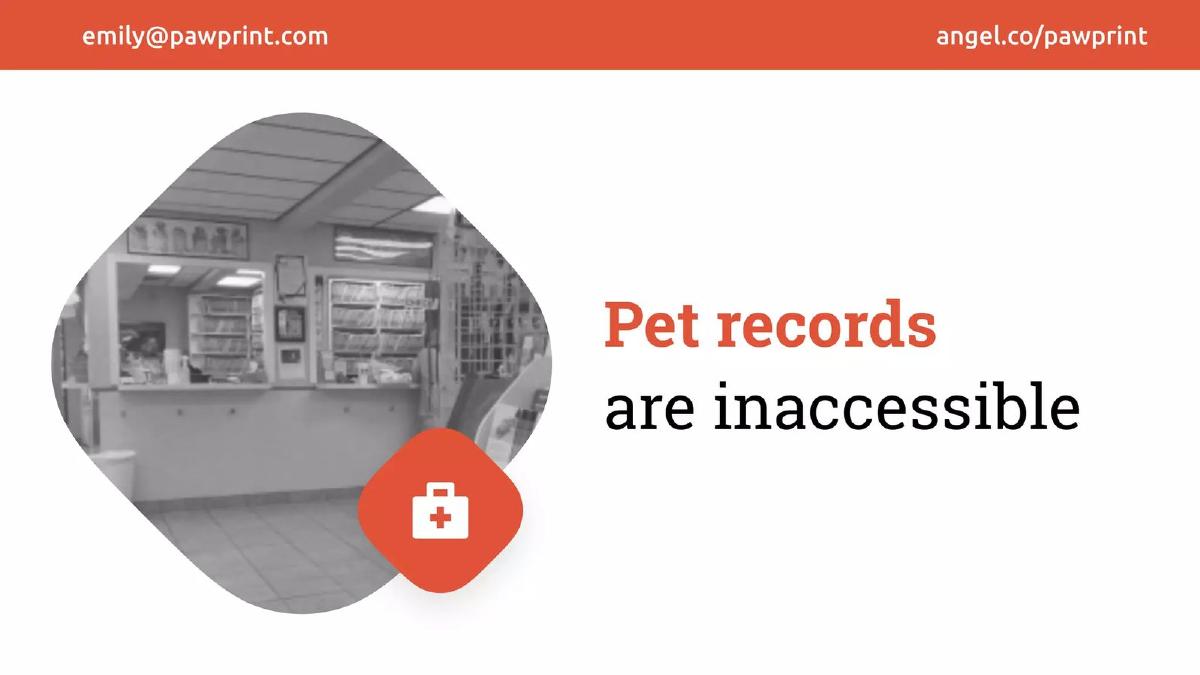
- The core problem is defined as the total inaccessibility of pet records in a digital-first world (slide 5).
- Pawprint has achieved significant market penetration, sourcing records from 15% of all US veterinarians (slide 12).
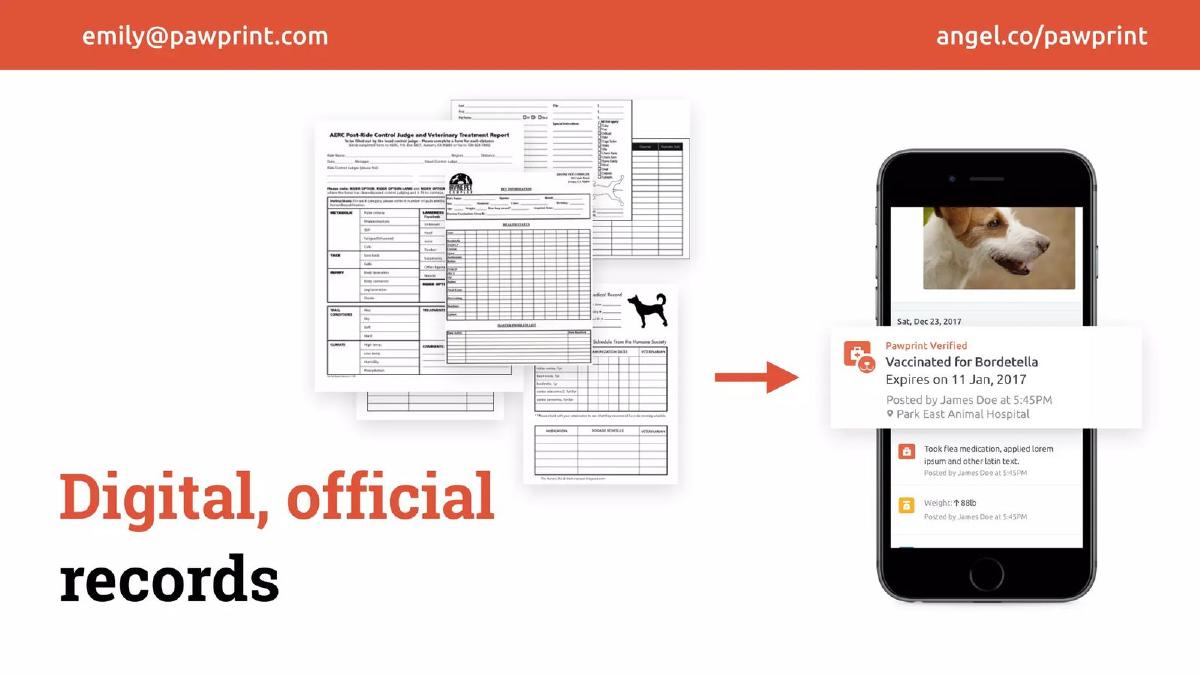
- The product acts as a digital vault for 'Pawprint Verified' vaccination records, addressing a mandatory requirement for boarding and grooming (slide 6).
- The deck highlights 400 million annual pet-related service visits as a key engagement opportunity (slide 8).
- Growth is shown as purely organic, with a steep upward trajectory from October 2014 to January 2017 (slide 10).
- The team includes a dedicated 'Vet Advisor' and leverages logos from 500 Startups, Stanford, and Y Combinator (slide 13).
The Narrative: From Paper Files to Digital Certainty
Pawprint’s deck is a masterclass in identifying a low-tech friction point in a high-spending industry. The pet care market is often viewed through the lens of food or insurance, but Pawprint focuses on the data layer. By positioning themselves as 'The Official Pet Medical Record,' they are attempting to build the 'source of truth' for an animal's health history. The deck follows a classic problem-solution-traction arc, but it leans heavily on the sheer volume of the market and the lack of regulatory friction compared to human health-tech.
Slides 1-2: The Hook and the Product
Slide 1 is a minimalist title card. It uses a bright orange brand color and a simple dog-nose logo. The subtitle, 'The Official Pet Medical Record,' is an aggressive positioning statement. It doesn't say 'an app for pet records'; it claims the 'Official' mantle, which suggests a desire for category leadership.
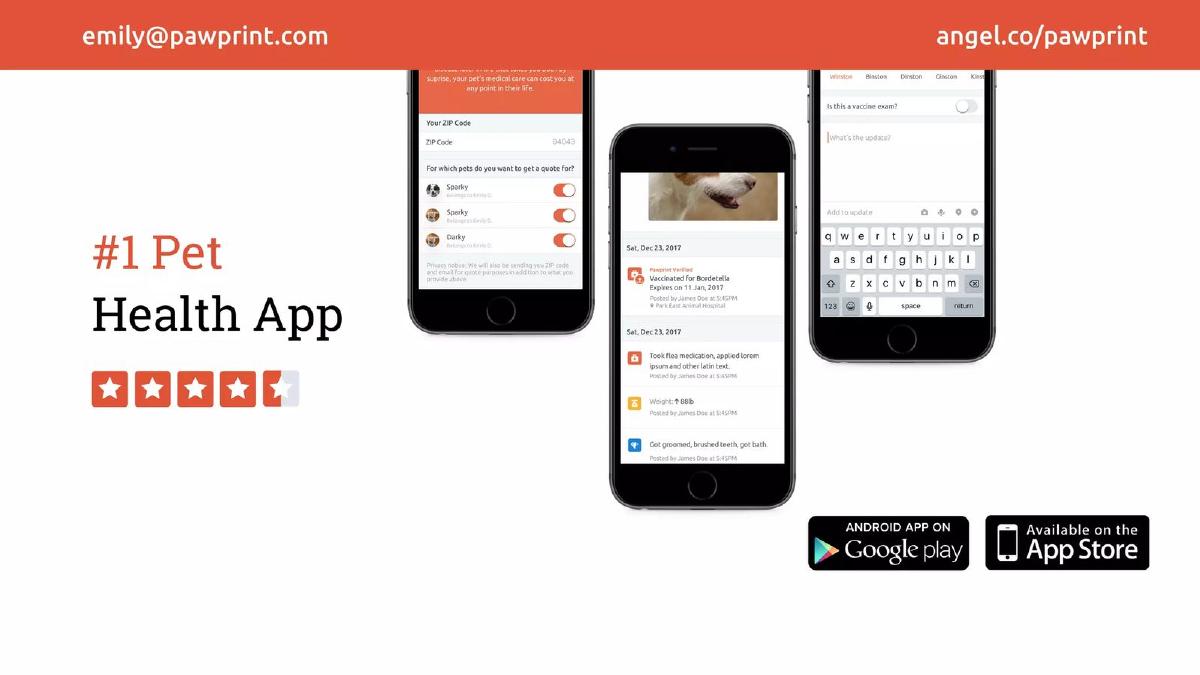
Slide 2 moves immediately to social proof and product visualization. It claims the title of '#1 Pet Health App' and displays a 4.5-star rating. Three smartphone mockups show the UI: a quote request screen, a 'Pawprint Verified' vaccination record, and a timeline of health events (medications, weight, grooming). This slide establishes that the product is live, functional, and available on both iOS and Android.
Slides 3-5: The Market Gap
Slide 3 provides a 'Why Now' context, stating that 'Healthcare has been transformed in the last decade.' This sets the stage for the comparison between human and animal health. Slide 4 then drops the 'anchor' statistic: 185 million pets in the US, which is '2x the number of kids.' This is a powerful framing device because it takes a massive number and makes it relatable to the size of the pediatric market, which investors already understand to be huge.
Slide 5 defines the problem: 'Pet records are inaccessible.' The background image of a cluttered veterinary reception desk with physical files reinforces the 'old way' of doing things. It’s a simple, emotional appeal to any pet owner who has had to wait for a faxed record from a vet.
Slides 6-9: The Solution and the Regulatory Advantage
Slide 6 shows the 'Digital, official records' transition. It uses an arrow to point from a stack of messy paper forms to a clean, verified digital notification on a phone. This is the core 'aha' moment for the user. Slide 7 adds urgency: 'Proof of vaccination required.' This reminds investors that this isn't just a 'nice to have'—it is a requirement for boarding, grooming, and travel.
Slide 8 quantifies the engagement opportunity. There are 400 million annual visits to vets, groomers, and boarding facilities, with 200 million of those being vet visits. This suggests a high-frequency use case for the app. Slide 9 is perhaps the most important for a tech investor: 'No HIPAA for pets.' This slide addresses a major objection—data privacy compliance. By stating that the strict regulations governing human health data don't apply, Pawprint signals that they can move faster and with lower legal overhead than human EHR (Electronic Health Record) companies.
Slides 10-12: Traction and Distribution
Slide 10 shows an 'Organic growth' chart. While the Y-axis is unlabeled (a common tactic to hide exact user counts while showing trend lines), the curve is a classic 'hockey stick' starting from October 2014 and accelerating through January 2017. The emphasis on 'organic' suggests low customer acquisition costs (CAC).
Slide 11 and Slide 12 detail the distribution strategy. They aren't just going direct-to-consumer; they are going 'Through veterinarians.' Slide 12 provides the most impressive metric in the deck: they have sourced records from 4,600 of the 30,000 US vets. Reaching 15% of the total US veterinary market is a significant moat, as it implies they have built the integrations or processes necessary to pull data from thousands of disparate clinics.
Slides 13-14: Team and Closing
Slide 13 introduces the team. It features Emily (Founder), Dr. Levine (Vet Advisor), Luke (Engineer), and Patryk (Designer). It also includes 'Apple' the mascot. The bottom of the slide is a 'logo soup' of credibility: 500 Startups, Stanford University, Y Combinator, LearnSprout, ParkEast Animal Hospital, and BluePearl. This indicates the company has been through top-tier accelerators and has professional clinical advisors. Slide 14 is a simple contact slide with an email and an AngelList link.
What Pawprint Does Well
The deck is exceptionally good at market framing . By comparing the pet population to the child population, they immediately justify the scale of the opportunity. They also do a great job of identifying a mandatory use case . Most pet apps struggle with retention because they are 'vitamin' apps (nice to have). By focusing on vaccination records required for boarding, Pawprint positions itself as a 'painkiller' (must have).
The 15% market penetration of US vets is the strongest piece of evidence in the deck. It proves that the founders have solved the 'cold start' problem of data acquisition, which is the hardest part of building a health record platform.
What is Missing from the Deck
1. Business Model and Revenue: There is no mention of how the company makes money. Is it a subscription for pet owners? A lead-gen fee from groomers? A SaaS fee for vets? This is a glaring omission for a late-seed or Series A deck.
2. Unit Economics: While they mention organic growth, they don't provide the Lifetime Value (LTV) of a user or the cost to acquire them. Without a business model, these numbers are impossible to calculate, but investors would want to see a path to profitability.
3. The Ask: The deck ends without a specific funding request. We know from the catalogue facts that they raised £580K, but the deck doesn't state the round size, the use of funds, or the milestones they intend to hit with the new capital.
4. Competitive Landscape: The deck assumes they are the only ones doing this. In reality, many vet practice management software systems are building their own client portals. A slide addressing why a centralized, third-party app wins over clinic-specific portals would have been valuable.
What Other Founders Should Copy
The 'No HIPAA' Logic: If you are in a 'parallel' industry (like pet-tech, ag-tech, or ed-tech) that mirrors a highly regulated industry (like med-tech or fintech), use a slide to explicitly state which regulations you don't have to follow. It immediately lowers the perceived risk for the investor.
The Mandatory Requirement Hook: Don't just say your app is useful. Show the moment where the user must use it. For Pawprint, that is the moment a pet is dropped off at a boarding kennel. Find the 'compliance' or 'requirement' moment in your own customer's journey and highlight it.
Visualizing the 'Old Way': Slide 5 and 6 use simple imagery to contrast the 'messy' past with the 'clean' future. Founders often spend too much time explaining their tech and not enough time visually demonstrating the relief their product provides from a common frustration.
Frequently asked questions
- How much did Pawprint raise and when?
- According to the catalogue facts from Failory, Pawprint raised £580K in 2020. The deck itself does not specify the amount being raised or the valuation, which is common for decks shared publicly after a round closes.
- What is Pawprint's primary value proposition for pet owners?
- The value proposition is the centralization of medical records. Slide 7 emphasizes that 'Proof of vaccination [is] required' for many pet services, and slide 6 shows the transition from paper forms to a 'Pawprint Verified' digital record on a smartphone.
- How does Pawprint acquire its data?
- Slide 11 and 12 explain that distribution and data sourcing happen through veterinarians. They have successfully sourced records from 4,600 out of 30,000 US vets, representing a 15% reach into the professional veterinary market.
- Is there a clear business model in the deck?
- No. The deck focuses on user growth, market size, and data acquisition. It mentions 400 million visits to vets, groomers, and boarding facilities on slide 8, implying a B2C or B2B2C lead-generation or subscription model, but specific revenue streams are not detailed.
- What is the 'No HIPAA for pets' slide about?
- Slide 9 states 'No HIPAA for pets.' This is a strategic point for investors, suggesting that the regulatory hurdles and data privacy restrictions that slow down human health-tech startups do not apply to the pet industry, allowing for faster data scaling and integration.