Green Way Laboratories’ 2012 pitch deck is a notable example of the 'less is more' philosophy in early-stage fundraising. Spanning 16 slides, the deck relies heavily on high-resolution imagery and bold, single-metric callouts rather than dense bullet points. With $278,000 in sales and a 70%+ gross margin already established across 135 locations, the company used its traction to validate a 'patented' green chemistry formula. While the deck lacks a specific financial 'Ask' or detailed competitive matrix, it successfully communicates a dual-market strategy targeting both consumer and industrial…
Key takeaways
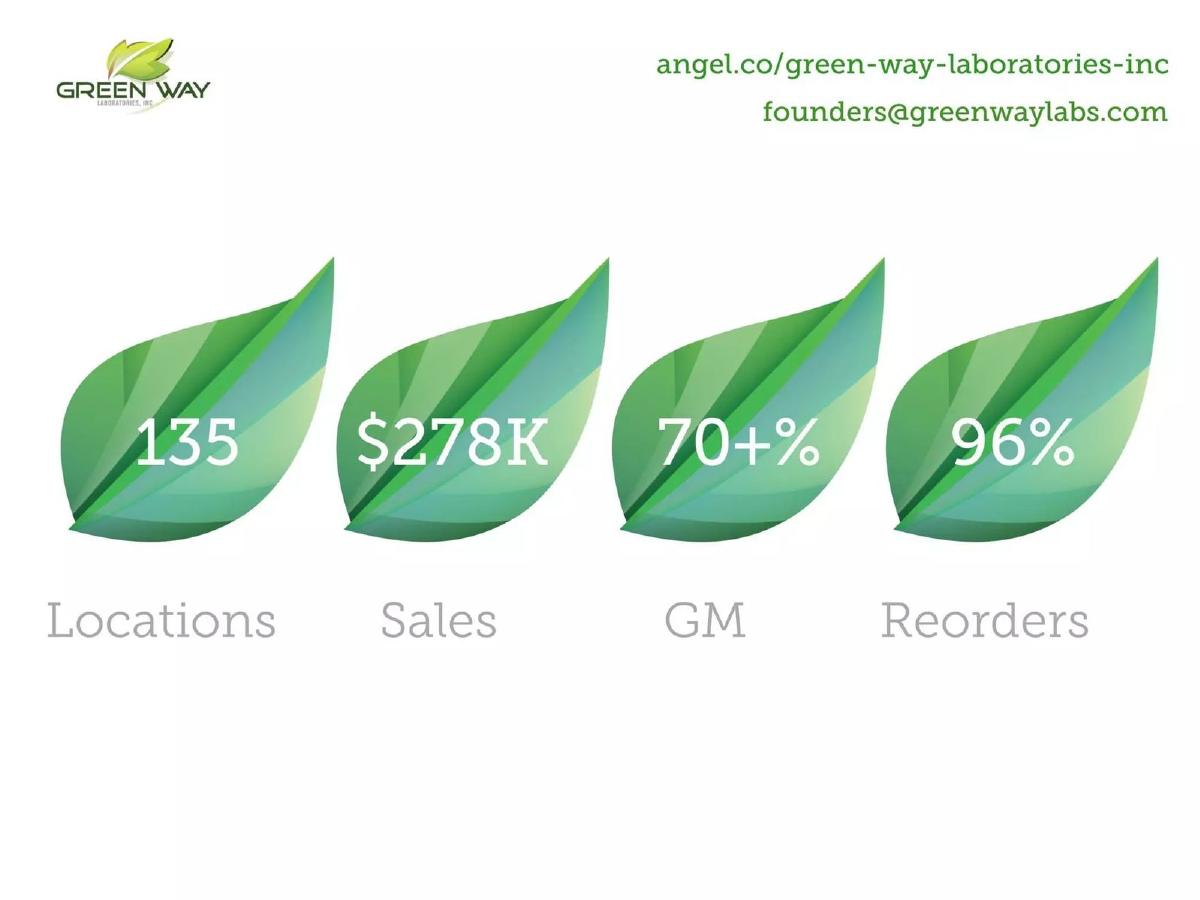
- The company demonstrates significant early-stage traction with $278K in sales and 135 active locations (Slide 3).
- A high reorder rate of 96% suggests strong product-market fit and customer retention (Slide 3).
- The business model boasts healthy unit economics with gross margins exceeding 70% (Slide 3).
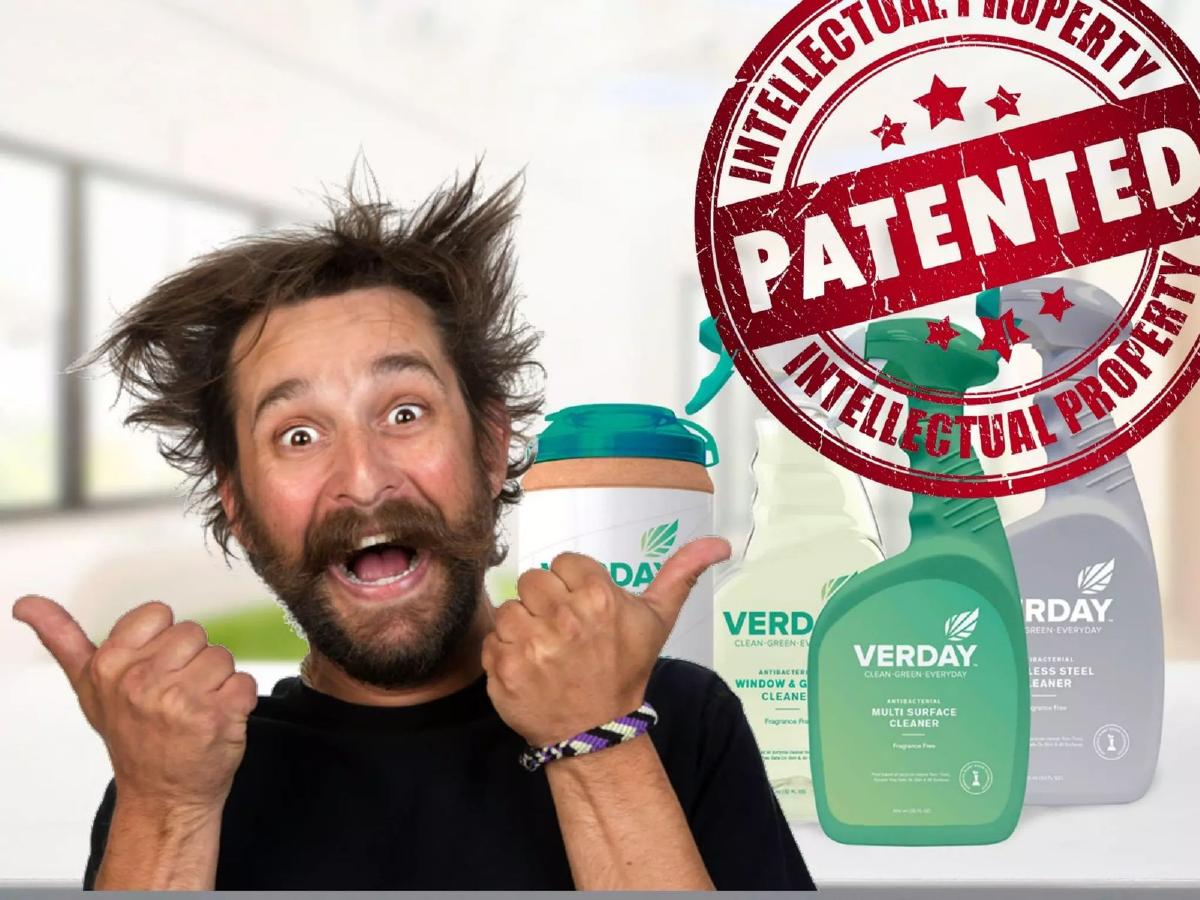
- The deck emphasizes intellectual property protection with a prominent 'Patented' stamp over its Verday product line (Slide 2).
- The total addressable market is visualized as a $140 billion global opportunity (Slide 13).
- The strategy involves a dual-track approach, targeting both Consumer and Industrial segments through brands like Verday and MastiClean (Slide 10).
- The team slide leverages massive corporate logos from past employers like Sears, Kmart, and Hyatt to build founder authority (Slide 14).
- The deck completely omits a formal 'Ask' slide, leaving the specific funding requirements and use of proceeds unstated (General Observation).
Executive Summary: The Power of Visual Traction
Green Way Laboratories’ pitch deck is a study in minimalist persuasion. In an era where many founders over-explain the chemistry of their products, Green Way chose to let their metrics and branding do the heavy lifting. With 16 slides that contain fewer than 200 words in total, the deck focuses on three core pillars: Traction , Safety , and Scale . By the time an investor reaches the final slide, they have seen clear evidence of retail presence, high margins, and a massive addressable market, even if the technical 'how' remains a proprietary secret.
Slides 1-4: The Hook and the Hard Numbers
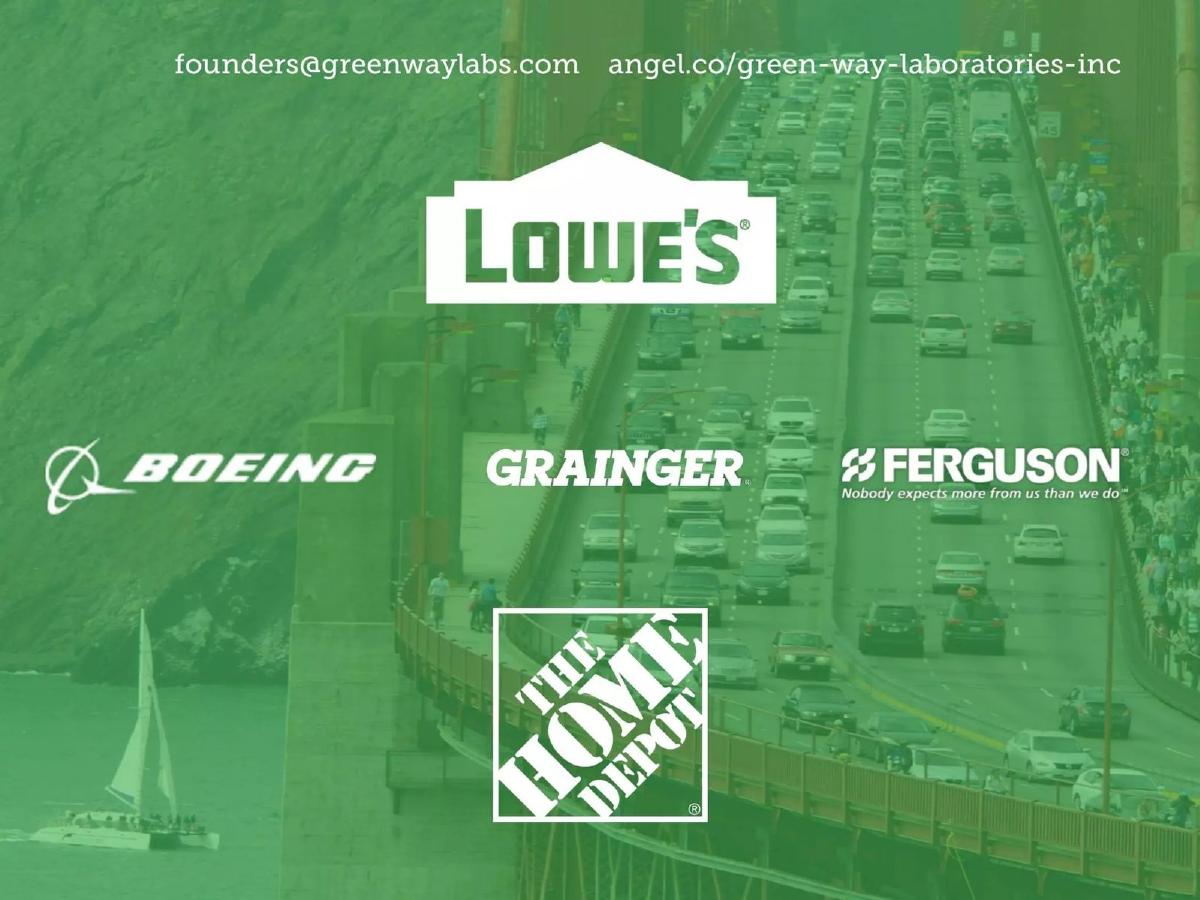
The deck opens with a high-impact cover slide (Slide 1) featuring a green-tinted image of a congested bridge, overlaid with the logos of Lowe’s, Boeing, Grainger, Ferguson, and The Home Depot . This immediately establishes the company’s playground: heavy industry and big-box retail. It is a bold move that suggests these are either current partners or the primary targets of their 'disruptive' technology.
Slide 2 introduces the 'Verday' brand with a high-energy image of a founder and a massive 'Patented' seal. This addresses the 'defensibility' question early. Investors in the chemical space are often wary of 'green' products that can be easily replicated; Green Way counters this by emphasizing their protected intellectual property.
Slide 3 is arguably the most important slide in the deck. It presents four key metrics inside leaf icons: 135 Locations, $278K Sales, 70+% GM (Gross Margin), and 96% Reorders . For a 2012-era startup in the 'Other' industry category, these are stellar numbers. A 96% reorder rate is a powerful proxy for product efficacy, and a 70% gross margin indicates a highly scalable manufacturing model. Slide 4 provides a clean transition with the company logo, maintaining the 'Green' brand identity.
Slides 5-9: The Emotional and Functional Problem
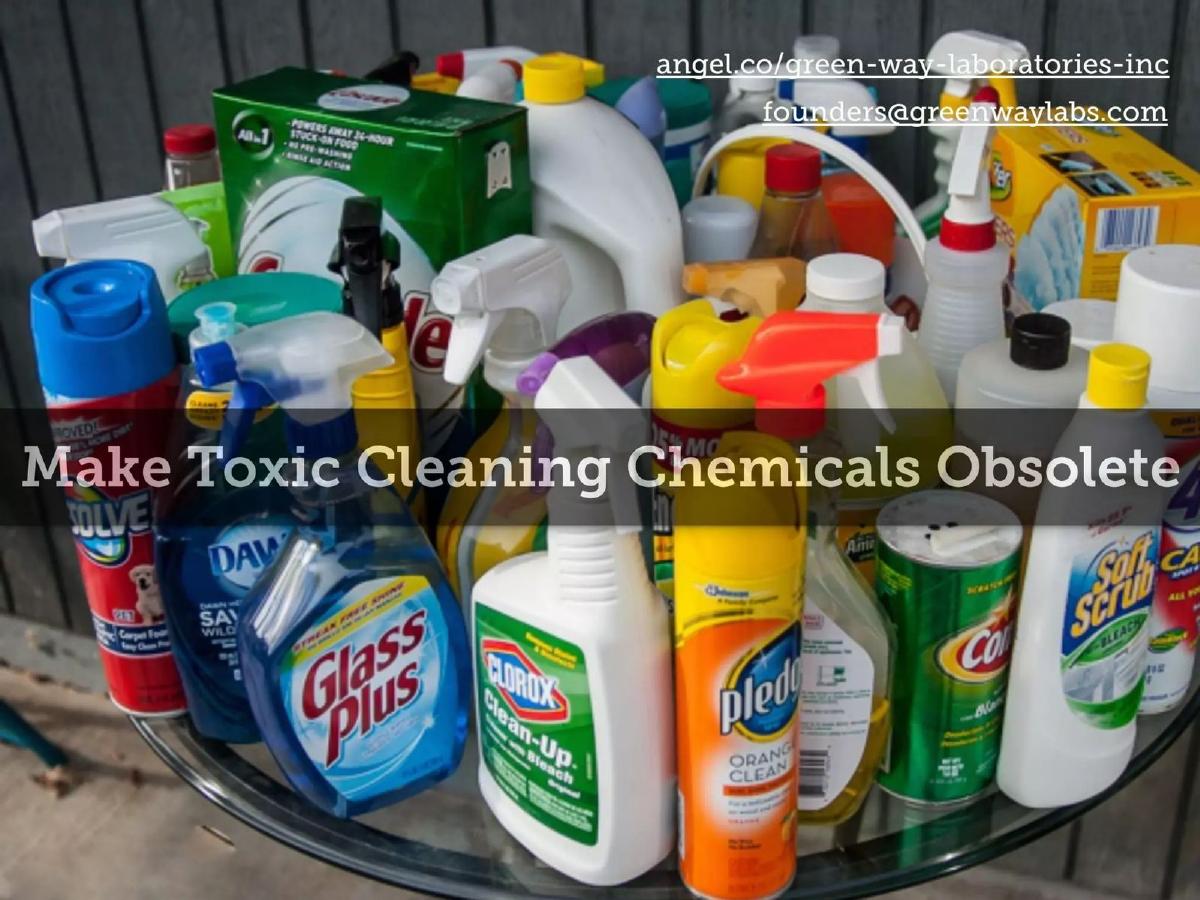
Slides 5 through 8 use full-bleed imagery to establish the 'Why.' Slide 5 features a cluttered table of 'legacy' cleaning products (Clorox, Pledge, Glass Plus) with the text: 'Make Toxic Cleaning Chemicals Obsolete.' This identifies the enemy. Slides 6 and 7 contrast this with images of a baby and a miner, suggesting the product is safe for the most vulnerable (infants) and effective for the most demanding (industrial workers).
Slide 8 shows a woman in distress while cleaning, a classic 'infomercial' style trope that highlights the unpleasantness of traditional chemicals. Slide 9 then introduces the solution in action: a Verday All-Purpose Natural Cleaner wipe. This sequence moves the investor from the 'toxic' problem to the 'natural' solution without needing a single bullet point of text.
Slides 10-13: Market Strategy and Product Breadth
Slide 10 uses a Venn diagram to show the overlap between Consumer and Industrial markets. It lists icons for trucking, manufacturing, construction, automotive, aviation, and shipping. This illustrates the '22 vertical markets' mentioned in the company's self-description. By showing the Verday (consumer) and MastiClean (industrial) bottles side-by-side, they demonstrate a versatile brand architecture.
Slide 11 showcases the full product family, including laundry detergent, dish soap, and various surface cleaners. This slide proves that Green Way isn't a 'one-hit-wonder' product but a platform for an entire suite of household and industrial chemicals. Slide 12 features a massive '86%' over a leaf, though the specific meaning of this percentage is not explicitly defined on the slide (it likely refers to a bio-based content percentage or a growth metric). Slide 13 rounds out the market section with a global map and a '$140bil' figure, defining the Total Addressable Market (TAM) for cleaning chemicals globally.
Slides 14-16: The Team and Real-World Validation
The team slide (Slide 14) is a masterclass in 'borrowed authority.' Instead of listing degrees or long bios, the founders— Ted Coté, Rick White, Marylou Garcia, and Zack Gorlick —are positioned above a cloud of logos including Sears, Kmart, H-E-B, Hyatt, and Stericycle . This tells the investor that the leadership team understands the procurement and supply chain needs of the very companies they are targeting.
Slide 15 provides 'social proof' with a photo of a large team in a retail environment (Lowe's ProServices) holding the product. This validates the '135 locations' claim from Slide 3 and shows that the product is actually on shelves and in the hands of professionals. The deck concludes on Slide 16 with a 'Unicorn' image—a playful but clear nod to the company’s ambitions to become a billion-dollar disruptor in the green chemistry space.
What Works in This Deck
Extreme Brevity: By using almost no text, the deck forces the viewer to focus on the numbers that matter: $278K in sales and 70% margins. · Visual Proof: The inclusion of the Lowe's ProServices photo (Slide 15) moves the company from 'theoretical' to 'operational.' · High-Margin Narrative: Highlighting a 70%+ gross margin (Slide 3) is a critical signal for investors in physical goods, as it provides the 'buffer' needed for marketing and distribution expansion. · Brand Consistency: The 'Green' theme is relentless, from the logo to the leaf-shaped data points, reinforcing the company's core value proposition.
What is Missing
The Ask: The deck never specifies how much money is being raised or what the 'Use of Proceeds' will be. While the catalogue facts state $250,000 was raised, an investor seeing this deck for the first time would not know the capital requirement. · Competitive Landscape: There is no slide comparing Green Way to other 'green' competitors (like Seventh Generation or Method). It only positions itself against 'toxic' legacy brands. · Technical Detail: While 'Patented' is mentioned, there is no explanation of why this green chemistry works better than existing alternatives. · Financial Projections: The deck shows past traction ($278K) but provides no forward-looking 'hockey stick' graph or 3-5 year revenue targets.
What a Founder Should Copy
The 'Traction Leaf' (Slide 3): If you have good numbers, put them on one slide with zero distractions. The combination of locations, sales, margins, and reorders is the 'perfect' quartet for a retail-focused startup. · Logo-Based Bios: If your team has worked at recognizable companies, use their logos. It is much faster for an investor to scan a Sears or Hyatt logo than to read a three-sentence career summary. · The Problem/Solution Contrast: Using Slides 5 through 9 to tell a visual story of 'Toxic vs. Safe' is more effective than a list of chemical ingredients. · Dual-Market Positioning: Showing how one core IP (the formula) can serve both a consumer brand (Verday) and an industrial brand (MastiClean) demonstrates a sophisticated understanding of revenue diversification.
Frequently asked questions
- How much did Green Way Laboratories raise with this deck?
- According to the catalogue facts from pitchdeckhunt.com, Green Way Laboratories raised $250,000 in 2012. The deck itself does not state the amount being raised or the valuation, which is a common omission in decks designed for live presentations or those intended to spark a follow-up conversation rather than serve as a standalone document.
- What is the core technology behind Green Way Laboratories?
- The deck describes the technology as a 'disruptive new technology using the latest in green chemistry.' Slide 2 features a large 'Patented' seal, and the company's description highlights a 'protected formula' that is consumable and applicable across 22 vertical markets. The goal is to make 'toxic cleaning chemicals obsolete' (Slide 5) using plant-based, non-toxic alternatives.
- Who are the key members of the leadership team?
- The team consists of Ted Coté (CEO, Co-Founder), Rick White (VP Sales), Marylou Garcia (CFO), and Zack Gorlick (Biz Dev, Co-Founder). Their experience is backed by a logo cloud on Slide 14 including major retailers and service providers like Sears, Kmart, H-E-B, and Hyatt, suggesting a background in high-volume retail and operations.
- What products does the company actually sell?
- The company markets two primary brands shown on Slide 10: 'Verday' for the consumer market and 'MastiClean' for the industrial market. The product lineup includes multi-surface cleaners, window and glass cleaners, stainless steel cleaners, laundry detergent, dishwashing soap, and heavy-duty multi-purpose scrubs (Slide 11).
- Is there evidence of retail distribution in the deck?
- Yes. Slide 15 shows a large group of employees in Lowe's 'ProServices' vests holding Green Way products in front of a 'Henry' branded display. Additionally, Slide 1 features logos for Lowe's, Boeing, Grainger, Ferguson, and The Home Depot, implying either existing partnerships, pilot programs, or primary target accounts for their industrial and consumer lines.