Greenwich LifeSciences (GLSI) utilizes this 15-slide deck to detail the clinical progress of GP2, a HER2/neu peptide immunotherapy. The presentation centers on the transition to a Phase III clinical trial following successful Phase IIb results, which showed 0% cancer recurrence in fully immunized patients over a five-year median follow-up. The deck is heavily technical, prioritizing clinical trial protocols, signaling pathway diagrams, and comparative recurrence data against existing standards of care like Herceptin and Kadcyla. While it excels at demonstrating clinical efficacy and safety—re…
Key takeaways
- The company is preparing for a Phase III clinical trial of GP2, a targeted immunotherapy for breast cancer recurrence (Slide 1).
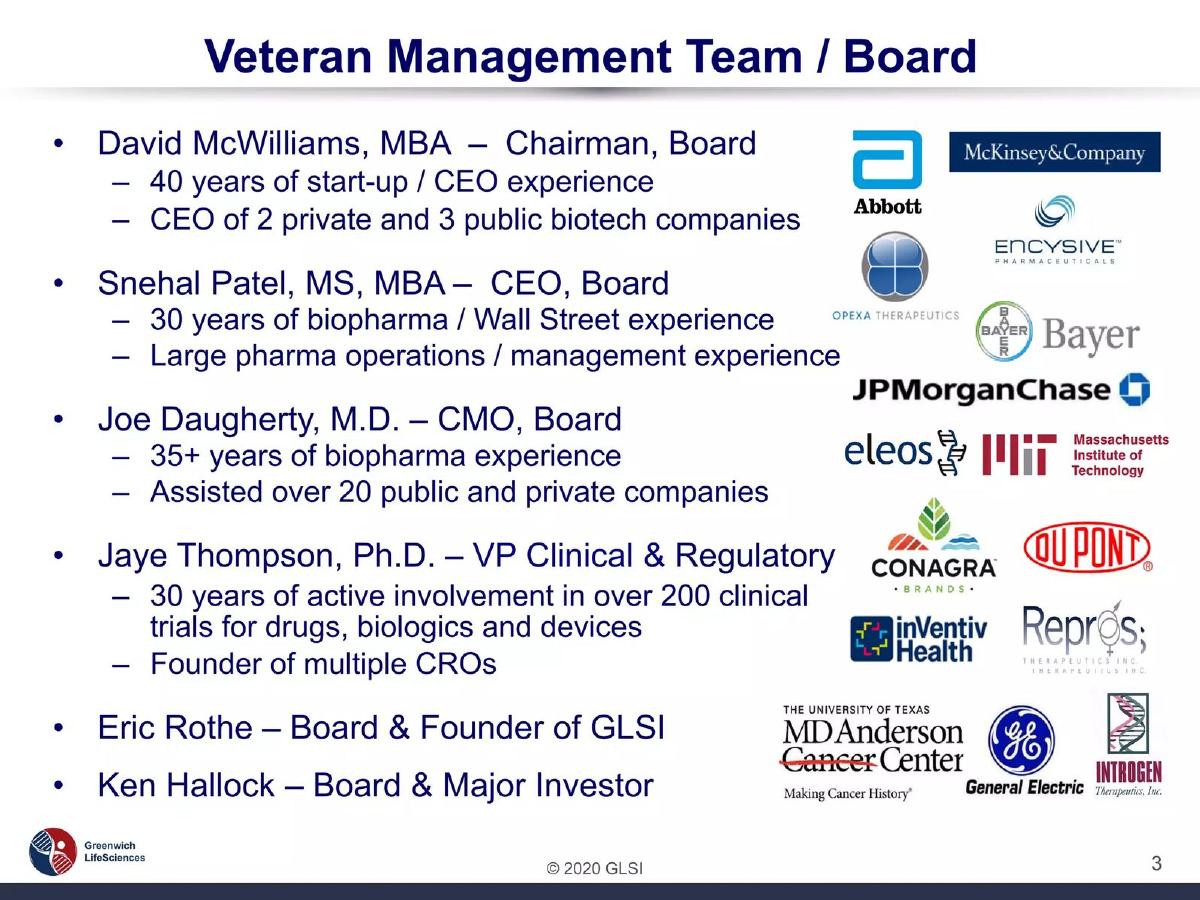
- The management team is highly experienced, featuring leaders with 30-40 years in biopharma and roles at Abbott, Bayer, and MD Anderson (Slide 3).
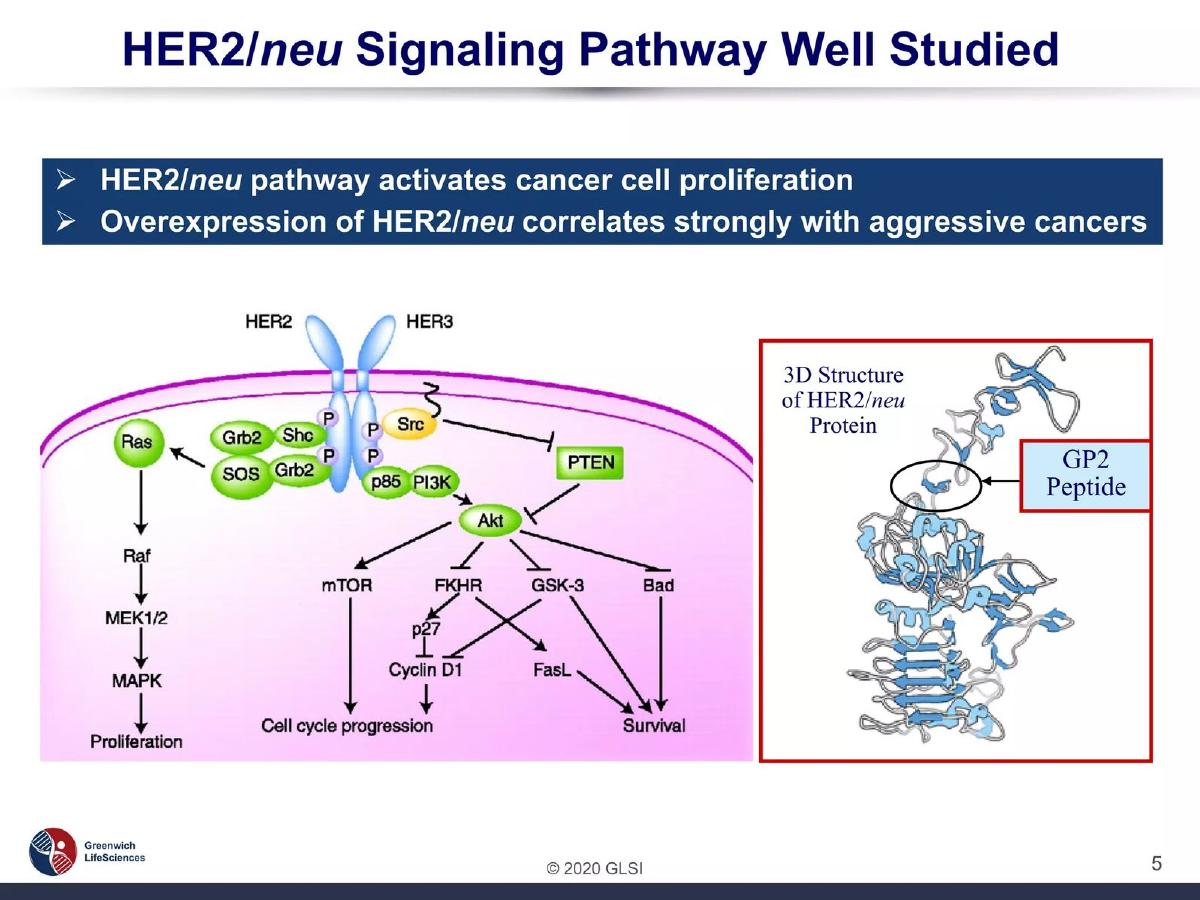
- GP2 targets the HER2/neu signaling pathway, which is a well-studied driver of cancer cell proliferation (Slide 5).
- Clinical history includes 3 Phase I and 1 Phase IIb trials covering 138 patients with zero Serious Adverse Events reported (Slide 7).
- Phase IIb data showed GP2 reduced recurrence rates from 11% to 0% in fully immunized patients at a 5-year median follow-up (Slide 9).
- The initial indication targets approximately 17,000 new patients per year, potentially saving 1,500 to 2,000 lives annually (Slide 9).
- GP2 is positioned as a post-surgery 'final treatment' to de-escalate toxic treatments and overlap with existing drugs like Herceptin (Slide 11).
- Commercial opportunities extend beyond breast cancer to other HER2/neu expressing cancers including lung, prostate, and leukemia (Slide 13).
Greenwich LifeSciences: A Clinical-Stage Deep Dive
The Greenwich LifeSciences (GLSI) pitch deck is a technical document intended for an audience familiar with clinical trial terminology and oncology. Unlike consumer tech decks that focus on user acquisition and viral loops, this deck focuses on biological efficacy, safety protocols, and unmet medical needs in the oncology space. As a NASDAQ-listed company at the time of this deck (2020), the presentation serves as a bridge between completed Phase IIb data and the commencement of a pivotal Phase III trial.
Slide 1: Title and Core Value Proposition
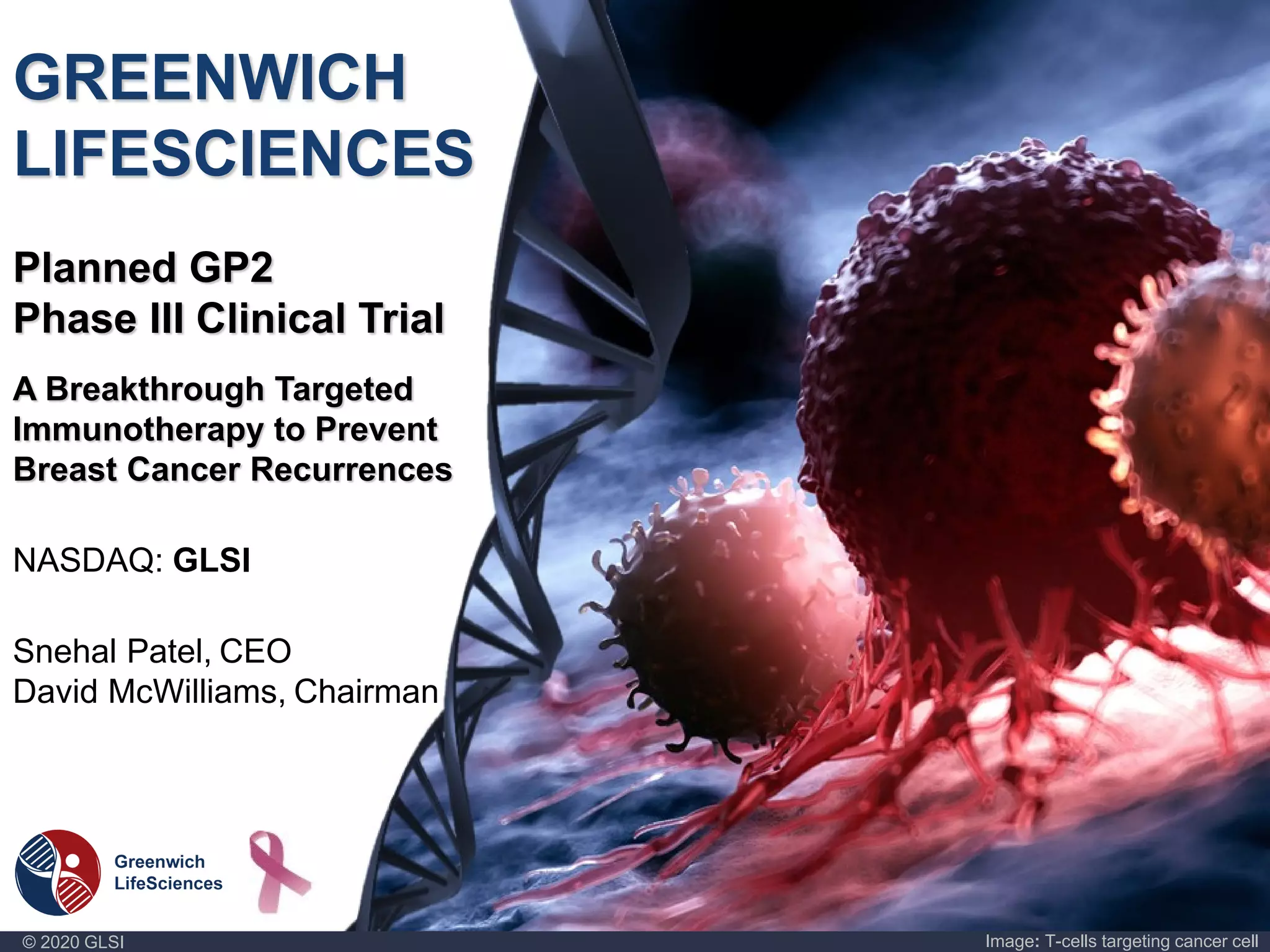
The cover slide immediately establishes the company's focus: "Planned GP2 Phase III Clinical Trial." It defines the product as a "Breakthrough Targeted Immunotherapy to Prevent Breast Cancer Recurrences." By including the NASDAQ ticker (GLSI) and the names of the CEO and Chairman, the slide signals institutional readiness. The background image of T-cells targeting a cancer cell reinforces the immunotherapy angle.
Slide 3: Veteran Management Team / Board
This slide is a masterclass in establishing authority in the life sciences sector. It lists four key executives and two board members, totaling over 135 years of combined experience. David McWilliams is credited with 40 years of experience and having served as CEO for five biotech companies. Snehal Patel brings a blend of biopharma and Wall Street experience. The right side of the slide is crowded with high-authority logos, including Abbott, McKinsey & Company, Bayer, JPMorgan Chase, and MD Anderson Cancer Center . This visual shorthand tells investors that the leadership has successfully navigated the regulatory and financial hurdles of the pharmaceutical industry before.
Slide 5: HER2/neu Signaling Pathway
Slide 5 shifts to the underlying science. It illustrates the HER2/neu signaling pathway, explaining that overexpression of this protein correlates with aggressive cancers. The slide includes a 3D structure of the HER2/neu protein and identifies exactly where the GP2 Peptide binds. This slide is essential for scientific due diligence, proving that the company understands the mechanism of action (MoA) for their lead candidate.
Slide 7: Summary of All GP2 Trials
This is the "traction" slide for a biotech company. It summarizes four completed trials (three Phase I and one Phase IIb). The headline figure is Total N=138 Patients Treated to Date with No SAEs (Serious Adverse Events) . This is a critical de-risking statement. The table breaks down the protocols, including a randomized, single-blinded Phase II trial. Highlighting that trials were conducted at institutions like the Brooke Army Medical Center adds further credibility to the data collection process.
Slide 9: Breast Cancer – Still a Substantial Unmet Need
Slide 9 defines the market problem and the GP2 solution. It notes that 50% of recurring patients do not respond to current standards like Herceptin or Kadcyla. The most compelling metric in the entire deck is found here: GP2 reduced recurrence rates from 11% to 0% at median 5 years follow-up (p = 0.0338) . The slide also quantifies the human impact, stating that 17,000 new patients could be treated annually, potentially saving 1,500 to 2,000 lives. This combines clinical success with a clear market opportunity.
Slide 11: GP2 Market Positioning & Feedback from KOLs
This slide addresses the "how it fits" question. It positions GP2 as a "final treatment" post-surgery. The diagram at the bottom shows the patient journey from diagnosis through primary treatment to a 3-year follow-up period. GP2 is placed in the "Follow-up / Surveillance Period," where patients currently experience anxiety and a lack of predictable recurrence prevention. The mention of KOLs (Key Opinion Leaders) suggests that the medical community supports this positioning, though specific quotes from these leaders are not provided on this slide.
Slide 13: Potential Commercial Opportunities / Additional Indications
To justify a higher valuation, the deck looks beyond the initial breast cancer indication. Using data from the American Cancer Society, this slide highlights other cancers where HER2/neu overexpression is reported. Red boxes highlight Prostate, Lung, Colon, Bladder, and Leukemia , among others. This suggests that GP2 could eventually become a platform technology rather than a single-use drug, significantly expanding the Total Addressable Market (TAM).
Slide 15: Contact Information
The final slide returns to the cover imagery and provides direct contact details for CEO Snehal Patel. It includes the company website and the NASDAQ ticker, maintaining the professional, public-company tone established at the beginning.
What Greenwich LifeSciences Does Well
The deck is exceptionally strong at de-risking the clinical path . By emphasizing the "0% recurrence" and "Zero SAEs" across multiple slides, the company addresses the two biggest fears in biotech investing: that the drug won't work or that it will be too toxic to pass regulatory hurdles. The use of peer-reviewed-style charts and signaling diagrams speaks directly to the technical analysts who often lead due diligence in this sector.
The team slide is also a standout. In biotech, the ability to navigate the FDA is as important as the science itself. By showcasing a team that has collectively worked on hundreds of clinical trials and held leadership roles at global pharma giants, Greenwich LifeSciences minimizes "execution risk" in the eyes of the investor.
What is Missing from the Deck
While the clinical data is robust, the deck is light on financial specifics . There is no slide detailing the projected cost of the Phase III trial, the current cash runway, or the specific funding amount being sought (the "Ask"). While this is common for public company presentations where such info is in SEC filings, a standalone pitch deck usually benefits from a clear timeline of milestones (e.g., "First Patient In" date, "Interim Data Readout" date).
Additionally, the competitive landscape is only addressed in terms of clinical outcomes (comparing recurrence rates to Herceptin). There is no mention of other immunotherapies or vaccines in development that might compete for the same patient population. A "Competitor Matrix" slide would have helped clarify GP2's unique moat beyond just the 0% recurrence figure.
Founder Takeaways: What to Copy
Lead with your strongest metric: If you have a "0%" or "100%" result in a key performance indicator, it should appear on multiple slides. Greenwich does this effectively with their recurrence data. · Use authority logos: If your team has worked at prestigious firms, use their logos. It provides instant cognitive shorthand for "quality." · Visualize the patient/user journey: Slide 11's timeline of diagnosis to recurrence is a great way to show exactly where a product fits into a complex ecosystem. · Define the 'Unmet Need' clearly: Don't just say your product is good; explain why the current market leaders are failing a specific subset of users. Greenwich's focus on the 50% of non-responders to Herceptin is a perfect example of niche targeting.
Frequently asked questions
- What is the primary product being pitched by Greenwich LifeSciences?
- The primary product is GP2, a HER2/neu peptide immunotherapy. It is designed to be administered as a vaccine (in combination with GM-CSF) to prevent breast cancer recurrences in patients who have already undergone surgery and primary treatments. The deck focuses on its transition into Phase III clinical trials.
- How does GP2 compare to existing breast cancer treatments?
- According to Slide 9, while Herceptin reduces recurrence from 25% to 12% and Kadcyla reduces it from 22% to 11%, GP2 reduced the recurrence rate to 0% in its specific Phase IIb trial population. The deck positions GP2 as a synergistic treatment that addresses the 50% of patients who do not respond to existing standards of care.
- What is the safety profile of the GP2 immunotherapy?
- The deck emphasizes a strong safety profile. Slide 7 notes that across four completed trials involving 138 patients, there were no Serious Adverse Events (SAEs). Slide 11 mentions that only injection site reactions were observed, which the company interprets as a positive sign of the drug's immunogenicity.
- Who are the key leaders driving this company?
- The leadership includes Chairman David McWilliams (40 years experience, former CEO of 5 biotech companies) and CEO Snehal Patel (30 years experience in biopharma and Wall Street). The team also includes CMO Joe Daugherty and VP of Clinical & Regulatory Jaye Thompson, both with over 30 years of industry experience.
- What is the total addressable market mentioned in the deck?
- Slide 9 identifies an initial indication of approximately 17,000 new patients per year for the specific breast cancer application. However, Slide 13 expands the potential commercial opportunity to multiple other cancers where HER2/neu overexpression occurs, including bladder, lung, prostate, and kidney cancers.