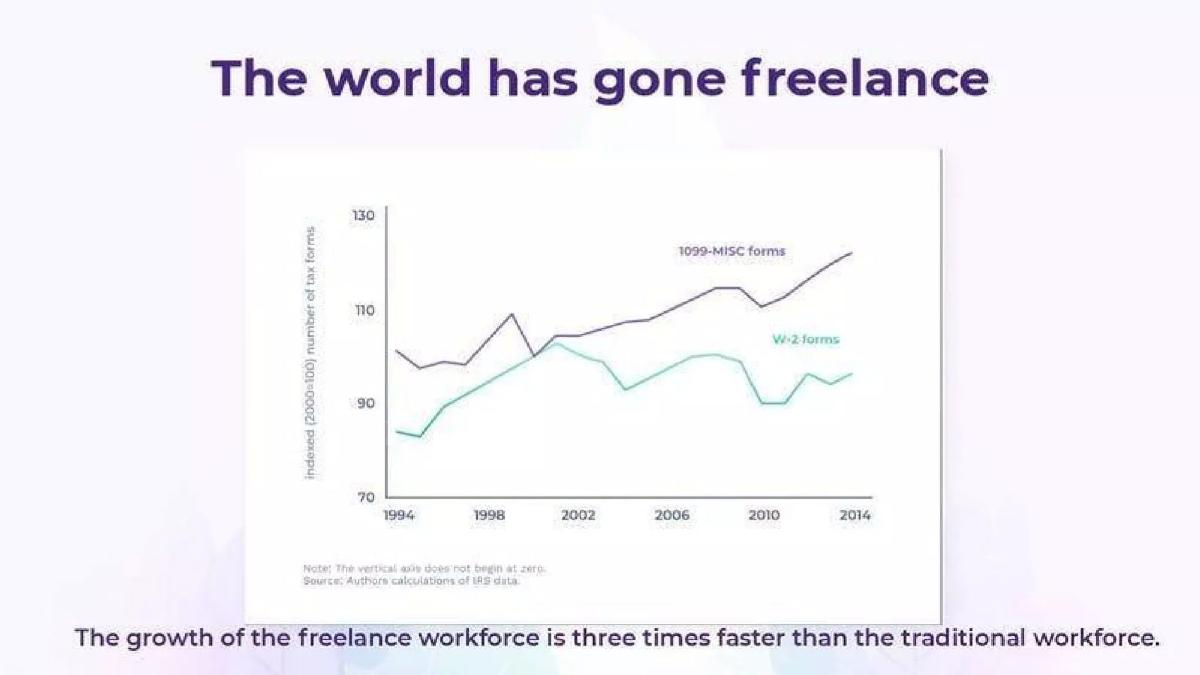
Stoke's 19-slide deck is a textbook example of narrative-driven fundraising. Rather than leading with product features, the founders spend the first half of the deck establishing a massive macroeconomic shift: the transition from a rigid to a hybrid workforce. They use IRS data on Slide 4 to prove that 1099-MISC filings are growing three times faster than W-2 forms, creating a sense of urgency. The deck successfully identifies a 'corporate challenge'—the lack of ownership for non-standard talent processes—before introducing Stoke as the 'On-Demand Talent Cloud.' While the deck is light on spe…
Key takeaways
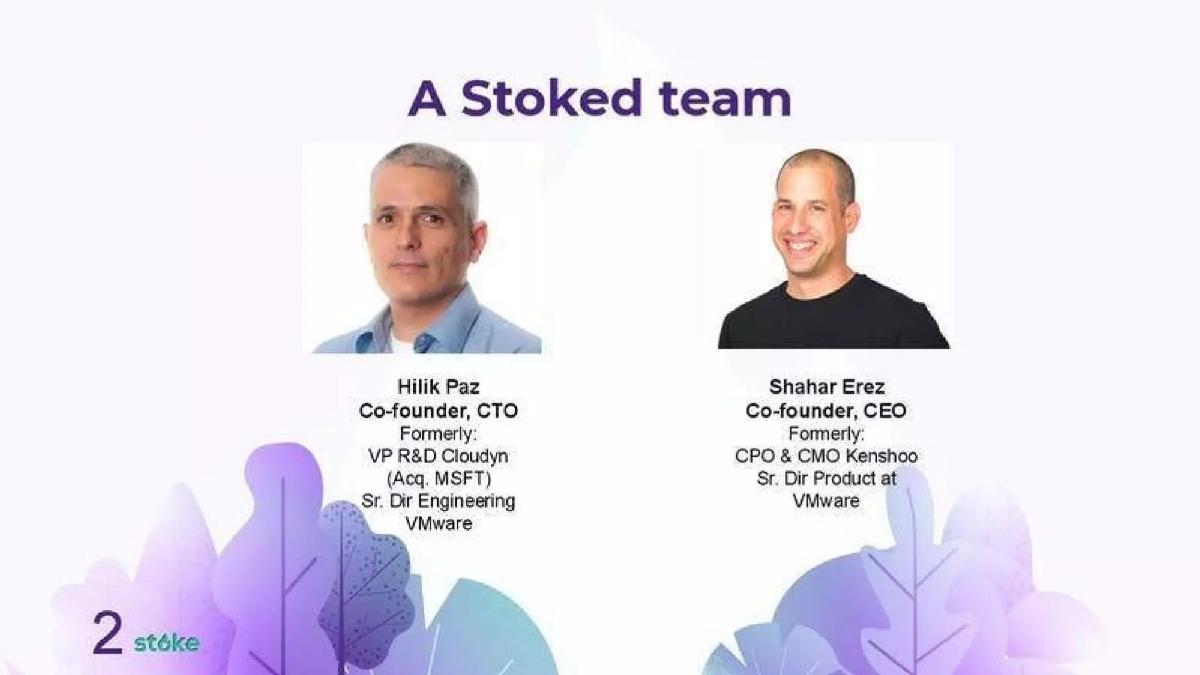
- The deck leads with the team on Slide 2, highlighting deep enterprise experience at VMware, Microsoft, and Kenshoo.
- Slide 4 provides a quantitative anchor, showing that freelance workforce growth is three times faster than the traditional workforce based on IRS data.
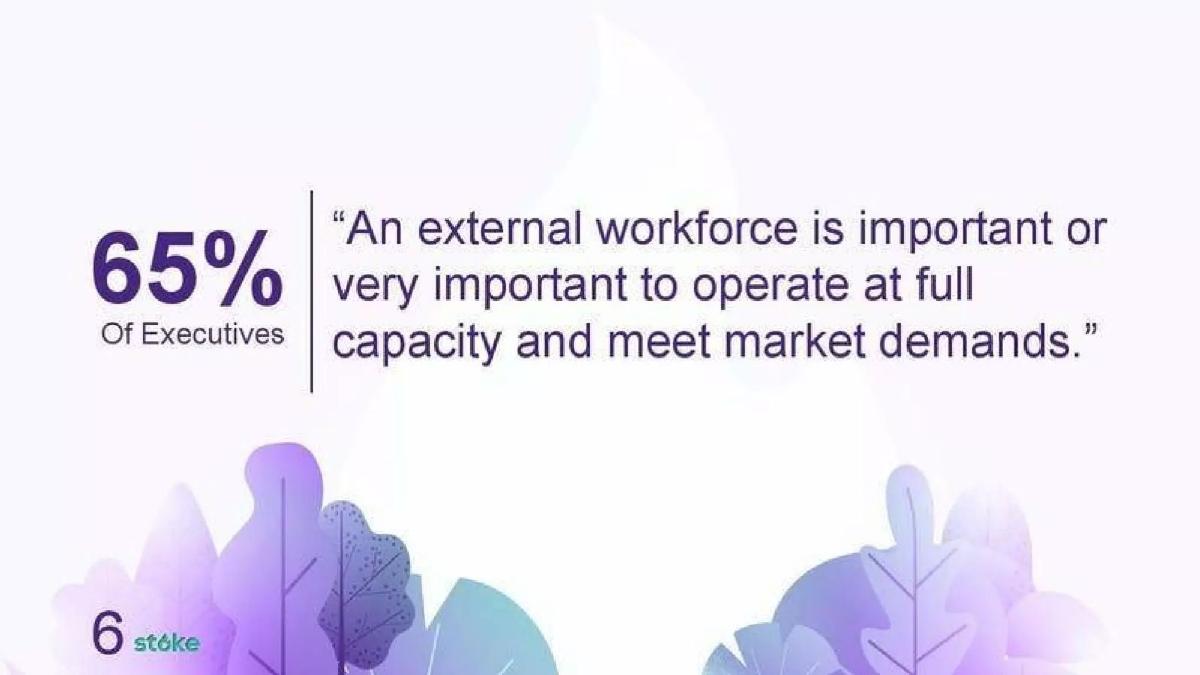
- A quote on Slide 6 claims 65% of executives view an external workforce as important or very important to operate at full capacity.
- Slide 10 identifies the core friction: on-demand talent is a 'one off, non standard process owned by no one in corporate.'
- The product is positioned on Slide 11 as an 'On-Demand Talent Cloud' that offers risk-free access to skill and capacity.
- Slide 14 outlines a comprehensive platform architecture covering talent access, onboarding, payments, and regulatory compliance.
- The roadmap on Slide 16 targets a 'Market Launch' in Q1 2020 with a planned headcount of 12 full-time employees and 3 external contractors.
- The deck relies heavily on a high-profile advisory board, including former executives from Google, Fiverr, and Amdocs, shown on Slides 17 and 18.
The Narrative of the Hybrid Workforce
Stoke’s Series A deck is a masterclass in selling a vision of the future. In 2019, the freelance economy was well-established, but the enterprise tools to manage it were still nascent. Stoke didn't just pitch a tool; they pitched a fundamental shift in how organizations operate. By framing the problem as a structural change from a "Rigid workforce" to a "Hybrid workforce," they made their platform feel like an inevitable necessity rather than a discretionary purchase.
Slides 1-2: The Hook and the Pedigree
Slide 1 sets the tone with the tagline "Workforce at the pace of business." The visual identity is clean, utilizing a campfire motif that suggests a gathering of talent. Slide 2 immediately introduces the founders, Hilik Paz and Shahar Erez. This is a strategic move for a Series A. By highlighting their past roles at VMware, Microsoft, and Kenshoo, they establish immediate credibility. Investors are told right away that these are not first-time founders; they are enterprise veterans who have built and sold companies before.
Slides 3-8: Establishing the Macro Trend
The next six slides are dedicated entirely to the "Why Now?" Slide 3 claims we are on the cusp of a significant shift toward on-demand work. Slide 4 provides the data to back this up, showing a chart where 1099-MISC forms grow "three times faster than the traditional workforce." Slide 5 adds a qualitative layer, asserting that these freelancers are "highest skilled individuals," moving the conversation away from low-cost gig work toward high-value expertise. Slide 6 brings in the buyer's perspective, quoting that 65% of executives see an external workforce as "important or very important." Slide 7 and Slide 8 summarize this as a shift toward being "Result based, Agile, Nimble, Distributed, and On-Demand," contrasting the old "Rigid" way of thinking with the new "Hybrid" reality. By the end of this section, the investor is primed to believe that the old way of hiring is dead.
Slides 9-10: The Friction Point
Slide 9 uses a simple "But..." to transition into the problem. Slide 10 identifies the "corporate challenge": on-demand talent is a "one off, non standard process owned by no one in corporate." It lists five areas of friction: Recruiting, On-boarding, Budgets & Payments, Corp. Policies, and Compliance. This slide is critical because it defines the specific pain points Stoke intends to solve, moving from the abstract macro trend to the concrete operational headache.
Slides 11-15: The Solution and Platform Architecture
Slide 11 introduces Stoke as the "On-Demand Talent Cloud." The phrasing is intentional, piggybacking on the familiar concept of the "Cloud" to suggest scalability and accessibility. Slide 12 and Slide 13 reinforce the mission of empowering leaders to increase productivity. Slide 14 provides the technical meat of the deck, showing a "unified on-demand workforce platform." It breaks the product down into six pillars: Talent Access, Onboarding, Transparency, Payments, Policy & Governance, and Regulatory Compliance. Underneath, it lists the platform's foundational attributes: Integrations, Scalability, Reliability, Security, and Compliance. Slide 15 gets even more granular, showing how the platform handles everything from "Model based policies" (pay bands, geo, docs) to integrations with marketplaces like Upwork, Fiverr, and Toptal.
Slides 16-19: The Roadmap and The Support System
Slide 16 presents a clear timeline. It shows the company grew from "2+4 people" in March to a projected "2+10 people" by Q4. It also notes the first marketplace integration (Upwork) in May and a planned "Market Launch" in Q1 2020. Slides 17 and 18 focus on the Advisory board. This is a "who's who" of enterprise and HR tech, featuring Boaz Chalamish (CEO, Clarizen), Bogomil Balkansky (former VP at Google), and Vered Raviv (former COO of Fiverr). Including these names serves as a powerful signal of industry validation. Finally, Slide 19 closes with a simple thank you and contact information.
What Works in the Stoke Deck
The Macro-to-Micro Narrative: The deck does an excellent job of starting with a global trend (the rise of the 1099 economy) and narrowing it down to a specific corporate pain point (the lack of ownership). This makes the solution feel like a logical conclusion to a global problem.
Founder-Market Fit: The team slide is placed early and is very strong. For an enterprise SaaS play, investors want to see founders who have navigated the halls of companies like VMware and Microsoft. The deck leans heavily on this experience.
Defining the Category: By calling themselves an "On-Demand Talent Cloud," Stoke attempts to own a new category rather than just being another "freelance marketplace." This positioning is key for achieving a high valuation at the Series A stage.
What is Missing from the Stoke Deck
Financials and Unit Economics: There is no mention of how Stoke makes money. Is it a SaaS fee? A percentage of spend? A per-contractor fee? Furthermore, there are no metrics regarding Customer Acquisition Cost (CAC) or Lifetime Value (LTV).
Traction Data: While the deck mentions a "Soft Launch / Open Beta" with approximately 30 customers on Slide 16, it doesn't provide any data on how those customers are using the platform. How many invoices have been processed? What is the total spend under management? These are the types of numbers Series A investors typically look for.
Competitive Landscape: The deck mentions marketplaces like Upwork and Fiverr as integrations, but it doesn't address other Freelance Management Systems (FMS) that were already in the market. A slide explaining why Stoke is different from incumbents would have been beneficial.
The Ask: The deck never explicitly states how much money they are raising or what the specific use of funds will be beyond general hiring. While this is often handled in the verbal pitch, including a high-level "Use of Funds" slide is standard practice.
What a Founder Should Copy
The Data-Backed 'Why Now': Use government or industry-standard data (like the IRS data on Slide 4) to prove your market is growing. It is much harder for an investor to argue with a trend when it is backed by official tax filing statistics.
The Problem Ownership Slide: Slide 10 is a great template for any B2B founder. Identifying that a process is "owned by no one" is a powerful way to explain why a new category of software needs to exist. It highlights a vacuum that your product will fill.
Strategic Use of Advisors: If you have high-profile investors or advisors, don't just bury them in a logo cloud. Give them space to lend their credibility to your mission, as Stoke did on Slides 17 and 18. This is especially important if your current traction is still in the beta phase.
Clean Visual Hierarchy: The deck uses a consistent color palette and avoids clutter. Each slide has one clear message, which makes it easy for an investor to skim while still absorbing the core narrative.
Frequently asked questions
- What is the primary problem Stoke aims to solve?
- Stoke addresses the 'corporate challenge' described on Slide 10: the fact that hiring and managing on-demand talent is currently a fragmented, non-standard process that no specific department owns. This leads to friction in recruiting, onboarding, budgeting, and compliance. Stoke aims to centralize these functions into a single 'Talent Cloud' to make working with freelancers as seamless as managing full-time employees.
- How does Stoke validate the market opportunity?
- The deck uses a combination of government data and executive sentiment. Slide 4 displays a chart of IRS data showing 1099-MISC forms significantly outpacing W-2 forms since 1994. Slide 6 reinforces this with a statistic stating that 65% of executives believe an external workforce is essential for meeting market demands. This dual approach proves both the supply of talent and the demand from enterprise leadership.
- What does the product actually do according to the deck?
- As shown on Slide 14 and 15, Stoke is a unified platform that handles the entire lifecycle of freelance management. This includes finding talent through marketplace integrations (like Upwork and Fiverr), automated onboarding with digital contracts, budget tracking, aggregated invoicing, and regulatory compliance checks such as workforce classification and background checks.
- Who are the founders and why are they qualified?
- The founders, Hilik Paz (CTO) and Shahar Erez (CEO), bring heavy enterprise software pedigrees. As detailed on Slide 2, Paz was previously VP R&D at Cloudyn (acquired by Microsoft) and a Senior Director at VMware. Erez served as CPO/CMO at Kenshoo and a Senior Director at VMware. This background suggests they understand the complex procurement and compliance needs of the large organizations they are targeting.
- What is missing from this pitch deck?
- The deck is notably missing a 'The Ask' slide, meaning the specific dollar amount and valuation are not mentioned. It also lacks a detailed business model or pricing slide, unit economics (LTV/CAC), and a competitive landscape analysis. While it mentions a 'Soft Launch' in Q4, it does not provide any hard traction metrics or revenue figures from the beta period.