Sensorfact’s 12-slide Series B deck is a study in brevity, focusing heavily on the 'why now' and the operational simplicity of their solution. By highlighting the EU's -32.5% energy reduction target and the extreme volatility of German baseload electricity prices between 2019 and 2022, the company establishes a high-urgency environment for their industrial SME target market. The deck successfully positions their product as a low-friction entry point into energy management, emphasizing 'No CAPEX' and 'Non-invasive' hardware. While the deck is strong on product-market fit and team experience—no…
Key takeaways
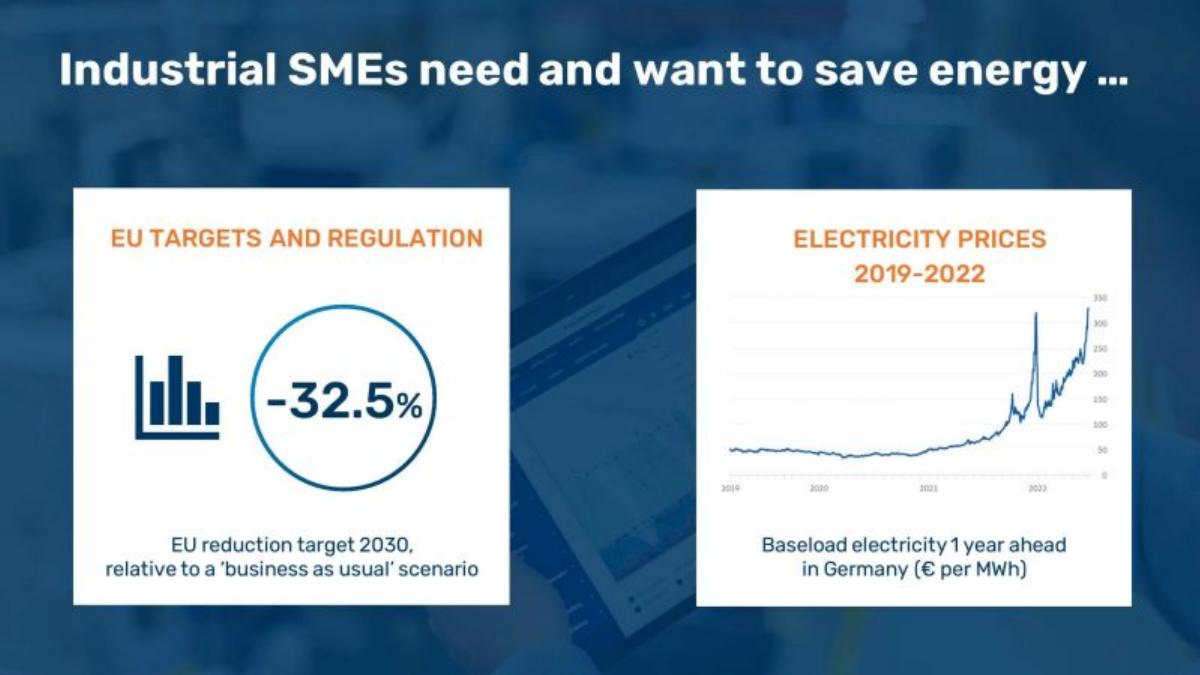
- The deck identifies a specific EU reduction target of -32.5% by 2030 as a primary regulatory driver (Slide 2).
- Electricity price volatility is visualized through a chart showing German baseload prices spiking significantly in 2022 (Slide 2).
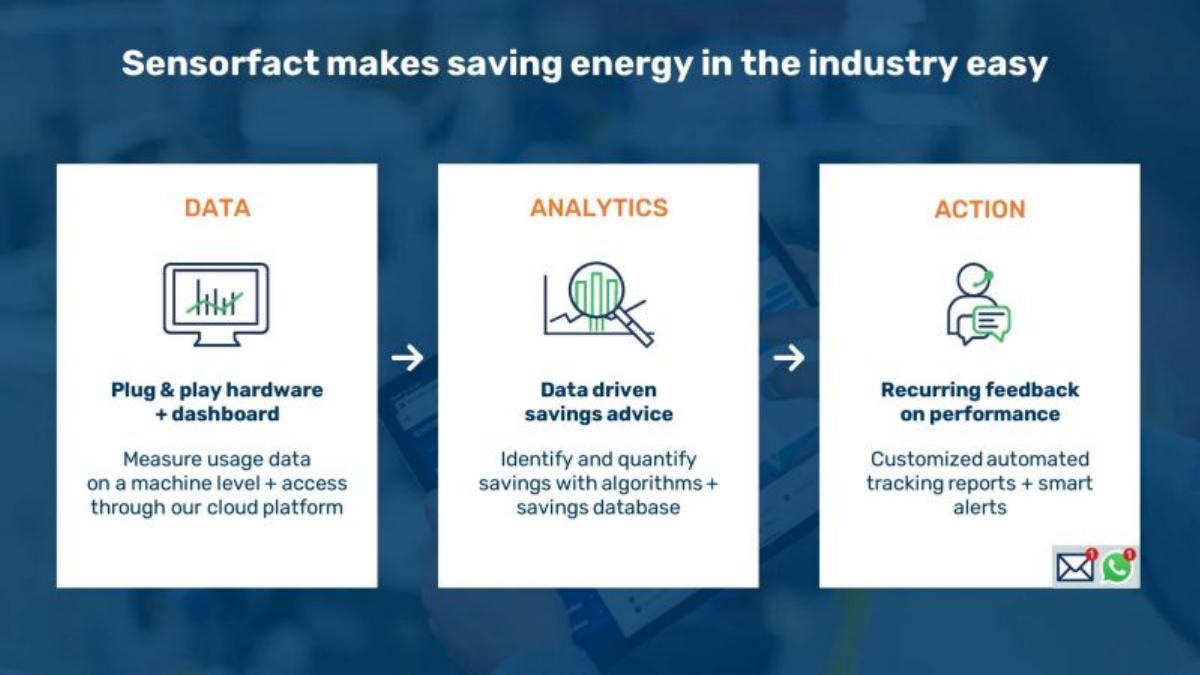
- The solution is framed as a three-step process: Data (plug & play hardware), Analytics (savings advice), and Action (feedback on performance) (Slide 4).
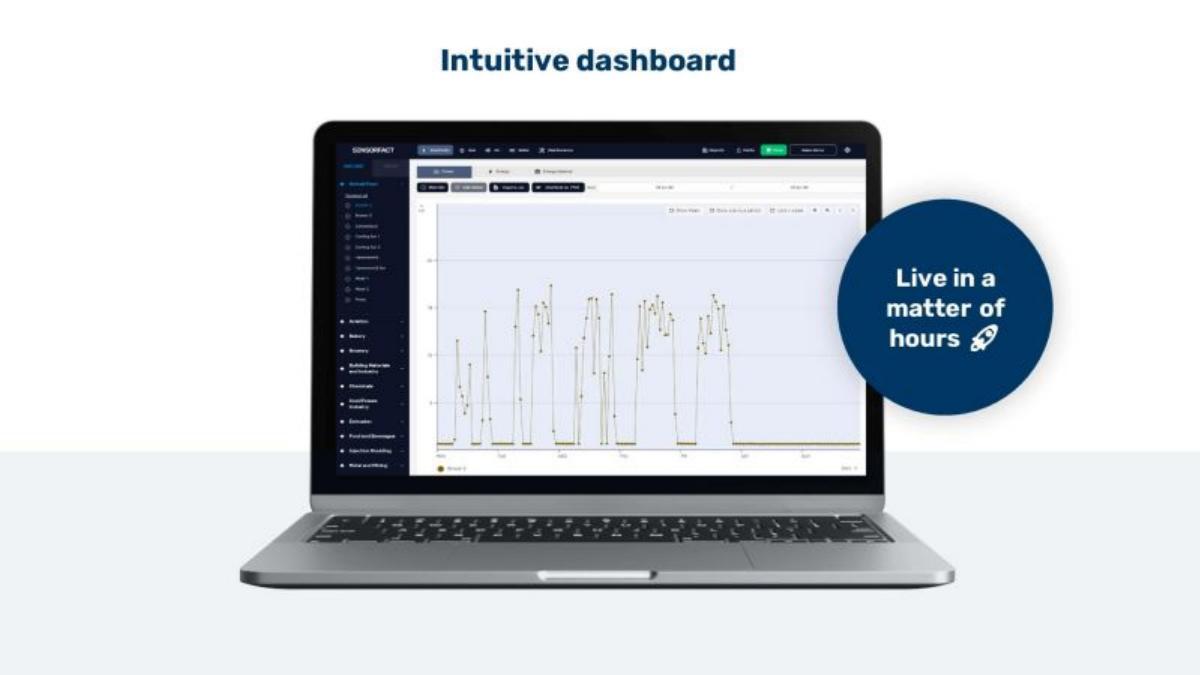
- Sensorfact claims their dashboard can be 'Live in a matter of hours,' emphasizing speed of deployment (Slide 5).
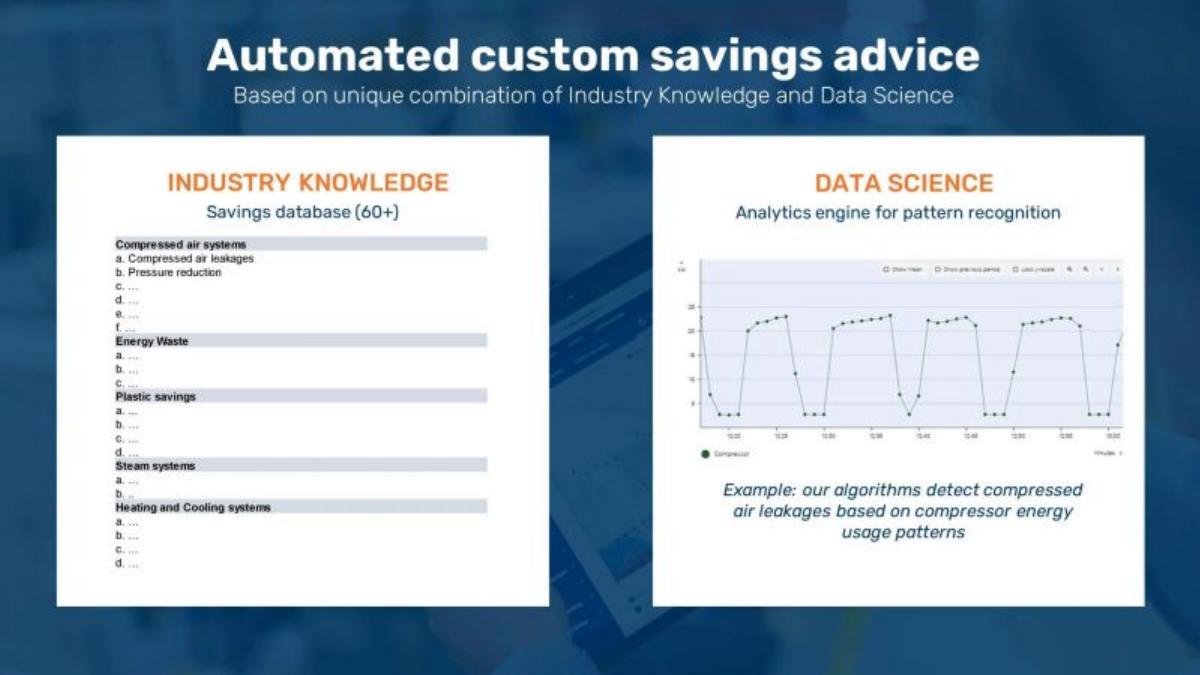
- The company maintains a proprietary savings database with over 60 industry-specific knowledge points, such as compressed air leakage detection (Slide 6).
- Business model advantages for SMEs include a 'No CAPEX' approach, removing the need for complex investment plans (Slide 7).
- The company operates from four European offices: Utrecht, Barcelona, Amsterdam, and Berlin (Slide 8).
- The management team features a founder with two active startups and one successful exit in the smart energy space (Slide 9).
Executive Summary: The Narrative-First Series B
Sensorfact’s 2023 management presentation is a lean, 12-slide deck that focuses almost exclusively on the macro-economic environment and the product's operational simplicity. Raising €25M at Series B usually requires a deep dive into unit economics and cohort analysis; however, this deck appears designed to sell the 'Vision, Mission, and Ambition' (Slide 10) rather than the balance sheet. It relies heavily on the 'Why Now'—citing the energy crisis and EU mandates—to justify the scaling of their four European offices.
Slide 1: Title Slide
The deck opens with a minimalist title slide featuring the Sensorfact logo and the text 'Management presentation 2023.' The background image shows a person using a tablet in an industrial setting, immediately establishing the brand's focus on the intersection of digital tools and physical manufacturing.
Slide 2: The Macro Drivers
This slide establishes the market urgency. It presents two primary catalysts for industrial SMEs to save energy. First, it cites EU Targets and Regulation , specifically a -32.5% reduction target for 2030 relative to a 'business as usual' scenario. Second, it displays a line chart of Electricity Prices 2019-2022 for baseload electricity in Germany. The chart shows a dramatic spike in 2022, reaching over 300 € per MWh, creating a clear financial pain point for the target customer.
Slide 3: The Customer Pain Point
Sensorfact identifies the 'Pain of Plant Managers' through three pillars: No Data, No Analytics, and No Action . The slide features a photo of a technician working on an open electrical panel, emphasizing that without specialized tools, these managers have 'no clue where to start' when it comes to energy efficiency.
Slide 4: The Three-Step Solution
The solution is presented as a linear flow. Data is gathered via 'Plug & play hardware' to measure usage at a machine level. Analytics involves 'Data driven savings advice' using algorithms and a savings database. Action is facilitated through 'Recurring feedback on performance' via automated reports and smart alerts. This slide effectively bridges the gap between the hardware (sensors) and the software (SaaS platform).
Slide 5: Product Interface
Titled 'Intuitive dashboard,' this slide shows a laptop mockup of the Sensorfact platform. A callout bubble claims the system is 'Live in a matter of hours,' which is a significant value proposition for industrial software that typically requires long implementation cycles.
Slide 6: Intellectual Property and Logic
This slide explains how the 'Automated custom savings advice' works. It combines Industry Knowledge (a database of 60+ savings types like compressed air leakages and steam systems) with Data Science (an analytics engine for pattern recognition). An example is provided showing how algorithms detect compressed air leakages based on specific compressor energy usage patterns.
Slide 7: Unique Selling Points (USPs)
Sensorfact categorizes its USPs into three buckets: Easy to Install (non-invasive, wireless, no battery), Affordable (No CAPEX, fits within plant manager budgets), and Full Service (hardware, software, and advice). The mention of 'No CAPEX' is critical, as it suggests a subscription-based model that avoids the long procurement cycles associated with capital equipment.
Slide 8: Geographic Footprint
The company highlights its expansion across Europe, operating from 4 European offices . Utrecht is the hub for product development and staff (since 2019), while Berlin, Barcelona, and Amsterdam are listed as sales offices established in 2022. This slide demonstrates the company's readiness to scale its commercial operations across major EU markets.
Slide 9: Management Team
The team slide focuses on 'Experienced management.' Pieter (CEO/Founder) is highlighted for having founded three smart energy startups with one exit. Hans (CFO/COO) and Karel Nanninga (Head of Growth) both have backgrounds in Strategy and VC. The slide also lists heads of Sales, Platform, and Data Science, signaling a well-rounded leadership team for a Series B stage company.
Slide 10: Vision and Mission
Using a hexagonal layout, the company defines its Vision (Reduce the human environmental footprint), Mission (Eliminating all waste in the industry), and Ambition (Becoming the leading smart IoT platform for industrial SMEs globally). This is a standard 'big picture' slide intended to align investors with the long-term impact of the business.
Slide 11-12: Closing and Contact
Slide 11 is a simple contact slide with the website URL and a background image of the hardware sensors. Slide 12 is a promotional slide for the source library, which is not part of the company's original pitch.
What Sensorfact Does Well
The deck is exceptionally focused on the 'Why Now' . By placing the energy price spike and EU regulations on Slide 2, Sensorfact makes the case that their solution is no longer a 'nice to have' but a regulatory and financial necessity for manufacturers. The emphasis on low-friction adoption (No CAPEX, non-invasive hardware) addresses the biggest hurdle in industrial sales: the difficulty of getting budget approval for new equipment. The team slide also builds significant credibility by highlighting the founder's specific serial experience in the smart energy sector.
What Is Missing
For a Series B deck, the omissions are striking. There are no financial metrics whatsoever—no ARR, no growth percentages, and no margins. There is also a lack of social proof ; the deck does not feature any customer logos, case study results (beyond a generic algorithm example), or testimonials. Furthermore, there is no competitive landscape analysis or a use of funds slide. This suggests that this specific deck was likely a 'teaser' or a high-level narrative deck used to open doors, with the heavy lifting of the due diligence performed through a separate data room or a much longer appendix.
Founder Takeaways
Sell the friction, not just the features. Sensorfact spends significant real estate on Slide 7 explaining why their product is easy to buy ('No CAPEX') and easy to install ('No battery'). For B2B founders, especially in hardware-enabled SaaS, proving that you have solved the implementation headache is often more important than the software's UI. Leverage regulatory tailwinds. If your industry is being impacted by specific government targets (like the EU's -32.5% goal), cite them early. It transforms your product from a discretionary expense into a compliance requirement.
Frequently asked questions
- What is the core problem Sensorfact is solving?
- Sensorfact addresses the 'cluelessness' of industrial plant managers regarding energy waste. According to Slide 3, these managers face a triple threat: No Data, No Analytics, and No Action. The deck argues that while SMEs want to save energy due to rising costs and EU regulations, they lack the tools to identify where leakages or inefficiencies occur at the machine level.
- How does Sensorfact differentiate its hardware and software?
- The differentiation lies in low-friction adoption. Slide 7 lists their Unique Selling Points (USPs) as 'Easy to Install' (non-invasive, wireless, no battery), 'Affordable' (no CAPEX, fits within a plant manager's sign-off budget), and 'Full Service' (combining hardware, software, and recurring human/algorithmic advice). This suggests they are competing on ease of use rather than just technical specifications.
- What geographic footprint does the company have?
- As of the 2023 deck, Sensorfact is a multi-city European operation. Slide 8 shows offices in Utrecht (Product dev, EC, CS, and staff since 2019), Berlin (Sales since Jan 2022), Barcelona (Sales since Sept 2022), and Amsterdam (Sales since Sept 2022). This indicates a heavy recent investment in sales expansion across the continent.
- Who is behind the management team?
- The team is led by CEO and Founder Pieter, who has founded three smart energy startups. He is supported by Hans (CFO/COO), who brings over 10 years of experience in Strategy and VC. The deck also highlights department heads in Sales, Tech, and Growth, specifically noting that Karel Nanninga (Head of Growth) also has a background in VC and strategy (Slide 9).
- What metrics are missing from this Series B deck?
- This deck is remarkably light on data for a Series B round. It omits Annual Recurring Revenue (ARR), Year-over-Year growth rates, customer acquisition costs (CAC), lifetime value (LTV), and even the number of active customers or sensors deployed. It also lacks a 'The Ask' slide, though external records confirm the round was for €25M.