SempreHealth's 16-slide Series A deck is a masterclass in demonstrating incentive alignment within the complex US healthcare ecosystem. By identifying a $300B problem—medication nonadherence—and a $4B inefficiency in pharma coupons, the company positioned itself as a bridge between payors and manufacturers. The deck relies heavily on clinical validation, showing a 15% improvement in adherence for enrolled members (Slide 8) and a significant reduction in emergency department admissions (Slide 11). While the deck lacks a formal 'Ask' slide or detailed financial projections, its strength lies in…
Key takeaways
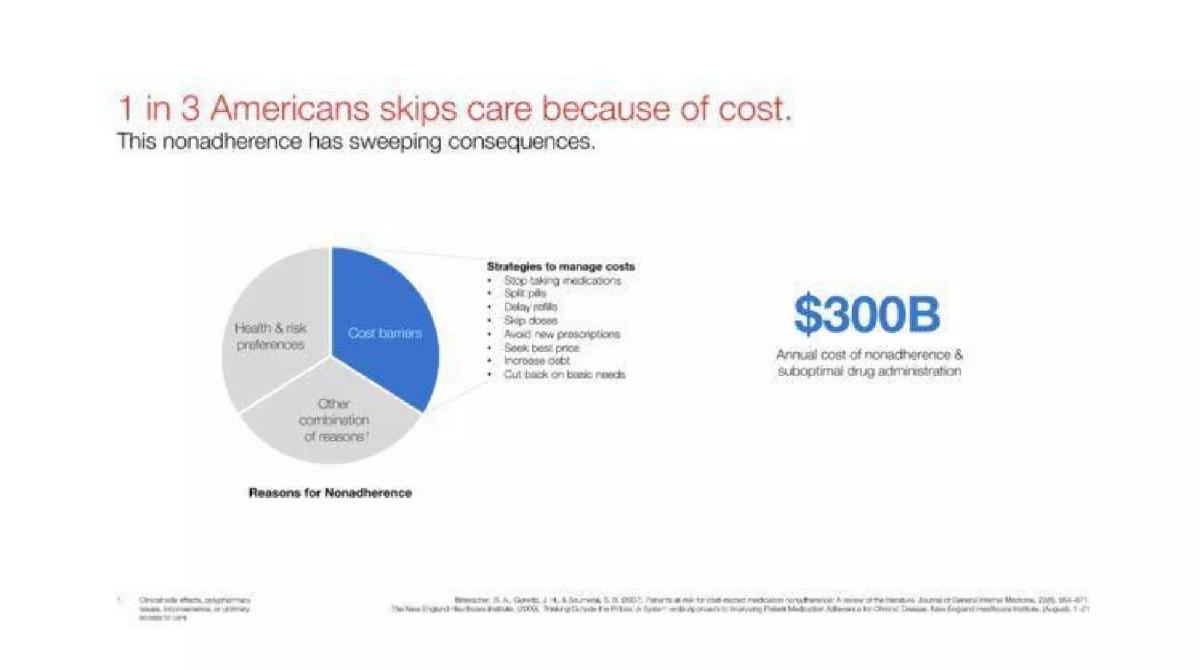
- The problem is framed as a $300B annual cost resulting from 1 in 3 Americans skipping care due to cost (Slide 2).
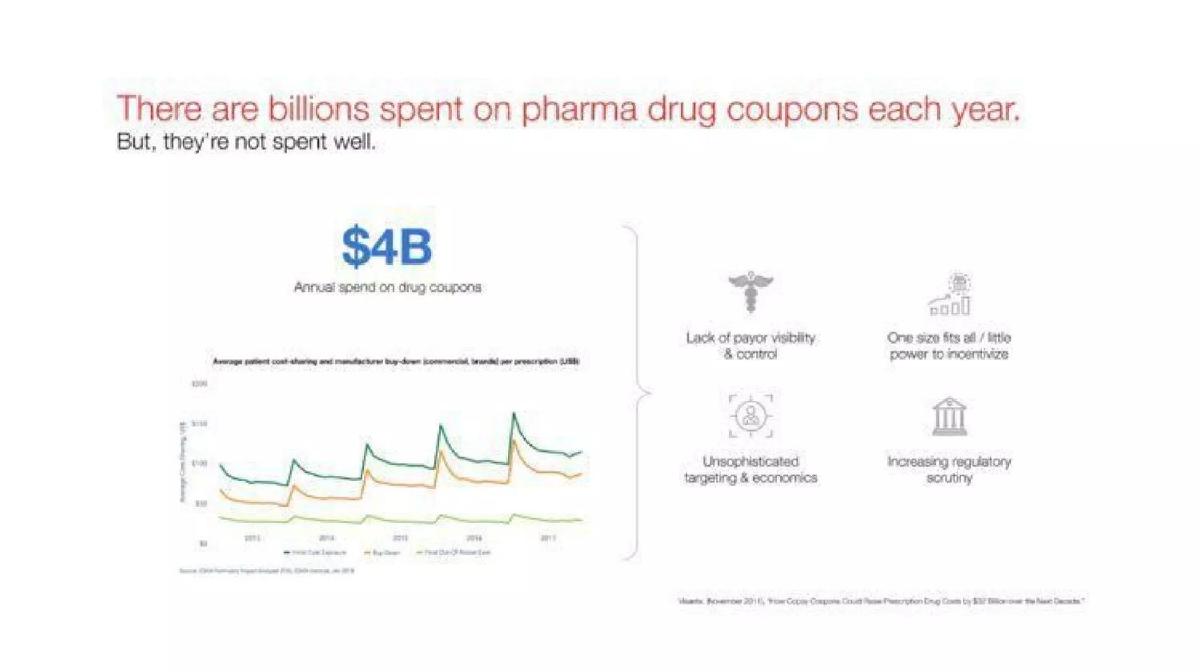
- Pharma manufacturers spend $4B annually on drug coupons that suffer from a lack of payor visibility and unsophisticated targeting (Slide 3).
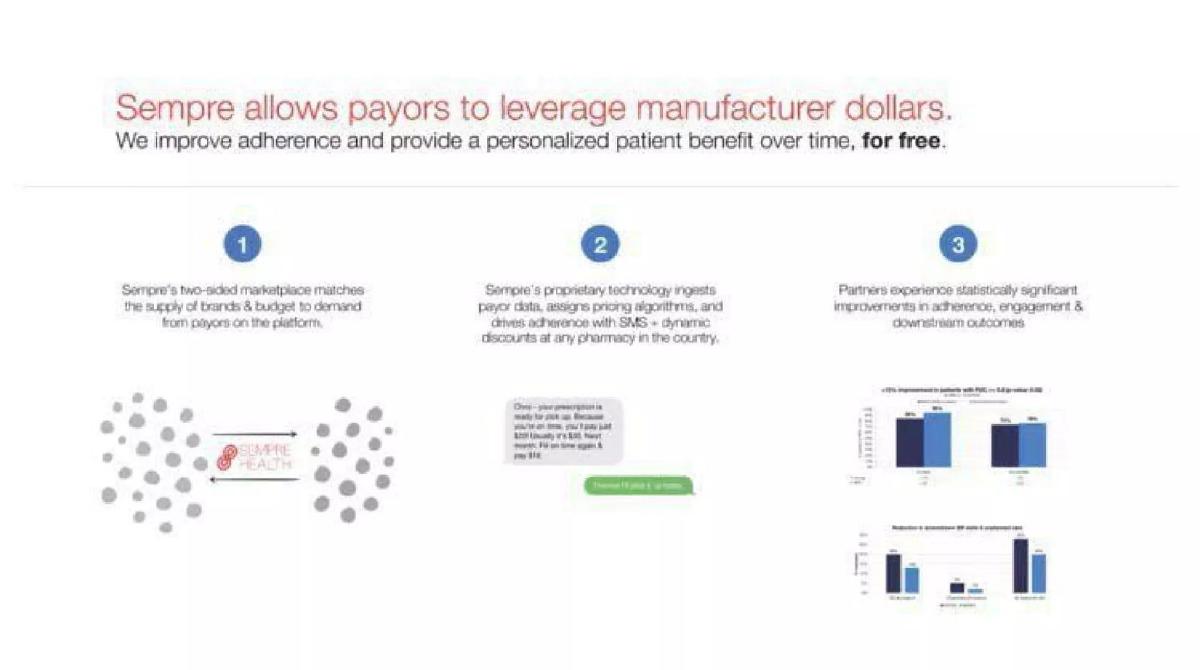
- The solution uses a two-sided marketplace to match manufacturer budgets with payor demand, delivering dynamic discounts via SMS (Slide 5).
- Clinical efficacy is a core pillar, with data showing a 15% improvement in adherence for enrolled members compared to a control group (Slide 8).
- Engagement metrics are high, with 92% of enrolled members filling at least one prescription through the platform (Slide 9).
- Behavioral change is evidenced by the fact that 86% of fills are on-time, within 3 days of the expected refill date (Slide 10).
- The platform demonstrates downstream health benefits, reducing ED admissions from 20% in the control group to 13% for Sempre members (Slide 11).
- The business model relies on 'delighting' three distinct stakeholders: members (savings), payors (loyalty/outcomes), and manufacturers (distribution) (Slide 14).
Executive Summary: The Incentive Alignment Playbook
SempreHealth’s Series A pitch deck, used to raise $8M in 2019, is a focused narrative on fixing the broken incentives of the US pharmaceutical chain. The deck avoids the trap of over-explaining complex healthcare regulations, instead focusing on a simple behavioral economic lever: dynamic pricing. By showing that they can lower costs for patients while improving outcomes for payors and volume for manufacturers, SempreHealth presents a rare 'triple-win' scenario in a sector usually defined by zero-sum games.
Slides 1-4: The Macro Problem and Market Inefficiency
Slide 1 is a standard title slide featuring a high-quality image of a senior citizen using a smartphone, immediately signaling the target demographic and the mobile-first nature of the solution. Slide 2 establishes the stakes. It cites that 1 in 3 Americans skip care due to cost, leading to a $300B annual cost for the healthcare system. The use of a pie chart for 'Reasons for Nonadherence' highlights that cost barriers are a primary, addressable driver.
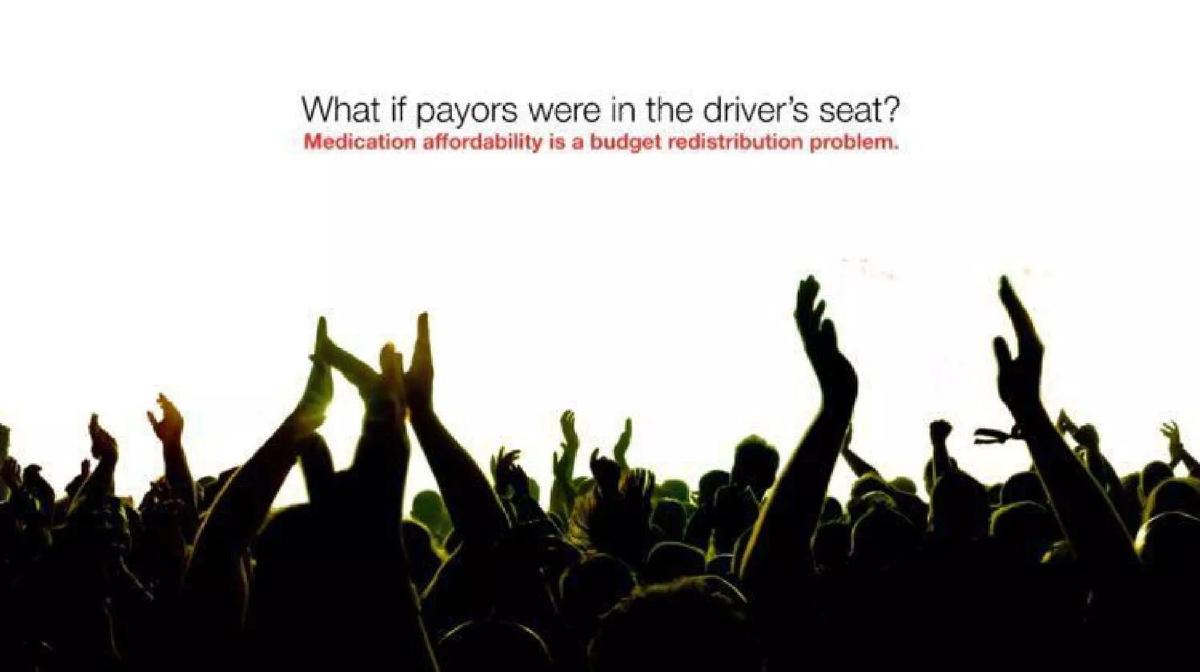
Slide 3 narrows the focus to the current, failed solution: pharma drug coupons. The deck notes that $4B is spent annually on these coupons, but they are 'not spent well.' The slide lists four specific failures: lack of payor visibility, one-size-fits-all incentives, unsophisticated targeting, and increasing regulatory scrutiny. This is a critical slide because it identifies a massive pool of existing capital ($4B) that is currently being wasted, providing a ready-made budget for SempreHealth to tap into. Slide 4 serves as a transition, asking 'What if payors were in the driver's seat?' and framing medication affordability as a 'budget redistribution problem.'
Slides 5-7: The Solution and Social Proof
Slide 5 explains the SempreHealth mechanism in three steps. First, a two-sided marketplace matches manufacturer budgets to payor demand. Second, proprietary technology ingests data to drive adherence via SMS and dynamic discounts. Third, partners see statistically significant improvements. The slide emphasizes that the benefit is 'free' for the patient, removing the primary barrier to entry identified on Slide 2.
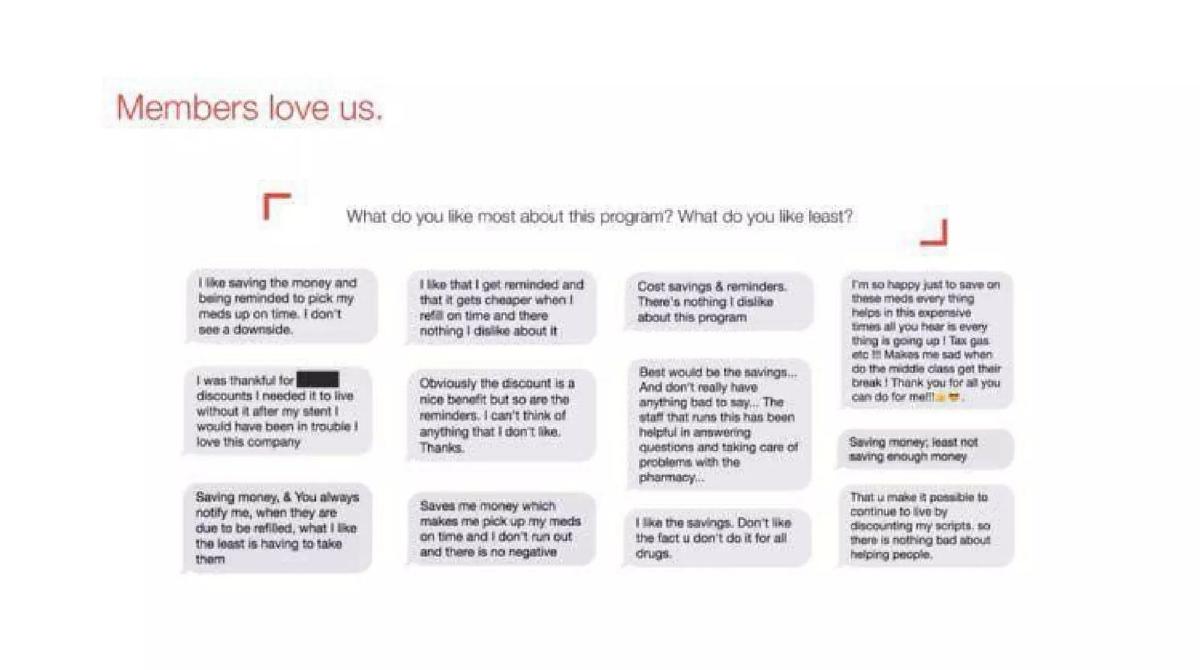
Slide 6 and Slide 7 focus on validation. Slide 6 is a 'wall of love' featuring twelve testimonials from members. These quotes highlight two themes: saving money and the helpfulness of reminders. Slide 7 shows a map of the US with roughly half the states highlighted in blue, indicating broad geographic reach. The slide lists the value proposition to payors, including 'real-time, real-world data' and 'supporting existing formulary.'
Slides 8-11: The Data-Driven Traction
This section is the 'meat' of the Series A deck, providing the clinical and behavioral proof required for a healthcare investment. Slide 8 shows a bar chart comparing 'Pre-Sempre' and 'Post-Sempre' adherence. The enrolled group saw an average 15% improvement (from 82% to 94%), while the 'Not enrolled' group remained stagnant. This clear delta is the primary evidence of the product's efficacy.
Slide 9 addresses the 'top of funnel' for healthcare apps, which usually struggle with engagement. SempreHealth claims an 8x higher enrollment than typical payor programs, with a 35% enrollment rate and a staggering 92% activation rate (defined as filling at least one prescription). Slide 10 explains the 'Dynamic Discount' behavior. It shows a sample SMS where a patient is told they will pay $18 if they refill by a certain date, but the copay will go up to $23 if they are late. The results: 86% of fills are on-time and 30% of previously 'lapsed' members were reactivated.
Slide 11 connects these behavioral changes to hard clinical outcomes. It shows that Sempre members had 35% fewer Emergency Department (ED) admissions (13% vs 20% in the control group) and significantly lower 'unplanned care' overall. A testimonial from 'Judy Miller' adds a human face to these stats, mentioning a 25-pound weight loss and a drop in fasting blood sugar.
Slides 12-16: The Business Model and Team
Slide 12 and Slide 13 reinforce the concept of 'incentive alignment.' Slide 13 explicitly states that they 'steer patients to good decision-making vs. expecting them to act like consumers.' This is a sophisticated nod to behavioral economics—acknowledging that patients often don't act in their own best interest without a nudge.
Slide 14 outlines the network effects. It includes high-level endorsements from Chronis Manolis (UPMC Health Plan) and Chris Leggett (Novo Nordisk). By showing both a major payor and a major manufacturer, the deck proves the two-sided marketplace is functioning. The slide also mentions a Net Promoter Score (NPS) of 4.83/5, which is exceptionally high for the healthcare sector. Slide 15 looks at future growth, identifying Specialty drugs ($406B spend), Generics ($140B), and Medicare ($129B) as the next frontiers.
Finally, Slide 16 introduces the team. Co-founders Anurati Mathur and Swaraj Banerjee bring experience from Propeller Health, Practice Fusion, and MindMeld. The slide also lists logos for Rethink Impact and Social Capital at the bottom, signaling existing institutional backing.
What Works in the SempreHealth Deck
Clinical Rigor: In Series A healthcare rounds, 'vibe-based' growth isn't enough. Slide 11’s data on ED admissions is the ultimate proof of value for an insurance company (payor). · Clear Stakeholder Benefits: The deck clearly delineates what the member gets (savings), what the payor gets (lower ED costs), and what the manufacturer gets (adherence/volume). · Behavioral Economics: The explanation of dynamic pricing on Slide 10 is intuitive. It moves away from 'education' (which rarely works) toward 'incentivization' (which does). · High Engagement Metrics: The 92% activation rate on Slide 9 is a 'mic drop' metric that sets them apart from the thousands of health apps that are downloaded but never used.
What is Missing from the SempreHealth Deck
The Ask: There is no slide stating how much they are raising, the terms, or the specific milestones they intend to hit with the Series A capital. · Unit Economics: While the deck mentions the platform is 'free' for members and payors, it doesn't explicitly detail the take-rate or fee structure charged to the manufacturers. · Competitive Landscape: The deck assumes a vacuum. It doesn't address other adherence platforms or how they differ from traditional Pharmacy Benefit Managers (PBMs) who might view this as a threat. · Financial Projections: There is no forward-looking revenue graph. While the 'future is bright' slide mentions market sizes, it doesn't show SempreHealth's projected capture of those markets.
What a Founder Should Copy
The 'Triple-Win' Framework: If your startup sits between multiple stakeholders, use a slide like Slide 14 to show how you 'delight' each one simultaneously. · The SMS Visualization: Slide 10 uses a simple screenshot of a text message to explain a complex algorithmic pricing model. Always choose a UI example over a technical flowchart when explaining 'how it works.' · Control Group Comparisons: Don't just show your numbers; show your numbers against a control group (Slide 8). It makes the data irrefutable. · Outcome-Based Messaging: The headline of every slide is a conclusion ('Our programs work,' 'Members love us'), not just a category ('Results,' 'Testimonials'). This forces the investor to read the takeaway even if they only skim the deck.
Frequently asked questions
- What is the core problem SempreHealth is solving?
- SempreHealth targets medication nonadherence, which costs the US healthcare system $300B annually. According to slide 2, one-third of Americans skip care due to cost. The company specifically addresses the inefficiency of the $4B pharma coupon market, which currently lacks payor visibility and uses 'one size fits all' incentives that fail to drive long-term adherence.
- How does the technology actually work for the patient?
- As shown on slides 5 and 10, the platform uses a proprietary technology that ingests payor data and applies pricing algorithms. Patients receive SMS notifications when a refill is due. These messages include dynamic discounts—for example, paying $18 if they refill on time versus $23 if they are late—incentivizing responsible health decisions through immediate financial rewards.
- What evidence does the deck provide that the solution works?
- The deck provides three layers of proof: adherence, engagement, and clinical outcomes. Slide 8 shows a 15% improvement in adherent members. Slide 9 highlights a 92% activation rate. Finally, slide 11 presents clinical data showing that Sempre members had a 13% ED admission rate compared to 20% for the control group, proving the platform reduces unplanned care.
- Who are the primary customers and how is the business defensible?
- The business operates as a two-sided marketplace between payors (insurance companies) and pharma manufacturers. Slide 14 argues that the business is defensible due to network effects: as more members join, payors get better outcomes and manufacturers get better distribution. The deck lists UPMC Health Plan and Novo Nordisk as partners/endorsers.
- What key fundraising elements are missing from this deck?
- This is a Series A deck focused on traction and product-market fit. However, it lacks a 'The Ask' slide detailing how much capital is being raised and how it will be spent. It also omits a detailed competitor matrix, a formal cap table, and specific revenue or margin projections, focusing instead on clinical and engagement metrics.