Hexlant Octet’s pitch deck focuses on bridging the gap in blockchain adoption by providing a low-code infrastructure layer. The company identifies a significant market opportunity, citing a $1 billion USD blockchain infrastructure market in 2020 with an 85% CAGR. Their core value proposition is efficiency: reducing the resources required for a blockchain service release from 5 developers over 120 days to 1 developer over 7 days. The deck highlights a strong technical pedigree, with all four management members sharing a background at Samsung. While the deck effectively positions Octet against…
Key takeaways
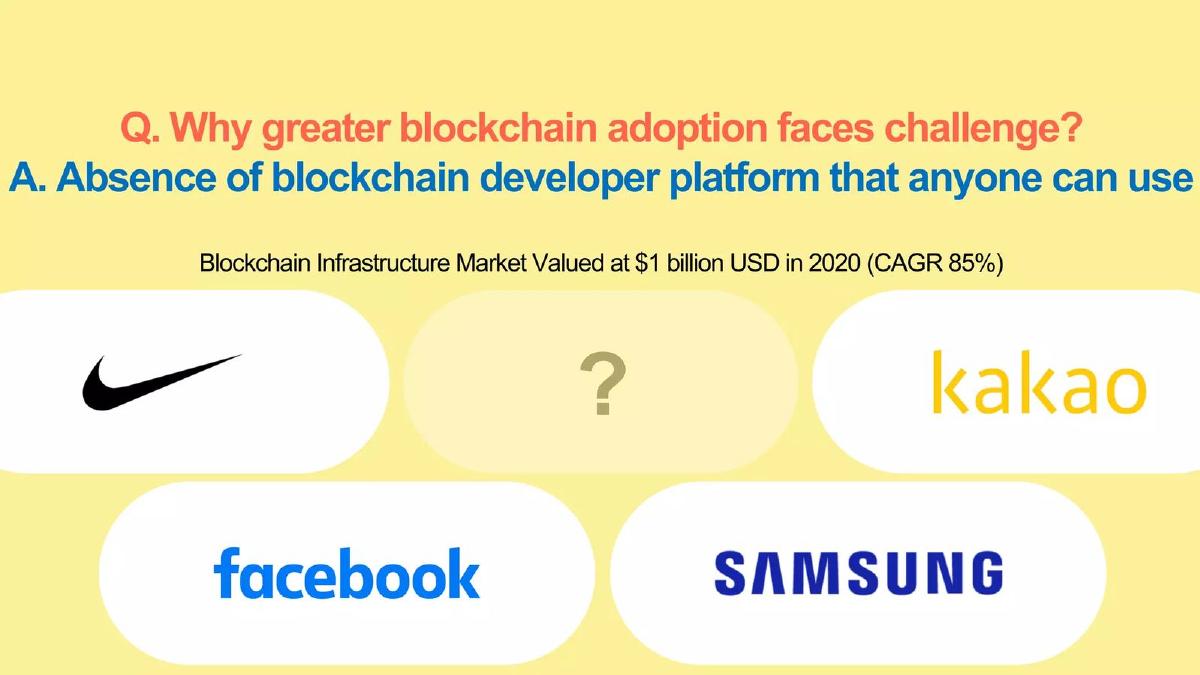
- The platform aims to solve the lack of accessible blockchain developer tools for mainstream enterprises (Slide 2).
- Hexlant Octet targets a blockchain infrastructure market valued at $1 billion USD in 2020 with an 85% CAGR (Slide 2).
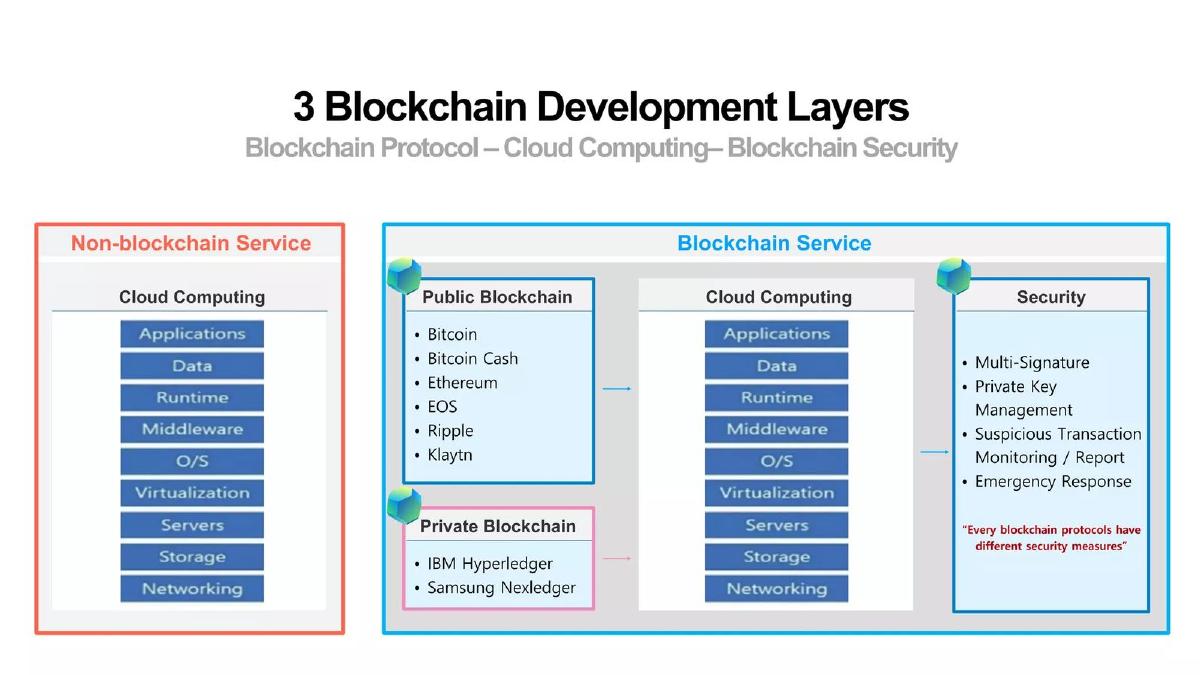
- The product architecture consists of three layers: Security, Development, and Blockchain, supporting various use cases like De-Fi and Wallets (Slide 3).
- A core metric claims the platform reduces development time from 120 days to 7 days and headcount from 5 devs to 1 (Slide 5).
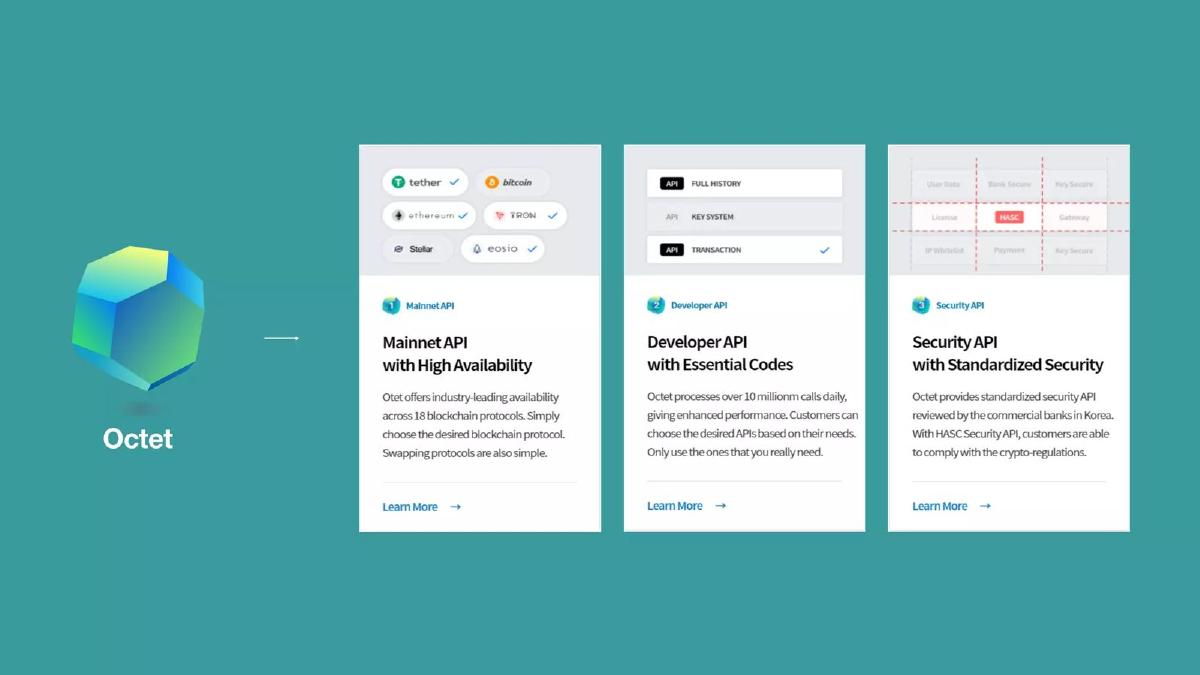
- The platform supports a wide array of mainnets including Bitcoin, Ethereum, Klaytn, Tron, and EOS (Slide 5).
- The company explicitly positions itself as the South Korean alternative to US-based competitors BitGo and Alchemy (Slide 6).
- The entire management team, including the CEO, CTO, COO, and CSO, are alumni of Samsung (Slide 7).
- The deck emphasizes a 'Tech Ambition' vision to become a key player in the blockchain market (Slide 8).
Executive Summary
Hexlant Octet is positioning itself as a critical infrastructure provider in the rapidly expanding blockchain sector. By offering a low-code platform, they aim to democratize access to blockchain technology for traditional enterprises and startups alike. The deck relies heavily on the efficiency gains provided by their toolset and the pedigree of a team sourced almost entirely from Samsung. While the technical value proposition is clear, the deck functions more as a product overview than a complete financial investment case, as it lacks specific traction metrics and a funding ask in the analyzed slides.
Slide 1: Title Slide
The deck opens with a clean, minimalist title slide. It identifies "Octet" as a "Blockchain Developer Platform" with a subtitle emphasizing "Low-code Development for Blockchain Services." The branding is professional, featuring the Hexlant logo and a copyright notice. This slide establishes the company's identity as a B2B infrastructure tool rather than a consumer-facing blockchain application.
Slide 2: The Problem and Market Opportunity
Slide 2 uses a Q&A format to define the problem: "Why greater blockchain adoption faces challenge?" The answer provided is the "Absence of blockchain developer platform that anyone can use." This slide is crucial for setting the stage for a low-code solution. It also includes a significant market data point, valuing the Blockchain Infrastructure Market at $1 billion USD in 2020 with a massive CAGR of 85%. The inclusion of logos like Nike, Facebook, Samsung, and Kakao serves to illustrate the types of massive enterprises that are currently exploring blockchain, though it does not explicitly claim them as customers.
Slide 3: Product Architecture
This slide provides a high-level technical overview of how Octet supports various services. It breaks the platform down into three distinct layers:
Security Layer: Includes Key Management Systems, Virtual Asset Whitelisting, and Emergency Response Plans. · Development Layer: Offers Node RPC Support, Enterprise Wallets, and On-chain Analytics. · Blockchain Layer: Displays a wide variety of supported protocols including Ethereum, Ripple, Binance, and others.
The top of the slide lists the end-user applications "Built with Octet," such as Wallets, Exchanges, De-Fi, and Gaming, showing the versatility of the infrastructure.
Slide 4: Product Interface (Dashboard)
Slide 4 shows a screenshot of the Octet Dashboard. The interface is in Korean, which reinforces the company's current focus on the South Korean market. The dashboard appears to track API usage, deposit/withdrawal frequencies, and administrative permissions. Providing a look at the actual UI helps ground the "low-code" claim in reality, showing a functional, user-friendly management console.
Slide 5: The Value Proposition (Efficiency)
This is arguably the most important slide in the deck for an investor. It breaks down the "Before" and "After" of using Octet. Before Octet , a blockchain service release reportedly took 120 days and required 5 developers. After Octet , the process is reduced to 7 days and 1 developer. The slide also details a 4-step selection process (Service, Mainnet, Library, Security) that leads to a "Blockchain Service Release." This quantification of time and labor savings is a powerful hook for enterprise sales.
Slide 6: Competitive Landscape
Hexlant Octet takes a direct approach to competition. It identifies US-based giants BitGo and Alchemy as its primary rivals. By placing a photo of the Octet team next to photos of the BitGo and Alchemy teams, the deck attempts to humanize the company while highlighting its regional identity (indicated by the South Korean flag). The slide also features logos for TechCrunch and GSMA Thrive, suggesting some level of media or industry recognition.
Slide 7: Management Team
The management slide reveals a team with a very specific background. All four listed executives—Jinwoo Ro (CEO), Alex Park (CTO), Henry Kang (COO), and Max Ryu (CSO)—feature the Samsung logo under their names. This indicates a team that has been vetted by one of the world's largest technology conglomerates. Other logos like Babitalk and Rocket View are also present, suggesting previous startup experience among the founders.
Slide 8: Vision
The final slide in the set is a vision statement titled "Tech Ambition." It features a black-and-white image of a person planting a Hexlant flag in a snowy landscape. The text states, "Every team member at Hexlant is equipped with Tech Ambition. We will become a key player in blockchain market." While this slide is high on sentiment, it lacks the concrete roadmap or milestones that usually accompany a vision slide in a late-stage pitch.
What Hexlant Octet Does Well
The deck is exceptionally clear about its value proposition . By quantifying the reduction in development time (120 days to 7 days) and personnel (5 devs to 1), the founders give investors a concrete metric to evaluate the product's utility. The competitive positioning is also smart; rather than claiming they have no competitors, they lean into being the regional leader in a space dominated by US companies. Finally, the team pedigree is a significant asset. Having an entire management team from Samsung provides a level of perceived technical competence that is highly valued in the infrastructure space.
What is Missing from the Deck
The most glaring omission in the provided slides is financial traction . There is no mention of current Revenue, Monthly Recurring Revenue (MRR), or the number of paying customers. While slide 2 shows big-brand logos, it doesn't confirm if they are active users. Furthermore, there is no Ask slide . A pitch deck's primary purpose is to secure funding, yet these slides do not state how much money is being raised, the valuation, or the intended use of funds. Lastly, the Unit Economics are absent; we don't know the cost of customer acquisition (CAC) or the lifetime value (LTV) of a client, which are critical for assessing the scalability of a SaaS-style infrastructure platform.
Founder Takeaways
Quantify the Pain: If your product saves time or money, put a specific number on it. The 120-day vs. 7-day comparison is the strongest part of this deck. · Leverage Regionality: If you are competing against global incumbents, emphasize your local expertise and presence. It can be a significant moat in markets with specific regulatory or linguistic requirements. · Show, Don't Just Tell: Including a dashboard screenshot (Slide 4) proves that the product exists and is more than just a conceptual framework. · Highlight Shared History: If your team has worked together at a prestigious firm (like Samsung), highlight it. It signals to investors that the team has a shared language and a high bar for quality.
Frequently asked questions
- What specific problem is Hexlant Octet trying to solve?
- According to slide 2, the company believes greater blockchain adoption is hindered by the 'absence of a blockchain developer platform that anyone can use.' They are targeting large enterprises—illustrated by logos like Nike, Samsung, and Kakao—that want to integrate blockchain technology but face high technical barriers to entry and long development cycles.
- How does the platform actually work for a developer?
- Slide 5 outlines a four-step low-code process: selecting the service type (e.g., De-Fi, Voting), selecting the mainnet (e.g., Ethereum, Klaytn), selecting the library (e.g., JSON-RPC, Explorer), and selecting security features (e.g., Private Key Management). This modular approach is designed to automate the heavy lifting of blockchain infrastructure.
- Who are the primary competitors mentioned in the deck?
- Slide 6 identifies BitGo and Alchemy as the primary global competitors. Hexlant Octet uses these comparisons to validate the market category while differentiating itself through its South Korean headquarters and local team, suggesting a regional advantage in the Asian market.
- What is the professional background of the founding team?
- The management team has a very homogenous professional background. As shown on slide 7, all four key executives—Jinwoo Ro (CEO), Alex Park (CTO), Henry Kang (COO), and Max Ryu (CSO)—previously worked at Samsung. This suggests a high level of technical discipline and shared corporate culture.
- What are the most significant omissions in this pitch deck?
- The provided slides lack critical investment data. There is no 'Ask' slide detailing how much capital is being raised, no slide covering unit economics or current revenue, and no detailed financial projections. Additionally, while logos of major companies are shown on slide 2, it is unclear if these are active customers or merely examples of the target market.