Startup Heroes is a discovery platform designed to help early adopters find and test new products while providing startups with a channel for user acquisition. The deck outlines a business model based on charging startups $0.30 per incentive claim (e.g., coupons). The presentation is exceptionally brief at seven slides and lacks traditional venture components such as a team slide, financial projections, or a detailed product roadmap. Most striking is the funding request: just $10,000 to build and host the website, justified by the presence of an in-house developer and graphic artist. While th…
Key takeaways
- The company defines its market broadly, claiming 'everyone is an early adopter' across niches from tech gadgets to knitting (Slide 3).
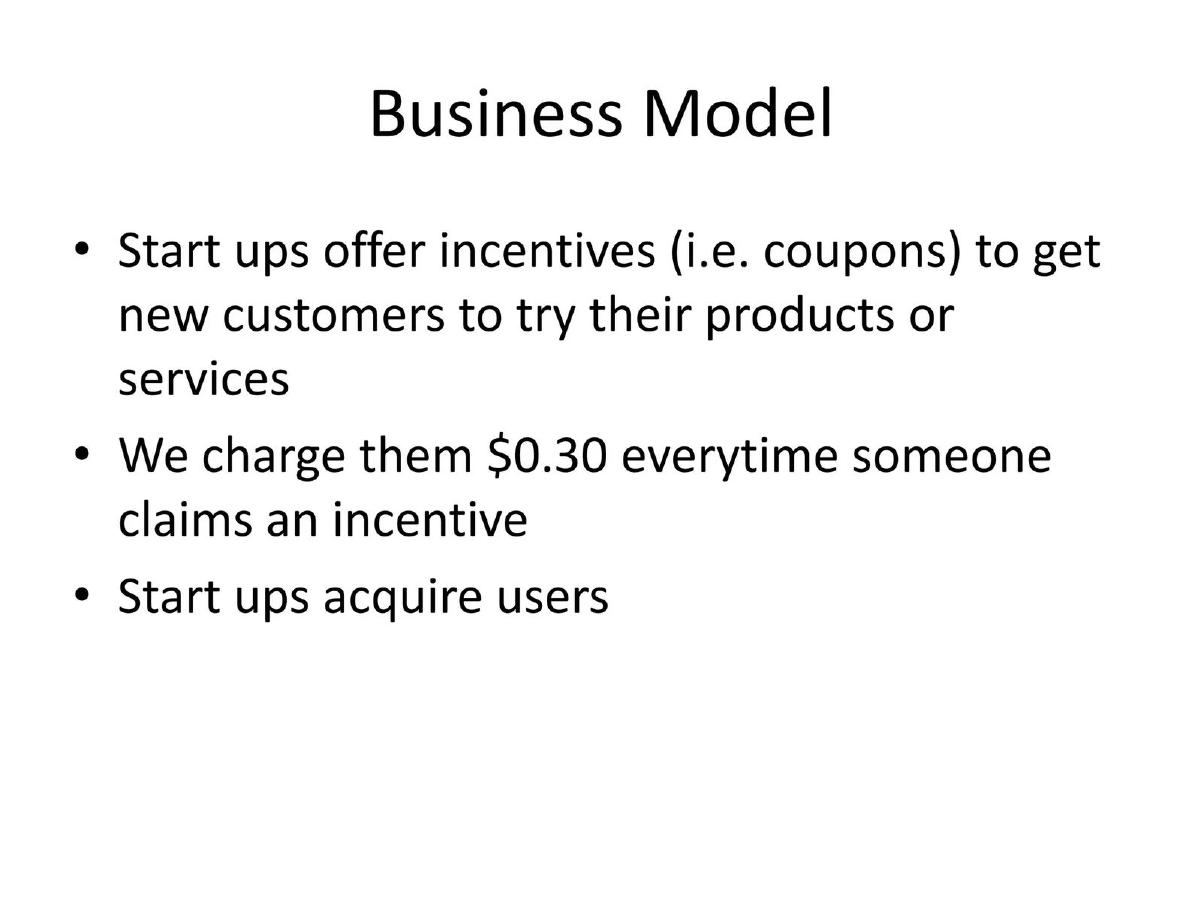
- The revenue model is a fixed fee of $0.30 charged to startups every time a user claims an incentive like a coupon (Slide 4).
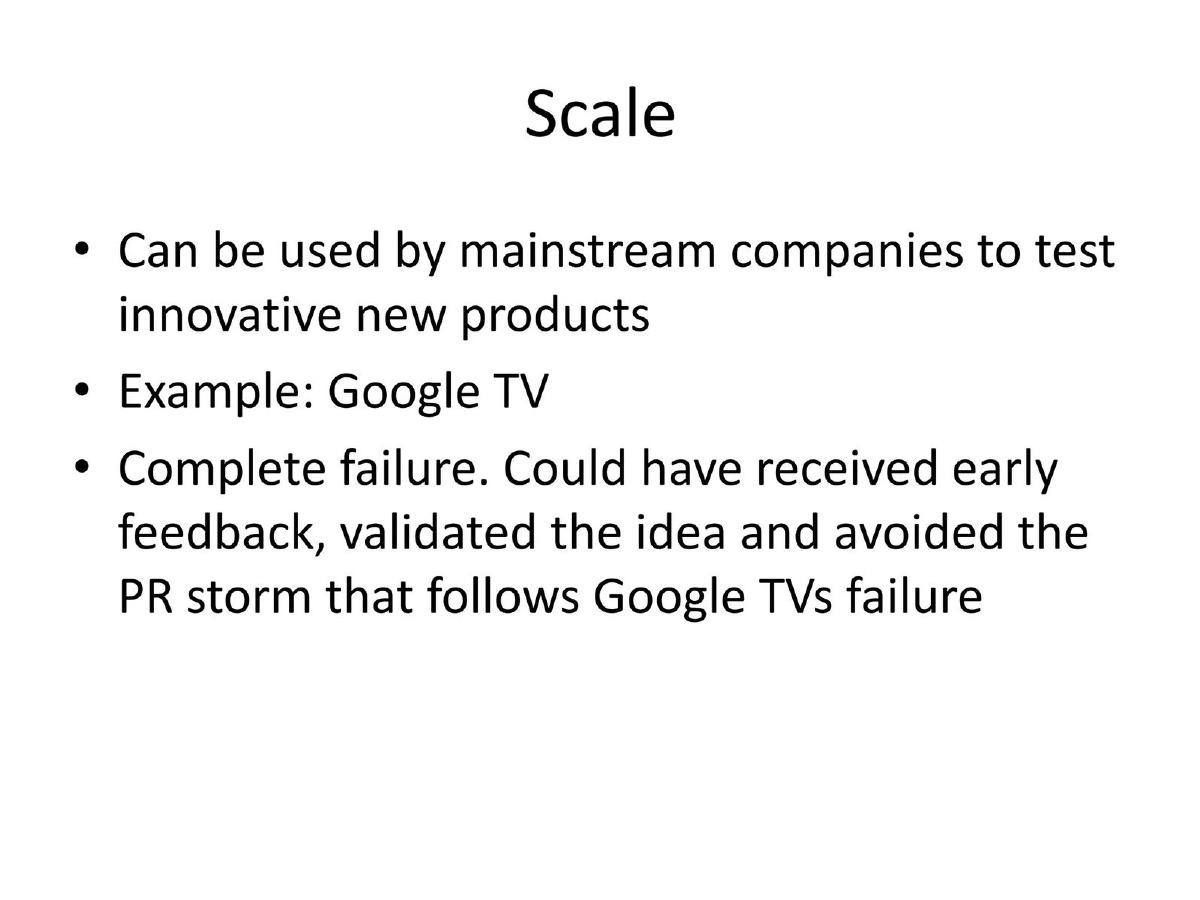
- The deck uses the failure of Google TV as a primary case study for why mainstream companies need their platform for feedback (Slide 5).
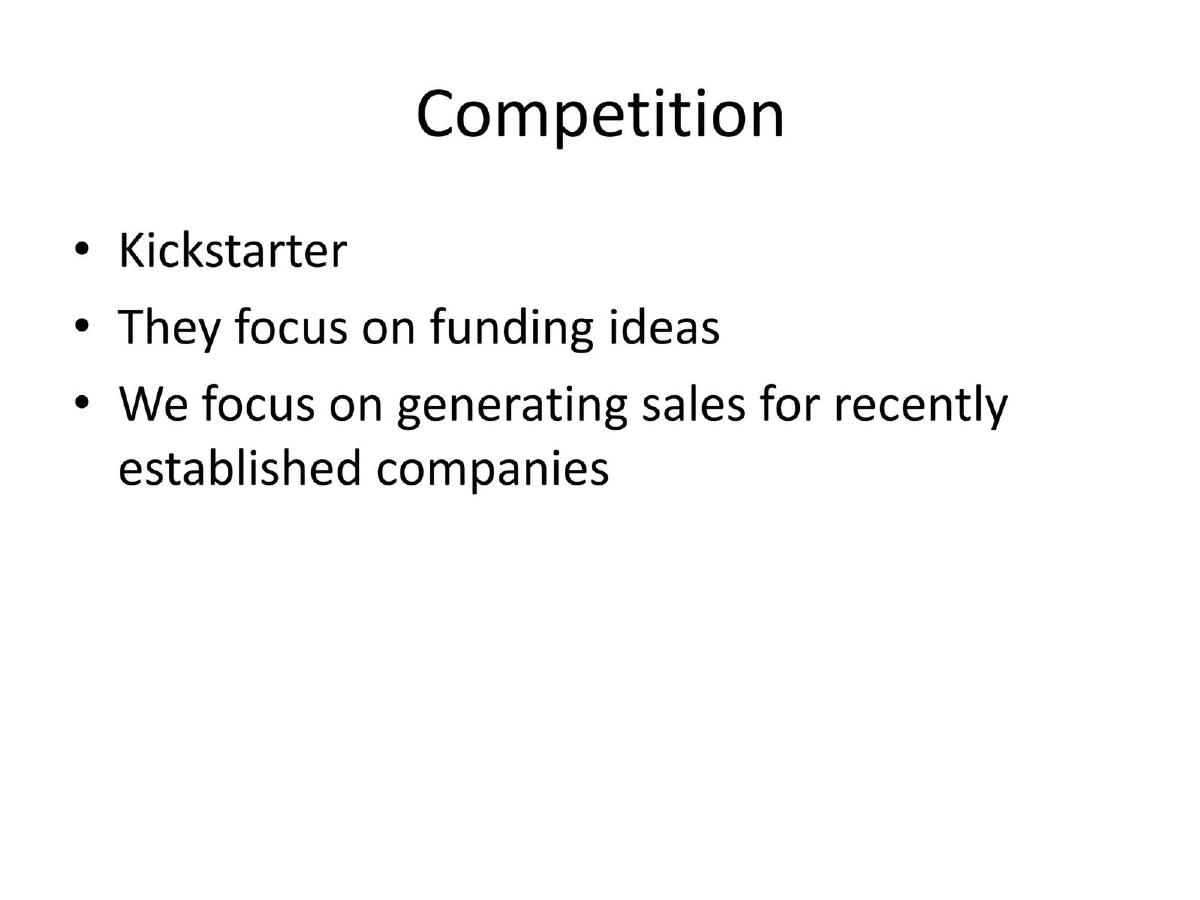
- Kickstarter is identified as the primary competitor, though Startup Heroes differentiates by focusing on sales for established companies rather than funding ideas (Slide 6).
- The funding ask is $10,000 'at most,' intended strictly for building and hosting the website (Slide 7).
- There is no dedicated team slide, though Slide 7 mentions a developer and graphic artist are already 'on board.'
- The deck contains no metrics, user growth projections, or evidence of a minimum viable product (MVP).
- The platform's value proposition is split between helping startups acquire users and helping early adopters find 'passion' projects (Slide 3).
Slide-by-Slide Analysis
Slide 1: Title Slide
The deck opens with the 'Startup Heroes' logo, featuring a red lightning bolt icon. The tagline is 'A discovery platform for early adopters to browse exciting new start ups.' This is a standard functional header that clearly defines the product category (discovery platform) and the target audience (early adopters).
Slide 2: Vision
The vision slide contains two bullet points: 'Change the world by helping start ups disrupt the status quo' and 'Create progress by empowering start ups and early adopters.' These are high-level, aspirational statements. They establish the 'why' behind the company but do not offer specific details on how the platform functions or what specific 'status quo' is being disrupted.
Slide 3: Market
This slide attempts to redefine the term 'early adopter.' The founders argue that early adoption is not limited to technology, but applies to any passion, including 'fair trade' and 'knitting.' By stating the platform will host 'any type of start up,' the company is pitching a very broad horizontal market. While this suggests a large Total Addressable Market (TAM), it lacks the specificity usually required to explain how a small team will gain traction in so many disparate niches simultaneously.
Slide 4: Business Model
The business model is the most concrete part of the deck. It outlines a three-step process: startups offer incentives (coupons), users claim them, and Startup Heroes charges the startup $0.30 per claim. This is a performance-based advertising model. It is simple and easy to understand, though it raises questions about the volume required to reach profitability given the low $0.30 price point.
Slide 5: Scale
Interestingly, the 'Scale' slide does not discuss growth projections or geographic expansion. Instead, it uses a case study of 'Google TV' as a 'complete failure.' The slide argues that mainstream companies could use Startup Heroes to test innovative products and receive early feedback to avoid 'PR storms.' This suggests the founders see a secondary market in enterprise innovation labs, not just small startups.
Slide 6: Competition
The deck identifies Kickstarter as the primary competitor. The differentiation is based on the lifecycle of the startup: Kickstarter is for 'funding ideas,' while Startup Heroes is for 'generating sales' for companies that are already established. This is a clear distinction, though it ignores other discovery platforms like Product Hunt or various coupon/deal sites that might occupy the same space.
Slide 7: Funding
The final slide lists a funding requirement of '$10,000 at most.' The use of the funds is limited to building and hosting the website. The slide preemptively answers the question of why the amount is so low by noting that a developer and graphic artist are already 'on board.' This is an unusually small 'ask' for a startup pitch deck, suggesting this may be for a pre-seed or 'friends and family' round rather than a professional venture capital raise.
What Works
Clarity of Revenue Model: Slide 4 is unambiguous. Investors know exactly how the company intends to make money ($0.30 per incentive claim). In an era of complex SaaS pricing, this level of simplicity is refreshing, even if the unit economics are unproven.
Specific Competitive Positioning: By positioning themselves against Kickstarter on Slide 6, the founders successfully identify a gap in the market: the transition from 'funded idea' to 'active seller.' This helps investors place the company within the existing ecosystem.
Lean Operations: The funding ask on Slide 7 demonstrates a commitment to a lean startup methodology. By utilizing in-house talent for development and design, the founders show they are focused on product builds rather than burning cash on high salaries in the early stages.
What is Missing
Team Bios: While Slide 7 mentions a developer and a graphic artist, there are no names, photos, or professional backgrounds provided. In early-stage investing, the team is often more important than the idea. The omission of a dedicated team slide is a significant weakness.
Traction and Validation: The deck is entirely theoretical. There are no screenshots of a prototype, no results from a beta test, and no letters of intent from startups willing to pay the $0.30 fee. Without these, the deck is a 'napkin sketch' rather than a business plan.
User Acquisition Strategy: The platform is a two-sided marketplace (startups on one side, early adopters on the other). These are notoriously difficult to build because of the 'chicken and egg' problem. The deck does not explain how they will attract the 'early adopters' needed to make the platform valuable for startups.
Financial Projections: With a $0.30 transaction fee, the company needs massive volume to cover even basic operating costs. There is no slide showing how many transactions are needed to reach break-even or what the projected growth looks like over the next 12-24 months.
What a Founder Should Copy
The 'Why So Cheap?' Approach: If you are asking for a small amount of money, address it head-on as Startup Heroes did on Slide 7. Explaining that you have the necessary talent in-house to keep costs low builds credibility regarding your operational efficiency.
Simple Taglines: The title slide (Slide 1) uses a very effective 'X for Y' style description. 'A discovery platform for early adopters' is a strong, jargon-free way to start a presentation.
Using Failures as Justification: The use of the Google TV failure on Slide 5 is a clever way to illustrate the 'cost of not using' the product. Showing the potential downside of the status quo can be just as persuasive as showing the upside of your solution.
Final Thoughts
The Startup Heroes deck is a minimalist presentation for a micro-budget project. While it succeeds in defining a clear revenue model and a specific niche in the startup lifecycle, it lacks the depth required for professional fundraising. The absence of team details, traction data, and a user acquisition plan makes it a high-risk proposition. However, as a document intended to secure a small amount of 'launch money' to get a website live, it provides a basic roadmap of the founders' intentions.
Frequently asked questions
- What is the primary business model for Startup Heroes?
- According to Slide 4, Startup Heroes operates on a lead-generation or conversion model. Startups offer incentives, such as coupons, to attract new customers. Startup Heroes charges the startup $0.30 every time a user claims one of these incentives. This positions the platform as a low-cost user acquisition tool for new companies.
- How does Startup Heroes define its target market?
- The deck takes a non-traditional view of 'early adopters.' Slide 3 states that 'everyone is an early adopter if you find their passion,' listing tech gadgets, fair trade, and knitting as examples. The platform intends to host 'any type of start up,' suggesting a horizontal discovery engine rather than a tech-exclusive one.
- What is the competitive advantage claimed against Kickstarter?
- On Slide 6, the deck differentiates itself from Kickstarter by stage of company. While Kickstarter focuses on 'funding ideas' (pre-product/pre-launch), Startup Heroes claims to focus on 'generating sales for recently established companies.' This suggests they target startups that already have a product ready for consumer use.
- Why is the funding request so low at $10,000?
- Slide 7 explicitly addresses the 'why so cheap?' question. The founders state that the $10,000 is needed only for building and hosting the website because they already have a developer and a graphic artist on the team. This implies the capital is for infrastructure and perhaps minor operational costs rather than salaries.
- What evidence of traction is provided in the deck?
- There is no evidence of traction provided in this 7-slide deck. The presentation lacks data on current users, signed-up startups, website traffic, or pilot programs. It is a conceptual deck focused on the vision and the basic mechanics of the proposed platform.