Helu's 2022 Series A deck is a masterclass in regional market positioning. By focusing on the DACH (Germany, Austria, Switzerland) region, the company identified a specific, high-barrier technical hurdle: the DATEV accounting monopoly. The deck successfully argues that while the global FP&A market is massive, the winner in Europe will be the player that masters local compliance and data structures. With a team led by a former Speedinvest partner and backed by CommerzVentures, Helu used this 17-slide presentation to demonstrate how their 'reporting engine' turns raw booking-level data into rea…
Key takeaways
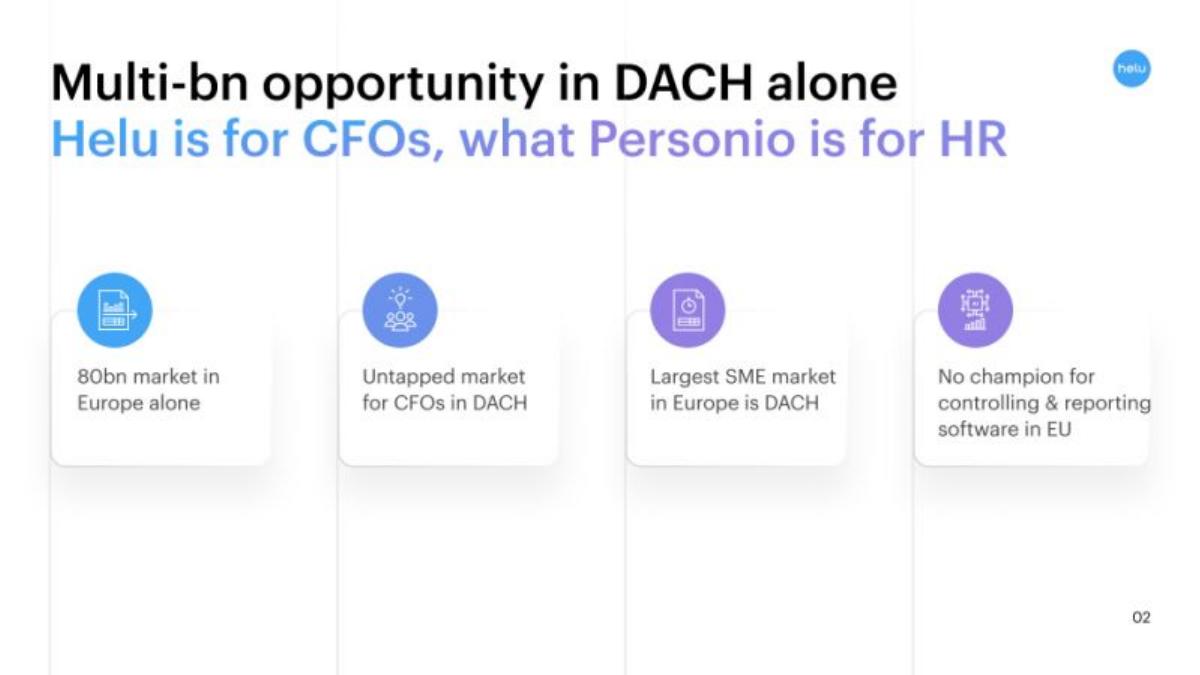
- Helu positions itself as the 'Personio for CFOs,' leveraging a well-known regional success story to explain its value proposition (Slide 2).
- The company identifies a specific technical moat: a unique API integration with DATEV, which holds a 75% market share in Germany (Slide 9, Slide 11).
- The deck highlights a massive regional opportunity, noting that 99.5% of all German companies are SMEs (Slide 10).
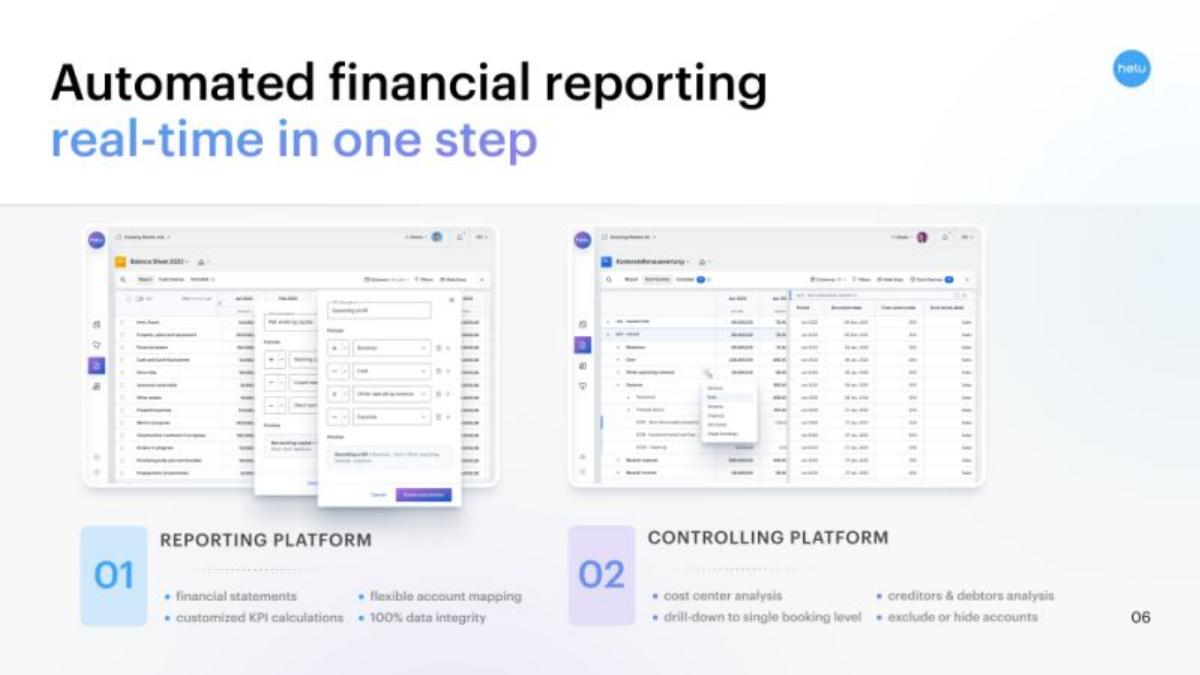
- Product functionality is divided into four clear pillars: Reporting, Controlling, Budgeting & Planning, and Liquidity Monitoring (Slides 6-7).
- The 'Typical Customer' profile is highly specific, targeting companies with 20-300 FTEs using DATEV (Slide 13).
- The team slide emphasizes founder Franz Salzmann's background as a former partner at Speedinvest and a board member at unicorns like Wefox (Slide 14).
- The deck omits standard financial metrics such as current ARR, CAC, LTV, or specific growth rates.
- The 'Ask' and use of funds are not included in this version of the deck.
The Strategy of Regional Dominance
Helu’s Series A deck is a focused argument for why a localized fintech solution can outperform global generalists. In the world of Financial Planning and Analysis (FP&A), many startups attempt to build for the global CFO. Helu takes the opposite approach, rooting its value proposition in the specific, idiosyncratic needs of the DACH (Germany, Austria, Switzerland) market. By solving for the DATEV integration—a notorious bottleneck in German accounting—Helu creates a defensible moat that is difficult for US-based competitors to replicate.
Slide 1: Title and Brand Presence
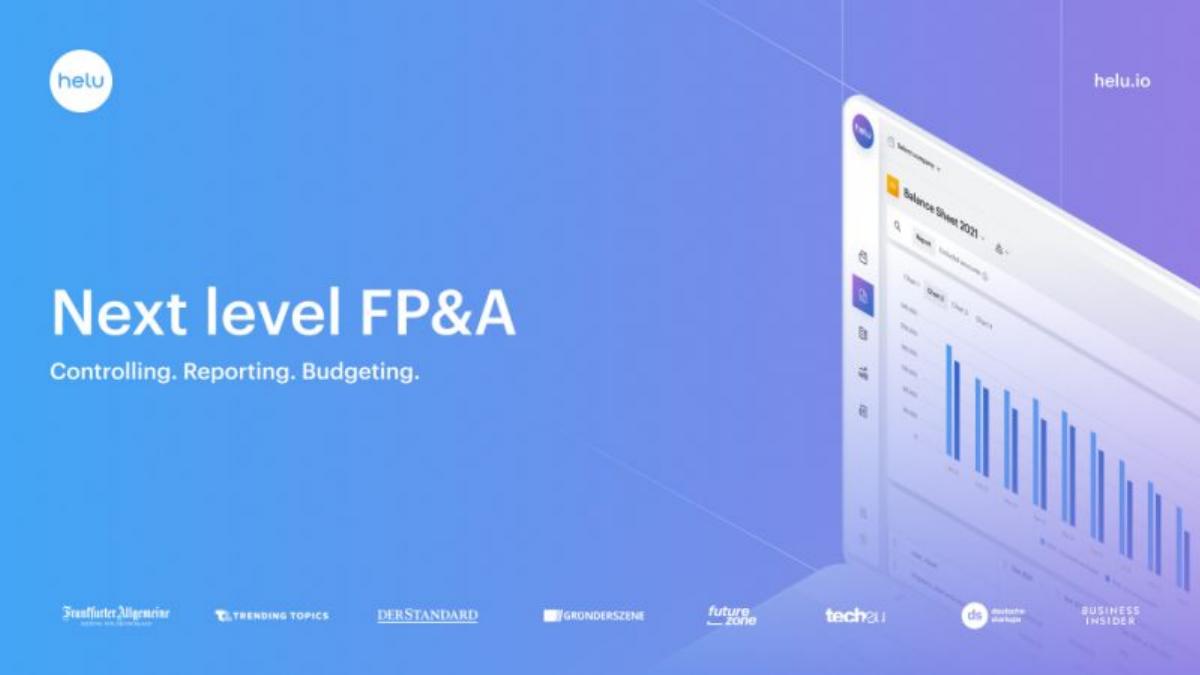
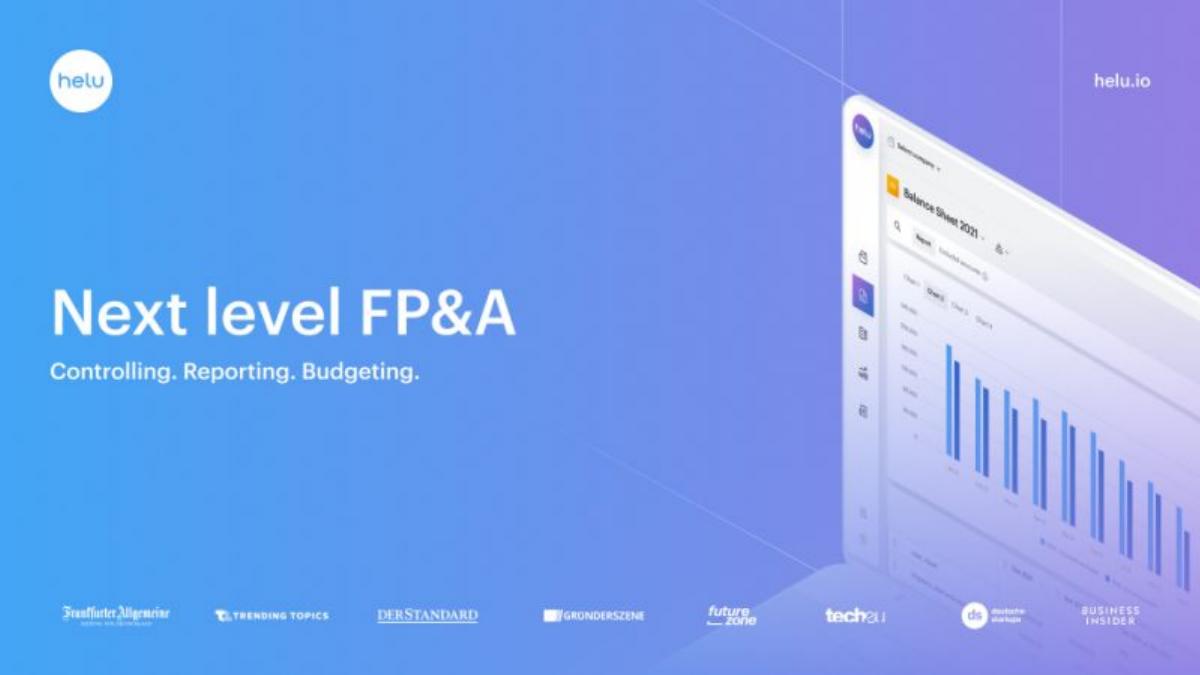
The opening slide establishes Helu as a tool for "Next level FP&A," specifically highlighting Controlling, Reporting, and Budgeting. The bottom of the slide features a row of logos from major German and European media outlets, including Frankfurter Allgemeine, Der Standard, and Business Insider, signaling established PR presence and credibility in the region.
Slide 2: The Personio Comparison
Slide 2 uses a powerful analogy: "Helu is for CFOs, what Personio is for HR." This anchors the company to one of Europe's most successful SaaS stories. The slide lists four key market pillars: an 80bn market in Europe, an untapped market for CFOs in DACH, the fact that DACH is the largest SME market in Europe, and the absence of an existing champion for controlling software in the EU.
Slide 3: Identifying the Enemy
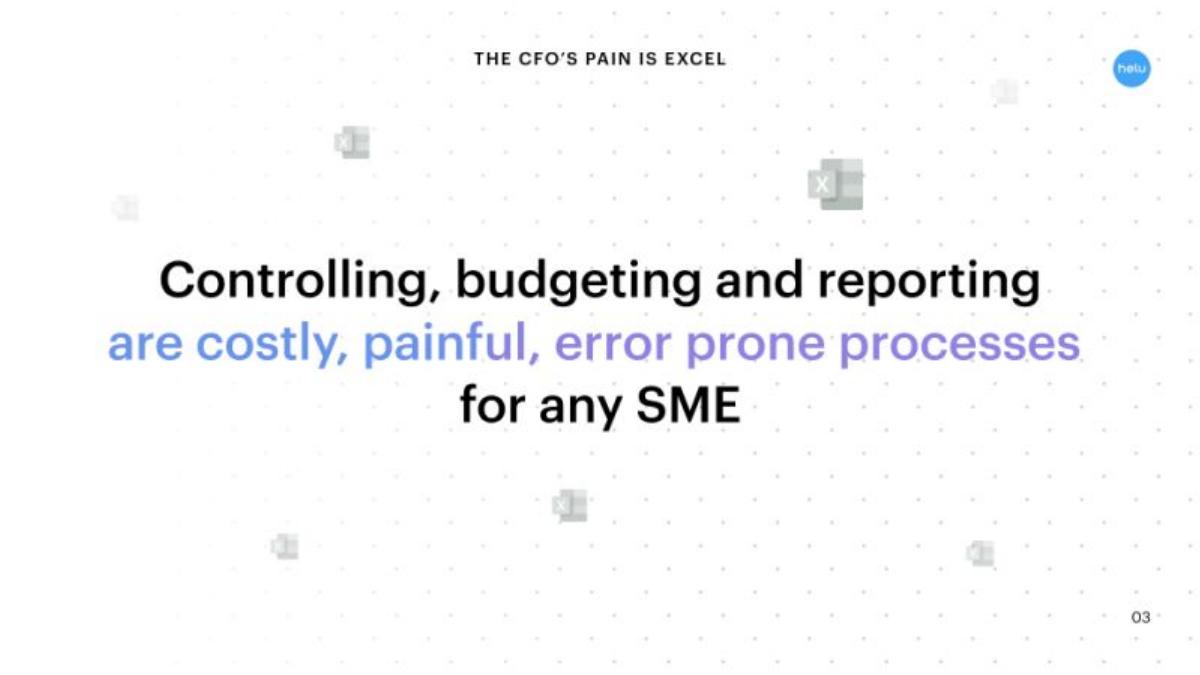
The problem is stated simply: "The CFO's pain is Excel." The slide claims that for SMEs, controlling and reporting are "costly, painful, error prone processes." This is a standard but effective framing for any B2B SaaS company replacing manual workflows.
Slide 4: The Solution Overview
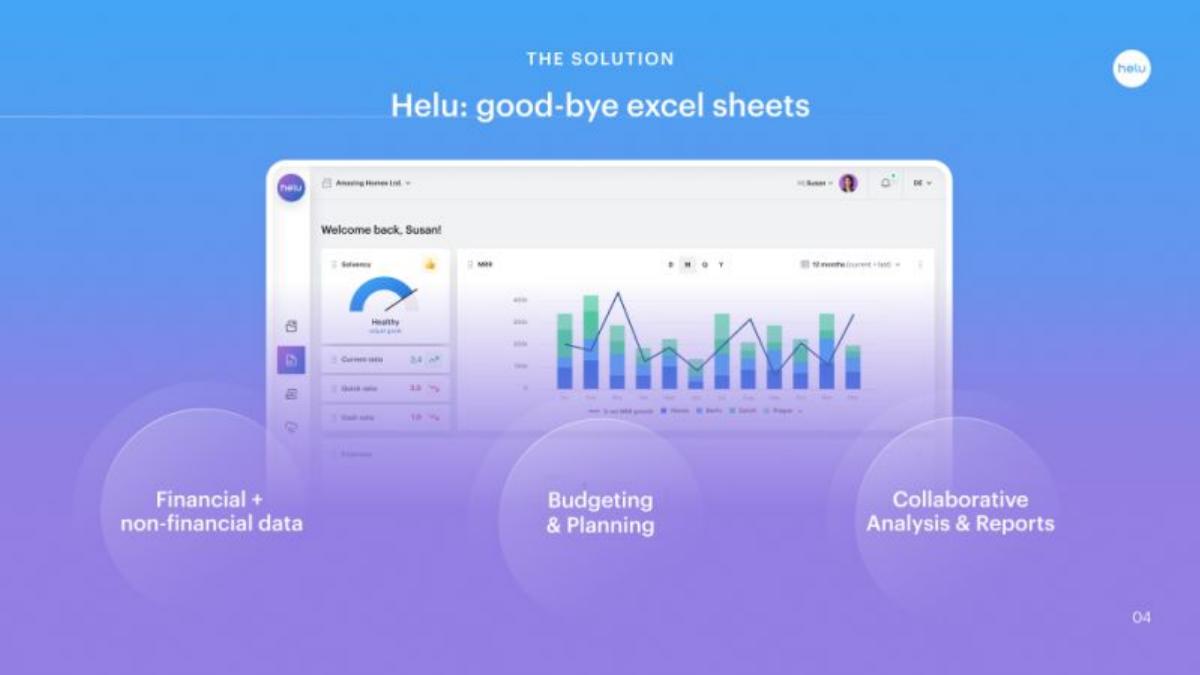
The solution slide introduces the Helu interface. It highlights three core capabilities: the integration of financial and non-financial data, budgeting and planning, and collaborative analysis and reports. The UI shown is clean and modern, contrasting with the "Excel pain" mentioned previously.
Slide 5: The Technical Moat
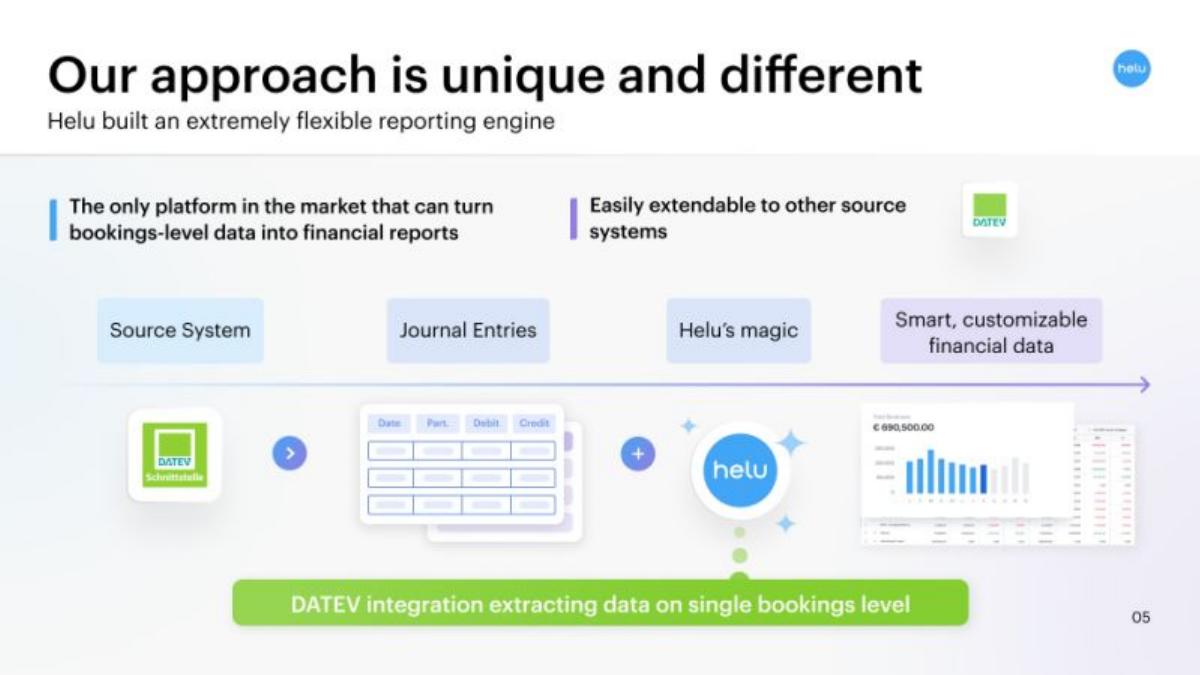
This is one of the most important slides in the deck. It explains Helu's "unique and different" approach. It claims to be the only platform that can turn booking-level data into financial reports. The diagram shows a flow from the "Source System" (DATEV) through "Journal Entries" into "Helu’s magic," resulting in customizable financial data. This emphasizes that Helu isn't just a visualization layer; it is a deep data processing engine.
Slides 6-7: Product Deep Dive
These slides break the product into four functional modules: 01 Reporting Platform (financial statements, KPI calculations), 02 Controlling Platform (cost center analysis, drill-down to single bookings), 03 Budgeting & Planning (tailored calculations, dynamic visualization), and 04 Liquidity Monitor (loan repayment simulation, runrate discussion). Each section uses product screenshots to prove the software's maturity.
Slide 8: Global Market Context
While the focus is on DACH, Slide 8 acknowledges the global opportunity, citing a "100bn B2B SaaS market globally." It uses a map to show the number of SaaS companies in various countries, with the USA at 15,000 and Germany at 1,000, based on 2021 Statista data.
Slides 9-10: The DACH Opportunity
These slides double down on the German market. Slide 9 includes a quote from a Growth VC: "In Germany alone you can build a multi-unicorn with Helu." It notes that 99.5% of German companies are SMEs and that DATEV has a 75% market share. Slide 10 lists specific market entry barriers, such as the "DATEV monopoly" and the "most complex accounting and tax system in the world," framing these challenges as Helu's competitive advantages. It also mentions that their servers are in Frankfurt, appealing to local data sovereignty concerns.
Slide 11: Partnership Traction
Instead of revenue, Helu shows "Significant lead pipeline through partnerships." They list 14 software partnerships, a total reach of 5,250 tax advisors, and a total reach of 14,230 SMEs. This demonstrates a clear go-to-market strategy through the gatekeepers of SME finance: tax advisors.
Slide 12: Data Aggregation
This slide shows Helu's ability to ingest data from other sources beyond DATEV, including Excel, Google Sheets, Power BI, Salesforce, Hubspot, Pipedrive, and Personio. This positions Helu as the central hub for all business data, not just accounting records.
Slide 13: The Ideal Customer Profile
Helu defines its persona clearly: a company with 20-300 FTEs using DATEV with in-house bookkeeping. The slide lists specific pain points (lack of insight, distrust in numbers) and gains from Helu (access to live data, simplified stakeholder communication).
Slide 14: The Team
The team slide is dominated by founder Franz Salzmann. His profile highlights his background as a serial entrepreneur, a former partner at Speedinvest, and a former board member at unicorns like Wefox and GoStudent. The slide also notes the company has 35 FTEs from 12 nationalities.
Slide 15: Investor Backing
The final content slide displays a strong roster of investors and advisors. It features lead investor CommerzVentures and IRIS, alongside high-profile angels like the founders of Wefox, Bitpanda, and Piabo. This provides the final layer of social proof needed for a Series A round.
What Helu Does Well
Regional Specificity: The deck doesn't try to be everything to everyone. It identifies a specific regional giant (DATEV) and explains why winning that integration means winning the market. · Analogy Usage: Comparing themselves to Personio immediately communicates their business model, target customer, and potential scale to investors familiar with the European ecosystem. · Moat Identification: By highlighting the complexity of German tax law and the DATEV monopoly, they turn a difficult market into a defensible asset.
What is Missing from the Deck
Hard Metrics: There is no mention of ARR, month-over-month growth, churn rates, or customer acquisition costs. While the partnership numbers are impressive, they represent "reach" rather than realized revenue. · The Ask: The deck does not state how much capital is being raised or how it will be allocated. (Catalogue facts indicate $9.8M was raised, but this is not on the slides). · Unit Economics: There is no information on pricing tiers or the lifetime value of a customer, which is usually expected at the Series A stage.
Lessons for Founders
Sell the 'Why Now' of your Region: If you are building in a market with high local barriers (like fintech or healthcare), make those barriers the star of your deck. Explain why a global competitor can't simply flip a switch and enter your territory. · Leverage Your Pedigree: If your team has experience at unicorns or major VC firms, highlight it. Helu’s team slide effectively uses the logos of Wefox and Speedinvest to borrow credibility. · Define Your Persona Narrowly: Helu’s Slide 13 is a great example of an ICP (Ideal Customer Profile). By stating the exact number of employees and the specific software the customer must already use, they show investors they have a surgical go-to-market strategy.
Frequently asked questions
- What is Helu's primary competitive advantage according to the deck?
- Helu’s primary advantage is its deep integration with DATEV, the dominant accounting software in the DACH region. Slide 5 and Slide 11 explain that Helu is building its own API via a software cooperation with DATEV, allowing it to extract data at the single-booking level. This technical integration creates a high barrier to entry for international competitors who may not have the local expertise or partnerships to navigate the complex German tax and accounting ecosystem.
- How does Helu define its target market?
- Helu focuses on the DACH SME market. Slide 9 and Slide 10 state that 99.5% of German companies are SMEs, representing approximately 2.5 million businesses. Specifically, Slide 13 defines their 'typical customer' as an organization with 20 to 300 full-time employees (FTEs) that manages its accounting via DATEV and has its own internal controlling or in-house bookkeeping.
- Who are the key investors and team members?
- The team is led by CEO Franz Salzmann, a serial entrepreneur and former partner at Speedinvest. The company is backed by prominent VCs including CommerzVentures, IRIS, and Speedinvest. Notable advisors and angel investors listed on Slide 15 include Fabian Wesemann (CFO of Wefox), Eric Demuth (CEO of Bitpanda), and Christophe Maire (Atlantic Labs).
- What specific problem does the software solve?
- The deck identifies 'Excel' as the primary pain point for CFOs. Slide 3 and Slide 13 argue that manual reporting in Excel is costly, error-prone, and lacks real-time insight. Helu automates the aggregation of financial and non-financial data to provide automated financial statements, cost center analysis, and liquidity monitoring, reducing the days per month teams spend preparing reports.
- What financial data or metrics are included in the deck?
- The deck is notably light on internal company metrics. It does not list current Revenue/ARR, customer count, churn, or burn rate. Instead, it focuses on market size (an 80bn market in Europe per Slide 2) and the reach of its partnerships (5,250 tax advisors and 14,230 SMEs via partnerships per Slide 11).