Hello Inside’s pre-seed deck is a textbook example of narrative-driven fundraising in the health-tech sector. With 12 slides, the company moves from a macro metabolic crisis to a specific hardware-software solution. The deck relies heavily on the 'credibility play,' featuring a co-founder who is a medical doctor and a high-profile advisory board. While it lacks traditional business metrics like CAC, LTV, or a specific financial 'Ask' slide, it compensates by framing the product as the intersection of three massive trends: the quantified self, the food revolution, and increased health consciou…
Key takeaways
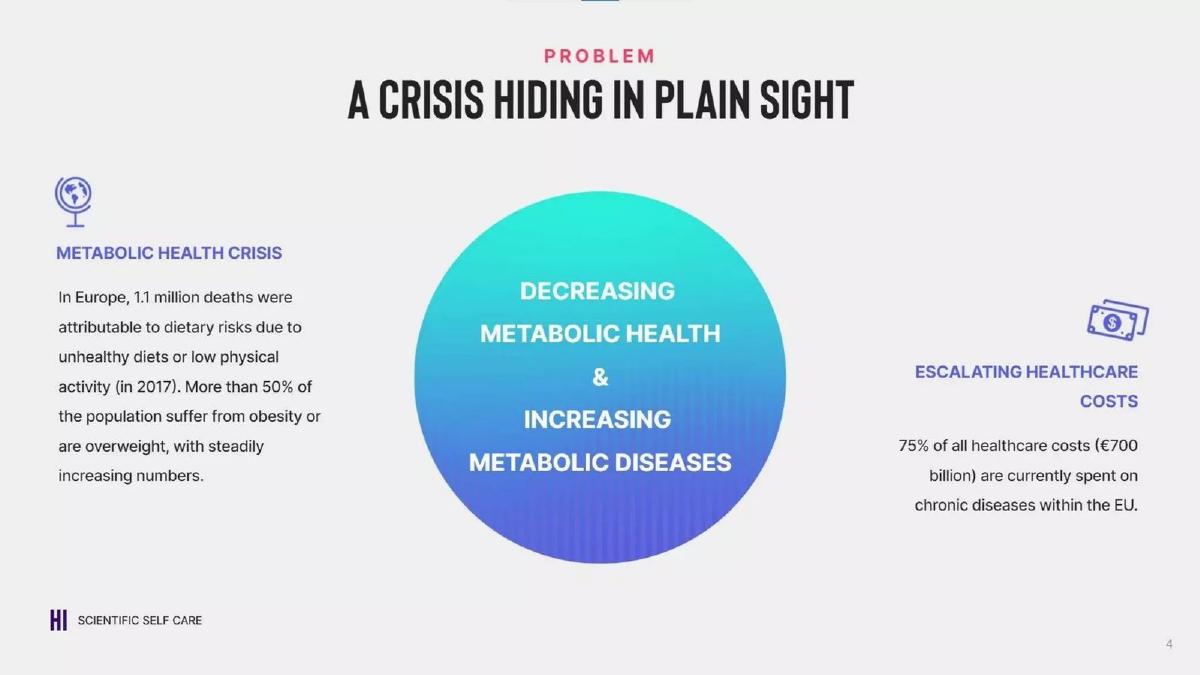
- The deck identifies a massive market opportunity by citing that 75% of EU healthcare costs (€700 billion) are spent on chronic diseases (Slide 4).
- A strong 'Why Now' slide links the product to the 'Quantified Self' movement and declining sensor costs (Slide 9).
- The team slide highlights significant domain expertise, including a former VP of Growth at Runtastic and a Chief Medical Officer (Slide 10).
- The product is positioned as a 'Scientific Self Care Platform' combining CGMs, analytics, and guided biohacking experiments (Slide 8).
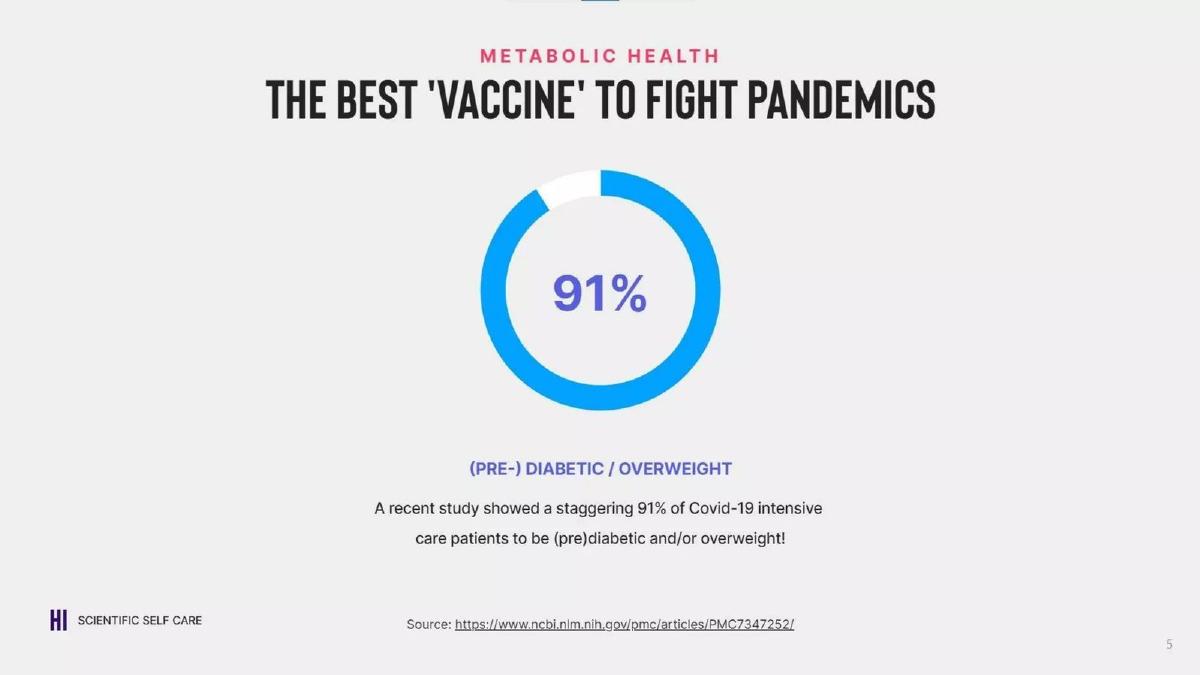
- The deck uses a specific COVID-19 data point—91% of intensive care patients were (pre-)diabetic or overweight—to create urgency (Slide 5).
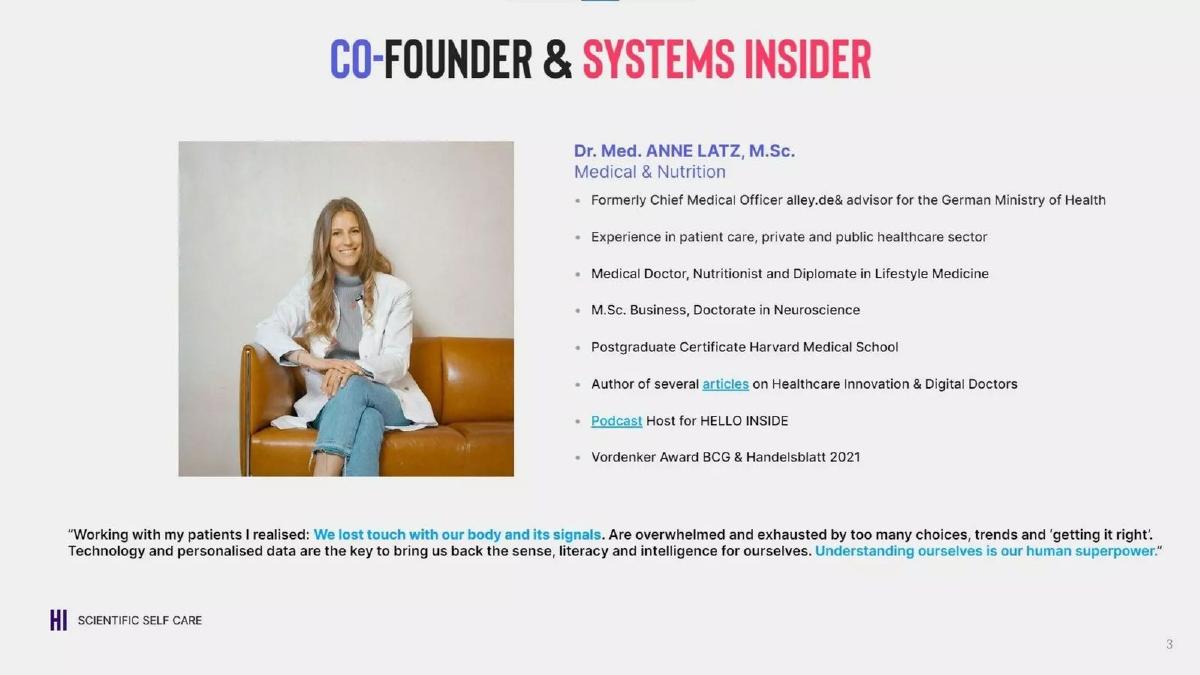
- The 'Systems Insider' slide (Slide 3) establishes Dr. Anne Latz as the face of the company, bridging the gap between clinical medicine and consumer tech.
- The deck omits a formal 'Ask' slide, leaving the specific funding amount and valuation out of the presentation.
- There is a total absence of competition analysis, which is a notable risk given the crowded CGM space.
Introduction: The Rise of Scientific Self-Care
Hello Inside entered the market in 2021 with a clear mission: to move self-care from anecdotal wellness into data-driven science. This 12-slide pre-seed deck is a masterclass in narrative construction, focusing on the 'Why' and 'Who' rather than the 'How much.' At this stage, the company is selling a future where every consumer has a 'data-driven conversation' with their body, starting with glucose levels.
Slides 1-2: The Vision and the Hook
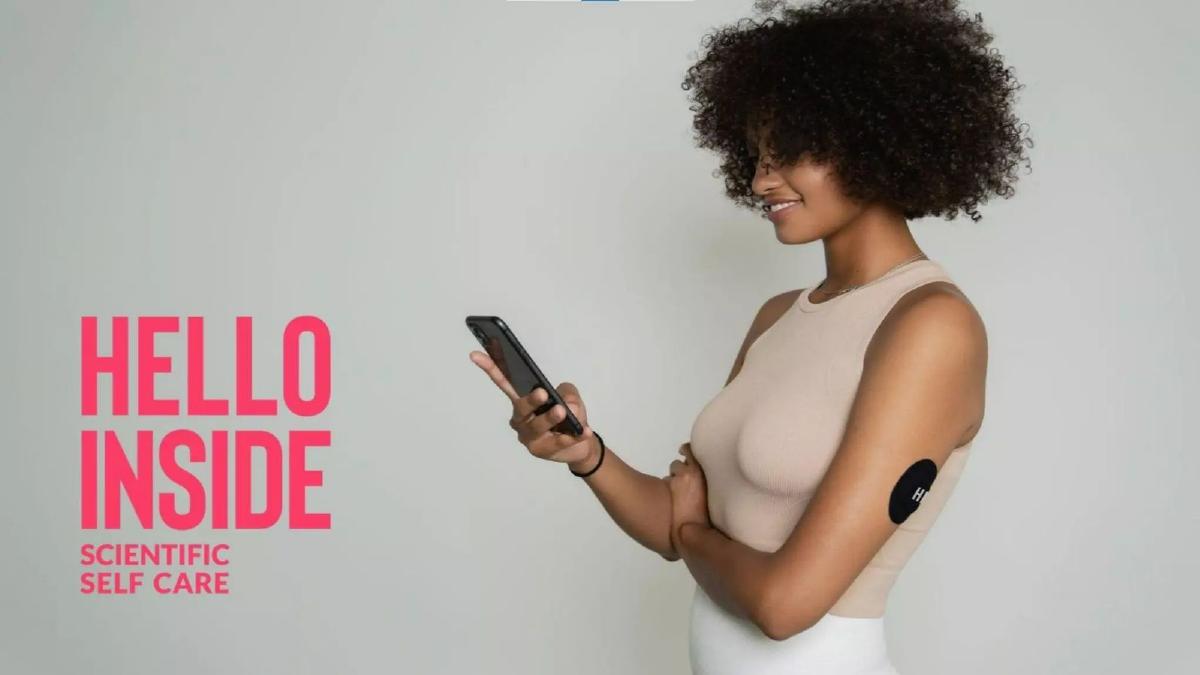
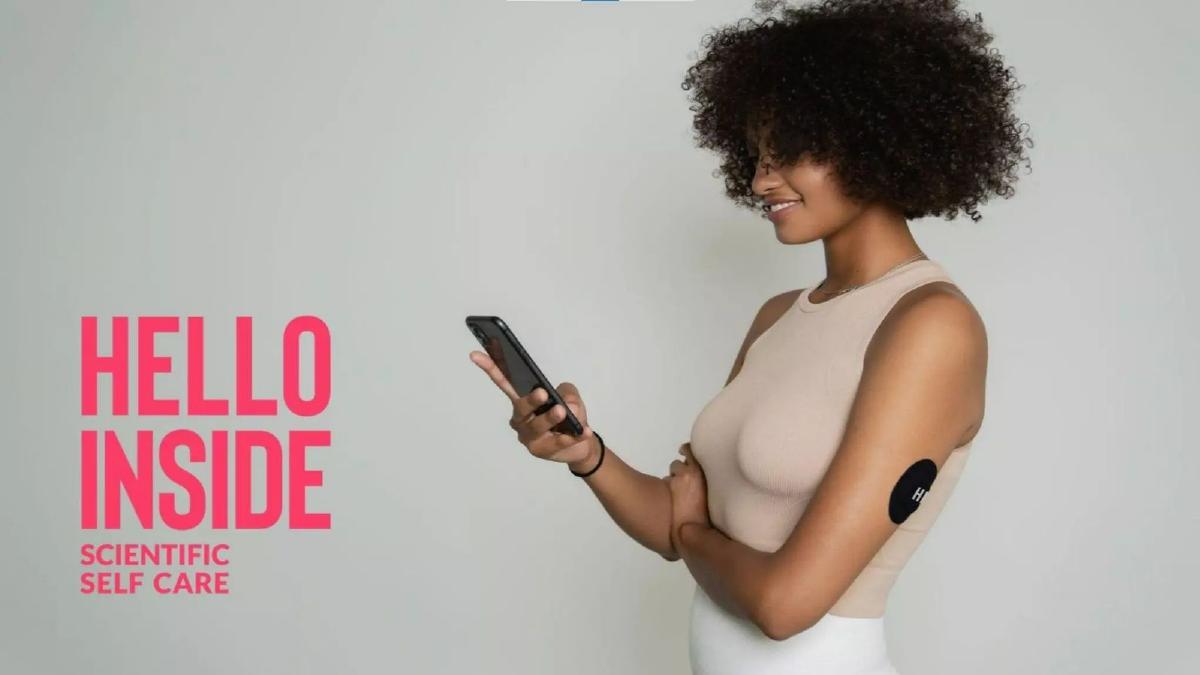
Slide 1: Title Slide The deck opens with a high-quality lifestyle image of a woman using a smartphone while wearing a black circular patch on her arm. The branding is clean, using the tagline 'Scientific Self Care.' It immediately identifies the product category: a wearable sensor integrated with a mobile app.
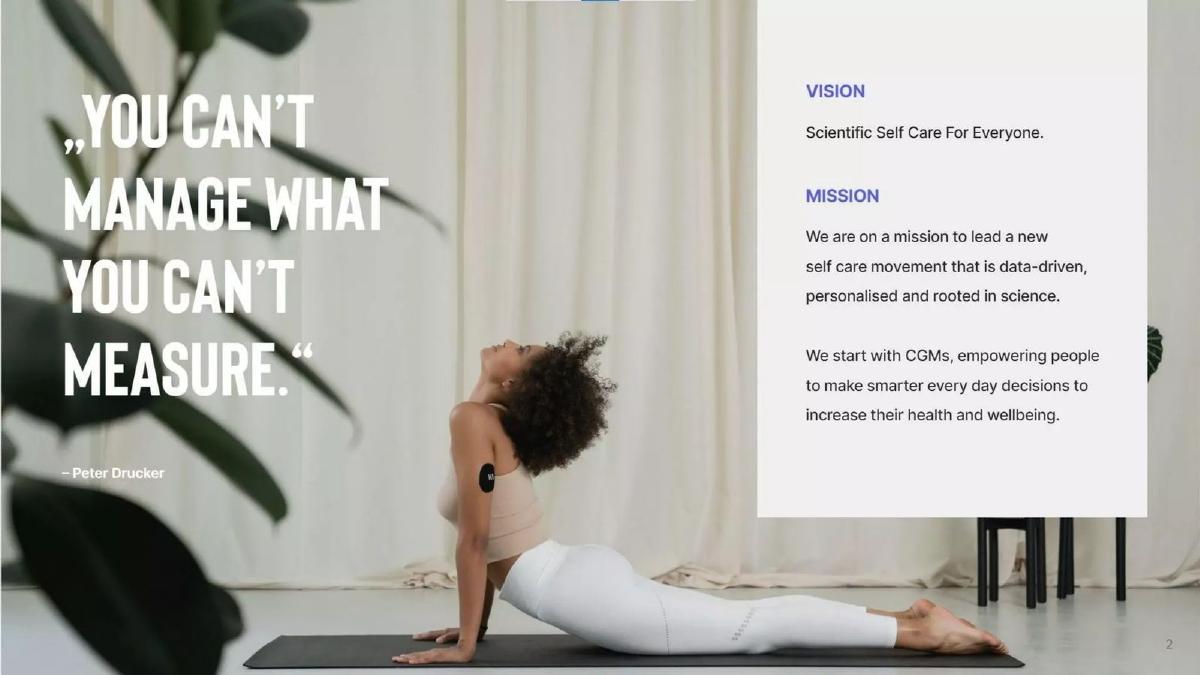
Slide 2: Vision and Mission The deck uses a Peter Drucker quote—'You can’t manage what you can’t measure'—to anchor its philosophy. The vision is stated as 'Scientific Self Care For Everyone.' The mission section explicitly mentions starting with CGMs (Continuous Glucose Monitors) to empower smarter everyday decisions. This slide sets the stage for a preventative health play rather than a medical treatment play.
Slide 3: The Systems Insider
Slide 3: Co-Founder Spotlight Unusually early in the deck, Slide 3 focuses entirely on Dr. Med. Anne Latz. This is a strategic move to establish immediate medical credibility. Her credentials include being a former CMO, an advisor to the German Ministry of Health, and holding a Doctorate in Neuroscience. The quote at the bottom emphasizes a 'loss of touch with our body and its signals,' framing the problem as a lack of 'biological literacy.'
Slides 4-7: The Problem Space
Slide 4: A Crisis Hiding in Plain Sight This slide quantifies the 'Metabolic Health Crisis.' It cites 1.1 million deaths in Europe due to dietary risks and notes that 75% of all healthcare costs (€700 billion) in the EU are spent on chronic diseases. By using 'EU' specific data, the deck signals its initial geographic focus.
Slide 5: The Pandemic Link Leveraging the context of 2021, Slide 5 presents a striking statistic: 91% of COVID-19 intensive care patients were (pre-)diabetic or overweight. This slide serves to transform metabolic health from a long-term 'nice to have' into an urgent, life-saving priority.
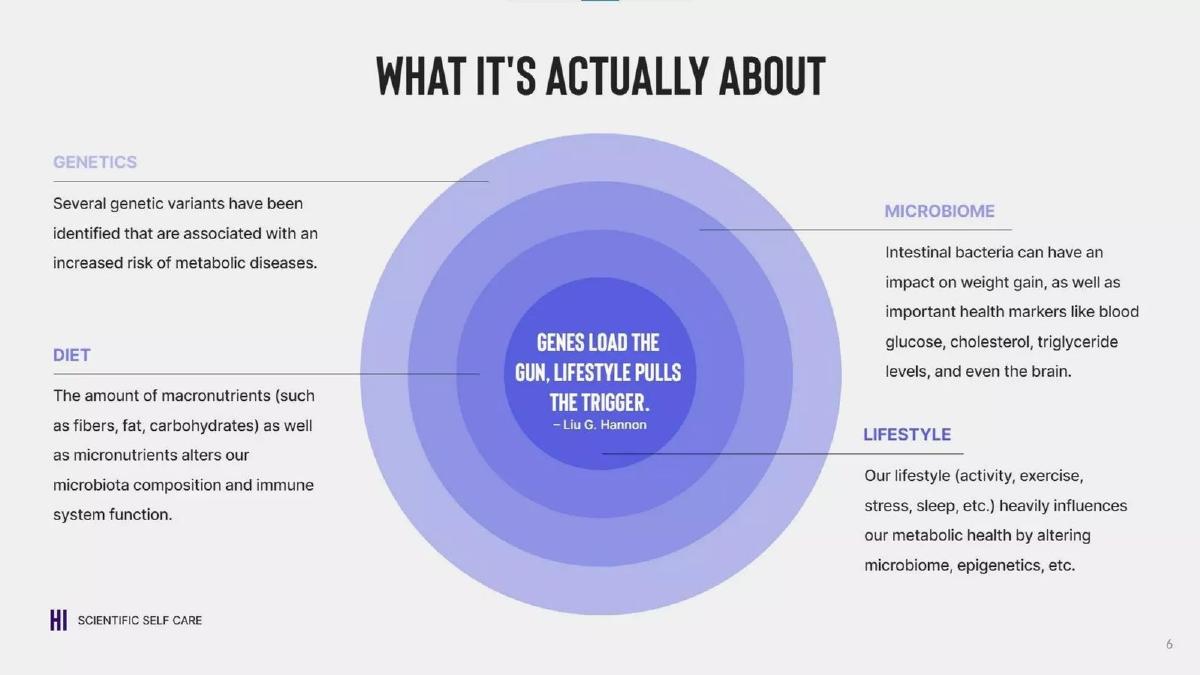
Slide 6: What It's Actually About This slide uses a concentric circle graphic to explain the interplay between Genetics, Microbiome, Diet, and Lifestyle. It features the quote 'Genes load the gun, lifestyle pulls the trigger.' This educational slide helps the investor understand that while we can't change genetics, Hello Inside targets the 'lifestyle' and 'diet' triggers that are within a user's control.
Slide 7: Why Is This Not Being Solved? The deck identifies three gaps in the current market: 'One size doesn't fit all' (nutrition is personal), 'No engagement' (feedback loops are too long), and 'Missing prevention' (current systems are reactive). This slide effectively sets up the 'Solution' by defining exactly what the solution must provide: personalization, real-time engagement, and a preventative focus.
Slide 8: The Solution
Slide 8: Scientific Self Care Platform This is the core product slide. It breaks the offering into four components:
App, Sensors, Patch: The hardware-software bundle. · Analytics: Personalized insights and actionable recommendations. · Experiments: Guided biohacking to see which foods work best. · Lessons: Bite-sized knowledge hacks.
The UI mockups show features like 'Time in Range,' 'Spikes,' and comparisons between 'Wheat Pasta' and 'Whole Grain Pasta,' demonstrating the app's ability to provide immediate feedback on food choices.
Slide 9: The 'Why Now'
Slide 9: Riding the Waves This slide justifies the timing of the startup. It points to three converging trends:
Quantified Self Movement: Declining sensor costs and real-time biofeedback. · Food Revolution: The shift toward plant-based and personalized nutrition. · Health Consciousness: A 'metabolic crisis pandemic' and health-aware millennials.
This slide is crucial for convincing investors that the technology is finally ready for mass-market adoption.
Slides 10-11: The Team and Advisors
Slide 10: Experienced Founders The founding team is a mix of 'Health' and 'Scale.' Mario Aichlseder’s background as VP of Growth at Runtastic (a major European exit to Adidas) is a significant highlight. Combined with Dr. Latz’s medical background and Vinzenz Weber’s technical experience at Diagnosia, the slide argues that this team has the 'founder-market fit' required to build a consumer health giant.
Slide 11: Meet Our Advisors The deck doubles down on credibility with a heavy-hitting advisory board. It includes Prof. Dr. Eran Elinav (author of 'The Personalised Diet'), Dr. Med. Anne Fleck (a TV personality), and Ben Hwang (CEO of Profusa). This suggests the company is well-connected within both the scientific community and the health-tech industry.
Slide 12: Conclusion
Slide 12: Thank You The final slide is a simple 'Thank You!' over a lifestyle image of a couple looking at the app during a meal. It reinforces the 'social' and 'everyday' nature of the product.
What Works in This Deck
The Credibility Play: By placing the medical co-founder and the advisory board prominently, Hello Inside overcomes the 'snake oil' skepticism often associated with the wellness industry. The Problem Framing: Linking metabolic health to the COVID-19 pandemic (Slide 5) and massive EU healthcare spending (Slide 4) creates a sense of immense scale and urgency. Visual Clarity: The deck is professionally designed, using a consistent color palette and high-quality imagery that makes the product feel like a premium consumer brand rather than a clinical medical device.
What Is Missing
The Business Model: There is no mention of how the company makes money. Is it a subscription? A one-time hardware sale? A B2B2C play through insurance companies? The Competitive Landscape: The CGM space is highly competitive, with well-funded US players like Levels and Nutrisense. The deck fails to mention how Hello Inside will compete or what its unique 'moat' is. The Ask: The deck concludes without a specific funding request. While this is sometimes done to keep the deck 'evergreen,' it leaves investors wondering about the roadmap and what the capital will be used for. Traction: There are no mentions of beta testers, waitlists, or early user data, which are often expected even at the pre-seed stage to prove initial interest.
What a Founder Should Copy
The 'Why Now' Structure: Slide 9 is an excellent template for any founder needing to explain why their business is possible today but wasn't five years ago. The Narrative Arc: The deck moves logically from a global crisis to a personal problem, then to a specific technological solution, and finally to the team capable of building it. The Use of Social Proof: If you have a strong advisory board or a founder with a previous exit, make it a central pillar of your deck. Hello Inside uses its team's pedigree to de-risk the investment before even showing the product in detail.
Frequently asked questions
- What is the core product of Hello Inside?
- Hello Inside is a 'Scientific Self Care Platform' that uses Continuous Glucose Monitors (CGM) paired with a mobile app. As shown on Slide 8, the platform provides real-time glucose data, food and activity analytics, guided biohacking experiments, and 'bite-sized knowledge hacks' to help users understand how their lifestyle choices affect their metabolic health.
- How does the deck justify the market need?
- The deck frames the need as a 'Metabolic Health Crisis.' Slide 4 notes that 1.1 million deaths in Europe are attributable to dietary risks and that over 50% of the population is overweight. It further emphasizes the financial burden, stating that €700 billion is spent annually on chronic diseases within the EU.
- Who are the founders of Hello Inside?
- The founding team consists of Mario Aichlseder (formerly VP of Growth at Runtastic), Dr. Anne Latz (Medical Doctor and former CMO of alley.de), Jürgen Furian (Co-founder of Pioneers.io), and Vinzenz Weber (formerly CTO of Diagnosia.com). This combination of growth, medical, operational, and technical expertise is highlighted on Slide 10.
- Is there any mention of revenue or business model?
- No. This 12-slide deck focuses entirely on the problem, vision, product, and team. It does not include a business model slide, unit economics, or revenue projections. This is common for very early-stage pre-seed decks where the goal is to sell the vision and the team's ability to execute.
- What is missing from this pitch deck?
- The most significant omissions are a competitive landscape analysis, a go-to-market strategy beyond the product description, and a clear financial 'Ask.' In a competitive market with players like Levels or Nutrisense, investors would typically expect to see how Hello Inside differentiates itself beyond just 'scientific self-care.'