HeavyConnect’s 2015 pitch deck is a study in extreme brevity, consisting of only seven slides. The presentation eschews traditional text-heavy explanations of unit economics, business models, or competitive landscapes. Instead, it relies on the visual weight of enterprise logos—such as Dole, Driscoll’s, and Green Giant—to establish immediate credibility in the agricultural sector. While the deck successfully communicates the 'who' (a team with John Deere and ThoughtWorks pedigree) and the 'where' (a $22.8 billion global market), it leaves significant gaps regarding the 'how.' There is no ment…
Key takeaways
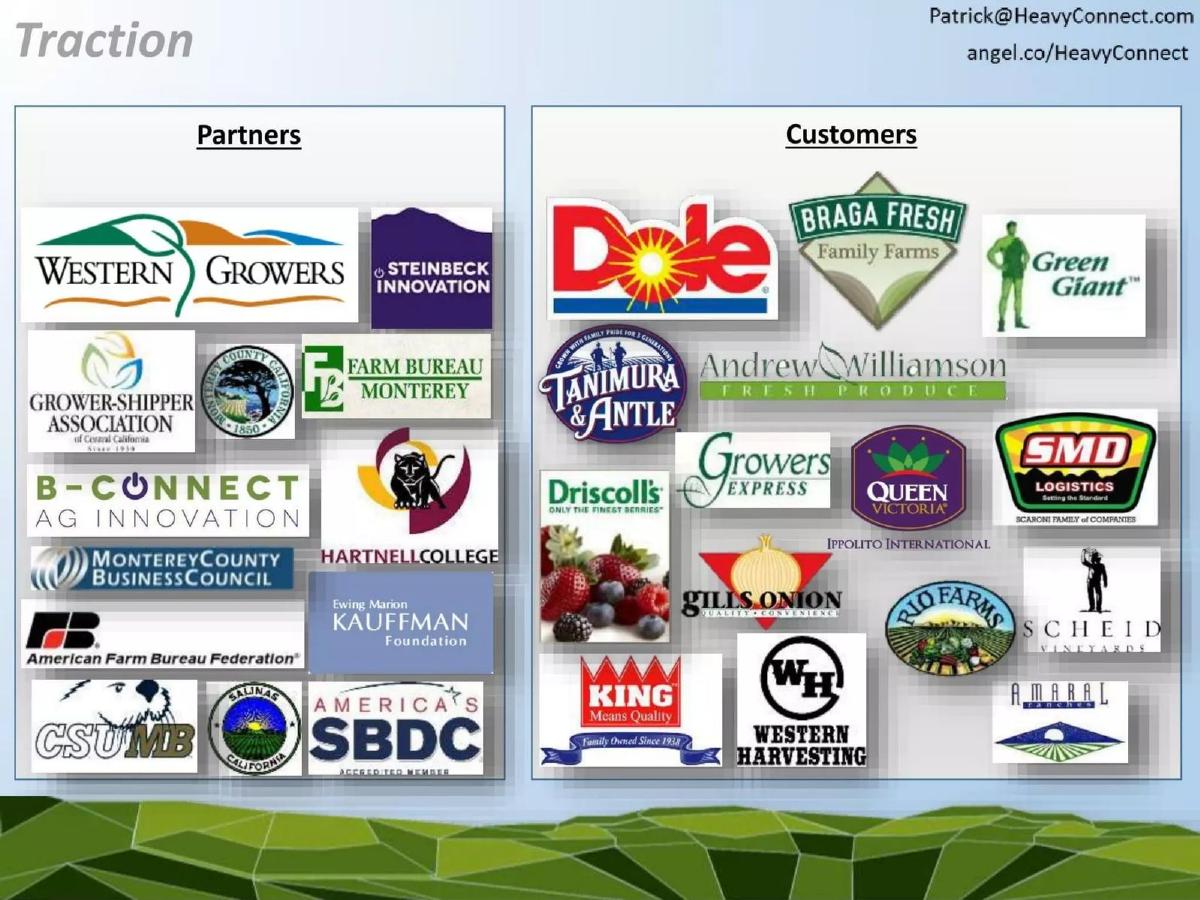
- The deck relies almost entirely on visual social proof, featuring 17 customer logos and 15 partner logos on Slide 6.
- Founder pedigree is a central pillar, highlighting the CEO's background at John Deere and the CTO's experience at ThoughtWorks on Slide 4.
- The problem is framed through labor intensity, citing '14 hours/day' and '6 days/week' on Slide 2.
- Market opportunity is segmented geographically, scaling from a $7.1 million local market in Monterey County to a $22.8 billion global market on Slide 7.
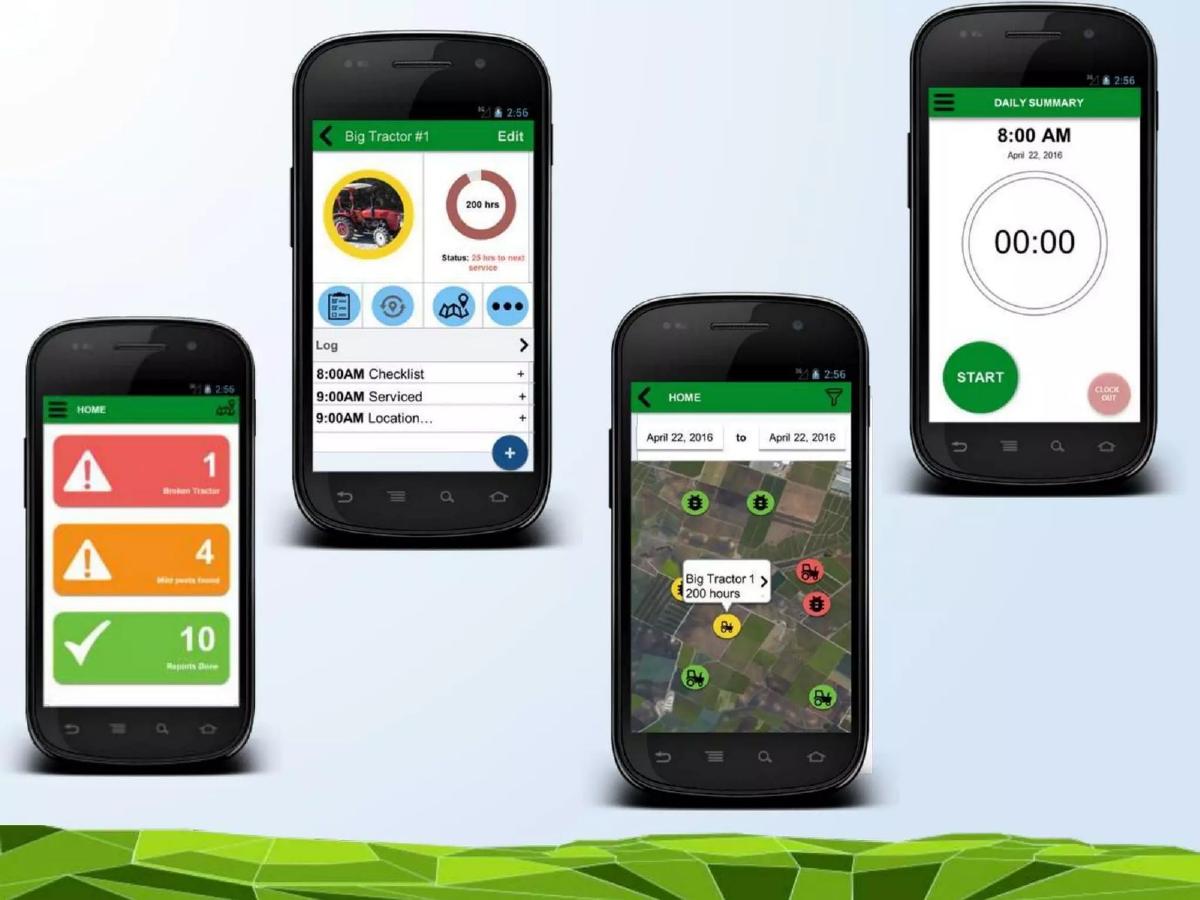
- The product interface is shown via four mobile screenshots on Slide 5, emphasizing field-level data collection and equipment tracking.
- The deck contains zero financial data, omitting revenue, burn rate, and specific 'ask' amounts.
- Strategic partnerships are emphasized through local and national organizations like the Western Growers and the American Farm Bureau Federation on Slide 6.
The 7-Slide Narrative: Visual Credibility Over Data
HeavyConnect’s pitch deck is an exercise in minimalism. In an era where decks often stretch to 20 or 30 slides of dense data, this 2015 presentation uses just seven slides to make its case. The strategy is clear: lead with the brand, validate with the team, and close with the massive scale of the opportunity. However, for an analyst, the lack of traditional metrics makes this a difficult deck to evaluate on paper alone.
Slide 1: Title and Branding
The cover slide introduces the HeavyConnect logo and the tagline: "Farming Operations.....Redefined!" Notably, the slide includes contact information for Patrick Zelaya and a link to their AngelList profile. The bottom of the slide features logos for major agricultural brands like Dole, Green Giant, Driscoll’s, Tanimura & Antle, and Queen Victoria . This is a bold move—placing customer logos on the title slide immediately signals that the company is not in the 'idea phase' but is already integrated into the enterprise supply chain.
Slide 2: The Human Cost
Slide 2 presents two stark figures: "14 hours/day" and "6 days/week." There is no further text. This slide is designed to evoke the grueling nature of agricultural management. It sets the stage for a solution that promises to reclaim time or reduce the administrative burden of these long shifts. It identifies the 'who' of the problem—the overworked farm manager—without needing a paragraph of explanation.
Slide 3: The Operational Imbalance
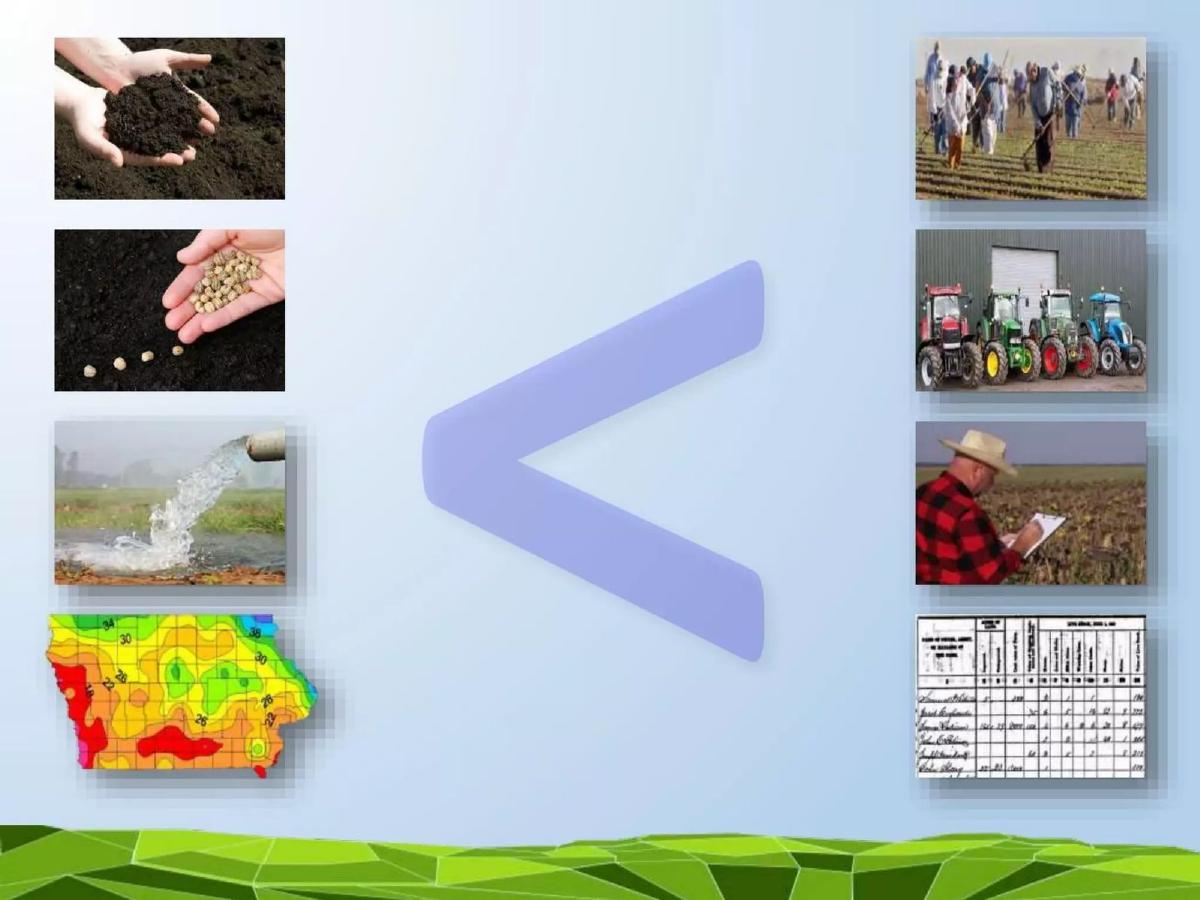
This slide uses a large " symbol to create a visual metaphor. On the left are images representing the core of farming: soil, seeds, water, and weather maps. On the right are images representing the operational 'overhead': field crews, a fleet of tractors, a manager with a clipboard, and a dense paper ledger. The implication is that the physical act of farming is being outweighed or constrained by the complexity of managing labor, equipment, and compliance paperwork. It identifies the 'administrative bloat' as the primary pain point.
Slide 4: Team Pedigree
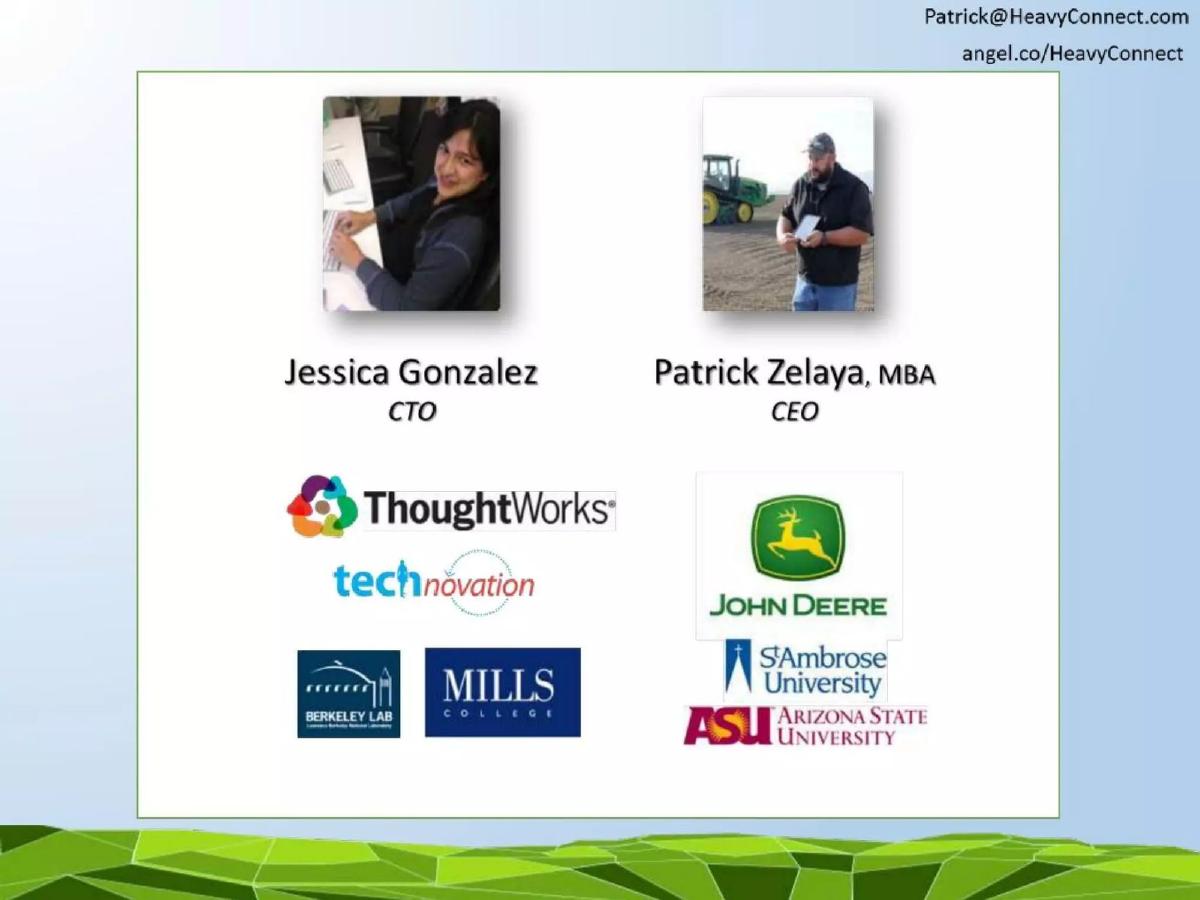
The team slide focuses on the two founders. Jessica Gonzalez (CTO) is backed by logos for ThoughtWorks, Technovation, Berkeley Lab, and Mills College . Patrick Zelaya (CEO) , who holds an MBA, is prominently associated with John Deere , alongside St. Ambrose University and Arizona State University . The inclusion of the John Deere logo is a strategic masterstroke for an AgTech startup; it provides the CEO with immediate 'industry insider' status, while the CTO’s ThoughtWorks background suggests enterprise-grade software capabilities.
Slide 5: Product Interface
HeavyConnect shows rather than tells. Slide 5 features four mobile screenshots of the app. The UI highlights:
Equipment Tracking: A 'Big Tractor #1' profile showing 200 hours of use and service status. · Alert Systems: A dashboard showing 1 broken tractor, 4 pest findings, and 10 completed reports. · Geospatial Mapping: A map view with icons for tractors and pest alerts. · Time Tracking: A simple 'Start/Clock Out' interface for daily summaries.
The screenshots emphasize that the data is collected at the 'ground-level,' supporting the company's self-description of being a cloud-based compliance platform.
Slide 6: Massive Industry Validation
This is the 'Traction' slide, and it is the most crowded slide in the deck. It is split into Partners and Customers . Partners include 15 organizations such as Western Growers, Steinbeck Innovation, Monterey County Business Council, and the Kauffman Foundation . The Customers section is even more impressive, featuring 17 logos including Dole, Green Giant, Driscoll's, Braga Fresh, and Gills Onion . For a 'Later' stage deck (as categorized), this level of enterprise penetration is the primary selling point. It suggests that the product-market fit has been established with the industry's most demanding users.
Slide 7: Market Opportunity
The final slide, titled "Opportunity," uses a series of cylinders to visualize market size. The figures are:
Monterey County: $7.1 Million · California: $165 Million · Western US: $691 Million · United States: $7.8 Billion · World: $22.8 Billion
The slide includes citations from sources like Statista and SIPRI. By starting with the $7.1 million local market, the founders show they have a grasp on their immediate backyard (Salinas, CA is in Monterey County) before projecting the multi-billion dollar global potential. This provides a realistic roadmap for growth.
What Works in This Deck
The Power of the Logo: HeavyConnect understands that in the agricultural industry, trust is the primary currency. By saturating the deck with logos of established giants like John Deere and Dole, they borrow the credibility of these billion-dollar entities. For an investor, seeing that the 'Big Three' of produce are already customers significantly de-risks the investment.
Founder-Market Fit: The team slide is excellent. It doesn't just list titles; it uses logos to tell a story of technical excellence (ThoughtWorks) and industry dominance (John Deere). It answers the question 'Why this team?' without using a single bullet point.
Visual Storytelling: The transition from the '14 hours/day' problem to the mobile solution is intuitive. The deck doesn't get bogged down in the 'how' of cloud syncing or API integrations; it focuses on the 'what'—tracking tractors, managing pests, and saving time.
What Is Missing
The Business Model: There is no mention of how HeavyConnect makes money. Is it a per-acre SaaS fee? A per-user subscription? A percentage of operational savings? Without a pricing model, it is impossible to determine if the $22.8 billion market is truly accessible or how the company plans to capture it.
Financial Performance: While the customer list is impressive, the deck provides no data on revenue growth, churn rates, or contract values. A 'Later' stage company should typically provide some indication of its financial trajectory to justify a new round of funding.
The Competitive Landscape: The deck operates as if HeavyConnect is the only player in the space. There is no mention of legacy software, manual paper processes (other than the visual hint on Slide 3), or other AgTech startups. Investors need to know how HeavyConnect defends its position against incumbents.
The Ask: The deck ends abruptly after the market slide. There is no 'Ask' slide detailing how much capital is being raised, what the valuation is, or how the funds will be allocated (e.g., hiring, R&D, sales expansion).
What a Founder Should Copy
The 'Traction First' Approach: If you have major customers, put them on the first slide. Don't wait until slide 10 to reveal that you are working with the industry leaders. HeavyConnect uses its customers as a shield against skepticism from the very first second.
Geographic Market Scaling: Instead of just throwing out a 'Trillion Dollar Market' figure, HeavyConnect breaks it down from the local level to the global level. This makes the 'Opportunity' slide feel grounded in reality. It shows a clear path of progression: win the county, then the state, then the country, then the world.
Minimalist Problem Framing: Slide 2 is a masterclass in brevity. If your problem is a universal truth in your industry (like long hours in farming), you don't need to explain it. You just need to acknowledge it. Using simple, large numbers to represent the 'pain' is highly effective for keeping an audience's attention during a live pitch.
Final Assessment: This is a 'supplemental' deck. It is designed to be talked over, not to be read in a vacuum. While it excels at establishing credibility and scale, it lacks the operational and financial depth required for a standalone investment case. Founders with a similar 'high-traction' profile can use this format to generate excitement, but they should be prepared with a much deeper 'Data Room' to answer the inevitable questions about margins and competition.
Frequently asked questions
- What is the primary value proposition of HeavyConnect according to the deck?
- The deck frames the value proposition around operational efficiency and the modernization of manual processes. Slide 3 uses a 'less than' symbol to compare traditional agricultural inputs (soil, seeds, water) against the administrative burden of labor management, equipment maintenance, and paper-based record-keeping. The goal is to 'redefine' farming operations by moving these manual tasks into a digital, cloud-based environment.
- How does the company demonstrate market traction?
- Traction is demonstrated exclusively through logo placement. Slide 6 is divided into 'Partners' and 'Customers.' The customer list includes major industry players like Dole, Green Giant, Driscoll's, and Tanimura & Antle. By showcasing these high-profile enterprise clients, HeavyConnect signals that its platform has already been vetted and adopted by the largest stakeholders in the food supply chain.
- Who are the founders and what is their relevant experience?
- As shown on Slide 4, the company is led by CEO Patrick Zelaya and CTO Jessica Gonzalez. Zelaya brings industry-specific credibility with a background at John Deere and an MBA. Gonzalez provides technical depth with experience at ThoughtWorks and Berkeley Lab. This combination of 'boots-on-the-ground' agricultural experience and high-end software engineering is a key selling point of the deck.
- What specific market segments does the deck target?
- Slide 7 outlines a total addressable market (TAM) that begins with a very specific local focus in Monterey County ($7.1 million) and expands through California ($165 million), the Western US ($691 million), and the United States ($7.8 billion), before reaching a global figure of $22.8 billion. This suggests a 'land and expand' strategy starting in the agricultural hubs of California.
- What critical information is missing from this pitch deck?
- The deck is missing several standard components: a business model slide (how they make money), a competition slide (who else is in the space), unit economics (CAC/LTV), and a specific fundraising 'ask.' There are no financial projections or historical growth metrics. It functions more as a high-level teaser or a visual aid for a live pitch than a standalone document for due diligence.