Hearo.Live’s pitch deck is a study in extreme minimalism, utilizing just nine slides to communicate a vision for synchronous social viewing. The deck relies heavily on the pedigree of its founders, Ned Lerner and Dwight Kwok, whose backgrounds span major gaming franchises like The Sims and Uncharted, as well as business roles at Xsolla and Digital River. The narrative bridge is simple: gaming is social, but general media is not—yet. By highlighting a $2.2 trillion media market compared to a $0.15 trillion gaming market, the deck argues for a massive expansion of social features into tradition…
Key takeaways
- The deck leads with founder pedigree, showcasing experience with massive IP like The Sims, Madden, and PlayStation 4 on slide 2.
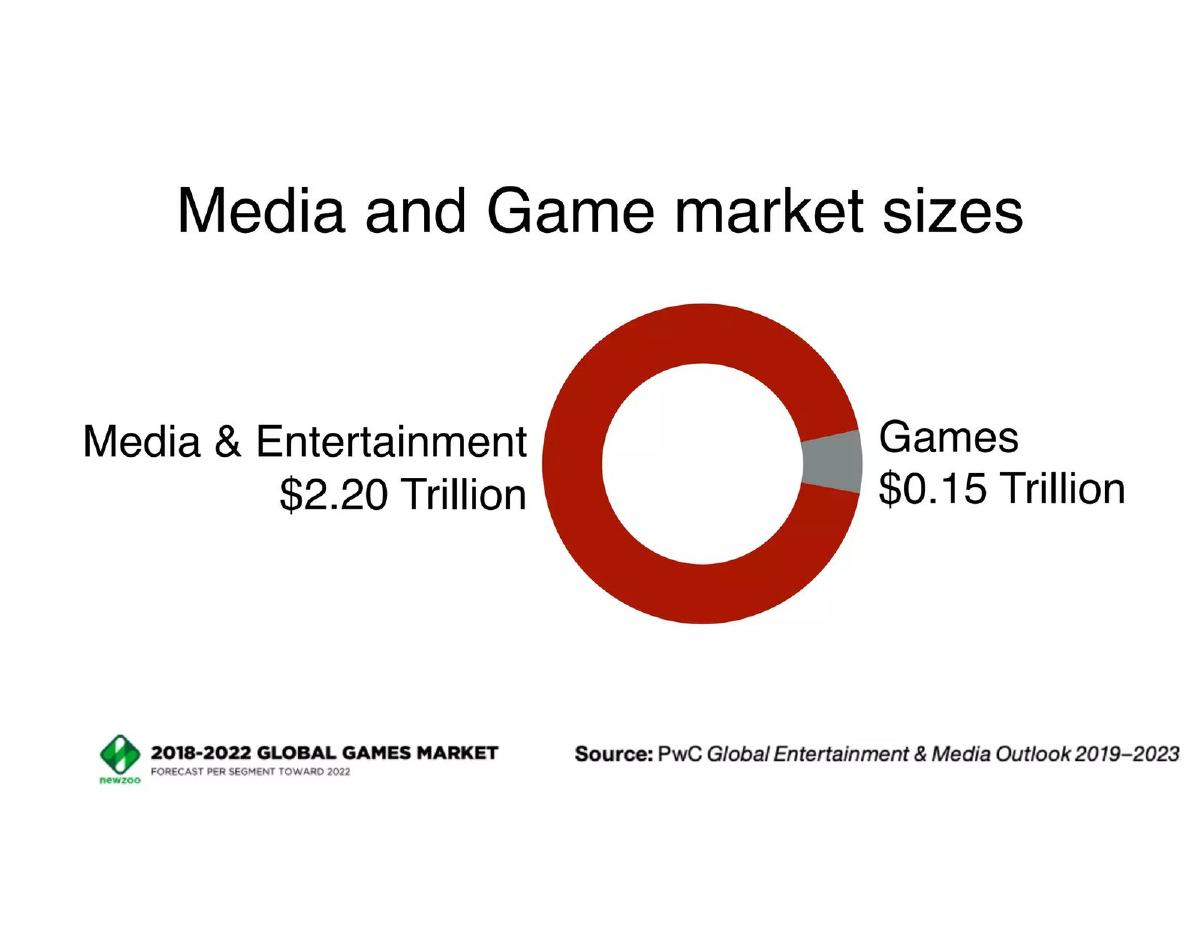
- Market sizing contrasts the $0.15 trillion gaming market with a $2.20 trillion Media & Entertainment market to show room for growth on slide 4.
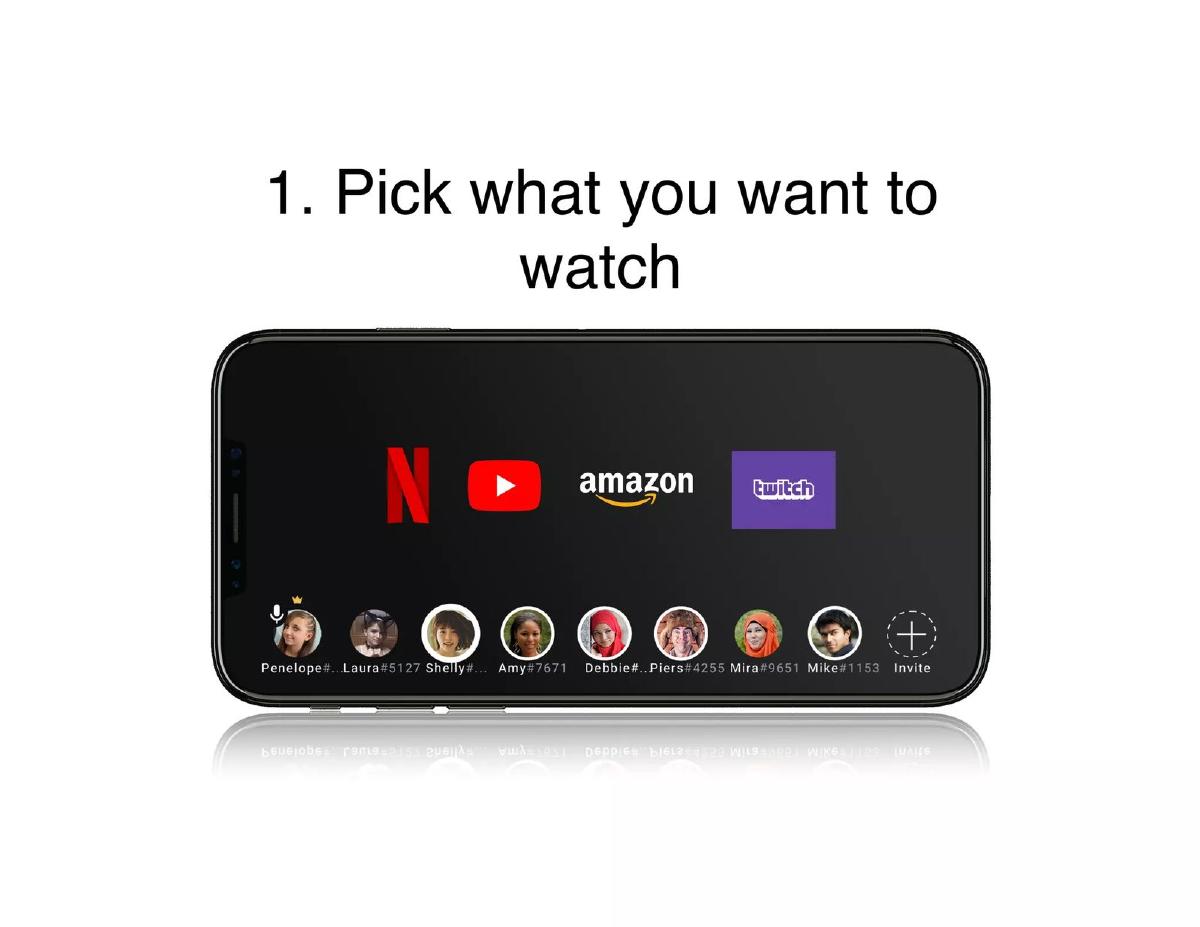
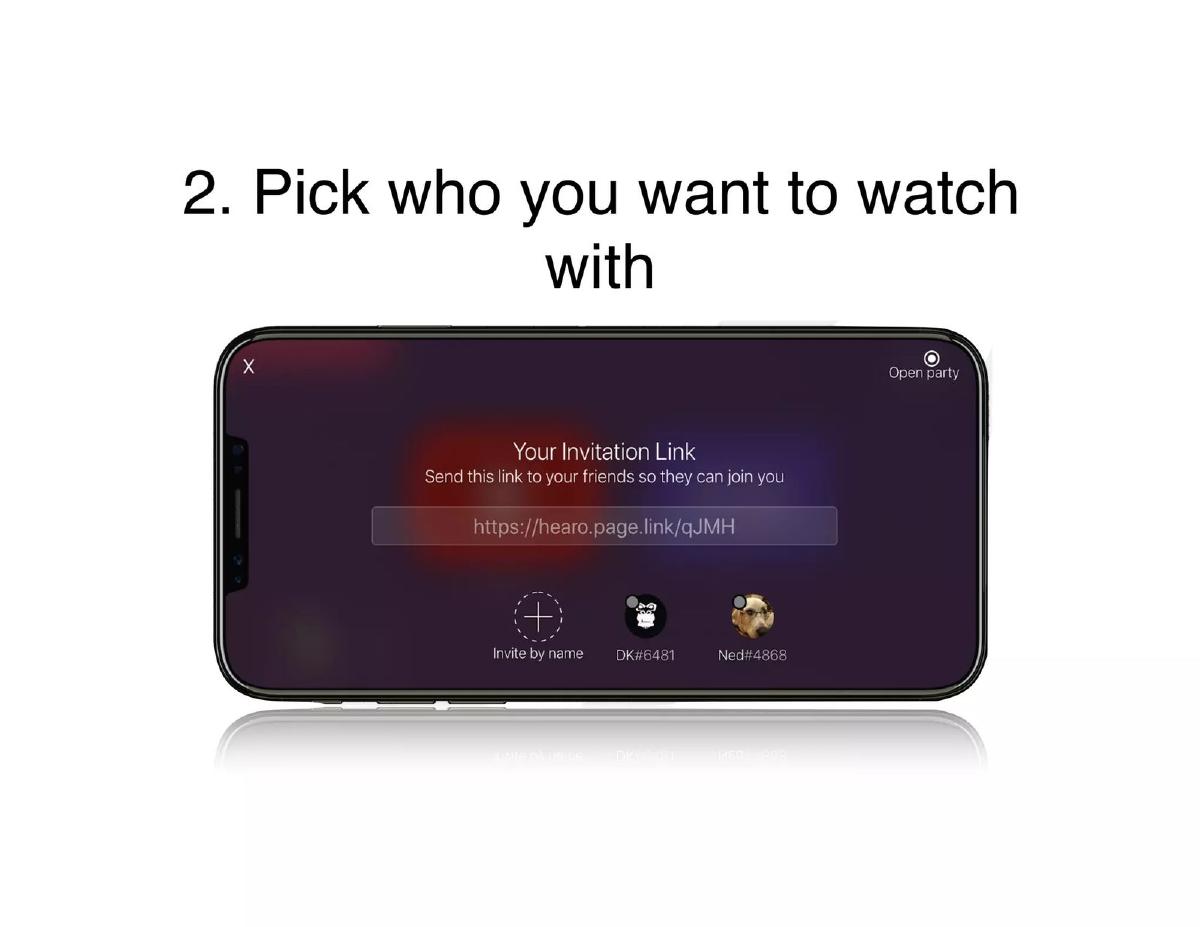
- The product workflow is distilled into three steps: pick content, pick friends, and watch together, as shown on slides 5, 6, and 7.
- The platform targets major streaming services, displaying logos for Netflix, YouTube, Amazon, and Twitch on slide 5.
- Hearo.Live positions itself as a 'human connection platform for entertainment' on slide 8.
- The deck includes a 'Confidential' stamp next to the ESL (Electronic Sports League) logo on slide 8, implying a strategic partnership.
- There is no mention of a business model, revenue streams, or monetization strategy in the entire 9-slide presentation.
- The deck completely omits a formal 'Ask' slide, leaving the funding target and use of proceeds unknown.
Hearo.Live: The Minimalist Vision for Social Streaming
The Hearo.Live pitch deck is a concise, 9-slide presentation that focuses almost entirely on the 'Why' and the 'Who,' leaving the 'How' and the 'How Much' for a follow-up conversation. In an era of 20-slide decks filled with complex data, Hearo.Live takes a different path, betting that founder pedigree and a simple, intuitive product hook will be enough to secure a second meeting.
Slide 1: Title Slide
The deck opens with a clean white background featuring the Hearo.Live logo—a play button encased in a circular red line that resembles a headset or a sound wave. It includes the contact information for Ned Lerner, Founder & CEO, including an email and a Discord handle (Hearo Ned#4868). The inclusion of a Discord handle immediately signals the company's roots in the gaming community.
Slide 2: The Founders
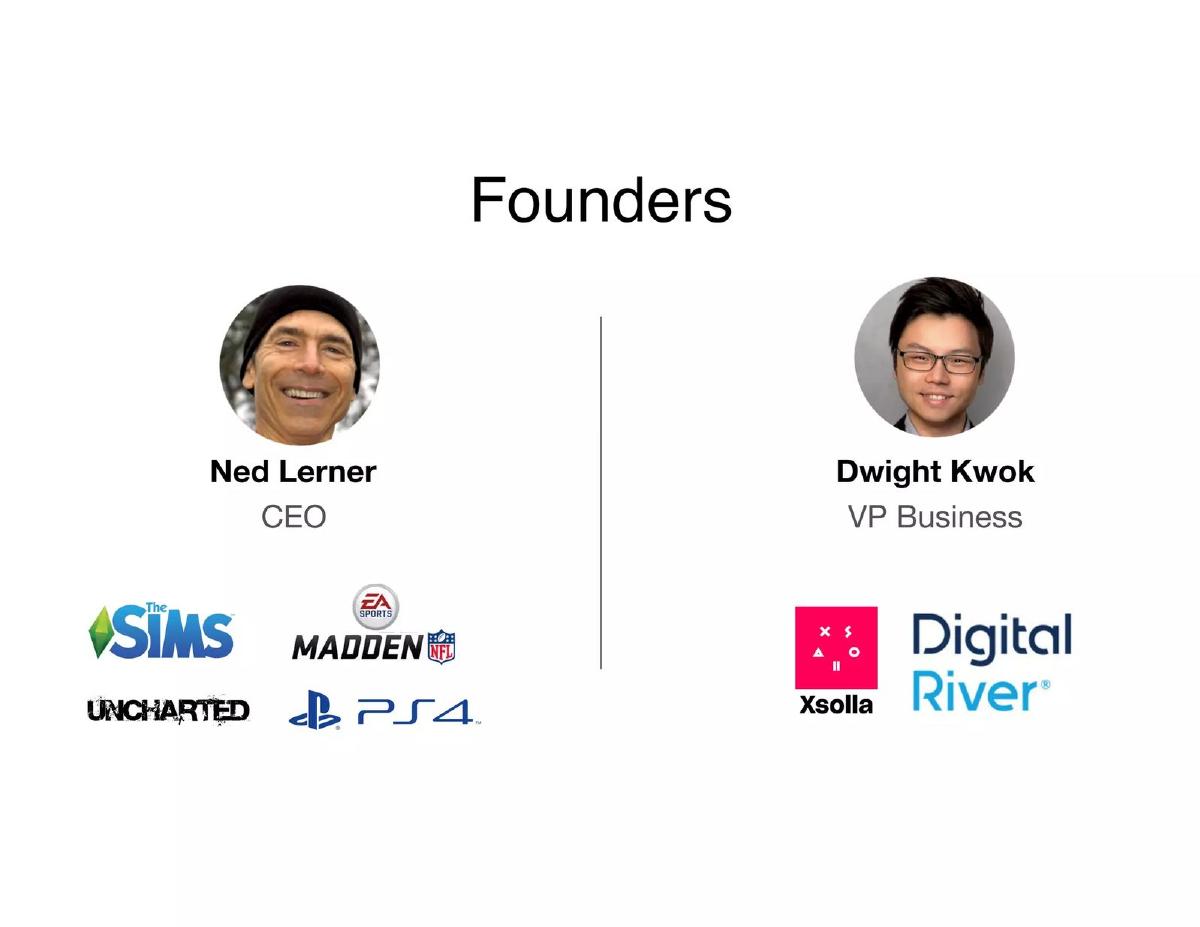
The second slide is arguably the strongest in the deck. It features CEO Ned Lerner and VP Business Dwight Kwok. Rather than listing bullet points of responsibilities, the slide uses iconic logos to establish credibility. For Lerner, we see The Sims, Madden NFL, Uncharted, and the PlayStation 4 logo. For Kwok, the logos for Xsolla and Digital River are displayed. This slide tells an investor that the team has built and scaled products at the highest level of the gaming industry. It sets the stage for the argument that they know how to build social experiences that work.
Slide 3: The Thesis
Slide 3 establishes the 'Why.' It features the text 'Games are highly social, talking experiences' above the logos for Fortnite and League of Legends. This is the foundational premise of the company: the most successful modern entertainment products are not just consumed; they are shared social environments. The deck uses these two massive titles to represent the gold standard of digital social interaction.
Slide 4: Market Opportunity
This slide provides the 'So What?' by comparing market sizes. Using a donut chart, it shows the 'Games' market at $0.15 Trillion and the 'Media & Entertainment' market at $2.20 Trillion. Citing Newzoo and PwC as sources, the slide suggests that the social mechanics currently confined to the $150 billion gaming sector have a massive opportunity to expand into the $2.2 trillion broader media sector. It is a classic 'TAM' (Total Addressable Market) slide that focuses on the potential for cross-pollination between industries.
Slide 5: Product Step 1 - Content Selection
The deck then moves into a three-step product walkthrough. Slide 5 shows a mobile phone mockup with the heading '1. Pick what you want to watch.' The screen displays logos for Netflix, YouTube, Amazon, and Twitch. At the bottom of the screen, a row of user avatars indicates that the social layer is already present even before content is selected. This suggests a 'social-first' rather than 'content-first' user flow.
Slide 6: Product Step 2 - Invitation
Slide 6 shows the second step: '2. Pick who you want to watch with.' The mockup displays an invitation link (hearo.page.link/qJMH) and options to invite friends by name or select from a list of active contacts. This highlights the synchronous nature of the platform; it is designed for real-time interaction, not asynchronous commenting.
Slide 7: Product Step 3 - The Experience
Slide 7 shows the final step: '3. Talk + Watch Together.' The mockup features a live stream of a soccer match (specifically the US Women's National Team) with the same row of user avatars from Slide 5 overlaid at the bottom. The interface is clean, prioritizing the content while keeping the 'party' visible. This slide visualizes the core utility of the app: a shared living room experience on a mobile device.
Slide 8: The Vision and Traction
Slide 8 summarizes the company's identity: 'The human connection platform for entertainment.' It features the logo for ESL (Electronic Sports League) next to a red 'CONFIDENTIAL' stamp. This is the only hint of traction or partnership in the deck. By associating with ESL, Hearo.Live suggests it is already being tested or integrated into major esports broadcasting environments, which aligns with the gaming expertise of the founders.
Slide 9: Closing
The final slide repeats the branding from the title slide but adds the hashtag #ThePartyIsOn. It provides the same contact information for Ned Lerner. It serves as a simple call to action, reinforcing the brand and the 'party' metaphor used throughout the deck.
What Works in the Hearo.Live Deck
1. Founder Credibility: In early-stage investing, the team is often more important than the product. By leading with 'The Sims' and 'PlayStation 4,' the founders immediately bypass questions about their ability to build complex software. They are established veterans, not first-time amateurs.
2. Simple Narrative: The deck follows a very logical path: Gaming is social (Slide 3) -> Media is huge but not social (Slide 4) -> We make Media social (Slides 5-7). This is a narrative that can be explained in 30 seconds, which is vital for a high-level pitch.
3. Visual Clarity: The mockups are professional and focus on the user experience. By using recognizable logos like Netflix and YouTube, they help the investor immediately understand how the product fits into the existing ecosystem of a consumer's phone.
What is Missing from the Hearo.Live Deck
1. Business Model: There is no explanation of how Hearo.Live intends to make money. Are they taking a cut of subscriptions? Is it ad-supported? Is it a B2B play for streamers? This is a significant omission that leaves the 'business' part of the startup a mystery.
2. The 'Ask': A pitch deck usually ends with a request for a specific amount of capital. This deck has no ask, no valuation, and no use-of-funds breakdown. This suggests it may be a 'teaser' deck meant to generate interest rather than a full investment deck.
3. Competitive Landscape: The co-watching space is crowded. During the time this deck was likely produced, companies like Scener, Kast, and even native features like Disney+ GroupWatch were emerging. The deck does not explain why Hearo.Live is a better solution than a simple Discord screen share or a native app feature.
4. Technical Moat: Synchronizing video across multiple devices while maintaining low-latency voice chat is technically difficult, especially when dealing with DRM-protected content from Netflix or Amazon. The deck does not address how they solve these technical hurdles or if they have intellectual property protecting their method.
What Founders Should Copy
The 'Three-Step' Product Slide: Founders often over-complicate their product demos. Hearo.Live’s use of three clear, numbered steps (Pick content, Pick friends, Watch) is an excellent way to demonstrate a user journey without needing a live demo. It shows the product is intuitive and focused.
Market Comparison: Instead of just showing a massive TAM, Hearo.Live compares their target market to a related market that the investor already understands (Gaming). This 'Market A is like Market B but bigger' approach is a persuasive way to frame an opportunity.
Minimalism: While this deck goes perhaps too far in its omissions, the lack of clutter is refreshing. Each slide has one job and one message. Founders should strive for this level of clarity, even if they choose to include more data than Hearo.Live did.
Frequently asked questions
- What is the core value proposition of Hearo.Live?
- Based on slide 8, the company defines itself as the 'human connection platform for entertainment.' The deck argues that while games like Fortnite and League of Legends are highly social, talking experiences (slide 3), traditional media lacks this layer. Hearo.Live provides a mobile interface that allows users to sync video streams from providers like Netflix and YouTube while maintaining a voice and visual social layer with friends.
- Who are the founders and what is their background?
- Slide 2 identifies Ned Lerner as CEO and Dwight Kwok as VP of Business. Lerner’s background includes work on major titles and platforms including The Sims, Madden NFL, Uncharted, and the PS4. Kwok brings business experience from Xsolla and Digital River. This emphasis on 'AAA' gaming experience suggests the company is applying gaming-industry social mechanics to the broader media landscape.
- Which streaming platforms does Hearo.Live support?
- Slide 5 shows a mockup of the app interface featuring the logos of Netflix, YouTube, Amazon (Prime Video), and Twitch. This suggests the platform acts as an aggregator or an overlay that enables social interaction across these disparate third-party content libraries, rather than hosting its own proprietary content.
- What market opportunity is the deck targeting?
- Slide 4 uses data from Newzoo and PwC to contrast the $150 billion global games market with the $2.2 trillion global media and entertainment market. The implication is that by bringing the social engagement levels of gaming to the much larger media market, Hearo.Live can capture a significant portion of a multi-trillion dollar industry.
- What critical information is missing from this deck?
- This is a very high-level 'vision' deck. It lacks a slide for unit economics, a business model (how they make money), a competitive landscape (how they beat Discord or native 'Watch Party' features), and a financial ask. There is also no roadmap or traction data beyond an implied partnership with ESL on slide 8.