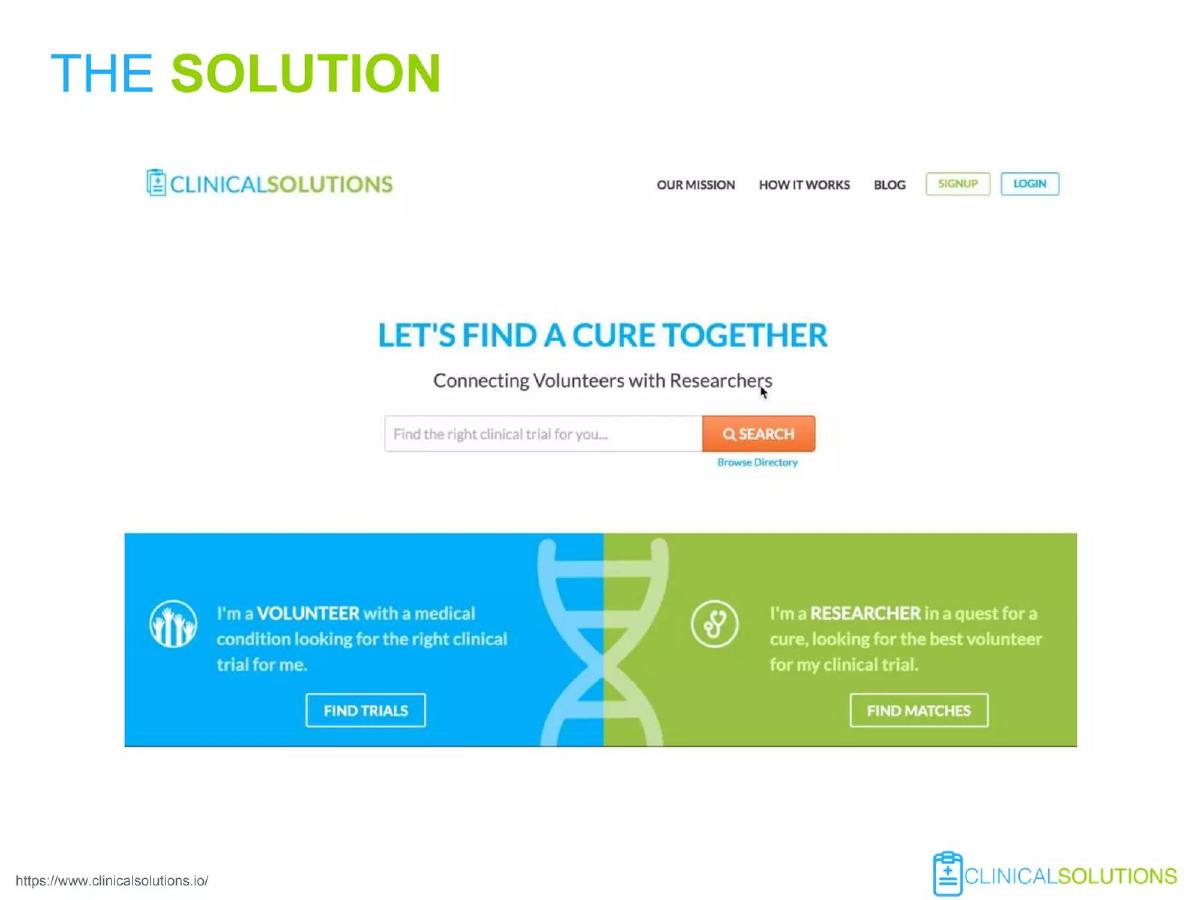
ClinicalSolutions (ClinicalSolutions.io) is a marketplace platform designed to streamline the clinical trial application process by matching volunteer medical data with researcher criteria. The 2016 deck identifies the inefficiency of the existing ClinicalTrials.gov registry, which listed over 218,000 studies at the time of the pitch. The company seeks $2.0 million in exchange for 20% equity to fund an 18-month runway. The primary value proposition is a proprietary matching algorithm intended to replace traditional newsletter-based solutions. The deck features extensive product screenshots de…
Key takeaways
- The company is seeking $2.0M for 20% equity with an 18-month runway (Slide 5).
- The mission is to eradicate all orphan diseases no later than 2050 (Slide 1).
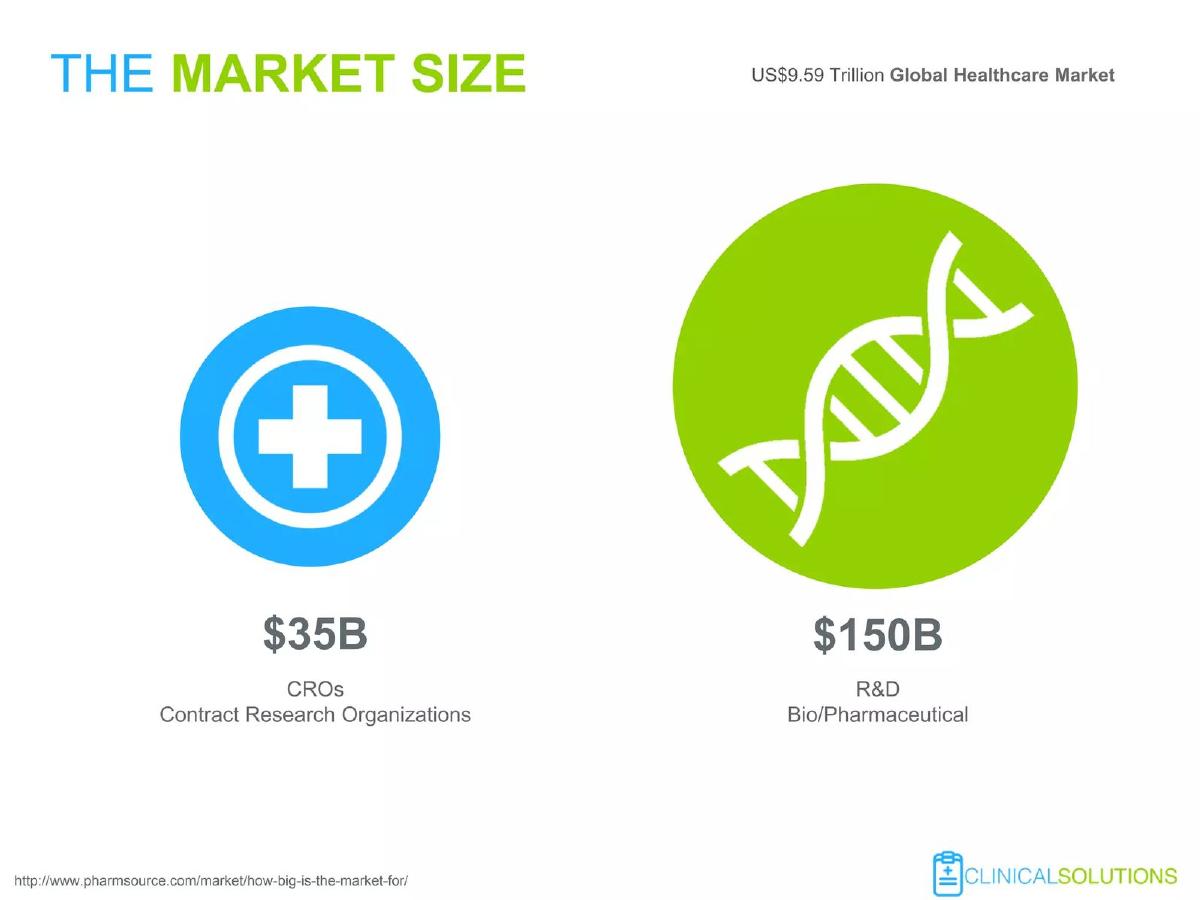
- The platform targets a $35B Contract Research Organization (CRO) market and a $150B Bio/Pharmaceutical R&D market (Slide 3).
- The product includes a 'one-click' solution for clinical trial applications using a proprietary matching algorithm (Slide 1).
- The founder, Irving Rivera, is an industrial engineer and UX designer with five years of military service (Slide 1).
- The raise is allocated toward hiring eight specific roles, including security, back-end, and mobile engineers (Slide 5).
- The platform features an API widget that allows researchers to embed the application process directly into their own websites (Slide 9).
- The deck identifies the current problem using a screenshot of ClinicalTrials.gov, noting 218,540 studies across 193 countries (Slide 2).
Executive Summary and Mission
Slide 1: Introduction and Founder Profile
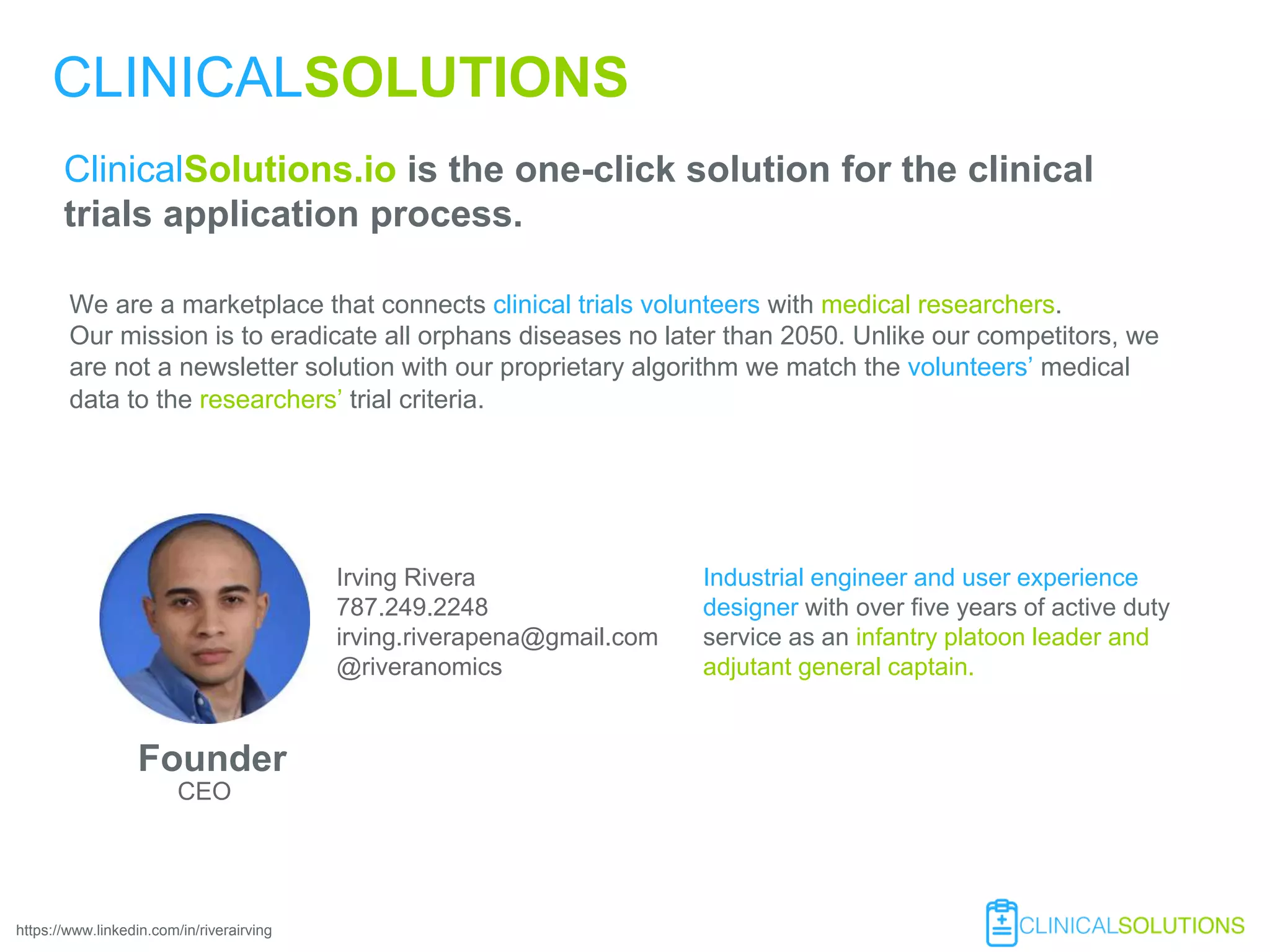
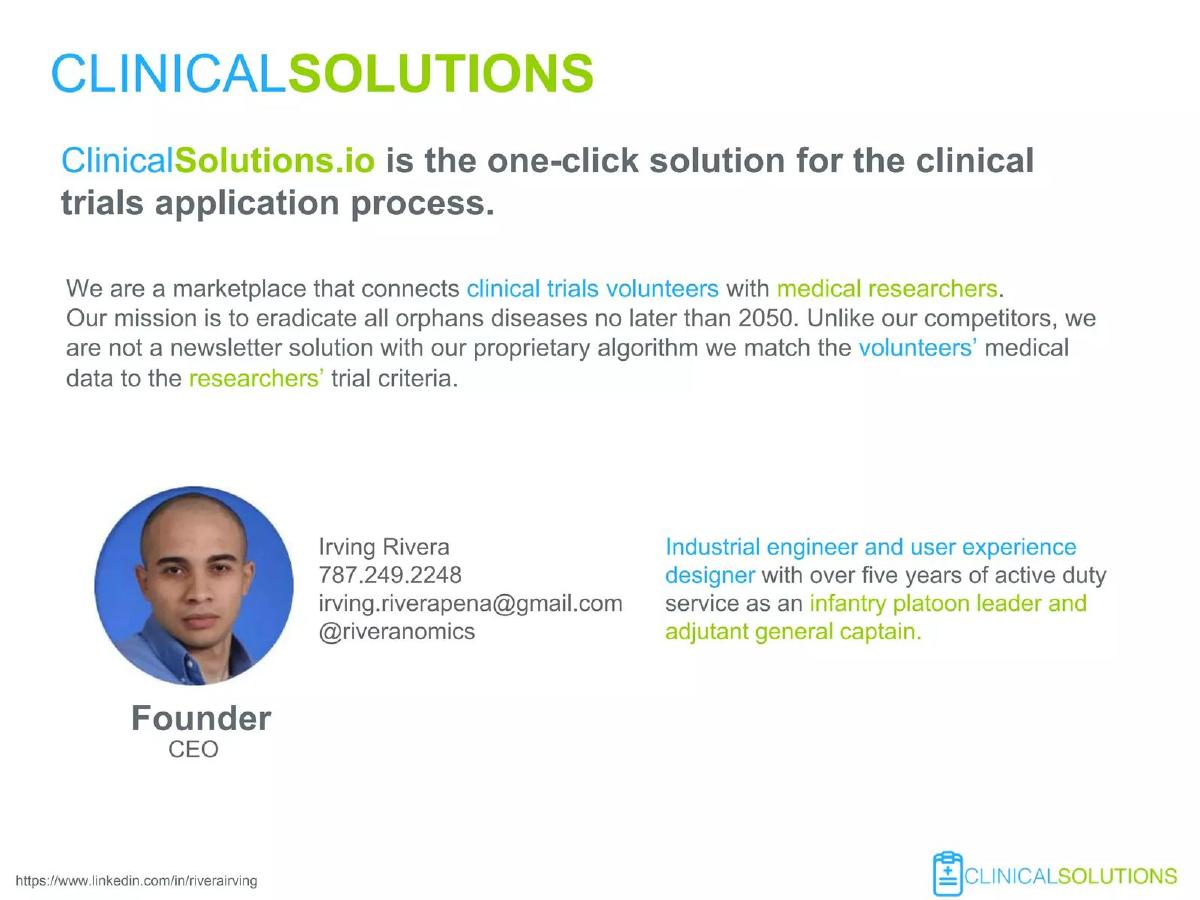
The deck opens with a clear value proposition: ClinicalSolutions.io is a 'one-click solution for the clinical trial application process.' The company defines itself as a marketplace connecting volunteers with medical researchers. A significant, long-term mission statement is included: 'to eradicate all orphan diseases no later than 2050.' This slide also introduces the founder, Irving Rivera, emphasizing his dual background in industrial engineering/UX design and his five years of military service as an infantry platoon leader. The mention of a 'proprietary algorithm' serves as the primary technical differentiator against 'newsletter solutions.'
Identifying the Market Friction
Slide 2: The Problem
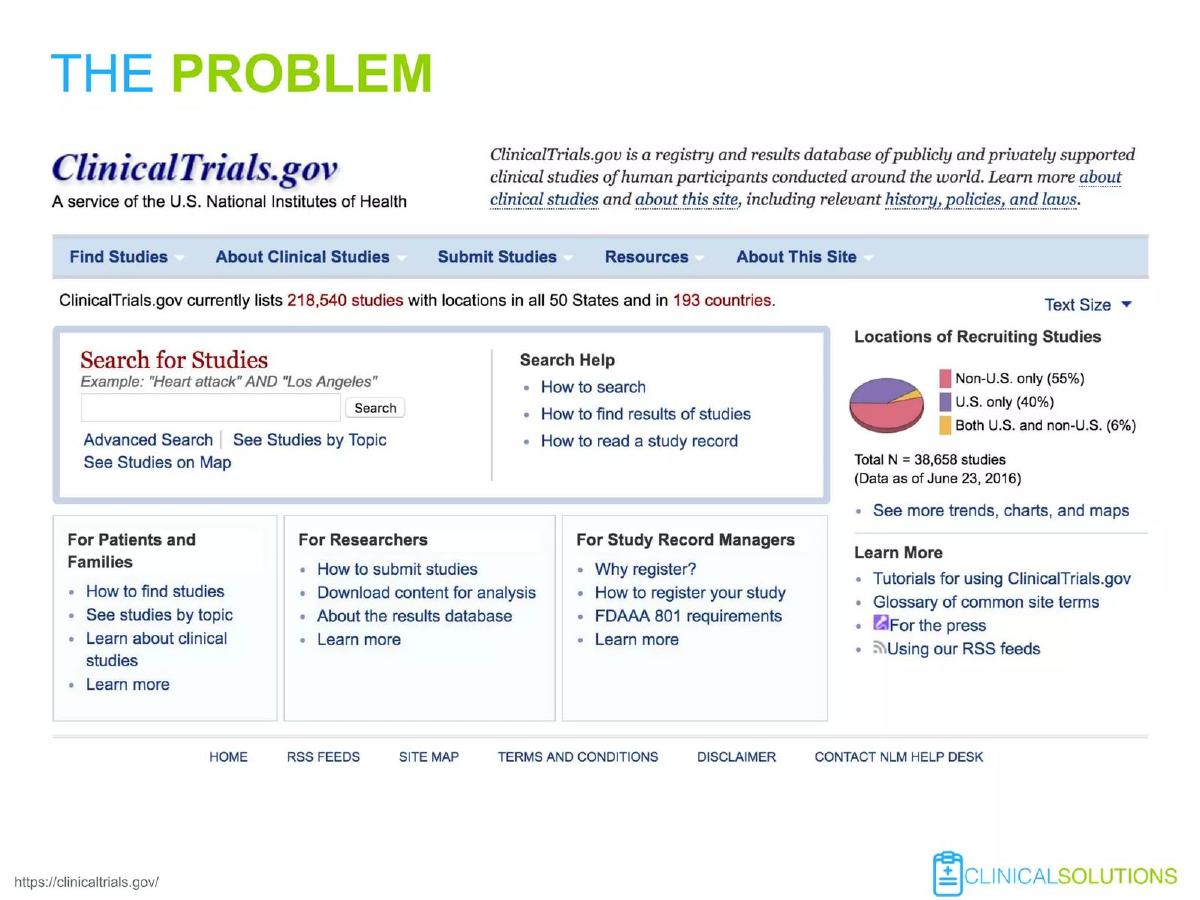
Rather than using bullet points to describe the problem, the deck uses a screenshot of the ClinicalTrials.gov website. It highlights that the site currently lists 218,540 studies across 50 states and 193 countries. By labeling this 'The Problem,' the founder implies that the government-run registry is an outdated, difficult-to-navigate database that hinders the matching of patients to critical research. The data provided is dated June 23, 2016, which anchors the deck's timeline.
Slide 3: The Market Size
The market slide utilizes a top-down approach. It cites a US$9.59 Trillion Global Healthcare Market as the broadest context. It then narrows the focus to two actionable segments: $35B for Contract Research Organizations (CROs) and $150B for Bio/Pharmaceutical R&D. This slide establishes that the company is playing in a high-capital industry where recruitment delays can cost pharmaceutical companies millions of dollars per day.
Team and Capital Requirements
Slide 4: The Team
The team slide is lean, featuring four individuals: Irving Rivera (Design), Seth Dorris (Development), Adam Shed (Sales), and Stacey Guillen (Compliance). The inclusion of a dedicated 'Compliance' role is a strategic choice for a health-tech startup, signaling to investors that the company understands the regulatory hurdles (such as HIPAA or GDPR) inherent in handling medical data. However, the slide lacks professional bios or past company exits for the team members other than the CEO.
Slide 5: The Raise
ClinicalSolutions is seeking $2.0M in exchange for 20% equity, implying a $10M post-money valuation. The runway is set at 18 months. The hiring plan is highly specific, listing eight roles ranging from Security Engineer to Videographer. The slide also features logos for Aptible and HITRUST, suggesting the company is utilizing these platforms for cloud security and compliance. A 60%/40% split is shown at the bottom, though the deck does not explicitly state if this refers to the split between engineering and marketing or another budget allocation.
Product Demonstration
Slide 6: The Demo - Researcher View
This slide shows the interface for researchers to input 'Basic Details' for a trial. Fields include Case Study Title, Study ID, Cash Reward ($2,500.0 in the example), and demographic requirements. The UI appears clean and follows modern web standards for 2016, supporting the founder's UX background.
Slide 7: The Demo - Volunteer View
The volunteer dashboard displays 'Matched Trials.' In this example, a user sees a trial with a 'Matched %: 98.0.' This reinforces the 'proprietary algorithm' claim from Slide 1. The interface shows the user their personal profile requirements (Age, Height, Weight, BMI, etc.) and how they align with the trial's needs.
Slide 8: The Demo - Pre-qualified Volunteers
This view shows the researcher's side of the matching process. It displays a list of 'Pre-qualified Volunteers & Matches' with a 98.0% match rate. The researcher has the option to 'Accept Match' or 'Decline Match.' This slide is crucial as it demonstrates the platform's ability to filter out unqualified candidates before they ever reach the researcher, which is a major pain point in clinical trials.
Slide 9: The Demo - API Integration
One of the more technical slides in the deck, this shows the 'Apply with API Setting.' It provides a code snippet that researchers can copy and paste into their own websites. This 'widget' strategy allows ClinicalSolutions to act as the backend infrastructure for various research institutions, potentially increasing their data moat by capturing volunteer applications across the web.
Emotional Hook
Slide 10: Noah - The Human Element
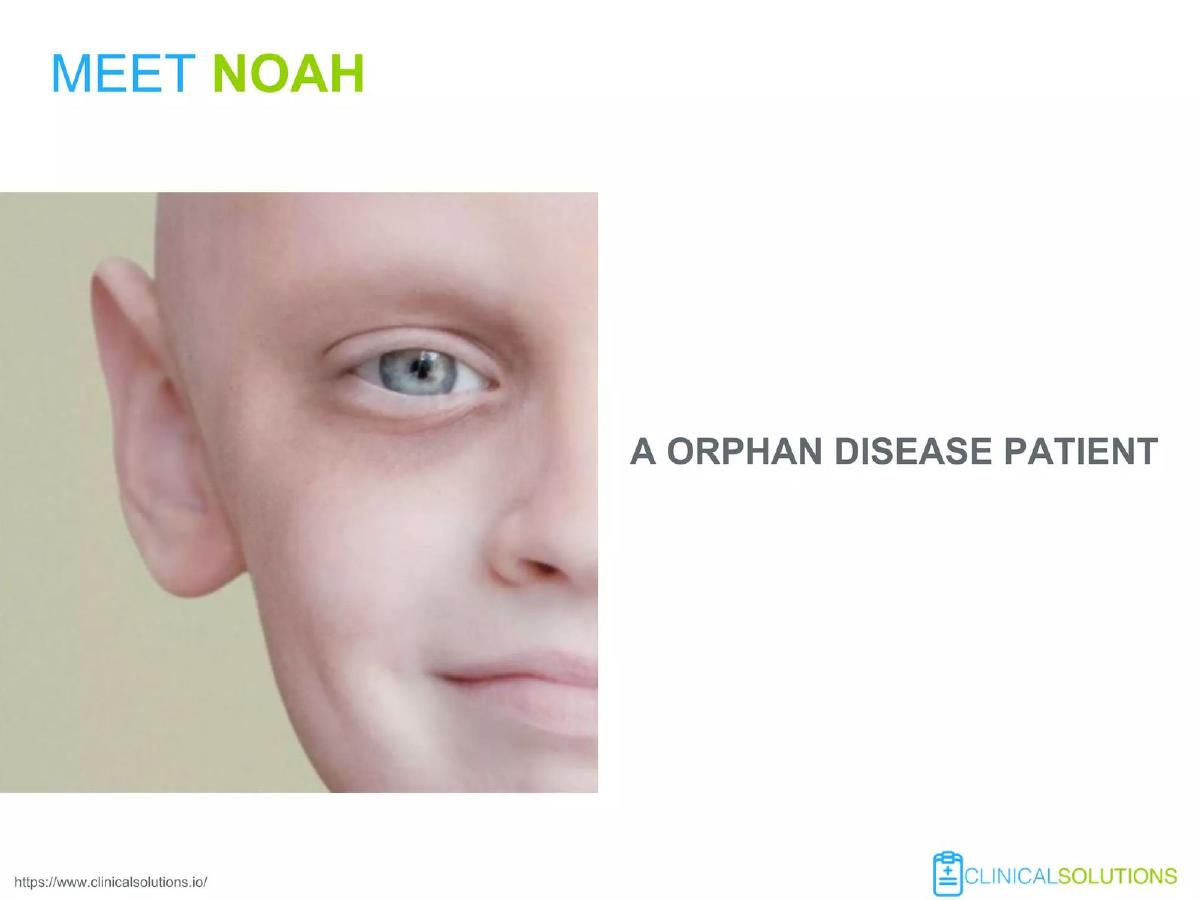
The final slide in this set moves away from data and UI to focus on 'Noah,' described as 'An Orphan Disease Survivor.' This serves as a bookend to the mission statement on Slide 1. It reminds investors of the human impact of the technology—that faster clinical trial matching leads to faster cures for life-threatening diseases.
What ClinicalSolutions Does Well
The deck excels at showing, rather than just telling. The inclusion of four distinct 'Demo' slides (Slides 6-9) provides a clear picture of the product's functionality and the user journey for both sides of the marketplace. The API integration slide is particularly strong, as it suggests a scalable B2B distribution strategy rather than just a standalone consumer portal. The 'Raise' slide is also refreshingly transparent, providing a specific dollar amount, equity percentage, and a detailed hiring list.
What is Missing from the Deck
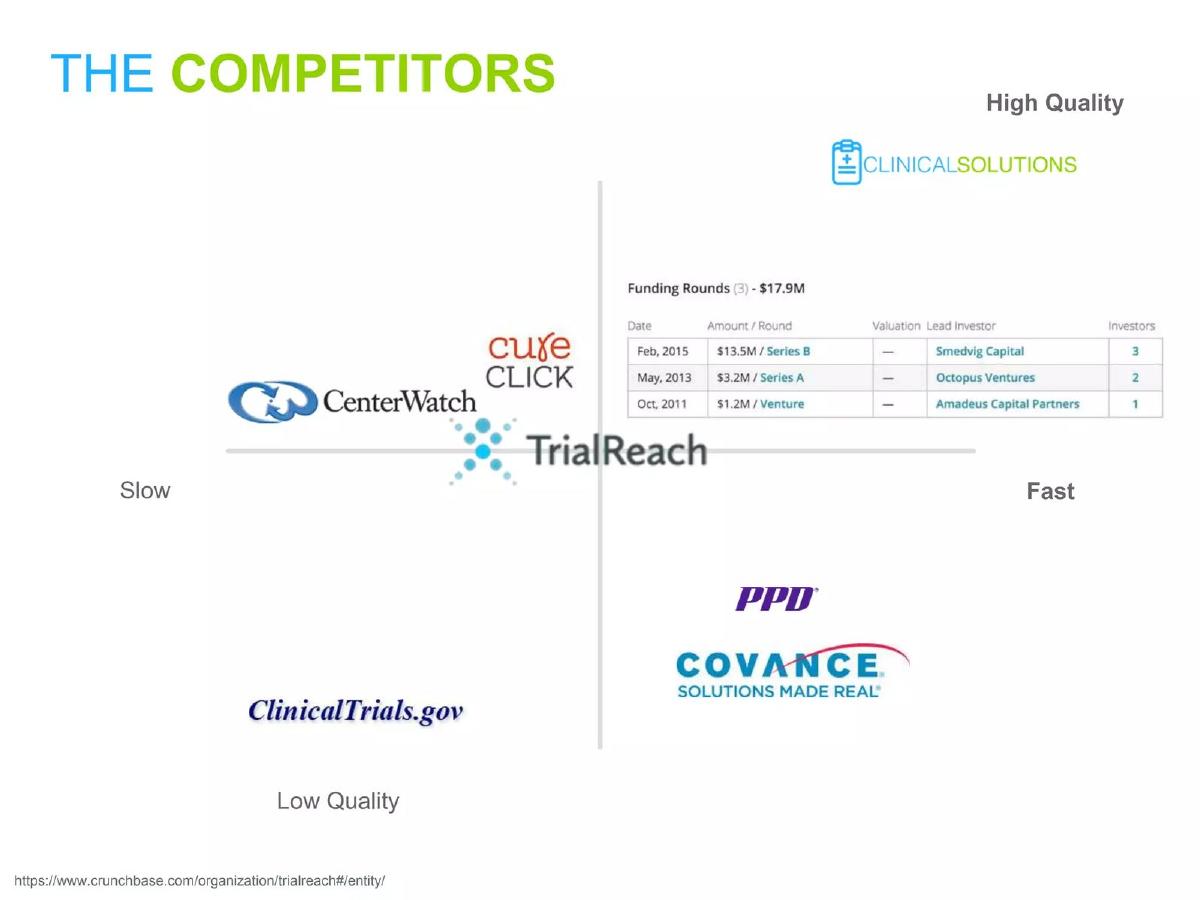
The most glaring omission is traction. There are no figures regarding the number of active volunteers, partnered research institutions, or successful matches made to date. Furthermore, the deck does not explain the revenue model. While it mentions 'Cash Rewards' for volunteers, it does not state how ClinicalSolutions makes money—whether through a percentage of the recruitment fee, a SaaS subscription for researchers, or a per-match fee. Finally, the competitive landscape is ignored; while ClinicalTrials.gov is cited as the 'problem,' there is no mention of other private competitors in the patient recruitment space, such as Antidote or SubjectWell.
Founder Takeaways
Founders should emulate the clarity of the 'Raise' slide. Investors appreciate knowing exactly how much capital is needed and where every dollar of that capital is going. The use of product screenshots to explain the 'Solution' is also a best practice, as it proves the product exists and is beyond the conceptual stage. However, founders should be careful not to omit the business model. A beautiful UI and a noble mission are rarely enough to secure a $2M investment without a clear path to monetization and evidence of early market interest.
Frequently asked questions
- What is the specific problem ClinicalSolutions aims to solve?
- ClinicalSolutions targets the inefficiency of the current clinical trial recruitment process. Slide 2 highlights ClinicalTrials.gov as the incumbent 'problem,' implying that the existing registry is difficult to navigate for the 218,540 listed studies. The deck suggests that current solutions are often just 'newsletters,' whereas ClinicalSolutions uses a proprietary algorithm to match volunteer medical data directly to trial criteria, reducing manual search time.
- How does the company plan to use the $2 million investment?
- According to Slide 5, the $2.0M raise is intended to cover an 18-month runway. The funds are primarily allocated to human capital, specifically hiring a Security Engineer, Back-End Engineer, Front-End Engineer, Android Engineer, iOS Engineer, Illustrator, Videographer, and Copywriter. The slide also indicates a 60/40 split, though it does not explicitly define what these percentages represent (likely development vs. operations/marketing).
- What is the technical maturity of the product based on the deck?
- The product appears to be in a functional beta or MVP stage. Slides 6 through 9 show detailed 'Demo' screenshots of the user interface. These include a 'Basic Details' form for researchers, a 'Matched Trials' view for volunteers showing a 98.0% match rate, and a 'Pre-qualified Volunteers' dashboard. Notably, Slide 9 shows a functional API widget code snippet, suggesting the platform is built for integration into third-party sites.
- Who are the key members of the ClinicalSolutions team?
- The team consists of four primary members listed on Slide 4: Irving Rivera (Design/CEO), Seth Dorris (Development), Adam Shed (Sales), and Stacey Guillen (Compliance). The founder, Irving Rivera, is highlighted on Slide 1 as an industrial engineer and UX designer with a background as an infantry platoon leader and adjutant general captain in the military.
- What market size is ClinicalSolutions targeting?
- Slide 3 defines the total addressable market within the global healthcare sector, valued at US$9.59 trillion. More specifically, it identifies two key segments: the $35 billion Contract Research Organization (CRO) market and the $150 billion Bio/Pharmaceutical R&D market. The platform positions itself as the marketplace connecting these researchers with volunteers.