GPU Eater’s 14-slide deck is a masterclass in high-contrast storytelling, using extreme visual metaphors to highlight the financial pain of machine learning developers. The company positions itself as a low-cost, high-performance alternative to incumbent cloud providers, claiming a 50% speed advantage and a price point of $249 per month compared to the $648 market average (Slide 11). With 135+ customers across 34 countries acquired in just nine months (Slide 2), the deck leans heavily on early traction and market growth projections—predicting a jump from a $3B market in 2018 to $10B by 2021 (…
Key takeaways
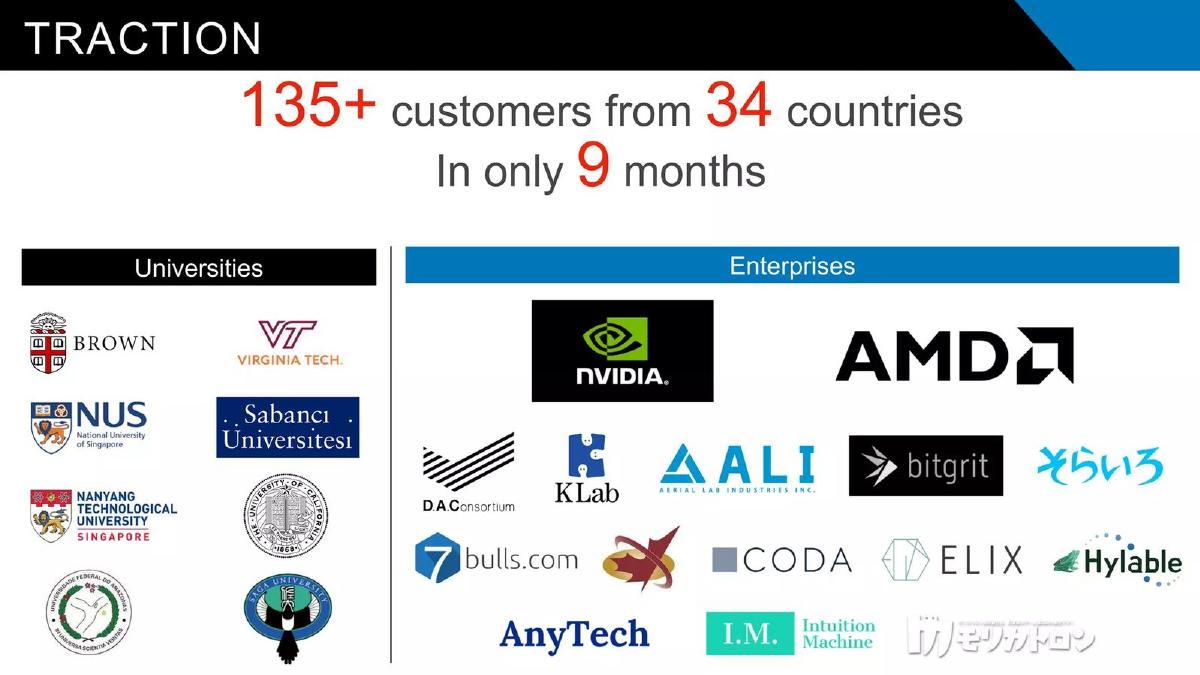
- The company claims to have acquired 135+ customers from 34 countries in only 9 months (Slide 2).
- GPU Eater positions its pricing at $249/month, significantly lower than the cited 'Market leader' price of $648/month (Slide 11).
- The deck asserts that their performance is 'up to 50%' faster than existing solutions (Slide 9).
- Market size is projected to grow from $3B in FY2018 to $10B in FY2021 (Slide 10).
- The business model is strictly 'Pay-as-you-go,' emphasizing flexibility for developers (Slide 11).
- The team consists of a CEO with one previous exit and a CTO who is a DL/ML Data Scientist (Slide 13).
- The deck uses aggressive visual metaphors, such as a man screaming at a bill increasing from $3,000 to $10,000, to illustrate the 'Problem' (Slide 8).
- Major enterprise logos including NVIDIA and AMD are featured on the traction slide, though their specific relationship to the company is not detailed (Slide 2).
The Hook: Immediate Traction and Use Cases
Slide 1: Title Slide
The deck opens with a minimalist title slide featuring the GPU Eater logo—a stylized 'G' with a blue geometric element. The tagline is simple: 'Cloud GPUs that help ML developers.' It includes a contact email for the CEO, establishing a direct line for investors from the outset.
Slide 2: Traction Overview
Unusually, the deck moves straight to traction. Slide 2 claims '135+ customers from 34 countries in only 9 months.' The slide is divided into 'Universities' and 'Enterprises.' University logos include Brown, Virginia Tech, NUS, and the University of California. The Enterprise section features heavy hitters like NVIDIA and AMD, alongside others like KLab and Bitgrit. This slide serves to immediately validate the product's market fit before the problem is even fully explained.
Slides 3-5: Vertical Use Cases
These three slides use full-bleed imagery to define the target markets. Slide 3 shows 'Autonomous Driving,' Slide 4 displays 'Medical Image Analysis' with a grid of brain scans, and Slide 5 features a 'Smart city' skyline with a digital mesh overlay. These slides contain no metrics or prose, serving only to visually anchor the company in high-growth AI sectors.
The Core Narrative: Problem, Solution, and Market
Slide 6: Defining the GPU
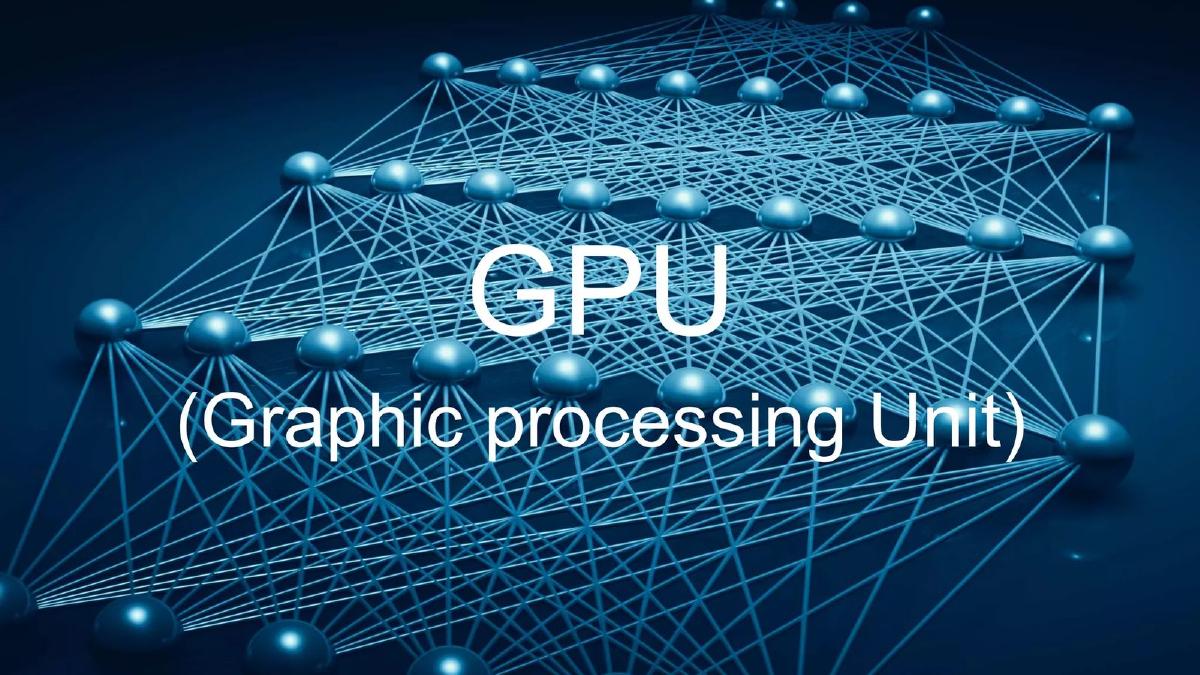
Slide 6 is a basic educational slide: 'GPU (Graphic Processing Unit)' over a 3D neural network visualization. In a 2015 context, this may have been necessary to ensure all investors understood the hardware focus, though today it would likely be considered redundant for a tech-focused VC.
Slides 7-8: The Financial Pain Point
GPU Eater uses a 'before and after' visual storytelling technique. Slide 7 shows a man giving a thumbs up next to a '$3,000/m' figure. Slide 8, labeled 'PROBLEM,' shows the same man screaming in distress as the figure jumps to '$10,000/m,' with a red '+ $7,000' highlight. This effectively illustrates the 'hidden' or scaling costs of traditional cloud GPU providers as a project grows.
Slide 9: The Solution
The 'SOLUTION' slide introduces 'GPU EATER' as the fix for the previous slide's distress. It brings the cost back down to '$3,000 /m' and adds a performance claim: 'up to 50%' with a red upward arrow. The background features a 'wave' of dollar bills, reinforcing the theme of cost savings.
Slide 10: Market Growth
Labeled 'MARKET,' this slide uses a photo of the New York Stock Exchange to project market expansion. It cites a growth trajectory from '$3B (FY2018)' to '$10B (FY2021).' This 233% projected increase over three years frames the company as a player in a rapidly inflating sector.
Slide 11: Business Model and Comparison
Slide 11 details the 'Business Model' as 'Pay-as-you-go.' It provides a direct head-to-head comparison: GPU Eater at '$249/m ~' versus a 'Market leader' at '$648/m ~.' It reiterates the 'Performance is 50% Faster' claim. This is the most data-rich slide in the deck, providing the specific price arbitrage that forms the core of their competitive advantage.
The Team and Closing
Slide 12: Traction Reiteration
Slide 12 repeats the traction data from Slide 2 ('135+ customers from 34 countries in only 9 months') but simplifies the logo set to just Brown University, D.A. Consortium, and NVIDIA. This repetition emphasizes their growth velocity one last time before the team slide.
Slide 13: Team
The 'TEAM' slide introduces the two founders. CEO Shunsuke Ichihara is noted as a '1 Exit Serial Entrepreneur.' CTO Akihito Nakatsuka is described as a 'DL/ML Data Scientist.' The CTO's photo is notably informal, showing him holding a 'Radeon Instinct' GPU box on his head, which aligns with the developer-centric, slightly irreverent 'GPU Eater' branding.
Slide 14: Thank You
The final slide provides the company name (Pegara, Inc.), the CEO's name, and his email address. It lacks a call to action or a summary of the investment opportunity, functioning strictly as a contact card.
What GPU Eater Does Well
Aggressive Price Comparison: The deck does not shy away from naming a specific price point ($249) and comparing it directly to the market average ($648). This makes the value proposition incredibly easy to understand for a non-technical investor.
Visual Metaphor: Using the 'screaming man' to represent the pain of scaling costs is a visceral way to communicate a problem that is usually buried in spreadsheets. It makes the 'Problem' slide memorable.
Early Validation: Leading with traction (Slide 2) is a strong move for a startup in a crowded space. By showing that they already have users at NVIDIA, AMD, and top-tier universities, they bypass the 'will anyone use this?' question entirely.
What Is Missing from the Deck
The 'How': The deck claims a 50% performance increase at a 60% lower cost but never explains the underlying technology. Is it a proprietary orchestration layer? A new type of hardware? A decentralized network? This omission is a significant hurdle for technical due diligence.
Financials and Ask: There is no mention of current revenue, burn rate, or the amount of capital being sought. Investors are left without a sense of the deal's terms or the company's runway.
Competitive Landscape: While they mention a 'Market leader,' they don't address the broader ecosystem of cloud providers (AWS, GCP, Azure) or other specialized GPU clouds. A competitive matrix would have helped define their niche more clearly.
What Other Founders Should Copy
The 'Traction First' Approach: If you have impressive numbers, don't wait until Slide 10 to show them. GPU Eater puts their 135 customers on Slide 2, which immediately changes how the investor views the rest of the presentation.
Minimalist Text: This deck relies on large numbers and clear headers. It is designed to be spoken over, not read as a document. Founders should aim for this level of clarity, avoiding the 'wall of text' that plagues many technical pitches.
Direct Price Anchoring: By stating their price and the competitor's price on the same slide, they control the narrative around 'value.' If your startup is a low-cost disruptor, make the math unavoidable for the reader.
Frequently asked questions
- What is GPU Eater's primary value proposition?
- According to slides 9 and 11, the primary value proposition is a combination of cost and performance. They claim to be up to 50% faster than competitors while charging $249 per month, which they contrast against a market leader price of $648 per month. This represents a significant cost reduction for machine learning developers who require high-performance Graphic Processing Units.
- How much traction did the company have at the time of the pitch?
- Slide 2 and Slide 12 both state that the company gained over 135 customers across 34 different countries within its first nine months of operation. The traction slide includes logos from prestigious universities like Brown and NUS, as well as major tech corporations like NVIDIA and AMD, suggesting a broad user base across academia and industry.
- Who are the founders of GPU Eater?
- As shown on Slide 13, the company is led by CEO Shunsuke Ichihara, described as a '1 Exit Serial Entrepreneur,' and CTO Akihito Nakatsuka, who is identified as a 'DL/ML Data Scientist.' This combination suggests a balance of business experience and technical domain expertise in deep learning and machine learning.
- What market opportunity does the deck identify?
- Slide 10 identifies a rapidly expanding market for GPU services. It cites a market value of $3 billion in fiscal year 2018 and projects that this will grow to $10 billion by fiscal year 2021. The deck uses a photo of the New York Stock Exchange to emphasize the financial scale of this opportunity.
- What is missing from the GPU Eater pitch deck?
- The deck is notably missing a specific 'Ask' slide detailing how much capital they are raising and how it will be used. It also lacks a technical roadmap, detailed unit economics (CAC/LTV), and a clear explanation of how they achieve a 50% performance increase at a lower cost than established market leaders.