GPU EATER, operated by Pegara, Inc., addresses the spiraling costs of machine learning development through a low-cost GPU cloud engine. The deck highlights a significant price gap in the market, where developers face monthly bills jumping from $3,000 to $10,000 as they scale. GPU EATER positions itself as a solution that maintains a $3,000/month price point while offering up to 50% faster performance. With a lean 14-slide presentation, the company emphasizes its rapid global traction—135+ customers in nine months—and a diverse client base including top-tier universities like Brown and UC Berk…
Key takeaways
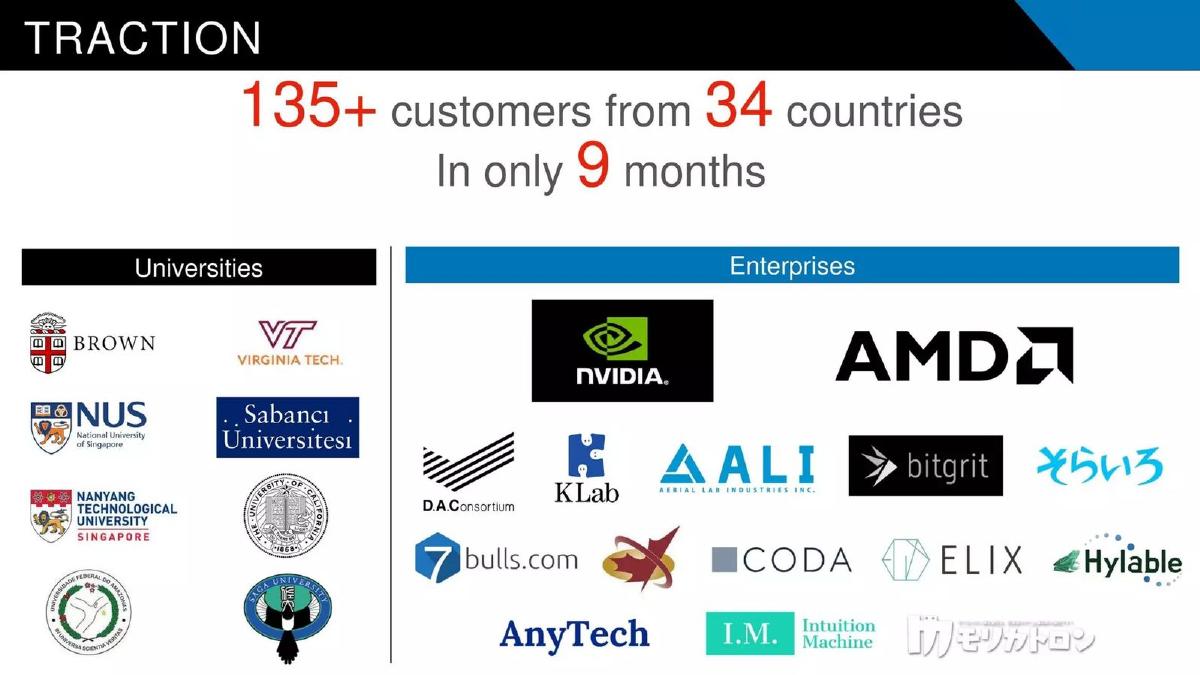
- The company achieved 135+ customers across 34 countries within its first nine months of operation, as stated on slide 2.
- The core problem identified is the steep cost escalation in ML development, where bills can surge by $7,000 per month (slide 9).
- GPU EATER claims a 50% performance advantage over the market leader while charging $249/month compared to the leader's $648/month (slide 12).
- The market for GPU computing is projected to grow from $3B in FY2018 to $10B by FY2021 (slide 11).
- The customer base is split between prestigious academic institutions like Brown and Virginia Tech and enterprise clients including NVIDIA and AMD (slide 2).
- The leadership team consists of a serial entrepreneur with one exit and a specialized DL/ML data scientist (slide 14).
- The deck utilizes a pay-as-you-go business model to lower the barrier to entry for developers (slide 12).
- There is a notable absence of a specific funding 'Ask' slide or a detailed roadmap for future infrastructure expansion.
Introduction to GPU EATER
GPU EATER, a product of Pegara, Inc., entered the market in 2015 to solve one of the most pressing bottlenecks in the artificial intelligence revolution: the cost of compute. As machine learning models grow in complexity, the hardware required to train them becomes prohibitively expensive for many developers. This 14-slide deck focuses heavily on the price-to-performance ratio and the rapid global adoption the company achieved shortly after launch.
The Hook and Immediate Proof of Concept
Slide 1: Title Slide The deck opens with a minimalist title slide featuring the GPU EATER logo and the tagline: "Cloud GPUs that help ML developers." It includes a direct contact email for the CEO, establishing an immediate line of communication for potential investors.
Slide 2: Traction Unusually, the deck leads with traction rather than the problem. Slide 2 claims "135+ customers from 34 countries in only 9 months." This is a strong opening that validates market demand before explaining the product. The slide is divided into "Universities" (listing Brown, Virginia Tech, NUS, and UC Berkeley) and "Enterprises" (listing NVIDIA, AMD, and several Japanese firms like KLab and D.A. Consortium). Seeing hardware giants like NVIDIA and AMD on a client list for a GPU rental service is a significant credibility marker.
Defining the Use Cases
Slide 3: Autonomous Driving This slide uses a high-quality stock image of a self-driving car interior to signal one of the primary industries driving GPU demand. There is no text other than the heading, letting the visual represent the scale of the data processing required for computer vision in transport.
Slide 4: Medical Image Analysis Similar to the previous slide, this uses a grid of brain scans to highlight the healthcare sector. The implication is that deep learning in medicine requires massive parallel processing power, which GPU EATER provides.
Slide 5: Smart City The visual here is a glowing cityscape of Singapore, representing the IoT and urban planning applications of AI. These three slides (3-5) serve to establish the "Why Now" by showing the diverse, high-growth industries that are currently hungry for GPU resources.
The Technical and Financial Problem
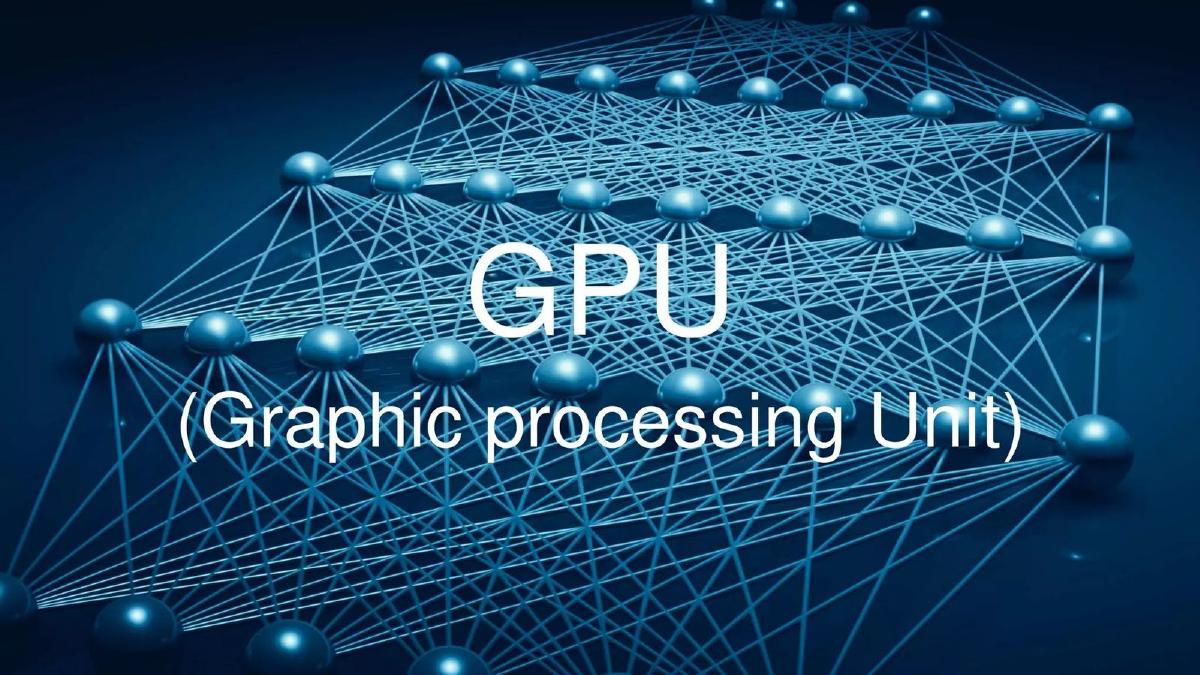
Slide 6: GPU (Graphic Processing Unit) This slide acts as a brief educational bridge, defining the GPU and showing a neural network visualization. It ensures the investor understands the core hardware component being discussed.
Slide 7: The Happy Developer A stock photo of a businessman giving a thumbs up with the figure "$3,000/m" represents the starting point for many ML projects—a manageable budget for early-stage development.
Slide 8: The Problem This slide contrasts the previous one. The same man is now screaming in frustration as his bill jumps from "$3,000/m" to "$10,000/m." A large red "+$7,000" highlights the pain point: the "compute tax" that kills startups as they scale their training data.
The GPU EATER Solution
Slide 9: Solution GPU EATER presents its answer to the cost crisis. The slide shows the company name over a wave of money, promising to keep costs at "$3,000/m" while delivering "up to 50%" better performance. This is the central thesis of the deck: more power for less money.
Slide 10: Market The deck quantifies the opportunity on slide 10. It shows the market growing from $3B in FY2018 to $10B in FY2021. The background image of the New York Stock Exchange reinforces the financial scale of the infrastructure play.
Business Model and Competitive Advantage
Slide 11: Business Model This slide details the "Pay-as-you-go" structure. It provides a direct head-to-head comparison: GPU EATER at "$249/m ~" versus a "Market leader" at "$648/m ~." It also reiterates that their "Performance is 50% Faster." By naming a specific price point, they demonstrate a clear 60% cost saving over incumbents.
Slide 12: Traction (Repeated/Detailed) This slide repeats the traction metrics from slide 2 but focuses on a smaller subset of logos (Brown, D.A. Consortium, NVIDIA). It feels slightly redundant in a 14-slide deck, but serves to remind the viewer of the company's momentum before the team reveal.
The Team and Closing
Slide 13: Team The leadership consists of two people. CEO Shunsuke Ichihara is described as a "1 Exit Serial Entrepreneur," which mitigates the risk of an early-stage venture. CTO Akihito Nakatsuka is shown holding a Radeon Instinct GPU, labeled as a "DL/ML Data Scientist." The photo of the CTO is informal, which may be a stylistic choice to appeal to the developer community they serve.
Slide 14: Thank You The final slide provides the company name (Pegara, Inc.), the CEO's name, and his email address. It is clean and functional, though it lacks a final "call to action" regarding the investment round.
What Works in This Deck
The deck's greatest strength is its clarity of value proposition . By using simple dollar amounts ($249 vs $648), the founders make the economic benefit of their service undeniable. They don't hide behind technical jargon; they focus on the bottom line for the customer. The early traction is also impressive. Securing 135 customers across 34 countries in nine months suggests a product-market fit that is already scaling globally. The inclusion of high-authority logos like NVIDIA and Brown University provides immediate social proof that the technology works and is trusted by experts in the field.
What Is Missing
The most glaring omission is the Investment Ask . There is no mention of how much money is being raised, the valuation, or the specific milestones the funding will help achieve. Additionally, the deck is technically thin . While it mentions an "innovative light-weight cloud engine," it never explains how they achieve 50% better performance at a lower cost. Investors in the infrastructure space typically want to see the underlying architecture or the strategic partnerships (e.g., with AMD) that enable such aggressive pricing. Finally, there is no Roadmap . It is unclear if the company plans to build its own data centers, lease more wholesale capacity, or move into specialized AI chips.
What a Founder Should Copy
Founders should emulate the visual simplicity of the problem/solution slides (Slides 7-9). Using a clear "Before and After" financial comparison is much more effective than a wall of text describing market inefficiencies. The Traction-first approach is also a smart move for startups that already have numbers to brag about; leading with your wins sets a positive tone for the rest of the presentation. Lastly, the market growth slide (Slide 10) is a textbook example of how to show a massive, expanding TAM (Total Addressable Market) using simple, bold figures that are easy to digest during a quick pitch.
Frequently asked questions
- What is the primary value proposition of GPU EATER?
- GPU EATER focuses on cost efficiency and performance for machine learning training. According to slide 12, they offer services starting at $249/month, which is significantly lower than the market leader's $648/month. Additionally, they claim their performance is 50% faster, allowing developers to train models more quickly and cheaply than on traditional cloud platforms.
- Who are the target customers for this platform?
- The platform targets two main segments: academic researchers and commercial enterprises. Slide 2 lists prestigious universities such as Brown, NUS, and Virginia Tech as clients. On the enterprise side, the deck lists major industry players like NVIDIA and AMD, suggesting that even hardware manufacturers utilize Pegara's cloud engine for specific training needs.
- How large is the market opportunity according to the deck?
- Slide 11 defines the market opportunity with a clear growth trajectory. It values the sector at $3 billion in fiscal year 2018 and projects it to reach $10 billion by fiscal year 2021. This represents a more than 3x increase in market size over a three-year period, driven by the rise of autonomous driving and medical imaging.
- What is the background of the founding team?
- The team is led by CEO Shunsuke Ichihara and CTO Akihito Nakatsuka. Slide 14 notes that Ichihara is a serial entrepreneur with one successful exit, providing the business experience necessary for scaling. Nakatsuka is identified as a DL/ML (Deep Learning/Machine Learning) Data Scientist, ensuring the technical expertise required to manage a GPU cloud engine.
- What critical information is missing from the GPU EATER deck?
- The deck lacks a formal 'Ask' slide detailing how much capital they are raising and how it will be allocated. It also omits a technical roadmap or explanation of their 'innovative light-weight cloud engine.' Furthermore, there are no detailed financial projections or unit economics beyond the basic monthly subscription price comparison.