Goodrive is a Spanish startup developing a connected car ecosystem that utilizes an OBD2 hardware dongle paired with a mobile application for iOS and Android. The deck identifies three primary pain points for drivers: high maintenance costs, safety risks, and a monotonous driving experience. Their solution promises savings, safety, and fun through gamification features like local rankings and 'Goods' points. The company plans to enter the market via the B2B taxi sector, targeting 70,000 taxis in Spain, with an initial goal of 2,500 users in the first year. Financially, they seek 150,000 € to…
Key takeaways
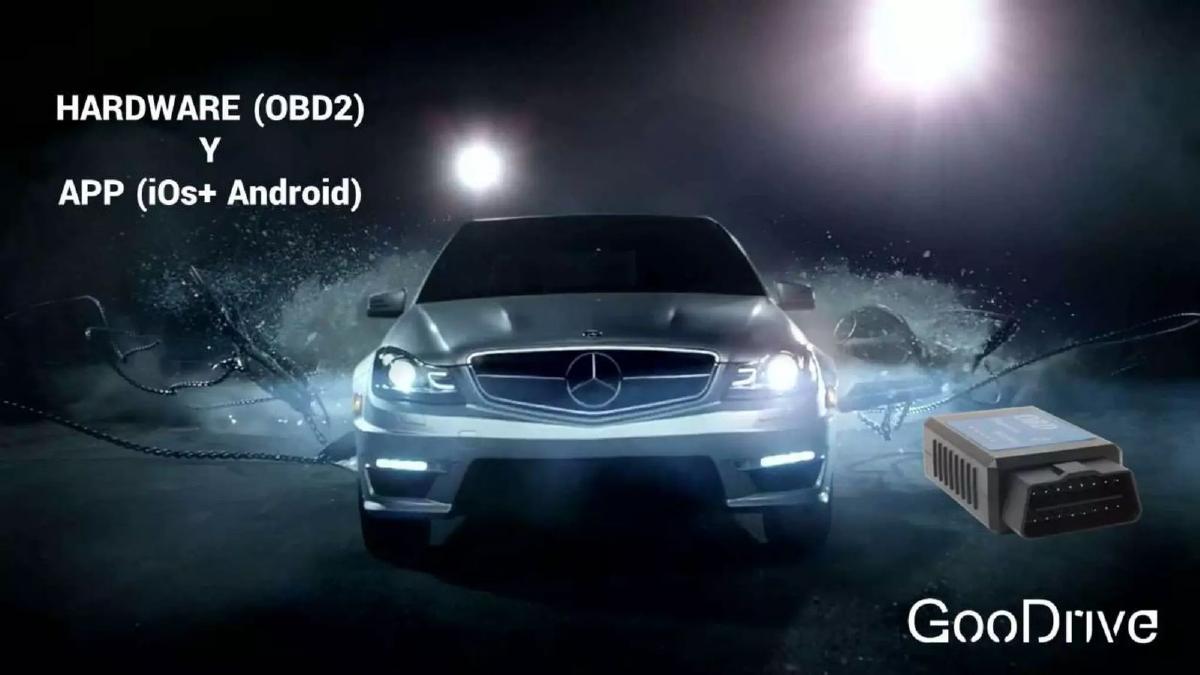
- The product consists of a physical OBD2 hardware device and a mobile app for both iOS and Android platforms (Slide 4).
- The startup identifies a total addressable market of 15,000,000 people in Spain, with a specific beachhead in the taxi industry (Slide 7).
- Initial market targets are 70,000 taxis in Spain and 3,000 in Valencia, aiming for 2,500 users in the first year (Slide 7).
- The business model relies on an annual subscription for hardware usage, while the mobile app remains free (Slide 8).
- Management claims a minimum gross margin of 60% for their subscription service (Slide 8).
- The funding ask is 150,000 €, allocated toward purchasing the first OBD2 units, hiring a hardware engineer, and working capital (Slide 10).
- First-year revenue is projected at 49,975 € based on 2,500 users paying a 19,99 € fee (Slide 10).
- The team consists of four core members: Andrés Bosch (CEO), Francisco Madrid (CTO), Angel Navarro (CMO), and Damien Martin (CFO & CDO) (Slide 9).
Goodrive Pitch Deck Analysis
Goodrive is a Spanish-language pitch deck for a startup focused on the connected car space. The presentation utilizes a high-contrast visual style, relying heavily on full-bleed background images and pop-culture references to convey its message. The core value proposition is the transformation of standard vehicle data into actionable, gamified insights for drivers, specifically targeting the professional taxi industry as a point of entry.
Slide 1: Title and Tagline
The cover slide features the Goodrive logo over a city street scene. The tagline, "Aprende de tu coche" (Learn from your car), immediately establishes the product as an educational or diagnostic tool for vehicle owners. The branding is clean, using a modern sans-serif typeface.
Slide 2: The Problem Statement
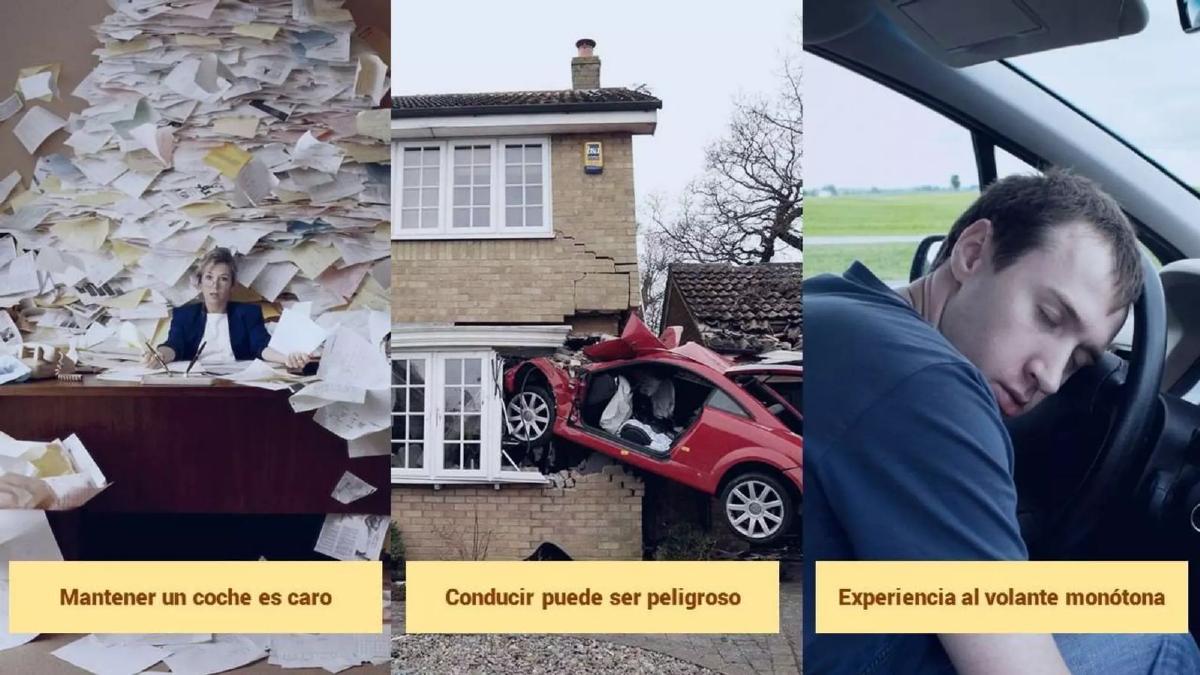
Slide 2 uses a three-panel layout to identify pain points. The first panel, "Mantener un coche es caro" (Maintaining a car is expensive), shows a woman buried in paperwork. The second, "Conducir puede ser peligroso" (Driving can be dangerous), shows a car crashed into a house. The third, "Experiencia al volante monótona" (Monotonous driving experience), shows a driver asleep at the wheel. These represent the economic, safety, and psychological problems the startup aims to solve.
Slide 3: The Value Proposition
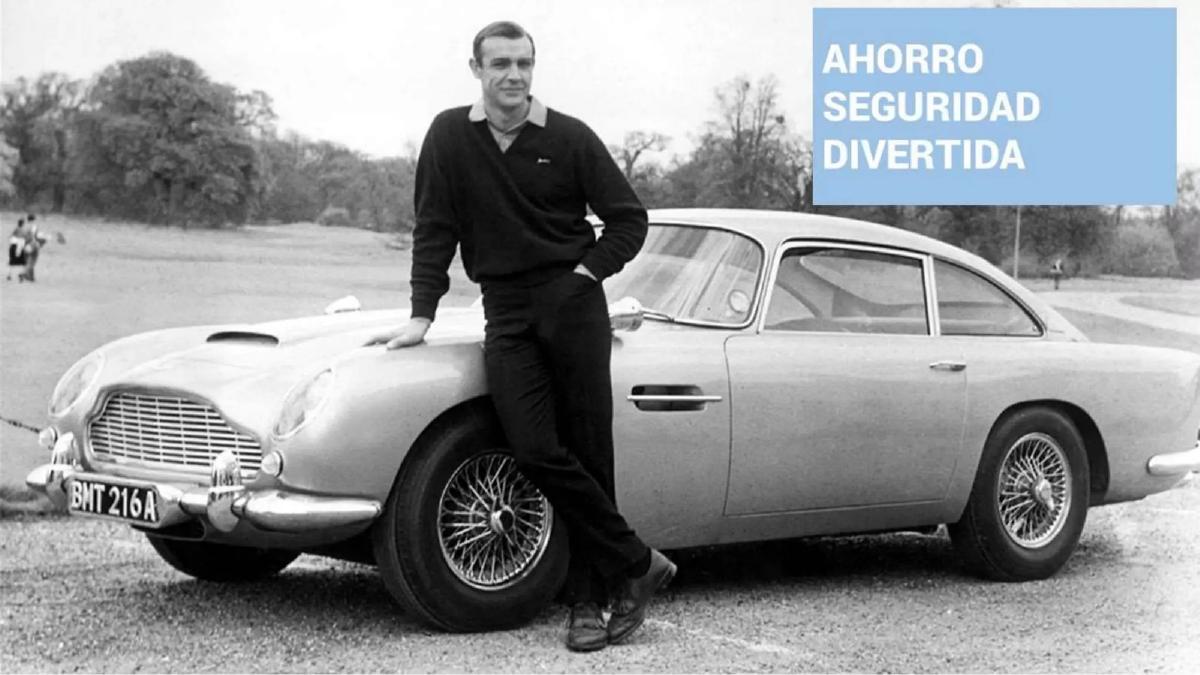
Using an image of Sean Connery as James Bond with an Aston Martin, slide 3 lists three pillars of the solution: AHORRO (Savings), SEGURIDAD (Safety), and DIVERTIDA (Fun). This slide serves as the emotional bridge between the problems identified previously and the technical solution that follows.
Slide 4: The Product Components
This slide clarifies the technical nature of the business. It specifies the use of HARDWARE (OBD2) and an APP (iOS + Android) . An image of a standard OBD2 dongle is shown next to a luxury vehicle, indicating that the service requires a physical device to be plugged into the car to function.
Slide 5: User Interface and Onboarding
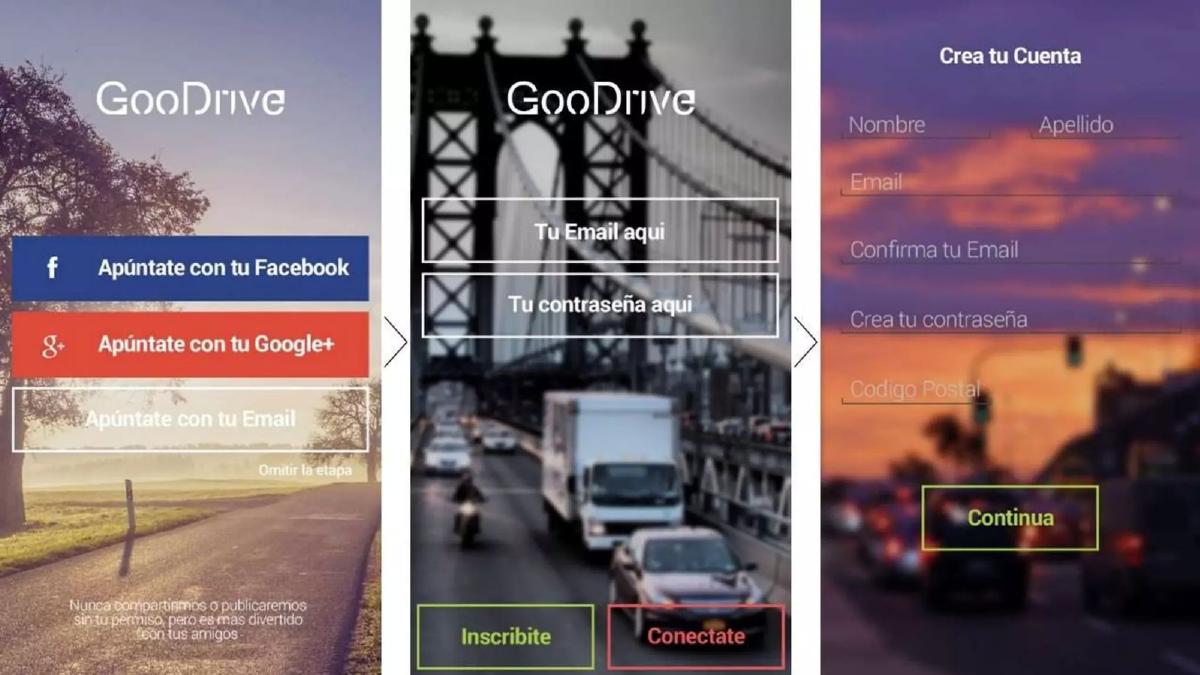
Slide 5 displays three mobile app screens showing the onboarding process. It highlights social login options via Facebook and Google+ , a login screen, and a "Crea tu Cuenta" (Create your Account) form. This demonstrates that the software side of the product is already designed or in development.
Slide 6: Gamification and Rankings
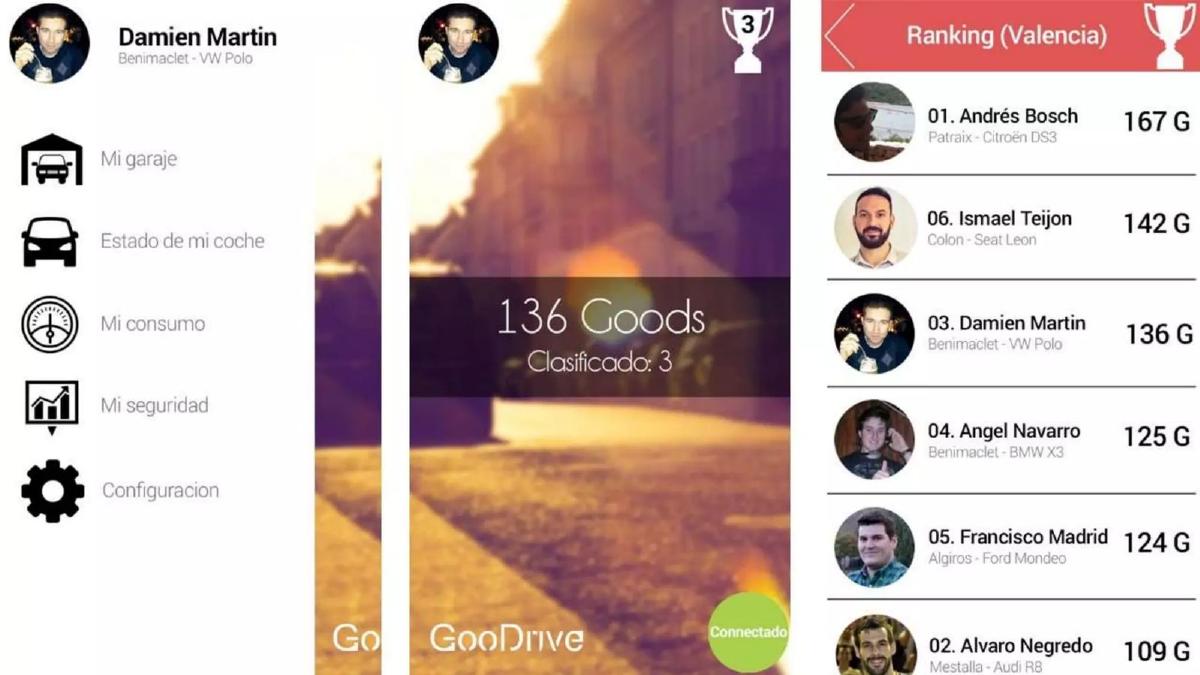
This slide showcases the core engagement hook. It features a user profile for "Damien Martin" and a menu including Mi garaje (My garage), Estado de mi coche (Car status), Mi consumo (My consumption), and Mi seguridad (My safety). Crucially, it shows a Ranking (Valencia) where users are ranked by "Goods" (points). This confirms the "Fun" aspect of the value proposition through social competition.
Slide 7: Market Opportunity
The market slide uses three circles to represent scale. It identifies 15.000.000 pers. in Spain as the total market. The "PRIMER MERCADO: B2B - TAXI" is defined as 70.000 taxis in Spain and 3.000 taxis in Valencia. The slide sets a target of 2.500 us. (users) for the first year.
Slide 8: Business Model
Using a background image from the show Breaking Bad, the slide outlines the revenue model: SUSCRIPCION para usar el hardware (OBD2) al año (Annual subscription to use the hardware). It notes the App GRATIS (Free App) and claims a MARGEN BRUTA: 60% al mínimo (Gross margin: 60% minimum).
Slide 9: The Team
The team slide features a photo of four founders in an office setting. The roles are defined as: Andrés Bosch (CEO) , Francisco Madrid (CTO) , Angel Navarro (CMO) , and Damien Martin (CFO & CDO) . No further biographical information or previous experience is listed on the slide.
Slide 10: The Ask and Financial Projections
The final slide, featuring a meme from The Wolf of Wall Street, states the funding requirement: 150.000 € . The funds are earmarked for Comprar los primeros OBD2 (Buying the first OBD2 units), Contratar a un ingeniero Hardware (Hiring a hardware engineer), and Fondo de maniobra (Working capital). It also provides first-year projections: 2.500 users x 19,99 € = 49.975 € in revenue, with a Margen Bruto (Gross Profit) of 29.985 € .
What Goodrive Does Well
The deck is highly focused. It does not attempt to solve every problem in the automotive industry, instead narrowing its focus to three specific areas: cost, safety, and boredom. By identifying the taxi industry as a beachhead market, the founders demonstrate an understanding of the need for a specific entry point where drivers are highly sensitive to fuel consumption and vehicle maintenance costs.
The visual clarity regarding the product is a strength. Many "connected car" decks remain vague about how they acquire data; Goodrive explicitly states they use OBD2 hardware and shows the device. The inclusion of app mockups (Slide 5 and 6) provides a tangible sense of the user experience, particularly the ranking system which differentiates them from purely utilitarian diagnostic tools.
What is Missing from the Goodrive Deck
The most significant omission is a Competitor Analysis . The OBD2 and telematics market was already crowded at the time of this deck's creation, with companies like Automatic, Dash, and various insurance-led programs offering similar features. The deck fails to explain why a taxi driver would choose Goodrive over an existing fleet management solution.
The Team Slide is also underdeveloped. While it identifies the founders, it provides no evidence of their ability to execute. In hardware-enabled startups, investors typically look for specific experience in supply chain management or embedded systems engineering, neither of which is highlighted here. Furthermore, the Unit Economics are overly simplified. The cost of acquiring a customer (CAC) is entirely absent, which is a critical metric for a subscription-based model targeting a specific B2B niche.
What Founders Should Copy
Founders should emulate the Beachhead Strategy presented on Slide 7. Rather than just saying "everyone with a car is a customer," Goodrive identifies a specific sub-sector (taxis) in a specific city (Valencia) where they can test their assumptions. This makes the first-year goal of 2,500 users feel grounded and achievable rather than purely speculative.
The Clear Use of Funds on Slide 10 is also a positive example. Instead of a vague "Product Development" bucket, they specify that they need to hire a hardware engineer and purchase inventory. This tells investors exactly what the capital will be doing on day one. Finally, the Simplicity of the Business Model (Slide 8) is commendable; a single annual subscription fee is easy for both the customer to understand and the investor to model.
Frequently asked questions
- What specific hardware does Goodrive require?
- Goodrive requires an OBD2 (On-Board Diagnostics) dongle that plugs into a vehicle's diagnostic port. As shown on slide 4, this hardware communicates with the Goodrive mobile app to extract vehicle data, which is then used to provide feedback on fuel consumption, vehicle status, and safety metrics to the driver.
- How does the gamification element work?
- The app includes a social and competitive layer where drivers earn 'Goods' points based on their driving performance. Slide 6 displays a ranking system for Valencia, showing drivers compared against one another. This is intended to address the 'monotonous driving experience' mentioned in the problem slide by making safe and efficient driving a competitive activity.
- What is the primary target market for the launch?
- While the deck mentions a broad market of 15 million people in Spain, slide 7 explicitly states that the 'Primer Mercado' (First Market) is B2B - Taxi. They are specifically focusing on the 3,000 taxis in Valencia and the 70,000 taxis across Spain to establish their initial user base.
- What are the projected economics for the first year?
- According to slide 10, Goodrive expects to acquire 2,500 users in its first year. At an annual subscription price of 19,99 €, this results in 49,975 € of revenue. With a projected 60% gross margin, the company expects a gross profit of 29,985 € for the inaugural year of operations.
- What is the background of the founding team?
- Slide 9 introduces the four founders: Andrés Bosch (CEO), Francisco Madrid (CTO), Angel Navarro (CMO), and Damien Martin (CFO & CDO). While the slide provides their titles and a group photograph, it lacks specific professional biographies, past company exits, or educational credentials, which are standard in more mature venture decks.