Goodcall’s pitch deck is a masterclass in founder-market fit. By highlighting Bob Summers’ background in building Google’s first paid SaaS product (CallJoy), the deck establishes immediate credibility in the niche of SMB voice AI. The problem is clearly defined: over 50% of local business calls go unanswered or result in a poor experience. The solution—a conversational AI named 'Airy'—is presented through a functional feedback loop that integrates with existing knowledge bases. While the deck is light on specific financial traction and competitive analysis, it successfully raised $4M by focus…
Key takeaways
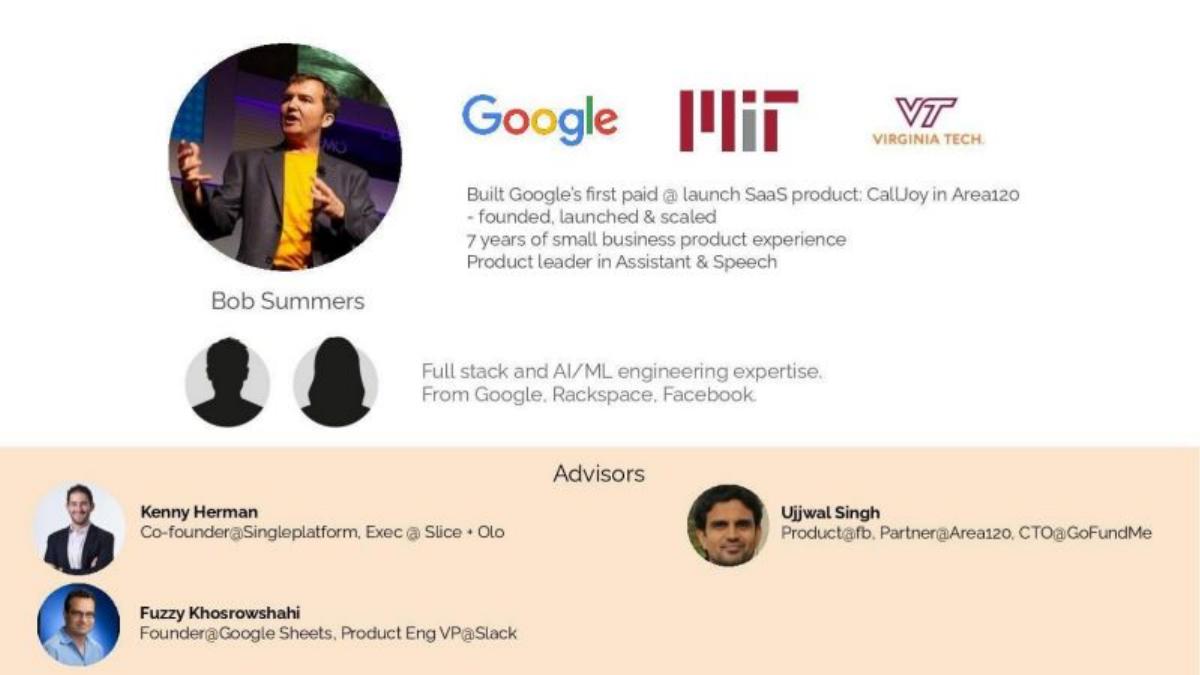
- The founder, Bob Summers, built Google's first paid SaaS product, CallJoy, which provides direct domain expertise (Slide 2).
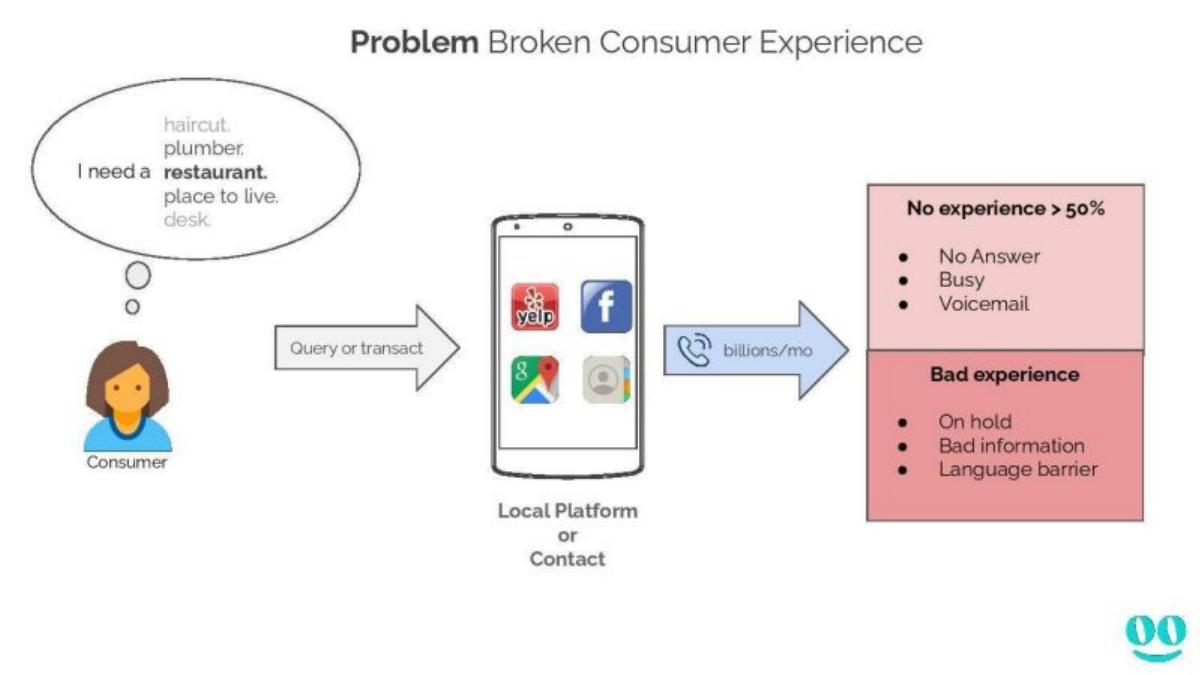
- The core problem is a 'Broken Consumer Experience' where over 50% of calls to local businesses result in no answer, a busy signal, or voicemail (Slide 4).
- Goodcall handles billions of monthly calls by acting as a conversational AI layer between consumers and local platforms (Slide 4).
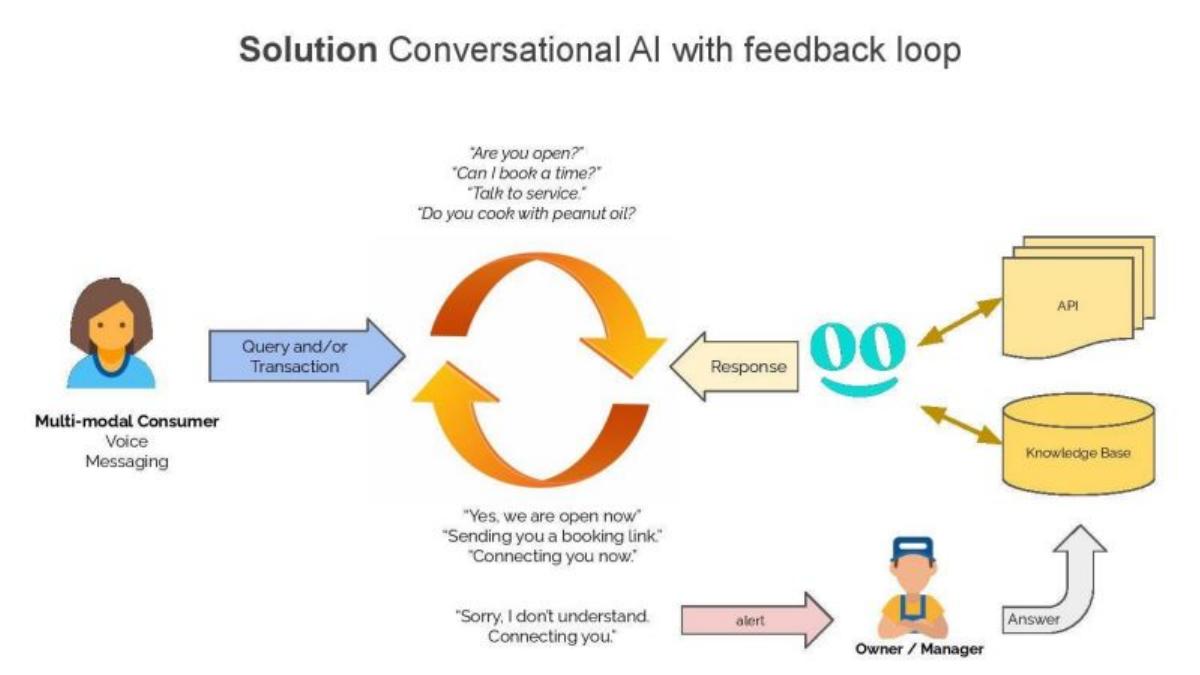
- The product, 'Airy', uses a feedback loop to escalate unknown queries to owners, who then provide answers that update the AI's knowledge base (Slide 5).
- The US market alone consists of 31.7 million small businesses, representing a massive horizontal opportunity (Slide 7).
- Cross-vertical validation is shown through testimonials from a gym, an appliance repair shop, and restaurants (Slide 8).
- The business model is a three-tier system: Solo (Free), Pro ($39/mo/location), and a future 'Transactions' tier with variable pricing (Slide 9).
- The go-to-market strategy relies on partnerships with entities that already have 50,000+ SMBs per partner (Slide 10).
The Power of Pedigree: Goodcall’s $4M Seed Deck
Goodcall’s 11-slide deck is a lean, focused presentation that relies heavily on the 'Who' and the 'Why.' In the world of early-stage fundraising, especially in 2021, a founder with a proven track record in a specific niche can often raise on a vision and a prototype. Bob Summers, the lead founder, brought the weight of Google’s Area 120 incubator to the table, specifically citing his work on CallJoy—a product nearly identical in spirit to Goodcall. This teardown examines how they structured their argument for a conversational AI assistant for small businesses.
Slide 1: Title and Introduction
The deck opens with a clean, minimalist title slide. It features the Goodcall logo—a friendly, lowercase serif font with a 'smile' underline—and the contact information for Bob Summers. The use of 'biz.intro' suggests this was a version of the deck intended for initial outreach or a first-look meeting. It is professional, uncluttered, and focuses entirely on the brand identity.
Slide 2: The Team and Advisors
Placing the team slide second is a strategic move often used by founders with significant 'pedigree.' Bob Summers is the focal point, with logos for Google, MIT, and Virginia Tech. The text highlights that he built Google’s first paid SaaS product, CallJoy, within Area 120. This is a critical piece of evidence; it tells investors that the founder has already solved this problem inside a tech giant and is now spinning it out or iterating on it independently. The slide also mentions engineering expertise from Google, Rackspace, and Facebook, though the specific names of the other two co-founders are represented by silhouettes. The advisor section adds further weight, featuring executives from Slack, Google Sheets, and GoFundMe.
Slide 3: The Big Question
Slide 3 acts as a transition: 'Can AI help local business?' This is a rhetorical setup. By 2021, the answer was trending toward 'yes,' but the implementation for small, non-technical businesses remained a challenge. This slide sets the stage for the problem/solution narrative that follows.
Slide 4: The Problem - Broken Consumer Experience
This slide uses a flow diagram to illustrate the friction in the current local business ecosystem. A consumer needs a service (haircut, plumber, restaurant) and uses a platform like Yelp, Facebook, or Google Maps to find a contact. The 'break' occurs at the phone call. Goodcall cites that over 50% of these interactions result in 'No experience' (No answer, busy, or voicemail) or a 'Bad experience' (On hold, bad information, or language barriers). The metric 'billions/mo' for calls highlights the scale of the inefficiency.
Slide 5: The Solution - Conversational AI with Feedback Loop
The solution slide explains the technical and operational flow of the product. It positions Goodcall as a 'Multi-modal' assistant handling voice and messaging. The key differentiator shown here is the 'feedback loop.' When the AI encounters a question it can't answer (e.g., 'Do you cook with peanut oil?'), it alerts the owner. The owner’s response is then saved to a Knowledge Base. This demonstrates a product that gets smarter with every interaction, reducing the long-term workload for the business owner.
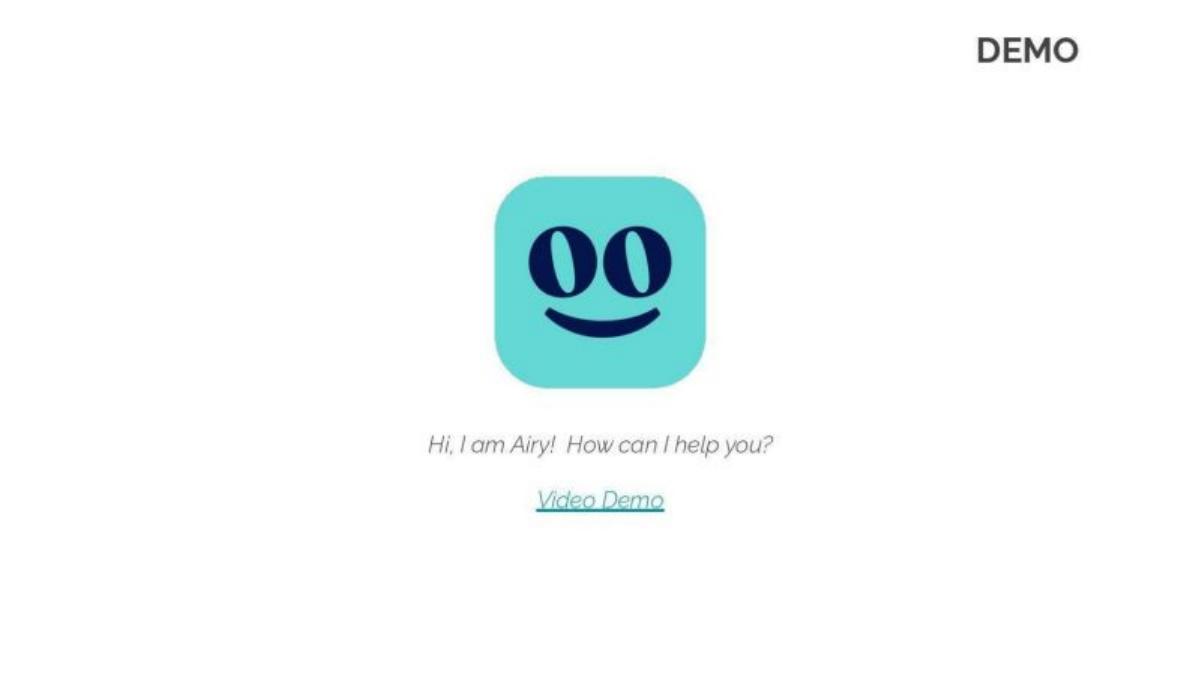
Slide 6: Product Demo
Slide 6 is a simple placeholder for a video demo of 'Airy,' the AI assistant. In a live pitch, this is where the 'magic' happens. For a deck being read asynchronously, the link provides proof of concept. The persona of 'Airy' humanizes the technology, making it more approachable for the SMB market.
Slide 7: Market Size
Goodcall keeps the market slide simple, focusing on the US opportunity. It cites 31.7 million small businesses. While it doesn't break this down into a Bottom-Up TAM (Total Addressable Market) calculation, the sheer volume of the 'Small Business' category in the US is usually enough to signal venture-scale potential to Seed investors.
Slide 8: Cross-Vertical Validation
To prove that the product isn't just for restaurants, Slide 8 shows testimonials from four different sectors: a Georgian restaurant, an Indian restaurant, a franchise gym, and an appliance repair shop. The quotes focus on the pain of missed calls. Dan, the appliance repair owner, notes that they 'let over 50% of calls go unanswered,' directly validating the problem stated on Slide 4. This 'cross-vertical' evidence is vital for a horizontal SaaS play.
Slide 9: Business Model
The pricing strategy is a classic 'Freemium' model. Solo is free and includes 1 location and 5 FAQs. Pro is $39/mo/location and offers unlimited FAQs and staff accounts. The third column, Transactions , is marked with '$X,' indicating a future revenue stream likely tied to bookings or payments made through the AI. This shows investors a path from low-friction acquisition (free) to steady SaaS revenue (Pro) to high-upside transactional revenue.
Slide 10: Go-To-Market Strategy
The GTM slide focuses on three pillars: Freemium (viral referrals), Partnerships, and Paid Acquisition. The 'Partnerships' section is the most compelling, mentioning '50,000+ smb/partner.' This suggests Goodcall is looking to integrate with platforms like Yelp or Google My Business rather than just selling door-to-door. It also mentions 'Q1 pilots' in specific verticals, showing that the company is in the execution phase.
Slide 11: Closing
The final slide is a standard closing page. Interestingly, the deck does not include a 'The Ask' slide. There is no mention of the $4M target or how the funds will be allocated. This is often a sign of a deck used for 'soft circling' investors or a deck that has been edited for public release after the round closed.
What Works in This Deck
Founder-Market Fit: The deck spends 10% of its real estate (Slide 2) proving that Bob Summers is the exact person to build this, given his history at Google. · Clear Problem/Solution: The '50% unanswered' statistic is a visceral pain point that any small business owner or consumer can relate to. · Scalability: By showing the feedback loop and the freemium model, the deck argues that the product can scale without a massive increase in human support.
What Is Missing
Competition: There is no mention of other AI answering services or the built-in features of platforms like Google Duplex. Investors would want to know how Goodcall defends its position. · Financial Projections: There are no charts showing projected growth, churn, or revenue targets over the next 18-24 months. · The Ask: As noted, the lack of a funding goal or use-of-funds breakdown is a significant omission for a standard pitch deck. · Unit Economics: While the pricing is clear, the cost to acquire these small businesses (CAC) is only mentioned as a future goal ('< $X CAC' on Slide 10).
What Other Founders Should Copy
The Feedback Loop Visualization: Slide 5 is an excellent way to explain how AI improves over time without getting bogged down in technical jargon. · Vertical Validation: Using diverse testimonials (Slide 8) proves the product's versatility and helps de-risk the 'niche' concern. · Minimalist Design: The deck uses consistent branding, plenty of white space, and clear icons. It doesn't overwhelm the viewer with text, making it easy to digest in under three minutes.
Frequently asked questions
- How much did Goodcall raise with this deck?
- According to the catalogue listing, Goodcall raised $4M in a Seed round in 2021. The deck itself does not explicitly state the amount being sought or the valuation, which is common in decks shared post-close or used for initial interest.
- What is the primary value proposition for small businesses?
- The value proposition is capturing missed revenue. Slide 8 features a testimonial stating that 'every missed call could be a missed business opportunity.' By answering 100% of calls 24/7, the AI ensures customers get information or booking links even when the owner is busy.
- What is the 'Airy' AI mentioned in the deck?
- Airy is the name of the conversational AI assistant. Slide 6 introduces Airy with a video demo link, positioning it as the interface that interacts with customers to answer FAQs, send booking links, or route calls to the appropriate staff member.
- How does the AI learn new information?
- Slide 5 illustrates a feedback loop. If the AI does not understand a query, it sends an 'alert' to the owner/manager. Once the owner provides an 'answer,' that information is fed back into the Knowledge Base, allowing the AI to handle that specific query automatically in the future.
- What is missing from the Goodcall pitch deck?
- The deck lacks several standard venture components: a competitive analysis (who else is doing SMB voice AI?), detailed unit economics (LTV/CAC), a clear use of funds (how the $4M will be spent), and a roadmap beyond 'Q1 pilots'.