The Amixr deck, presented under the Grafana Labs umbrella following its acquisition, is a study in extreme minimalism. Spanning 16 slides (8 provided here), it avoids dense text in favor of visual metaphors and high-impact metrics. The core value proposition centers on reducing 'noise' in incident management by up to 300x and leveraging human behavior within Slack to automate resolution paths. While the deck lacks traditional elements like a detailed team slide, competition matrix, or financial projections in the provided set, it successfully communicates a specific pain point: the 'cockpit'…
Key takeaways
- The product positions itself as 'Intelligent Incident management' on slide 1, targeting the DevOps sector.
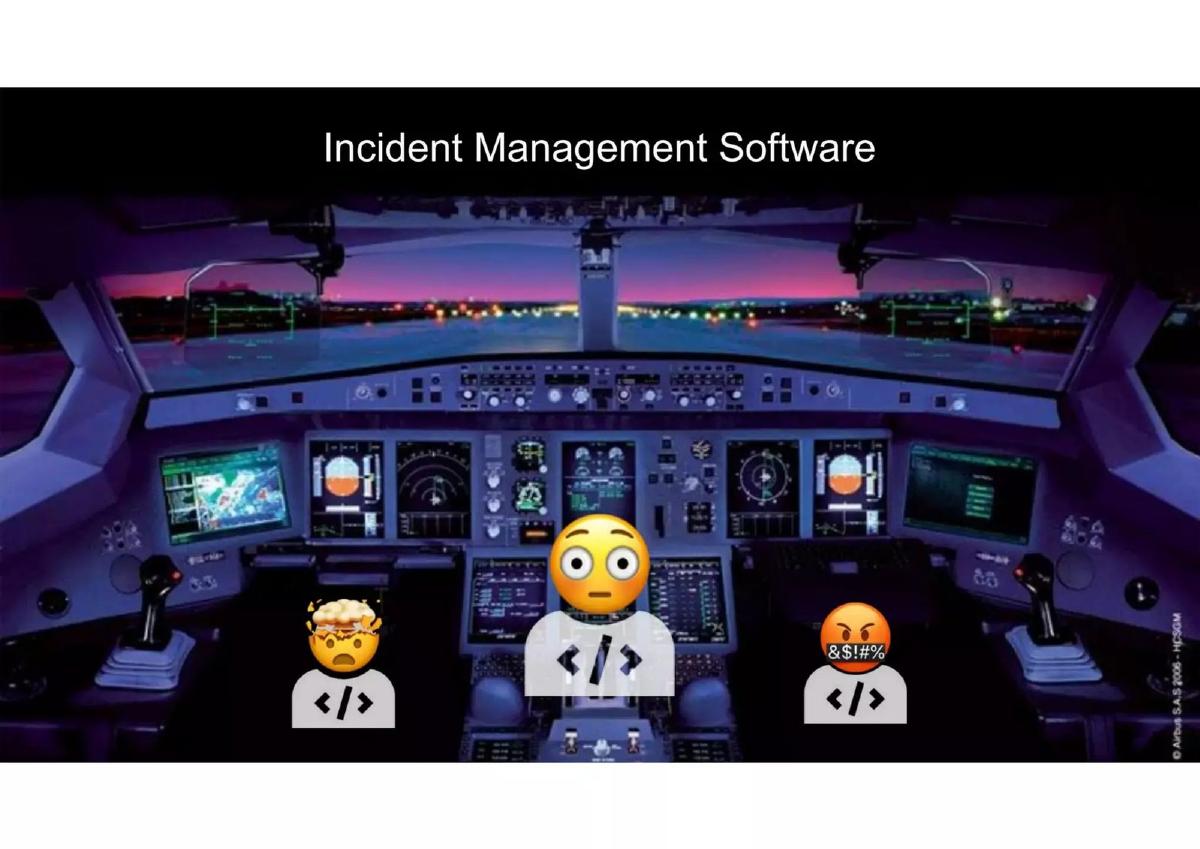
- Slide 3 uses a cockpit metaphor to illustrate the overwhelming complexity of current incident management software for engineers.
- The platform is built to live inside Slack, as evidenced by the UI mockups on slides 4 and 5.
- A key technical differentiator is the ability to 'learn from people' by tracking who resolved past incidents and how, as shown on slide 5.
- The deck claims a massive efficiency gain of 'Up to X300 less noise' on slide 6.
- Traction is demonstrated through a 'x2 MAU last month' growth metric on slide 7.
- The Total Addressable Market (TAM) is valued at '$25B' on slide 8.
- The deck relies heavily on emojis to convey engineer sentiment, moving from 'mind-blown' stress to a 'smiling' state on slide 8.
The Minimalist Narrative of Incident Management
The Amixr pitch deck (later associated with Grafana Labs) is a departure from the data-heavy presentations typical of enterprise SaaS. It utilizes a high-contrast, black-background aesthetic with minimal text, relying on the audience's familiarity with the 'DevOps tax'—the high cost of engineer burnout and alert fatigue. The narrative follows a classic problem-solution arc, but does so through visual metaphors rather than bulleted lists.
Slide 1: Title and Positioning
The deck opens with the Amixr logo and the tagline "Intelligent Incident management." This immediately establishes the sector. The use of the word "Intelligent" suggests an automation or machine learning component, differentiating it from static alerting tools that simply relay messages without context.
Slides 2-3: The Problem Metaphor
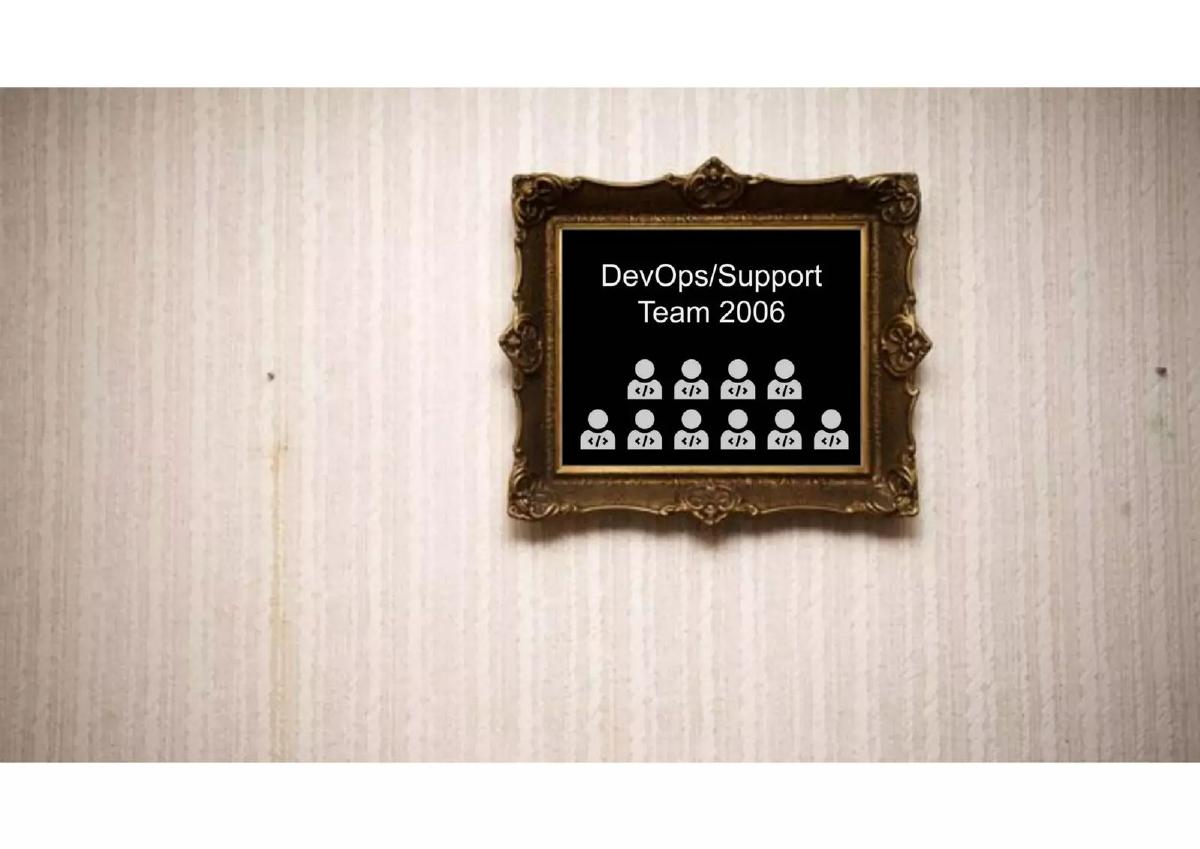
Slide 2 is a dark, cinematic image of a person sleeping or perhaps exhausted, setting a somber tone. Slide 3 clarifies this by labeling "Incident Management Software" over a complex airplane cockpit. Three engineer icons (represented by the </> symbol) are shown with emojis representing explosion, shock, and anger. This slide effectively communicates that current tools are too complex, overwhelming the very people they are meant to help. It frames the existing market as one of 'cockpit complexity' that leads to engineer frustration.
Slide 4: The Environment Shift
Slide 4 transitions the setting from a complex cockpit to a simplified Slack interface. By placing the engineer icons inside a Slack-style window, the deck argues that the solution isn't a new dashboard, but rather meeting engineers where they already communicate. This 'Slack-first' approach is the cornerstone of the Amixr value proposition.
Slide 5: The 'Intelligent' Mechanism
This slide provides the most technical detail in the set. It shows a mockup of the "Alert Mixer APP" within a Slack thread. The app identifies a "HighCpuLoad via AlertManager" and automatically invites a specific user (@Matvey) because they "fixed similar incident before." The slide lists three key learning points: "How is was resolved?" , "Who did it?" , and "Who helped?" . This is the 'Intelligence' promised on slide 1—a system that builds a knowledge graph of human expertise to accelerate resolution.
Slide 6: The Efficiency Metric
Slide 6 is a pure 'impact' slide. It features a downward arrow and the text "Up to X300 less noise." In the world of SRE (Site Reliability Engineering), alert noise is the primary cause of burnout. Claiming a 300x reduction is a bold statement that directly addresses the 'mind-blown' emoji problem introduced on slide 3. No methodology for this figure is provided on the slide, but its purpose is to serve as a conversational hook for investors.
Slide 7: Traction and Momentum
To prove the market wants this solution, slide 7 displays "x2 MAU last month." Doubling Monthly Active Users in a single month is a significant growth signal, suggesting strong product-market fit or a successful viral loop within engineering organizations. This metric serves to validate that the 'Slack-first' hypothesis is working in practice.
Slide 8: The Market Opportunity
The final slide in this sequence connects the emotional journey of the user to the financial opportunity. It shows the stressed engineer icon transforming into a smiling icon, followed by "TAM: $25B." This suggests that by solving the emotional and operational pain of incident management, the company can capture a significant portion of a multi-billion dollar market. It is a classic 'happy path' conclusion to the pitch.
What Works in This Deck
Visual Storytelling: The use of the cockpit metaphor (slide 3) is an excellent way to describe 'feature bloat' without using those words. It creates an immediate emotional connection with anyone who has managed a complex software stack.
Focus on Workflow: By showing the product inside Slack (slides 4 and 5), the founders demonstrate a deep understanding of their user base. They aren't asking engineers to open another tab; they are augmenting the tab that is already open.
Clear Value Metric: The '300x less noise' (slide 6) is a powerful, memorable number. Even if it represents a best-case scenario, it gives investors a clear 'north star' for what the product achieves.
What Is Missing
Competitive Landscape: The deck does not mention PagerDuty, Opsgenie, or VictorOps. Given the $25B TAM claim, investors would naturally want to know how Amixr survives against these established incumbents.
Team Background: In the provided slides, there is no information about the founders. In early-stage DevOps startups, the technical pedigree of the team is often as important as the product itself.
Business Model: There is no mention of pricing, ACV (Annual Customer Value), or how the company scales revenue. While MAU growth is great, enterprise software requires a clear path to monetization.
Unit Economics: The deck lacks data on churn, customer acquisition cost (CAC), or the length of the sales cycle, which are critical for assessing the scalability of the $25B TAM claim.
Founder Takeaways
Embrace Minimalism: If your product solves a visceral pain point, you don't need 50 words per slide. Use imagery to make the investor feel the problem. · Highlight the 'Aha' Moment: Slide 5 is the 'Aha' moment—the system automatically finding the right person for the job. Every deck needs one slide that clearly shows the 'magic' of the software. · Quantify the Relief: Don't just say your tool is 'better' or 'faster.' Use a specific multiplier (like X300) to define the magnitude of the improvement. · Context is King: Showing your UI within the ecosystem it inhabits (like Slack) is more effective than showing a standalone screenshot. It proves you understand the user's daily reality.
Frequently asked questions
- What is the relationship between Amixr and Grafana Labs?
- Amixr was a Slack-first incident management startup that was acquired by Grafana Labs in 2021. The deck analyzed here represents the Amixr product and vision, which has since been integrated into the Grafana ecosystem as Grafana OnCall. The acquisition was intended to bolster Grafana's observability suite by adding native incident response capabilities.
- How does the product actually work based on the slides?
- According to slide 5, the software integrates with tools like AlertManager and operates within Slack. It uses historical data to identify which team members have fixed similar incidents before and automatically invites them to the relevant Slack thread. It also manages notification plans, such as escalating to phone calls if the incident is not acknowledged within a set timeframe.
- What is the primary value proposition for DevOps teams?
- The primary value proposition is noise reduction and workflow simplification. Slide 6 claims the tool can reduce alert noise by up to 300 times. By moving the 'cockpit' of incident management (slide 3) into a streamlined Slack interface (slide 4), it aims to reduce the cognitive load on engineers during high-pressure system outages.
- Is there any financial information or a specific 'Ask' in the deck?
- No. The provided slides do not include a breakdown of revenue, burn rate, or a specific funding request. It focuses entirely on the problem, the product's integration into the developer workflow, and high-level growth metrics like the doubling of Monthly Active Users (MAU) mentioned on slide 7.
- What market does Amixr aim to capture?
- Slide 8 explicitly identifies a Total Addressable Market (TAM) of $25 billion. This encompasses the broader IT operations and incident management space, where Amixr competes by offering a more automated, 'intelligent' alternative to traditional on-call rotation and alerting software.