Gravity Sketch presents a compelling case for the modernization of industrial design by moving from 2D-constrained workflows to native 3D creation. The deck is anchored by significant social proof, featuring testimonials from Ford, Reebok, and Honda, alongside a community of 50,000 users. By quantifying the value proposition—reducing a 3-4 month design cycle to just 2 weeks—the founders move beyond the 'cool factor' of VR into tangible ROI. While the deck excels at demonstrating product-market fit within the automotive and footwear sectors, it lacks specific financial projections and a clear…
Key takeaways
- The deck claims a massive efficiency gain, reducing design cycles from 3-4 months to just 2 weeks (Slide 6).
- Gravity Sketch highlights a community of 50,000 strong and partnerships with 32 educational institutions (Slide 4).
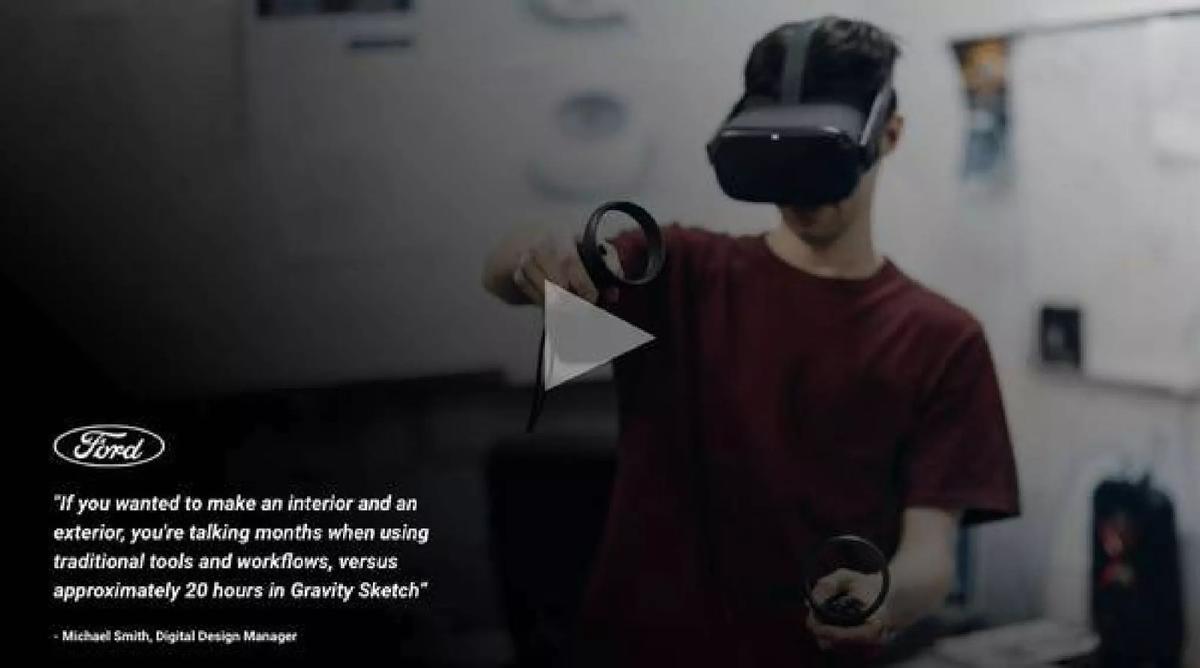
- A testimonial from Ford's Digital Design Manager states that interior/exterior design takes 20 hours in Gravity Sketch versus months with traditional tools (Slide 3).
- The company identifies a $48bn TAM for Product Design, positioning itself as the 'new' innovator against incumbents like Autodesk and Siemens (Slide 7).
- The Go-To-Market strategy shows a clear expansion path from a $0.2bn auto-focused TAM to a $10bn multi-industry TAM by 2022+ (Slide 13).
- The product is positioned as a cross-platform solution accessible via VR, AR, Mobile, Desktop, and Web (Slide 9).
- The business model is a cloud subscription with three tiers: Pro, Studio, and Enterprise (Slide 14).
- The team slide emphasizes deep technical and industry backgrounds, including experience at Land Rover, HP, and Improbable (Slide 16).
Gravity Sketch: Bridging the Gap Between 3D Thought and 3D Creation
Gravity Sketch is a London-based startup founded in 2014 that aims to revolutionize the industrial design process. This Series A deck focuses on the transition from traditional, fragmented design workflows to a unified 3D environment. With a total of $41.8 million raised to date (according to catalogue facts), this deck represents a pivotal moment where the company moved from a niche VR tool to an enterprise-grade design platform.
The Hook: Immediate Social Proof and Efficiency Gains
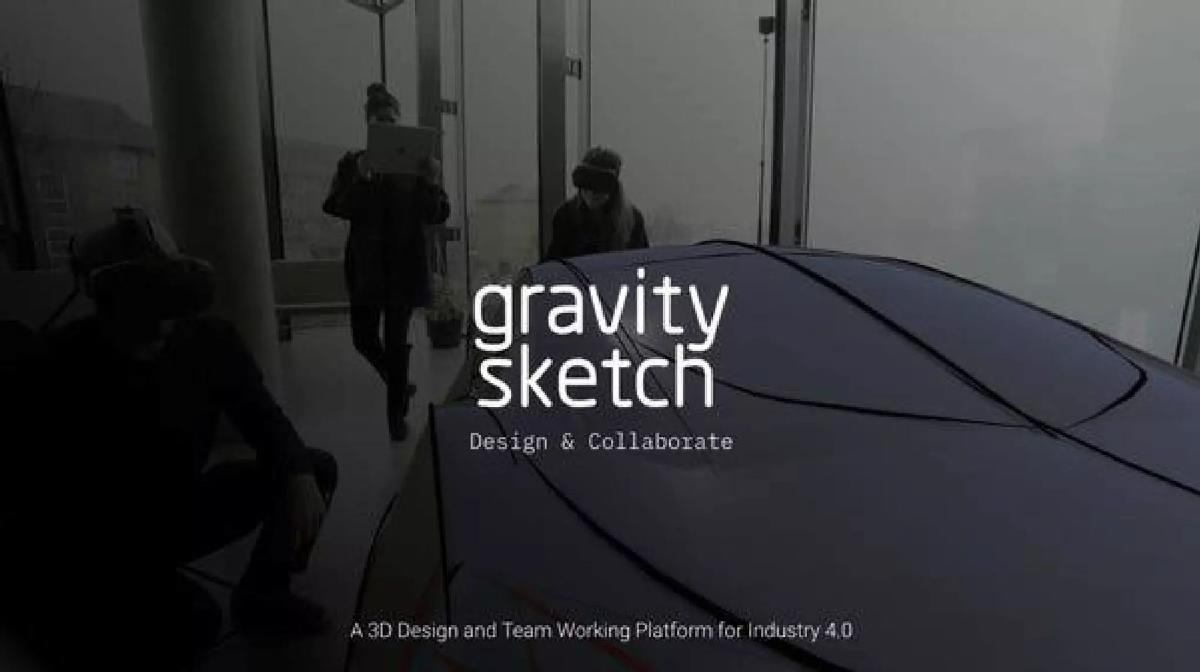
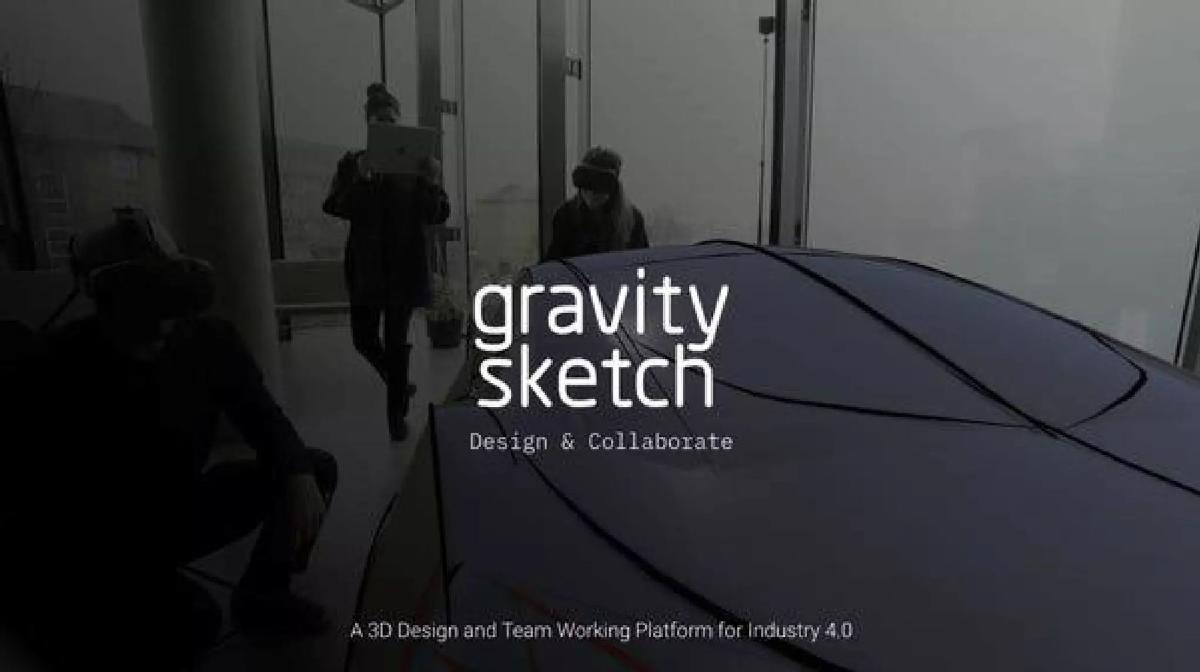
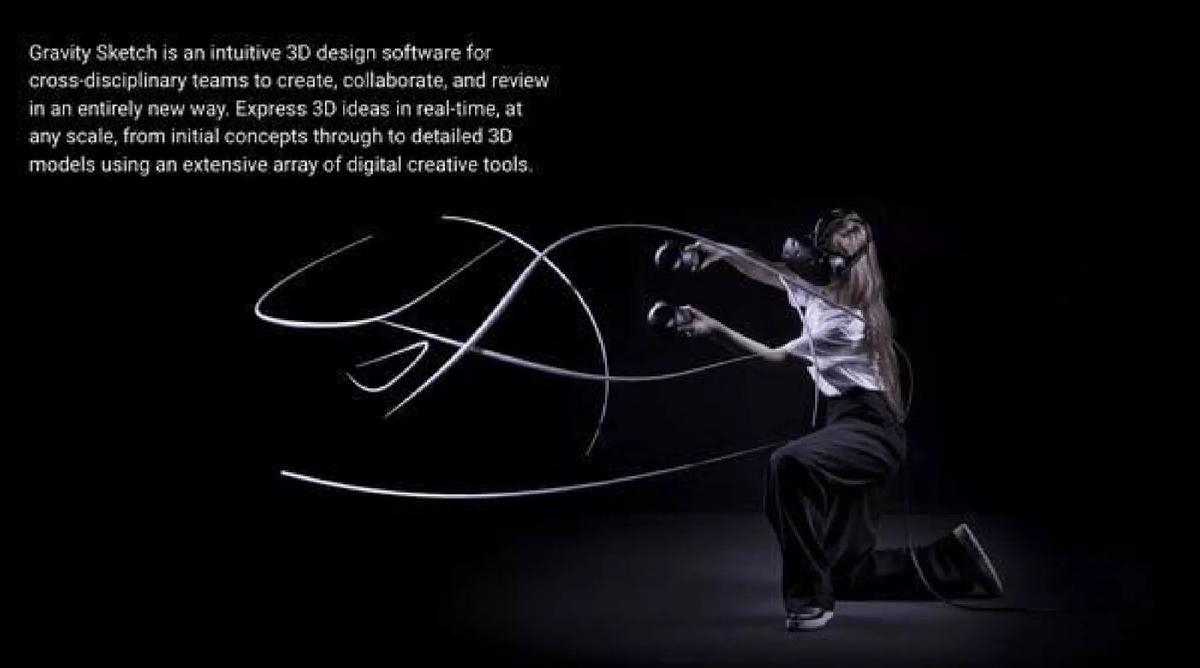
Slide 1 to 3: The deck opens with a high-resolution image of designers in a studio using VR headsets to work on a car model. Slide 2 provides a concise definition: 'intuitive 3D design software for cross-disciplinary teams.' However, the real power is on Slide 3, which features a video play button (presumably a demo) and a quote from Michael Smith, Digital Design Manager at Ford. The quote is a founder's dream: 'If you wanted to make an interior and an exterior, you're talking months when using traditional tools... versus approximately 20 hours in Gravity Sketch.' This immediately anchors the value proposition in time-saving and ROI rather than just technology.
Traction and the Problem Statement
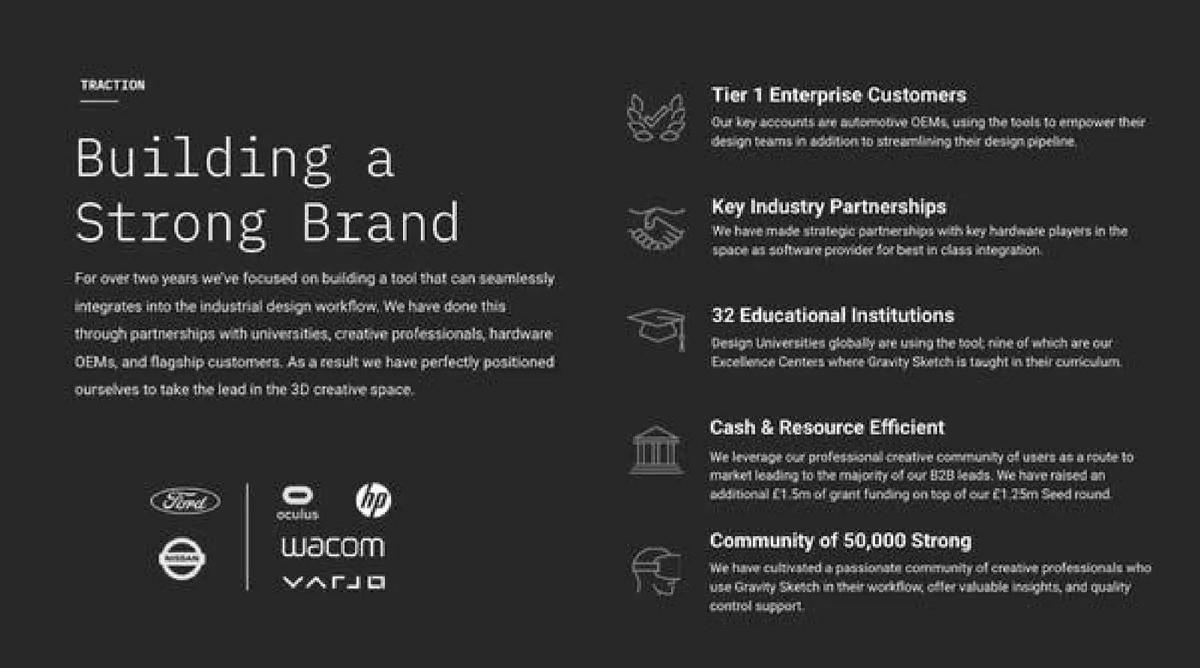
Slide 4: Titled 'Building a Strong Brand,' this slide lists impressive stats: 50,000 users, 32 educational institutions, and Tier 1 customers like Ford, Nissan, and HP. It also notes that the company has been 'Cash & Resource Efficient,' having raised £1.5m in grants on top of a £1.25m Seed round. This signals to Series A investors that the team knows how to stretch a dollar.
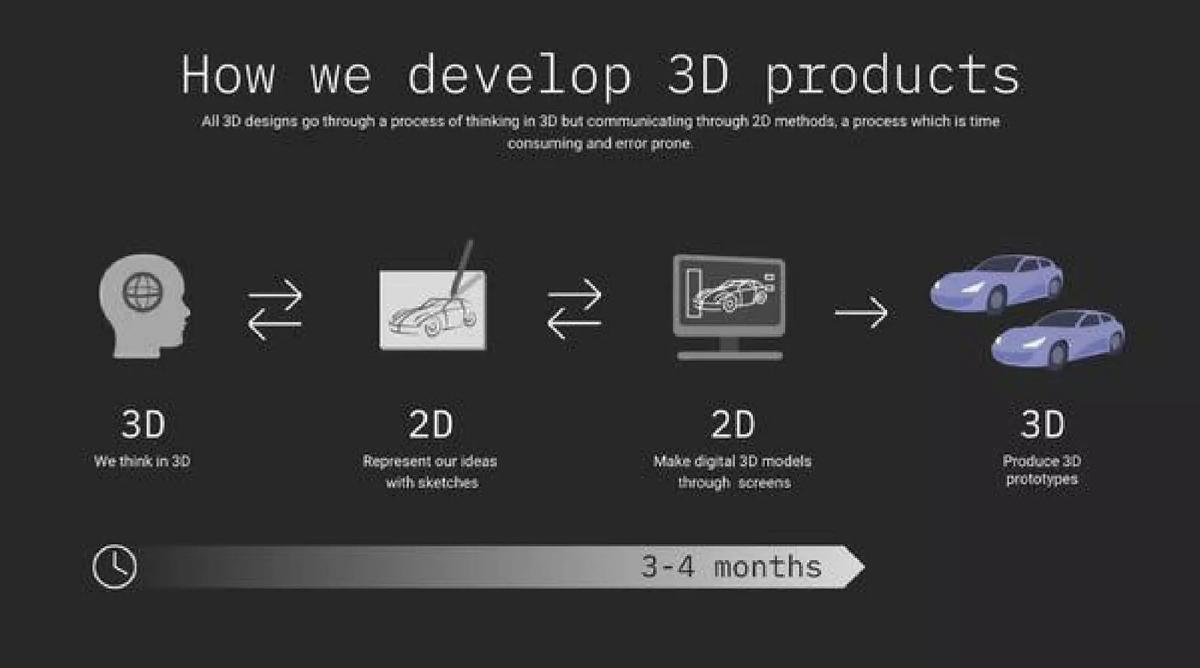
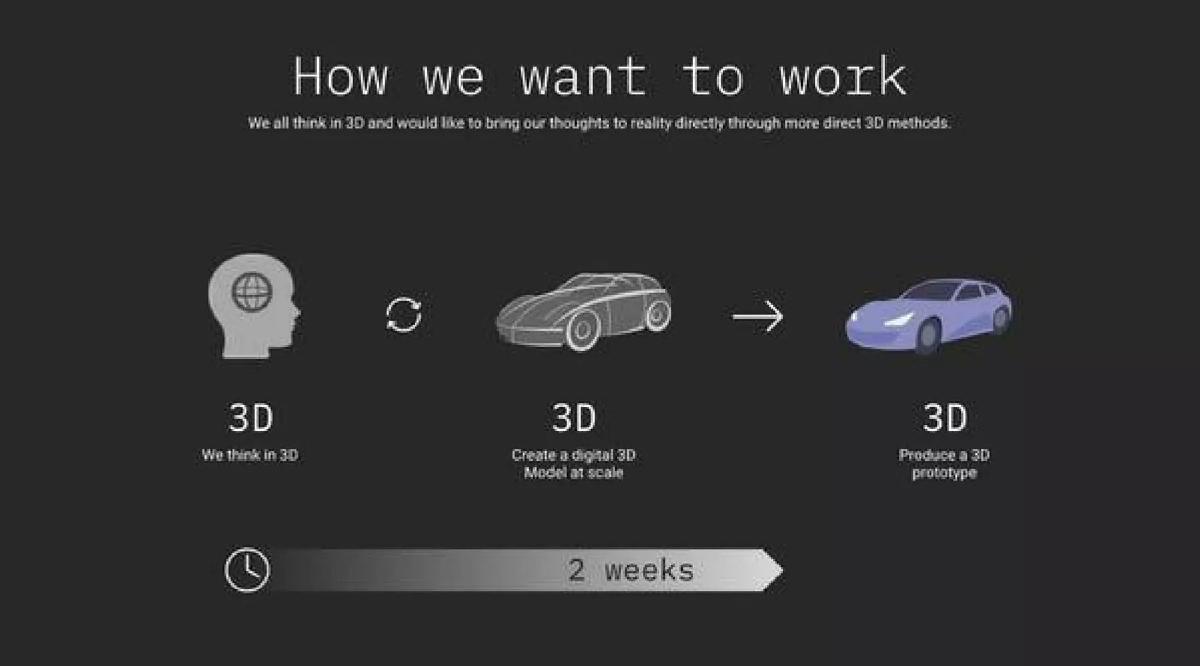
Slide 5 and 6: These slides use a simple 'Old vs. New' visualization. Slide 5 shows the current 3-4 month process: thinking in 3D, sketching in 2D, modeling on a 2D screen, and finally producing a 3D prototype. Slide 6 shows the Gravity Sketch way: thinking in 3D, creating a digital 3D model at scale, and producing a prototype in just 2 weeks. The visual contrast between the '3-4 months' and '2 weeks' bars is the core of the pitch.
Market Opportunity and Timing
Slide 7: The deck compares 'Graphic Design' ($24bn TAM) with 'Product Design' ($48bn TAM). It lists incumbents like Adobe and Sketch in the graphic space, then positions Gravity Sketch as the 'New' leader in Product Design, standing against 'Old' giants like Autodesk, Dassault Systèmes, and Siemens. This is a bold positioning strategy that suggests a changing of the guard.
Slide 8: Titled 'A Growing demand for 3D designs,' this slide uses external validation from the broader tech ecosystem. It features Mark Zuckerberg announcing the Oculus Quest at $399, arguing that 'Immersive Technology is Driving Demand.' By showing Gravity Sketch featured at Facebook's Developer Conference, the company hitches its wagon to the growth of VR hardware without having to build the hardware themselves.
Product Deep Dive and Workflow Integration
Slide 9 and 10: Slide 9 breaks down the 'Why' into six pillars: Intuitive, Collaborative, Fits into Workflows, Connected, Real Time, and Cross Platform. Slide 10 doubles down on testimonials, featuring James Robbins (Honda USA), Brian Rinella (Reebok), and Saiful Haque (Avatar Sequels). The Reebok quote is particularly specific, noting that the tool 'cuts out 1.5 weeks of back and forth with factories.'
Slide 11: This is perhaps the most important slide for enterprise investors. It shows the 'Product design pipeline' and where Gravity Sketch fits. Instead of claiming to replace every tool, it shows Gravity Sketch owning 'Ideation' and 'Review & Iterate,' with seamless exports to '3D Modeling' (Autodesk, Siemens) and 'Visualization' (Unreal, Unity). This 'Trojan Horse' strategy—entering through ideation—is a classic way to disrupt entrenched enterprise software.
Growth Strategy and Business Model
Slide 12 and 13: Slide 12 highlights 'Teamwork,' emphasizing the 'Co-Creation' feature that allows designers to meet in a virtual studio. Slide 13 outlines the Go-To-Market roadmap. It shows a clear progression: starting with a $0.2bn Auto TAM in 2018, expanding to a $7bn TAM (Aerospace, Entertainment) in 2020, and aiming for a $10bn TAM (Architecture, Apparel) by 2022. This demonstrates a disciplined, phased approach to market domination.
Slide 14: The 'Cloud Subscription' model is detailed here. It follows a standard SaaS tiering: Pro (freelance), Studio (medium enterprises), and Enterprise (multinationals). Each tier adds more 'Co-Creation rooms,' storage, and security features like an Enterprise Security Management Portal. This confirms the company is a pure-play software business with scalable margins.
Vision and Team
Slide 15: 'The Vision' slide describes a suite of products connected through a cloud platform called 'Landing Pad.' This indicates that Gravity Sketch isn't just an app, but an ecosystem for 3D data management, including presentation and publishing tools.
Slide 16: The 'Ambitious Team' slide is strong. It features three co-founders with backgrounds in industrial design (Muji, Land Rover, HP) and theoretical physics (Cambridge). The Head of Engineering is a 'Serial startup software architect' from Improbable, and the Head of Operations brings venture capital and strategy experience. The logos at the bottom (Oxford, Cambridge, Jaguar, Lucasfilm) reinforce the pedigree of the team and their network.
What Works in This Deck
Quantified Value: The deck doesn't just say it's 'faster'; it says it turns months into 20 hours. That is a metric an investor can model. · Strategic Partnerships: Featuring Ford and Facebook (Meta) prominently gives the startup a level of credibility that is hard to ignore for a Series A lead. · Workflow Integration: By showing exactly where they sit in the pipeline (Slide 11), they answer the 'how do we actually use this?' question that plagues many VR startups. · Clear GTM Expansion: The TAM isn't just a big number; it's a roadmap of specific industries they plan to conquer one by one.
What Is Missing
The Ask: There is no slide stating how much they are raising or what the milestones for the next 18-24 months are. · Financials: While they mention a subscription model, there are no charts showing MRR growth, churn, or LTV/CAC ratios. · Competitor Analysis: While they list 'Old' incumbents, they don't address other 'New' startups in the VR design space, which would be a standard requirement for a Series A due diligence process. · Unit Economics: There is no mention of the cost of sale or the length of the enterprise sales cycle, which is crucial for a company targeting OEMs like Ford and Nissan.
Founder Lessons: What to Copy
The 'Old vs. New' Slide: Slide 7 is a masterclass in positioning. If you are entering a crowded market, clearly define the 'Old' guard and why you are the 'New' standard. · Testimonial Placement: Don't bury your best quotes at the end. Gravity Sketch puts their strongest validation (Ford) on Slide 3. · Process Mapping: If your product changes how people work, you must visualize the 'Before' and 'After' as clearly as they did on Slides 5 and 6. · Ecosystem Thinking: Show that you aren't just a feature. Slide 15 (The Vision) shows how the core product expands into a platform, which justifies a higher valuation multiple.
Frequently asked questions
- What is the primary value proposition of Gravity Sketch according to the deck?
- The primary value proposition is the radical compression of the design pipeline. Slide 5 and 6 illustrate that traditional workflows involve moving back and forth between 3D thinking and 2D communication, taking 3-4 months. Gravity Sketch allows designers to 'stay in 3D' from concept to prototype, reducing that timeline to 2 weeks. This is supported by a Ford testimonial on Slide 3 claiming 20 hours of work replaces months of traditional labor.
- How does Gravity Sketch position itself against industry giants like Autodesk?
- Gravity Sketch positions itself as a 'New' innovator that complements rather than immediately replaces the entire legacy stack. Slide 11 shows the 'Product design pipeline' where Gravity Sketch owns the Ideation and Review phases, then exports data to 'later phases' handled by Autodesk Alias, Siemens, or Rhino. This 'fits into workflows' approach reduces friction for enterprise adoption.
- What evidence of market traction is provided?
- Traction is demonstrated through three pillars on Slide 4: Tier 1 Enterprise customers (Ford, Nissan), a community of 50,000 professionals, and 32 educational institutions. The deck also mentions raising £1.25m in Seed funding and £1.5m in grant funding, showcasing capital efficiency before the Series A round.
- What industries is the company targeting for growth?
- The Go-To-Market slide (Slide 13) outlines a phased expansion. In 2018-19, the focus was strictly on Automotive ($0.2bn TAM). By 2020-21, they expanded into Aerospace, Consumer Products, and Entertainment ($7bn TAM). The 2022+ vision includes Engineering, Architecture, and Apparel, targeting a $10bn TAM with logos like Apple, H&M, and Zaha Hadid.
- Is there a clear 'Ask' or financial roadmap in this deck?
- No. The deck is notably missing a slide detailing the specific amount of capital being raised, the valuation, or a breakdown of how the funds will be spent. It also lacks detailed financial projections or unit economics, focusing instead on market opportunity, product utility, and high-level growth milestones.