ProcureNow’s 2019 Seed deck is a masterclass in using narrative to bridge the gap between a dry industry—government procurement—and investor interest. The deck identifies a massive $38 billion daily GMV market on slide 2 and immediately validates the product with high-profile logos like Boston and Palo Alto on slide 3. The core of the presentation is a fictionalized user journey featuring Commissioner Gordon, which effectively visualizes a chaotic 4-week manual process (slide 6) against a streamlined digital solution. While the deck excels at storytelling and pipeline growth (showing a 6.7x i…
Key takeaways
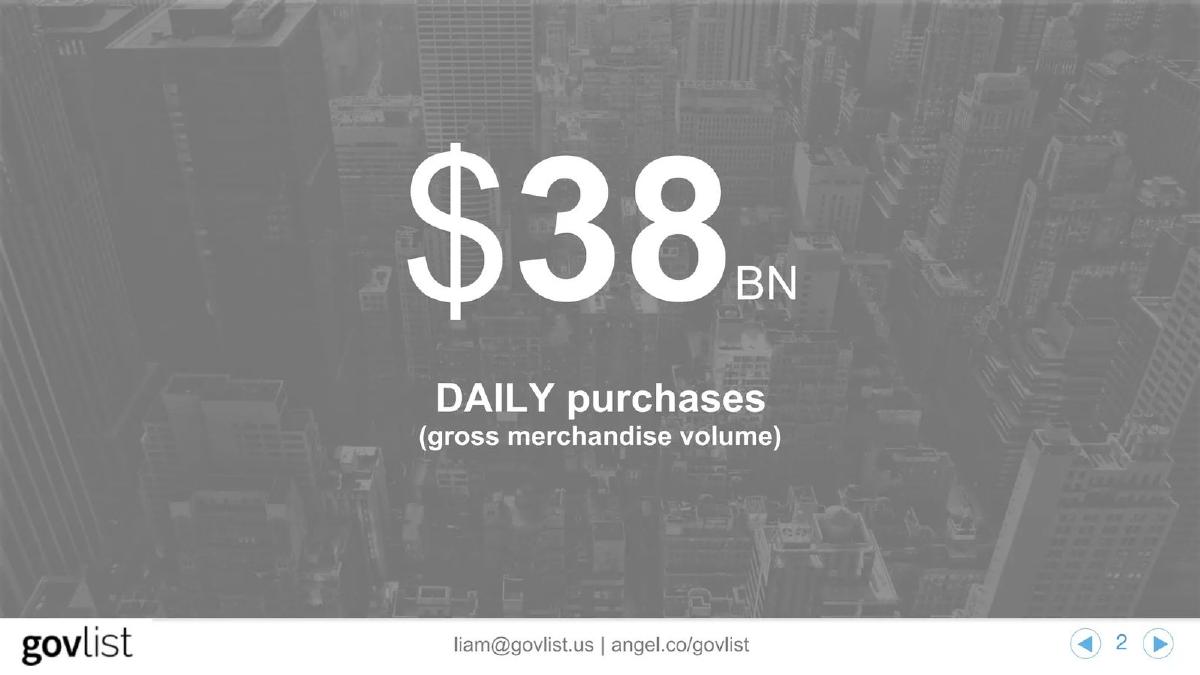
- The deck leads with a massive macro figure of $38 billion in daily government purchases to establish market scale (Slide 2).
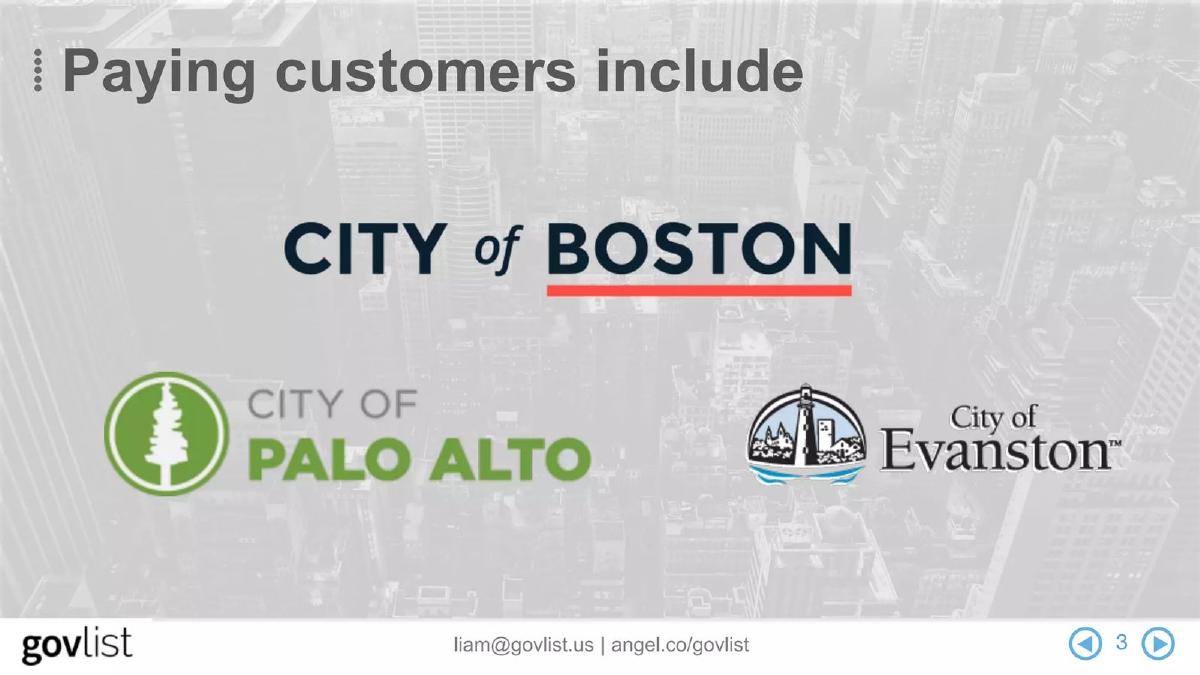
- Social proof is established early, listing the City of Boston, City of Palo Alto, and City of Evanston as paying customers (Slide 3).
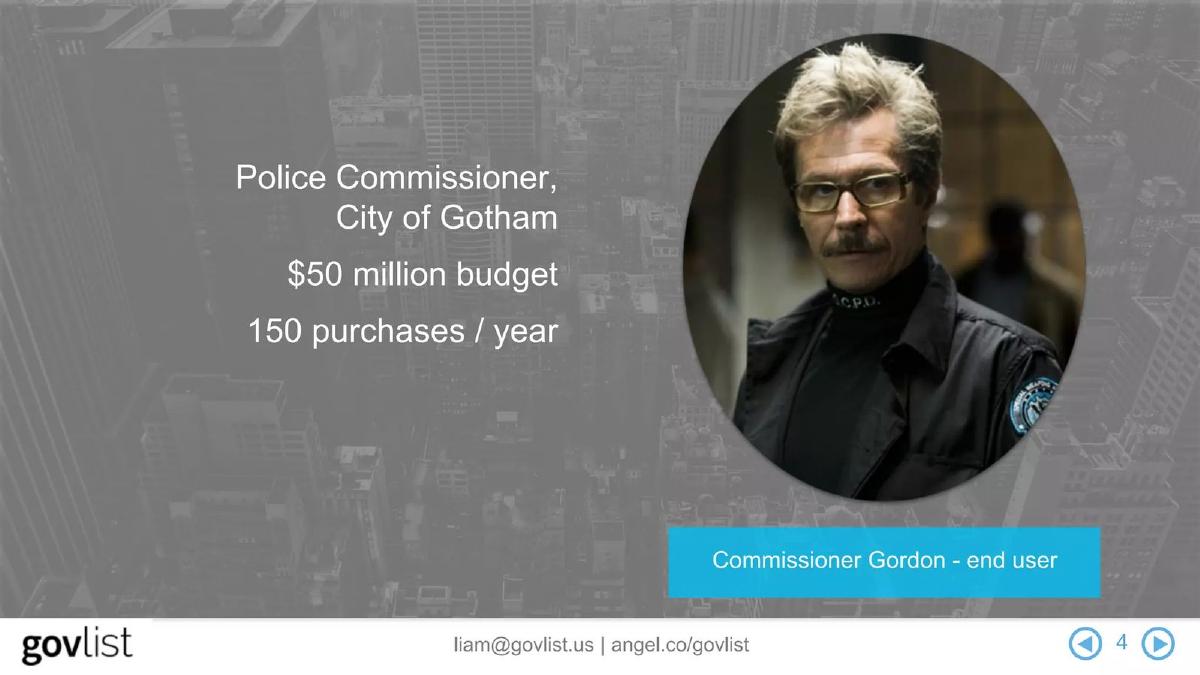
- A pop-culture analogy featuring Commissioner Gordon is used to humanize the 'end user' and their specific budgetary constraints (Slide 4).
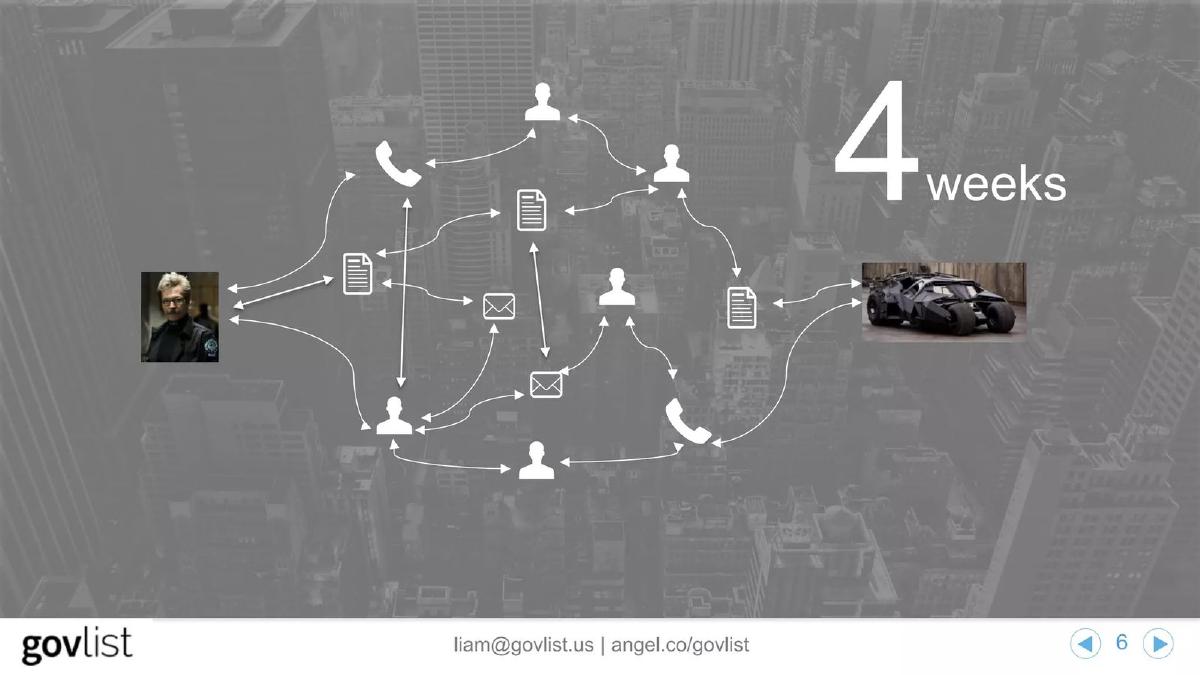
- The 'Problem' is visualized as a complex web of phone calls, emails, and documents taking 4 weeks to complete a single acquisition (Slide 6).
- The product UI is shown across multiple devices, highlighting categories like commodities, professional services, and technology (Slide 7).
- The company claims a 3-month average sales cycle, which is notably fast for the GovTech sector (Slide 8).
- Traction is demonstrated through a 6.7x growth in sales qualified pipeline, moving from $125K to $835K (Slide 9).
- The deck completely omits a team slide, leaving the founders' backgrounds to the verbal pitch or external research.
ProcureNow: A Narrative-Driven Approach to GovTech
ProcureNow, which operated under the brand govlist at the time of this 2019 Seed deck, provides a fascinating look at how to pitch a highly regulated, bureaucratic industry. The deck consists of only 10 slides, focusing heavily on the 'Why Now' and the 'User Pain' rather than technical specifications. By the time this deck was circulated, the company had already secured major municipal contracts, allowing them to lead with traction rather than theory.
Slides 1-3: The Hook and Immediate Validation
Slide 1 is a minimalist title slide featuring the 'govlist' logo in white against a black background. There is no tagline or mission statement here, which forces the viewer to move quickly to the next slide for context.
Slide 2 delivers the macro-economic hook. It features a large, bold $38 BN figure centered on the slide, defined as 'DAILY purchases (gross merchandise volume).' This is a classic TAM (Total Addressable Market) slide. By framing the market in terms of daily spend, the founders emphasize the sheer velocity and scale of government spending, making the opportunity feel urgent.
Slide 3 provides the 'Social Proof.' Under the heading 'Paying customers include,' the deck displays the logos for the City of Boston , City of Palo Alto , and City of Evanston . For a Seed stage company, having three recognizable municipal logos—especially tech-forward cities like Palo Alto and major hubs like Boston—serves as a powerful de-risking mechanism. It proves the product can pass the rigorous security and procurement hurdles required by local governments.
Slides 4-6: The Batman Analogy (The Problem)
Instead of using a dry case study, ProcureNow uses a pop-culture analogy to explain their value proposition. Slide 4 introduces 'Commissioner Gordon' as the end user. It notes he is the 'Police Commissioner, City of Gotham' with a $50 million budget and 150 purchases per year . This slide establishes the persona: a high-level official with significant capital but a high volume of administrative tasks.
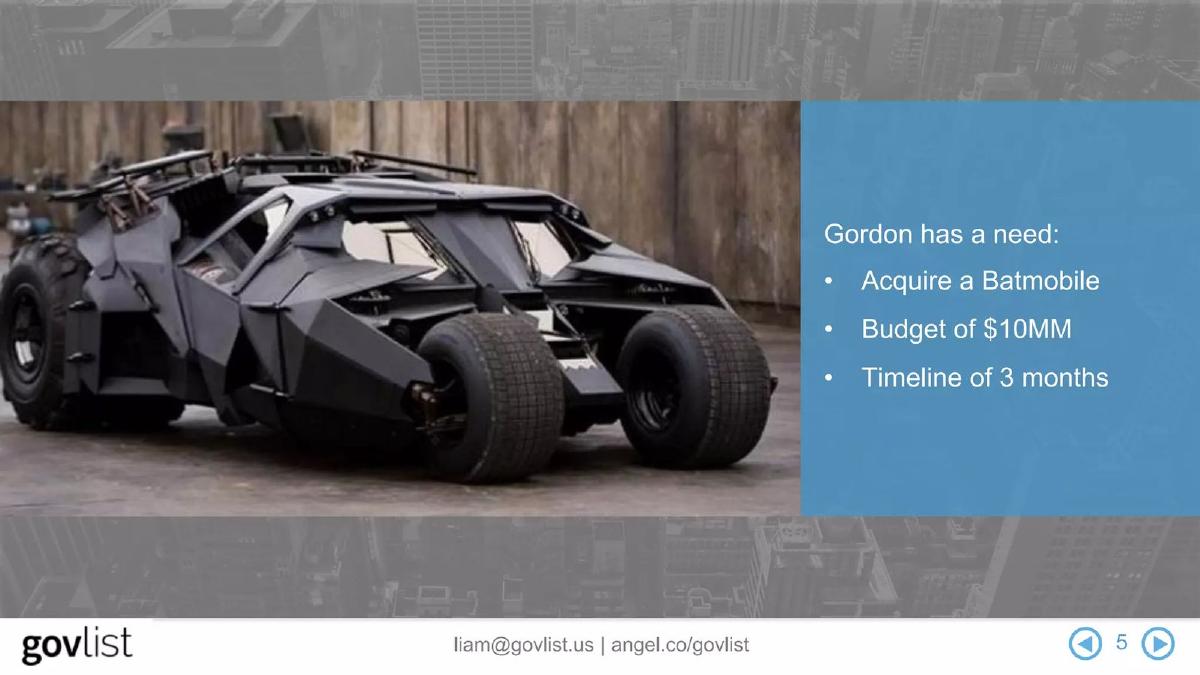
Slide 5 defines the specific 'Need.' The fictional goal is to 'Acquire a Batmobile' with a budget of $10MM and a timeline of 3 months . This sets the stakes. It’s a high-value, time-sensitive acquisition that requires precision.
Slide 6 is the 'Status Quo' or 'Problem' slide. It uses a complex diagram of icons representing people, phone calls, emails, and documents. The process is shown as a non-linear, chaotic web that takes 4 weeks just to coordinate. This visualizes the 'friction' that ProcureNow aims to eliminate. By showing Commissioner Gordon trapped in a web of manual communication, the deck makes the case for a centralized digital platform.
Slides 7-8: The Solution and Sales Velocity
Slide 7 showcases the product. It features a laptop, tablet, and smartphone displaying the govlist interface. The central modal asks, 'What Would You Like to Purchase?' and offers categories such as Arts & Entertainment, Commodities, Construction, General Services, Professional Services, and Technology . The UI appears clean and modern, contrasting with the 'legacy' feel usually associated with government software. A pie chart on the mobile view shows 'Currently 36 Projects,' suggesting the tool handles portfolio management, not just single transactions.
Slide 8 focuses on the three pillars of the value proposition: Acceleration, Compliance, and Outcomes . Below these icons, the deck makes a bold claim: 3 Months average sales cycle . In the world of Enterprise GovTech, where sales cycles often stretch past a year, this metric is a significant competitive advantage. It suggests that their go-to-market strategy is optimized for speed, which is critical for scaling a SaaS business.
Slides 9-10: Traction and Contact
Slide 9 is the 'Traction' slide. It uses a 3D bar chart to show growth in the 'sales qualified pipeline.' The pipeline grew from $125K to $835K , which the slide calculates as 6.7x growth. This slide demonstrates momentum. It shows that the 3-month sales cycle mentioned on the previous slide is resulting in a rapidly expanding top-of-funnel.
Slide 10 is the closing slide, featuring the logo and a contact email: liam@govlist.us . The background image is a faded historical painting (likely Washington Crossing the Delaware), maintaining the 'government' theme without being overly literal.
What ProcureNow Does Well
The deck’s greatest strength is its narrative clarity . Government procurement is a topic that can easily become boring or overly technical. By using the Commissioner Gordon analogy, the founders ensure that any investor—regardless of their familiarity with municipal law—can understand the pain point. The deck is also exceptionally lean . It doesn't waste time on 'market trends' or 'industry fluff'; it moves straight from market size to customer validation to the user journey.
The inclusion of paying customers on Slide 3 is the 'mic drop' moment of the deck. In GovTech, the hardest part is the first sale. Showing that they have already cracked three different cities suggests that the product-market fit is already being realized.
What is Missing from the ProcureNow Deck
Despite its narrative strength, the deck has several glaring omissions that would typically be required for a successful Seed round:
No Team Slide: There is zero information about the founders. Investors need to know why this specific team is qualified to sell to governments. Do they have procurement backgrounds? Are they former city officials? The deck leaves this entirely to the imagination. · No Competitive Landscape: The deck implies that the competition is 'manual processes' (phone calls and emails), but it doesn't acknowledge other GovTech players or legacy ERP systems like Oracle or SAP that often handle these functions. · No Financial Projections: While the pipeline growth is shown, there are no projections for ARR (Annual Recurring Revenue), churn rates, or unit economics. · No 'The Ask': The deck never states how much money they are raising, the valuation, or what the milestones will be for the next 18 months.
Founder Takeaways: How to Copy This Strategy
Founders in 'unsexy' or complex industries should take note of ProcureNow’s analogy-first approach . If your product involves complex legal workflows or back-office logistics, find a way to tell a story that a five-year-old (or a busy VC) can follow.
Additionally, the social proof placement is a tactic worth emulating. By putting the logos on Slide 3, ProcureNow earns the right to be heard for the rest of the deck. It tells the investor, 'We aren't just dreaming; these major cities are already writing us checks.' Finally, the focus on sales cycle speed (Slide 8) is a brilliant way to preemptively strike down the most common objection in the GovTech sector. If you have a metric that defies industry norms, make it a focal point of your presentation.
Frequently asked questions
- Why does the deck use Batman characters?
- Government procurement is notoriously complex and bureaucratic. By using Commissioner Gordon and the Batmobile as a proxy for a department head needing to acquire specialized equipment, ProcureNow simplifies the user journey. It allows investors to quickly grasp the friction of the current 4-week manual process without getting bogged down in real-world municipal jargon.
- Is the $38 billion daily GMV figure realistic?
- Slide 2 cites $38 billion in daily purchases as the Gross Merchandise Volume. This represents the total spend of the government sector, not ProcureNow's revenue. In pitch decks, this is a 'TAM' (Total Addressable Market) play, intended to show that even a fractional percentage of market capture results in a massive business.
- What is the significance of the '3 Months average sales cycle'?
- GovTech is often avoided by VCs because sales cycles typically last 12 to 18 months. By stating a 3-month cycle on slide 8, ProcureNow is directly addressing a major investor objection, suggesting their SaaS model or procurement category allows for much faster velocity than traditional government contractors.
- How does the deck prove the product works?
- The deck relies on two forms of proof: logos and pipeline. Slide 3 shows paying customers like Boston and Palo Alto, which provides immediate credibility. Slide 9 shows a 6.7x growth in the sales qualified pipeline, indicating that the '3-month sales cycle' is successfully filling the top of the funnel.
- What are the biggest risks in this deck's structure?
- The total absence of a team slide is the biggest risk. In a Seed round, investors are primarily betting on the founders' ability to navigate the specific hurdles of the industry. Without seeing the team's pedigree in GovTech or software, an investor has no way to vet the execution risk based on this document alone.