HealthPanel is a conceptual marketplace platform designed to bridge the gap between health professionals and individuals seeking preventative care. The deck centers its problem statement on the inefficiency of the UK's NHS, citing that diabetes care could cost £17 billion annually by 2035 (Slide 2). The proposed solution is a 'communications hub' that facilitates consultations, diagnostic data sharing, and automated administrative tools for practitioners, such as scheduling and payments (Slide 6, 7). While the deck is exceptionally long at 64 slides, the core narrative focuses on the shift fr…
Key takeaways
- The deck identifies a massive fiscal problem in the UK, stating the taxpayer pays over £100 billion per year for healthcare services (Slide 2).
- It leverages the 'Software is eating the world' thesis by Marc Andreessen to justify the disruption of the healthcare industry (Slide 3).
- The platform aims to reduce 'premature closure,' which it cites as the single most common cause of diagnosis error (Slide 4).
- HealthPanel positions itself at the intersection of Healthcare and Telecommunications to enable professional scale (Slide 6).
- The business model includes a commission-based structure on built-in payments for health services (Slide 6).
- The vision encompasses a wide range of experts, including doctors, medical specialists, nutritionists, and fitness coaches (Slide 7).
- The founder uses a personal narrative regarding dietary changes and 'personal biology' to establish the need for individualized health advice (Slide 9).
- The current objective is 'Proof of concept funding' to develop a minimum viable product and conduct initial testing (Slide 10).
Introduction and Problem Statement
Slide 1: Title Slide
The deck opens with the HealthPanel logo and a clear value proposition: "Connect to Health Experts for Personalised Consultations and Share Health Data for Actionable Advice that gets Results." The branding is minimalist, using a black-and-white color scheme that suggests a professional, clinical focus.
Slide 2: The Macro Problem
This slide establishes the economic urgency of the project. It focuses on the UK healthcare system, stating that while services are free at the point of use, the taxpayer pays "£100 Billion + / year for it." It labels the system as "unsustainable both economically and environmentally." A specific data point is provided regarding diabetes: by 2035, care could cost the NHS £17 billion annually, with a quote warning that diabetes could "bankrupt" the NHS in 20 years. This slide successfully creates a sense of impending crisis that requires a structural solution.
Slide 3: Industry Disruption Context
To justify why a software solution is appropriate, the deck quotes Marc Andreessen of Andreessen Horowitz: "More and more major businesses and industries are being run on software and delivered as online services." This is a standard appeal to the 'Software is Eating the World' narrative, positioning healthcare as the next logical industry for digital transformation.
Slide 4: The Clinical Problem
The deck shifts from macroeconomics to clinical outcomes. It quotes an article from JAMA Internal Medicine stating that "premature closure" is the "single most common cause of diagnosis error." This identifies a specific failure point in current medical practice—stopping the diagnostic process too early—which HealthPanel intends to solve through better data sharing and expert access.
Market Opportunity and Solution
Slide 5: Why Now
This slide uses a Venn diagram-style graphic to highlight "High leverage industries" in chaos: Healthcare, Telecoms, and Education. It claims these sectors are "ripe for disruption & consolidation." By grouping healthcare with telecoms, the deck prepares the reader for a solution rooted in communication technology.
Slide 6: The Platform Value Proposition
Slide 6 details how the platform serves health professionals. It lists several features designed to help practitioners scale: tools for structured organization, referral earnings, automated email scripts for niche segments, and automated booking/scheduling. Crucially, it mentions "Built in payments" and a "% commission" model, which is the first indication of the company's monetization strategy. The goal is to enable professionals to increase revenue through efficiency.
Slide 7: The Vision
The vision is defined as being the "communications hub of preventative health & wellness services." The deck emphasizes that this is a global connection tool. It also clarifies the scope of "health professionals," which includes doctors, medical specialists, nutritionists, fitness coaches, and behavior change experts. The slide notes that the platform will connect people to diagnostic testing services and provide a place to share that data for interpretation and actionable plans.
Strategic Positioning and Ask
Slide 8: Social Forces
This slide offers a philosophical take on the market shift. It argues that in the age of Google, finding answers has become cheap or free. Therefore, the "next area of growth" is not in providing answers, but in "finding the right questions to ask." This positions the HealthPanel experts as guides who help users navigate an overwhelming amount of information.
Slide 9: Founder's Narrative
The deck introduces a personal element, though the founder is not named on this slide. The text describes a personal journey of dietary changes based on "personal biology" that proved transformational. It lists "pain, stress, and low quality life performance" as symptoms of a diet missing key ingredients. This narrative serves to humanize the problem and suggest that the founder has firsthand experience with the benefits of personalized, data-driven health advice.
Slide 10: The Ask
The final slide in this set is titled "Proof of concept funding." It is remarkably sparse, stating only that the funds will be used for "Developing a minimum viable product, testing with health professionals and users." No specific dollar amount, equity offer, or timeline is mentioned on this slide.
What Works in the HealthPanel Deck
Strong Problem Anchoring: The deck does an excellent job of quantifying the problem on Slide 2. By citing the £100 billion cost of the NHS and the specific £17 billion threat from diabetes, it moves the conversation from a vague "healthcare is bad" to a specific "this system is going bankrupt."
Clear Professional Utility: Slide 6 is very specific about why a health professional would want to use this platform. It doesn't just promise "better care"; it promises "increased revenue," "automated email scripts," and "referral earnings." This addresses the practitioner's pain points as a business owner, not just a clinician.
Broad Market Definition: By including nutritionists and fitness coaches alongside doctors (Slide 7), the deck expands its Total Addressable Market (TAM) significantly. It positions the company in the "wellness" space, which often has fewer regulatory hurdles and faster sales cycles than pure clinical health-tech.
What is Missing from the HealthPanel Deck
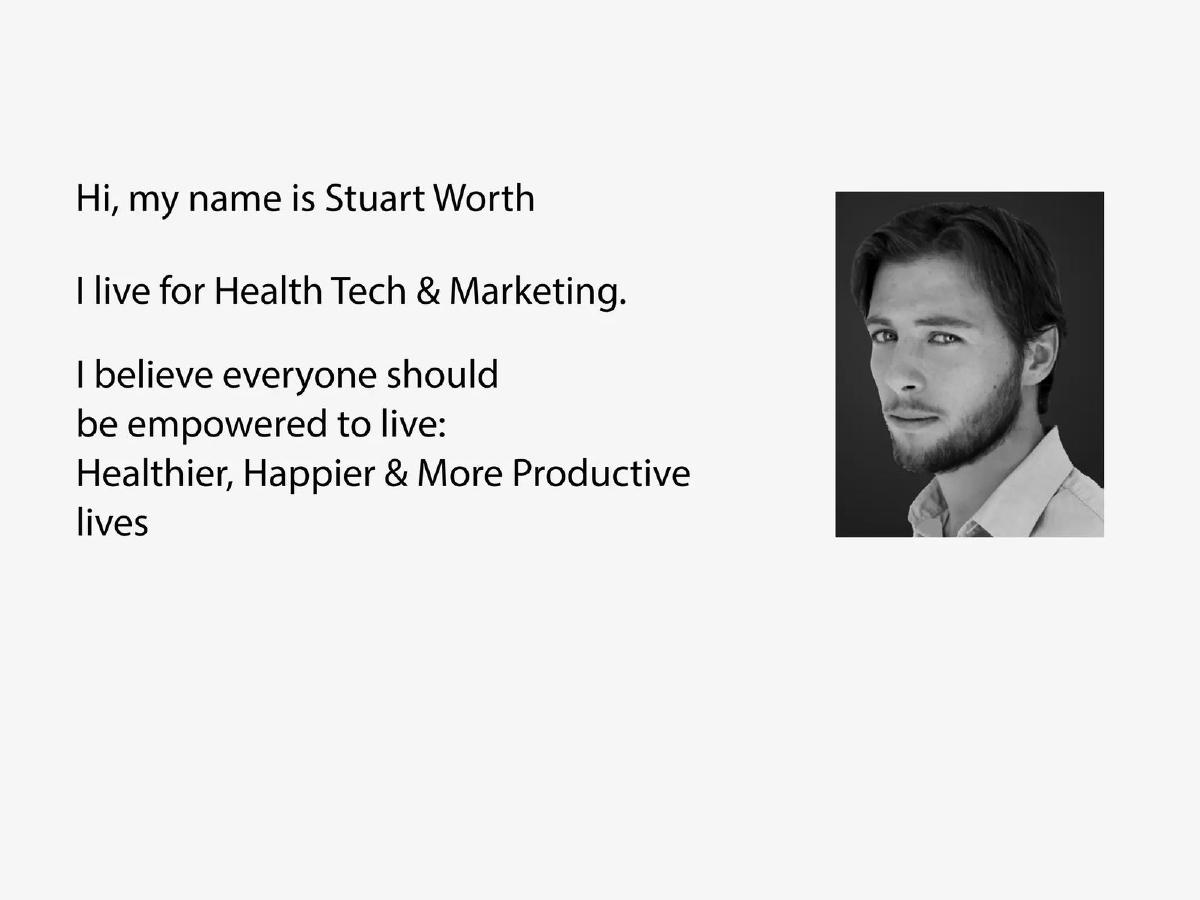
The Team Slide: In the 10 slides provided, there is no mention of the founders' names, backgrounds, or medical credentials. For a healthcare startup, especially one citing clinical errors (Slide 4), the lack of a visible medical advisory board or experienced technical team is a significant gap.
Specific Financials and Ask: Slide 10 asks for "Proof of concept funding" but fails to state how much is being raised. Furthermore, there are no projections regarding user growth, take rates, or customer acquisition costs. Investors cannot evaluate the opportunity without knowing the scale of the capital requirement.
Competitive Landscape: The deck mentions that healthcare is "ripe for disruption" but does not acknowledge existing telehealth giants or wellness marketplaces. A slide showing how HealthPanel differs from established players like Zocdoc, Teladoc, or even specialized platforms like Levels would be necessary.
Product Visuals: Despite being a 64-slide deck, the first 10 slides contain no screenshots, wireframes, or mockups of the actual platform. It remains a "concept" rather than a tangible product, which makes the "Proof of concept" ask harder to justify.
Founder's Playbook: What to Copy
Use Macro Trends to Set the Stage: The use of the Marc Andreessen quote (Slide 3) and the JAMA quote (Slide 4) provides external validation for the startup's existence. Founders should always look for authoritative sources that confirm their industry is either failing or changing in a way that favors their solution.
Identify the 'Why Now' Through Social Shifts: Slide 8's argument about the shift from "finding answers" to "finding questions" is a sophisticated way to explain a market evolution. It moves the product away from being a simple database and toward being a high-value service. Founders should try to identify similar underlying shifts in consumer behavior.
Address the Supply Side's Wallet: Most marketplace decks focus entirely on the consumer. HealthPanel's Slide 6 focuses on how the professional makes more money. If you are building a marketplace, you must prove that the supply side (the experts) will be more profitable on your platform than off it.
Final Analysis
The HealthPanel Concept deck is a high-level visionary document that identifies a massive, growing problem in the UK healthcare sector. It correctly identifies that the solution lies at the intersection of data sharing and expert communication. However, at 64 slides total, the deck is likely far too long for an initial investor pitch, and the first 10 slides are heavy on philosophy and light on execution details. To move from a "concept" to a fundable company, the founders need to drastically condense the narrative, introduce a credible team, and put a specific price tag on their proof-of-concept phase.
Frequently asked questions
- What is the primary problem HealthPanel is trying to solve?
- HealthPanel focuses on the unsustainability of current healthcare systems, specifically the UK's NHS. It highlights that the system is wasteful and inefficient, with chronic issues like diabetes potentially costing £17 billion a year by 2035. It also addresses 'premature closure' in diagnosis, suggesting that a lack of comprehensive data sharing leads to medical errors.
- How does the platform intend to generate revenue?
- According to Slide 6, the platform features 'built-in payments' and operates on a '% commission' model. It also provides tools for health professionals to increase their own revenue through automated email scripts, referral earnings, and structured organization tools, suggesting a B2B2C marketplace dynamic where the platform takes a cut of transactions.
- Who are the target users on the professional side of the marketplace?
- The deck defines 'health professionals' broadly. This includes traditional medical roles like doctors and specialists, but extends to wellness roles such as nutritionists, fitness coaches, and 'behaviour change experts.' The goal is to provide a holistic approach to health advice rather than just clinical intervention.
- What is the 'Why Now' justification for this startup?
- The deck argues that healthcare, telecommunications, and education are 'industries in chaos' and ripe for disruption. It specifically points to the transition from the 'age of Google' (where answers are free) to a new era where the value lies in 'finding the right questions to ask' through expert guidance and data interpretation.
- What stage is the company currently in based on the deck?
- HealthPanel appears to be at the pre-seed or concept stage. Slide 10 explicitly states they are seeking 'Proof of concept funding' for the purpose of developing a Minimum Viable Product (MVP) and testing it with users and professionals. There is no evidence of an existing product or active user base in the slides provided.