SimpliRoute’s pitch deck is a concise, data-driven presentation that prioritizes traction and clear problem-solution mapping. Founded in 2015 and headquartered in Santiago, the company raised $11.2 million for its logistics optimization platform. The deck stands out by placing a high-growth MRR chart on slide 2, showing a jump from $2K to $21K in just five months. It effectively uses a persona-based problem slide featuring a Sodexo employee to humanize the inefficiencies of route planning. While the deck is visually sparse and lacks a formal 'Ask' or detailed financial projections, its focus…
Key takeaways
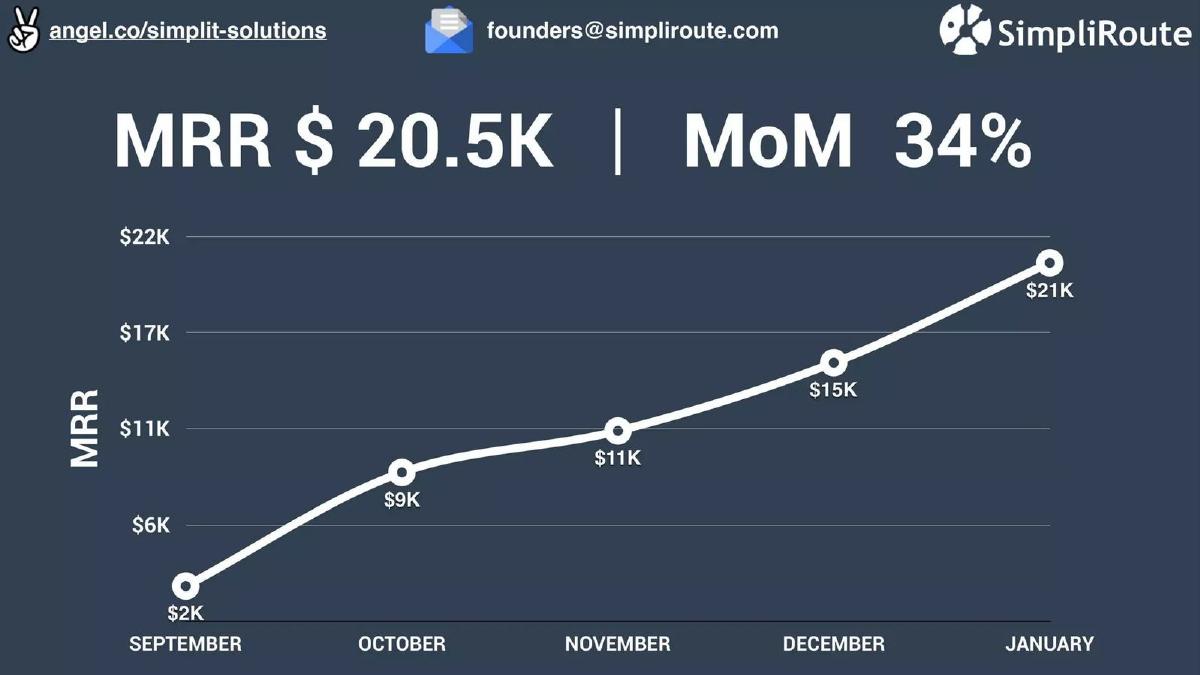
- The deck opens with a massive traction signal, showing MRR growth from $2K in September to $21K in January (Slide 2).
- SimpliRoute reports a consistent 34% month-over-month growth rate, a key metric for their Series B narrative (Slide 2).
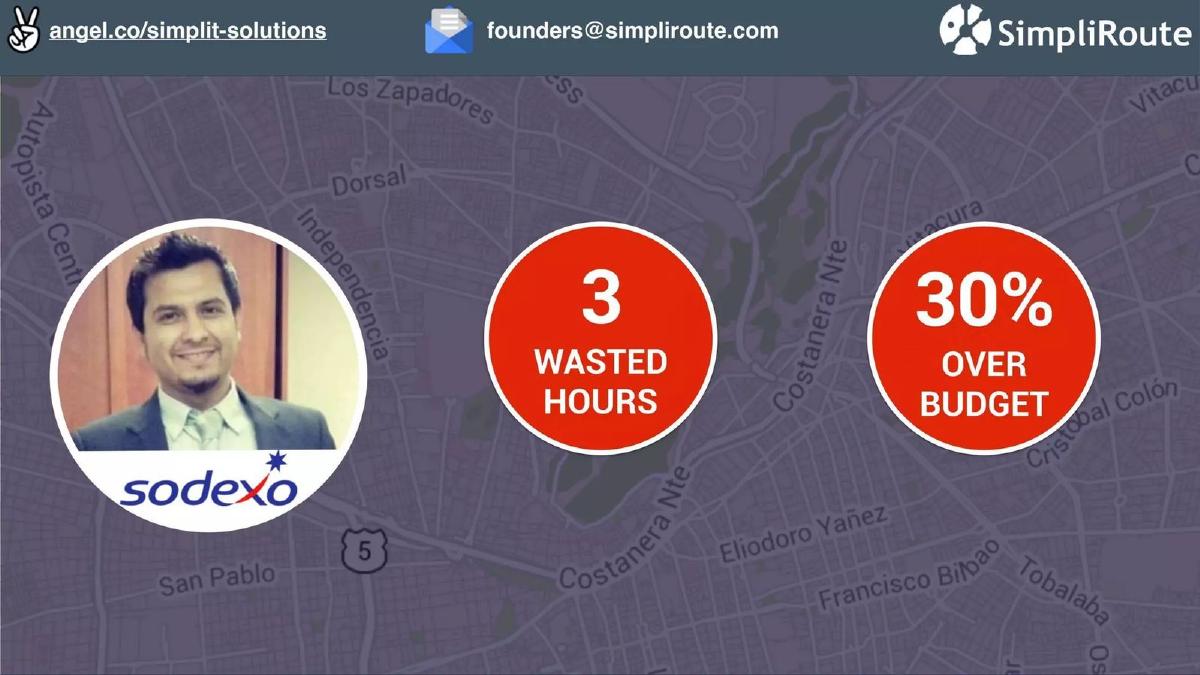
- The problem is quantified through a specific user persona, citing 3 wasted hours and 30% over-budget operations (Slide 4).
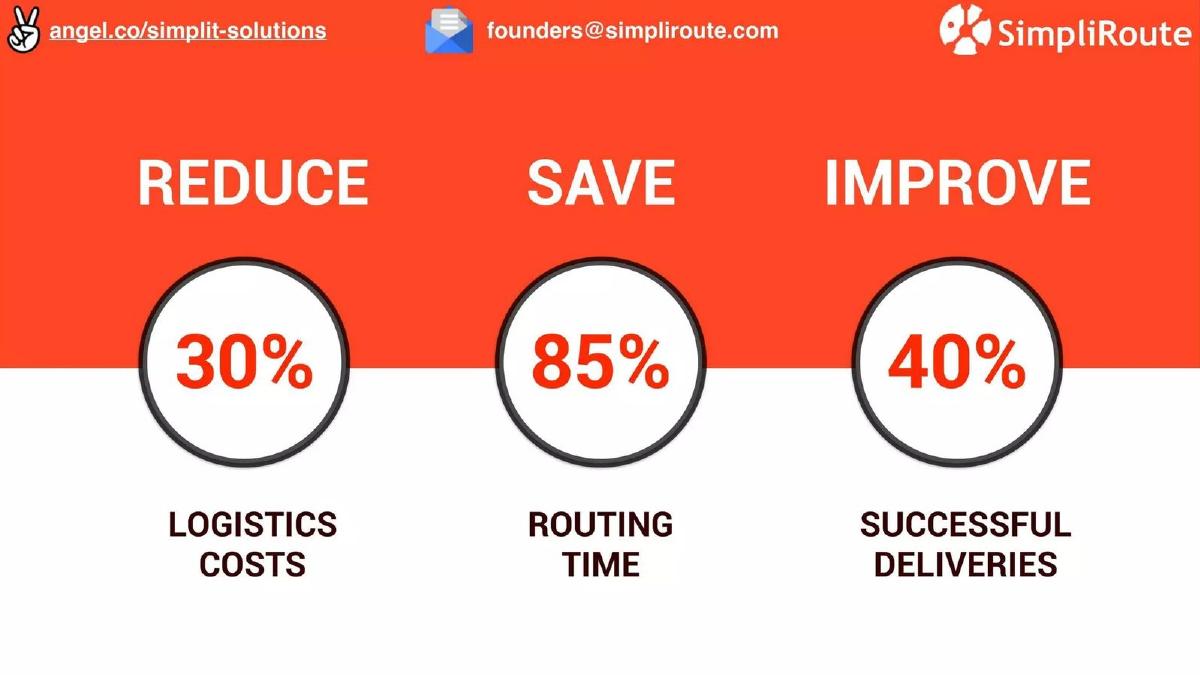
- Product efficacy is demonstrated by three core KPIs: 30% reduction in costs, 85% time savings, and 40% improvement in deliveries (Slide 6).
- The market focus is explicitly on 'Small Fleet Owners,' who control 90% of the 54 million vehicles worldwide (Slide 8).
- The competitive landscape is framed by contrasting small fleets against the 10% market share held by giants like FedEx, UPS, and DHL (Slide 8).
- The founding team combines deep technical expertise in operations research with 15+ years of sales and innovation experience (Slide 9).
- The deck omits a specific funding 'Ask,' detailed unit economics, and a roadmap for future product development.
Executive Summary: The Power of Brevity
SimpliRoute’s pitch deck is a study in minimalism. At just 9 slides, it bypasses the traditional fluff often found in Series B decks and focuses on a singular, powerful narrative: explosive growth in an underserved market. By targeting the 90% of fleet owners who aren't global logistics giants, SimpliRoute identifies a massive 'blue ocean' opportunity. The deck’s strength lies in its ability to quantify every claim, from revenue growth to customer savings.
Slide 1: Title and Positioning
The cover slide introduces the company with a clear, functional tagline: "Logistics Optimization as a Service." This immediately categorizes the business as a SaaS platform within the logistics vertical. The use of a highway long-exposure photo reinforces the industry focus, while the contact information for the founders is prominently displayed at the top.
Slide 2: The Traction Hook
In a bold move, SimpliRoute places its traction slide second. This is a high-conviction strategy designed to stop an investor from skimming. The slide features a line graph showing MRR growth from $2K in September to $21K in January . The headline metric, "MoM 34%," is the most important number on the page, signaling that the company has found a repeatable sales motion. By leading with revenue, they validate the problem before they even describe it.
Slides 3-4: The Problem and the Persona
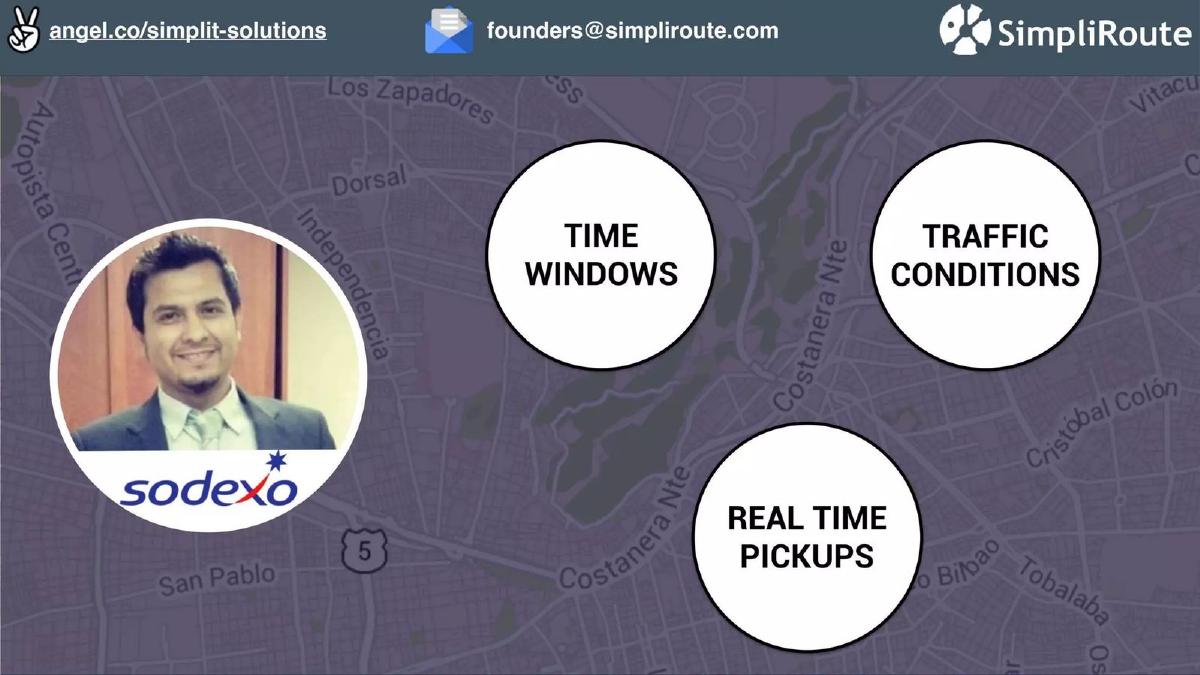
Slides 3 and 4 use a specific persona—a professional associated with Sodexo —to illustrate the pain points of logistics. Slide 3 identifies the variables that make routing difficult: Time Windows, Traffic Conditions, and Real Time Pickups . Slide 4 then quantifies the cost of failing to manage these variables, citing "3 Wasted Hours" and operations that are "30% Over Budget." Using a real-world brand like Sodexo adds a layer of enterprise-grade credibility to the problem statement.
Slide 5: The Solution (Product Visualization)
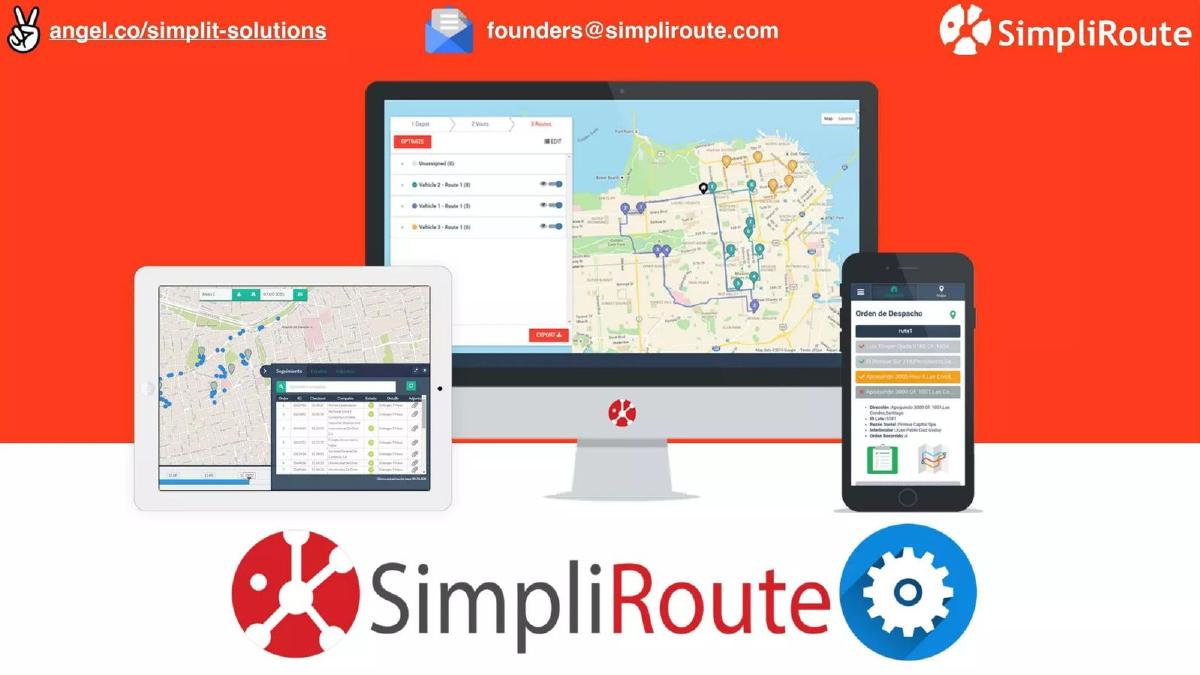
The product slide shows the SimpliRoute interface across three devices: a desktop, a tablet, and a smartphone. This demonstrates the cross-platform nature of the service, which is essential for a logistics tool that must be used by both dispatchers in an office and drivers on the road. The UI shown includes maps with plotted routes and a list of "Unassigned," "Vehicle 1," and "Vehicle 2" routes, giving investors a glimpse of the actual workflow.
Slide 6: Quantified Value Proposition
This slide is the 'Why' behind the product. It breaks down the impact of the software into three key metrics: 30% reduction in Logistics Costs , 85% reduction in Routing Time , and a 40% improvement in Successful Deliveries . These are the hard ROI figures that a B2B buyer needs to justify the purchase. For an investor, these numbers represent the 'stickiness' of the product.
Slides 7-8: Market Opportunity and Segmentation
Slide 7 starts with a teaser, showing the logos of FedEx, UPS, DHL, and the USPS . Slide 8 then provides the context: these giants only represent 10% of the market. The real opportunity, according to SimpliRoute, is the "Small Fleet Owners" who own 90% of the 54 million vehicles worldwide . This is a classic 'David vs. Goliath' market framing, suggesting that while the big players have their own internal tech, the rest of the world needs SimpliRoute.
Slide 9: The Team
The final slide introduces the co-founders. Alvaro Echeverria (CEO) is positioned as the technical lead with a background in Operations Research and 6+ years in logistics. Eyal Shats (Director of Sales) provides the commercial weight with 15+ years in innovation companies. The inclusion of logos like Informs and Scopix suggests a history of academic and professional achievement in relevant fields.
What Works in This Deck
Traction Front-Loading: By putting the 34% MoM growth on slide 2, the founders ensure that every subsequent slide is viewed through the lens of a winning company. It transforms the 'Problem' and 'Solution' slides from theoretical exercises into explanations of why they are already succeeding.
Market Framing: The distinction between the 10% (the giants) and the 90% (the small fleets) is a brilliant way to demonstrate a massive Total Addressable Market (TAM) without using a generic 'trillion-dollar' industry slide. It identifies a specific, underserved niche that is actually larger than the visible market leaders.
ROI-Centricity: The deck focuses heavily on what the customer gains (time and money). In B2B SaaS, this is the only thing that matters. The 85% reduction in routing time is a particularly 'sticky' metric because it represents a massive shift in daily operations for a fleet manager.
What Is Missing
The Ask: There is no slide detailing how much money SimpliRoute is raising or what they intend to do with it. While the catalogue facts state they raised $11.2M, the deck itself leaves the investor guessing about the terms or the use of proceeds.
Unit Economics: For a Series B deck, investors typically expect to see Customer Acquisition Cost (CAC), Lifetime Value (LTV), and churn rates. This deck is very light on the financial health of the business beyond top-line MRR.
Competitive Landscape: While the deck mentions the 10% market share of FedEx/UPS, it doesn't address other software competitors in the routing space (e.g., Route4Me, OptimoRoute). A competitive matrix would have helped define their unique technical advantage.
What a Founder Should Copy
The 'Persona' Problem Slide: Instead of listing abstract problems, use a photo of a real person or a specific role and list their daily frustrations. It makes the problem feel tangible and urgent.
The 90/10 Market Split: If you are entering a crowded market, find a way to segment it so that the 'crowded' part is actually the minority. This allows you to claim a massive, untapped territory while acknowledging the existence of incumbents.
Minimalist Design: This deck uses high-contrast colors (red, white, and dark blue) and very little text. It is designed to be spoken over, not read like a book. This keeps the audience's attention on the presenter while the slides provide the 'proof' for the claims being made.
Frequently asked questions
- What is SimpliRoute's primary value proposition?
- SimpliRoute positions itself as 'Logistics Optimization as a Service.' According to slide 6, the platform delivers three primary outcomes: a 30% reduction in logistics costs, an 85% reduction in routing time, and a 40% improvement in successful deliveries. It targets the inefficiencies of manual route planning, such as managing time windows, traffic conditions, and real-time pickups.
- How does SimpliRoute define its target market?
- The company focuses on the 'Small Fleet Owner' segment. Slide 8 illustrates that while major carriers like FedEx, UPS, and DHL are well-known, they only represent 10% of the market. The remaining 90%, totaling 54 million vehicles worldwide, consists of small fleet owners who lack the sophisticated optimization tools used by global giants.
- What traction did SimpliRoute show in this deck?
- The deck highlights significant early-stage momentum on slide 2. It shows Monthly Recurring Revenue (MRR) starting at $2,000 in September and climbing to $21,000 by January. This represents a 34% month-over-month (MoM) growth rate, which is a strong indicator of product-market fit for a Series B stage company.
- Who are the founders of SimpliRoute?
- As shown on slide 9, the company was co-founded by Alvaro Echeverria (CEO) and Eyal Shats (Director of Sales). Echeverria is an Operations Researcher with over 6 years in the logistics industry, while Shats brings over 15 years of experience in innovation companies. Their backgrounds suggest a balance of technical logistics knowledge and commercial execution.
- What is missing from the SimpliRoute pitch deck?
- The deck is remarkably lean at only 9 slides. It lacks a formal 'Ask' slide detailing how much capital is being raised and how it will be used. Additionally, there is no slide dedicated to unit economics (LTV/CAC), a detailed competitive matrix, or a long-term product roadmap. It relies heavily on current traction to carry the investment thesis.