SimplyInsight’s 11-slide deck is a textbook example of how to leverage early traction to overcome a lack of complex financial modeling. By 2013 standards, the mobile ad market was exploding, and Uplette (as they were then known) positioned themselves at the center of this growth. The deck excels by showing, rather than just telling, the inefficiency of existing mobile ads—specifically citing a sub-1% conversion rate for standard experiences. With 40 million user experiences delivered in just five months and a 50% month-over-month growth rate, the founders used momentum to justify their seed r…
Key takeaways
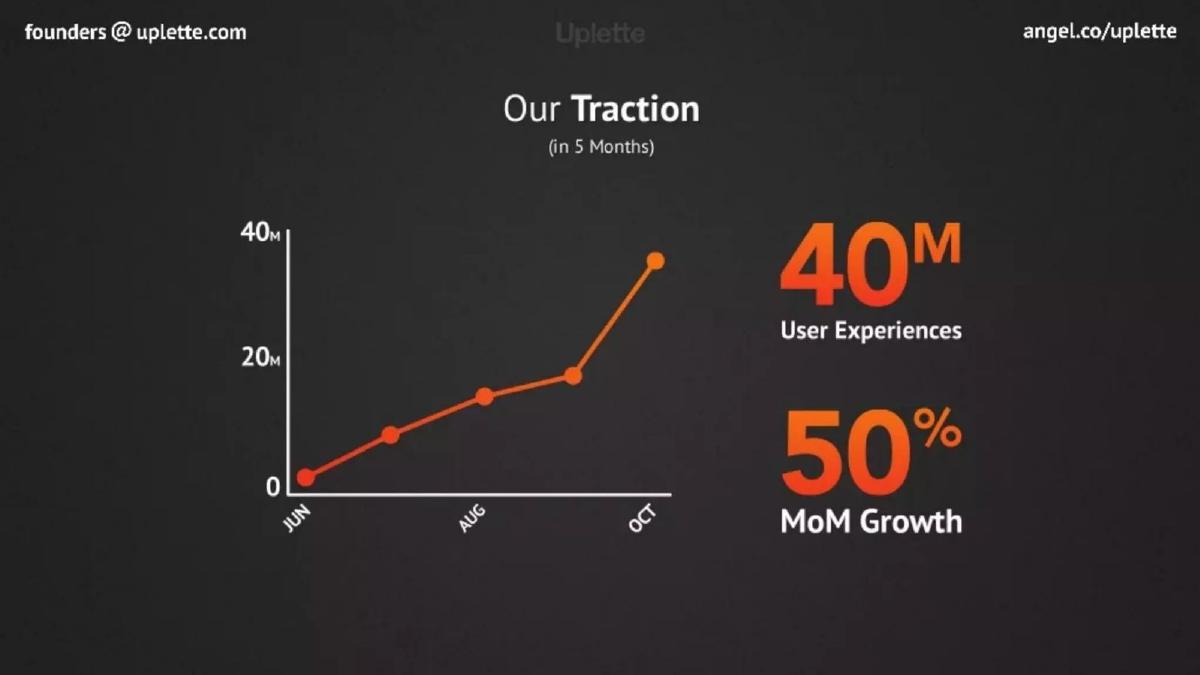
- The deck highlights a massive 50% month-over-month growth rate in user experiences on slide 5.
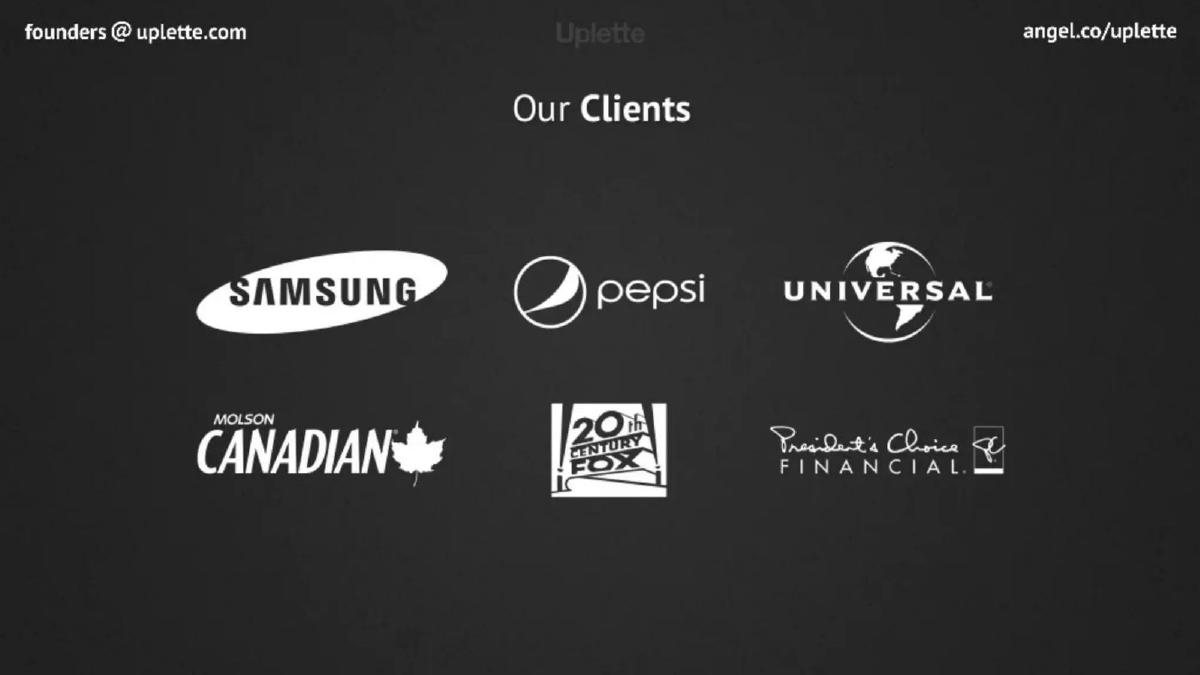
- Social proof is front-loaded with a client slide featuring global brands like Samsung, Pepsi, and Universal on slide 4.
- The problem is quantified by showing that existing mobile ad experiences result in less than 1% conversion on slide 7.
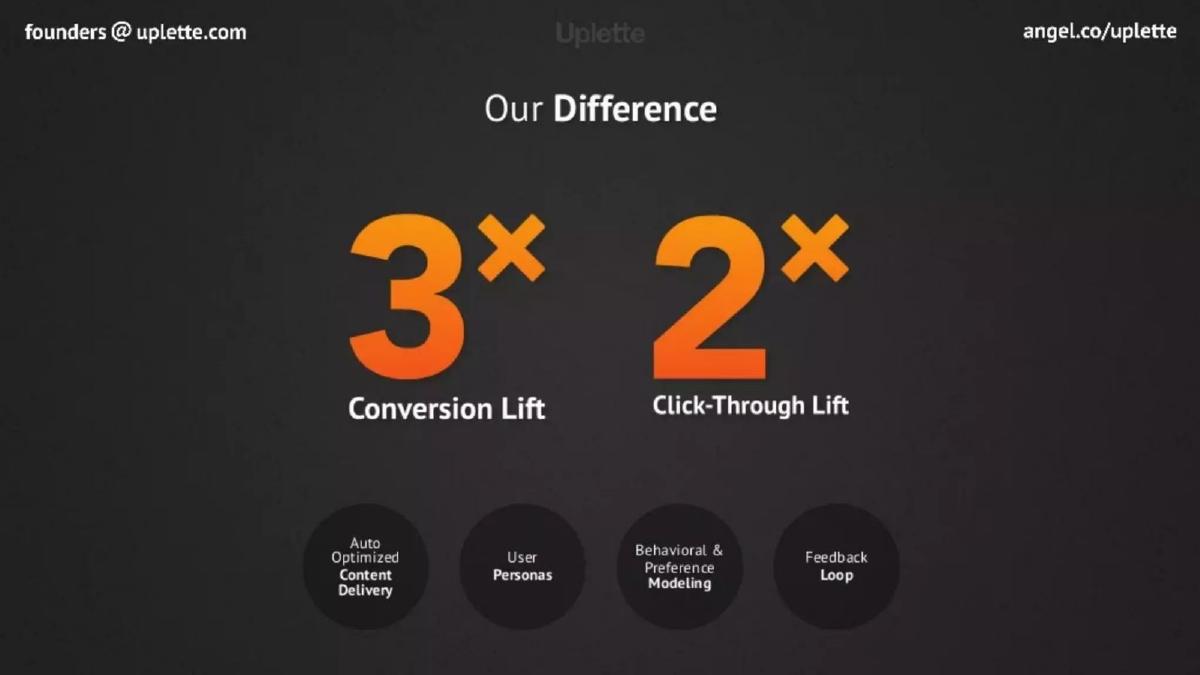
- The solution claims a 3x conversion lift and a 2x click-through lift compared to standard methods on slide 3.
- Market size projections were aggressive, citing a $25 billion mobile ad spend for 2014 on slide 9.
- The team slide emphasizes corporate pedigree from Microsoft, American Express, and RBC Royal Bank on slide 10.
- The deck completely omits a specific funding 'Ask' or a breakdown of how capital will be deployed.
- Unit economics and revenue figures are entirely absent from the presentation.
The SimplyInsight (Uplette) Seed Deck: Selling Momentum Over Metrics
SimplyInsight, originally founded as Uplette, entered the market at a pivotal moment in 2013. Mobile advertising was transitioning from a secondary thought to a primary budget item for major brands. This 11-slide deck is a focused, high-impact presentation that leans heavily on traction and social proof. It does not get bogged down in technical architecture or complex spreadsheets; instead, it focuses on the 'lift' it provides to advertisers.
The Hook and Value Proposition (Slides 1-3)
Slide 1 introduces Uplette with the tagline: Mobile advertising that learns. This immediately positions the company in the machine learning and optimization space. The sub-header, Improve response and engagement, defines the utility of the product in two simple metrics that every marketer cares about.
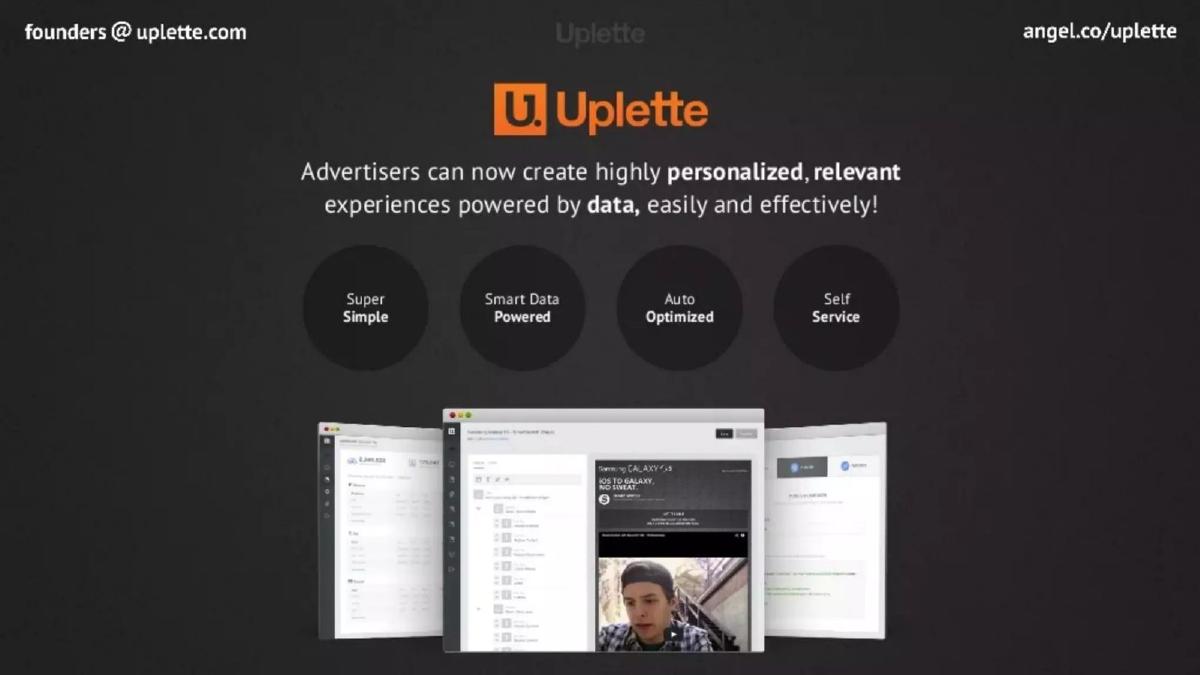
Slide 2 provides a high-level overview of the product capabilities. It uses four pillars: Super Simple, Smart Data Powered, Auto Optimized, and Self Service. The inclusion of a desktop dashboard screenshot is a subtle but important detail; it shows that while the output is mobile, the control center is a professional, enterprise-grade tool. The text emphasizes that advertisers can create personalized, relevant experiences powered by data, which was the holy grail of 2013 digital marketing.
Slide 3, titled Our Difference, is the core of the pitch. It presents two massive figures: a 3x Conversion Lift and a 2x Click-Through Lift. Below these numbers, the deck lists the mechanisms behind the lift: Auto Optimized Content Delivery, User Personas, Behavioral & Preference Modeling, and a Feedback Loop. By leading with the results rather than the technology, the founders ensure the investor understands the 'why' before the 'how.'
Validation and Traction (Slides 4-5)
Slide 4 is a powerful display of social proof. Titled Our Clients, it features the logos of Samsung, Pepsi, Universal, Molson Canadian, 20th Century Fox, and President's Choice Financial. For a seed-stage company, this is an extraordinary list. It signals to investors that the product has already passed the rigorous procurement and security hurdles of global conglomerates.
Slide 5 quantifies the company's growth. The chart shows a steep upward trajectory over a five-month period from June to October. Two key figures are highlighted: 40M User Experiences and 50% MoM Growth. Using 'User Experiences' as a metric is a clever way to show scale without disclosing sensitive revenue data, while the 50% month-over-month growth rate suggests a product-market fit that is rapidly accelerating.
The Problem and Current Market Failures (Slides 6-8)
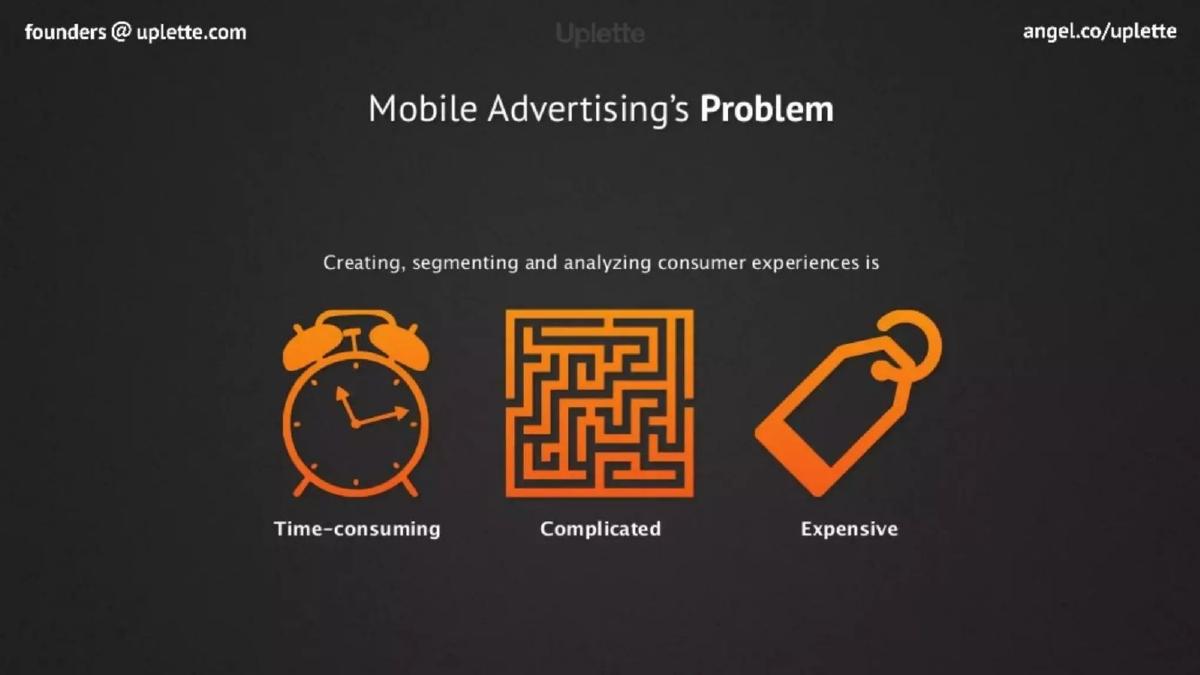
Slide 6 moves into the 'Problem' phase of the deck. It identifies Mobile Advertising's Problem as being Time-consuming, Complicated, and Expensive. These are standard pain points, but they set the stage for the more specific critique that follows.
Slide 7, Existing Experience, uses a visual comparison to drive home the inefficiency of the status quo. It shows a standard mobile ad for 'McCafé Rewards' leading to a poorly formatted landing page. The slide notes that this is an Actual ad and landing page and highlights the devastating result: Less than 1% Conversion. This slide is effective because it makes the problem visceral; any investor can see that the mobile experience shown is broken.
Slide 8 critiques Existing Tools. It lists three specific failures: Not actual dynamic content rendering, Fail to use targeting data for decision making, and Limited to impression and conversion analytics. The background image of messy spreadsheets and cluttered dashboards reinforces the idea that the current way of doing things is archaic and ripe for disruption.
Market Opportunity and Team (Slides 9-11)
Slide 9 addresses The Market. It uses eMarketer data to show that Mobile advertising is huge, and growing. The slide highlights a 2014 Mobile Ad Spend of $25 Billion and projects growth to $59 Billion by 2017. By showing that the market is expected to more than double in three years, the founders justify the need for a high-growth, scalable solution like Uplette.
Slide 10 introduces Our Team. The four members—Amanda Parker (Business), Alexey Adamsky (Tech), Kowsheek Mahmood (Tech), and Paul Feltoe (Design)—are presented with their professional backgrounds. The logos at the bottom of the slide include Critical Mass, RBC Royal Bank, Microsoft, American Express, and Ahamoment. This mix of enterprise technology, finance, and design experience suggests a well-rounded founding team capable of building and selling complex software.
Slide 11 is the contact slide, providing an email address, an AngelList URL, and a phone number. Notably, the AngelList link ( angel.co/uplette ) appears on every single slide of the deck, indicating that this presentation was designed specifically for a digital-first fundraising environment.
What Works in the SimplyInsight Deck
The primary strength of this deck is its clarity of value. The founders do not hide behind jargon. They state clearly that they provide a 3x lift in conversions, and they prove that major brands believe them by showing a top-tier client list. The visual evidence on Slide 7 is also a masterstroke; showing a broken user experience from a brand as large as McDonald's (McCafé) makes the problem undeniable.
The traction slide is also highly effective. By focusing on the growth of 'User Experiences,' the company demonstrates that their technology is already integrated into the wild. For an investor, 40 million data points is a significant enough sample size to believe that the conversion lift metrics are statistically significant and not just a fluke from a small pilot program.
What is Missing from the SimplyInsight Deck
The most glaring omission is the Financial Ask. There is no slide detailing how much money is being raised, the valuation target, or the milestones the company intends to hit with the new capital. While this information might have been on the AngelList profile, its absence from the deck makes the presentation feel incomplete as a standalone pitch.
Additionally, there is a lack of Unit Economics. While we see conversion lifts, we don't see how Uplette makes money. Is it a SaaS fee? A percentage of ad spend? A per-click optimization fee? Without a business model slide, investors are left guessing about the company's path to profitability. Finally, the Competitive Landscape is handled too broadly. While they critique 'Existing Tools,' they don't name specific competitors or explain why a large player like Google or Facebook couldn't simply build a similar optimization layer into their own mobile ad stacks.
What a Founder Should Copy
The 'Logo Bar' Strategy: If you have worked at prestigious companies or have major clients, put those logos front and center. It is the fastest way to build trust. · Visualizing the Problem: Don't just say the current solution is bad; show a screenshot of it failing. Slide 7's 'Actual ad and landing page' comparison is the most memorable part of the deck. · Consistent Branding: The deck uses a consistent orange and dark grey palette that matches the logo. It looks professional and cohesive, which reflects well on the founders' attention to detail. · Leading with Results: Put your most impressive metric (like the 3x conversion lift) on one of the very first slides. Don't make the investor wait until the end to find out why your product matters.
Frequently asked questions
- Why did SimplyInsight focus on 'User Experiences' instead of revenue?
- At the seed stage, especially in 2013, showing scale and technical viability often preceded revenue. By reporting 40 million 'user experiences' on slide 5, the company demonstrated that their infrastructure could handle significant volume and that their product was being actively deployed by major brands, which is a leading indicator for future revenue.
- How does the deck handle the competitive landscape?
- Rather than naming specific competitors, slide 8 focuses on the failures of 'Existing Tools.' It argues that current solutions lack dynamic content rendering and fail to use targeting data for real-time decision-making. This approach frames the entire existing market as the competitor, positioning SimplyInsight as the only modern alternative.
- Is the lack of a financial 'Ask' a mistake?
- In a deck intended for a platform like AngelList (which is linked on every slide), the 'Ask' is often handled by the platform's interface rather than the static slides. However, for a direct pitch, the omission of the amount being raised and the intended use of funds is a missed opportunity to drive the closing conversation.
- What is the significance of the 3x conversion lift claim?
- Slide 3 uses this metric as its primary value proposition. By claiming a 3x conversion lift, SimplyInsight is speaking directly to the ROI concerns of CMOs. This metric, combined with the logos on slide 4, suggests that their technology has been proven in the field with high-budget advertisers.
- How does the team slide build credibility?
- Slide 10 uses a 'logo-bar' strategy. By listing Microsoft, American Express, and RBC Royal Bank, the founders signal that they have experience working within the large corporate environments they are currently targeting as clients. This reduces the perceived risk of the startup being unable to navigate enterprise sales cycles.