Sira Medical’s pitch deck is a masterclass in clinical de-risking for a Seed-stage medtech startup. By focusing heavily on 'Accuracy & Precision' and providing specific results from a UCSF pilot study, the company moves beyond the 'cool factor' of augmented reality into tangible medical utility. The deck identifies a massive $19.5B annual cost in preventable adverse events and counters it with a projected 21% reduction in operating room time. While the financial ask and specific team backgrounds are omitted from this version of the deck, the technical differentiation—specifically the move fro…
Key takeaways
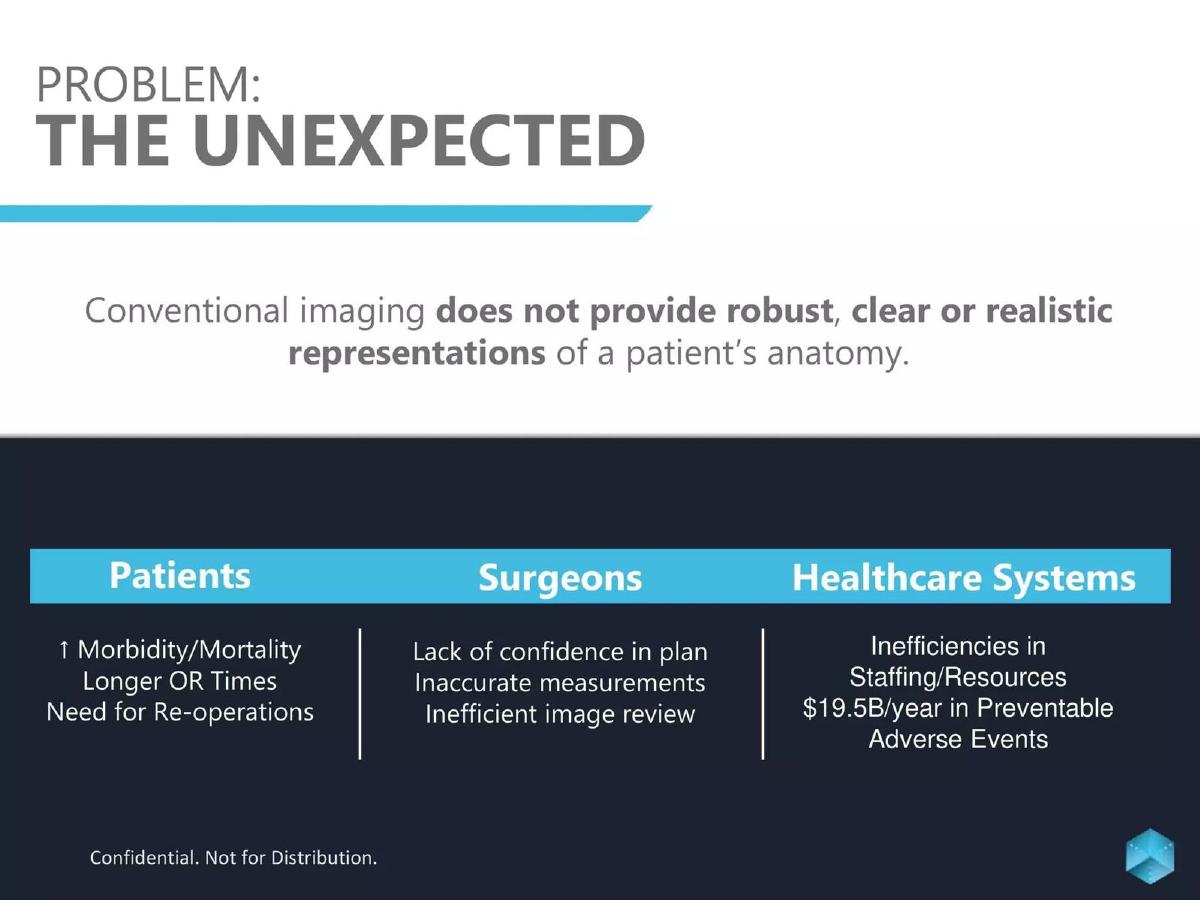
- The problem is framed as 'The Unexpected,' citing a $19.5B annual cost to healthcare systems for preventable adverse events (Slide 3).
- The product workflow is a simple three-step process: Upload CT/MRI, Transform to hologram, and Plan via AR software (Slide 4).
- Economic value is quantified as a 21% time reduction in the OR, leading to $27,023 in added revenue per OR per day (Slide 5).
- Clinical validation is supported by a UCSF pilot study of 60 observations on complex elbow fractures, projecting a 20% intra-operative time saving (Slide 14).
- Technical differentiation is established by comparing 'Surface Based Reconstruction' against 'Volume Based Reconstruction,' noting the former is less computationally demanding (Slide 17).
- The regulatory strategy is explicitly defined as a 510(k) Class II medical device pathway with 'Minor' level of concern (Slide 15).
- The business model utilizes a tiered subscription approach (Basic, Premium, Enterprise) based on the number of seats and models per month (Slide 16).
- Strategic partnerships include high-profile institutions like UCSF, UC Davis, and Microsoft for Startups (Slide 8).
The Sira Medical Teardown: Bridging the Gap Between Radiology and the Operating Room
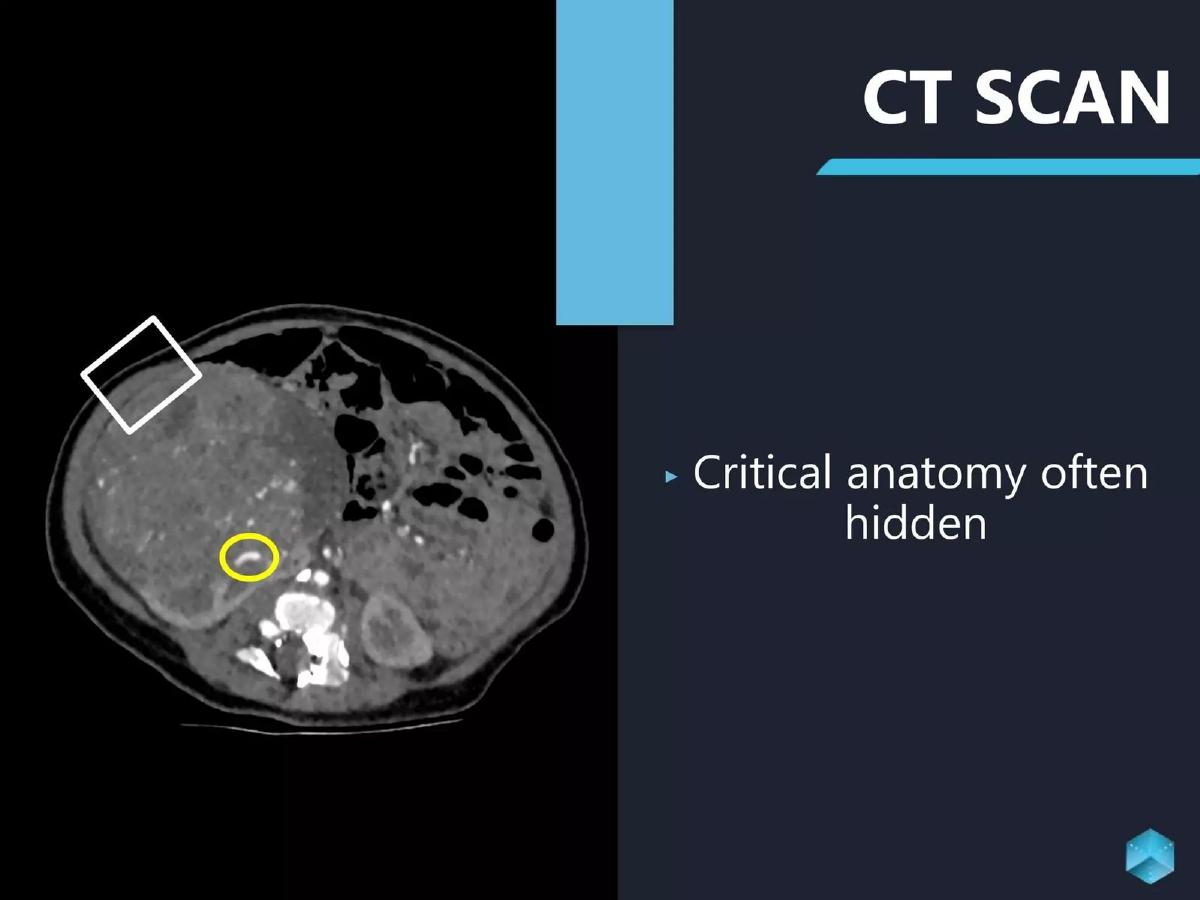
Sira Medical’s pitch deck focuses on a critical friction point in modern medicine: the translation of 2D imaging data into 3D surgical reality. While surgeons have long relied on CT and MRI scans, these images require mental reconstruction to apply to a physical patient. Sira Medical proposes an Augmented Reality (AR) solution to bridge this gap. This teardown examines the 18 slides provided to understand how the company plans to scale this high-tech intervention.
The Hook: Reality vs. The Unexpected
Slide 1: Title Slide The deck opens with a high-contrast image of a CT scanner overlaid with a 3D anatomical model. The tagline, "Improving Surgical Planning with Augmented Reality," is functional and direct. It immediately identifies the sector (HealthTech/MedTech) and the technology (AR).
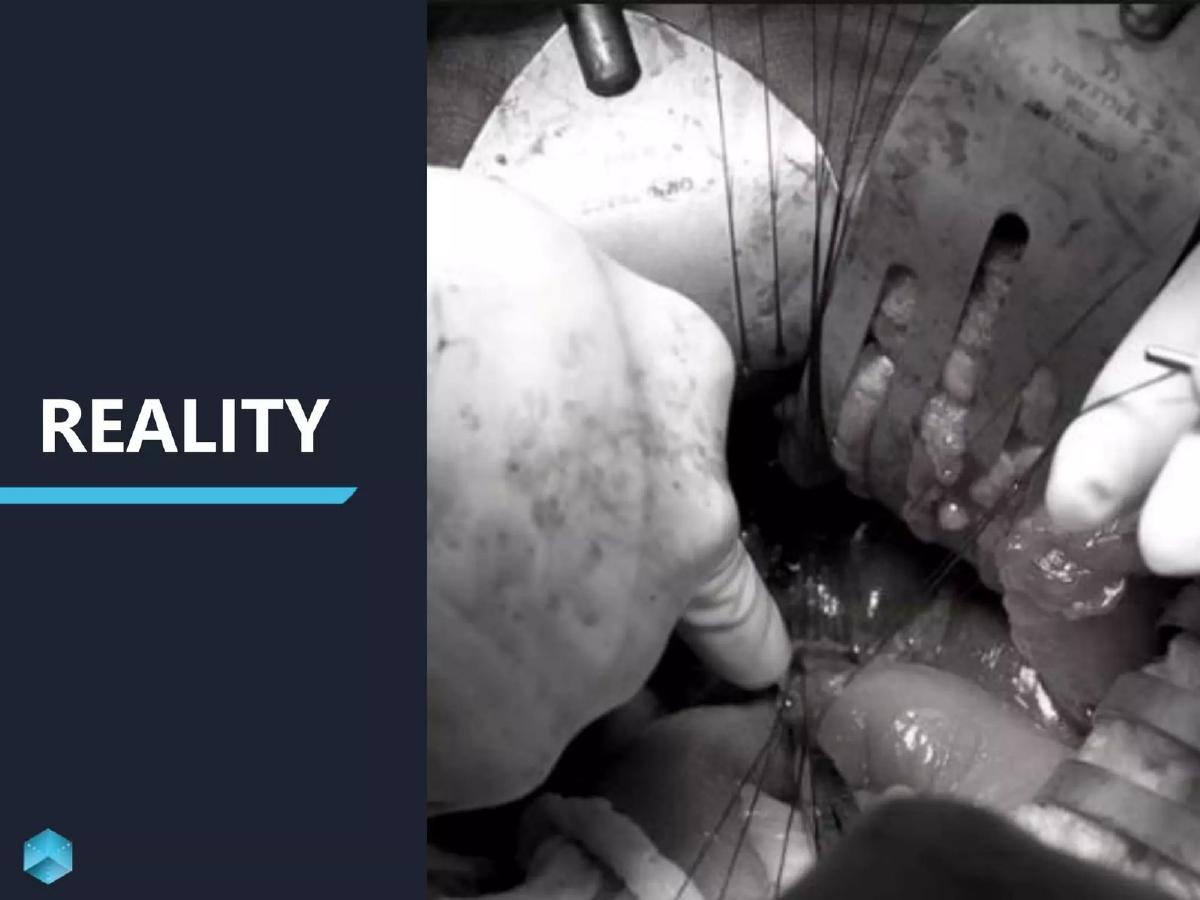
Slide 2: Reality This slide features a stark, black-and-white image of an actual surgical site. It serves as a visceral reminder of the complexity surgeons face. There is no text other than the word "REALITY," which sets up the problem-solution dynamic for the following slides.
Slide 3: Problem: The Unexpected Sira Medical frames the problem through three lenses: Patients, Surgeons, and Healthcare Systems. The most compelling figure here is the $19.5B/year in Preventable Adverse Events attributed to healthcare systems. For surgeons, the pain points are "Lack of confidence in plan" and "Inaccurate measurements." By quantifying the problem in billions of dollars, the company establishes a massive Total Addressable Market (TAM) based on cost savings.
The Solution and Workflow
Slide 4: How It Works Complexity is the enemy of adoption in a hospital setting. Sira Medical counters this with a simple three-step workflow: Upload (CT/MRI to a secure server), Transform (Conversion to a custom hologram), and Plan (Clinician reviews the 3D model). This slide is crucial because it suggests that the software integrates into existing workflows without requiring surgeons to learn new imaging protocols.
Slide 5: It All Adds Up This is the ROI slide. It splits the value proposition into "Cost Savings" and "Additional Revenue." The data points are specific: a 21% time reduction in surgery and $27,023 in added revenue per OR per day . They also list specific high-value use cases like Pedicle screws ($700MM) and Valve replacements ($500MM), showing they have identified the most profitable niches for their technology.
Slide 6: Initial Target Markets The company uses a simple bar chart to show their expansion strategy. They start with Education ($), move to Device Manufacturers ($$), and finally target Pre-Surgical Planning ($$$). This tiered approach suggests a logical path to revenue, starting with lower-regulatory-barrier markets (Education) while pursuing the high-value clinical market.
Clinical Validation and Technical Moat
Slide 7: Accuracy & Precision In MedTech, "cool" doesn't sell; "accurate" does. This slide lists three studies, including a CT Phantom Study where "Holograms match Gold standard" and an Elbow Fracture study with 60 observations. Citing the Journal of Pediatric Orthopedics and the European Society of Pediatric Radiology provides the academic rigor necessary to convince hospital procurement committees.
Slide 11: Operation Planning This slide lists the benefits for both the surgeon and the hospital. A key claim here is "No Change to Workflow." This is a major selling point in healthcare, where new technologies often fail because they add time to an already overextended staff's day.
Slide 17: Advantages of Surface Reconstruction This is a highly technical slide that explains Sira’s competitive advantage. They compare Surface Based Reconstruction (their method) against Volume Based Reconstruction . They claim their method is "less computationally demanding" and makes it easier to obtain 3D measurements. This explains why their software can run efficiently in a real-time surgical environment where lag or high hardware requirements would be a dealbreaker.
Slide 18: 3D on a 2D Monitor This slide visually demonstrates the difference between looking at a 3D model on a flat screen versus interacting with a hologram in physical space. It uses a "not equal" sign to emphasize that traditional 3D imaging lacks "real world interaction," which Sira provides for "testing actual hardware fit."
The Business Case: Partnerships, Regulatory, and Pricing
Slide 8: Research Sites and Partners The logos here are impressive for a Seed-stage company. They list UCSF, UC Davis, and USC as research sites. Corporate partners include NTT Docomo 5G and Microsoft . Being part of 500 Startups and Microsoft for Startups adds further venture-backed credibility.
Slide 9: Our Advisors The advisory board is heavy on clinical leadership. Having the Vice Chair of the Department of Surgery at UCSF (Hanmin Lee, MD) and the Director of Cardiac Imaging at UCSF (Karen Ordovas, MD) suggests that the product is being built with direct input from its end-users.
Slide 14: Pilot Study: UCSF This slide doubles down on the elbow fracture study mentioned earlier. It includes qualitative quotes from surgeons, such as: "Would change how I’d approach; looking at this makes it more likely I’d have recognized need for bone grafting." These testimonials are powerful because they describe a direct impact on surgical outcomes.
Slide 15: Regulatory Pathway This is perhaps the most important slide for a Seed investor. Sira identifies as a 510(k) Class II medical device . They note that software verification is currently underway by Battelle . Having a defined regulatory roadmap shows the team isn't just building an app, but a regulated medical tool.
Slide 16: Our Packages The pricing slide uses a SaaS model: Basic, Premium, and Enterprise. While the actual dollar amounts are represented by "$" signs (likely redacted for the public version), the structure is clear. It is based on seats (5 to 10) and models per month (20 to 40). This indicates a volume-based recurring revenue model.
What Works, What is Missing, and What to Copy
What Works The deck is exceptionally strong on clinical validation . By the time an investor reaches the end, they have seen data from phantom studies, pilot studies, and qualitative surgeon feedback. The ROI calculation on Slide 5 is also a standout, as it speaks the language of hospital administrators (revenue per OR day) rather than just the language of surgeons (better images).
What is Missing The most glaring omission in this version of the deck is the Team Slide . While advisors are listed, the actual founders and their full-time operators are not shown in these 18 slides. Additionally, there is no Financial Ask or Use of Funds slide. An investor would need to know how much capital is being raised and what milestones (e.g., FDA clearance) that capital will achieve. Finally, while they mention "Device Manufacturers" as a target, there is no detailed Go-To-Market (GTM) strategy explaining how they will penetrate the notoriously slow hospital sales cycle.
What a Founder Should Copy Founders in regulated industries should copy the Regulatory Pathway (Slide 15) and the Technical Moat (Slide 17) . Sira Medical does a great job of explaining why their technology is better (surface vs. volume reconstruction) and how it will be legal to sell (510k pathway). This removes two of the biggest hurdles in a MedTech investor's mind. Furthermore, the use of specific pilot data (Slide 14) to show how the product changes clinical decision-making is far more effective than simply saying the product is "better" or "faster."
Frequently asked questions
- What is Sira Medical's primary value proposition?
- Sira Medical provides RadHA, an augmented reality software that converts traditional 2D CT and MRI scans into 3D holograms. This allows surgeons to view patient-specific anatomy in a real-world background, improving surgical planning accuracy, reducing operating room time by a projected 21%, and increasing surgeon confidence before the first incision is made.
- How does the company plan to navigate FDA approval?
- The deck outlines a clear regulatory pathway as a 510(k) Class II medical device. They identify the 'Level of Concern' as minor and are pursuing a 'Substantial Equivalence' claim based on existing predicate devices. Software verification is noted as being underway by Battelle, a common strategy for de-risking the technical validation phase of medical software.
- What evidence does the deck provide for clinical efficacy?
- Sira Medical cites multiple studies, including a 'CT Phantom Study' where holograms matched the gold standard and a UCSF pilot study involving 60 observations of elbow fractures. The pilot results showed a 'major improvement in confidence' and allowed surgeons to recognize the need for specific procedures, like bone grafting, that were not as apparent on 2D scans.
- What is the revenue model for the software?
- The company uses a SaaS-style tiered pricing model. The 'Basic' package includes 5 seats and 20 models per month, 'Premium' offers 7 seats and 30 models, and 'Enterprise' provides 10 seats and 40 models. This suggests a recurring revenue stream rather than a one-time hardware sale, which is highly attractive to venture investors.
- Who are the key advisors supporting the project?
- The advisory board includes high-level clinical and technical experts: Hanmin Lee, MD (Vice Chair of Surgery at UCSF), Karen Ordovas, MD (Director of Cardiac Imaging at UCSF), and Sean Ong, an AR/Computer Vision expert and author on Mixed Reality programming. This provides the necessary clinical 'buy-in' for hospital adoption.