Calaxy’s 2021 pitch deck focuses on the 'fragmentation' of the creator economy, where influencers are forced to manage disparate platforms for audio, video, and text. By introducing 'Creator Tokens' as an all-access pass, Calaxy proposes a unified ecosystem where fans can purchase shout-outs, video calls, and exclusive content directly. The deck is heavily anchored by its 'Starting Roster,' showcasing a combined reach of over 85 million fans from influencers like Teyanna Taylor and Ezekiel Elliott. While the business model is a straightforward 15% commission on token issuances, the deck relie…
Key takeaways
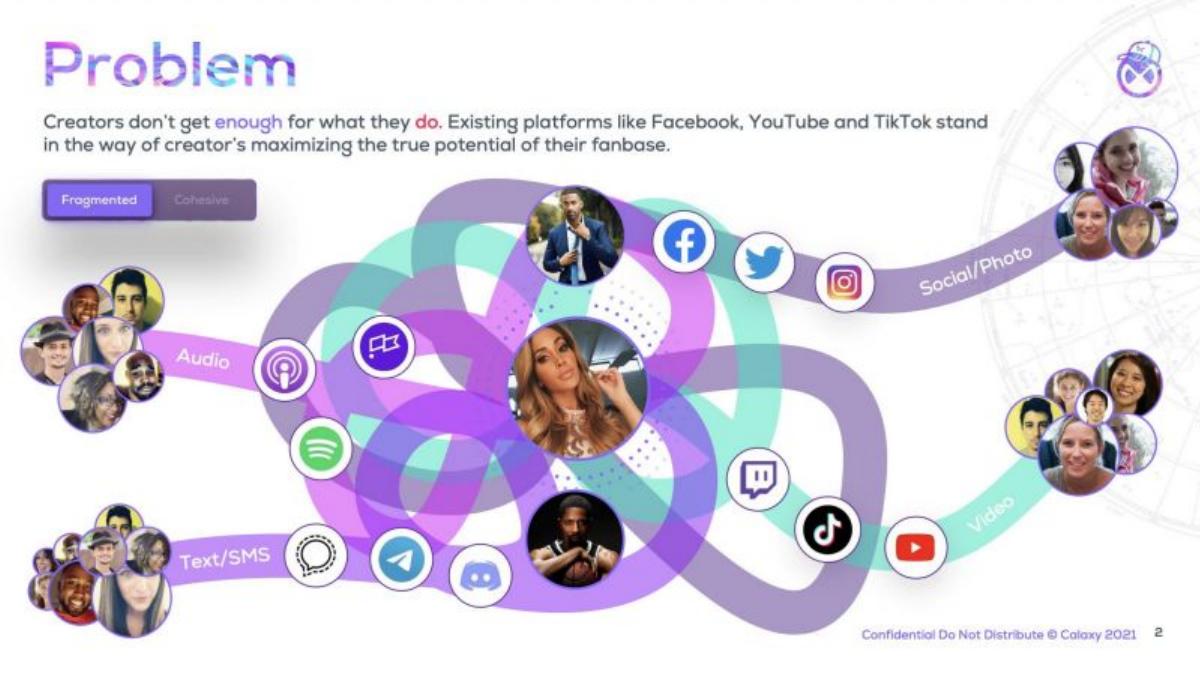
- The core problem identified is that creators are fragmented across platforms like Facebook, YouTube, and TikTok, which prevents them from maximizing their fanbase potential (Slide 2).
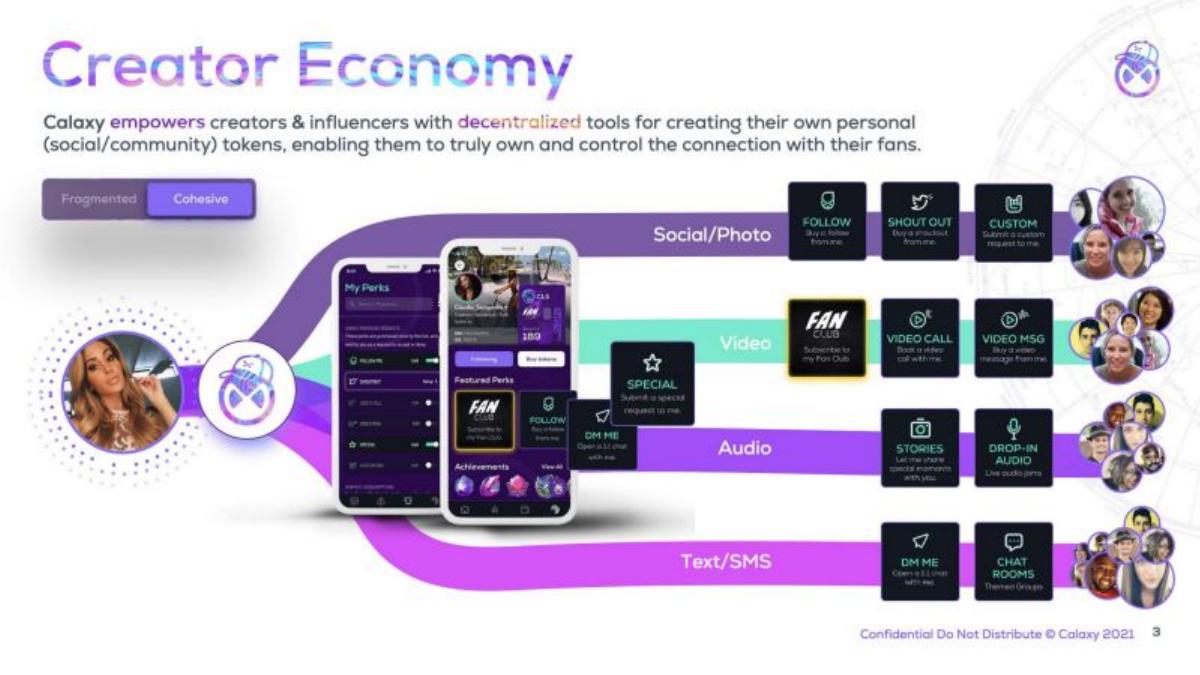
- Calaxy positions itself as a 'cohesive' alternative, offering decentralized tools for creators to issue personal social tokens (Slide 3).
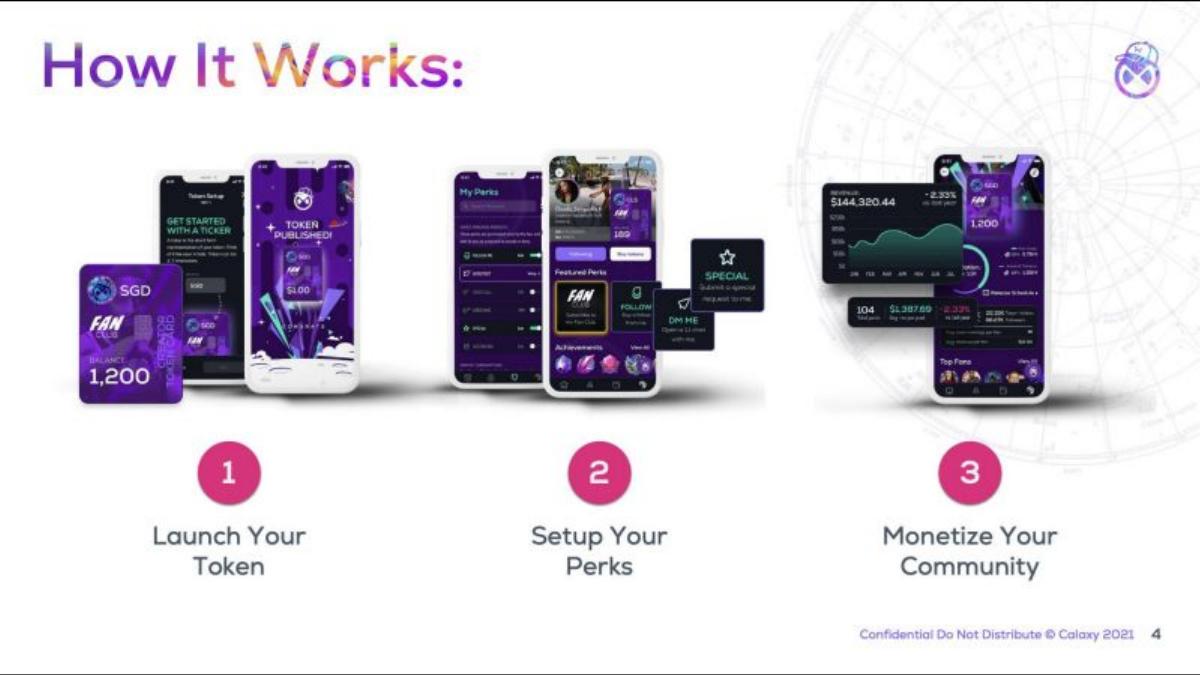
- The product uses a three-step flow: Launch Your Token, Setup Your Perks, and Monetize Your Community (Slide 4).
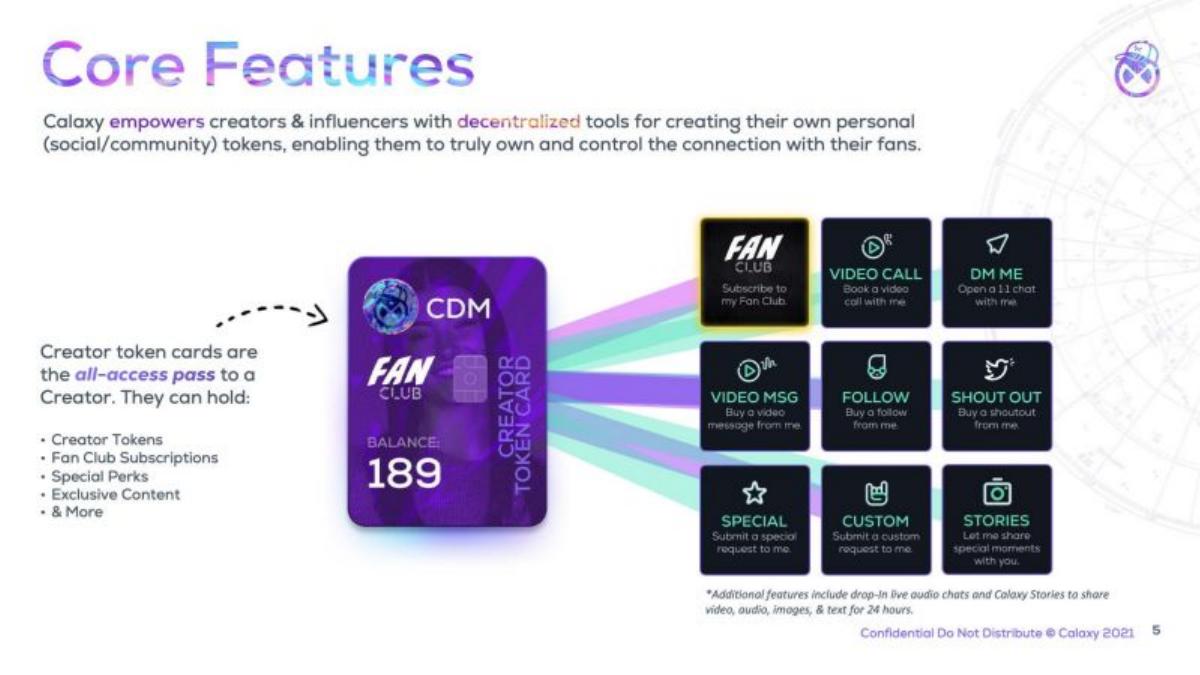
- The 'Creator Token Card' acts as an all-access pass for fans to unlock video calls, DMs, shout-outs, and exclusive stories (Slide 5).
- Go-to-market strategy relies on a 'Starting Roster' of influencers with a combined reach of 85+ million fans (Slide 8).
- The company secured a $400K grant from Hedera and had 70+ influencers with signed LOIs at the time of the deck (Slide 10).
- The primary revenue model is a 15% fee taken from every token issuance by a creator (Slide 11).
- The deck features a high-profile advisory team including Roham Gharegozlou, CEO of Dapper Labs (Slide 14).
Executive Summary: The Creator-Led Pivot to Web3
Calaxy’s pitch deck is a masterclass in leveraging celebrity equity to validate a technical product. Founded by NBA star Spencer Dinwiddie, the platform seeks to solve the 'fragmentation' of the creator economy by moving fan interactions onto a blockchain-powered marketplace. The deck focuses less on the underlying cryptography and more on the utility: how a creator can turn their social capital into a liquid asset. With a 15% take rate and a roster of influencers reaching 85 million people, the pitch is built on the premise that the audience is already there; they just need a better place to transact.
Slides 1-3: The Fragmentation Problem
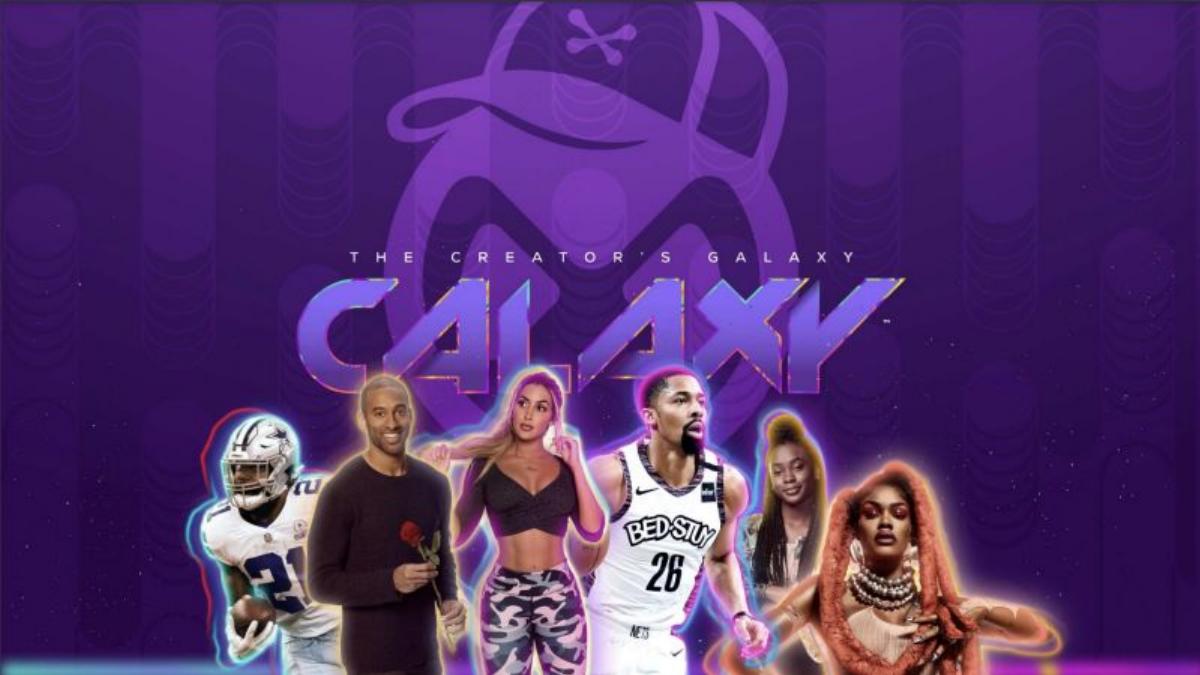
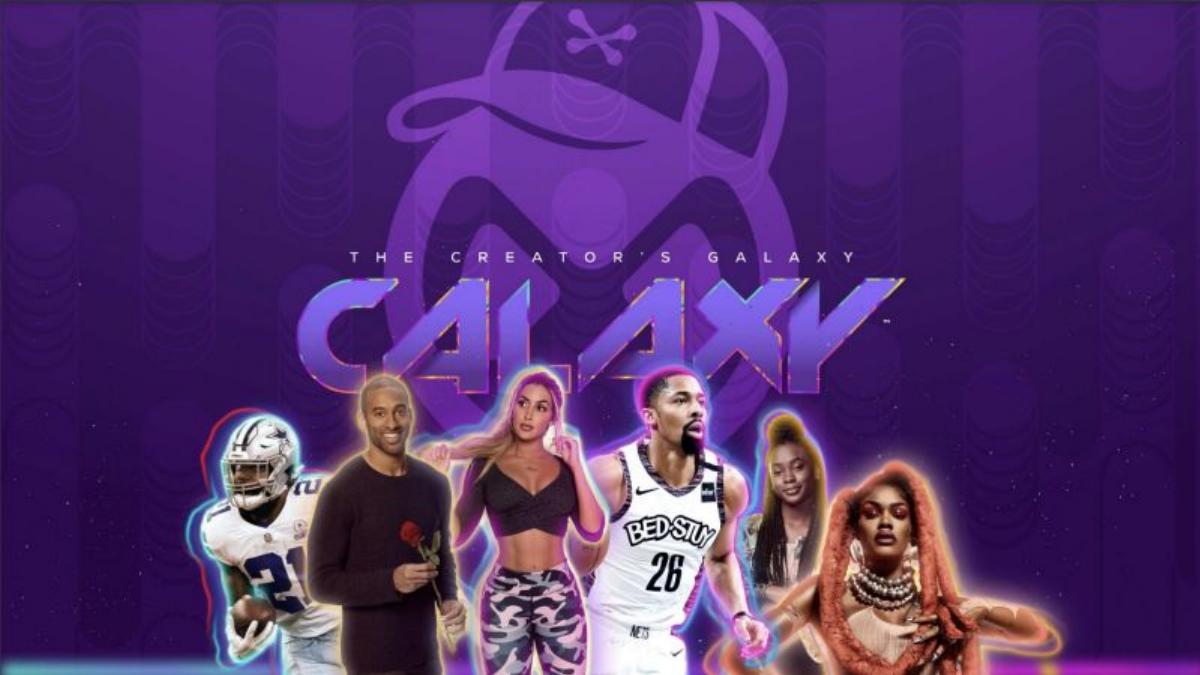
The deck opens with a high-energy title slide featuring several professional athletes and influencers, immediately establishing the brand's aesthetic: purple-hued, neon, and 'web3-native.' The subtitle, 'The Creator's Galaxy,' sets the stage for a platform built around the individual rather than the network.
Slide 2 defines the problem: 'Creators don't get enough for what they do.' It visualizes the current landscape as 'Fragmented,' showing a chaotic web of logos including Spotify, TikTok, Instagram, and Discord. The argument is that these platforms stand in the way of creators maximizing their fanbase potential. This is a common trope in creator economy decks, but Calaxy uses it to justify the need for a 'Cohesive' alternative.
Slide 3 introduces the 'Creator Economy' solution. It contrasts the previous slide by showing a centralized hub—the Calaxy app—where audio, video, text, and social interactions are unified. The key differentiator here is 'decentralized tools,' which Calaxy claims allow creators to 'truly own and control the connection with their fans.'
Slides 4-7: Product Mechanics and the Token System
Slide 4 provides a simple three-step 'How It Works' flow. It moves from 'Launch Your Token' to 'Setup Your Perks' and finally 'Monetize Your Community.' The UI mockups show a clean, mobile-first interface that looks more like a modern fintech app than a crypto wallet, which is a strategic choice to lower the barrier to entry for non-technical fans.
Slide 5 details the 'Core Features.' The 'Creator Token Card' is presented as an 'all-access pass.' By holding these tokens, fans can unlock specific interactions. The slide lists nine distinct modules, including Video Calls, DMs, Shout Outs, and Fan Club Subscriptions. This slide is critical because it moves the conversation from abstract 'tokens' to concrete 'services' that fans already understand from platforms like Cameo or OnlyFans.
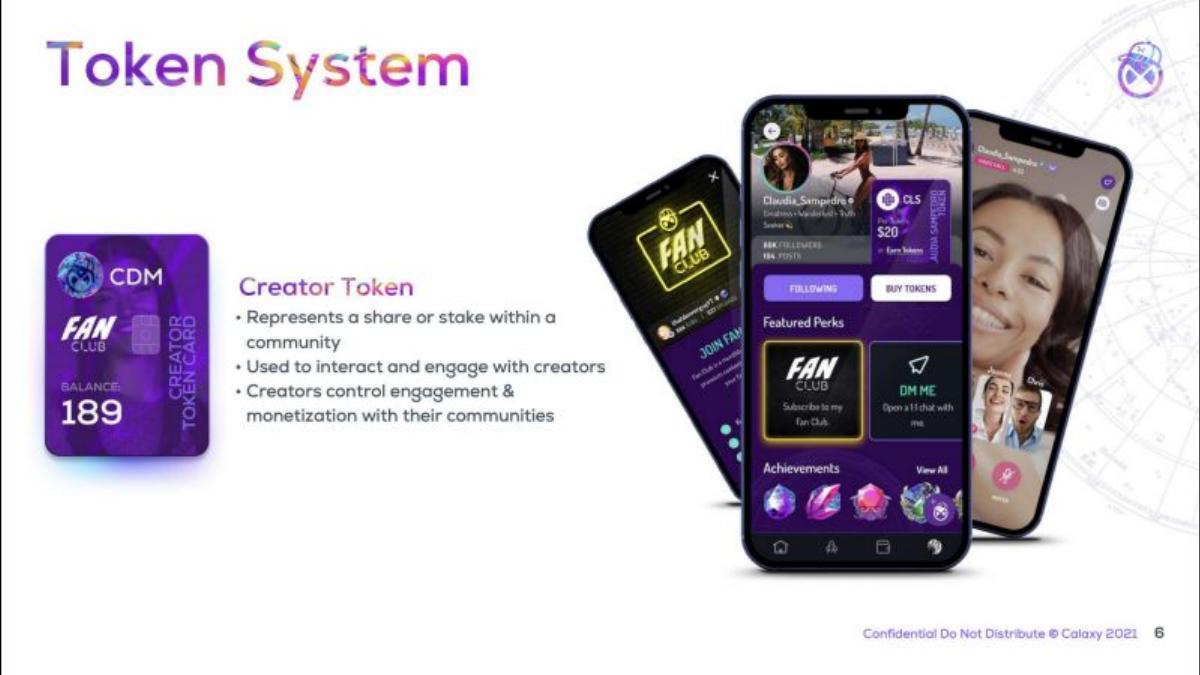
Slides 6 and 7 dive deeper into the 'Token System.' Slide 6 explains that a Creator Token represents a 'share or stake within a community.' Slide 7 introduces 'Calaxy Cash,' described as the 'Native protocol token.' It is positioned as a future release ('Coming Soon') that will be used for platform fees and governance. This distinction between the individual creator tokens and the platform's utility token is a standard dual-token model often seen in blockchain ecosystems.
Slides 8-10: Traction and Go-To-Market
Slide 8 is the 'heavy hitter' of the deck. Titled 'Starting Roster,' it showcases eight high-profile influencers with their respective reaches. The standout figure is Teyanna Taylor with 13 million followers. The slide claims that 70+ additional influencers have signed LOIs, bringing the total reach to over 85 million fans. For a marketplace, supply-side liquidity is everything, and Calaxy uses this slide to prove they have already captured the supply.
Slide 9 reinforces this with a testimonial from Ezekiel Elliott, a running back for the Dallas Cowboys, who calls the app a 'Game Changer.' The slide also includes a screenshot of a tweet from Soulja Boy asking for help with a 'SouljaCoin,' suggesting that the market demand for these tools is organic and celebrity-driven.
Slide 10 provides a 'Roadmap' and 'To Date' summary. Key milestones include a $400K grant from Hedera and the release of an MVP Alpha with over 10 features. The 2021 roadmap includes a public beta launch, the introduction of the Calaxy Cash token, and a goal of onboarding 500+ influencers. This slide serves as the 'Traction' proof, showing that the team can execute beyond just signing celebrities.
Slides 11-12: Business Model and Competition
Slide 11 is refreshingly simple. The business model is a 15% fee 'from a token issuance by any Creator.' While it mentions other potential revenue streams like marketplace fees and brand partnerships in the footer, the 15% issuance fee is the primary driver. This is a high margin, but standard for the creator economy space (Cameo, for instance, takes 25%).
Slide 12 is the 'Competitive Landscape' matrix. Calaxy compares itself to Cameo, Rally, Patreon, Clubhouse, and OnlyFans. The matrix claims Calaxy is the only platform that offers all five categories: Decisions, Audio, Video, Micro-Endorsements, and Tokenization. While these matrices are always biased, it effectively communicates that Calaxy is a 'super-app' for creators, combining the features of its competitors into one blockchain-backed ecosystem.
Slides 13-14: The Team and Advisors
Slide 13 introduces the leadership. Spencer Dinwiddie is the Founder & CEO, bringing his personal brand and network to the forefront. The rest of the C-suite includes Rusty Matveev (CSO), Kyle Ellicott (COO), Cooper Kunz (CTO), and Solo Ceesay (Co-Founder & CIO). The text notes the team has '+25 years of industry, technology, and venture capital expertise.'
Slide 14 features the 'Advisory Team,' which is exceptionally strong for a seed-stage startup. It includes Roham Gharegozlou (CEO of Dapper Labs, the creators of NBA Top Shot), Adrian Lai (CEO of Liquefy), and Rahul Kothari (Research Eng. at BlueSky). Having the CEO of Dapper Labs as an advisor provides massive credibility in the 'sports + crypto' niche.
What Calaxy Does Well
The deck excels at visualizing the transition from Web2 to Web3 . By using the 'Fragmented vs. Cohesive' toggle on slides 2 and 3, they make a compelling case for why a new platform is necessary without getting bogged down in the technicalities of blockchain. They frame the technology as a solution to a business problem (fragmentation and lack of ownership) rather than a feature in itself.
The 'Starting Roster' is another high point. In the creator economy, the biggest hurdle is often the 'cold start' problem—getting enough creators to attract fans. By showing 85 million in potential reach via signed LOIs, Calaxy effectively tells investors that the hard part of user acquisition is already solved.
What Is Missing from the Deck
The most glaring omission is a specific 'Ask' slide . While the catalogue facts state they raised $26M, the deck itself does not specify how much they were seeking at the time of this presentation, nor does it provide a breakdown of how the funds would be allocated (e.g., 40% engineering, 30% creator onboarding, etc.).
Furthermore, there is a lack of unit economics or financial projections . While the 15% take rate is mentioned, there are no projections on GMV (Gross Merchandise Volume) or estimates on how many tokens an average creator might issue. For a $26M round, investors typically want to see a more rigorous financial model alongside the celebrity endorsements.
Finally, the deck is light on technical architecture . While it mentions 'decentralized tools,' it doesn't explain how the tokens are secured, which blockchain they are minted on (though Hedera is mentioned in the roadmap), or how they handle the 'gas fee' problem that often plagues consumer-facing crypto apps.
Founder Takeaways: Copy These Strategies
Use a 'Starting Roster': If your business relies on a marketplace or network effect, don't just say you will get users. Show the specific, high-value users you have already 'soft-circled' or signed. · Simplify the Revenue Model: Calaxy's 15% take rate is easy to understand and easy to model. Avoid over-complicating your first revenue slide with ten different potential streams; focus on the primary one. · Visual Contrast: The 'Fragmented vs. Cohesive' visualization is a powerful way to show the 'Before and After' of your product. It helps investors visualize the value proposition immediately. · Leverage Strategic Advisors: If you are entering a complex space like Web3, having an advisor who has already succeeded in that space (like the CEO of Dapper Labs) is worth more than ten slides of technical explanations.
Frequently asked questions
- How does Calaxy plan to make money?
- According to slide 11, Calaxy's primary business model is a 15% commission taken from every token issuance by a creator on the platform. The deck also notes that additional revenue streams, such as a digital marketplace, subscriptions, brand partnerships, and trading fees, were in development for late 2021.
- What is the 'Creator Token' mentioned in the deck?
- As described on slide 6, the Creator Token represents a share or stake within a creator's community. It is used by fans to interact and engage with creators, while giving creators control over their own monetization and engagement strategies without relying on third-party social media algorithms.
- Who are the key influencers supporting Calaxy?
- Slide 8 highlights a 'Starting Roster' including Teyanna Taylor (13M reach), Ezekiel Elliott (5M reach), Andre Drummond (2M reach), and Matt James (1.2M reach). The deck claims a total combined reach of over 85 million fans across its initial group of 70+ influencers.
- What blockchain technology does Calaxy use?
- While the slides don't explicitly name the blockchain in the technical architecture, slide 10 mentions that the company received a $400K grant from Hedera. Catalogue facts also confirm that The HBAR Foundation (associated with Hedera) was a lead investor in their $26M round.
- What specific features does the Calaxy app offer?
- Slide 5 lists several 'Core Features' including Fan Club subscriptions, video calls, direct messaging (DM Me), video messages, shout-outs, custom requests, and 'Stories' for sharing 24-hour content. These are all gated or powered by the creator's specific token.