Letters of Intent on a Pitch Deck: What an LOI Proves
How founders present letters of intent on a pitch deck: who signed, for what volume or value, on what conditions.
How to Show Letters of Intent on Your Pitch Deck Without Overstating Them
Twelve slides from real pitch decks that cite letters of intent (LOIs) as evidence of demand or supply. For each, we record what the slide says was signed, what it leaves out, and how the LOI sits next to orders, contracts and forecasts on the same page.
TL;DR
A letter of intent records that another party plans to do business with you, usually on terms still to be agreed. Most LOIs are not binding purchase commitments, so on a pitch deck they sit between a conversation and a contract. An LOI line earns trust when the slide names or describes the counterparty, gives a volume or value, says when it was signed, states any condition attached to it, and keeps LOIs separate from signed orders and contracts.
In this set, Benvira and EnergyX draw that line most clearly: Benvira puts "LOI - US$ 2.5Mn" beside "Order under execution - US$0.5 Mn", and EnergyX labels one partner "Signed Letter of Intent" and another "Won Pilot Bid - Signed Agreement". Cematrix shows the opposite risk: its footnote counts projects "awarded by letter of intent" inside a $94.0M backlog, so a reader cannot see how much of the backlog is LOI-based. Most other slides give only a count, such as GolfAlong's "20+ Golf Courses Signed LOI", with no terms.
Letter of intent slides from real pitch decks
Each example shows the exact page from the original public deck above its analysis and links to the full teardown. Figures are the companies' own and have not been verified. Calculations are ours and are labelled. Page numbers are PDF pages.
Benvira traction slide — slide 9
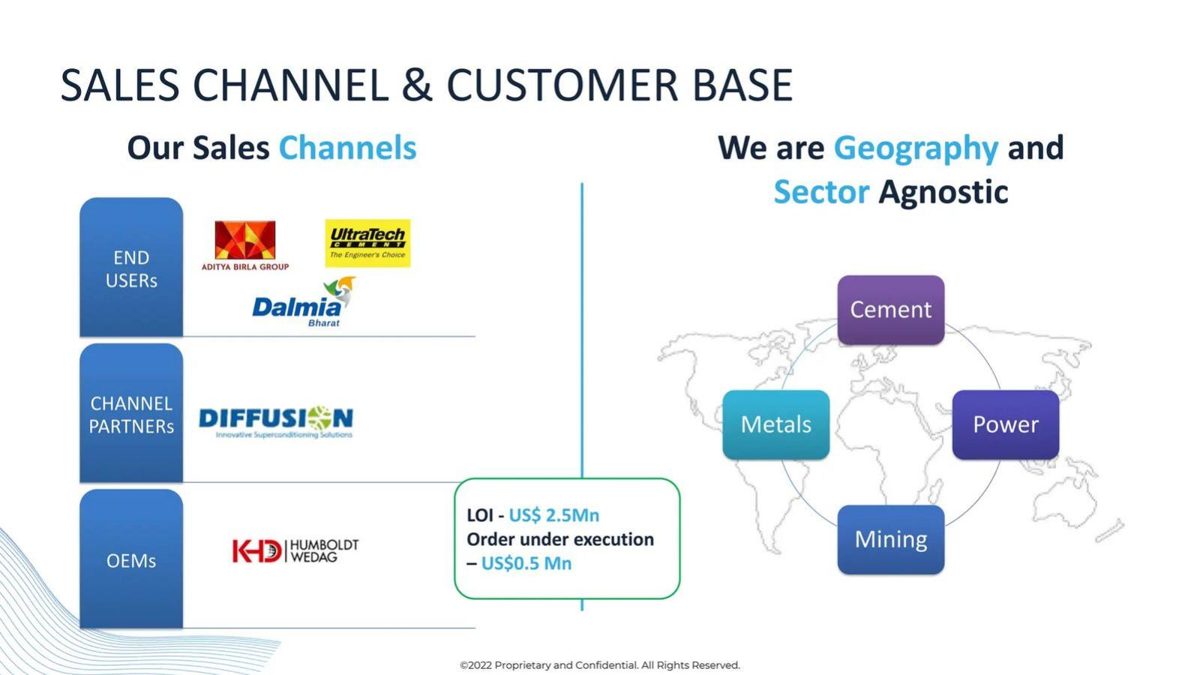
Industrial technology company selling to cement, metals, power and mining. "Sales Channel & Customer Base" page of a 2022 deck.
Benvira deck, slide 9. Exact stored slide matched to this analysis.
Our analysis: The LOI and the order are separate figures, so a reader can see that the committed order is one fifth of the LOI value (our calculation).
Evidence and limitation: Logos for end users and channel partners carry no status; mark each as customer, partner or prospect.
What a founder can adapt: Add the signed dates and say whether the order is part of the LOI or a separate deal.
Supporting analysis
What the deck claims: Under OEMs, beside KHD Humboldt Wedag: "LOI - US$ 2.5Mn"; "Order under execution - US$0.5 Mn". End users and a channel partner are shown as logos.
Presentation choice: The LOI and the order are separate figures, so a reader can see that the committed order is one fifth of the LOI value (our calculation).
When it does not fit: Logos for end users and channel partners carry no status; mark each as customer, partner or prospect.
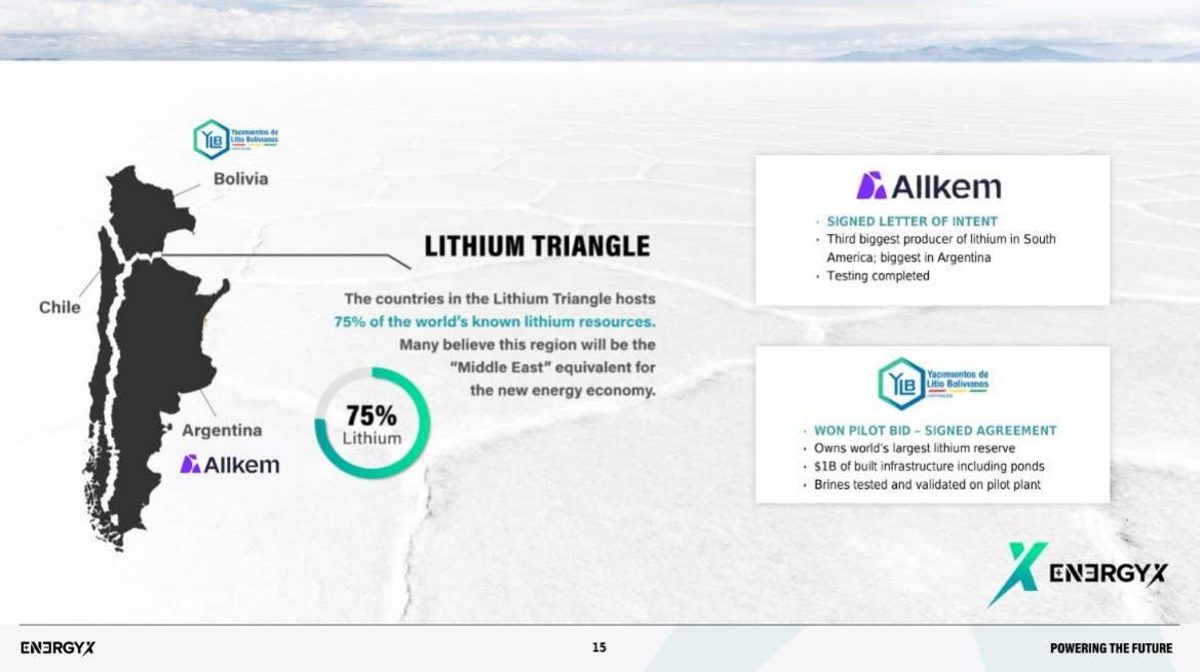
Lithium extraction technology company. "Lithium Triangle" page showing two partners in Argentina and Bolivia.
EnergyX deck, slide 15. Exact stored slide matched to this analysis.
Our analysis: Each partner is labelled with the stage of the relationship, so the LOI is visibly distinct from the signed agreement on the same page.
Evidence and limitation: "Testing completed" without a result leaves the reader guessing whether the LOI is moving toward a contract.
What a founder can adapt: Add the signed dates and what each agreement covers (volume, fee or term).
Supporting analysis
What the deck claims: Allkem: "Signed Letter of Intent"; "Third biggest producer of lithium in South America; biggest in Argentina"; "Testing completed". YLB: "Won Pilot Bid - Signed Agreement"; "Brines tested and validated on pilot plant".
Presentation choice: Each partner is labelled with the stage of the relationship, so the LOI is visibly distinct from the signed agreement on the same page.
When it does not fit: "Testing completed" without a result leaves the reader guessing whether the LOI is moving toward a contract.
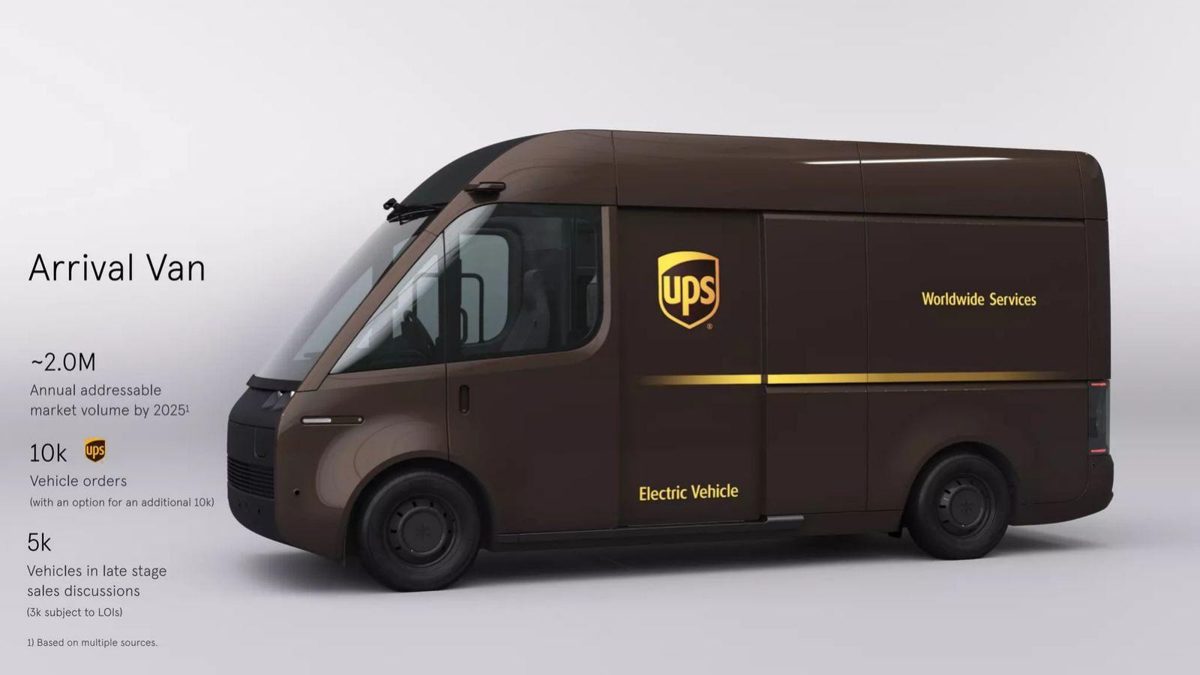
Electric vehicle maker. "Arrival Van" page of an investor presentation.
Arrival deck, slide 12. Exact stored slide matched to this analysis.
Our analysis: Demand is split into orders, LOI-backed discussions and discussions without LOIs, so a reader can see that 2,000 late-stage vehicles have no LOI (our calculation).
Evidence and limitation: The option for another 10,000 vehicles is not an order; keep it out of any total.
What a founder can adapt: Say whether the orders are binding or cancellable and who signed the 3,000 LOI vehicles.
Supporting analysis
What the deck claims: "~2.0M Annual addressable market volume by 2025" (footnote "Based on multiple sources"); "10k Vehicle orders (with an option for an additional 10k)" with the UPS logo; "5k Vehicles in late stage sales discussions (3k subject to LOIs)".
Presentation choice: Demand is split into orders, LOI-backed discussions and discussions without LOIs, so a reader can see that 2,000 late-stage vehicles have no LOI (our calculation).
When it does not fit: The option for another 10,000 vehicles is not an order; keep it out of any total.
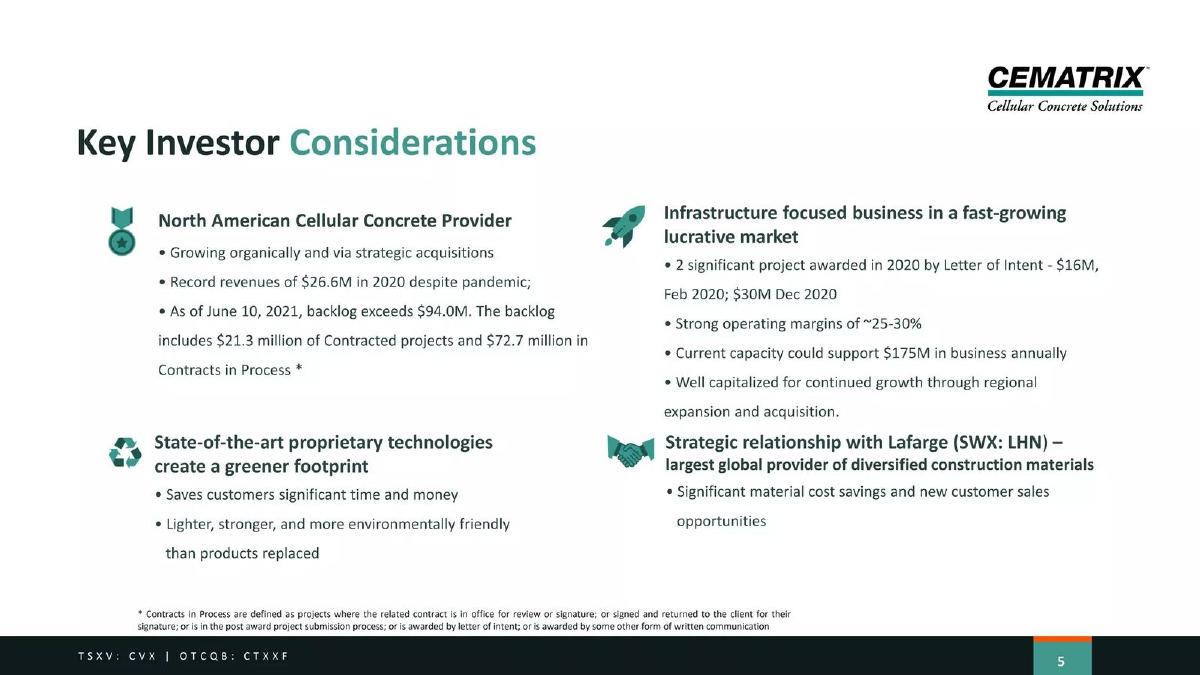
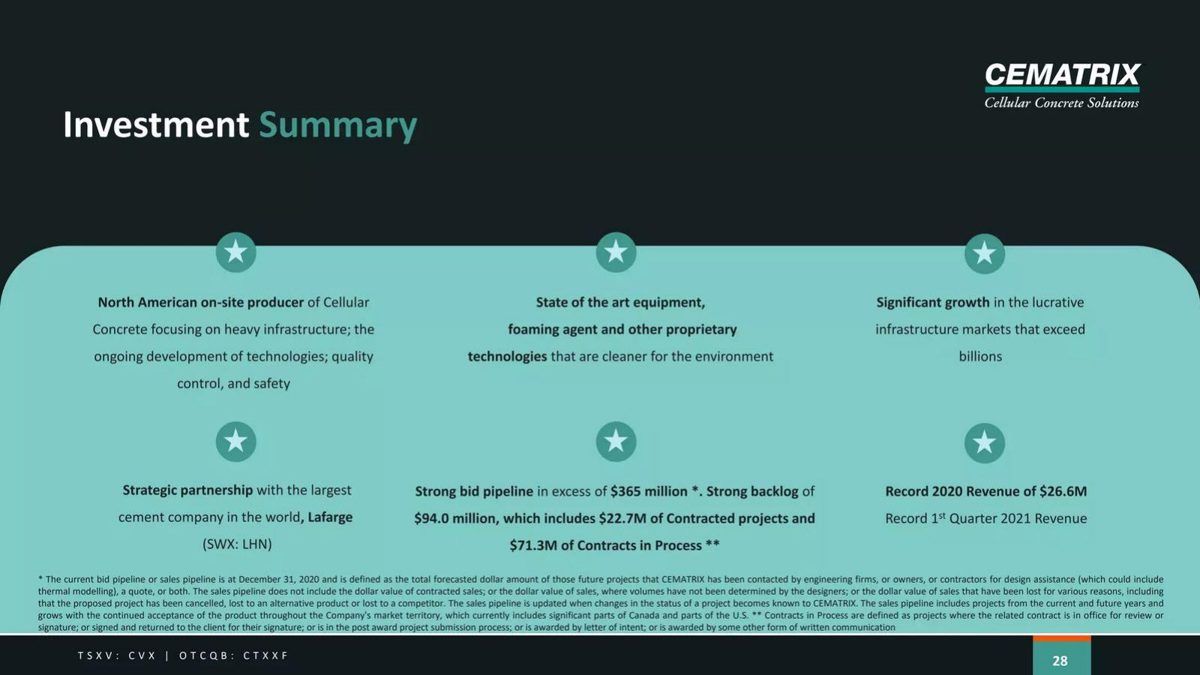
Cellular concrete company listed in Canada. "Key Investor Considerations" (page 5) and "Investment Summary" (page 27).
Cematrix deck, slide 5. Exact stored slide matched to this analysis.Cematrix deck, slide 27. Exact stored slide matched to this analysis.
Our analysis: The footnote discloses that LOI-awarded projects are counted in backlog, which many decks would leave unsaid.
Evidence and limitation: The two pages give different splits of the same total (our calculation: $1.4M apart each way), and page 27 has no date.
What a founder can adapt: Give the LOI share of the $94.0M, dated, and say whether the $16M and $30M projects have since been contracted.
Supporting analysis
What the deck claims: Page 5: "As of June 10, 2021, backlog exceeds $94.0M", "$21.3 million of Contracted projects and $72.7 million in Contracts in Process"; "2 significant project awarded in 2020 by Letter of Intent - $16M, Feb 2020; $30M Dec 2020". Footnote: Contracts in Process include projects "awarded by letter of intent". Page 27: backlog of $94.0 million with $22.7M contracted and $71.3M in process.
Presentation choice: The footnote discloses that LOI-awarded projects are counted in backlog, which many decks would leave unsaid.
When it does not fit: The two pages give different splits of the same total (our calculation: $1.4M apart each way), and page 27 has no date.
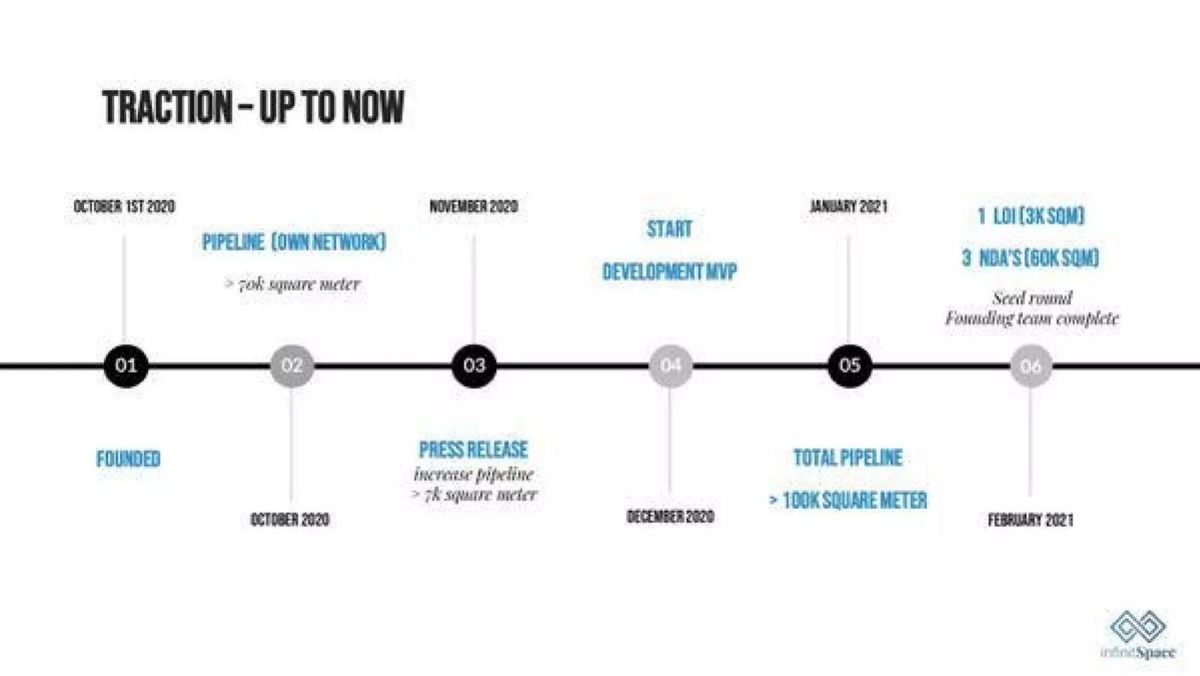
Space-sharing business. "Traction - Up to Now" timeline from October 2020 to February 2021.
Infinitspace deck, slide 16. Exact stored slide matched to this analysis.
Our analysis: Each stage has a unit (square metres), so a reader can see the LOI covers about 3% of the pipeline area (our calculation).
Evidence and limitation: An NDA is not a commitment; keep NDAs out of the traction count or label them as conversations.
What a founder can adapt: Name the type of counterparty and what the LOI commits them to, such as term and price per square metre.
Supporting analysis
What the deck claims: January 2021: "1 LOI (3K SQM)"; "3 NDA's (60K SQM)"; total pipeline of more than 100K square metres. Earlier: pipeline of more than 70k square metres (October 2020).
Presentation choice: Each stage has a unit (square metres), so a reader can see the LOI covers about 3% of the pipeline area (our calculation).
When it does not fit: An NDA is not a commitment; keep NDAs out of the traction count or label them as conversations.
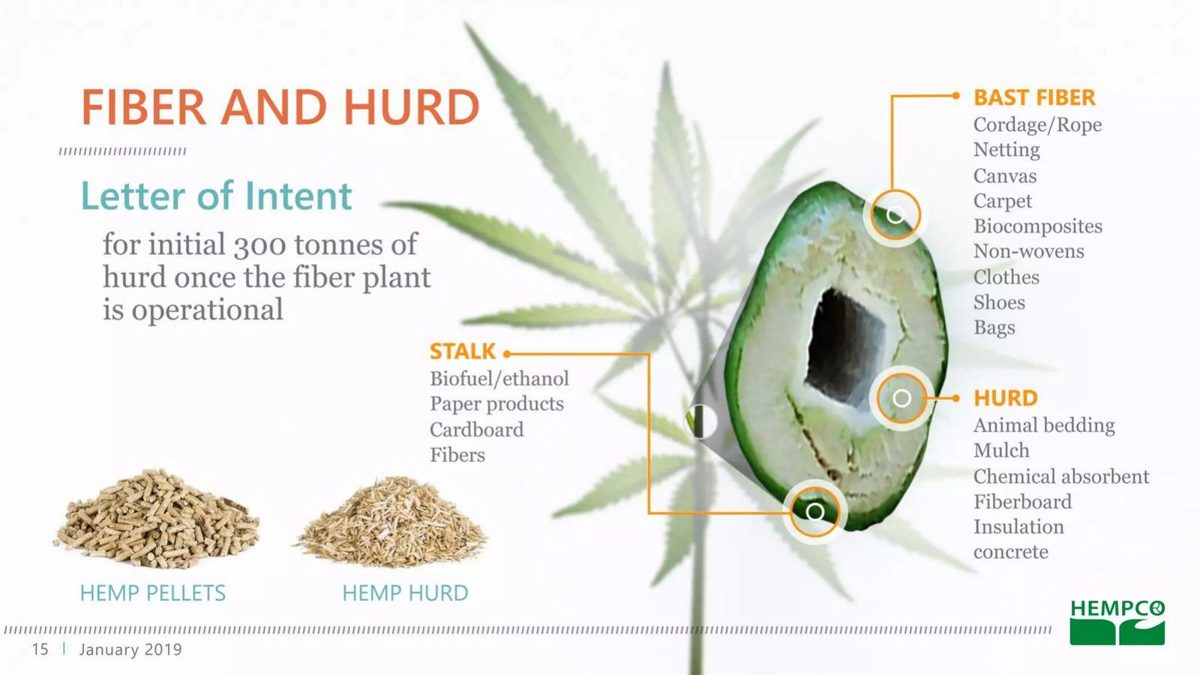
Hemp processing company. "Fiber and Hurd" product page, January 2019.
Hempco deck, slide 15. Exact stored slide matched to this analysis.
Our analysis: The volume and the condition (a plant that must first be running) are in one sentence, so the reader sees what the LOI depends on.
Evidence and limitation: Placing the LOI on a product page, away from traction and financials, makes it easy to miss or to overweight.
What a founder can adapt: Name or describe the buyer, give a price range and link the plant timeline to the use of funds.
Supporting analysis
What the deck claims: "Letter of Intent for initial 300 tonnes of hurd once the fiber plant is operational"; product uses for bast fiber, hurd and stalk.
Presentation choice: The volume and the condition (a plant that must first be running) are in one sentence, so the reader sees what the LOI depends on.
When it does not fit: Placing the LOI on a product page, away from traction and financials, makes it easy to miss or to overweight.
Uthukela Green Energy Park traction slide — slide 4
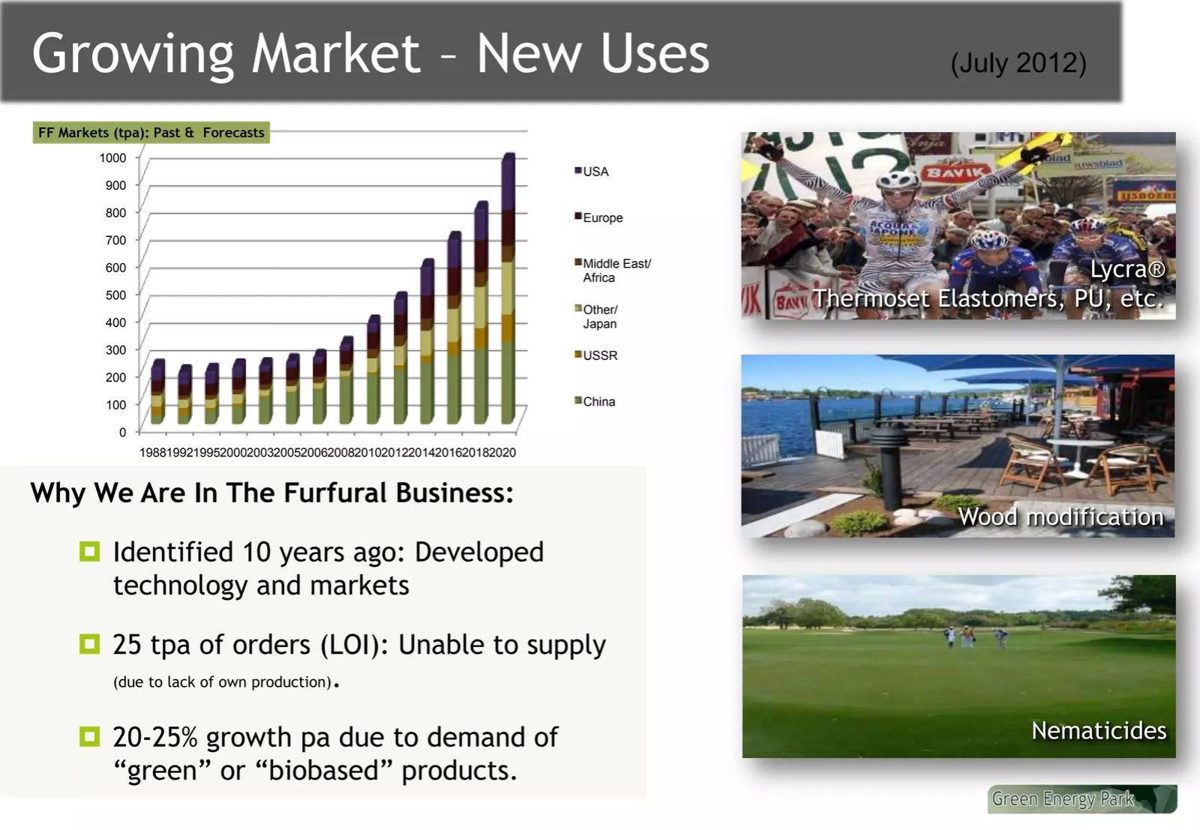
Furfural production project. "Growing Market - New Uses" page dated July 2012.
Uthukela Green Energy Park deck, slide 4. Exact stored slide matched to this analysis.
Our analysis: It states the unit and admits the LOIs cannot yet be served, so the reader treats them as demand evidence, not revenue.
Evidence and limitation: Calling LOIs "orders" blurs the distinction the rest of the line makes clear.
What a founder can adapt: Name or describe the buyers and say whether the LOIs carry prices or durations.
Supporting analysis
What the deck claims: "25 tpa of orders (LOI): Unable to supply (due to lack of own production)"; "20-25% growth pa due to demand of 'green' or 'biobased' products"; a chart of furfural markets in tonnes per year.
Presentation choice: It states the unit and admits the LOIs cannot yet be served, so the reader treats them as demand evidence, not revenue.
When it does not fit: Calling LOIs "orders" blurs the distinction the rest of the line makes clear.
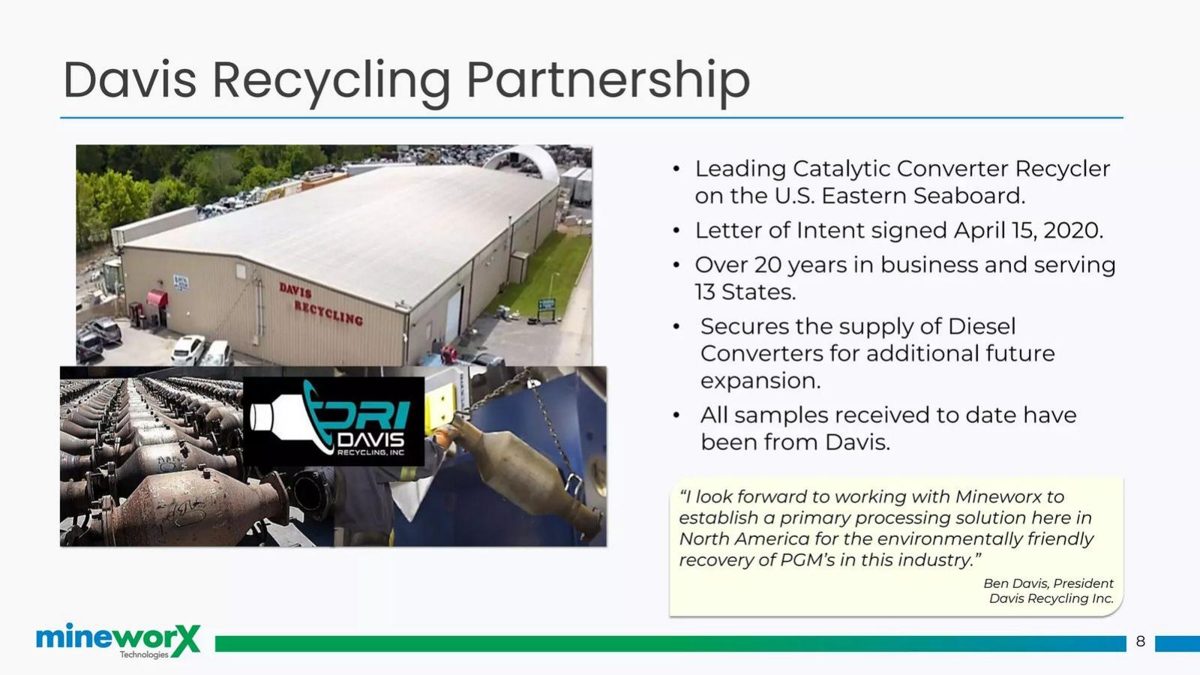
Mineworx deck, slide 8. Exact stored slide matched to this analysis.
Our analysis: It names the counterparty, dates the LOI and says what it is for (supply), with a quote that shows the partner's side.
Evidence and limitation: "Secures" overstates a letter of intent; "supports" or "sets out terms for" is more accurate unless the supply is binding.
What a founder can adapt: Add the volume of converters the LOI covers and whether any supply terms are binding.
Supporting analysis
What the deck claims: "Letter of Intent signed April 15, 2020"; Davis is a "Leading Catalytic Converter Recycler on the U.S. Eastern Seaboard"; the LOI "Secures the supply of Diesel Converters for additional future expansion"; "All samples received to date have been from Davis"; quote from Davis's president.
Presentation choice: It names the counterparty, dates the LOI and says what it is for (supply), with a quote that shows the partner's side.
When it does not fit: "Secures" overstates a letter of intent; "supports" or "sets out terms for" is more accurate unless the supply is binding.
Charter airline (Global Crossing Airlines). "Projected Stable Cargo Business" page.
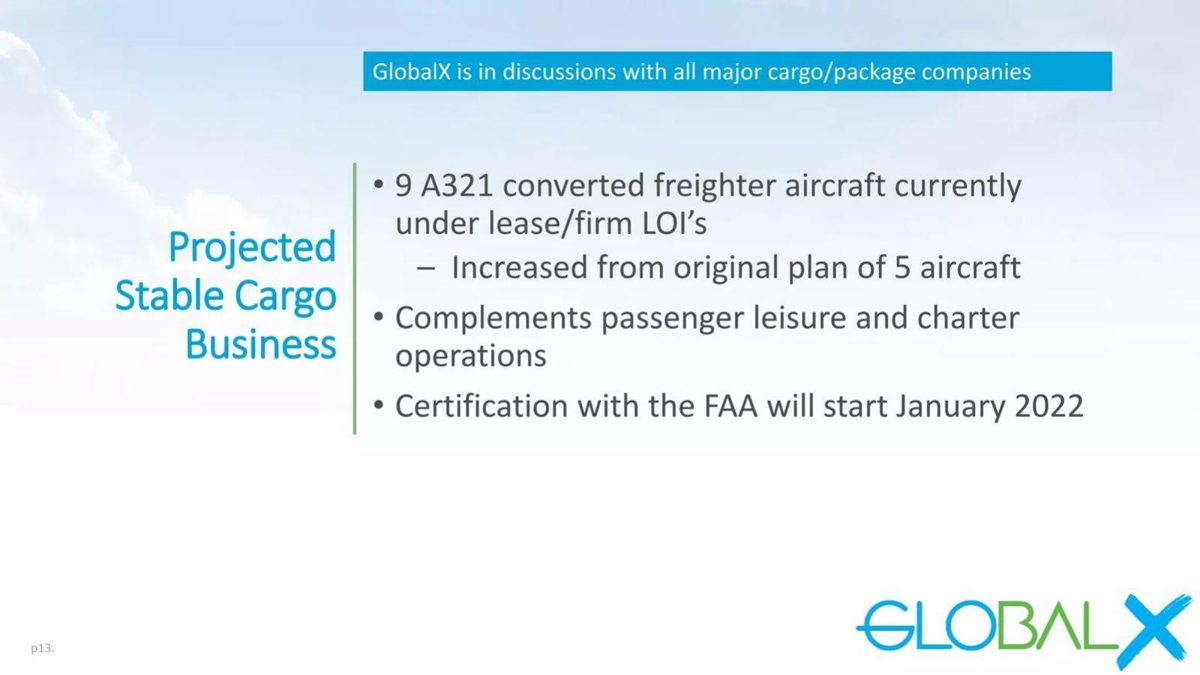
GlobalX deck, slide 13. Exact stored slide matched to this analysis.
Our analysis: It gives a count and shows the plan grew from five to nine aircraft.
Evidence and limitation: Combining signed leases and LOIs in one number hides how many aircraft are committed.
What a founder can adapt: Split the nine into leased and LOI aircraft, and give delivery dates.
Supporting analysis
What the deck claims: "GlobalX is in discussions with all major cargo/package companies"; "9 A321 converted freighter aircraft currently under lease/firm LOI's"; "Increased from original plan of 5 aircraft"; "Certification with the FAA will start January 2022".
Presentation choice: It gives a count and shows the plan grew from five to nine aircraft.
When it does not fit: Combining signed leases and LOIs in one number hides how many aircraft are committed.
GolfAlong deck, slide 13. Exact stored slide matched to this analysis.
Our analysis: Each milestone is dated by half-year, which shows sequence.
Evidence and limitation: A "20+" count with no terms can't be weighed; give the exact number and what was signed.
What a founder can adapt: State what the courses agreed to do (promote, integrate, pay) and how the 13 partners relate to them.
Supporting analysis
What the deck claims: "2014: Awarded SGI's Technology Accelerator; Granted Development funds of $300,000"; "1H 2015: 13 Strategic Partners signed on giving us access to over 200,000 golfers"; "2H 2015: Beta Platform Completed with 20+ Golf Courses Signed LOI"; "5,000+ Users signed up for Beta".
Presentation choice: Each milestone is dated by half-year, which shows sequence.
When it does not fit: A "20+" count with no terms can't be weighed; give the exact number and what was signed.
AI design tool for fashion brands. "Where We Are So Far" page, marked private and confidential.
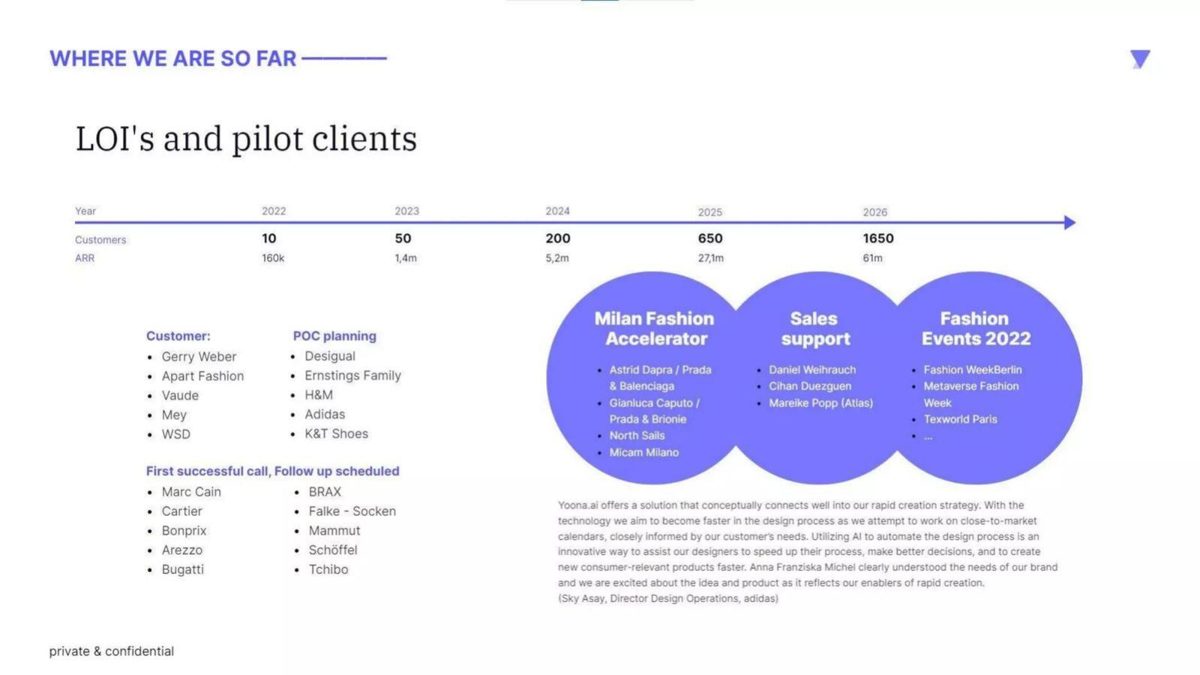
Yoona deck, slide 15. Exact stored slide matched to this analysis.
Our analysis: Brands are grouped by stage, which is more informative than one logo row.
Evidence and limitation: A heading that mentions LOIs over lists that never identify one invites readers to assume the strongest reading.
What a founder can adapt: Mark which brands have signed LOIs and which are paying customers.
Supporting analysis
What the deck claims: Heading "LOI's and pilot clients"; brand lists under "Customer", "POC planning" and "First successful call, Follow up scheduled"; forecast from 10 customers and 160k ARR (2022) to 1,650 customers and 61m ARR (2026), as read from the timeline.
Presentation choice: Brands are grouped by stage, which is more informative than one logo row.
When it does not fit: A heading that mentions LOIs over lists that never identify one invites readers to assume the strongest reading.
Each cell reports only what the slide itself states. "Not stated" means the page gives no figure.
Example
LOI claim
Counterparty
Volume / value
Condition or status
Separate from orders?
Benvira
LOI US$2.5M
Named OEM
US$2.5M
Not stated
Yes (US$0.5M order)
EnergyX
Signed LOI
Allkem, named
Not stated
Testing completed
Yes (YLB agreement)
Arrival
3k subject to LOIs
Not stated
3,000 vehicles
Late-stage discussions
Yes (10k orders)
Cematrix
$16M and $30M by LOI
Not stated
$46M (our calc.)
Counted in backlog
No (share not given)
Infinitspace
1 LOI
Not stated
3K sqm
Not stated
Yes (NDAs, pipeline)
Hempco
LOI for 300 tonnes
Not stated
300 tonnes
Once plant operational
No other figure
Uthukela
25 tpa orders (LOI)
Not stated
25 tpa
Unable to supply
Called orders
Mineworx
LOI signed April 15, 2020
Davis Recycling
Not stated
Supply, samples received
No other figure
GlobalX
9 aircraft lease/LOI
Not stated
9 aircraft
Projected
No (combined)
Calaxy
70+ influencer LOIs
Not stated
Not stated
Target 500+
No other figure
GolfAlong
20+ courses LOI
Not stated
Not stated
Not stated
No other figure
Yoona
Heading only
Brands listed
Not stated
Not stated
Not identified
Key Takeaways
Separate LOIs from orders. Benvira shows its LOI (US$2.5M) and its order under execution (US$0.5M) as two figures; the LOI is five times the order (our calculation).
Don't fold LOIs into backlog without saying how much. Cematrix's backlog definition includes projects "awarded by letter of intent" but never gives the LOI share.
Give a unit. Infinitspace's "1 LOI (3K SQM)" and Uthukela's "25 tpa of orders (LOI)" say how much each LOI covers; counts alone do not.
State the condition. Hempco's LOI is "for initial 300 tonnes of hurd once the fiber plant is operational", so it depends on a plant not yet running.
Say which side of the market signed. Mineworx's and GlobalX's LOIs secure supply (catalytic converters, aircraft), not customers; Calaxy's secure creators.
Label mixed lists. Yoona's page is headed "LOI's and pilot clients" but does not mark which names are which.
Write your LOI line
Fill in what you know. Leave a field blank rather than guess, and never call an LOI an order.
Counterparty. Who signed, by name or description, and at what level?
Scope. What volume, value, units or area does it cover?
Date. When was it signed?
Binding terms. Is any part binding (minimum purchase, deposit, exclusivity)?
Condition. What must happen first (product, plant, certification)?
Status. What has happened since: testing, contract, first order?
Copyable framework: [n] LOIs signed with [counterparty type] covering [volume/value], signed [dates]; non-binding except [clause]. Conditional on [condition]. Since signing: [n] converted to contracts worth $[x]. Separately: $[x] in signed orders.
Illustrative example 1 — written by us
Before: Multiple LOIs with major retailers.
After: 3 non-binding LOIs with regional grocers (together about 40 stores, first-year volume est. 12,000 units), signed March–May; conditional on shelf-life testing, due July. 1 has converted to a purchase order for 2,000 units. Signed orders to date: $38K.
What improved: Placeholder figures showing the format: counterparties, scope, dates, binding status, condition and conversion make the LOIs testable.
What a letter of intent is, and what it is not
An LOI is a written statement that two parties intend to enter an agreement. It usually sets out the main terms under discussion (volume, price range, timing, exclusivity) and then says most of those terms are not binding until a final contract is signed. Some clauses, such as confidentiality or a period of exclusive negotiation, may be binding on their own. The legal effect depends on the wording and the governing law, which a slide never shows.
For an investor, that means an LOI is evidence of interest from a named party, and sometimes of the size and shape of a future deal. It is not revenue, and it is usually not a purchase order. The value of an LOI line on a pitch deck depends on how much the slide lets the reader see: who signed, what they intend to buy or supply, on what conditions, and what has happened since.
Founders often cite LOIs because they have nothing more committed yet, which is reasonable at an early stage. The problem arises when the slide blurs the line between an LOI and a contract, or counts LOIs in a total that looks like committed business. The slides below show both the clear and the blurred versions.
Keep LOIs, orders and contracts in separate lines
The simplest improvement to most LOI claims is to put them beside the more committed figures, not inside them. Benvira's page 9, "Sales Channel & Customer Base", does this in a single call-out beside its OEM partner KHD Humboldt Wedag: "LOI - US$ 2.5Mn" and, on the next line, "Order under execution - US$0.5 Mn". A reader can see that the order is one fifth of the LOI value (our calculation) and weigh each accordingly. The slide does not say whether the order is part of the LOI or a separate deal, or when either was signed.
EnergyX's page 15, "Lithium Triangle", does the same with two partners. Allkem is marked "Signed Letter of Intent" with "Testing completed". YLB (Yacimientos de Litio Bolivianos) is marked "Won Pilot Bid - Signed Agreement" with "Brines tested and validated on pilot plant". The two labels tell the reader that one relationship has reached a signed agreement and the other has not, which is exactly the distinction an LOI slide should make. Neither box gives a value, volume or date.
Arrival's page 12 grades its van demand in three tiers: "10k Vehicle orders (with an option for an additional 10k)" with the UPS logo, then "5k Vehicles in late stage sales discussions (3k subject to LOIs)". It separates orders from discussions, and discussions covered by an LOI from those that are not. By our calculation, 2,000 of the 5,000 late-stage vehicles are not covered by any LOI. The slide does not say whether the 10,000 orders are binding or cancellable, or who signed the 3,000 LOI vehicles.
When LOIs are inside a larger total
Backlog is normally read as contracted work not yet delivered. Cematrix, a cellular concrete company listed in Canada, defines its backlog more widely. Page 5 says "As of June 10, 2021, backlog exceeds $94.0M. The backlog includes $21.3 million of Contracted projects and $72.7 million in Contracts in Process". The footnote defines Contracts in Process as projects "where the related contract is in office for review or signature; or signed and returned to the client for their signature; or is in the post award project submission process; or is awarded by letter of intent; or is awarded by some other form of written communication".
Our calculation: $21.3M + $72.7M = $94.0M, so about 77% of the backlog is in the wider Contracts in Process category, and some unknown part of that is LOI-based. The same page says "2 significant project awarded in 2020 by Letter of Intent - $16M, Feb 2020; $30M Dec 2020", or $46M together (our calculation). If both were still open on June 10, 2021, they could account for more than half of the $72.7M, but the slide does not say whether either had become a signed contract by then.
Page 27 of the same deck, "Investment Summary", repeats the $94.0 million backlog with a different split: "$22.7M of Contracted projects and $71.3M of Contracts in Process". The two splits add to the same total but differ by $1.4M in each direction (our calculation), and page 27 gives no date for its figures. A founder presenting LOI-based work inside a backlog can avoid both problems with one line: the LOI share of the total, as of a stated date.
Give each LOI a unit and a condition
A count of LOIs says little unless the reader knows how large each one is. Infinitspace's page 16, "Traction - Up to Now", is a timeline for a space-sharing business measured in square metres. January 2021 shows "1 LOI (3K SQM)" and "3 NDA's (60K SQM)", against a total pipeline of more than 100K square metres the same month. By our calculation, the signed LOI covers about 3% of the pipeline area. Stating the unit lets the reader see this; a bare "1 LOI" would not.
Uthukela Green Energy Park's page 4 (dated July 2012) lists "25 tpa of orders (LOI): Unable to supply (due to lack of own production)" under "Why We Are In The Furfural Business". The unit (tonnes per year) is stated. The slide is also candid that the LOIs cannot yet be served, which tells the reader the LOI is evidence of demand, not of revenue that could be booked. It calls the LOIs "orders", which blurs the line discussed above.
Hempco's page 15, "Fiber and Hurd" (January 2019), shows "Letter of Intent for initial 300 tonnes of hurd once the fiber plant is operational". The volume is stated, and so is the condition: the purchase depends on Hempco building and running a plant. That condition is the most important fact about the LOI, and the slide puts it in the same sentence. It does not name the buyer, a price or a date for the plant.
Demand-side, supply-side and creator LOIs
Not every LOI on a pitch deck is from a customer. Mineworx's page 8, "Davis Recycling Partnership", records a "Letter of Intent signed April 15, 2020" with Davis Recycling, described as a "Leading Catalytic Converter Recycler on the U.S. Eastern Seaboard". The LOI "Secures the supply of Diesel Converters for additional future expansion", and "All samples received to date have been from Davis". This is a supply-side LOI: it supports Mineworx's ability to source material, not its revenue. The slide is strong on counterparty and date, and includes a quote from Davis's president; it gives no volume.
GlobalX's page 13, "Projected Stable Cargo Business", reads "9 A321 converted freighter aircraft currently under lease/firm LOI's", "Increased from original plan of 5 aircraft". The aircraft are inputs to a planned cargo business, and the count combines leases (signed) with LOIs (not) in one figure. The heading also says "Projected", and the slide adds that FAA certification "will start January 2022". A reader cannot tell how many of the nine aircraft are leased.
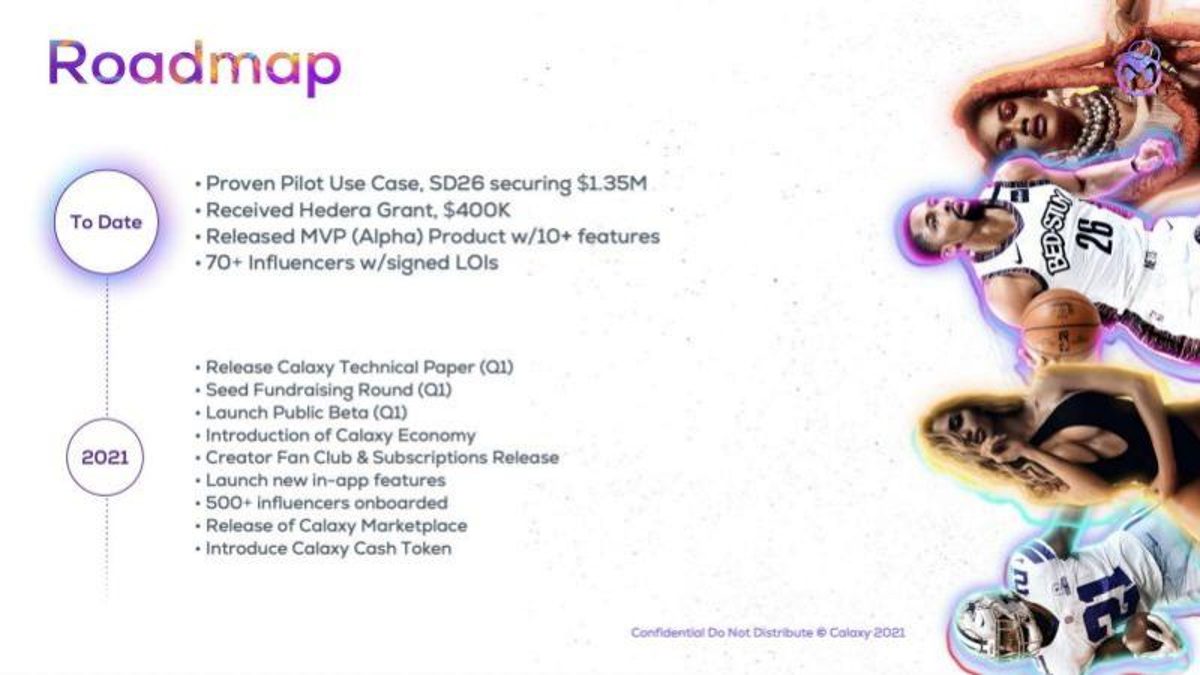
Calaxy's page 10, "Roadmap", lists "70+ Influencers w/signed LOIs" under "To Date", and "500+ influencers onboarded" as a 2021 goal. For a creator platform, creators are supply. By our calculation, 70 signed LOIs are about 14% of the 500 target. The slide does not say what the LOIs commit an influencer to, such as exclusivity, a launch date or a revenue share.
Counts, lists and logos
GolfAlong's page 13, "Our Traction", lists by half-year: "2014: Awarded SGI's Technology Accelerator; Granted Development funds of $300,000", "1H 2015: 13 Strategic Partners signed on giving us access to over 200,000 golfers", and "2H 2015: Beta Platform Completed with 20+ Golf Courses Signed LOI". The timeline dates each item, which is useful. The "20+" count has no definition of what the courses agreed to do, and it sits next to 13 "strategic partners" whose relationship to the courses is not explained.
Yoona's page 15, "Where We Are So Far", is headed "LOI's and pilot clients". Below, it lists brands under "Customer" (Gerry Weber, Apart Fashion, Vaude, Mey, WSD), "POC planning" (Desigual, Ernstings Family, H&M, Adidas, K&T Shoes) and "First successful call, Follow up scheduled" (Marc Cain, Cartier, Bonprix, Arezzo, Bugatti, BRAX, Falke - Socken, Mammut, Schöffel, Tchibo). None of the lists is labelled as the LOI list. The same page shows a forecast rising from 10 customers and 160k ARR in 2022 to 1,650 customers and 61m ARR in 2026, as read from the timeline. A reader cannot tell which names have signed anything.
The lesson from both is the same: a count or a logo row needs a definition. If some names have signed LOIs, mark them; if others are calls or planned pilots, say so. Mixing the categories under a heading that mentions LOIs invites the reader to assume the strongest reading and then discount the whole slide when they discover it is weaker.
What investors will ask about an LOI
Is it binding? Most are not, beyond confidentiality or exclusivity clauses. If yours includes a binding commitment, such as a minimum purchase, a deposit or a take-or-pay term, say so on the slide; that makes it much stronger than a standard LOI. If it is non-binding, saying so costs little and protects credibility in diligence.
Who signed, and at what level? An LOI signed by a buyer with budget authority is different from one signed by an enthusiastic user. Mineworx names the counterparty and quotes its president; most slides here name no signer at all.
What has happened since? An LOI signed a year before the pitch, with no contract since, is weaker than a recent one. Adding a signed date (as Mineworx does) and a status (as EnergyX does with "Testing completed") lets the reader see momentum. If LOIs have converted to contracts, give the number: of the LOIs you have signed, how many became paying agreements, and in what time.
Is it conditional? Hempco's condition (a plant that must first be built) and Uthukela's constraint (no production to supply) change what the LOI means. Put the condition on the slide rather than leaving it for diligence.
How to present an LOI in practice
Lead with the most committed evidence you have: revenue, then signed contracts, then paid pilots, then LOIs, then conversations. Put each category on its own line with its own figure, so the reader can see the mix. If the slide has room for only one number, choose the most committed one and move LOIs to a supporting line.
For each LOI, or for the LOIs as a group, give: the counterparty or a description ("a top-5 US grocer"), what it covers (volume, value, units or area), the signed date, whether it is binding in any part, and any condition. A footnote is enough for the binding status and the conditions. Keep the language consistent: call an LOI an LOI, not an order.
If LOIs feed into a pipeline or backlog figure, state the LOI share of that figure. Cematrix's definition is transparent about what it includes but not about how much, which leaves the reader unable to separate committed work from intended work. Our suggestion, not a rule: give the LOI share as of the same date as the total.
Finally, match the LOI to the ask. If the round funds the plant that an LOI depends on, as in Hempco's case, say so: the LOI then becomes part of the case for the use of funds, not just a traction line.
Common mistakes
Calling LOIs orders. An LOI is usually non-binding; use the word LOI and keep orders separate.
Hiding LOIs in a total. If backlog or pipeline includes LOIs, give the LOI share and the date.
Counts with no scope. "20+ LOIs" says little; give volume, value or units for each or in total.
Leaving out conditions. If the LOI depends on a plant, certification or product launch, say so on the slide.
Mixing leases and LOIs. Signed leases or contracts and LOIs belong in separate figures.
Unlabelled lists. Under an LOI heading, mark which names have actually signed.
Diagnostic checklist
LOIs are called LOIs, not orders or contracts.
Each LOI or group has a counterparty or description.
Volume, value or units are stated.
Signed dates are given.
Binding terms and conditions are stated or footnoted.
Orders and contracts are shown as separate figures.
Any total that includes LOIs states their share.
Frequently asked questions
Should I put letters of intent on my pitch deck?
Yes, if they are your strongest evidence of demand or supply, and if you describe them accurately. Name or describe who signed, what the LOI covers and when, and keep it separate from signed orders. Benvira's split between a US$2.5M LOI and a US$0.5M order is a good model.
Is a letter of intent binding?
Usually not, except for specific clauses such as confidentiality or exclusivity; the wording and governing law decide. If your LOI includes a binding minimum purchase or deposit, say so on the slide, because that makes it much stronger than a typical LOI.
Can I include LOIs in my backlog or pipeline figure?
You can, if you disclose it and give the share. Cematrix's footnote says its backlog includes projects awarded by letter of intent, but it does not say how much of the $94.0M they account for, so a reader cannot separate contracted work from intended work.
How is an LOI different from a paid pilot?
A paid pilot means the customer has spent money; an LOI usually means they intend to. Investors generally weigh a paid pilot above an LOI. Our paid pilot guide covers how to show pilots and their conversion.
Do supplier or partner LOIs count as traction?
They count as evidence that you can source what you need, which matters for hardware, materials and marketplace businesses. Label them as supply: Mineworx's LOI secures catalytic converter supply, not customers, and Calaxy's influencer LOIs are creators, not buyers.
How we chose these examples
Search (2026-09-30): the durable corpus index (docs/seo/artifacts/corpus-search, 70,729 unique pages, deduplicated by deck-file sha256 + page) was searched for "letter(s) of intent" and "LOI(s)" (61 matches). Many describe acquisitions, real estate offers, fund processes or OCR noise. Existing guides were read first: the paid pilots guide mentions LOIs only to say they are weaker than a converted pilot, the pre-orders guide cites one LOI line in passing, and the traction guide gives one sentence of advice, so this guide asks a question none of them answers: how to present an LOI itself.
Sixteen candidate pages were rendered from the original public deck files and read from the images; thirteen pages from twelve decks are used: Benvira 9, EnergyX 15, Arrival 12, Cematrix 5 and 27, Infinitspace 16, Hempco 15, Uthukela Green Energy Park 4, Mineworx 8, GlobalX 13, Calaxy 10, GolfAlong 13, Yoona 15. Images were stored from the original PDFs on 2026-09-30.
Left out: Ajinomatrix 3 ("letters of intent and active negotiation with 5 client prospects" is one text sentence with no count of LOIs or terms), Biodel 28 (a 2010 public-company conference page whose supply LOI teaches the same lesson as Mineworx), Zazu 6 (an unnamed sponsor bank with no terms), Edurino 2 (already used in the pre-orders guide), and pages about acquisition LOIs (1847 Holdings, Canexxia, CDIF, EV Technology Group, Kredivo), property offers (FI Real Estate, Medalist, Fund I) and fund or accelerator processes (E62 Ventures, LI-BIO, UCC Ignite).
All calculations are ours and labelled; readings of small print are from the slide images. This guide describes common LOI practice in general terms and is not legal advice. How we built this: drafted and checked with AI assistance (editorial model review against the original slide images); no human editor has reviewed this guide.