Calaxy’s pitch deck centers on the transition from fragmented social media interactions to a cohesive, decentralized creator economy. By positioning NBA star Spencer Dinwiddie as Founder and CEO, the company establishes immediate credibility in the high-stakes world of professional athlete monetization. The platform enables creators to issue personal tokens that unlock specific perks like video messages, 1:1 chats, and fan club subscriptions. The business model is straightforward, taking a 15% cut of token issuances. While the deck excels at showcasing a star-studded team and a clear product…
Key takeaways
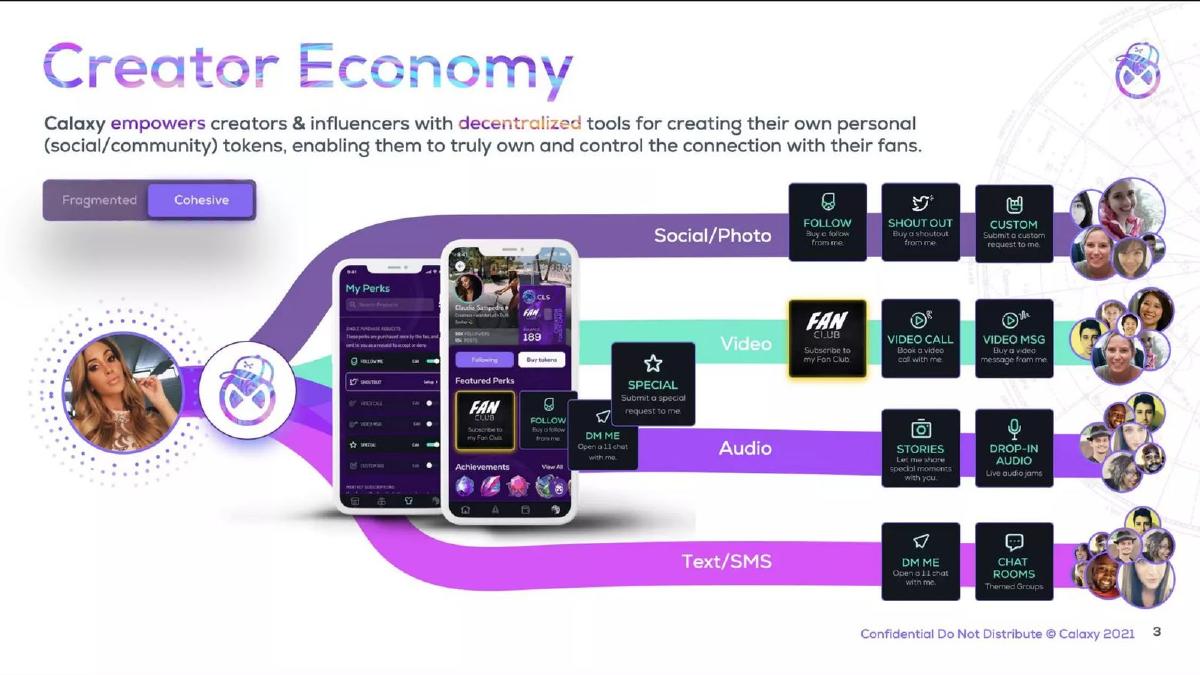
- The platform aims to replace fragmented social tools with a cohesive decentralized ecosystem for creator tokens (Slide 3).
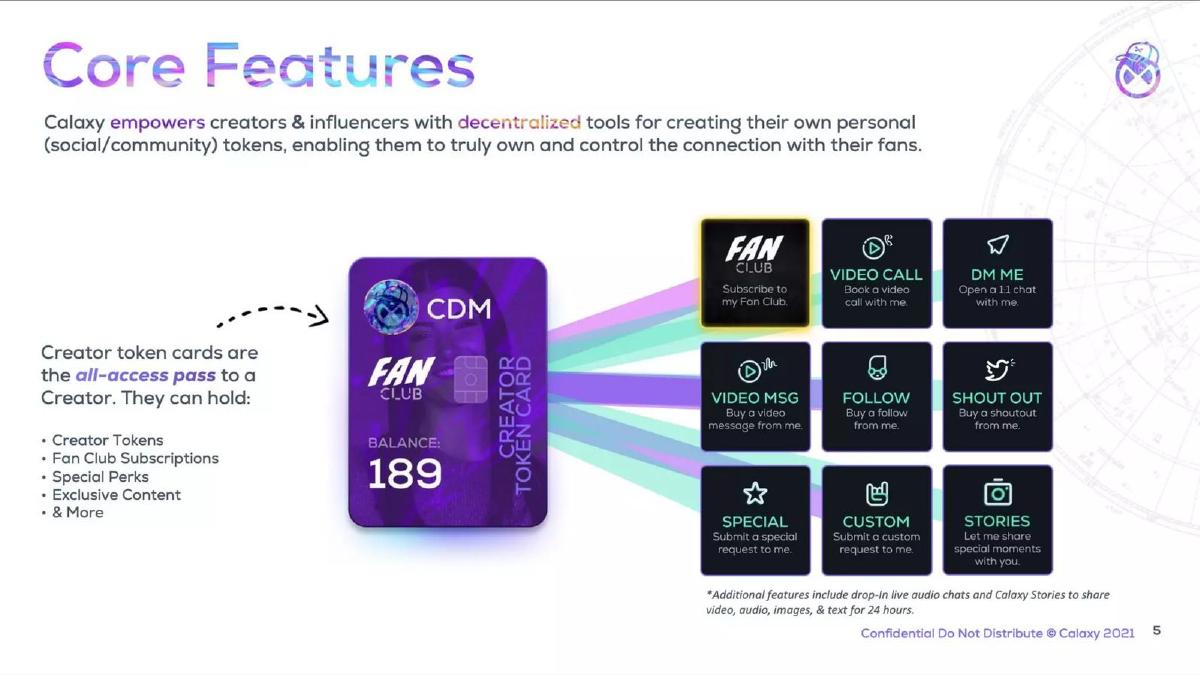
- Creators can monetize through nine distinct features including Video Calls, DMs, and Fan Club subscriptions (Slide 5).
- The business model relies on a 15% commission from all token issuances by creators (Slide 11).
- Calaxy plans to launch 'Calaxy Cash,' a native protocol token for fees and platform governance (Slide 7).
- The startup leverages significant social proof with a testimonial from NFL star Ezekiel Elliott calling the app a 'Game Changer' (Slide 9).
- The founding team claims over 25 years of combined industry, technology, and venture capital expertise (Slide 13).
- Spencer Dinwiddie (NBA) and Solo Ceesay serve as the primary leadership, bridging the gap between professional sports and Web3 (Slide 13).
- The deck omits specific financial projections, current user numbers, and a detailed breakdown of the $26M use of funds.
Calaxy Pitch Deck Analysis: The Intersection of Celebrity and Crypto
Calaxy’s pitch deck is a masterclass in leveraging founder-market fit. When your CEO is an active NBA player, the typical 'problem' slide regarding athlete monetization is almost redundant. The deck focuses on the 'Creator Economy' and the shift from Web2 fragmentation to Web3 cohesion. With a $26 million raise, the stakes were high, and the presentation reflects a polished, brand-heavy approach that prioritizes the 'who' and the 'what' over granular financial data.
Slide 1: Title and Brand Identity
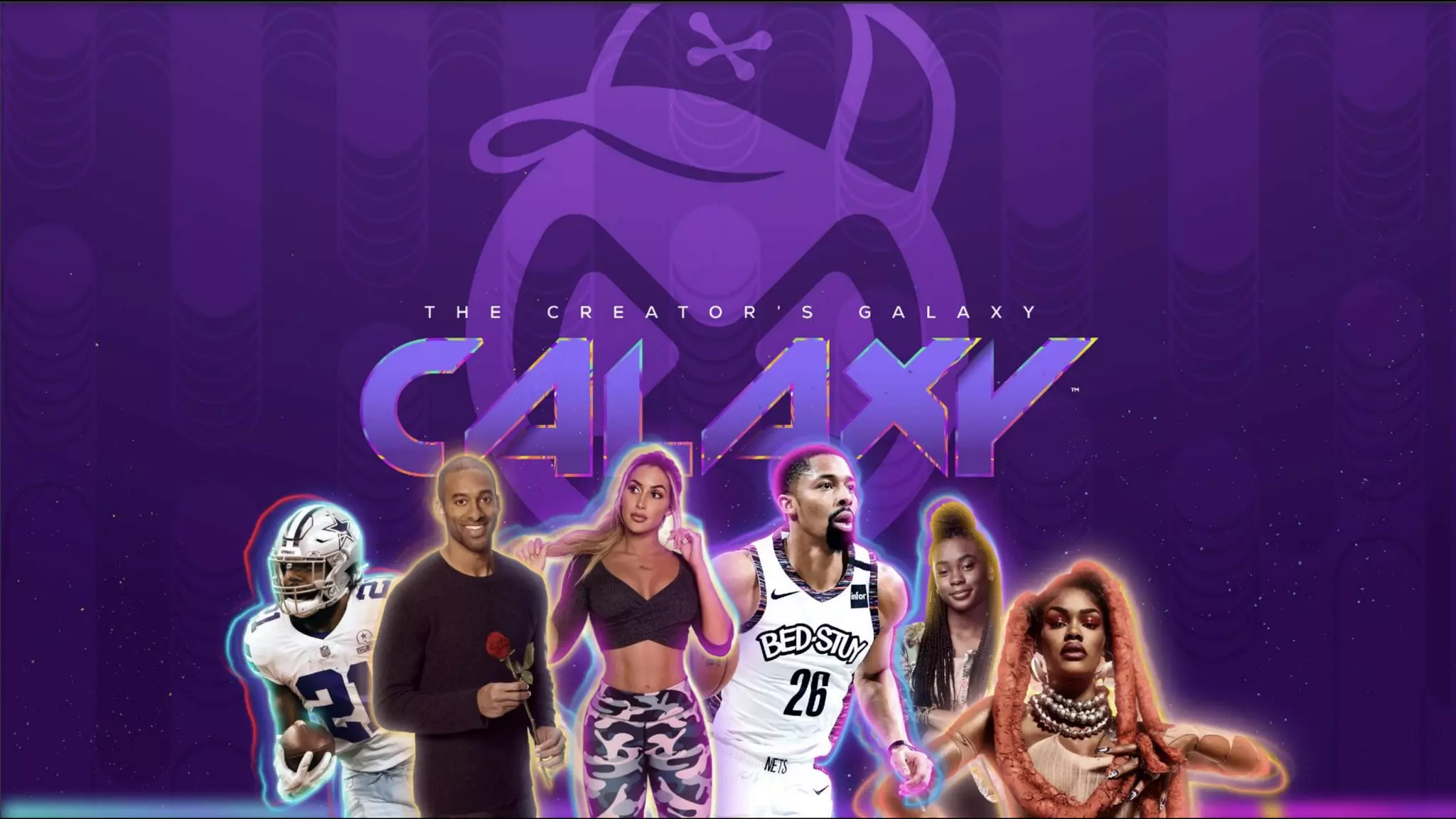
The cover slide sets a high-energy, entertainment-focused tone. It features the company logo, 'The Creator’s Galaxy,' and a collage of high-profile athletes and influencers, including Spencer Dinwiddie and Ezekiel Elliott. The purple and neon color palette immediately signals a modern, tech-forward brand. There is no text here other than the name, letting the visual star power do the heavy lifting.
Slide 3: The Creator Economy Vision
This slide defines the core value proposition: empowering creators with decentralized tools to create personal tokens. It uses a 'Fragmented vs. Cohesive' toggle visual. On the left, a creator is shown as the source; on the right, their interactions are split into four channels: Social/Photo, Video, Audio, and Text/SMS. This slide argues that Calaxy brings these disparate interactions—currently spread across platforms like Instagram, Cameo, and Clubhouse—into one unified wallet-based ecosystem.
Slide 5: Core Features and the 'All-Access Pass'
Slide 5 introduces the 'Creator Token Card.' This is the central product metaphor. The card is described as an 'all-access pass' that can hold creator tokens, fan club subscriptions, and special perks. The slide lists nine specific monetization features: Fan Club, Video Call, DM Me, Video Msg, Follow, Shout Out, Special, Custom, and Stories. By listing these, Calaxy demonstrates that it isn't just a token issuance platform, but a full-service engagement suite.
Slide 7: The Token System and Calaxy Cash
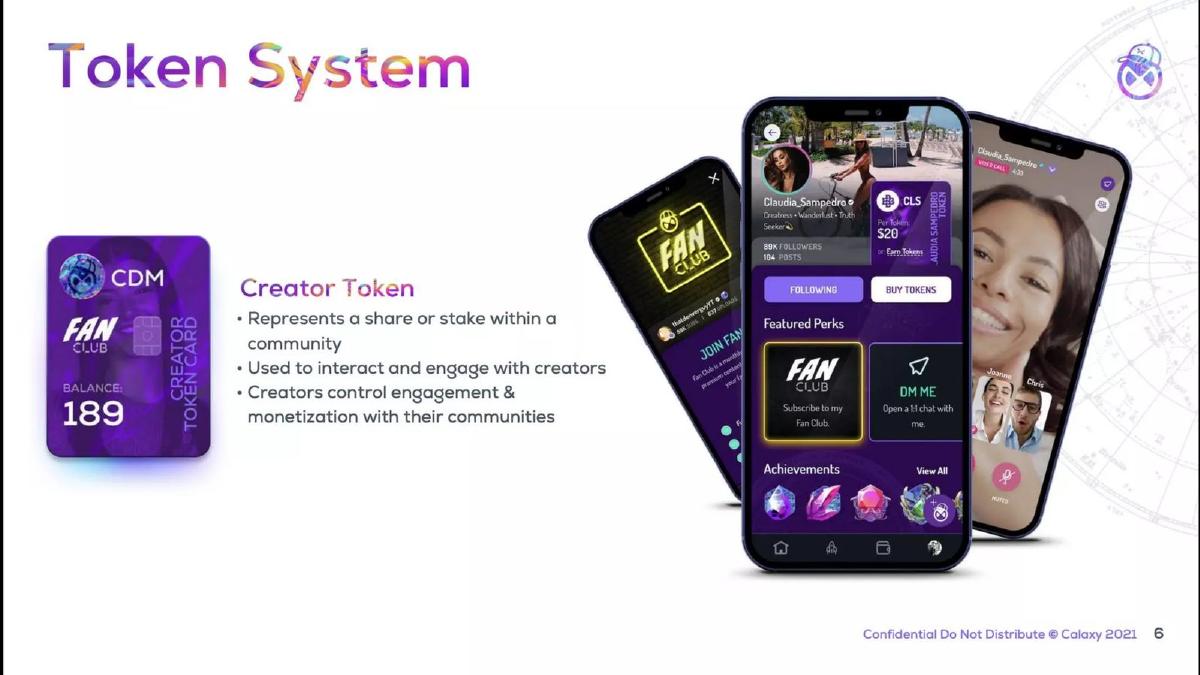
This slide introduces the technical layer of the platform. It differentiates between individual creator tokens and 'Calaxy Cash' (CLX). CLX is described as the native protocol token. The slide notes that it will 'potentially' be used for application fees and platform governance. The use of the word 'potentially' suggests that at the time of this deck, the exact tokenomics were still being finalized, a common trait in early-stage Web3 raises.
Slide 9: Social Proof and Celebrity Endorsement
Instead of a traditional traction slide with bar charts, Calaxy uses a 'Game Changer' testimonial slide. It features a quote from Ezekiel Elliott, a prominent NFL player, stating that Calaxy makes interacting with fans 'super easy.' The slide also includes a screenshot of a Twitter thread where Soulja Boy asks for help creating a 'SouljaCoin' without legal trouble, with Dinwiddie and Elliott responding. This is a highly effective way to show that the target demographic (high-net-worth creators) is actively looking for this specific solution.
Slide 11: The Business Model
The business model is presented with extreme simplicity. Calaxy takes a 15% fee from 'a token issuance by any Creator.' A footnote mentions that other revenue streams, including a digital marketplace, subscriptions, and brand partnerships, were in development for 2021. While a 15% take rate is standard for many creator platforms, the deck does not explain how this fee is collected (e.g., in fiat, in the creator's token, or in CLX).
Slide 13: The Team
The team slide is the strongest part of the deck. It features Spencer Dinwiddie (Founder & CEO), Rusty Matveev (CSO), Kyle Ellicott (COO), Cooper Kunz (CTO), and Solo Ceesay (Co-Founder & CIO). The slide claims '+25 years of industry, technology, and venture capital expertise.' By positioning a professional athlete alongside experienced tech and VC operators, Calaxy addresses the potential concern that this is merely a 'celebrity project' rather than a serious technology company.
Slide 15: External Resource
The final slide in this set is a promotional slide for a third-party pitch deck library and does not contain information regarding Calaxy.
What Works in the Calaxy Deck
1. Unmatched Founder-Market Fit: Having Spencer Dinwiddie as the CEO isn't just a gimmick; it provides the company with an immediate 'in' with the professional sports world. The deck leans into this by using athlete imagery and testimonials throughout.
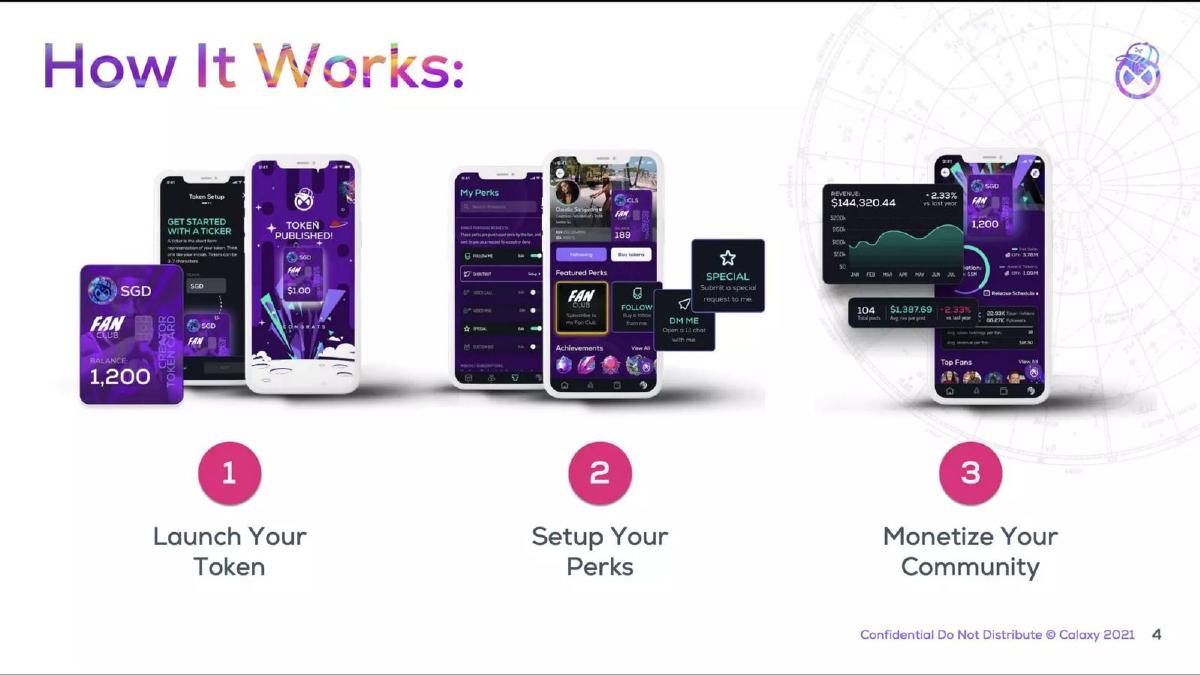
2. Visual Clarity: The product mockups on slides 3 and 7 are clean and professional. They help investors visualize how a complex concept like 'decentralized social tokens' actually looks to an end-user on a smartphone.
3. Clear Monetization: Many Web3 decks get lost in complex 'flywheel' diagrams. Calaxy keeps it simple: we take 15% of the tokens issued. This is a model that traditional VCs can easily understand and model.
What is Missing from the Calaxy Deck
1. Quantitative Traction: There are no numbers regarding the current user base, the number of creators signed, or the volume of tokens already issued. The deck relies entirely on the promise of future growth and celebrity interest.
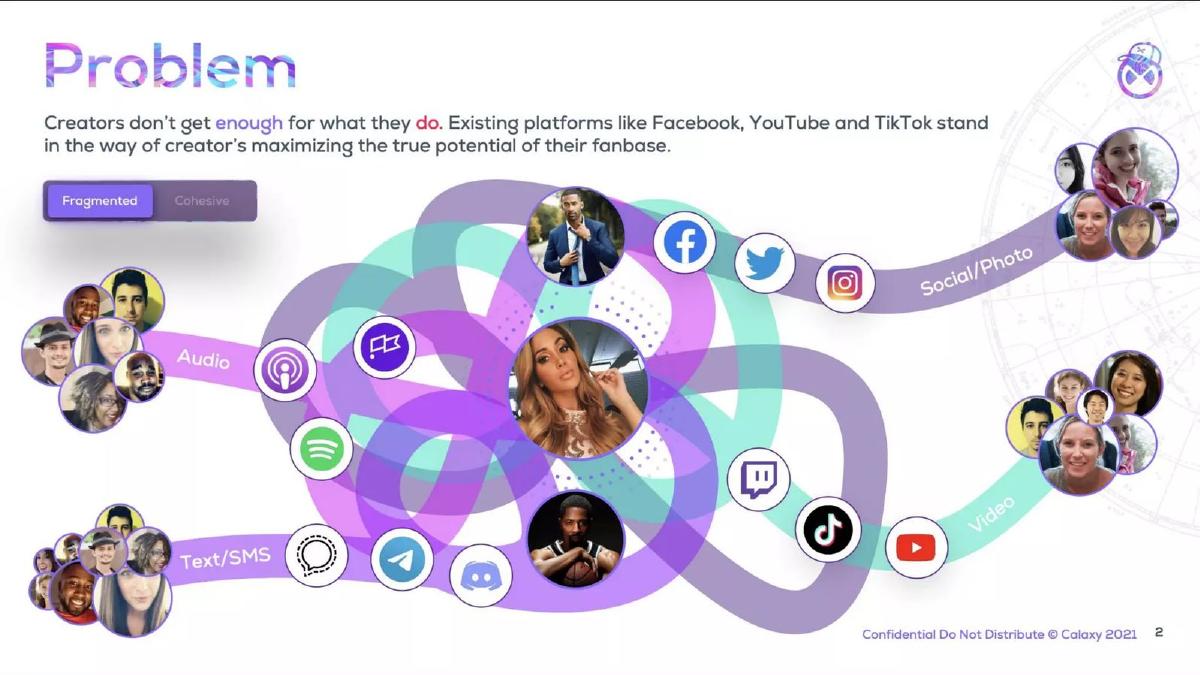
2. Competitive Landscape: The deck mentions 'fragmented' tools but does not name competitors like BitClout (now DeSo), Rally, or Roll, which were active in the social token space at the same time. Investors would want to know how Calaxy differentiates itself from these existing protocols.
3. Use of Funds: For a $26 million raise, the absence of a 'Use of Funds' slide is notable. There is no indication of how much will be spent on engineering versus creator acquisition or legal compliance (a major hurdle in the crypto space).
Lessons for Founders
Leverage your unique advantage: If you have a high-profile founder or early adopter, make them the centerpiece of your traction story. · Simplify complex tech: Calaxy uses the 'Creator Token Card' as a familiar mental model for a crypto wallet. This makes the technology accessible to non-technical investors. · Focus on the 'Why Now': The deck effectively argues that the current creator economy is broken (fragmented) and that Web3 is the logical 'cohesive' solution. · Don't ignore the 'How': While the 15% fee is clear, founders should be prepared to explain the mechanics of their revenue model in more detail during Q&A if it isn't on the slide.
Frequently asked questions
- How does Calaxy generate revenue according to the deck?
- According to slide 11, Calaxy's primary revenue stream is a 15% fee taken from every token issuance by a creator on the platform. The deck also notes that additional revenue streams like a digital marketplace, subscriptions, brand partnerships, and trading were in development for a 2021 launch.
- What role does Spencer Dinwiddie play in the company?
- Spencer Dinwiddie is listed on slide 13 as the Founder and CEO of Calaxy. His involvement is a central part of the company's identity, leveraging his profile as a professional NBA player to attract other high-profile creators and athletes to the platform.
- What are 'Creator Tokens' in the Calaxy ecosystem?
- As shown on slide 5, Creator Tokens act as an 'all-access pass' to a creator. Holding these tokens allows fans to unlock specific interactions such as video messages, custom requests, shout-outs, and access to exclusive 'Fan Club' content.
- What is 'Calaxy Cash' and how is it used?
- Slide 7 describes Calaxy Cash (CLX) as the native protocol token. It is intended to be used for paying application fees and for governance, allowing token holders to participate in decisions regarding the Calaxy platform.
- Does the deck provide any evidence of market traction?
- The deck relies on qualitative traction rather than quantitative data. Slide 9 features a high-profile endorsement from Dallas Cowboys running back Ezekiel Elliott and a screenshot of a Twitter interaction involving Soulja Boy, suggesting strong interest from celebrity creators.