The Love with Food pitch deck is a 22-slide visual narrative that prioritizes emotional resonance and market scale over dense financial modeling. By leaning heavily on the 'X for Y' analogy (Birchbox/TOMS/Warby Parker) on slide 2, the company immediately established its business model and social mission. The deck excels at demonstrating early traction, citing 200 boxes sold in the first month and 300 in the second (slide 11), alongside a massive social media presence of over 117,000 Facebook fans (slide 12). While it lacks detailed unit economics or a competitive landscape matrix, it successf…
Key takeaways
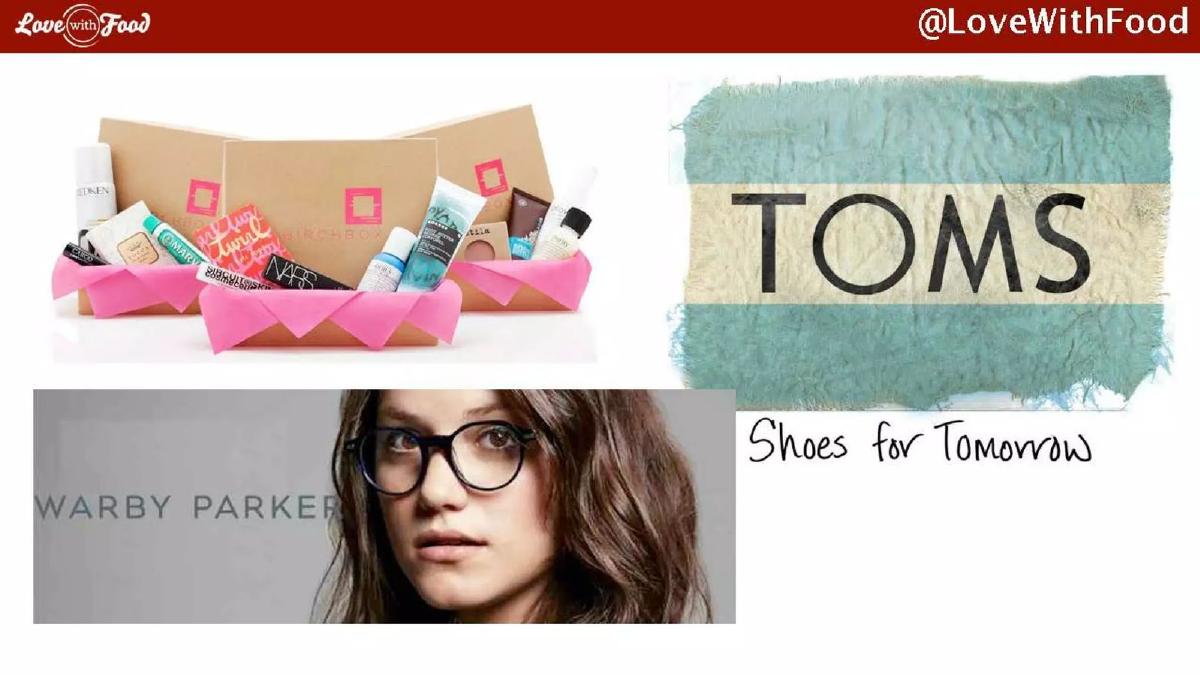
- The deck uses a powerful 'X for Y' analogy on slide 2, referencing Birchbox, TOMS, and Warby Parker to anchor the business model.
- Early traction is highlighted on slide 11, showing a 50% month-over-month growth in box sales from 200 to 300 units.
- The company leverages massive social proof on slide 12, claiming 117,000+ Facebook fans and 30 blogger reviews.
- The revenue model is clearly defined on slide 10 as a $14 monthly subscription with a 30% commission structure.
- Market size is presented with high-impact visuals on slide 13, valuing the specialty food trade at '$50 Freaking Billion'.
- The social mission is integrated as a core product feature, with slide 9 stating that subscriptions help end childhood hunger.
- The team slide (slide 21) emphasizes technical and business credentials, including a CEO with a Comp Sci degree and an MBA.
- The final 'Ask' on slide 22 is specific, seeking $750K with $150K already committed at the time of the presentation.
The Love with Food Teardown: Selling the 'Discovery' Experience
Love with Food entered the market during the peak of the subscription box craze. Their deck is a textbook example of how to pitch a consumer-facing e-commerce brand by focusing on brand identity, social mission, and rapid early traction. With 22 slides, the deck moves quickly, using large imagery and minimal text to keep the audience focused on the narrative of discovery and philanthropy.
Slides 1-3: The Hook and the Analogy
The deck opens with a clean title slide (Slide 1) that immediately defines the product: "Monthly Subscription to DISCOVER GREAT FOODS." This is followed by one of the most effective slides in the deck (Slide 2), which uses logos for Birchbox, TOMS, and Warby Parker. This is a classic fundraising tactic: instead of explaining a complex business model, they show three successful companies and let the investor's brain fill in the gaps. The implication is clear: we are a subscription box (Birchbox) with a social mission (TOMS) and a direct-to-consumer edge (Warby Parker).
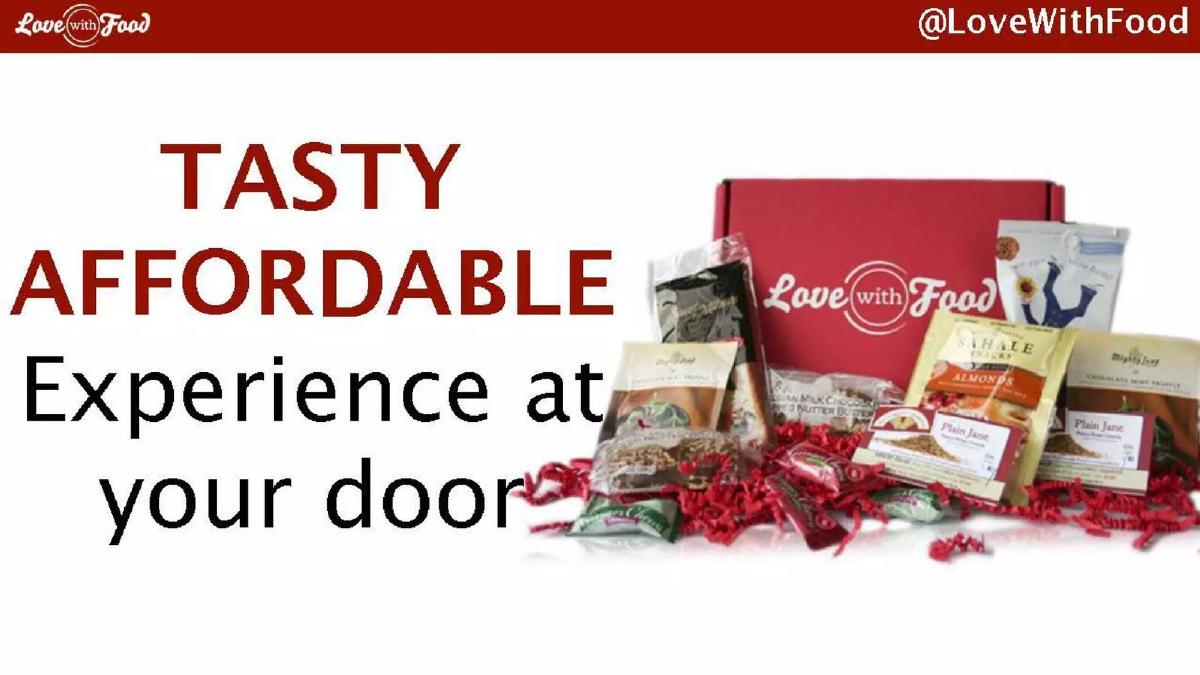
Slide 3 reinforces the value proposition with a high-quality product shot and the words "TASTY AFFORDABLE Experience at your door." By using the word "experience" rather than "snacks," they are positioning themselves as a lifestyle brand rather than a grocery delivery service.
Slides 4-6: The Problem and the Solution
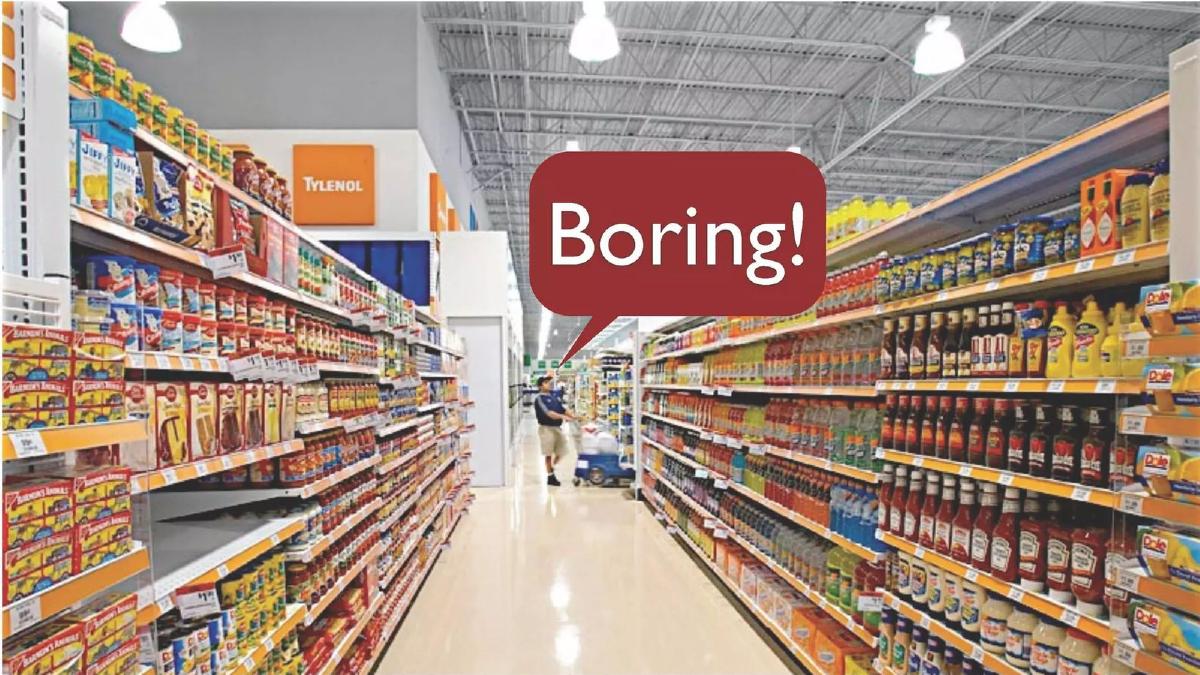
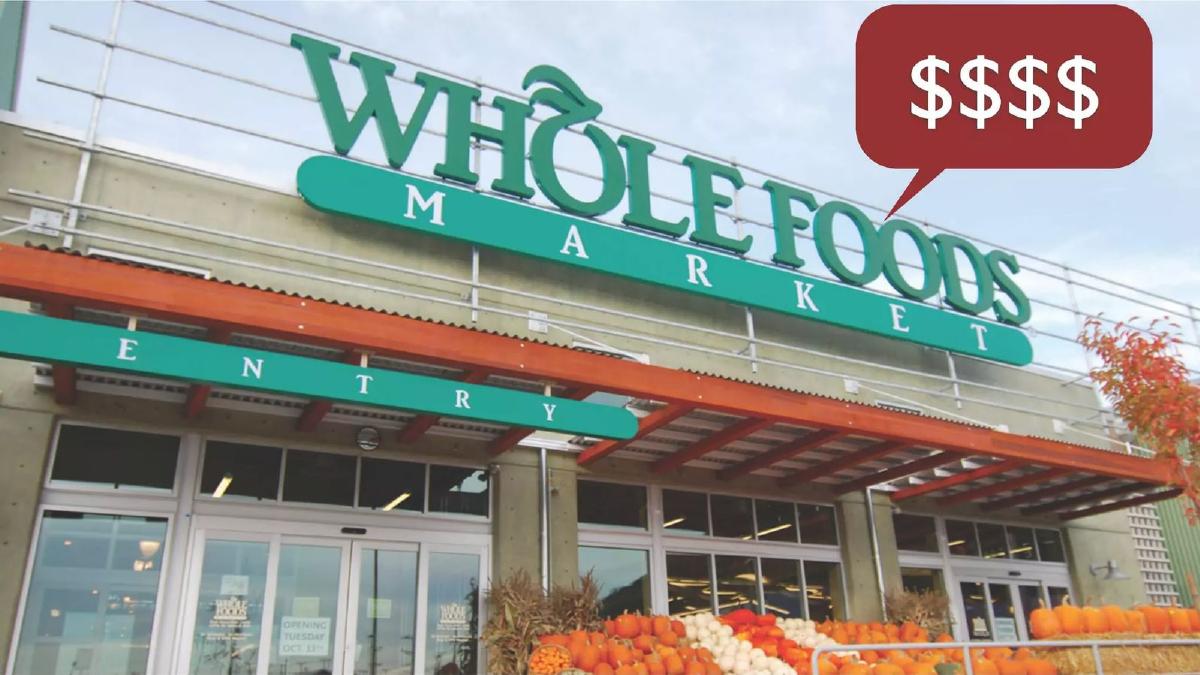
Slides 4 and 5 identify the pain points in the current food discovery process. Slide 4 shows a generic grocery aisle labeled "Boring!", while Slide 5 shows a Whole Foods storefront labeled "$$$$". This sets up a dichotomy where the consumer's only choices are uninspired mass-market goods or prohibitively expensive specialty stores. Love with Food positions itself as the middle ground: curated and exciting, but affordable.
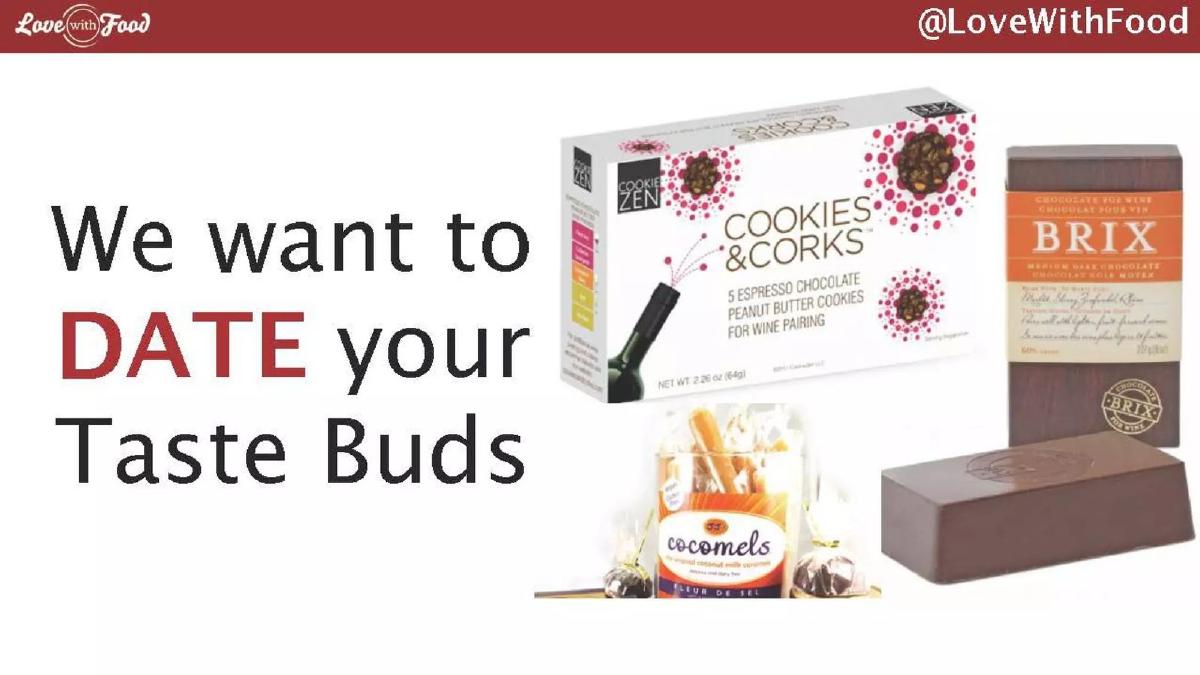
Slide 6 introduces the solution with the playful phrase "We want to DATE your Taste Buds," accompanied by images of artisanal products like "Cookies & Corks" and "Cocomels." This slide emphasizes the quality and uniqueness of the vendors they partner with.
Slides 7-9: Product Features and Social Mission
Slides 7 and 8 provide a glimpse into the user interface. Slide 7 shows a feedback loop where users earn points for reviewing products, while Slide 8 shows a product page for "Li'l Puffs Gourmet Marshmallows" with a "Buy Now" button and a countdown timer. This is crucial because it demonstrates that Love with Food is not just a box company; it is a data-driven marketing platform for food brands.
Slide 9 pivots to the social mission: "Your Taste buds DOING GOOD." It features a photo of a child and a thank you for helping end childhood hunger. This emotional beat is designed to build brand loyalty and provide a "feel-good" reason for subscribers to stay on the platform.
Slides 10-12: The Business Model and Early Traction
Slide 10 gets into the numbers: a "$14 Monthly Subscription" and a "30% Commission." This is a dual-revenue stream model. They make money on the box itself and on the subsequent sales of the products featured in the box. Slide 11 provides the proof of concept: 200 boxes sold out in the first month, 300 in the second, and a 15% upsell rate. While these numbers are small in absolute terms, the "Sold Out" status suggests high demand and limited supply, which is a powerful narrative for a Seed round.
Slide 12 is the "Social Proof" slide. Claiming 117,000+ Facebook fans and 30 blogger reviews is an impressive feat for a company only two months into sales. It suggests a highly effective, low-cost customer acquisition strategy and a product that people naturally want to share online.
Slides 13-17: Market Size and Financial Projections
The market size slides (13-16) use a "bottom-up" approach. Slide 13 starts with a "$50 Freaking Billion" specialty food market. Slide 14 identifies 82,000,000 potential customers (likely referring to the total number of US households or a specific demographic). Slide 15 and 16 narrow this down to a 1.5% market share, resulting in 1,230,000 customers. Slide 17 then translates this into a "$200 MILLION PER YEAR" revenue goal based on a $16/month subscription plus upsells. This is a standard venture capital projection: show a massive TAM and then show how even a small percentage of that market leads to a nine-figure business.
Slides 18-20: The Virtual Supply Chain
Slides 18, 19, and 20 are very sparse, featuring only large text. Slide 18 notes "SAMPLES = Single Serving," which explains the low cost of goods. Slide 19 and 20 mention a "VIRTUAL SUPPLY CHAIN" and "CHEAPER CONTENT." This likely refers to the fact that food brands provide the samples for free or at a deep discount because they view the box as a marketing channel. This is a key insight into their unit economics—they are being paid by the consumer to distribute marketing materials for the brands.
Slides 21-22: Team and The Ask
The team slide (Slide 21) is strong. CEO Aihui Ong has the "hacker/hustler" profile with a Computer Science degree and an MBA. The inclusion of high-profile advisors like Dave McClure (500 Startups) and executives from Poshmark and eBay adds a layer of professional validation. Finally, Slide 22 presents the ask: "$750K" with "$150K committed." It includes contact information and a link to their AngelList profile, making the next steps for investors very clear.
What Works in This Deck
Visual Storytelling: The deck is not cluttered. It uses high-quality photography and large, bold text to convey one idea per slide. This is ideal for a presentation where the founder is speaking over the slides. · The 'Birchbox' Anchor: By comparing themselves to Birchbox, they avoid having to explain the subscription box model from scratch. Investors in that era already understood the metrics and exit potential of that model. · Aggressive Social Proof: Highlighting 117k Facebook fans and major press logos early on creates a sense of inevitability and "FOMO" (fear of missing out). · Clear Revenue Streams: The deck clearly distinguishes between subscription revenue and commission revenue, showing a path to higher margins.
What Is Missing
Unit Economics: While they mention the subscription price and commission, there is no mention of Customer Acquisition Cost (CAC) or Lifetime Value (LTV). For a subscription business, these are the most important metrics. · Churn Rates: With only two months of data, churn might not be stable, but investors would want to know how many of those first 200 customers stayed for the second month. · Competitive Landscape: The deck ignores other food subscription boxes. A slide showing how they differ from competitors like Graze or NatureBox would have been helpful. · Logistics and Fulfillment: Shipping food is difficult and expensive. The deck mentions a "virtual supply chain" but doesn't explain how they handle the physical reality of packing and shipping thousands of boxes.
What a Founder Should Copy
The 'X for Y' Slide: If your business model is a variation of a known success, use a slide like Slide 2 to anchor the investor's understanding immediately. · The 'Sold Out' Narrative: If you have small numbers, frame them as a supply issue rather than a demand issue. "Sold out 200 units" sounds much better than "We only had 200 customers." · Social Media as Traction: If your sales are early, use your social media following and engagement as a proxy for market demand. It shows that you know how to build a brand. · Direct Ask: Always include a slide like Slide 22 that states exactly how much you are raising and how much is already committed. It creates momentum.
Frequently asked questions
- What is the primary business model of Love with Food?
- As shown on slides 10 and 17, Love with Food operates a monthly subscription service. Customers pay $14 to $16 per month to receive a curated box of gourmet snack samples. The company also earns a 30% commission on 'upsells,' which likely refers to customers purchasing full-sized versions of the products they discovered in their boxes.
- How does the company address its social impact?
- Social impact is a pillar of the brand, modeled after companies like TOMS. Slide 9 features a child with the caption 'Thanks for helping to end childhood hunger,' and slide 20 reinforces this mission. This 'buy-one-give-one' or donation-per-box model is used to differentiate the brand in a competitive e-commerce market.
- What metrics did Love with Food use to prove traction?
- The deck relies on three types of traction: sales, social media, and press. Slide 11 notes they sold out 200 boxes in month one and 300 in month two. Slide 12 highlights a massive top-of-funnel reach with 117,000+ Facebook fans and mentions from major outlets like TechCrunch, Mashable, and The Huffington Post.
- Who are the key team members and advisors?
- The team (slide 21) is led by Founder/CEO Aihui Ong (Comp Sci + MBA) and CTO Hendy Tanata. Notable investors and advisors listed include Dave McClure of 500 Startups, Manish Chandra (Founder of Poshmark), and Tanguy Peers (VP at eBay), providing significant institutional and industry credibility.
- What is the 'upsell' strategy mentioned in the deck?
- Slide 11 mentions a '15% up sell' rate, and slide 17 projects revenue based on a '$16/month subscription + Up sell.' This indicates that the sample box is a lead generation tool for their e-commerce shop, where users can buy larger quantities of the artisanal snacks they enjoyed.