Lula’s Series A deck is a lean, 9-slide presentation that successfully raised $18M in 2021. The company positions itself as the software layer for the insurance industry, offering an API that allows businesses to embed episodic insurance at the point of sale. By targeting the $1.3T US insurance market, specifically underserved commercial segments like car sharing and micro-mobility, Lula demonstrated a clear path to scale. The deck relies heavily on traction, showcasing a 31.13% Compound Monthly Growth Rate (CMGR) and a 95%+ retention rate. While it lacks detailed unit economics or a specific…
Key takeaways
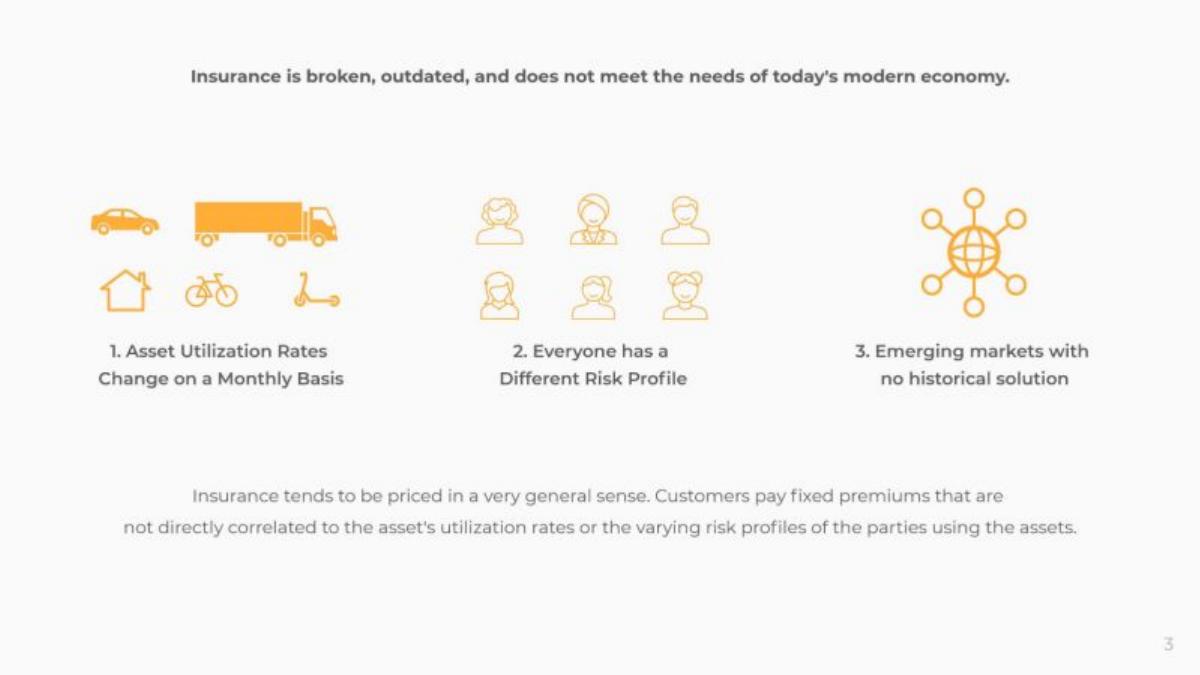
- Lula identifies three core problems in modern insurance: changing asset utilization, varying risk profiles, and emerging markets with no historical solutions (Slide 3).
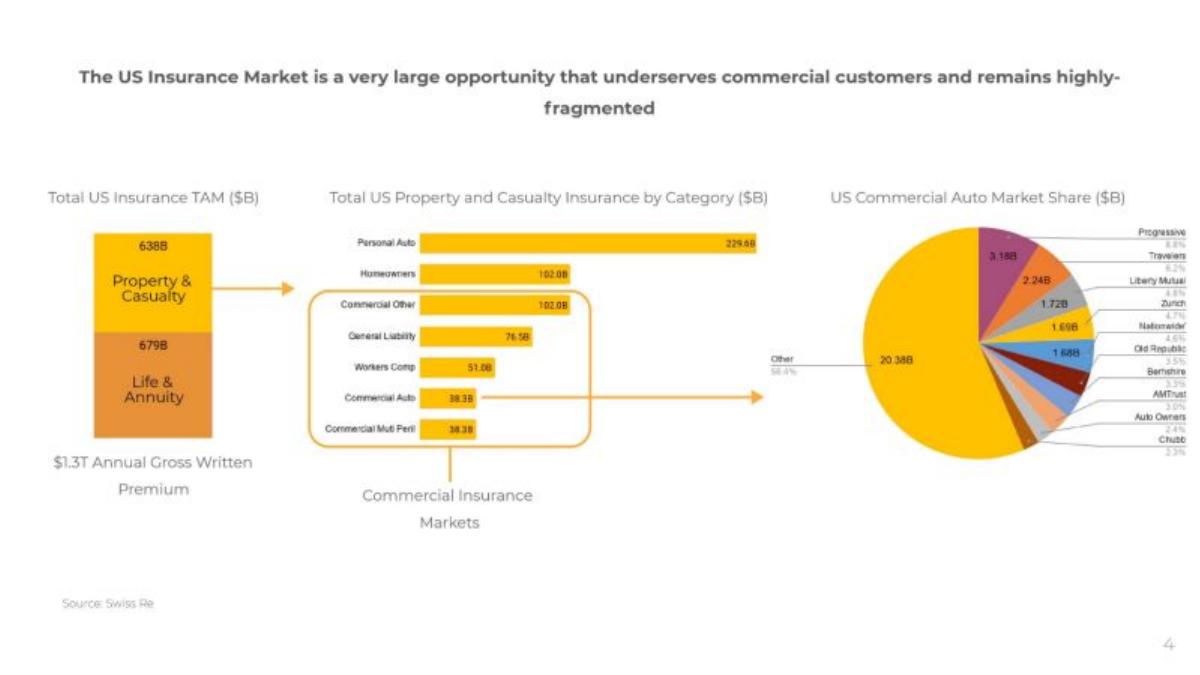
- The company targets a $1.3T annual gross written premium market, specifically focusing on the fragmented $38.3B commercial auto sector (Slide 4).
- Lula's product is an 'Insurance API' that eliminates the need for companies to build their own infrastructure for episodic insurance (Slide 5).
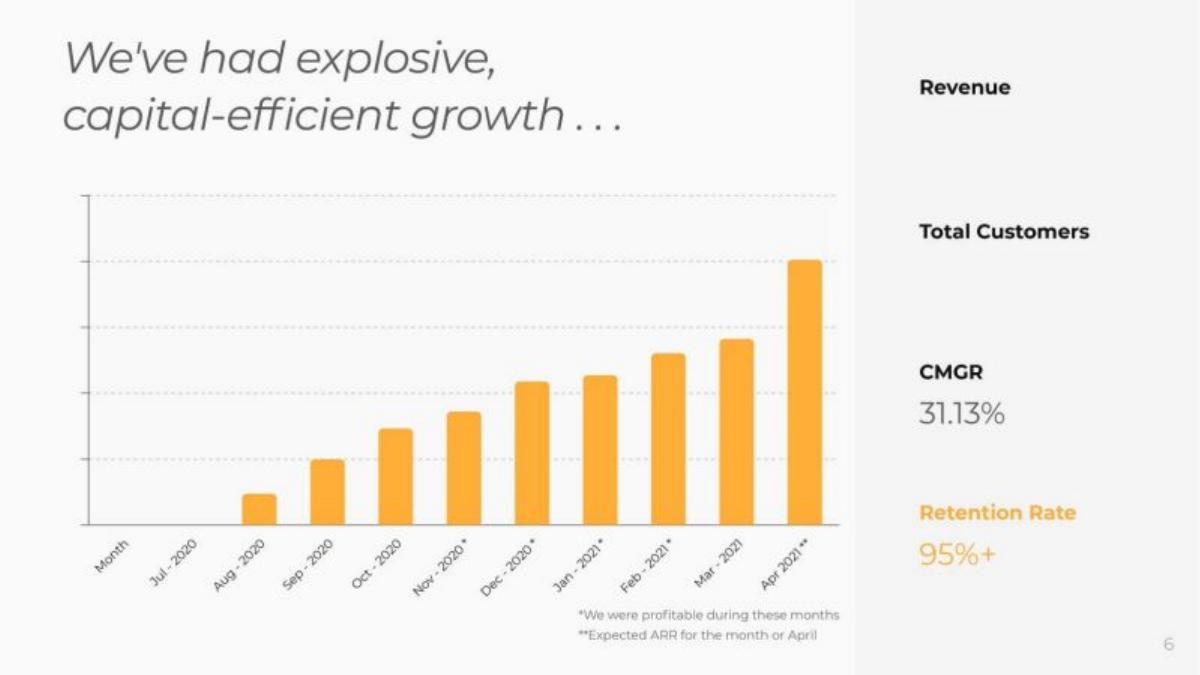
- The startup reported a 31.13% Compound Monthly Growth Rate (CMGR) leading up to April 2021 (Slide 6).
- Customer retention is a primary strength, cited at 95%+ (Slide 6).
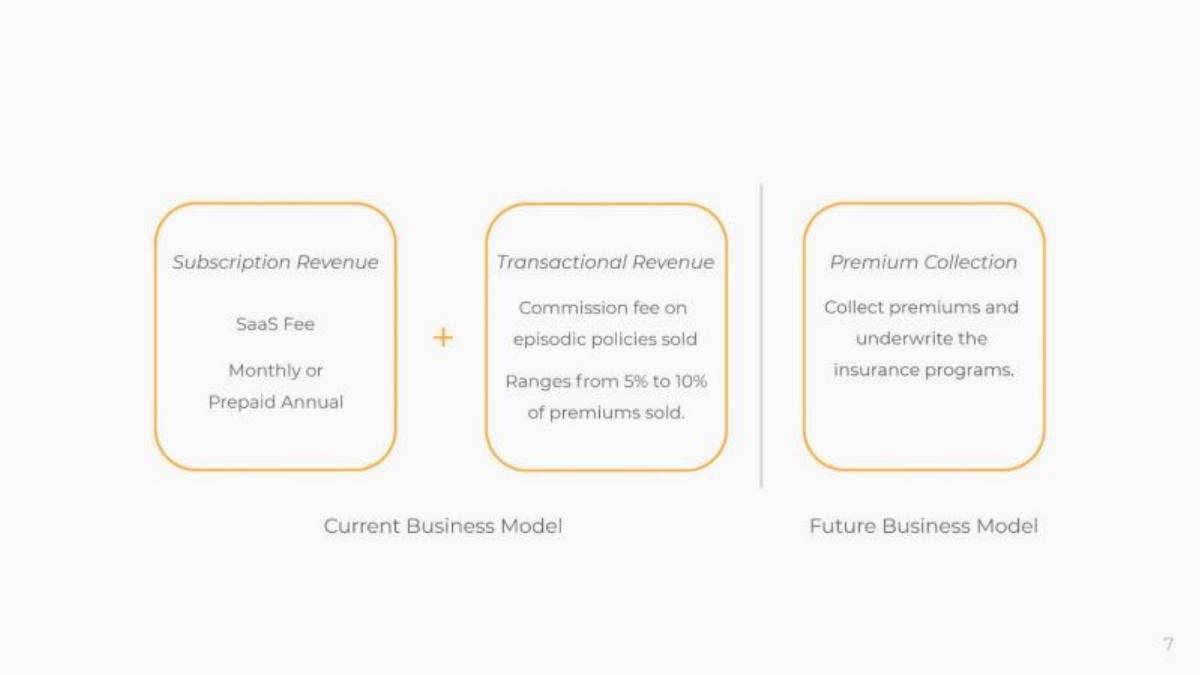
- The business model combines a SaaS fee with a 5% to 10% commission on episodic policies sold (Slide 7).
- Future expansion plans include moving into 'Premium Collection' to underwrite insurance programs directly (Slide 7).
- The team includes high-level advisors such as the former Head of Insurance at Uber and VP of Risk at Lyft (Slide 9).
Lula Series A Teardown: The 9-Slide Path to $18M
Lula’s 2021 Series A pitch deck is a study in efficiency. In an era where decks often stretch to 20 or 30 slides, Lula managed to communicate a complex infrastructure play in just nine. The company positions itself as the 'Stripe for Insurance,' providing the API-based plumbing that allows modern platforms to offer insurance to their users instantly. By focusing on the 'episodic' nature of the modern economy—where a car might be a personal vehicle one hour and a commercial delivery van the next—Lula addresses a massive gap in the traditional insurance market.
Slide 1: Title Slide
The deck opens with a minimalist title slide. It features the Lula logo in orange and the text 'Series A Pitch Deck.' There is no tagline or mission statement here, which is a bold choice that assumes the investor is already somewhat familiar with the space or that the subsequent slides will do the heavy lifting immediately. The clean aesthetic sets a professional, tech-forward tone.
Slide 2: The Problem Statement
Slide 3 (labeled as page 2 in the sequence) identifies the core friction in the industry: 'Insurance is broken, outdated, and does not meet the needs of today's modern economy.' The slide breaks this down into three pillars: 1. Asset Utilization Rates change monthly; 2. Everyone has a different risk profile; 3. Emerging markets have no historical solution. The bottom text emphasizes that fixed premiums are not correlated to actual asset usage, which is the fundamental inefficiency Lula aims to solve.
Slide 3: Market Opportunity
Slide 4 uses data from Swiss Re to quantify the opportunity. It shows a Total US Insurance TAM of $1.3T in Annual Gross Written Premium. The slide then drills down into the Property & Casualty segment ($638B), highlighting the 'Commercial Insurance Markets' which include Commercial Auto ($38.3B). A pie chart of the US Commercial Auto Market Share shows a highly fragmented landscape, with the 'Other' category making up 58.4% of the market. This fragmentation is key to Lula’s pitch—there is no dominant incumbent owning the long tail of commercial risk.
Slide 4: The Solution (The Insurance API)
Slide 5 introduces the product: 'We've begun at the software layer with our Insurance API.' The visual shows the Lula 'box' connecting various insurance components (represented by icons for coverage, claims, and policy management) to a mobile interface. The text explains that Lula eliminates the need for companies to build their own infrastructure by providing a 'fully integrated suite of insurance products' and selling 'episodic insurance' at the point of sale.
Slide 5: Traction and Growth
Slide 6 is the 'money slide.' It features a bar chart showing monthly growth from July 2020 to April 2021. While the Y-axis lacks specific dollar denominations, the visual trend is clearly up and to the right. The slide lists a Compound Monthly Growth Rate (CMGR) of 31.13% and a Retention Rate of 95%+. A small footnote indicates that the company was profitable during several of those months (Nov 2020 through Feb 2021) and that the April 2021 bar represents 'Expected ARR for the month.' This slide proves product-market fit and capital efficiency.
Slide 6: Business Model
Slide 7 details how Lula makes money. The 'Current Business Model' is a hybrid of Subscription Revenue (SaaS fees paid monthly or annually) and Transactional Revenue (a 5% to 10% commission on episodic policies). This is a classic 'land and expand' model where the SaaS fee provides stability and the commission provides upside as the customer scales. The slide also previews a 'Future Business Model' involving 'Premium Collection' and underwriting, suggesting a path toward becoming a full-stack insurance carrier.
Slide 7: Competitive Landscape
Slide 8 is partially obscured in this version of the deck, but the headers indicate a comparison between Brokers, InsurTech Companies, and Carriers. It evaluates these groups based on 'Threat,' 'How We Win,' and 'Long Term Advantage.' This slide is intended to show that while brokers have distribution, they lack the tech, and while carriers have the balance sheet, they lack the agility to handle episodic, API-driven risk.
Slide 8: Team and Social Proof
Slide 9 introduces the founders, Matthew and Michael Vega-Sanz, along with their technical leads. The real weight on this slide comes from the 'Notable Firms' and 'Notable Angel Investors' sections. Backing from Nextview Ventures, Florida Funders, and SoftBank-affiliated individuals (implied by the names listed) provides significant credibility. Most importantly, the inclusion of Curtis Scott, the former Head of Insurance at Uber and VP of Risk at Lyft, as an advisor is a massive signal that Lula has the right domain expertise to navigate the complex regulatory and actuarial world of insurance.
What Lula’s Deck Does Well
Focus on Infrastructure: By positioning themselves as an API rather than just a digital brokerage, Lula appeals to investors looking for 'toll booth' businesses. They aren't just selling insurance; they are selling the pipes that make selling insurance possible for everyone else.
Exceptional Traction: A 31.13% CMGR is incredibly high for a Series A company. Highlighting this alongside profitability in certain months suggests a very disciplined approach to growth, which is highly attractive to VCs.
Strategic Advisory: In a highly regulated industry like insurance, having the person who built insurance for Uber and Lyft on your advisory board is a 'cheat code.' It validates the technical and regulatory feasibility of the product.
What is Missing from the Lula Deck
Unit Economics: While the deck mentions a 5-10% commission, it doesn't detail the Customer Acquisition Cost (CAC) or the Lifetime Value (LTV). For a SaaS/Fintech hybrid, these metrics are usually scrutinized heavily during Series A due diligence.
The 'Ask' and Use of Funds: The deck does not explicitly state how much they are raising (though we know from external data it was $18M) or how they plan to spend the capital. Usually, a Series A deck includes a slide on hiring plans, geographic expansion, or R&D milestones.
Case Studies: While the traction chart is impressive, the deck lacks a specific example of a customer using the API. Showing how a car-sharing platform or a trucking fleet integrated Lula and what the result was for their bottom line would have made the 'Solution' slide more tangible.
What Founders Should Copy
The 9-Slide Format: Lula proves that you don't need a 20-slide deck to raise a significant round. If your metrics are strong and your market is clear, brevity is your friend. It forces you to focus on the most compelling parts of your story.
The 'Future Business Model' Tease: Slide 7 is a great example of how to show investors a 'bigger' vision without distracting from the current execution. By showing the path from API/Broker to Underwriter, Lula demonstrates that they have a plan to capture more of the value chain as they mature.
Clear Market Segmentation: Slide 4 does an excellent job of starting with a massive number ($1.3T) and quickly narrowing it down to a specific, addressable, and fragmented sub-sector (Commercial Auto). This makes the 'huge market' claim feel realistic rather than hyperbolic.
Frequently asked questions
- What is Lula's core product offering?
- Lula offers an 'Insurance API' designed to provide companies with a fully integrated suite of insurance products. This allows businesses to sell episodic insurance to their customers at the point of sale without having to build their own insurance infrastructure from scratch. The goal is to act as the software layer for the insurance industry, specifically for the modern economy where asset usage is fluid.
- How does Lula generate revenue?
- According to slide 7, Lula utilizes a dual revenue stream in its current business model. First, it charges a 'SaaS Fee' which can be paid monthly or as a prepaid annual subscription. Second, it earns 'Transactional Revenue' in the form of a commission fee on every episodic policy sold, typically ranging from 5% to 10% of the premiums.
- What market segments does Lula target?
- Lula focuses on the US Property and Casualty market, with a specific emphasis on commercial insurance. Slide 4 highlights segments like Commercial Auto ($38.3B), General Liability ($76.5B), and 'Commercial Other' ($102.0B). Their solution is particularly geared toward emerging markets like car-sharing, trucking, and micro-mobility where traditional fixed premiums do not align with asset utilization.
- Who are the key people behind Lula?
- The company was co-founded by Matthew Vega-Sanz (CEO) and Michael Vega-Sanz (President). The leadership team includes Jag Doddapaneni (VP of Development) and Suresh Cherrolu (Senior Technical Lead). Notably, the company is advised by Curtis Scott, who served as the Head of Insurance at Uber and VP of Risk at Lyft, providing deep domain expertise in gig-economy insurance.
- What is the 'Future Business Model' mentioned in the deck?
- Slide 7 outlines a transition from being a pure software/brokerage layer to becoming an underwriter. The 'Future Business Model' involves 'Premium Collection,' where Lula intends to collect premiums and underwrite the insurance programs themselves. This move would likely increase their margins but also require them to take on more balance sheet risk compared to their current API-first model.