Lumotune’s 2013 Seed deck is a masterclass in visual communication for hardware startups. By using high-fidelity mockups of retail storefronts and cityscapes, the company bypasses the need for dense text to explain their 'Digital Marketing on Glass' concept. The deck successfully highlights a $9.4 billion U.S. digital signage market while narrowing its focus to a $3.4 billion retail and banking segment. However, the presentation is notably light on financial projections, unit economics, and a specific funding ask. Despite these omissions, the strength of the founding team—boasting credentials…
Key takeaways
- The deck defines its niche as 'Digital Marketing on Glass' on the title slide (Slide 1).
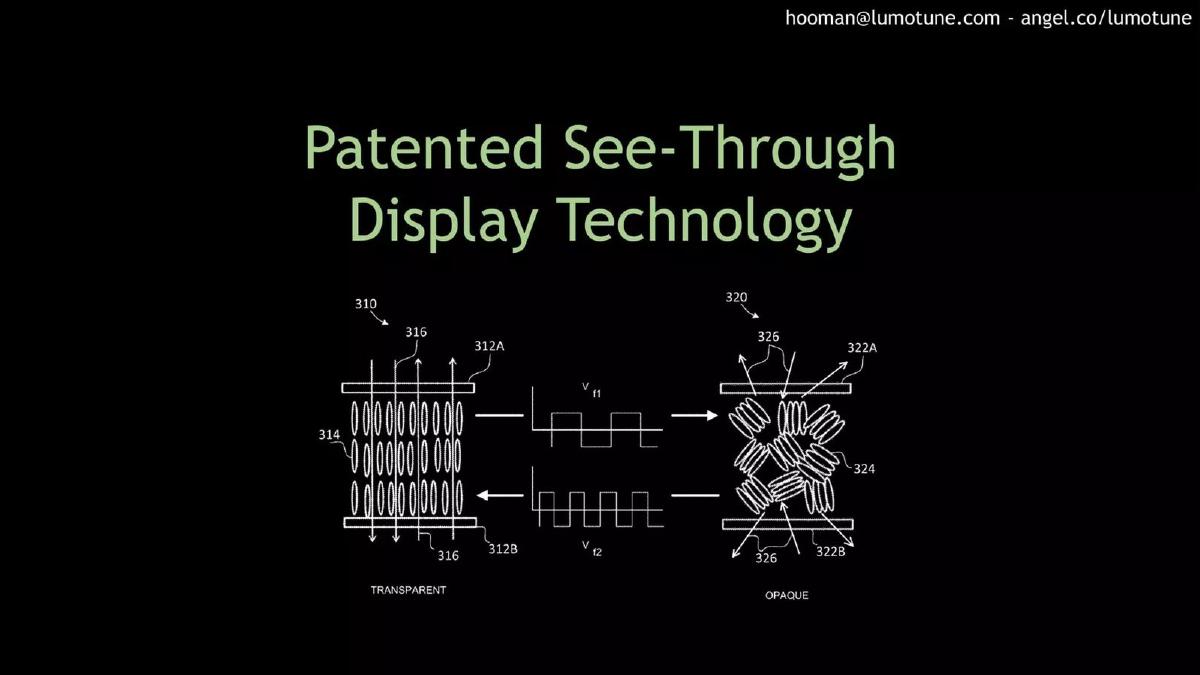
- A technical diagram on Slide 5 explains the 'Patented See-Through Display Technology' by showing the transition from transparent to opaque states.
- Slide 8 identifies a total U.S. Digital Signage market of $9.4 billion, citing IDC research from 2015.
- The company targets a specific $3.4 billion 'Retail & Banking Segment' within the broader signage market (Slide 8).
- The business model utilizes a 'Land and expand strategy' specifically targeting Quick Service Restaurant chains (Slide 9).
- The founding team features significant institutional pedigree, including MIT, Harvard, and the University of Waterloo (Slide 10).
- Team experience includes tenures at major tech firms like BlackBerry, Xerox, and Flex (Slide 10).
- The deck lacks a slide dedicated to competition, financial history, or a specific capital request.
Introduction: Selling the Invisible
Lumotune’s 2013 pitch deck is a fascinating artifact from the early 2010s hardware boom. The company set out with a bold mission: to transform the world’s glass into digital displays. At the time, digital signage was largely limited to bulky LCD screens or projection systems that struggled with ambient light. Lumotune’s value proposition was the integration of the display directly into the glass itself. With a modest raise of $574,300, this deck had to do a lot of heavy lifting to prove that a small team could disrupt a multi-billion dollar signage industry. The resulting 11 slides are lean, visually driven, and focused heavily on the 'why' and the 'how' of the technology.
Slides 1-4: The Visual Hook
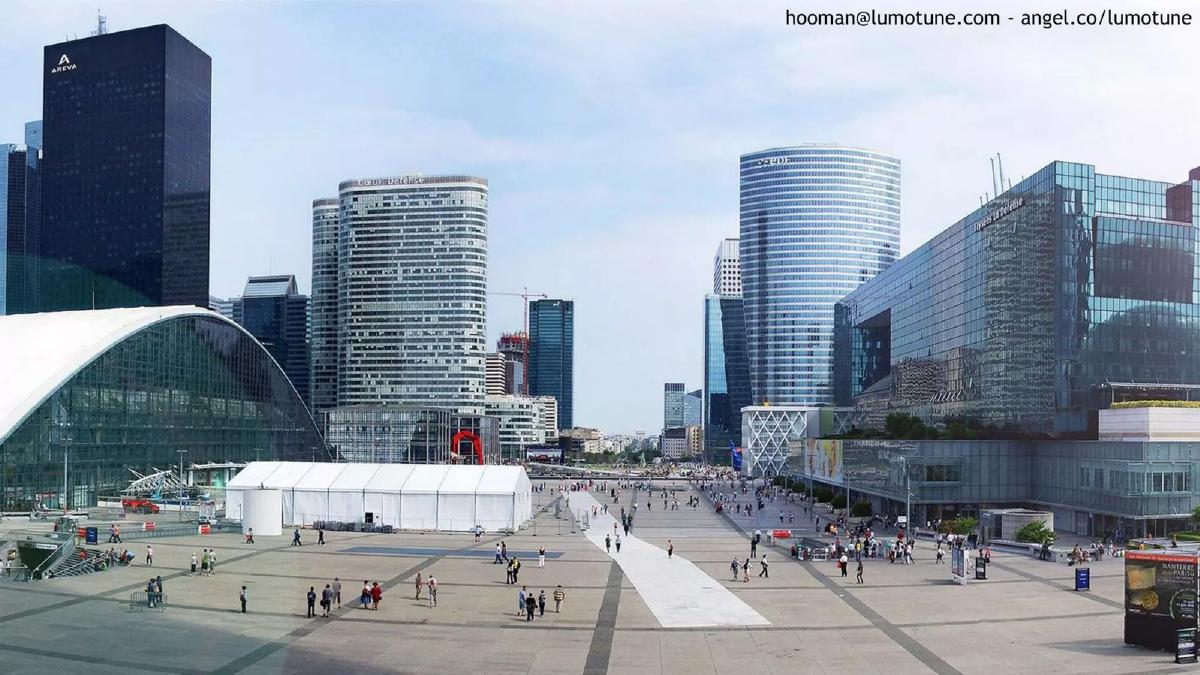
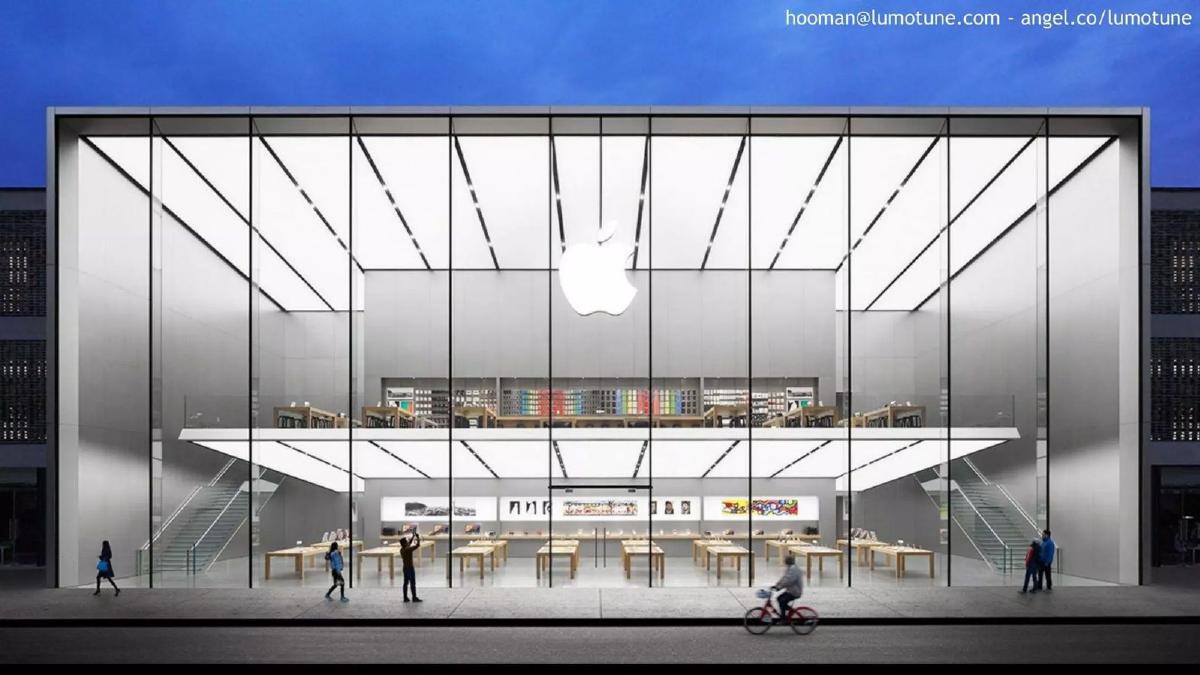
The deck opens with a minimalist title slide (Slide 1) that establishes the brand and the category: "Digital Marketing on Glass." This is a strong start because it immediately tells the investor what the product is and who it is for. Slides 2, 3, and 4 are entirely wordless, consisting of high-resolution photographs. Slide 2 shows a modern city square, Slide 3 features a glass-heavy Apple Store facade, and Slide 4 shows a cluttered retail storefront with traditional paper and neon signs. These slides serve as a visual 'Problem/Opportunity' set. They highlight how much glass exists in the world (Slide 2 and 3) and how poorly that space is currently utilized for advertising (Slide 4). By showing the Baskin Robbins and Dunkin' Donuts storefront covered in static, messy posters, Lumotune sets the stage for a digital cleanup.
Slide 5: The Technical Proof
Hardware investors are notoriously skeptical of 'magic' technology. Slide 5, titled "Patented See-Through Display Technology," addresses this head-on. It uses a classic patent-style diagram to show two states: Transparent and Opaque. The diagram (labeled with parts 310 through 326) illustrates how voltage (V f1 and V f2) manipulates molecules to either let light through or block it. This slide is critical because it moves the conversation from science fiction to engineering. It signals that the intellectual property is protected and that the founders understand the physics of their product.
Slides 6-7: The 'After' Pictures
Having shown the messy 'before' in Slide 4, Lumotune uses Slides 6 and 7 to show the 'after.' These are mockups of the technology in action. Slide 6 shows a clean, digital advertisement for "New Strawberry Cheesecake" overlaid on a cafe window, while customers remain visible inside. Slide 7 shows a "Chestnut Latte" ad appearing on a window during a snowstorm. These slides are effective because they demonstrate the product's primary benefit: the ability to advertise without blocking the view into the store. This is the 'aha' moment for the retail use case.
Slide 8: Market Size and Segmentation
Slide 8 provides the necessary quantitative context. It cites an IDC forecast (2015-2019) valuing the U.S. Digital Signage market at $9.4 billion. Crucially, the slide uses a nested circle diagram to show a $3.4 billion "Retail & Banking Segment." This is a sophisticated move; it shows the founders aren't just chasing a giant, vague number, but have identified a specific, high-value sub-sector where their transparent tech is most applicable.
Slide 9: The Business Model
The business model slide (Slide 9) is simple but clear. It outlines a B2B2C or enterprise sales flow. Lumotune sells to "Corporate" entities, which then push the technology out to their "Stores." The text at the bottom defines this as a "Land and expand strategy, targeting Quick Service Restaurant chains." This specificity is excellent. It tells investors exactly who the first sales hire needs to call: the corporate headquarters of companies like McDonald's or Starbucks.
Slide 10: The Team
For a seed-stage hardware company, the team is often the most important slide. Lumotune’s team slide (Slide 10) is impressive. It features four individuals: Matin Esfahani (CEO), Shafi Siddiqi (Technology and Finance), Hooman Safaee (Business Development), and Cornel Mercea (Hardware Engineering). The slide uses logos to communicate pedigree: MIT, Harvard, and the University of Waterloo for education, and BlackBerry, Xerox, and Flex for professional experience. In 2013, having former BlackBerry engineers in the Waterloo ecosystem was a strong signal of hardware execution capability.
Slide 11: The Future Vision
The final slide (Slide 11) returns to the cityscape from Slide 2, but this time it is annotated with future applications. It points to "Dynamic targeted ads on buildings," "Windows with tunable transparency," and "Personal signage with no obstruction." This slide serves to expand the investor's horizon beyond just coffee shops and restaurants, suggesting that Lumotune could eventually become the literal fabric of smart cities.
What Works in This Deck
Visual Storytelling: The use of wordless slides (2-4) to establish the environment is a bold and effective choice. It forces the audience to look at the world through the founders' eyes before a single word is spoken. Market Realism: By segmenting the $9.4 billion market down to a $3.4 billion retail target, the deck displays a level of focus often missing in seed decks. Technical Clarity: Slide 5 explains a complex optical process simply enough for a generalist investor to grasp the basic mechanics of the patent. Team Credibility: The combination of top-tier academic institutions and relevant industry experience (BlackBerry/Xerox) makes the technical risk feel manageable.
What is Missing
Competition: There is no mention of existing players in the digital signage space or alternative technologies like transparent OLEDs or projection films. Investors would want to know why Lumotune’s approach is superior to a high-lumen projector. Financials and Unit Economics: The deck contains zero financial data. There is no mention of the cost to manufacture a square foot of Lumotune glass, the expected retail price, or the projected revenue. Traction: There are no mentions of pilots, LOIs (Letters of Intent), or prototypes currently in the field. The mockups in Slides 6 and 7 appear to be digital renders rather than photos of a working product. The Ask: The deck ends without stating how much money the company is looking for or what milestones that money will help them achieve. While this information is often in the cover email, its absence in the deck makes the presentation feel incomplete as a standalone document.
What a Founder Should Copy
The 'Land and Expand' Specificity: Don't just say you are selling to 'retail.' Say you are targeting 'Quick Service Restaurant chains' via 'Corporate' headquarters. This shows you have a go-to-market plan. Pedigree Logos: If your team has worked at name-brand companies or attended top universities, use the logos. They act as a cognitive shorthand for quality. The 'Before and After' Mockups: If your product changes the physical world, show a messy 'before' photo and a clean, rendered 'after' photo. It is the fastest way to communicate value. Market Segmentation: Always show the 'Total Addressable Market' (TAM) but highlight your 'Serviceable Addressable Market' (SAM). It proves you are realistic about your starting point.
Conclusion
Lumotune’s deck is a product of its time—a period when hardware was 'hard' but the vision of a connected, digital world was highly sellable. While the deck is light on the 'business' of the startup (money, competition, and traction), it is exceptionally strong on the 'vision' and 'team.' For a $574,300 seed round, this balance was clearly sufficient. Modern founders should take note of the clean design and the power of visual evidence, but they should be careful to include the financial and competitive context that today's more cautious investors require.
Frequently asked questions
- How much did Lumotune raise with this deck?
- According to the catalogue listing, Lumotune raised $574,300 in 2013 during their Seed stage. The deck itself does not explicitly state the amount being raised or the valuation sought, which is a common omission in decks designed for live presentations rather than cold emails.
- What is the core technology behind Lumotune?
- As shown on Slide 5, the core technology is a 'Patented See-Through Display Technology.' The slide uses a scientific diagram to illustrate how light passes through aligned molecules in a 'Transparent' state and is scattered by randomized molecules in an 'Opaque' state, allowing glass to function as a screen.
- Who is the target customer for this technology?
- Slide 9 explicitly states that Lumotune is 'targeting Quick Service Restaurant chains.' The business model diagram shows a flow from Lumotune to Corporate offices, which then deploy the technology across multiple individual store locations using a 'land and expand' strategy.
- What market data does the deck provide?
- Slide 8 cites an IDC forecast for 2015-2019, valuing the U.S. Digital Signage market at $9.4 billion. It further narrows the addressable market for Lumotune to the $3.4 billion Retail & Banking segment, providing a clear sense of the company's immediate opportunity.
- What are the most significant omissions in the Lumotune deck?
- The deck completely omits a competition slide, financial projections, and a 'The Ask' slide. There is no mention of unit economics, manufacturing costs, or current revenue. This suggests the deck was likely used as a visual aid for a pitch where these details were discussed verbally or provided in a separate data room.