Loom’s 17-slide Seed deck from 2017 successfully secured $3M by reframing video from a social medium into a workplace productivity tool. The narrative transitions quickly from the pain points of distributed teams—notifications and schedule conflicts—to hard evidence of organic adoption. Rather than relying on theoretical market sizes, Loom used granular data to show how employees at HubSpot, Uber, and Google were already using the tool without formal corporate mandates. The deck is particularly strong in its use of 'leading indicators,' such as the percentage of new users who share a video, t…
Key takeaways
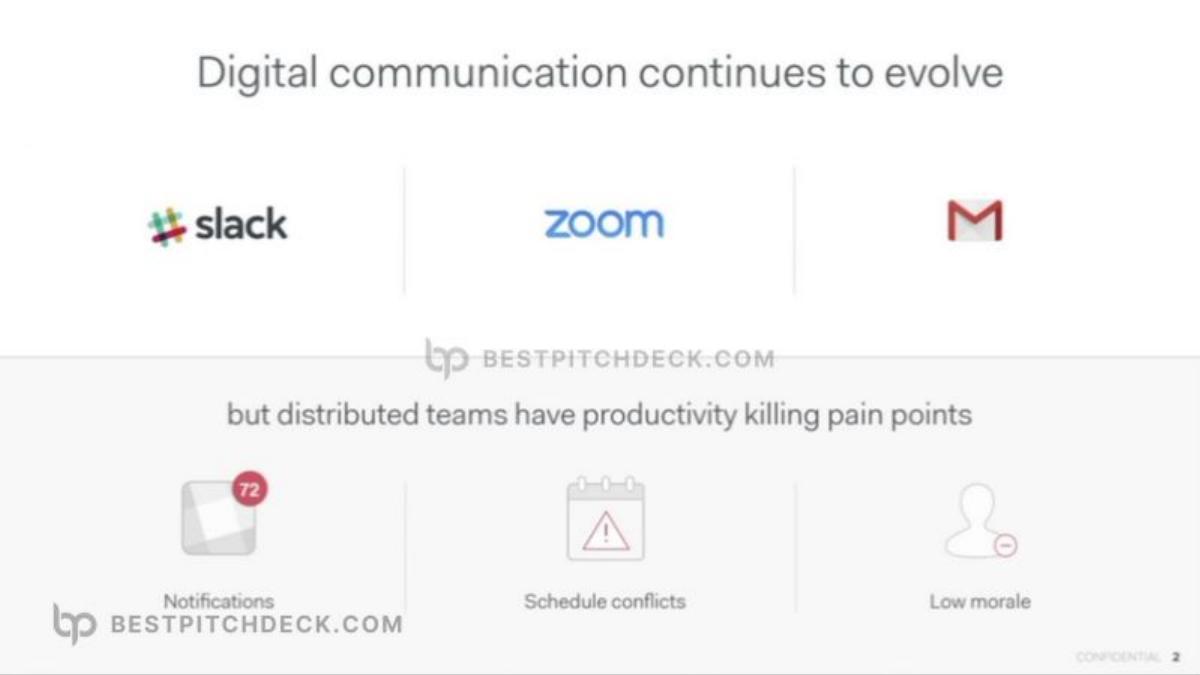
- The deck identifies 'Notifications,' 'Schedule conflicts,' and 'Low morale' as the primary pain points for distributed teams on Slide 2.
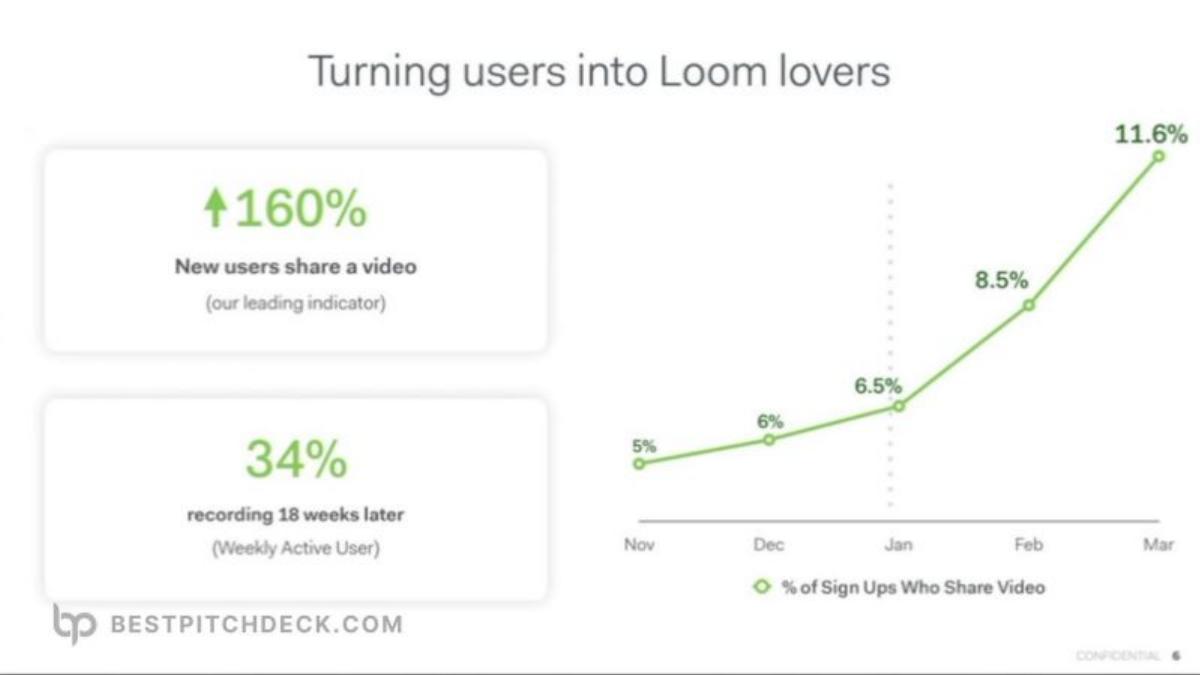
- Loom defines its leading indicator of success as the percentage of new users who share a video, which grew to 11.6% by March 2017 as shown on Slide 6.
- Retention is highlighted on Slide 6, noting that 34% of users are still recording 18 weeks after sign-up.
- Slides 7 and 8 demonstrate 'bottom-up' adoption by showing growth in users and videos recorded at HubSpot, Nielsen, Uber, and Google.
- A customer testimonial on Slide 9 claims that using video for training is approximately 350% faster than text and screenshots.
- The monetization strategy on Slide 12 introduces a $12 per seat per month paid tier, targeting CIOs at companies with at least 30 employees.
- Slide 13 quantifies the revenue potential of 'bottom-up' growth, estimating a $240,000 ARR opportunity at HubSpot based on their existing user footprint.
- The 'Ask' on Slide 17 is $3M, specifically intended to monetize 1,000+ teams and progress toward enterprise-grade features.
The Narrative: From Social Video to Workplace Utility
In 2017, video was largely seen through the lens of social media (Snapchat, YouTube) or synchronous conferencing (Zoom). Loom’s seed deck was tasked with a difficult pivot: convincing investors that video could be a high-frequency, asynchronous B2B productivity tool. The deck succeeds by focusing almost entirely on organic adoption and efficiency metrics rather than abstract market projections.
Slides 1-4: The Problem and The Solution
Slide 1 introduces Loom as a "Cloud-based video collaboration platform for the workplace." It is a functional, no-frills opening. Slide 2 immediately contextualizes the product within the modern tech stack, acknowledging the success of Slack, Zoom, and Gmail, but highlighting the "productivity killing pain points" they leave behind: notifications, schedule conflicts, and low morale. This is a clever way to position Loom not as a replacement for these giants, but as the missing piece of the puzzle.
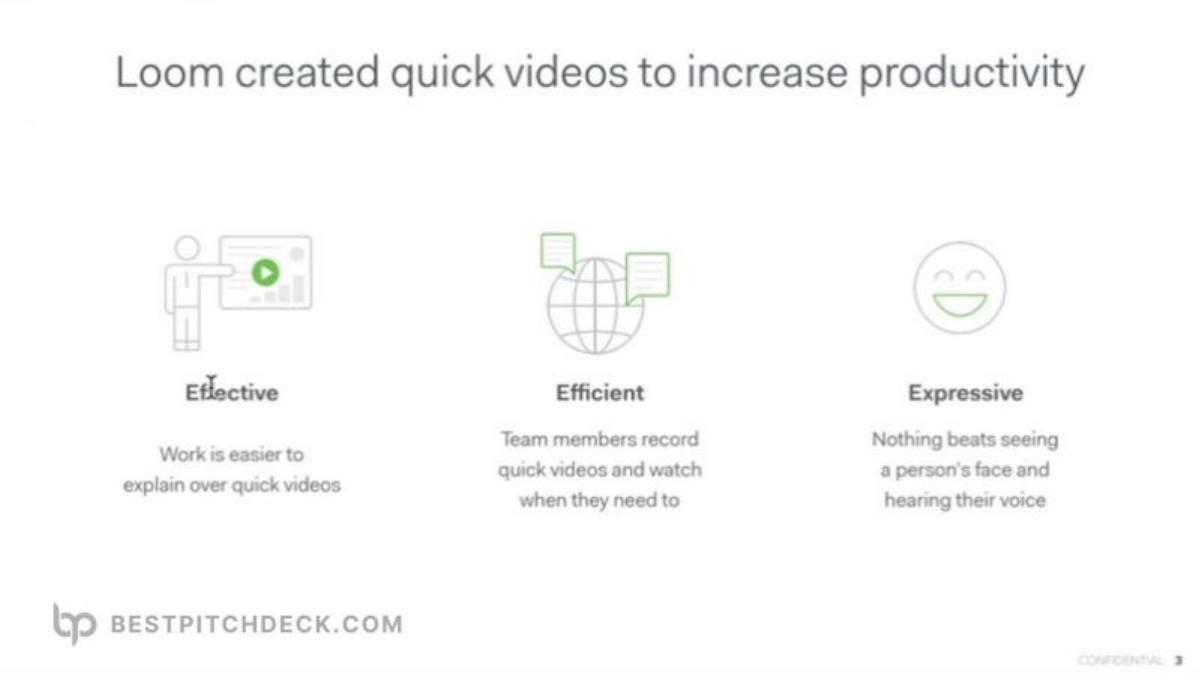
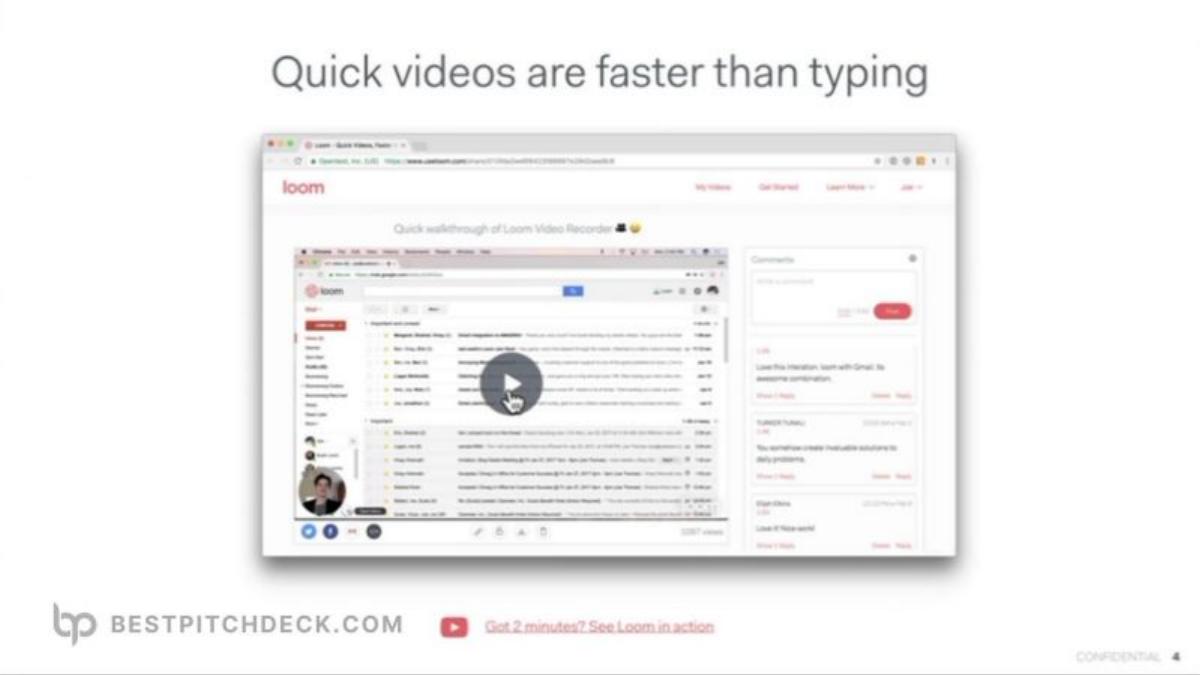
Slide 3 defines the solution through three pillars: Effective (easier to explain), Efficient (asynchronous viewing), and Expressive (human connection). Slide 4 provides the ultimate 'Aha!' moment with a simple headline: "Quick videos are faster than typing." This slide includes a screenshot of the product in action, showing a video embedded in a Gmail workflow, which grounds the abstract concept in a real-world use case.
Slides 5-6: Proving the 'Loom Lover'
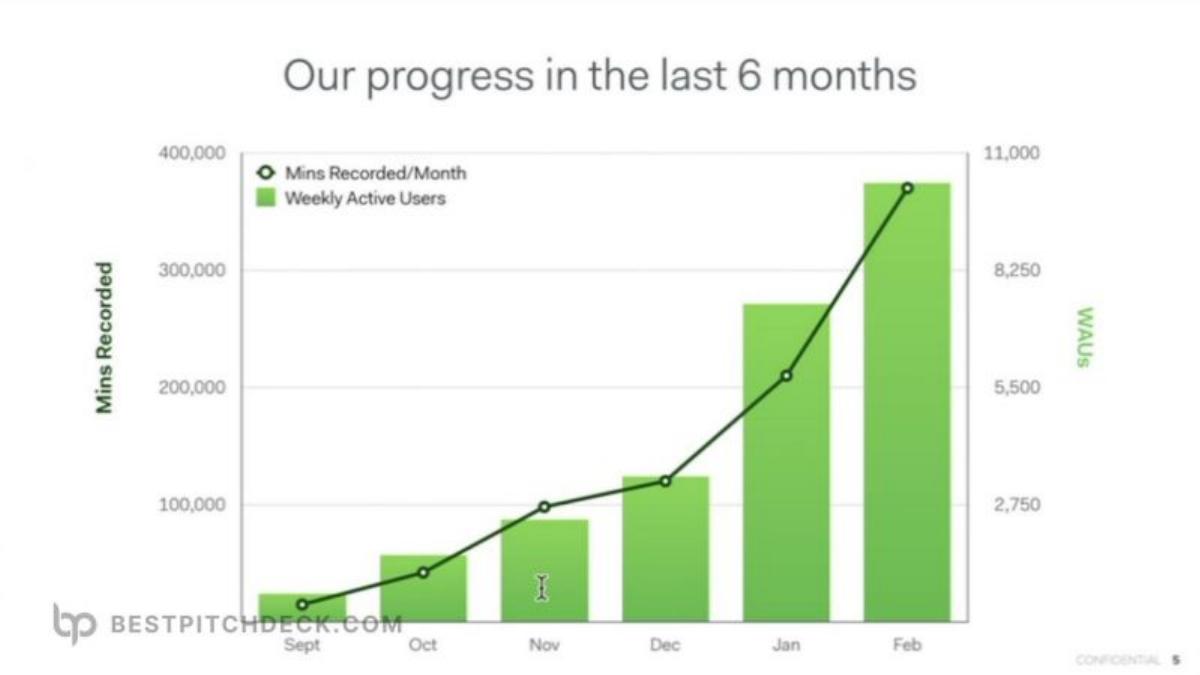
Slide 5 is the classic 'up and to the right' traction chart. It tracks two metrics: Mins Recorded/Month and Weekly Active Users (WAUs) . By February, the chart shows WAUs approaching 11,000 and minutes recorded exceeding 350,000. This demonstrates that users aren't just signing up; they are actively creating content.
Slide 6, titled "Turning users into Loom lovers," is perhaps the most important slide for a Seed-stage VC. It highlights a "leading indicator": the percentage of new users who share a video. This metric grew from 5% in November to 11.6% in March. It also notes a 34% retention rate for users recording 18 weeks after sign-up. These figures prove that the product has 'stickiness' and a built-in viral loop.
Slides 7-9: The Enterprise Trojan Horse
Slides 7 and 8 are dedicated to showing how Loom spreads within large organizations. Using logos like HubSpot, Nielsen, Uber, and Google , Loom shows charts of "Videos Recorded" vs. "New Users." In every case, the number of videos recorded grows faster than the number of users, suggesting that once an employee starts using Loom, they use it frequently. For example, at Nielsen (Slide 7), a small group of users went from recording under 50 videos in October to nearly 400 by February.
Slide 9 reinforces this with social proof. Jeff Beaumont, Director of Support at Riskalyze, is quoted saying that video training is "~350% faster than text and screenshot." This slide quantifies the value proposition through the eyes of a power user, providing a bridge between 'cool tool' and 'business necessity.'
Slides 10-13: The Path to Revenue
Slide 10 outlines a "clear" product roadmap. It divides tasks into Distribution (iOS/Android apps), Collaboration (Team accounts, analytics), and Video Tech (transcription, indexing). A green line marks June 2017 as the point where they intend to "Monetize."
Slide 12 details the business model: a $12 per seat per month paid tier. It identifies the target buyer as a CIO at a company with 30+ employees in 4+ time zones. This specificity shows that the founders have a clear go-to-market strategy beyond just 'getting users.'
Slide 13, "Potential deals Q4 2017," is a unique take on a revenue slide. Instead of a spreadsheet, it shows two cards: LinkedIn and HubSpot. It calculates that if they converted the existing user base at these companies to paid seats, LinkedIn would represent $223,000 ARR and HubSpot $240,000 ARR . This makes the revenue potential feel tangible and imminent rather than theoretical.
Slides 14-15: Market Context
Slide 14 uses massive numbers to show that "video is huge," citing 10B hours of video/day on YouTube and 8B views/day on Facebook. While these are consumer metrics, Slide 15 brings it back to the workplace. It cites data showing that 75% of employees are encouraged to use video by "Easy-to-use tools" and that 47% of employees are recording more video than before. This establishes the 'Why Now?'—the workforce is ready for video, they just lack the right enterprise tool.
Slides 16-17: The Team and The Ask
Slide 16 introduces the "product-focused founders." Joe Thomas (CEO) is credited with growing a product line to $600k MRR at MyLife. Vinay Hiremath (Engineering) came from Upthere (which raised $77M), and Shahed Khan (Design) is noted for his early start as a designer at Weebly and analyst at Upfront Ventures. The emphasis here is on their ability to build and scale technical products.
Slide 17 closes with the ask: Raising $3MM . The stated goals are to monetize 1,000+ teams and progress toward enterprise features. It is a direct, clear conclusion to a data-driven pitch.
What Works in This Deck
The 'Bottom-Up' Evidence: By showing growth within specific companies like Google and Uber, Loom proved that employees wanted the tool regardless of whether their bosses had bought it yet. · Leading Indicators: Focusing on the "percentage of users who share a video" (Slide 6) is a sophisticated way to show product-market fit. It proves the viral loop is functioning. · The Efficiency Hook: The claim that video is "350% faster than text" (Slide 9) is a powerful ROI argument for any B2B buyer. · Visual Consistency: The deck is clean, uses a consistent color palette, and doesn't crowd slides with text, making it easy to digest in a 3-minute read.
What Is Missing
Competitive Landscape: There is no slide explaining how Loom differs from existing screen recording tools (like Snagit) or newer competitors. They rely on the 'speed' and 'cloud' aspect to imply differentiation. · Unit Economics: While they mention a $12 price point, there is no mention of Customer Acquisition Cost (CAC) or projected margins, though this is common for Seed-stage companies focused on growth. · Detailed Financials: The deck is very light on historical spending or a detailed breakdown of how the $3M will be allocated beyond "monetizing teams."
What a Founder Should Copy
The 'Potential Deal' Slide: If you have organic users at big companies, do what Loom did on Slide 13. Calculate what those users would be worth if they were on a paid plan. It’s the most convincing way to show a path to $1M+ ARR. · Focus on One Core Metric: Loom’s obsession with "videos shared" is a great example of finding the 'North Star' metric that actually matters for your specific business model. · The Problem/Solution Simplicity: Slide 4 ("Quick videos are faster than typing") is a perfect example of a 'high-concept pitch.' It’s a sentence that anyone can understand and agree with immediately.
Frequently asked questions
- What was Loom's primary value proposition in this deck?
- Loom positioned itself as a productivity tool that makes work 'Effective, Efficient, and Expressive.' According to Slide 3, the core value is that work is easier to explain via video than text, allowing team members to watch on their own schedule. Slide 4 reinforces this with the simple hook: 'Quick videos are faster than typing.'
- How did Loom demonstrate traction without significant revenue?
- Loom focused on usage metrics rather than dollars. Slide 5 shows a steep growth curve in 'Mins Recorded/Month' and 'Weekly Active Users' from September to February. More importantly, Slides 7 and 8 show 'land and expand' data within specific high-profile companies, proving that the product spreads organically within large organizations.
- What was the proposed business model?
- As detailed on Slide 12, Loom used a freemium model. The 'Free' tier offered unlimited recording and storage but limited features. The 'Paid' tier was priced at $12 per seat per month, including advanced features like branded pages, transcription, and video analytics. They targeted a 'bottom-up growth, top-down sale' strategy.
- Who were the target customers identified in the 2017 deck?
- While the product was used by individuals, the 'Buyer Persona' on Slide 12 was the CIO. Loom specifically looked for companies with at least 30 employees operating across four or more time zones, where the pain of asynchronous communication is most acute.
- What is missing from the Loom seed deck?
- The deck notably lacks a dedicated 'Competitors' slide. It mentions Slack, Zoom, and Gmail on Slide 2, but only as part of the existing 'evolution' of communication rather than direct rivals. It also lacks a detailed financial pro forma, choosing instead to focus on the 'potential' ARR of specific accounts on Slide 13.