Lolli’s 2023 Series B deck is a masterclass in using traction and defensibility to overcome the volatility of the crypto sector. By positioning bitcoin rewards as a 'frictionless on-ramp' for the masses, the company moved beyond niche crypto enthusiasts into mainstream retail. The deck highlights significant scale, including 600,000+ users and $175M+ in GMV driven to partners. Most notably, it emphasizes a shift from a simple browser extension to a B2B white-label provider, backed by a strategic patent for 'Automating digital asset transfers based on historical transactions.' This transition…
Key takeaways
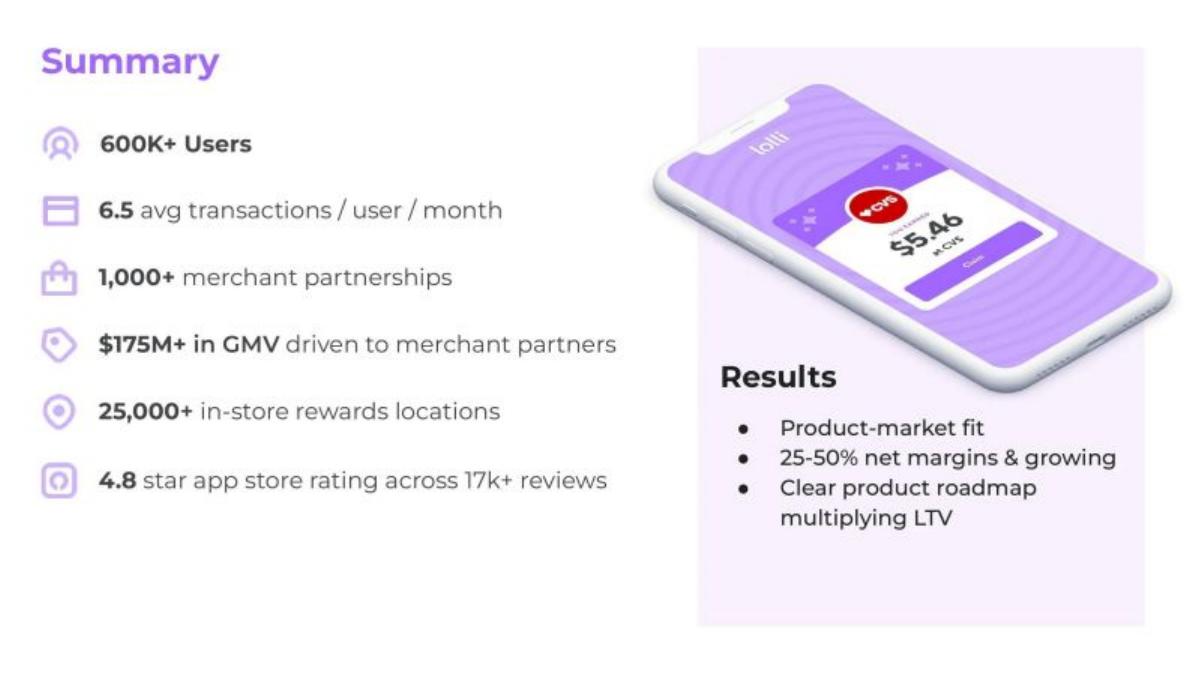
- Lolli reports a user base of over 600,000 individuals as of 2023 (Slide 3).
- The platform has driven more than $175M in Gross Merchandise Value (GMV) to its merchant partners (Slide 3).
- The company maintains high financial efficiency with stated net margins between 25-50% (Slide 3).
- Lolli claims a high engagement rate of 6.5 average transactions per user per month (Slide 3).
- The network includes over 1,000 merchant partnerships and 25,000+ in-store rewards locations (Slide 3).
- A core part of their defensibility is Patent US20220300952A1 for automating digital asset transfers (Slide 8).
- The business model is expanding into B2B white-label solutions for banks, exchanges, and card providers (Slide 9).
- The deck omits a specific team slide, detailed financial projections, and a breakdown of the $8M use of funds.
The Series B Narrative: From Extension to Infrastructure
Lolli’s 2023 pitch deck arrives at a critical juncture for the crypto industry. Following a period of intense market volatility, the narrative in this deck shifts away from speculative trading and toward 'passive, trusted ways to earn.' The deck is concise, consisting of 11 slides that prioritize hard traction metrics and intellectual property over the typical 'visionary' fluff found in early-stage crypto decks. By the time of this raise, Lolli had already established itself as a leading consumer-facing brand, and this deck serves to explain how that consumer 'wedge' (Slide 10) converts into a high-LTV platform business.
Slide 1: Title
The cover slide is minimalist, featuring the Lolli logo and the text 'Lolli Fundraise 2023.' It sets a professional, brand-forward tone without distracting imagery. The purple gradient background is consistent with their consumer branding.
Slide 2: The Value Proposition
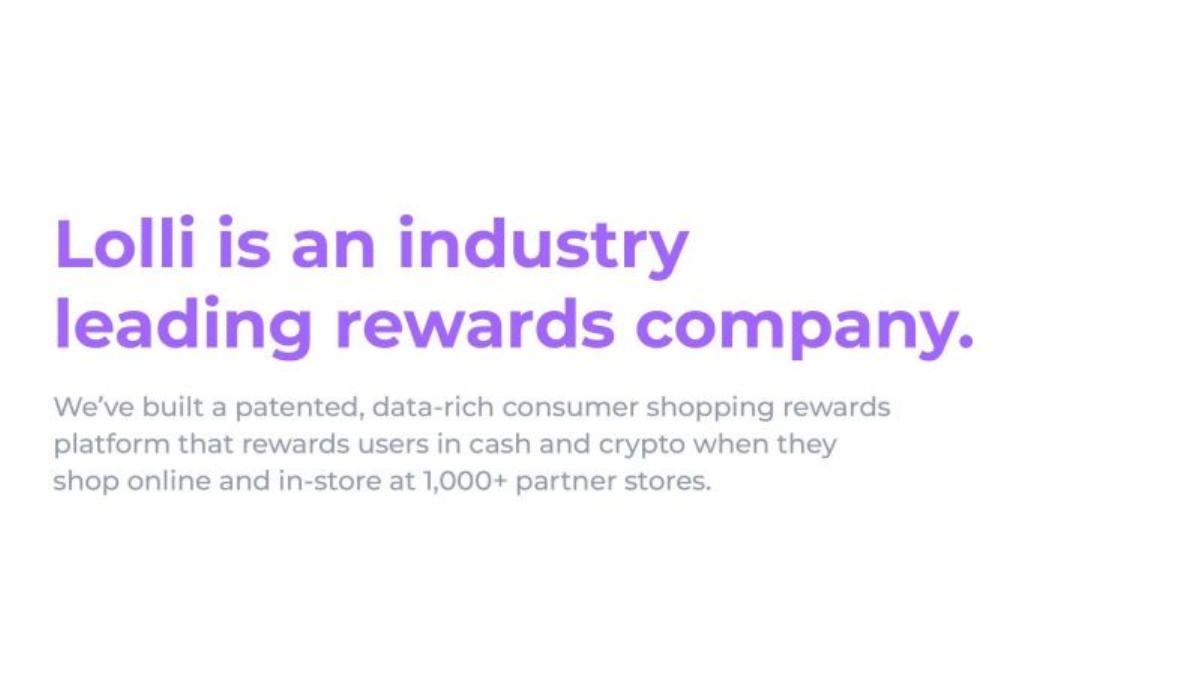
Slide 2 provides a high-level summary of the company's identity. It describes Lolli as an 'industry leading rewards company' that has built a 'patented, data-rich consumer shopping rewards platform.' Key to this slide is the mention of '1,000+ partner stores' and the dual-reward system of 'cash and crypto.' This positioning is important because it frames Lolli not just as a bitcoin company, but as a broader fintech rewards player that competes with the likes of Rakuten or Honey.
Slide 3: Summary and Traction
This is the 'money slide' of the deck. It lists six heavy-hitting metrics that establish immediate credibility: 600K+ Users, 6.5 average transactions per user per month, 1,000+ merchant partnerships, $175M+ in GMV driven to partners, 25,000+ in-store rewards locations, and a 4.8-star app store rating. On the right side, it highlights 'Results,' specifically noting '25-50% net margins & growing.' For a Series B investor, these unit economics are the primary signal of a sustainable business model.
Slide 4: Market Opportunity
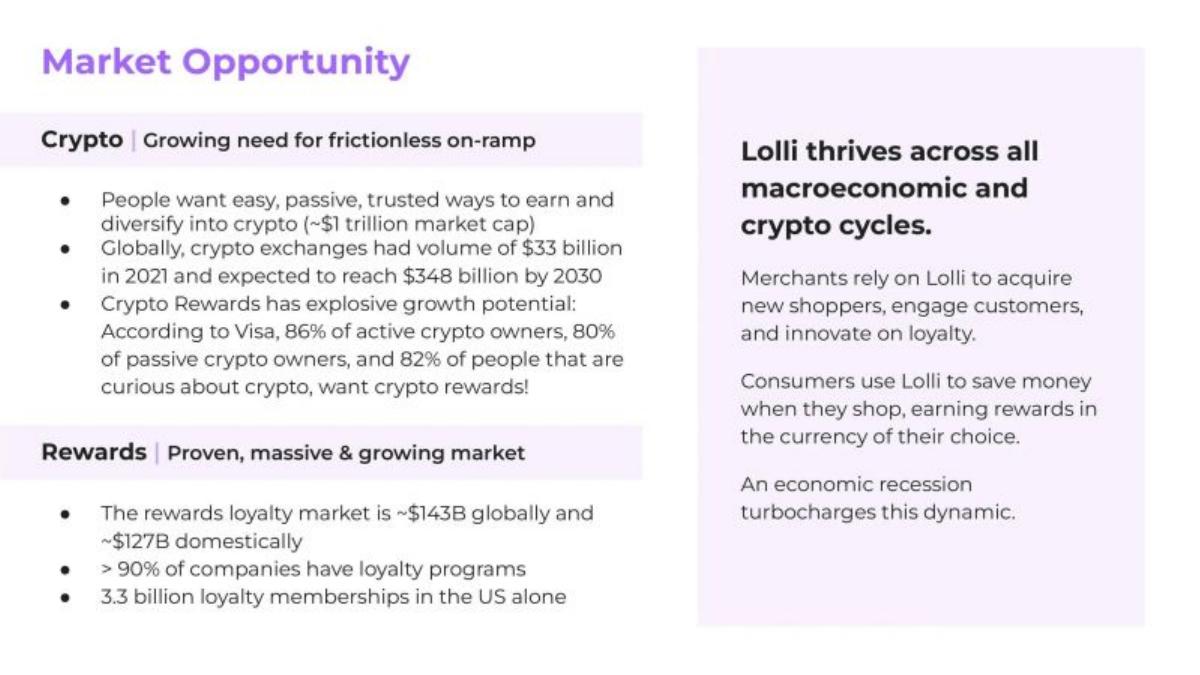
Slide 4 breaks the market into two segments: Crypto and Rewards. It notes a 'growing need for frictionless on-ramp' and cites a $1 trillion crypto market cap. On the rewards side, it points to a $143B global market where over 90% of companies have loyalty programs. The most strategic claim here is that 'An economic recession turbocharges this dynamic,' suggesting that as consumers become more price-sensitive, the demand for rewards increases, making Lolli a counter-cyclical investment.
Slide 5: How Lolli Works
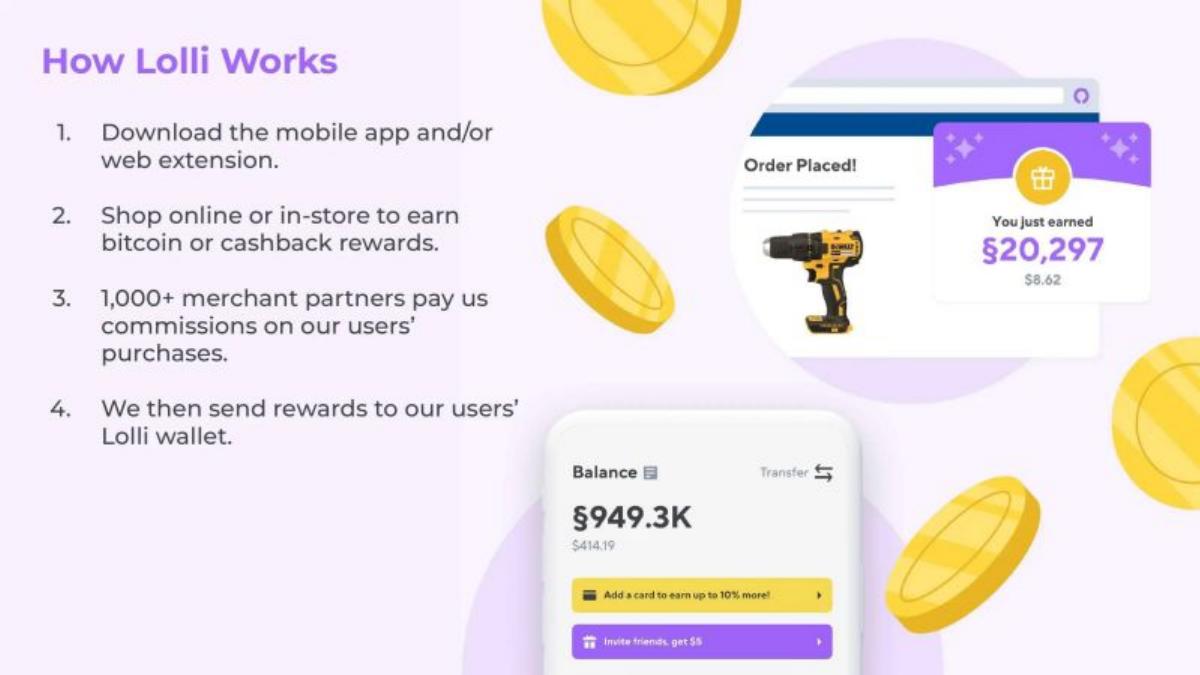
This slide explains the four-step loop of the business: 1. Download app/extension; 2. Shop online or in-store; 3. Merchants pay Lolli a commission; 4. Lolli sends rewards to the user's wallet. The visual includes a mockup of the Lolli wallet showing a balance in 'sats' (satoshis, the smallest unit of bitcoin). This clarifies the revenue model as a standard affiliate/commission structure, which is well-understood by VCs.
Slide 6: Online Shopping & Browser Extension
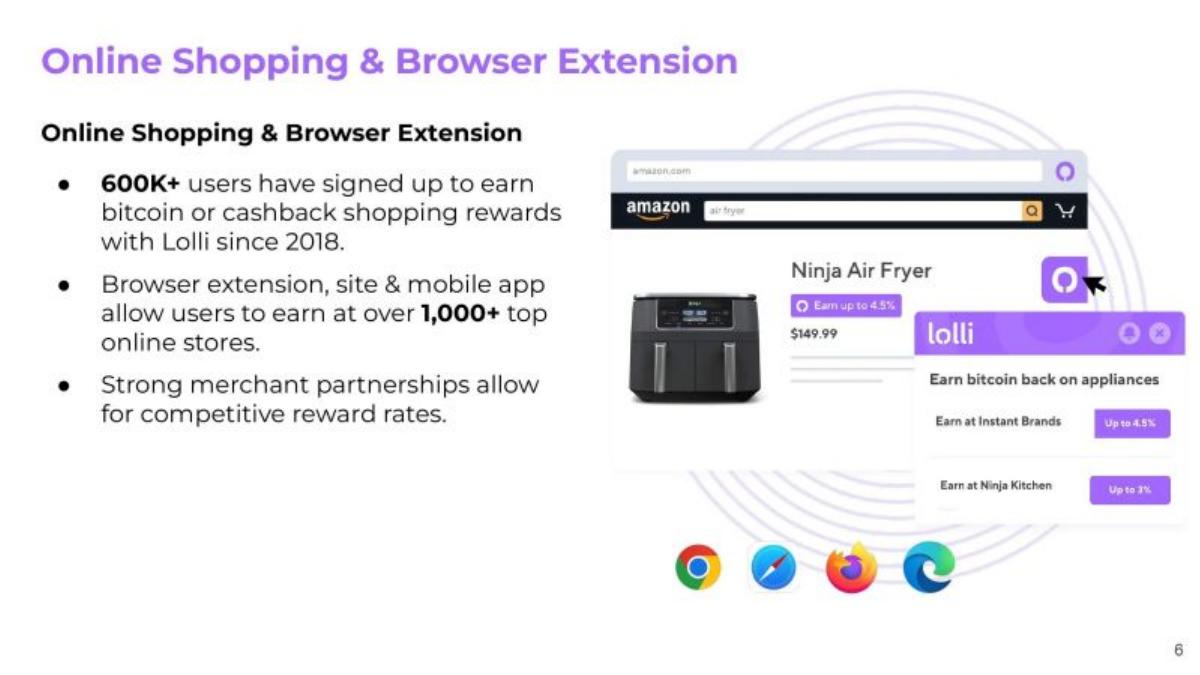
Focusing on their original product, this slide reiterates the 600K+ user count and the 1,000+ online stores. It shows a visual of the browser extension in action on Amazon, highlighting a '4.5% reward' on a Ninja Air Fryer. This slide emphasizes the 'strong merchant partnerships' that allow for 'competitive reward rates,' which is the primary driver of user acquisition and retention.
Slide 7: Bank-Linked Offers & Mobile
This slide introduces the 'Patented Bank Linked Technology' launched in mid-2022. This is a major evolution for the company, moving from a browser-based experience to a card-linked experience. It allows users to earn rewards on 'frequent in-store purchases such as gas, coffee, or groceries.' This move significantly increases the surface area for user engagement and positions Lolli to compete with neobanks and traditional loyalty programs.
Slide 8: Patented Technology
Defensibility is a core theme of this deck. Slide 8 provides the specific patent number (US20220300952A1) and a link to the Google Patents page. The patent covers 'Automating digital asset transfers based on historical transactions.' The deck explicitly states that this is an 'intentionally broad and defensible patent' applicable to both fungible and non-fungible rewards. This is a clear signal to investors that Lolli has a technological moat that prevents easy replication by competitors.
Slide 9: B2B White-label Solution
Slide 9 reveals the growth strategy: moving from a B2C app to a B2B infrastructure provider. It lists potential partners like banks, crypto exchanges, and phone providers who could white-label Lolli’s technology. This is a classic 'platform play' that suggests the $8M raise will be used to build out the sales and engineering teams necessary to support enterprise integrations.
Slide 10: The Wedge Strategy
The final content slide summarizes the overarching strategy: 'Lolli is leading with a low CAC, scalable, & proven rewards product as a wedge to higher LTV features & products.' This acknowledges that while rewards are the entry point, the long-term value lies in the 'data-rich' platform and the B2B services mentioned in previous slides.
Slide 11: BestPitchDeck.com Promo
The final slide is a placeholder from the source library and contains no company-specific information.
What Lolli Does Well
The deck is exceptionally strong on traction and unit economics . By leading with 25-50% net margins and $175M in GMV, Lolli moves the conversation away from 'crypto hype' and toward 'fintech fundamentals.' The inclusion of a specific patent number (Slide 8) provides a level of 'hard' defensibility that is often missing in consumer app decks. Furthermore, the transition from a B2C tool to a B2B white-label solution (Slide 9) provides a clear path to the massive scale required for a Series B and beyond.
What is Missing from the Deck
The most glaring omission is a Team Slide . While the catalogue facts mention lead investors like BITKRAFT, the deck itself does not showcase the founders or the executive team. For a Series B, investors typically want to see the 'bench strength' of the leadership team. Additionally, there is no Financial Projections slide or a Use of Funds breakdown. While we know from the catalogue that they raised $8M, the deck does not specify how that capital will be allocated between marketing, R&D, or B2B sales expansion. Finally, there is no Competition slide, which is surprising given the presence of established players like Rakuten or newer crypto-reward competitors.
What a Founder Should Copy
Founders should emulate the 'Summary' slide (Slide 3) . It is a perfect example of how to front-load a deck with 'un-ignorable' facts. If your metrics are strong, don't hide them on slide 12; put them on slide 3 to set the tone for the rest of the presentation. Additionally, the way Lolli frames their product as a 'wedge' (Slide 10) is a sophisticated way to explain a multi-stage business model. It tells investors: 'We have solved user acquisition (low CAC), and now we are moving into high-margin infrastructure.' This narrative structure is highly effective for companies moving from their first product to a broader platform strategy.
Frequently asked questions
- How does Lolli generate revenue?
- According to Slide 5, Lolli operates on an affiliate-style commission model. Merchant partners (over 1,000 in total) pay Lolli a commission on purchases made by Lolli users. Lolli then shares a portion of that commission with the user in the form of bitcoin or cash rewards, keeping the remainder as revenue. Slide 3 notes that this model currently yields net margins of 25-50%.
- What is Lolli's 'Patented Technology' mentioned in the deck?
- Slide 8 details Patent US20220300952A1, titled 'Automating digital asset transfers based on historical transactions.' This technology allows Lolli to link to a user's existing debit or credit cards to trigger rewards automatically based on purchase history. The deck emphasizes that this patent is 'intentionally broad and defensible,' covering both fungible (crypto) and non-fungible (NFT) digital asset rewards.
- Who are Lolli's target B2B partners?
- While originally a B2C browser extension, Slide 9 outlines a pivot toward B2B white-labeling. Potential partners listed include banks, crypto exchanges, neobanks, credit card providers, phone providers, and web browsers. The goal is to allow these third parties to integrate Lolli’s merchant-funded rewards and data analytics into their own branded products.
- What market problem does Lolli claim to solve?
- Slide 4 identifies the need for a 'frictionless on-ramp' to crypto. It cites Visa data showing that over 80% of crypto-curious people want crypto rewards. By integrating rewards into everyday shopping, Lolli removes the technical and financial barriers of traditional exchanges, allowing users to earn into a $1 trillion market cap asset class passively.
- Is Lolli only for online shopping?
- No. While the company started with a browser extension, Slides 3 and 7 highlight a significant expansion into physical retail. The deck claims 25,000+ in-store rewards locations and 'Patented Bank Linked Technology' launched in mid-2022 that allows users to earn rewards on everyday offline purchases like gas, coffee, and groceries.