Lollipop’s 14-slide pitch deck is a masterclass in visual storytelling and market positioning. By explicitly contrasting their focus on the 'stock-up' market against the hyper-competitive 'speedy delivery' sector (Slide 2), they carved out a defensible niche for investors. The deck leans heavily on product UI to demonstrate value, showing how they bridge the gap between recipe discovery and actual grocery fulfillment through a live integration with Sainsbury’s featuring 30,000 products (Slide 6). While the deck is light on hard financial metrics and unit economics, it compensates with qualita…
Key takeaways
- The deck identifies that 90% of the market is 'stock-up' shopping, rather than the 'last-minute' delivery services that dominate headlines (Slide 2).
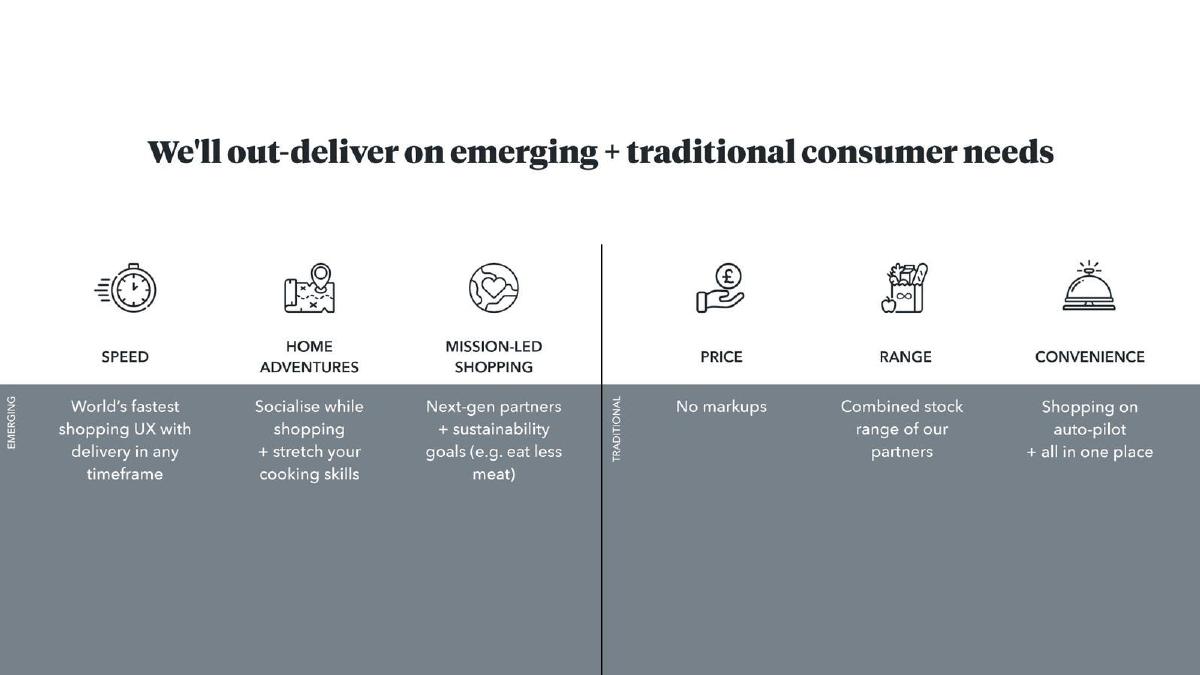
- Lollipop positions itself at the intersection of three trends: speed, home adventures, and mission-led shopping (Slide 3).
- Product integration is a core moat, specifically citing a live stock integration with 30,000 Sainsbury's products (Slide 6).
- The UI emphasizes personalization, allowing users to filter by dietary preferences like 'Pork Free' or 'Dairy Free' (Slide 4).
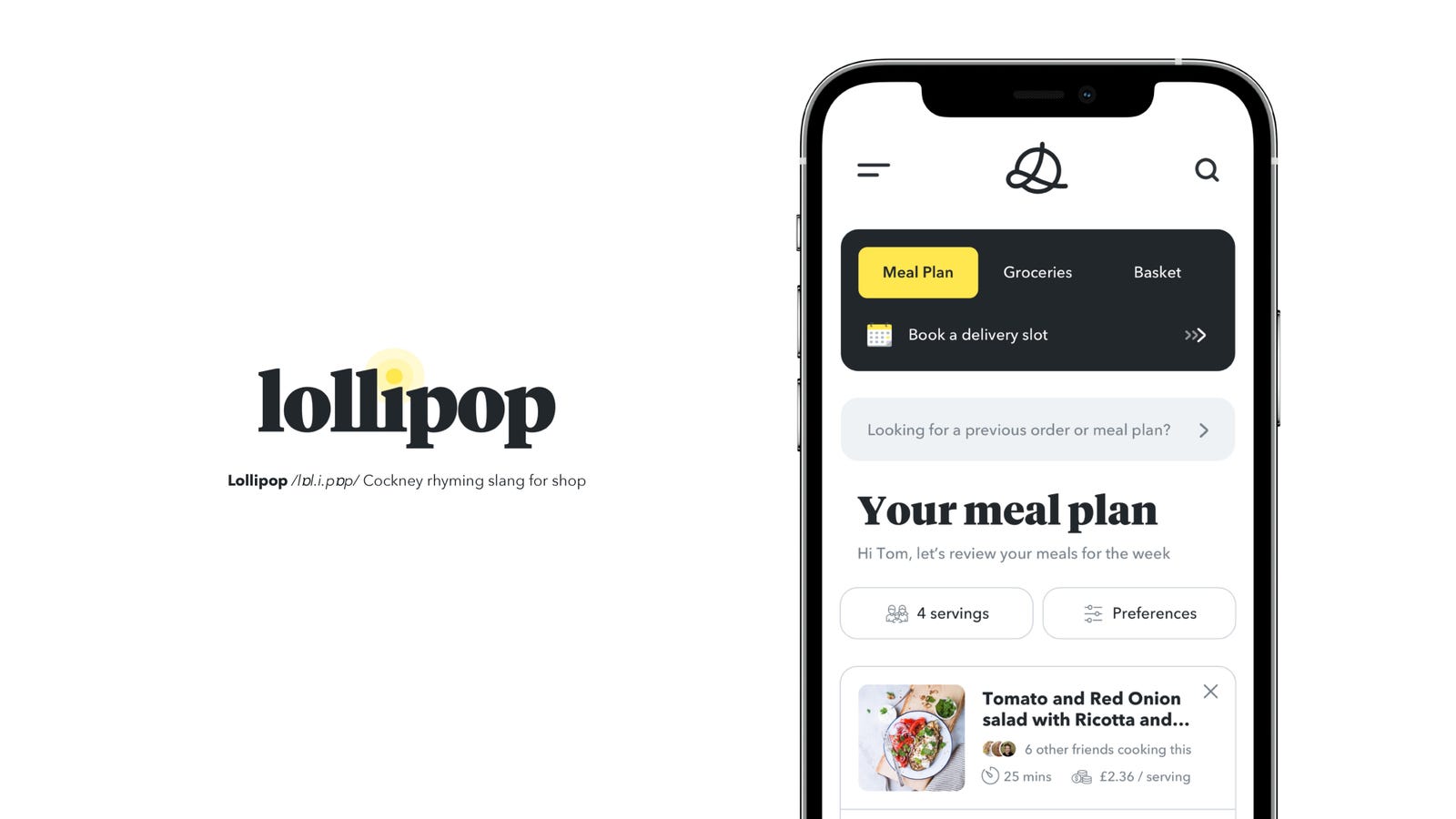
- The app provides granular cost data to users, showing per-serving prices such as £2.36 for a salad (Slide 1).
- Social proof is established through a 'Pioneers' community providing daily feedback and testimonials (Slide 7).
- The deck uses a 'companion app' narrative to suggest utility throughout the entire cooking process, not just the purchase (Slide 5).
- Lollipop was reported by Business Insider to have raised $6.1M in a 2024 Seed round.
Lollipop Pitch Deck Teardown: The 90% Market Opportunity
Lollipop, a London-based consumer app, successfully raised $6.1M in a 2024 Seed round. Their pitch deck is a focused, 14-slide presentation that prioritizes product experience and market positioning over traditional financial disclosures. By focusing on the 'weekly shop' rather than the 'instant craving,' Lollipop presents a compelling case for a massive, yet technologically stagnant, market segment.
Slide 1: The Brand Identity
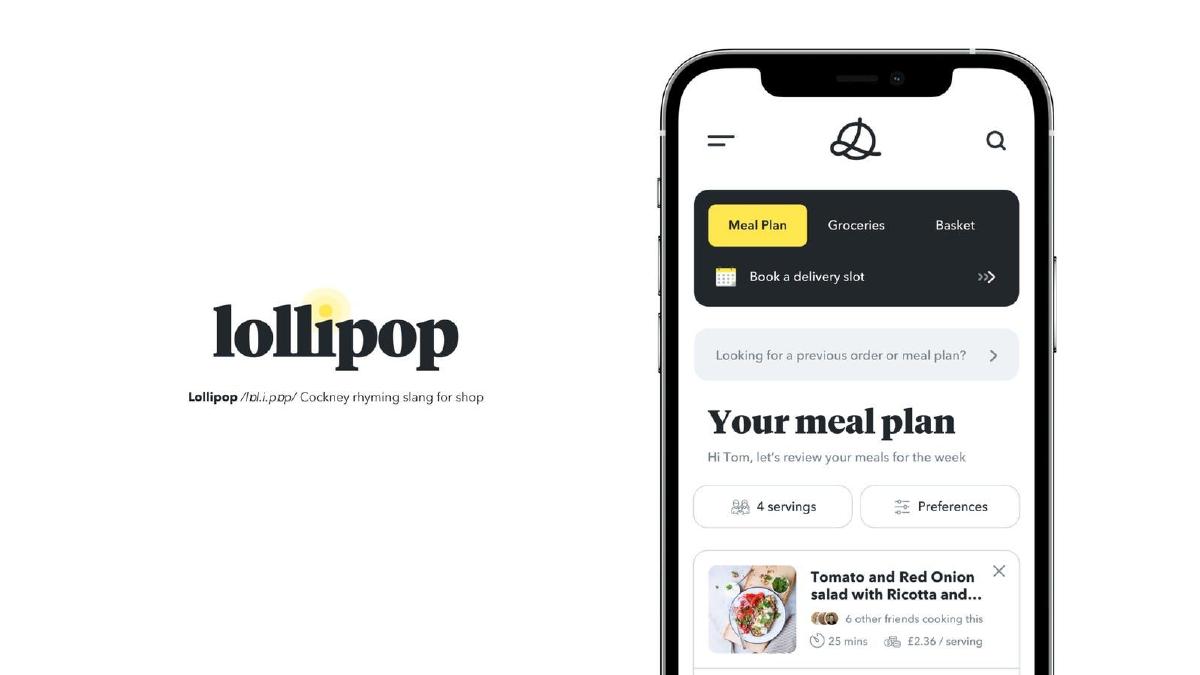
The title slide introduces the brand with a clean, minimalist aesthetic. Notably, it includes a phonetic pronunciation and a cultural reference: 'Lollipop /lɒl.i.pɒp/ Cockney rhyming slang for shop.' This immediately establishes the company's London roots and approachable brand voice. The accompanying mobile mockup on Slide 1 shows a 'Your meal plan' interface, highlighting a specific recipe ('Tomato and Red Onion salad') with a cost-per-serving of £2.36. This sets the stage for a product that is both aspirational and budget-conscious.
Slide 2: The Market Thesis
Slide 2 is arguably the most important slide for an investor. It features a bold headline: 'Speedy delivery is grabbing the headlines but this ignores 90% of the market.' Below this, a yellow bar representing 'Stock-up' shopping dwarfs a small gray section for 'Last-minute & top-up' services like Getir, Gorillas, Zapp, and Uber Eats. By citing Kantar as a source, Lollipop validates their claim that the vast majority of grocery spending happens in the planned, weekly shop—a segment they intend to own.
Slide 3: The Three Mega-Trends
Lollipop categorizes the shifting consumer landscape into three buckets: Speed, Home Adventures, and Mission-led shopping. Slide 3 maps existing players to these trends. 'Speed' includes the instant delivery apps; 'Home Adventures' includes recipe boxes like Gousto and HelloFresh; 'Mission-led' includes sustainable brands like Oddbox and Allplants. This slide positions Lollipop as the aggregator that can potentially touch all three trends by providing speed in planning, adventure in recipes, and choice in products.
Slide 4: Personalization and Dietary Preferences
Slide 4 focuses on the onboarding and curation experience. The UI mockups show a 'Your diet' screen where users can select preferences such as Vegetarian, Vegan, Pork Free, Dairy Free, Gluten Free, and Pescatarian. The slide also showcases a 'Seared Duck Salad' recipe, detailing total time (30 mins), difficulty (Medium), total cost (£15.43), and cost per serving (£3.86). This level of data transparency is a key differentiator from traditional grocery apps that only show item prices, not meal prices.
Slide 5: The Companion App Narrative
Describing the product as a 'companion app that helps you rustle up something unforgettable,' Slide 5 emphasizes the utility of the app beyond the checkout button. The UI shows a 'What are you in the mood for?' search interface and a 'Favorites' tab. This suggests that Lollipop wants to be the starting point for the cooking journey, capturing user intent long before they reach the supermarket.
Slide 6: The Retail Integration Moat
For a grocery tech startup, the hardest part is the plumbing. Slide 6 addresses this head-on by stating, 'We’ve integrated with Sainsbury’s with live stock on 30K products.' The visual shows the Sainsbury's logo alongside a shopping interface where users can add lemons and melons to their basket with real-time pricing (£1.00 for a minimum of 5 lemons). This slide proves the product is functional and has solved the significant technical hurdle of inventory synchronization with a major UK retailer.
Slide 7: Qualitative Social Proof
The final slide in the provided sequence focuses on the 'Pioneers' community. Instead of showing a growth chart (which might be modest at the Seed stage), Lollipop shows a wall of testimonials. Users praise the app for saving 'headspace,' being a 'life-saver' during self-isolation, and helping them shop in 'record time.' The inclusion of a photo of a baby eating a meal adds an emotional layer, reinforcing the 'busy family' target demographic mentioned in the publisher's summary.
What Works in the Lollipop Deck
Clear Market Segmentation: The distinction between 'top-up' and 'stock-up' shopping is brilliant. It allows Lollipop to dismiss a crowded field of competitors (instant delivery) as only fighting for 10% of the market, while positioning themselves as the leader of the remaining 90%.
Product-First Storytelling: The deck uses high-fidelity mockups to explain the value proposition. By showing the cost-per-serving and dietary filters, they demonstrate a deep understanding of the modern consumer's pain points—budgeting and health—without needing a wall of text.
Technical Validation: Mentioning the 30,000-product live integration with Sainsbury's is a massive credibility booster. It shows that they aren't just a 'wrapper' app but have built significant infrastructure that would be difficult for a weekend project to replicate.
What is Missing from the Lollipop Deck
The Team Slide: In the 14-slide deck (based on the provided text and images), there is no mention of the founders. For a $6.1M Seed round, the 'who' is often as important as the 'what.' Investors want to know if the team has experience in retail, logistics, or consumer tech.
Business Model: The deck does not explain how Lollipop makes money. Do they take a commission from the retailer? Do they charge a subscription fee? Is there a media/advertising play for CPG brands? This is a significant omission for a professional pitch.
Unit Economics and Growth Metrics: While the 'Pioneers' community provides nice quotes, there is no data on Customer Acquisition Cost (CAC), Lifetime Value (LTV), or retention rates. Even at the Seed stage, showing the 'velocity' of the 'Pioneers' group would have strengthened the case.
The Ask: The deck ends without a clear call to action. There is no slide detailing how much capital is being raised (though we know it was $6.1M) or how that capital will be allocated toward hiring, marketing, or technical expansion.
Founder's Playbook: Lessons from Lollipop
Own the 'Boring' Market: Many founders chase the 'sexy' trends (like 10-minute delivery). Lollipop’s success shows there is significant investor appetite for solving the 'boring' problems—like the weekly grocery shop—if you can prove the market size is substantially larger.
Use 'Headlines' as a Foil: If your industry is dominated by a specific narrative, use that narrative to your advantage. Lollipop used the 'speedy delivery' headlines to highlight what everyone else was missing. This creates an immediate 'aha!' moment for an investor who might be weary of the latest fad.
Focus on 'Headspace': In consumer tech, saving time is good, but saving 'headspace' (cognitive load) is better. Lollipop’s messaging consistently hits on the mental burden of meal planning, which is a much stickier problem than just getting groceries delivered quickly.
Integrate Early: If your business relies on a third-party ecosystem (like retail), getting a 'live' integration early is the best way to prove your product isn't just vaporware. It turns a 'vision' deck into a 'product' deck.
Frequently asked questions
- What is Lollipop's core value proposition?
- Lollipop aims to be a 'companion app' that streamlines the entire meal cycle. It combines personalized meal planning (Slide 4) with automated grocery list generation and direct integration with supermarkets like Sainsbury's (Slide 6) to save users time and 'headspace' during the weekly stock-up shop.
- How does Lollipop differentiate itself from delivery apps like Deliveroo or Getir?
- On Slide 2, Lollipop explicitly separates the market into 'Last-minute & top-up' (where Deliveroo and Getir sit) and 'Stock-up.' They argue that while speedy delivery gets the headlines, it only represents 10% of the market, leaving the 90% 'stock-up' segment underserved by modern tech.
- What technical moats does the company claim?
- The primary technical moat presented is the deep integration with retail inventory. Slide 6 highlights a live stock integration with 30,000 products at Sainsbury's, suggesting a level of data synchronization that goes beyond simple web-scraping or third-party API usage.
- Is there evidence of user traction in the deck?
- The deck relies on qualitative traction rather than quantitative metrics. Slide 7 showcases testimonials from a 'Pioneers' community, highlighting user benefits such as saving time, managing meal planning for infants, and completing shops in 'record time.'
- What critical information is missing from the Lollipop deck?
- The deck is missing several standard venture components: there is no team slide (founder backgrounds), no business model/monetization strategy, no competitive landscape beyond the trend slide, and no financial 'ask' detailing how the $6.1M would be spent.