LottieLab’s Seed deck is a masterclass in trend-jacking and workflow optimization. By anchoring their value proposition to the Lottie file format—an open-source standard created by Airbnb—they bypassed the need to educate investors on a new file type and instead focused on the 'broken' tooling surrounding it. The deck successfully highlights the massive cost of animation (citing millions spent by companies like Stripe) and the inefficiency of legacy tools like After Effects. While the deck is light on traditional financial metrics and completely omits a team slide or a specific 'ask' amount,…
Key takeaways
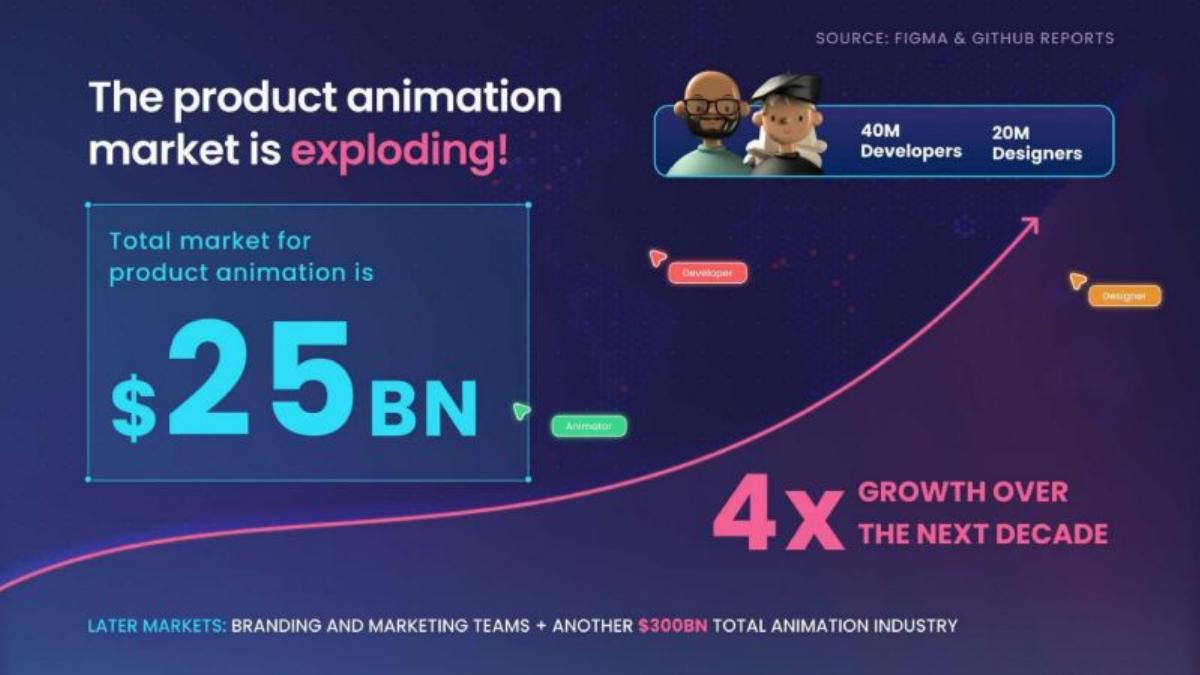
- The total market for product animation is valued at $25 billion, with a projected 4x growth over the next decade (Slide 5).
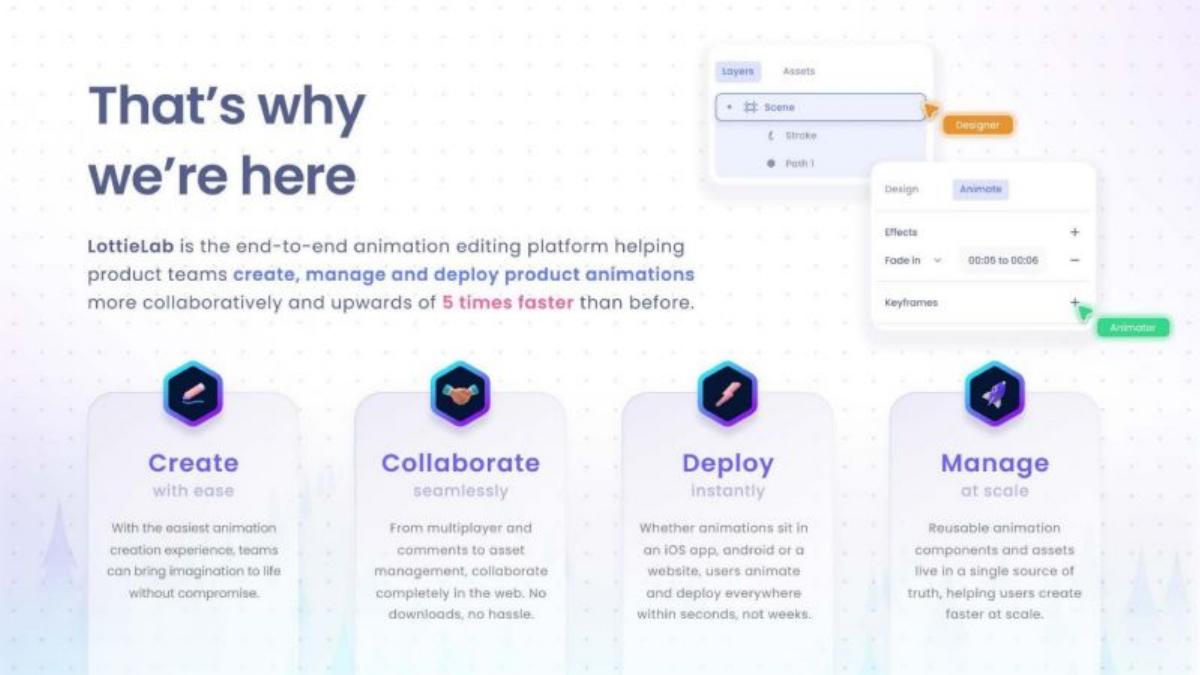
- LottieLab claims to enable product teams to create, manage, and deploy animations up to 5 times faster than existing workflows (Slide 4).
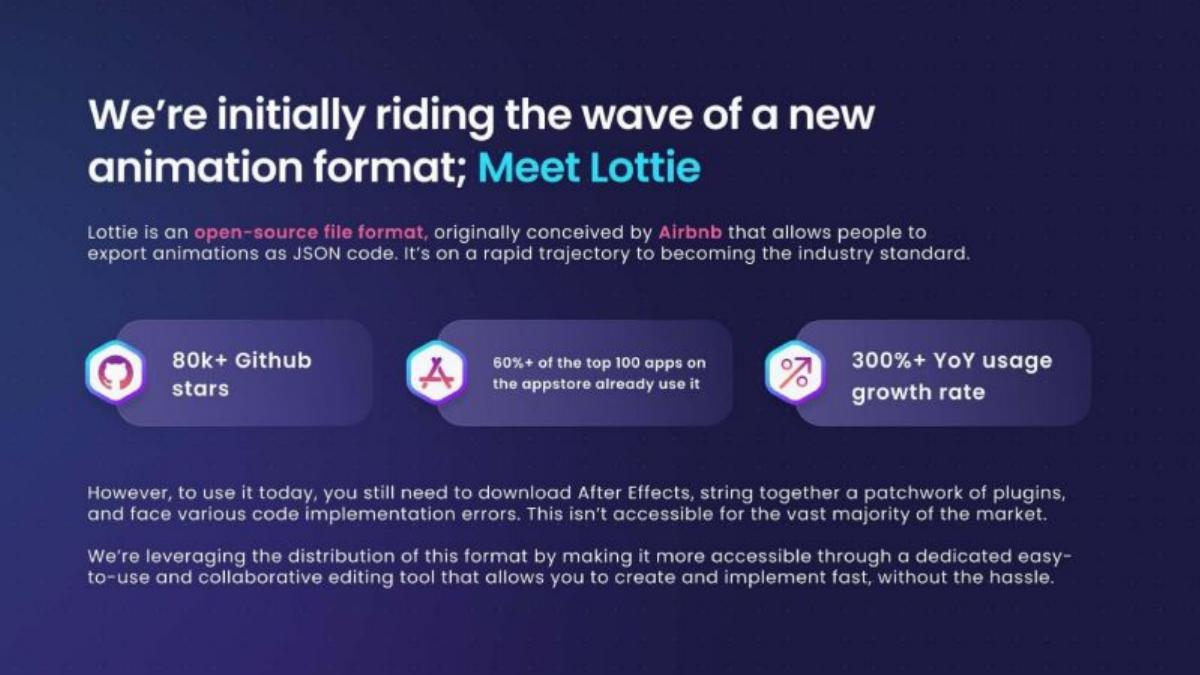
- The deck leverages the 'Lottie' format's existing momentum, noting it has 80k+ GitHub stars and is used by 60%+ of the top 100 apps (Slide 6).
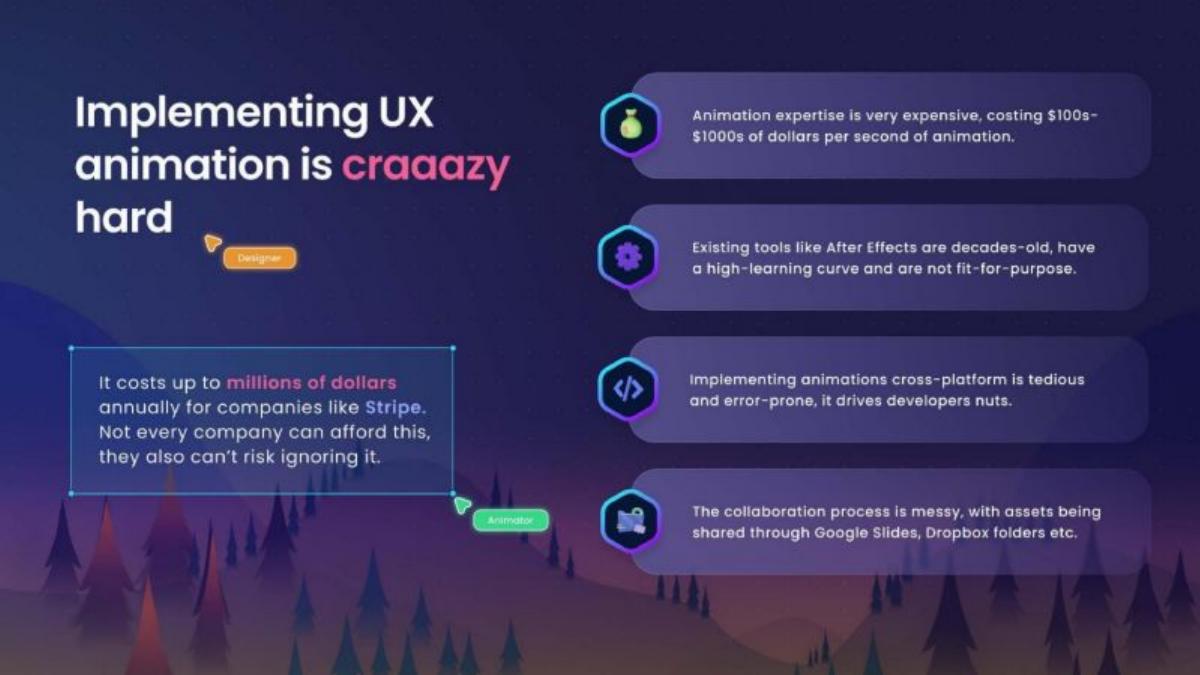
- Animation expertise is cited as a major cost center, ranging from $100s to $1000s per second of animation (Slide 3).
- The startup utilizes a 'Land and Expand' GTM strategy, relying on free tiers and team invites to drive organic growth (Slide 12).
- Social proof is a core pillar of the deck, displaying logos of companies like Google, Amazon, and Apple to represent the origins of their waitlist signups (Slide 10).
- The deck omits a team slide, financial projections, and a specific funding ask, focusing instead on product-market fit and community demand.
- The product is positioned as a web-first, collaborative alternative to 'decades-old' tools like After Effects (Slide 3).
The Narrative: Fixing the Design-to-Code Handover
LottieLab’s pitch deck is a focused argument for a specialized tool in an era of generalist design platforms. While Figma conquered static UI design, the animation layer remained trapped in Adobe After Effects—a tool built for cinema, not software. LottieLab positions itself as the bridge that brings the 'Figma' experience to the Lottie file format.
Slide 1: Title Slide
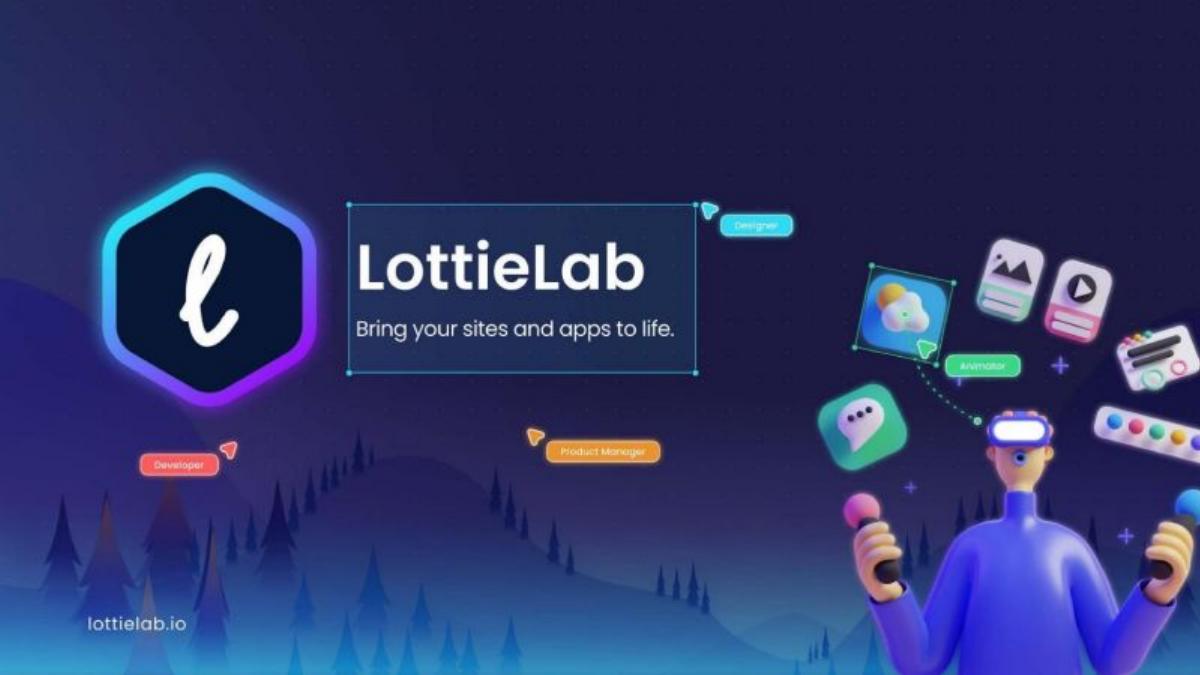
The cover slide establishes the brand identity immediately. It uses high-fidelity 3D illustrations and floating 'cursor' tags for 'Designer,' 'Product Manager,' and 'Developer.' This is a subtle but effective way to signal that the product is a multi-player, collaborative platform. The tagline, "Bring your sites and apps to life," is simple and outcome-oriented.
Slide 2: The Vision
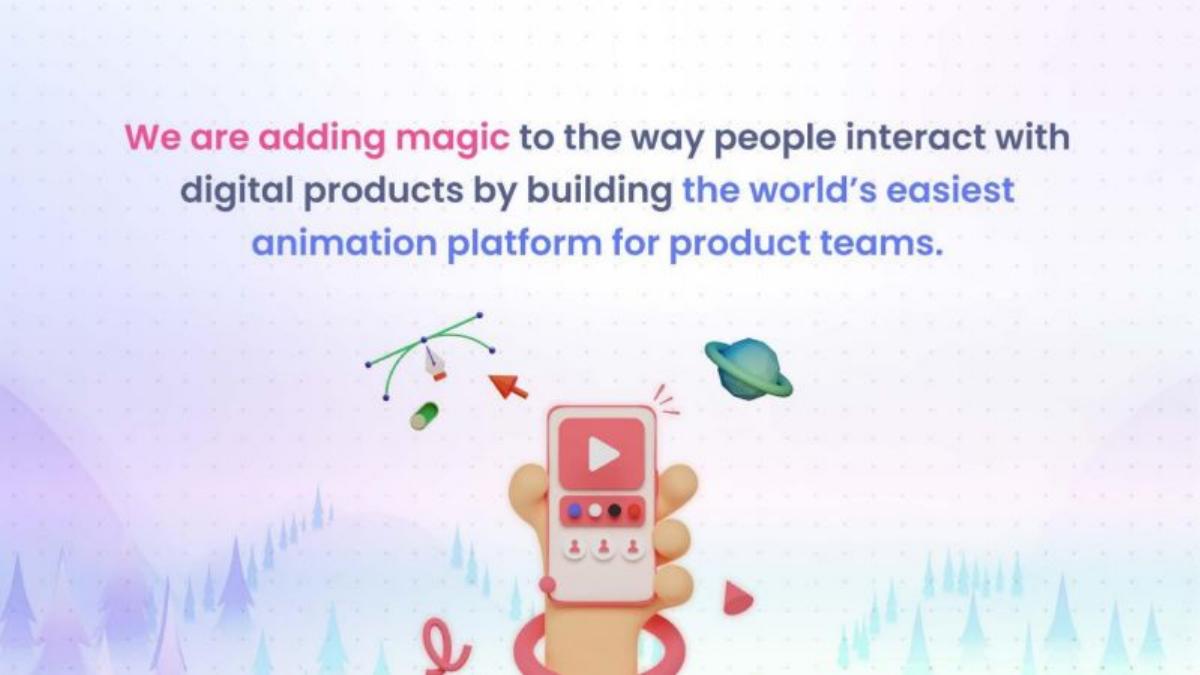
Slide 2 serves as a mission statement: "We are adding magic to the way people interact with digital products by building the world’s easiest animation platform for product teams." It’s a high-level 'Why' slide that sets the emotional tone before diving into technical friction.
Slide 3: The Problem
This is a critical slide that quantifies the pain. It lists four specific hurdles: expensive expertise ($100s-$1000s per second), outdated tools (After Effects), tedious cross-platform implementation, and messy collaboration. The most striking claim is that "It costs up to millions of dollars annually for companies like Stripe" to implement UX animation. By naming a high-standard design company like Stripe, they anchor the value of their solution to a premium market need.
Slide 4: The Solution
Slide 4 introduces LottieLab as the "end-to-end animation editing platform" that is "upwards of 5 times faster than before." It breaks the solution into four pillars: Create, Collaborate, Deploy, and Manage. This structure mirrors the typical product development lifecycle, showing that they aren't just an editor, but a workflow tool.
Slide 5: Market Size
LottieLab defines the "product animation market" at $25 billion , with a projected 4x growth over the next decade. They cite Figma and GitHub reports to back up their user base estimates of 40 million developers and 20 million designers. They also hint at a much larger "$300BN total animation industry" as a later-stage target, which includes branding and marketing teams.
Slide 6: The Lottie Wave
This slide explains why now is the time for this product. They are "riding the wave of a new animation format." By highlighting that "60%+ of the top 100 apps on the appstore already use it" and citing a "300%+ YoY usage growth rate," they prove that the demand for the file format exists independently of their tool. They position LottieLab as the necessary infrastructure to make this popular format actually usable for the 'vast majority of the market.'
Slides 7-9: Product Deep Dive
These three slides use clean UI mockups to demonstrate the 'Create,' 'Collaborate & Deploy,' and 'Manage' functions. Slide 7 shows a familiar timeline-based editor. Slide 8 highlights a 'Share Playground' feature and code snippets for developers, emphasizing the handover process. Slide 9 shows an asset management view, positioning the tool as a 'single source of truth' for a company's animation library.
Slide 10: Community Traction
Instead of a revenue chart, LottieLab shows a 'logo wall' of companies where their waitlist signups originate. The list includes Google, Amazon, TikTok, Apple, and Uber . This is a powerful form of 'bottom-up' validation, suggesting that employees at the world's most sophisticated tech companies are actively seeking a better way to work with Lottie files.
Slide 11: Social Proof
Slide 11 is a 'wall of love' featuring testimonials from Slack, Discord, and Twitter. One notable quote from a 'Design Lead at Google' mentions wanting to "ditch after effects for a streamlined tool for micro animations." This reinforces the problem stated on Slide 3 with real-world user testimony.
Slide 12: Go-To-Market (GTM)
The GTM strategy is summarized in five points: Community Building, Land and Expand (free tiers), 3rd party Integrations (Webflow, Framer), Education, and Asset-driven network effects. This is a standard PLG (Product-Led Growth) playbook, emphasizing that the product's output (animations) acts as a marketing vehicle for the tool itself.
Slide 13: Closing
The final slide is a promotional placeholder for the platform where the deck was hosted (bestpitchdeck.com). In the original fundraising version, this would typically be the contact slide or the 'Ask' slide. As it stands, the deck ends on the GTM strategy.
What LottieLab Does Well
Trend Alignment: They don't try to invent a new behavior; they capitalize on the existing adoption of the Lottie format and the industry-wide shift toward collaborative, web-based design tools. · User Persona Clarity: By using cursor tags for 'Designer' and 'Developer' throughout the deck, they constantly remind the investor that this tool solves a multi-stakeholder problem. · Quantified Pain: Attaching a dollar value to the problem ($1000s per second of animation) makes the ROI of a faster tool immediately obvious.
What is Missing from the Deck
Team Slide: There is no mention of the founders' backgrounds. In a Seed round, the 'Why you?' is often as important as the 'Why now?'. · The Ask: The deck does not state how much capital is being raised or what the milestones for the next 18 months are. · Competition: While they mention After Effects as a legacy competitor, they do not address other emerging players in the Lottie space (like LottieFiles). · Unit Economics: There is no mention of pricing tiers, ACV (Annual Customer Value), or churn, though this is common for early Seed-stage pre-revenue companies.
Founder Takeaways: What to Copy
The 'Wave' Slide: If your startup is built on top of an open-source standard or a third-party ecosystem (like Shopify, Salesforce, or Lottie), use a slide like Slide 6 to show that the underlying ecosystem is exploding. It reduces the perceived risk of your specific product. · Contextual Social Proof: Don't just show logos; explain why those logos are there. LottieLab didn't claim those companies are customers; they claimed their employees are on the waitlist. This is an honest and effective way to show early demand. · Workflow-Based Solution: Instead of just showing features, group your solution by the user's workflow (Create -> Collaborate -> Deploy -> Manage). This helps investors visualize how the product fits into a customer's daily life.
Frequently asked questions
- How much did LottieLab raise with this deck?
- According to the catalogue facts, LottieLab raised $4M in a Seed round in 2022. Interestingly, the deck itself does not include a slide stating the specific 'Ask' or the intended use of funds, which is common in decks shared publicly after a successful close.
- What is the primary problem LottieLab is solving?
- The deck identifies three main pain points: the high cost of animation expertise ($100s-$1000s per second), the high learning curve of legacy tools like After Effects, and the 'messy' collaboration process where assets are shared via Google Slides or Dropbox (Slide 3).
- Who is the target audience for LottieLab?
- The deck specifically targets 'product teams,' which include Designers, Developers, and Product Managers. Slide 5 quantifies this audience as 40 million developers and 20 million designers globally.
- Does the deck show any revenue or traction?
- No revenue figures are provided. Instead, the deck uses 'community traction' as a proxy for growth, citing 'Thousands of' waitlist signups and community members from major tech firms like TikTok, Uber, and Salesforce (Slide 10).
- What is the 'Lottie' format mentioned in the deck?
- As explained on Slide 6, Lottie is an open-source file format originally conceived by Airbnb. it allows animations to be exported as JSON code, making them lightweight and scalable for web and mobile applications.