Clearing’s 2021 Seed deck is a masterclass in the 'verticalized telehealth' narrative. Raising $20M on a 16-slide presentation, the company successfully positioned itself as the 'Curology for pain.' The deck relies heavily on the massive scale of the opioid crisis and the $45 billion pain management market to justify its entry. By focusing on personalized, non-opioid compound creams delivered via asynchronous telehealth, Clearing addresses a specific gap in a crowded market. While the deck is light on financial projections and unit economics, it compensates with a high-pedigree team and a pre…
Key takeaways
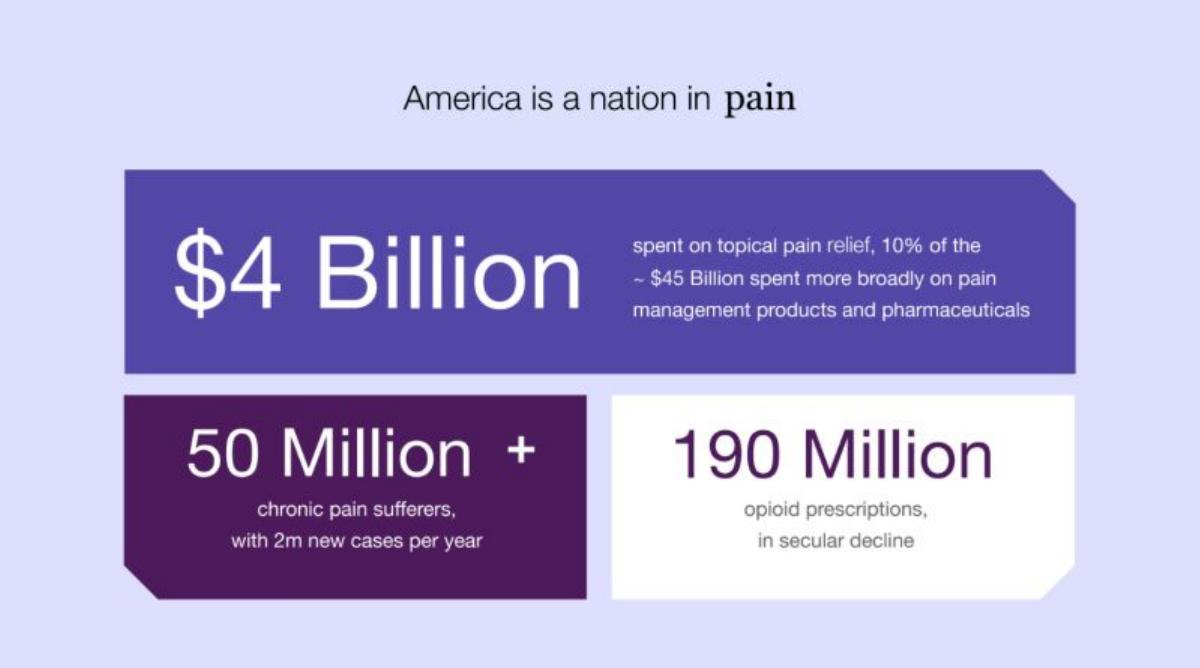
- The company identifies a $4 billion market for topical pain relief within a broader $45 billion pain management sector on Slide 2.
- Clearing positions its solution as a direct response to the 191 million opioid prescriptions written annually in the U.S., as noted on Slide 15.
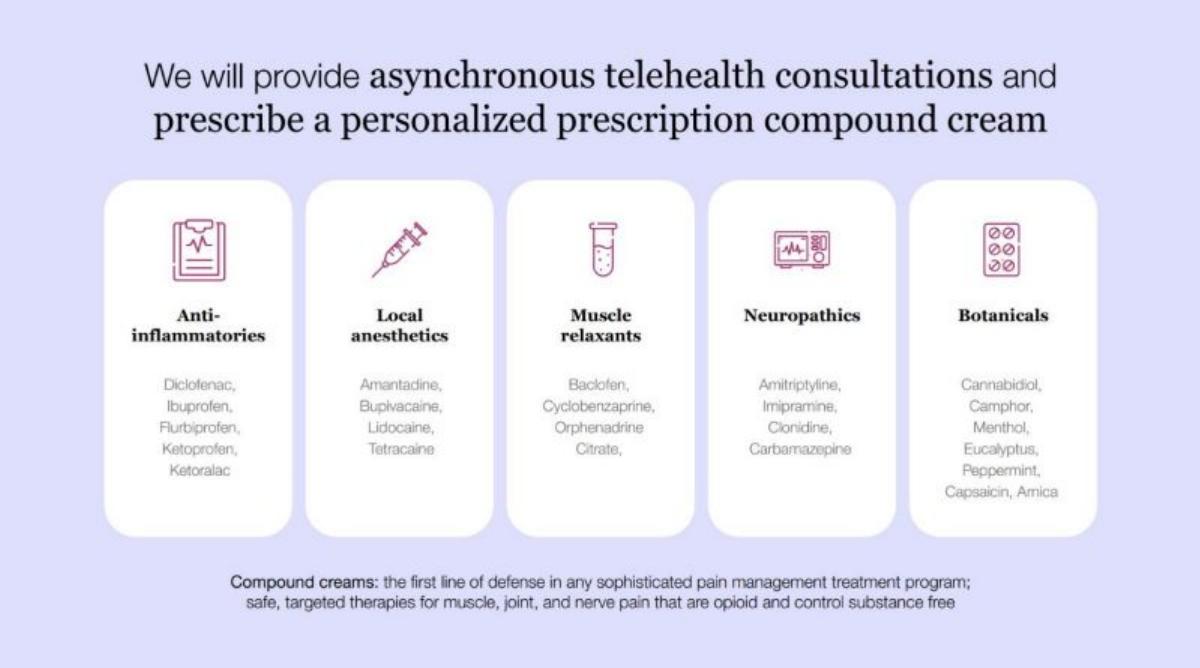
- The core product strategy involves asynchronous telehealth consultations leading to personalized prescription compound creams (Slide 5).
- The deck uses a competitive matrix on Slide 8 to explicitly compare its business model to Curology, Hinge Health, and Goodpath.
- The founding team features deep experience from high-growth startups like Uber, Compass, and FanDuel (Slide 12).
- A heavy emphasis is placed on a medical advisory board with affiliations to Harvard, Johns Hopkins, and HSS (Slide 13).
- The deck lacks any mention of specific revenue targets, customer acquisition costs, or a detailed breakdown of the $20M use of funds.
- The 'Why Now' slide (Slide 7) cites COVID-19 accelerated telehealth adoption and the availability of plug-and-play pharmacy infrastructure as key tailwinds.
The Narrative: Verticalizing the Pharmacy
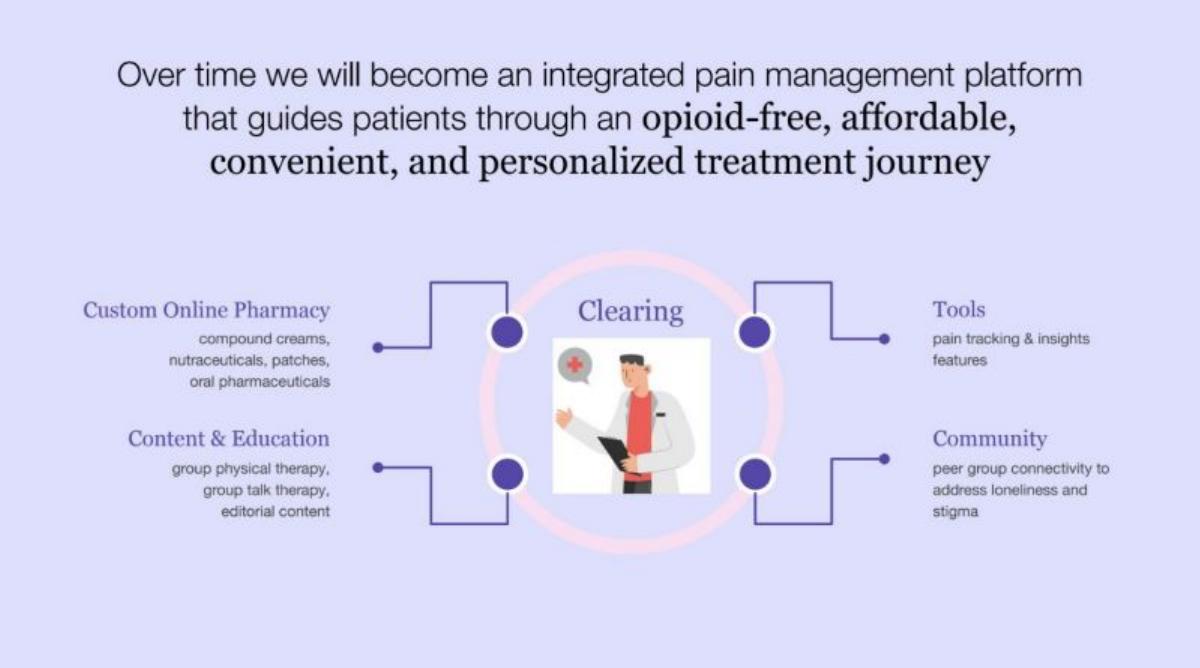
In 2021, the 'Hims-and-Hers' model of verticalized telehealth was the dominant trend in health-tech investing. Clearing’s pitch deck follows this playbook perfectly. It identifies a massive, fragmented, and broken market—chronic pain—and proposes a digitally native, vertically integrated solution. The deck doesn't just sell a cream; it sells an 'integrated pain management platform' that promises to guide patients through an opioid-free journey.
Slide 1: The Cover
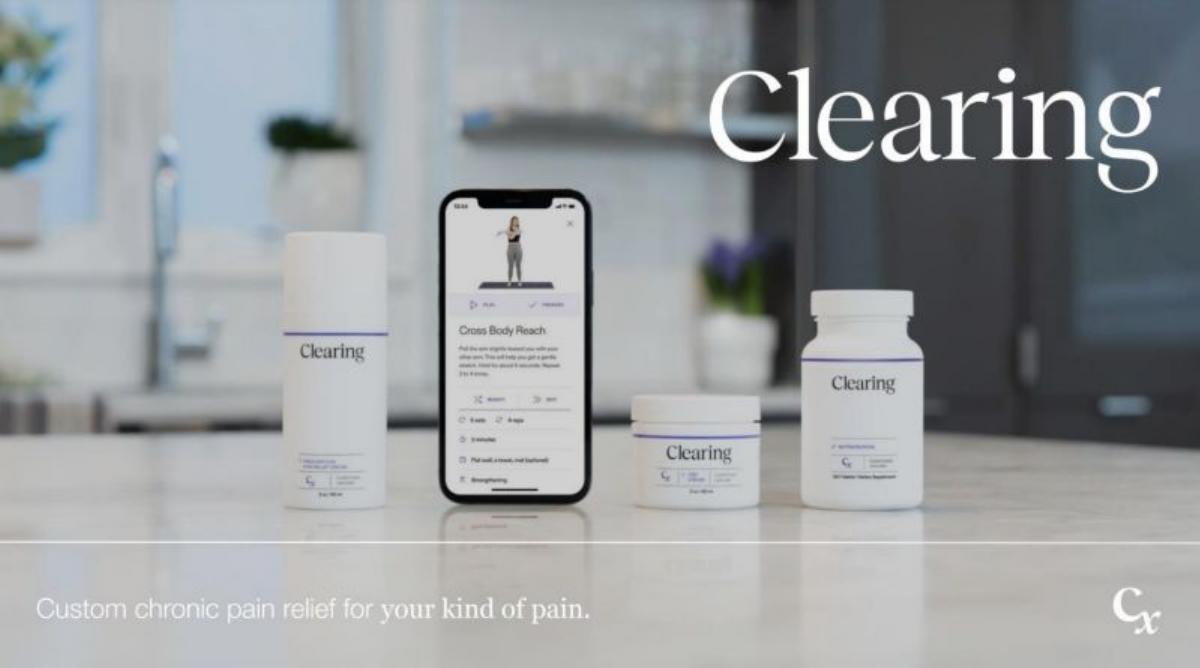
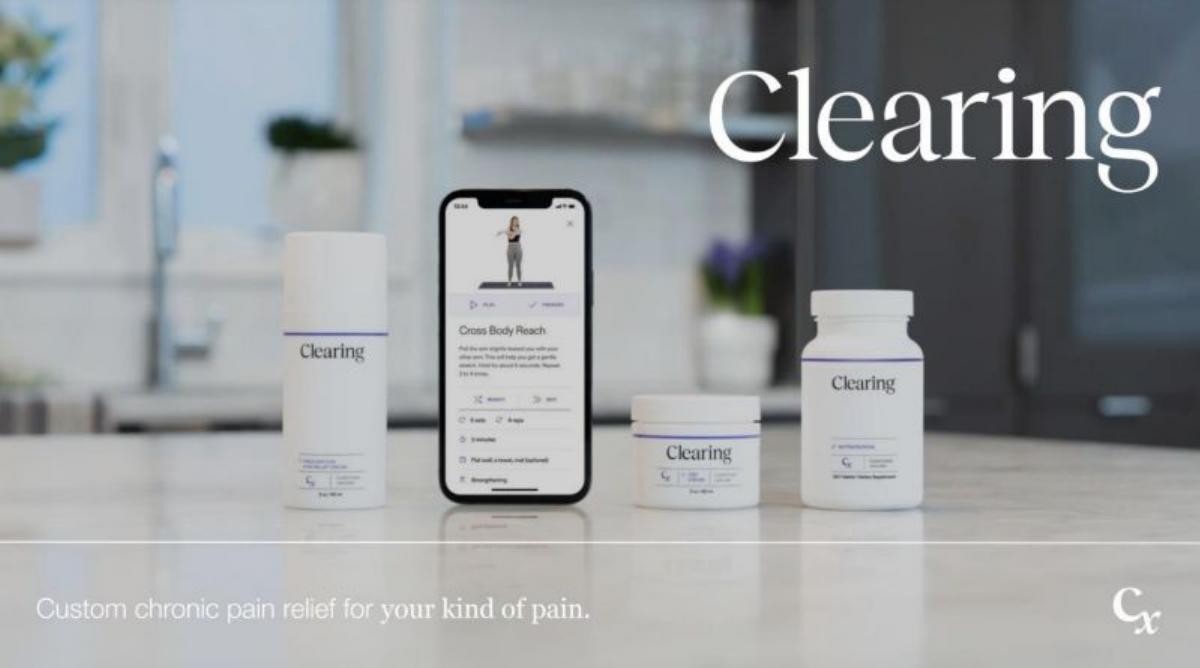
The deck opens with a high-quality lifestyle image of Clearing’s product line: a pump bottle, two jars, and a supplement bottle alongside a smartphone showing a physical therapy exercise. The tagline, "Custom chronic pain relief for your kind of pain," immediately establishes the value proposition of personalization. The branding is minimalist and premium, distancing the brand from the clinical look of traditional pharmaceuticals.
Slides 2-3: The Problem and Market Size
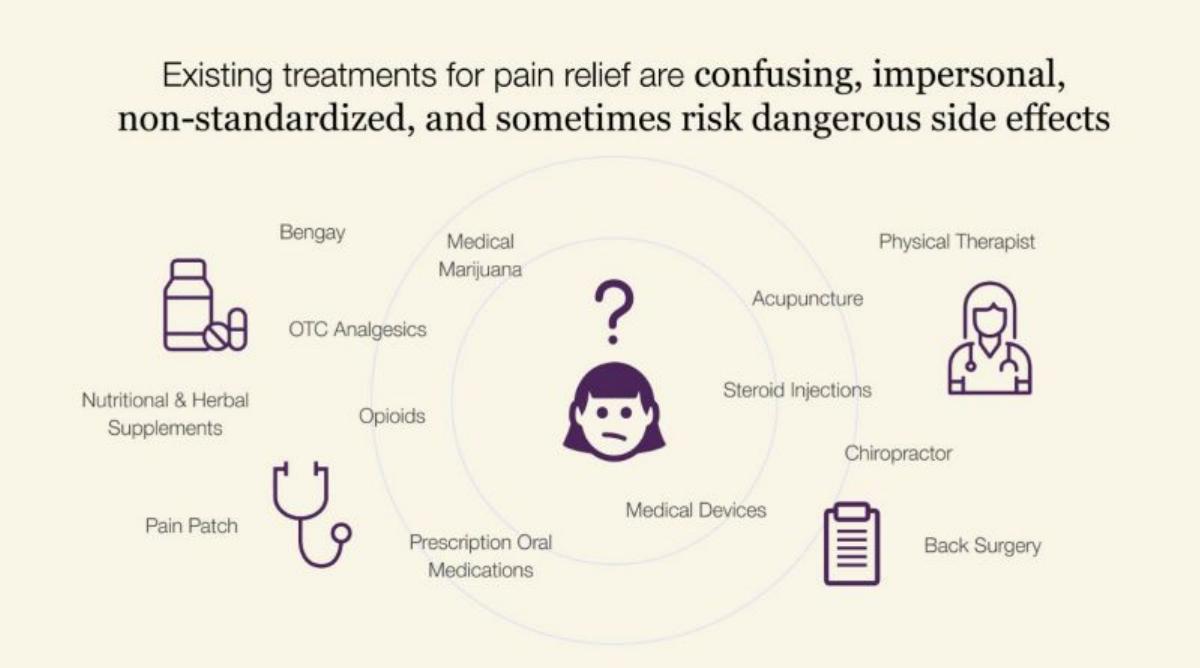
Slide 2 presents the macro-opportunity. It cites $4 Billion spent on topical pain relief and 50 Million + chronic pain sufferers in the U.S. It also notes 190 Million opioid prescriptions, which it describes as being in 'secular decline,' creating a vacuum for new solutions. Slide 3 visualizes the 'confusing' landscape for patients, placing a frustrated icon in the center of a web of options like 'Bengay,' 'Back Surgery,' and 'Acupuncture.' This slide effectively argues that the current patient journey is non-standardized and impersonal.
Slides 4-6: The Solution and Product
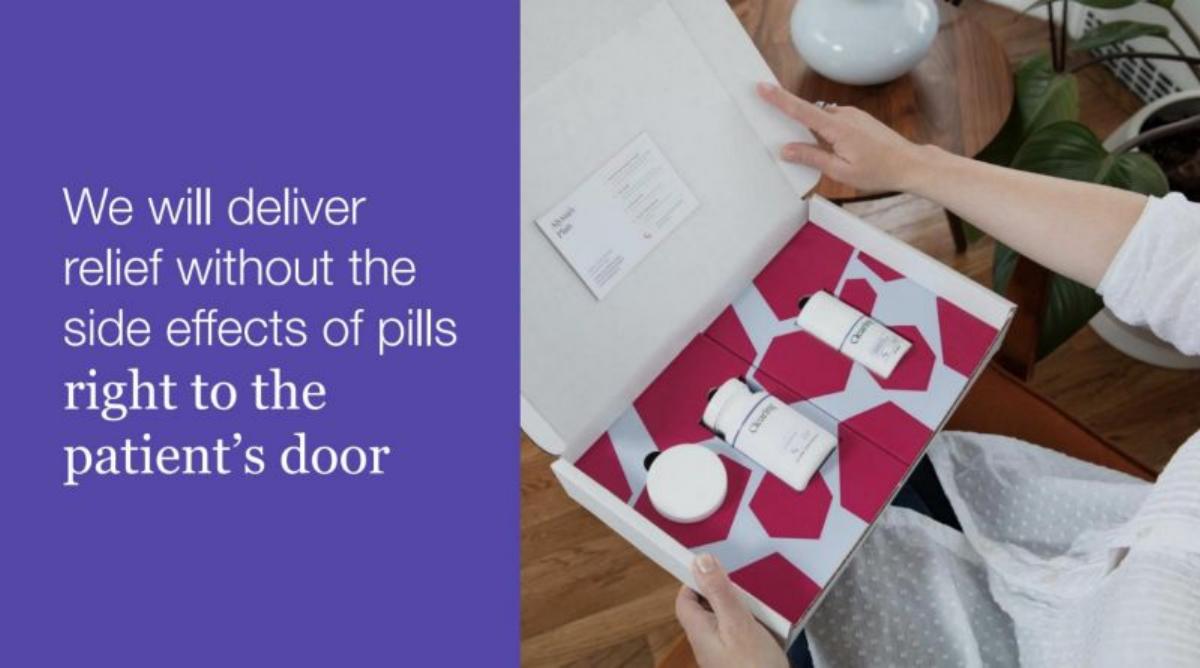
Slide 4 is a simple transition: "We will deliver relief without the side effects of pills right to the patient’s door." This is followed by Slide 5, which details the actual medical offering. Clearing uses asynchronous telehealth consultations to prescribe personalized prescription compound creams . The slide lists the ingredients they can mix, including Diclofenac, Lidocaine, and Baclofen. Slide 6 expands the vision beyond just cream, mentioning a 'Custom Online Pharmacy,' 'Content & Education,' 'Tools' for pain tracking, and a 'Community' to address loneliness.
Slide 7: The 'Why Now'
This slide identifies three macro tailwinds: 1. Telehealth adoption accelerated by COVID-19. 2. The rise of non-opioid treatments. 3. The availability of "plug-and-play telehealth pharmacy infrastructure." This third point is crucial for investors, as it suggests that Clearing doesn't need to build a pharmacy from scratch to scale.
Slide 8: The Competitive Landscape
Clearing uses a standard 2x2 matrix to position itself. The X-axis ranges from general to "Personalized D2C Treatment + Pharmacy," and the Y-axis measures "Relevance to Pain Management." Clearing places itself in the top-right quadrant, alone. It explicitly references Curology in the bottom-right, signaling to investors that they are adopting a proven business model in a new, higher-value therapeutic area.
Slides 9-11: User Experience and Retention
Slide 10 focuses on the "Iterative & Personalized Treatment Journey." It shows mobile app screens where patients rate their pain (e.g., "7/10") and receive data-driven recommendations. The claim is that this tracking will lead to higher retention: "patients will... remain with us for the entirety of the pain relief journey." This is a key pitch for a subscription-based business model, though the specific pricing is not mentioned.
Slides 12-13: The Team and Advisors
The team slide (Slide 12) is a 'who's who' of the 2021 startup scene. CEO Avi Dorfman (Compass), Head of Growth Yakov Kagan (Uber, Bread), and Head of Product Jeremy Pippin (FanDuel) provide the operational 'heft.' This is balanced by Dr. Jacob Hascalovici (MD PhD) as CMO. Slide 13 doubles down on medical credibility with an advisory board from Harvard Medical School, Johns Hopkins, and the Hospital for Special Surgery (HSS). For a $20M Seed round, this level of institutional backing is often a prerequisite.
Slides 14-15: The Social Impact
Slide 15 returns to the 'Why' by framing the opioid epidemic as a "tragedy on a national scale." It provides sobering statistics: $78.5 billion in annual costs and 17,000 deaths from overdoses. By positioning Clearing as a solution to this crisis, the founders add a layer of 'mission-driven' urgency to the commercial pitch.
What Clearing Does Well
The Curology Comparison: By explicitly naming a successful predecessor in a different vertical, Clearing reduces the cognitive load for investors. They don't have to wonder if the model works; they only have to decide if it works for pain. · Visual Consistency: The deck looks like the product. It is clean, modern, and high-end. This suggests a level of attention to detail and brand-building that is essential for a D2C healthcare play. · Medical Credibility: In a space often crowded with 'wellness' products of dubious efficacy, Clearing’s emphasis on prescription compounds and its heavy-hitting medical board provides necessary defensibility.
What is Missing from the Deck
Unit Economics: There is no mention of the cost of goods sold (COGS), the price of the subscription, or the expected Customer Acquisition Cost (CAC). For a $20M round, these are usually discussed in a data room, but their total absence from the deck is notable. · Regulatory Strategy: Telehealth and compound pharmacies face significant state-by-state regulatory hurdles. The deck does not address how they plan to navigate these complexities. · The 'Ask': There is no slide detailing how much they are raising or how they intend to spend the capital. While we know from the catalogue that they raised $20M, the deck itself is silent on the terms of the round.
Founder's Playbook: What to Copy
The 'Why Now' Equation: Slide 7 uses a simple 'A + B + C > D' formula to explain market timing. It’s a very effective way to show that a company isn't just a good idea, but a good idea for this specific moment . · Pedigree Stacking: If you have a team from high-growth companies, use their logos prominently as Clearing did on Slide 12. It acts as a proxy for 'ability to scale.' · Verticalization Narrative: If you are entering a crowded market (like healthcare), don't try to be everything to everyone. Clearing’s focus on chronic pain specifically makes their value proposition much sharper than a general telehealth provider.
Frequently asked questions
- How much did Clearing raise with this deck?
- According to the catalogue facts, Clearing raised $20M in a Seed round in 2021. This is an exceptionally large Seed round, likely driven by the founders' previous exits and the high-growth potential of the D2C healthcare sector at that time.
- What is Clearing's primary product?
- As shown on Slide 5, the primary product is a personalized prescription compound cream. These creams can include anti-inflammatories, local anesthetics, muscle relaxants, neuropathics, and botanicals, formulated specifically for the patient's needs after an asynchronous consultation.
- Who are the competitors mentioned in the deck?
- Slide 8 identifies several competitors across different quadrants, including Hinge Health and Goodpath in the pain management space, and Ro, Hims, and Curology in the personalized D2C treatment space.
- Does the deck include financial projections?
- No. The 16-slide deck focuses entirely on the problem, solution, market size, and team. There are no slides dedicated to revenue forecasts, burn rate, or specific unit economics.
- What is the 'Curology' comparison used in the deck?
- Slide 8 uses the headline 'What Curology has done for dermatology we will do for pain.' This is a strategic move to help investors understand the business model: a specialized, verticalized telehealth platform that provides customized prescription products directly to consumers.