Clean Kitchen Club’s 2022 seed deck is a masterclass in brand-led fundraising. Positioned as the UK’s leading plant-based QSR brand, the company leans heavily on its 'magic sauce': a combination of high-profile founders, a massive organic social media reach, and rapid physical execution. The deck highlights a 4.8 rating on major delivery platforms and a site launch that generated £4k profit in its first week. While the deck is light on traditional unit economics and detailed financial projections, it compensates with strong social proof, including 1.8M monthly TikTok views and a clear roadmap…
Key takeaways
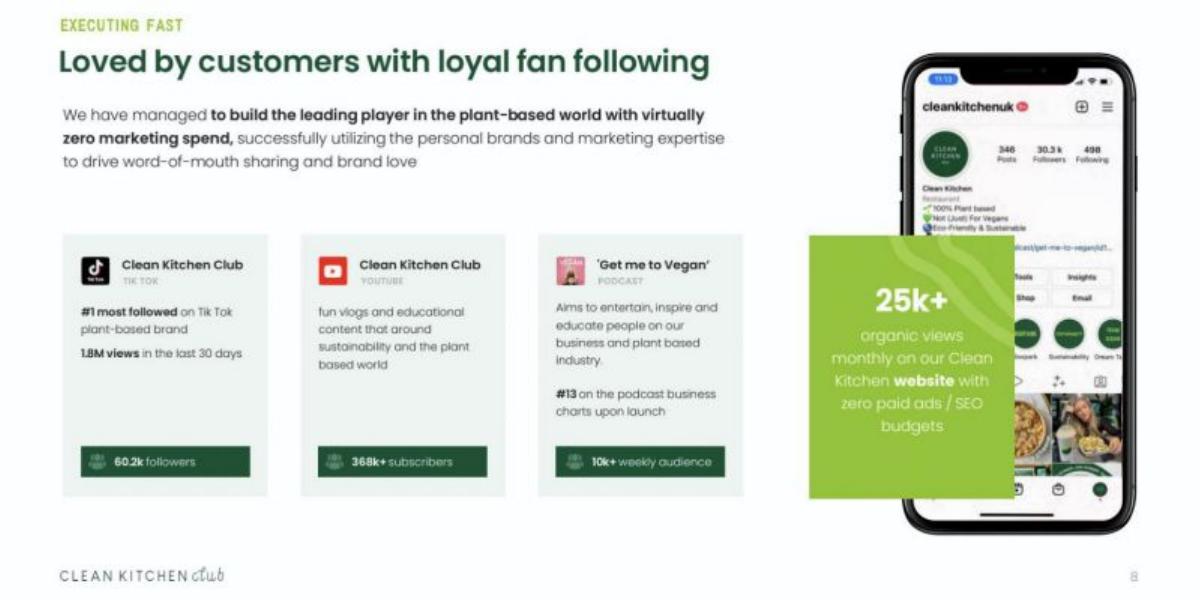
- The brand claims to be the #1 most followed plant-based brand on TikTok with 1.8M views in the last 30 days (Slide 5).
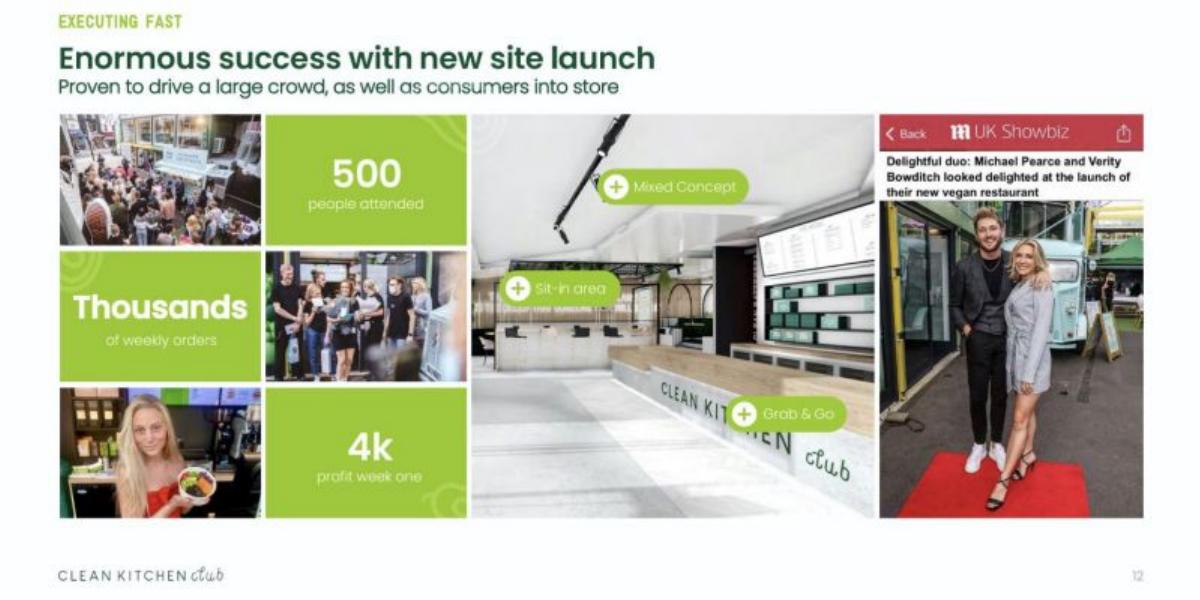
- Clean Kitchen Club reports achieving £4k profit in the first week of a new site launch (Slide 4).
- The company utilizes a 'mixed concept' model including eat-in, take-away, and delivery formats (Slide 2).
- Co-founder Verity Bowditch brings significant media leverage as a British TV personality from 'Made In Chelsea' (Slide 8).
- The deck outlines an aggressive expansion plan targeting 30+ UK locations by 2025 (Slide 11).
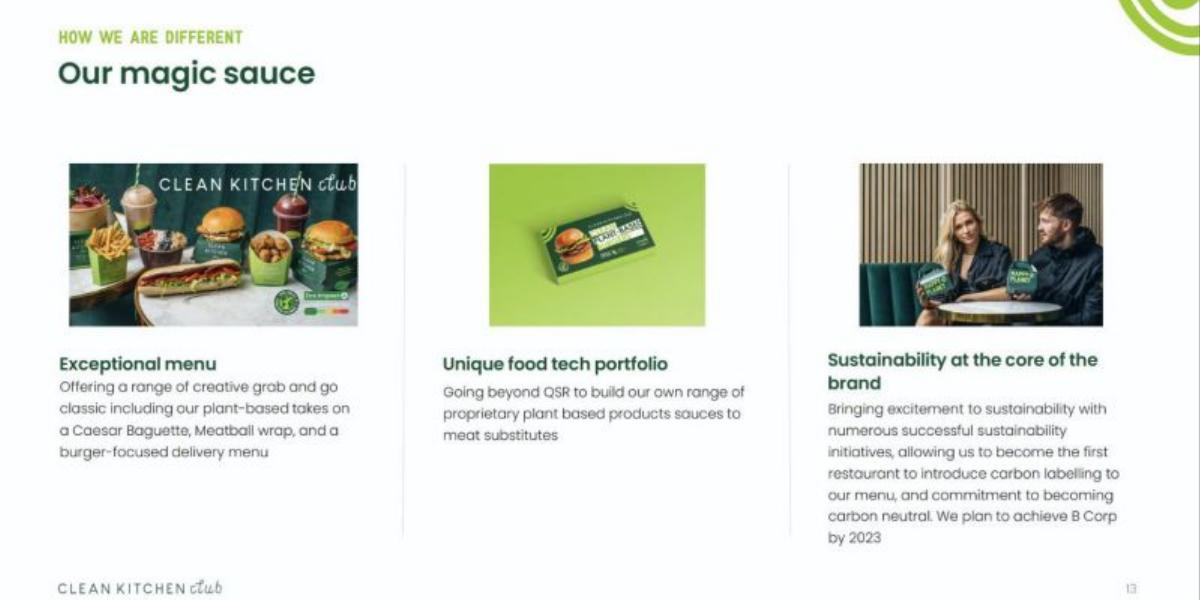
- The brand aims for B Corp certification by 2023 and has already implemented carbon labeling on its menu (Slide 6).
- A key differentiator is the 'food tech portfolio,' moving beyond QSR into proprietary plant-based retail products (Slide 6).
- The deck omits a specific 'Ask' slide detailing the exact valuation or breakdown of the $1.7M raise (Slide 13).
The Influencer-Led QSR: A New Playbook for Plant-Based Dining
Clean Kitchen Club entered the market at a time when plant-based dining was shifting from a niche dietary requirement to a mainstream lifestyle choice. Their 2022 seed deck, which facilitated a $1.7M raise, reflects this shift by prioritizing brand identity, social media metrics, and celebrity association over traditional restaurant metrics like COGS or labor percentages. This teardown examines the 13-slide deck that successfully pitched a 'lifestyle' as much as a menu.
Slide 1: The Visual Hook
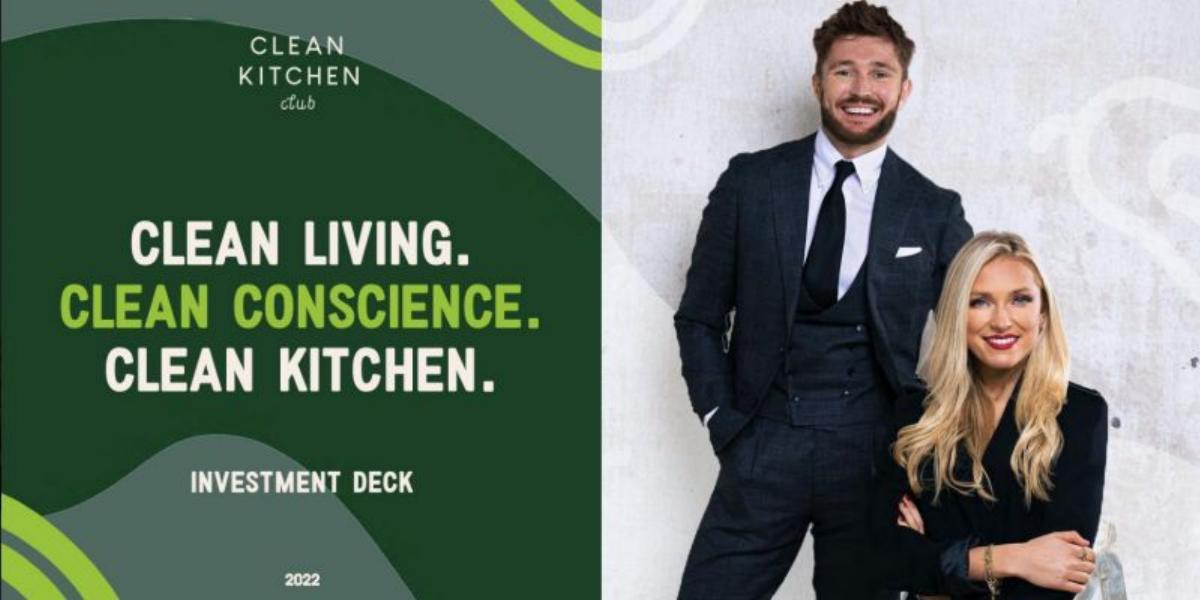
The cover slide features founders Mikey Pearce and Verity Bowditch. This is a deliberate choice for a brand that relies on personal influence. The tagline— "CLEAN LIVING. CLEAN CONSCIENCE. CLEAN KITCHEN." —establishes the three pillars of their value proposition: health, ethics, and the product itself. It is a high-production-value start that signals a brand-first approach.
Slide 2: Defining the Identity
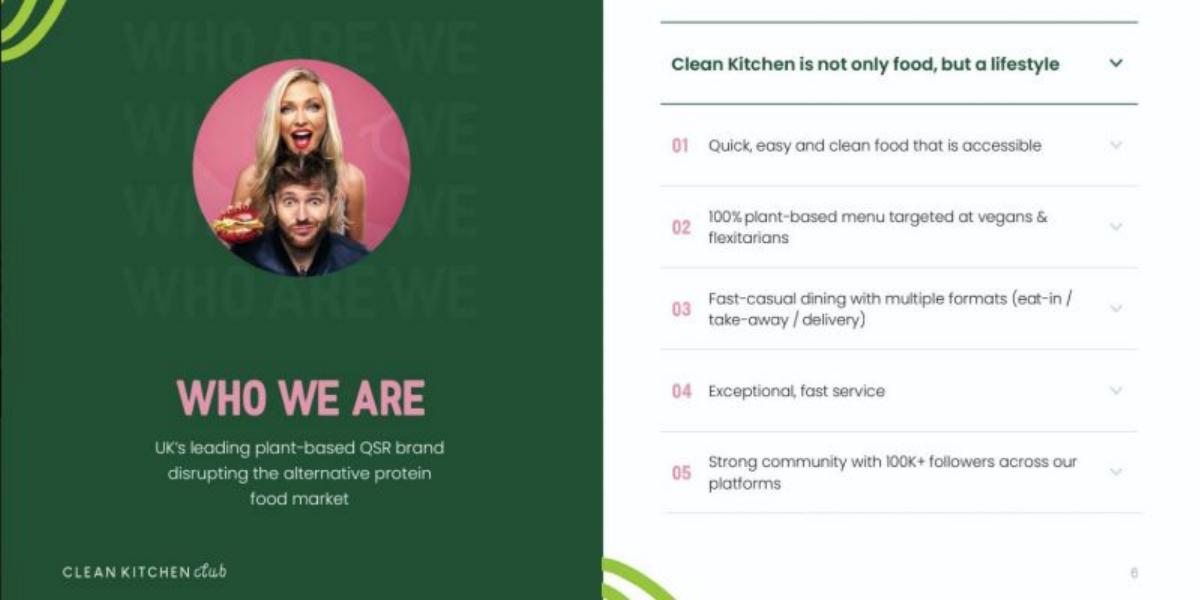
Slide 2, titled "WHO WE ARE," positions the company as the "UK’s leading plant-based QSR brand." It lists five core attributes: accessibility, a 100% plant-based menu for vegans and flexitarians, multiple dining formats (eat-in, take-away, delivery), fast service, and a community of 100k+ followers. This slide is critical because it defines the scope of the business—it is not just a restaurant; it is a multi-channel brand.
Slide 3: Customer Sentiment and Social Proof
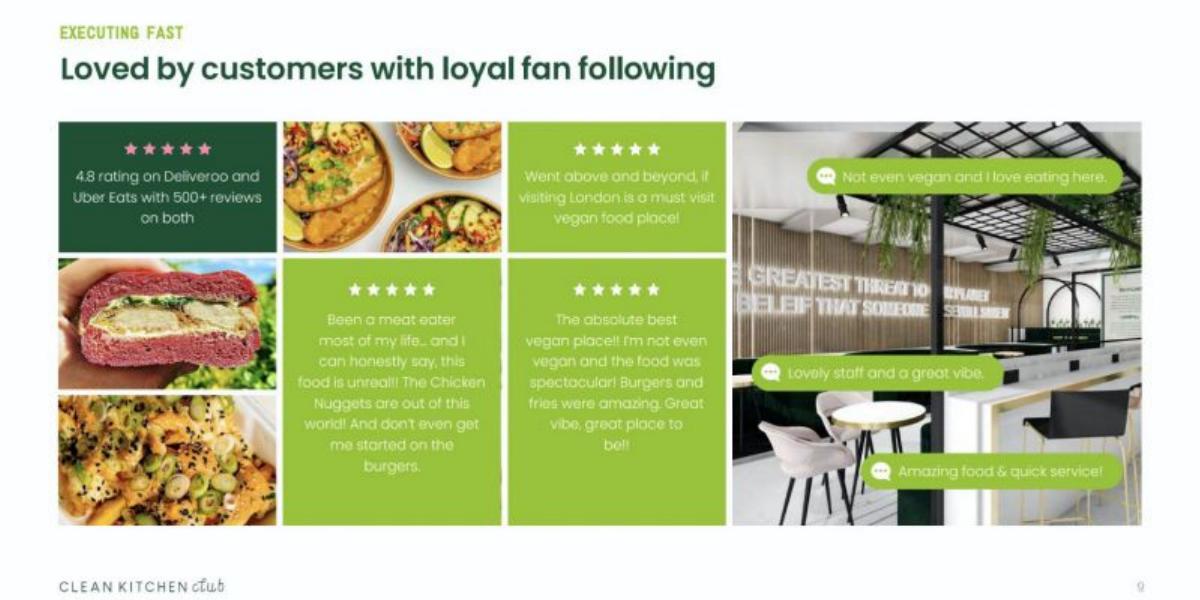
Titled "Loved by customers with loyal fan following," Slide 3 uses a grid of food photography and customer reviews. It highlights a 4.8 rating on Deliveroo and Uber Eats with over 500 reviews on each. The testimonials specifically mention that the food appeals to meat-eaters, which supports their claim of targeting the "flexitarian" market. This provides the necessary validation that the product quality matches the brand hype.
Slide 4: The Launch Blueprint
Slide 4 focuses on the "Enormous success with new site launch." This is the most data-heavy slide regarding physical operations. It cites 500 people in attendance at a launch, "thousands of weekly orders," and a £4k profit in week one . By showing a photo of a queue and a "UK Showbiz" headline featuring the founders, they demonstrate that their social media following translates into physical foot traffic and immediate profitability.
Slide 5: The Digital Engine
Slide 5 breaks down the brand's organic reach. It claims the #1 most followed TikTok plant-based brand spot with 1.8M views in 30 days and 60.2k followers. It also mentions 368k YouTube subscribers and a podcast, "Get me to Vegan," which hit #13 on the business charts. The standout metric here is 25k+ monthly organic website views with "zero paid ads / SEO budgets." For an investor, this represents a massive reduction in Customer Acquisition Cost (CAC) compared to traditional food brands.
Slide 6: The "Magic Sauce" and Sustainability
This slide introduces the concept of a "food tech portfolio." Clean Kitchen Club isn't just selling burgers; they are developing proprietary plant-based sauces and meat substitutes. This moves the company from a low-multiple restaurant business toward a higher-multiple tech/product business. They also lean into ESG (Environmental, Social, and Governance) goals, mentioning carbon labeling and a plan to achieve B Corp status by 2023 .
Slide 7: The Vision Gap
Slide 7 addresses the market problem: "To date, there are no truly vegan & popular plant-based QSR brands that resonate with the consumer." This is a bold claim, especially given the existence of competitors like Neat Burger, but it sets the stage for their "Why Us" argument. They argue that QSRs are the key to taking alternative proteins mainstream due to their high volume and accessibility.
Slide 8: The Power Team
The team slide is a significant asset for this deck. It features:
Mikey Pearce (CEO): 800k social media followers and hospitality experience. · Verity Bowditch: TV personality (Made In Chelsea) and Head of Sustainability. · Chase Hunter & Nolan Spratt: The operational backbone, with Hunter having operated 15 venues over 10 years. · Grace Beverley (Advisor): A high-profile D2C founder and Forbes 30 under 30 honoree.
This combination of "fame" and "operational experience" is designed to mitigate the risk of the founders being seen as just influencers.
Slide 9: Product Showcase
This slide is a visual menu. It shows price points ranging from £6 for bagels to £10.5 for burgers . It also highlights their "Eco Impact A" rating. The menu diversity (Açaí bowls, smoothies, katsu baguettes) suggests they are capturing multiple day-parts (breakfast, lunch, dinner), which is essential for QSR unit economics.
Slide 10: Competitive Positioning
The standard 2x2 matrix places Clean Kitchen Club in the top-right quadrant: High QSR focus and 100% Plant-Based. They position themselves against "Meat" brands like Leon and Pret, and "Restaurant" brands like The Vurger Co. Their stated vision is to be the "next plant-based Pret or Leon."
Slide 11 & 12: The Roadmap
Slide 11 provides a geographical expansion map, showing a target for 30+ locations across the UK by 2025 , including major cities like Manchester, Leeds, and Bristol. Slide 12 provides a more granular timeline for 2022, including the launch of "Clean Retail" products into supermarkets and the opening of flagship sites like Battersea Power Station and Soho. This shows a clear path from a London-centric brand to a national player.
Slide 13: The Closing
The final slide is a standard contact page. Notably, the deck does not include a specific "Ask" slide detailing the valuation or the exact use of funds for the $1.7M raise. This information was likely reserved for the data room or verbal pitch.
What Works in the Clean Kitchen Club Deck
1. Leveraging the "Unfair Advantage": The deck doesn't shy away from the founders' social media presence. Instead, it frames it as a massive cost-saving mechanism for marketing and a guaranteed driver of foot traffic. In a crowded QSR market, this is a genuine competitive advantage.
2. Multi-Channel Ambition: By mentioning "Clean Retail" and "Food Tech," the founders are signaling that they aren't limited by the physical footprint of their restaurants. This increases the Total Addressable Market (TAM) and makes the company more attractive to venture capital investors who typically avoid pure-play brick-and-mortar restaurants.
3. Strong Visual Identity: The deck is professionally designed and consistent with the brand's aesthetic. For a consumer-facing brand, the quality of the pitch deck is a proxy for the quality of the brand's marketing and in-store experience.
What Is Missing
1. Unit Economics: There is almost no mention of the "boring" side of restaurants. Investors would typically want to see Average Order Value (AOV), Contribution Margin per location, and Payback Period for a new site. While they mention a £4k profit in week one, they don't define if that is Gross Profit or EBITDA.
2. The Ask: As noted, the lack of a clear investment slide (how much they are raising and what they will do with it) is a missed opportunity to create urgency within the deck itself.
3. Market Sizing: While they mention the vision of being the next "Pret," they don't provide data on the size of the UK plant-based QSR market or the specific growth rates of the flexitarian demographic they are targeting.
What Other Founders Should Copy
1. The "Mixed Concept" Slide: Showing that your business can thrive in multiple formats (delivery, grab-and-go, and sit-in) is a great way to demonstrate resilience and market reach.
2. Social Proof Integration: Don't just list your followers; show how those followers translate into business results. Clean Kitchen Club's slide linking launch attendance to social media hype is a perfect example of this.
3. ESG Integration: In 2024 and beyond, sustainability isn't a "nice to have." Clean Kitchen Club's inclusion of carbon labeling and B Corp goals shows they are building a brand that is future-proofed against regulatory and consumer shifts.
Frequently asked questions
- How much did Clean Kitchen Club raise with this deck?
- According to the catalogue data, Clean Kitchen Club raised $1.7M in a Seed round in 2022. The deck itself focuses on the growth strategy and brand traction rather than the specific terms of the investment round.
- Who are the key people behind Clean Kitchen Club?
- The founding team includes CEO Mikey Pearce, a hospitality entrepreneur with a social media following of 800k, and Co-founder Verity Bowditch, a TV personality. The team also includes Operations Directors Chase Hunter and Nolan Spratt, and board advisor Grace Beverley, a Forbes 30 under 30 entrepreneur.
- What is the company's primary business model?
- The company operates as a plant-based Quick Service Restaurant (QSR) with multiple revenue streams: physical sit-in locations, grab-and-go services, and delivery. Additionally, they are expanding into 'Clean Retail' by launching proprietary plant-based products into supermarkets.
- What kind of traction does the deck show?
- The deck shows significant digital and physical traction, including 100k+ followers across platforms, 500+ reviews on Deliveroo/Uber Eats with a 4.8 rating, and a site launch that saw 500 attendees and thousands of weekly orders.
- What are the main competitors identified in the deck?
- The deck positions Clean Kitchen Club against traditional QSRs like Pret, Leon, and Joe & The Juice, as well as plant-based competitors like Neat Burger and The Vurger Co. It claims a unique advantage by being a 'plant-based brand that resonates' with mainstream consumers.