Fashion Startup Problem Slide: Pitch Deck Examples
How fashion and apparel startups present the problem in a pitch deck: name who can't find, fit, sell or make the clothes, and why today's options fail them.
Fashion Startup Problem Slide: Real Pitch Deck Examples
Eight problem slides from fashion and apparel startups, shown in full, compare whether each slide names who struggles, what exactly goes wrong, and why current shops, brands or tools don't fix it.
TL;DR
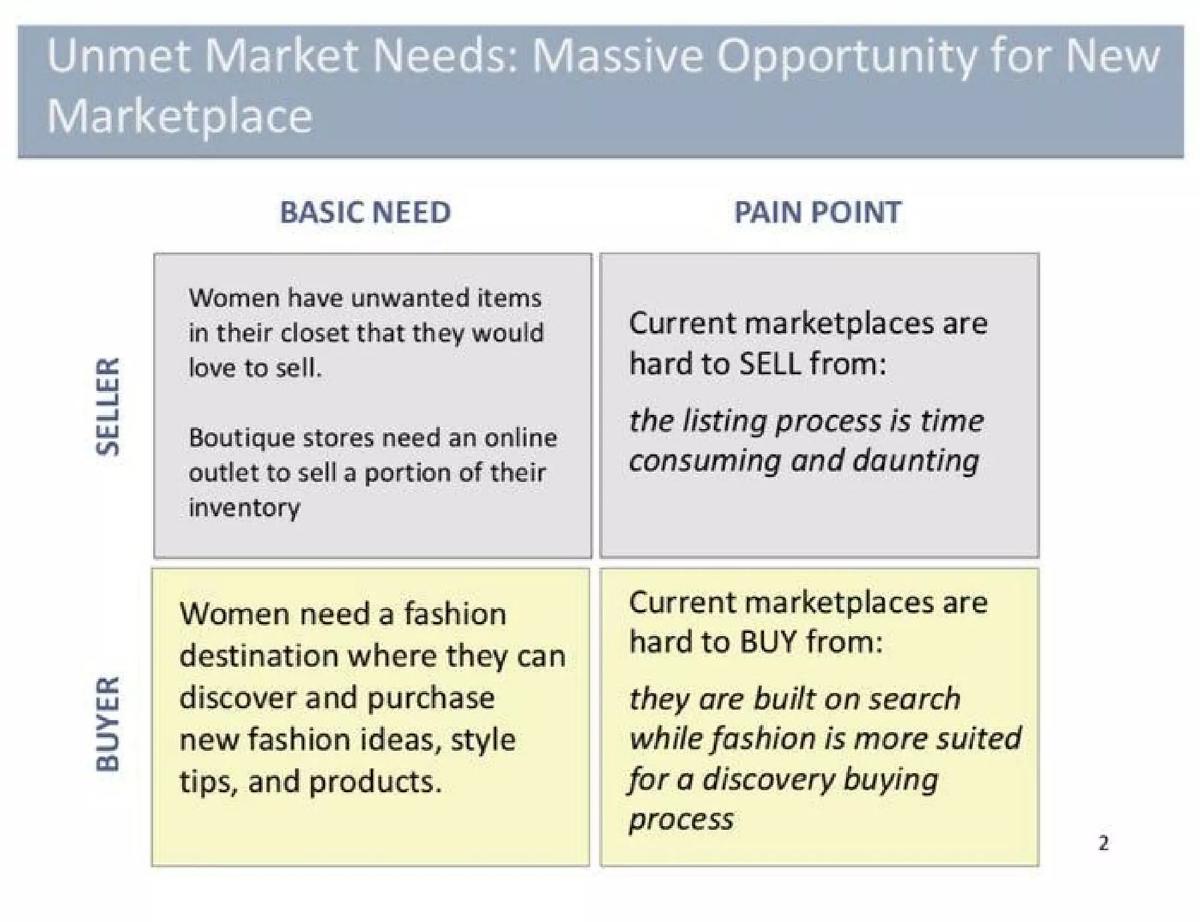
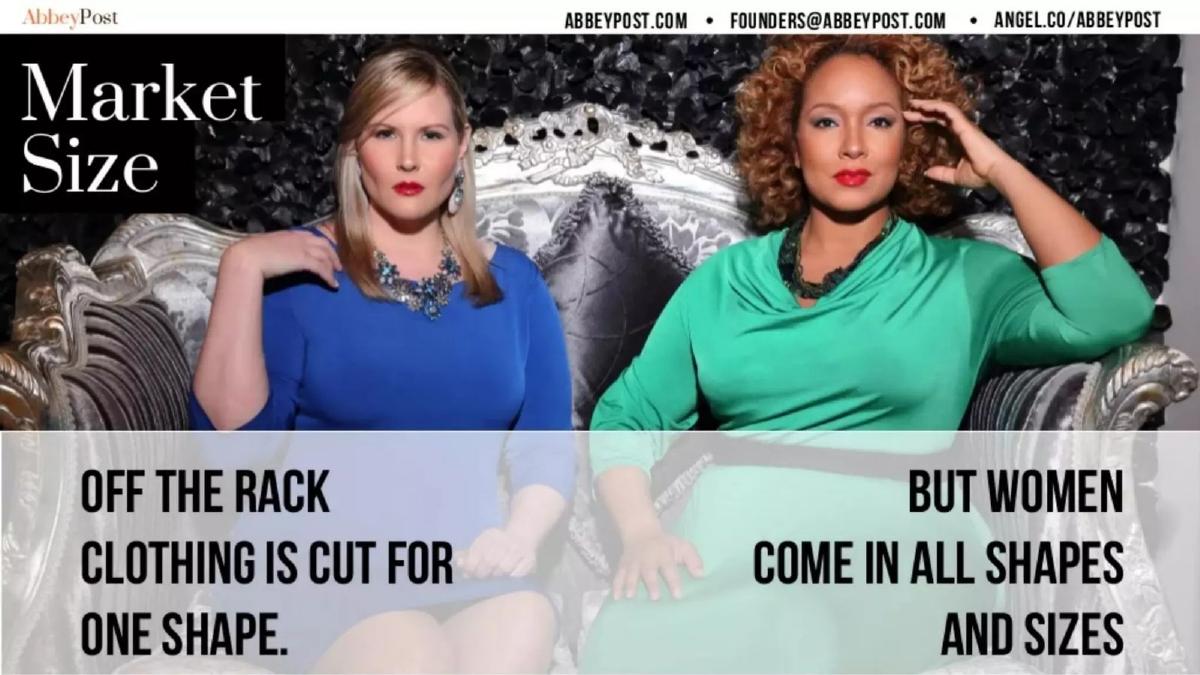
A fashion problem slide has to go past "people love style" to one person who can't get what they want. The stronger slides name the person and the gap. Poshmark splits the problem into seller and buyer: "Women have unwanted items in their closet" but "the listing process is time consuming and daunting", and buyers find marketplaces "built on search while fashion is more suited for a discovery buying process". AbbeyPost says it in two lines: "Off the rack clothing is cut for one shape. But women come in all shapes and sizes." My Beautiful Africa's paragraph about a brand "desired by men and women who tour Africa", with no problem named, is the weaker pattern.
Fashion problem slides from real pitch decks
Each example shows the exact stored slide above its analysis and links to the full teardown. Claims are as shown on the slides; we have not verified them.
Poshmark problem slide — slide 2
Fashion resale marketplace. A two-by-two table: seller and buyer, need and pain point.
Poshmark deck, slide 2. Exact stored slide matched to this analysis.
Our analysis: The strongest slide here: both sides of the marketplace, each with a need and a named reason current sites fail.
Evidence and limitation: No figures.
What a founder can adapt: For a marketplace, give each side one need and one pain, in the same table.
Supporting analysis
What the deck claims: "Unmet Market Needs: Massive Opportunity for New Marketplace." Seller need: "Women have unwanted items in their closet that they would love to sell. Boutique stores need an online outlet to sell a portion of their inventory." Seller pain: "Current marketplaces are hard to SELL from: the listing process is time consuming and daunting." Buyer need: "Women need a fashion destination where they can discover and purchase new fashion ideas, style tips, and products." Buyer pain: "Current marketplaces are hard to BUY from: they are built on search while fashion is more suited for a discovery buying process."
Presentation choice: "Built on search" versus "discovery" is a precise reason incumbents can't simply copy the fix.
When it does not fit: Add one number per side, such as how long a listing takes today.
Loungewear. The founder's story above a screenshot of an online forum thread.
Lazy Creatures deck, slide 3. Exact stored slide matched to this analysis.
Our analysis: It names what people wear today ("ratty old T-shirts", "activewear") and uses strangers' posts to show the problem isn't only the founder's.
Evidence and limitation: A forum thread as evidence of shared demand.
What a founder can adapt: Show what customers make do with today, in their words.
Supporting analysis
What the deck claims: "The Problem." "A personal problem that many shared." "In 2011, I asked an ex-boyfriend: why aren't there any comfortable but cute clothes that you could wear around the house? 3 years later, I found out that people were having the same thoughts on the internet." "It turns out there weren't a whole lot of options for affordable, comfortable, and cute loungewear. Most people wore ratty old T-shirts or stuck with activewear."
Presentation choice: The forum screenshot turns a personal story into outside evidence.
When it does not fit: The forum text is too small to read; pull out one quote.
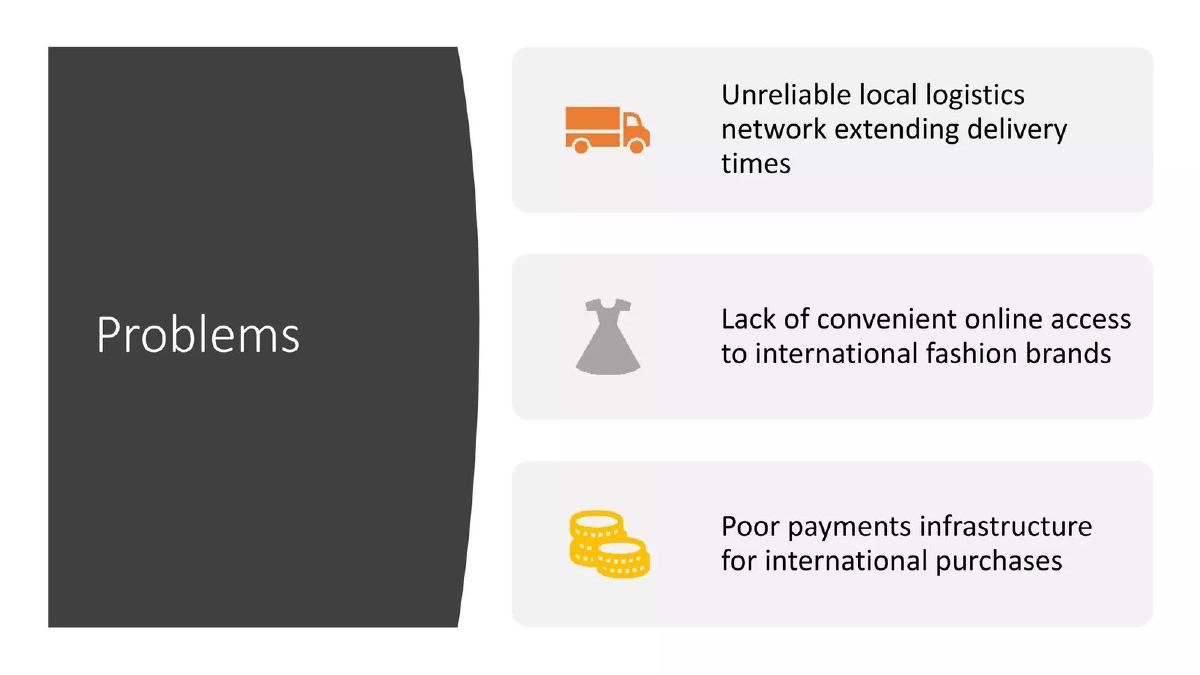
International fashion delivery in an emerging market. Three icon rows.
House of Highness deck, slide 2. Exact stored slide matched to this analysis.
Our analysis: Three concrete barriers between a shopper and a foreign brand: access, payment and delivery.
Evidence and limitation: No figures.
What a founder can adapt: List the barriers in the order the shopper hits them: find, pay, receive.
Supporting analysis
What the deck claims: "Problems." "Unreliable local logistics network extending delivery times." "Lack of convenient online access to international fashion brands." "Poor payments infrastructure for international purchases."
Presentation choice: Each row is something the company can fix, which sets up the solution slide.
When it does not fit: Name the country and give one delivery time; "extending delivery times" needs a number.
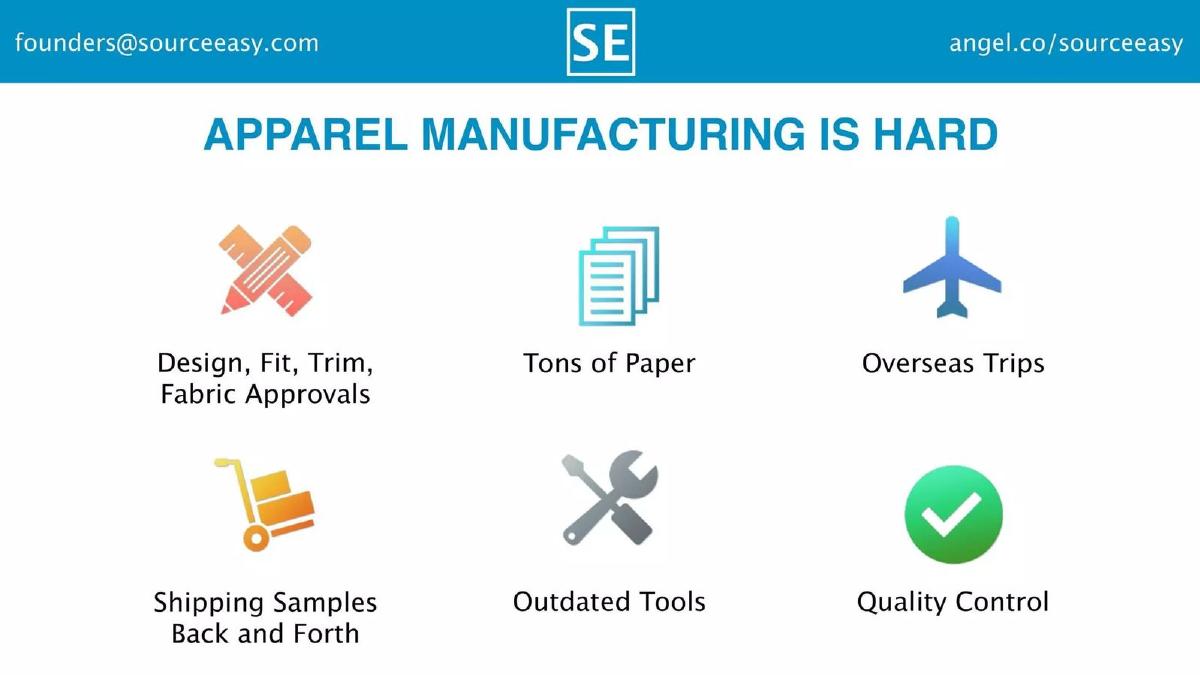
Apparel manufacturing software. Six icons under a headline.
Sourceeasy deck, slide 4. Exact stored slide matched to this analysis.
Our analysis: It lists the steps a brand goes through to make a garment, each one slow or manual.
Evidence and limitation: No figures.
What a founder can adapt: Show the steps your customer repeats today, and mark the slow ones.
Supporting analysis
What the deck claims: "Apparel Manufacturing Is Hard." "Design, Fit, Trim, Fabric Approvals." "Tons of Paper." "Overseas Trips." "Shipping Samples Back and Forth." "Outdated Tools." "Quality Control."
Presentation choice: Anyone who has made clothes recognises every icon.
When it does not fit: Add how long a sample round takes or costs; six icons with no number read as generic.
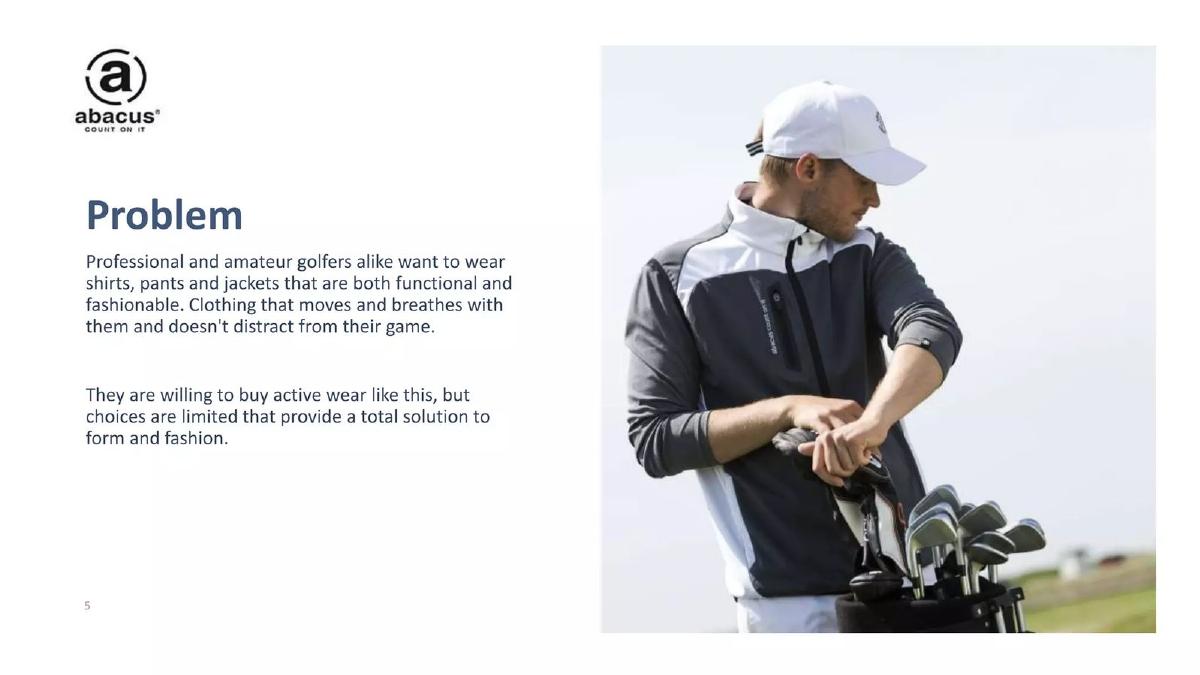
Golf clothing. Two short paragraphs beside a photo of a golfer.
Abacus deck, slide 5. Exact stored slide matched to this analysis.
Our analysis: It names the customer and the two needs, but "choices are limited" doesn't say which brands fail or how.
Evidence and limitation: No figures.
What a founder can adapt: Name the alternatives golfers buy today and what each gets wrong.
Supporting analysis
What the deck claims: "Problem." "Professional and amateur golfers alike want to wear shirts, pants and jackets that are both functional and fashionable. Clothing that moves and breathes with them and doesn't distract from their game." "They are willing to buy active wear like this, but choices are limited that provide a total solution to form and fashion."
Presentation choice: "Moves and breathes with them and doesn't distract" is specific about what golfers want.
When it does not fit: "Willing to buy" needs evidence: a survey, a price they pay today.
Sneaker trading app. Two problems and two solutions on one card.
SnkTrd deck, slide 2. Exact stored slide matched to this analysis.
Our analysis: Partial: it names the customer ("sneakerheads"), but both problems are "there is no platform", which describes the missing product rather than what goes wrong.
Evidence and limitation: No figures.
What a founder can adapt: Replace "there is no platform" with what a sneakerhead goes through today to trade a pair.
Supporting analysis
What the deck claims: "Problem Vs. Solution." "Problem #1: There is currently no online presence that seamlessly joins e-commerce and social media." "Problem #2: There is currently no platform that address the need that many sneakerheads have when it comes time to buying, selling and trading sneakers."
Presentation choice: Pairing each problem with its solution is easy to follow.
When it does not fit: Defining the problem as the absence of your product.
African-inspired fashion and travel brand. One paragraph on a dark background.
My Beautiful Africa deck, slide 3. Exact stored slide matched to this analysis.
Our analysis: Weak on purpose: a brand ambition under a "Problem" heading, with no customer who can't get something.
Evidence and limitation: No figures.
What a founder can adapt: Say what a traveller who wants African-designed clothing can't find or buy today.
Supporting analysis
What the deck claims: "Problem." "My Beautiful Africa has spotted the need for contemporary African inspired fashion travel and lifestyle community and enthusiasts represented from an artistic perspective to foster a love and appreciation for all things Africa. Our Brand will be globally positioned and embraced as a fashion travel and lifestyle experience desired by men and women who tour Africa."
Presentation choice: Kept as a contrast; the slide describes the company, not the customer's difficulty.
When it does not fit: Brand positioning in place of a problem.
Whether each slide names who struggles, what goes wrong, and why current options fail.
Example
Who
What goes wrong
Why current options fail
Poshmark
Yes (sellers and buyers)
Yes
Yes (built on search)
AbbeyPost
Yes (women of all sizes)
Yes (doesn't fit)
Yes (cut for one shape)
Lazy Creatures
Partly
Yes
Yes (T-shirts, activewear)
House of Highness
Partly (no country)
Yes (three barriers)
Partly
Sourceeasy
Partly (brands)
Yes (six steps)
Partly (outdated tools)
Abacus
Yes (golfers)
Partly
No ("choices are limited")
SnkTrd
Yes (sneakerheads)
No (no platform)
No
My Beautiful Africa
No
No
No
Key Takeaways
Name one shopper, seller or maker, not "fashion lovers".
Say what goes wrong: it doesn't fit, it can't be found, it's hard to list, it takes months to make.
Say why today's options fail: stores cut for one shape, marketplaces built for search.
If both sides of a marketplace hurt, show both, as Poshmark does.
A brand vision is not a problem; keep it for the vision slide.
Build your fashion problem slide
One person, what goes wrong, why today's options fail.
Who. Which shopper, seller or maker has the problem?
What goes wrong. What can't they find, fit, sell or make?
Today. What do they use now, and why does it fail?
Number. One figure: returns, time to list, time to sample, size range missed.
Copyable framework: [Person] can't [find/fit/sell/make] [what], because [current option] [why it fails]. [Number].
Illustrative example 1 — written by us
Before: Fashion is broken and consumers deserve better.
After: Women over size 16 return 4 in 10 online orders because brands grade patterns from a size 8; the average return costs the retailer $14. (Source: our survey of 400 shoppers.)
What improved: Our illustrative rewrite; the figures are invented for the example. It names the shopper, what goes wrong, the cause and a cost.
What this guide adds
This is the library's first guide on fashion and apparel startups. It sits between the consumer and e-commerce problem guides: the decks here sell clothing, resale, manufacturing software and fashion delivery.
The slides range from resale (Poshmark, SnkTrd) and fit (AbbeyPost, Abacus) to loungewear (Lazy Creatures), delivery in emerging markets (House of Highness), factory sourcing (Sourceeasy) and a lifestyle brand (My Beautiful Africa).
Three things a fashion problem slide proves
Who: women selling from their closet and women looking for ideas (Poshmark), women who aren't one size (AbbeyPost), golfers (Abacus), brands making clothes (Sourceeasy).
What goes wrong: "the listing process is time consuming and daunting" (Poshmark), "Shipping Samples Back and Forth" (Sourceeasy), "Unreliable local logistics network extending delivery times" (House of Highness).
Why today's options fail: "cut for one shape" (AbbeyPost), "built on search" (Poshmark), "choices are limited" (Abacus).
Common mistakes
A brand vision as the problem. "A lifestyle experience desired by travellers" describes you, not the customer.
"There is no platform". That's the missing product; say what the customer goes through today.
"Choices are limited". Name the brands they buy now and what's wrong with them.
The wrong label. A slide titled "Market Size" needs a size.
Unreadable evidence. Pull one quote out of the screenshot.
Diagnostic checklist
It names one shopper, seller or maker.
It says what goes wrong.
It says why today's options fail.
It gives one number.
It doesn't describe your brand or product.
Frequently asked questions
How we chose these examples
Corpus: published pitch deck teardowns on StartupFundraising.com. Founder-uploaded private decks are excluded.
Selection (2026-09-25): we searched slides 2–5 for problem slides mentioning fashion, apparel, clothing, garments, wardrobes or sneakers. Nine stored images were inspected. Ever-Dye slide 3 was excluded because it already appears in the climate problem guide; stor.ai slide 2 is about grocery shopping, not fashion; Namshi slide 5 is a market overview. SnkTrd is marked partial; My Beautiful Africa is kept as a weaker contrast.
Overlap check: none of these eight slides appears in another guide.
Review: all eight stored slide images were inspected on 2026-09-25 and matched to company, deck and slide number (editorial model review). No person has yet completed an editorial review of this page.
Claims are as shown on the slides; we have not verified them. We make no claim that any slide caused a fundraising outcome.