House of Highness presents a straightforward proposition: bringing international luxury fashion to emerging markets, with an immediate focus on Nigeria. The deck highlights a significant market opportunity, citing 40 million mobile internet subscribers in Nigeria and a 7x growth in online retailing over five years. The founders, Andrew and Zubaida, seek £100,000 to cover working capital, marketing, and technical development. While the deck identifies key competitors like Jumia and David Wej, it lacks granular unit economics and a detailed logistics roadmap for cross-border trade. The vision i…
Key takeaways
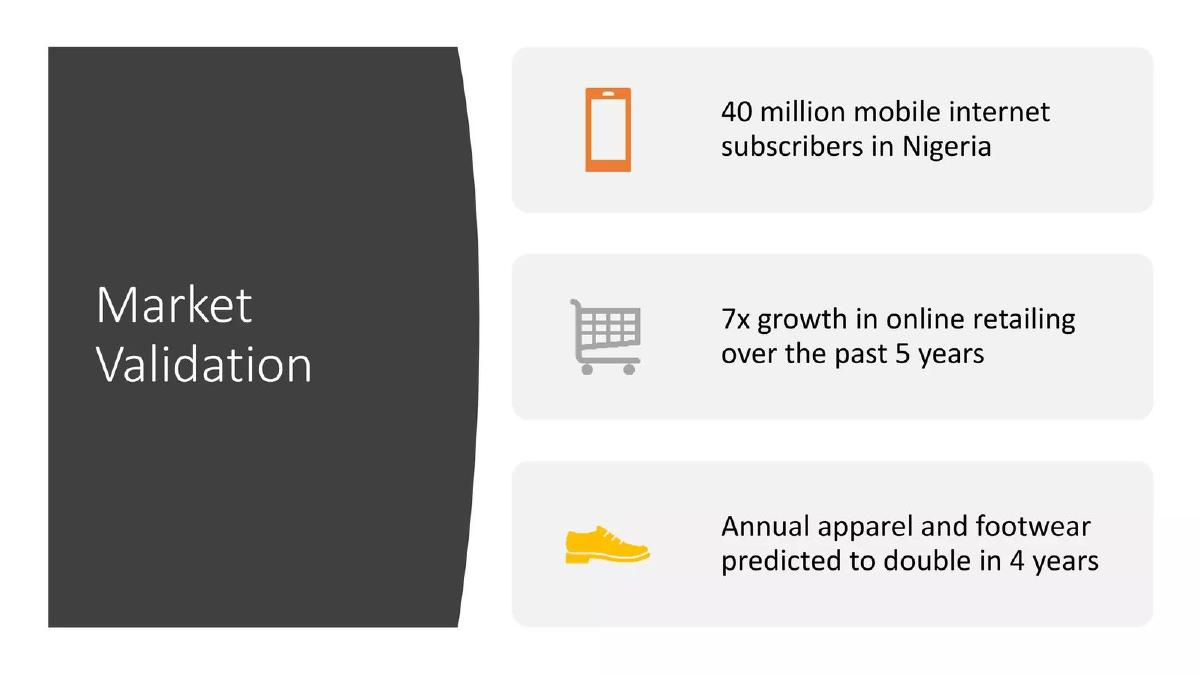
- The company identifies Nigeria as its primary entry point, citing 40 million mobile internet subscribers on slide 3.
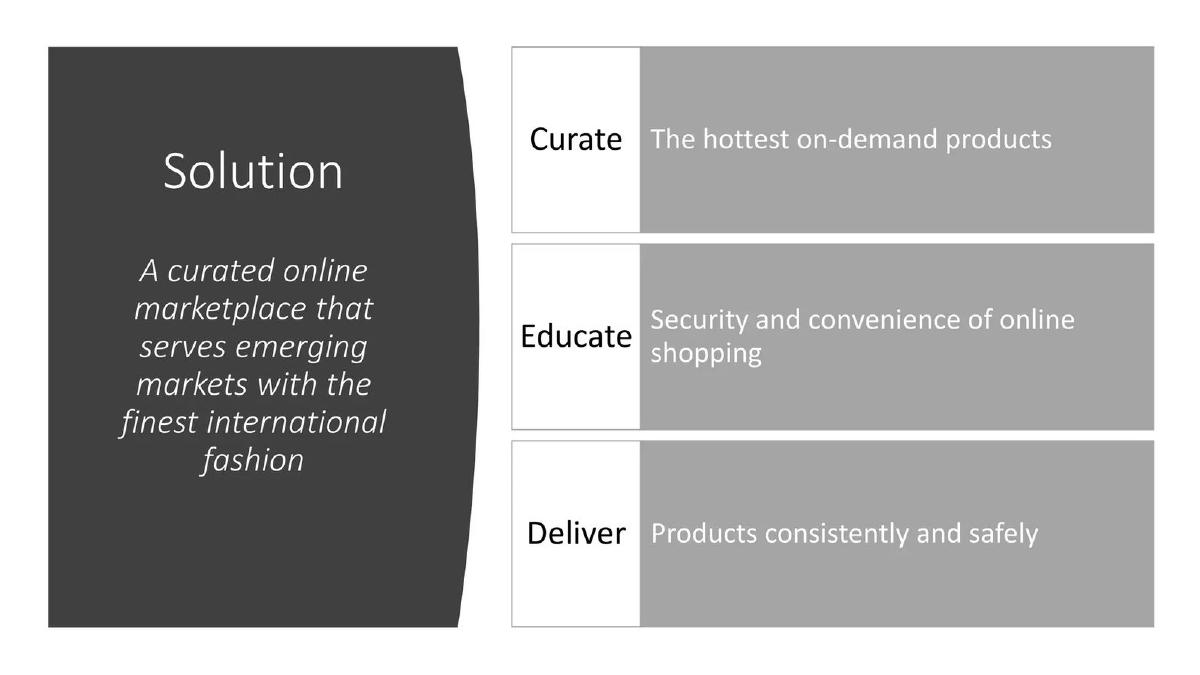
- The business model relies on a three-pillar strategy: Curate, Educate, and Deliver, as outlined on slide 2.
- The vision extends beyond Africa, with slide 4 explicitly targeting both African and South American emerging markets.
- The total funding requirement is £100,000, with the largest portion (£40,000) allocated to working capital, warehouse, and inventory (slide 6).
- Marketing and events are budgeted at £15,000, representing 15% of the total raise on slide 6.
- The deck identifies Jumia as a primary competitor in the individual reseller marketplace category on slide 5.
- Founder Andrew claims this is his 4th startup and holds a masters in Business Management and Entrepreneurship (slide 7).
- Founder Zubaida brings a neuroscience background to marketing and branding, focusing on the identity aspect of fashion (slide 7).
Executive Summary: The Luxury Bridge to Emerging Markets
House of Highness enters the pitch with a clear, albeit ambitious, goal: to become the premier gateway for international luxury fashion into Africa and South America. The deck is structured as a classic seed-stage presentation, focusing heavily on the macro-opportunity of the Nigerian market and the personal passion of the founding team. With a modest ask of £100,000, the company is positioning itself as a lean operation looking to solve the trust and curation gap in emerging market e-commerce.
Slide 1: Title and Tagline
The cover slide features a gold crown logo against a black background, establishing a luxury aesthetic. The tagline, "Bringing the worlds finest fashion to Africa!", immediately defines the geographic and sectoral focus. It is a functional title slide that sets the tone for a high-end brand proposition, though it lacks a specific mention of the platform's digital nature, which is only clarified in subsequent slides.
Slide 2: The Solution Framework
Slide 2 outlines the "Solution" through three functional pillars: Curate, Educate, and Deliver. The text describes the business as a "curated online marketplace that serves emerging markets with the finest international fashion." The three pillars address specific consumer pain points in the region: the need for on-demand products (Curate), the need for trust in online payments (Educate), and the necessity of reliable logistics (Deliver). By including "Educate" as a core pillar, the founders acknowledge that consumer behavior in their target markets still requires active cultivation regarding the "security and convenience of online shopping."
Slide 3: Market Validation and Nigerian Growth
This slide serves as the "Why Now?" component of the deck. It focuses exclusively on Nigeria, providing three compelling statistics: 40 million mobile internet subscribers, 7x growth in online retailing over the past five years, and a forecast that the apparel and footwear market will double in size within four years. While these numbers are impressive, the slide does not cite the specific sources for these projections, which is a common omission in early-stage decks. However, the data successfully paints a picture of a market that is both large and rapidly digitizing.
Slide 4: Regional Vision and Expansion
Slide 4 expands the scope of the business beyond Nigeria. The vision statement is to "Become the leading online marketplace for fashion and luxury products in emerging African and South American markets." The accompanying map highlights the two continents. This is a significant jump in scale; while Nigeria is a logical starting point, the inclusion of South America suggests the founders see their model as a replicable template for any emerging economy with a growing middle class and limited access to global luxury brands. It moves the company from a local play to a global emerging-markets play.
Slide 5: The Competitive Landscape
The "Competitors" slide is categorized by business type rather than a simple list of names. It identifies Jumia as the "Individual reseller marketplace" leader. It also lists "Nigerian International Brands" like Orange Culture and "Quality Nigerian designers" like David Wej. Finally, it acknowledges "Physical Retail Stores." This categorization is useful because it shows the founders understand they are competing for "wallet share" across different channels, not just other websites. However, the slide lacks a "competitive advantage" or "matrix" section that explains exactly how House of Highness will beat Jumia or lure customers away from physical malls.
Slide 6: Funding Breakdown and Use of Proceeds
The company is asking for a total of £100,000. The breakdown on slide 6 is specific: £40,000 for Working Capital, Warehouse, and Inventory; £25,000 for Salaries; £20,000 for Online Personal Shopper development; and £15,000 for Marketing and Events. This allocation suggests a "heavy" e-commerce model where the company intends to hold inventory rather than acting as a pure drop-shipping marketplace. The investment in an "Online Personal Shopper" indicates a desire to use technology (or tech-enabled services) to replicate the high-touch experience of luxury retail.
Slide 7: The Founding Team
The final slide introduces the two founders, Andrew and Zubaida. Andrew is positioned as the strategist and administrator, noting he is on his "4th startup" and holds a masters in Business Management and Entrepreneurship. Zubaida is presented as the creative and brand lead, with a background in neuroscience and a personal passion for fashion as identity. The bios are written in the first person ("Hi, I'm Andrew..."), which is unconventional for formal pitch decks but adds a personal touch. The team appears to balance operational experience with local market insight and branding expertise.
What House of Highness Does Well
The deck excels at identifying a specific, high-growth niche. By focusing on "luxury" rather than general e-commerce, House of Highness avoids a direct head-to-head battle with giants like Jumia on price and volume, instead competing on curation and trust. The market validation slide (Slide 3) uses clear, punchy metrics that make the Nigerian opportunity feel urgent and inevitable. Furthermore, the funding breakdown is transparent; investors rarely like to see "miscellaneous" categories, and this deck avoids that by assigning specific pound amounts to clear operational needs.
What is Missing from the Deck
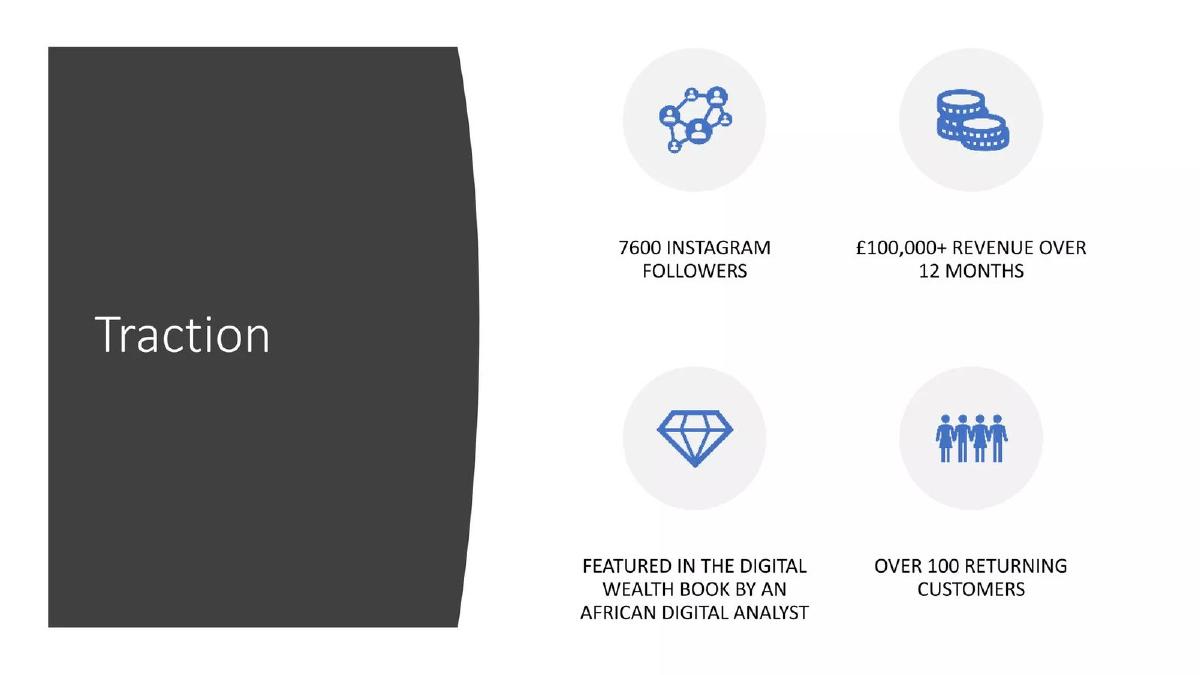
The most glaring omission is the lack of unit economics. There is no mention of average order value (AOV), customer acquisition cost (CAC), or gross margins. In luxury e-commerce, where shipping and duties can be exorbitant, understanding the margin after logistics is critical. Additionally, there is no "Traction" slide. It is unclear if House of Highness is a concept or a functioning business with existing sales. The deck also fails to explain the logistics of "Deliver" (Slide 2). Shipping luxury goods into Nigeria involves complex customs and last-mile delivery challenges that are not addressed here. Finally, the leap to South America (Slide 4) feels premature without a more detailed roadmap for how a UK or Nigeria-based team would manage operations across the Atlantic.
Founder's Guide: What to Copy and What to Avoid
Copy the competitive categorization: Instead of a standard logo cloud, Slide 5 breaks competitors into functional groups. This helps investors understand the different types of threats the business faces and shows a deeper level of market analysis.
Copy the clear use of funds: Slide 6 is a model of clarity for a small seed round. It tells the investor exactly what their money buys, which builds confidence in the founders' operational planning.
Avoid the first-person bios: While the team slide (Slide 7) is informative, writing bios in the first person can come across as less professional in a high-stakes fundraising environment. Stick to third-person summaries of achievements and credentials.
Avoid the "Map of the World" trap: Highlighting two massive continents as your target market (Slide 4) without explaining the bridge between them can make a startup look unfocused. It is usually better to demonstrate total dominance in one market before claiming a multi-continental vision.
Conclusion
House of Highness presents a compelling case for the "luxury gap" in West Africa. The founders have identified a clear demographic shift and have a plan to address the trust issues that plague emerging market e-commerce. To move to the next level, the company will need to provide hard data on their supply chain costs and proof that their "curation" strategy can actually lower customer acquisition costs compared to horizontal marketplaces. For a £100,000 ask, this deck provides enough of a hook to start a conversation, provided the founders can back up their vision with operational specifics in the room.
Frequently asked questions
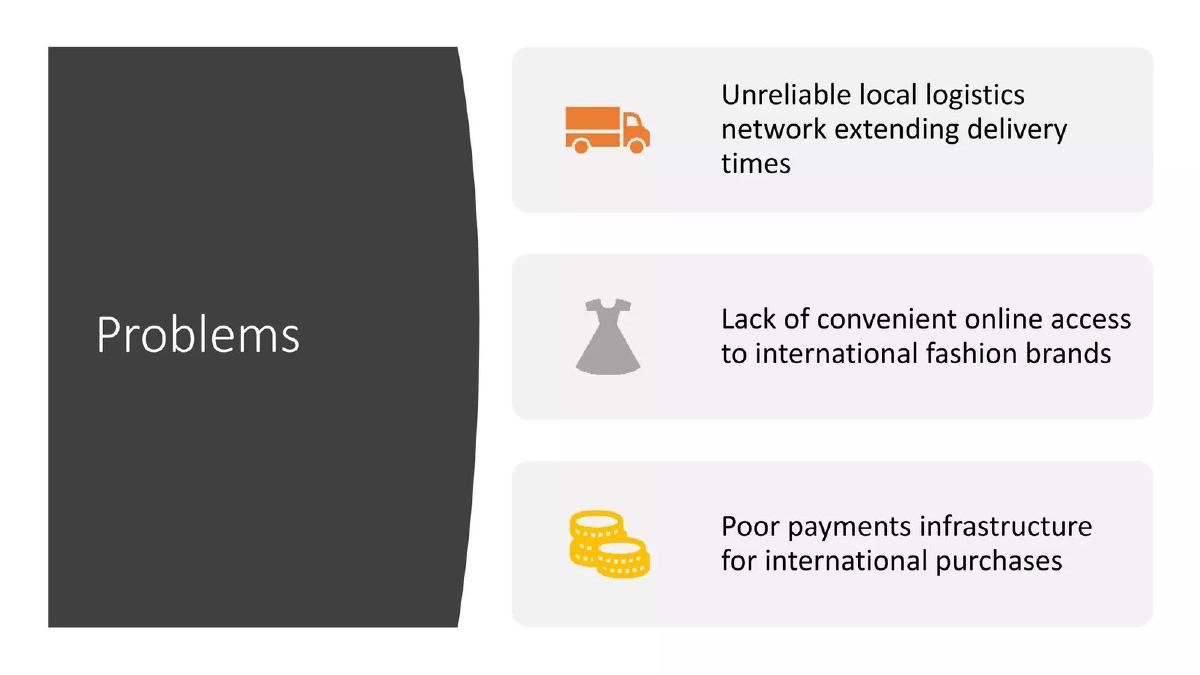
- What is the specific problem House of Highness is solving?
- While a dedicated 'Problem' slide is not among the provided images, the 'Solution' slide (slide 2) implies the problem is a lack of access to curated, safe, and convenient international fashion in emerging markets. It suggests that current options lack the necessary curation and security that African consumers desire when purchasing high-end global brands.
- How does the company plan to spend the £100,000 investment?
- According to slide 6, the funds are split into four categories: £40,000 for working capital, warehouse, and inventory; £25,000 for salaries; £20,000 for 'Online Personal Shopper development'; and £15,000 for marketing and events. This indicates a heavy focus on the physical supply chain and the technical user experience.
- Who are the main competitors mentioned in the deck?
- Slide 5 categorizes competition into four groups: individual reseller marketplaces (Jumia), Nigerian international brands (Orange Culture), quality Nigerian designers (David Wej), and physical retail stores. This shows the company views both local high-end brands and massive horizontal e-commerce players as its primary rivals.
- What market data is used to justify the business case?
- Slide 3 provides three key data points for Nigeria: 40 million mobile internet subscribers, 7x growth in online retailing over the past 5 years, and a prediction that annual apparel and footwear spending will double within 4 years. These metrics aim to prove the readiness of the Nigerian consumer for digital fashion platforms.
- What is the long-term geographic ambition of the brand?
- Slide 4 features a world map highlighting Africa and South America. The stated vision is to become the leading online marketplace for fashion and luxury products in both of these emerging market regions, indicating an intent to scale across the 'Global South' rather than staying limited to West Africa.