Howbout’s 12-slide deck is a masterclass in presenting a consumer social product through the lens of organic growth and network effects. By positioning the 'social calendar' as the next evolution of connection for Gen Z—a demographic reportedly moving away from traditional feeds—the company highlights a user base of over 4 million people (Slide 3). The deck leans heavily on the concept of the 'Chief Friendship Officer' to explain its viral loop, noting that 90% of new users join via referral links (Slide 7). With $0 spent on acquisition outside the UK and USA (Slide 9) and a top-10 ranking in…
Key takeaways
- The company reports a user base of over 4 million people using the app as a social calendar (Slide 3).
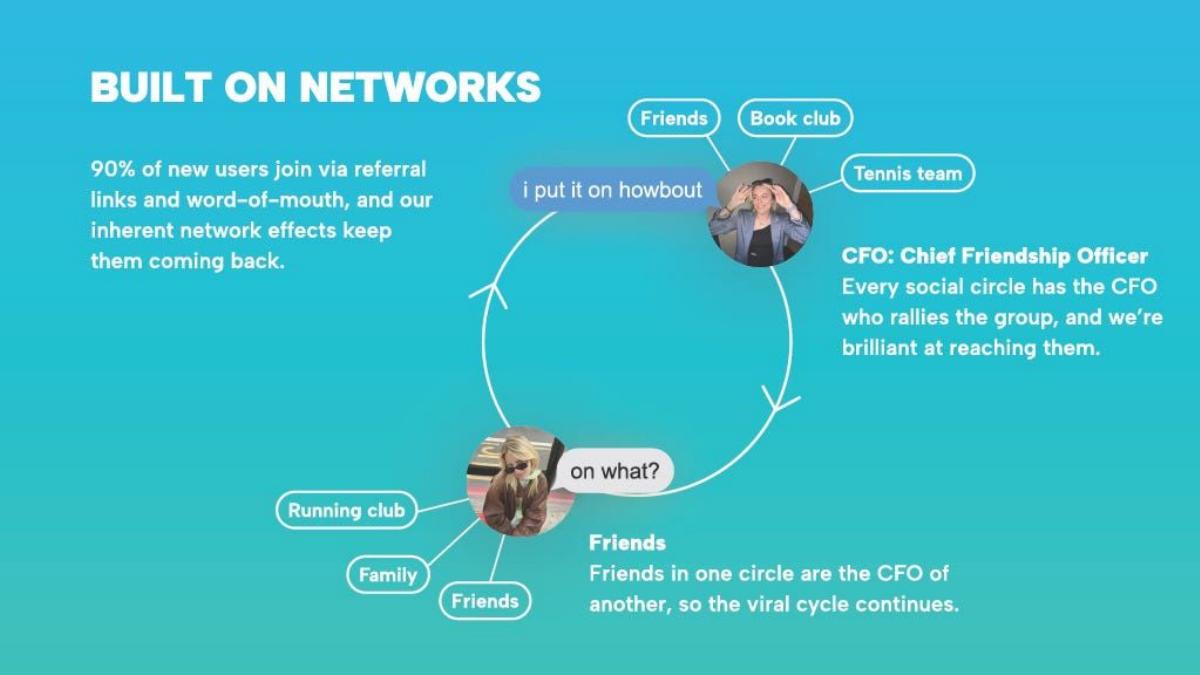
- 90% of new users are acquired through referral links and word-of-mouth rather than paid advertising (Slide 7).
- The deck identifies a specific user persona, the 'Chief Friendship Officer,' as the primary driver of group adoption (Slide 7).
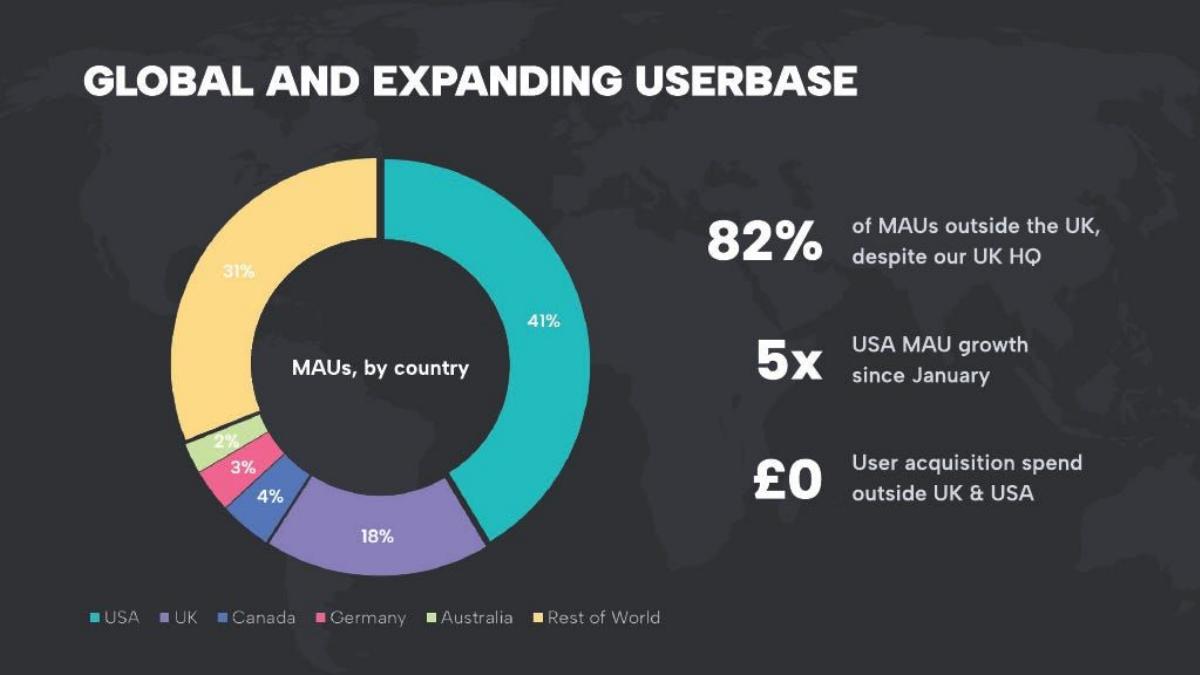
- International expansion is highly organic, with 82% of Monthly Active Users (MAUs) located outside the UK (Slide 9).
- The company claims $0 in user acquisition spend for all regions outside the UK and USA (Slide 9).
- Howbout positions itself against workplace tools, arguing that 'multiplayer' time management does not exist for social circles (Slide 10).
- The app has achieved a top 10 social app ranking in over 30 countries with a 4.7-star rating (Slide 11).
- The team is presented as a lean, 10-person high-performing unit (Slide 12).
The Narrative: From Utility to Social Network
Howbout’s pitch deck for their 2023 Series A round is a concise 12-slide presentation that focuses on a single, powerful narrative: the transition of social media from public feeds to private coordination. By framing a calendar not as a productivity tool, but as a 'social' platform, the company addresses a specific pain point for Gen Z—the difficulty of making plans in an era of digital fragmentation. The deck relies heavily on social proof and growth efficiency metrics to convince investors that they have captured lightning in a bottle with a lean team and zero-cost international expansion.
Slide 1: Title Slide
The deck opens with a minimalist title slide featuring the Howbout logo. There is no tagline or mission statement here, relying instead on the brand identity to set a modern, consumer-focused tone.
Slide 2: The Market Shift
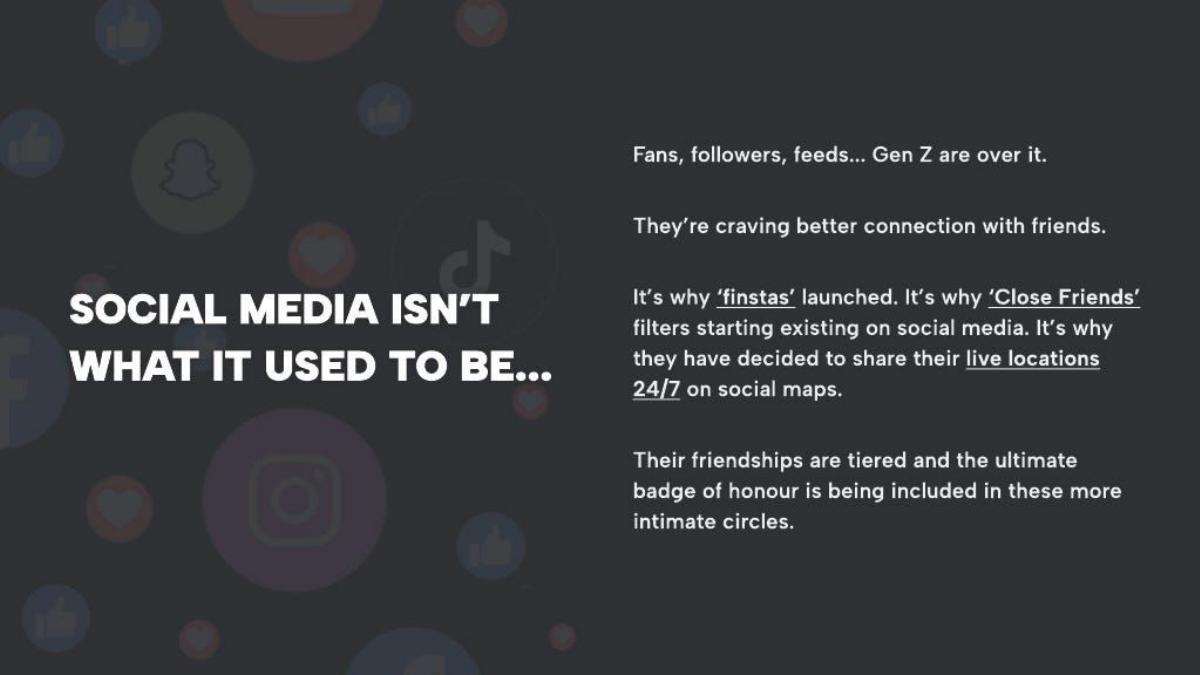
Howbout sets the stage by diagnosing a problem with current social media. The slide claims Gen Z is 'over' fans, followers, and feeds, craving 'better connection' instead. It cites the rise of 'finstas' (fake Instagram accounts) and 'Close Friends' filters as evidence that users are retreating from public broadcasting toward private, intimate circles. This establishes the 'Why Now' for a social coordination tool.
Slide 3: The Value Proposition
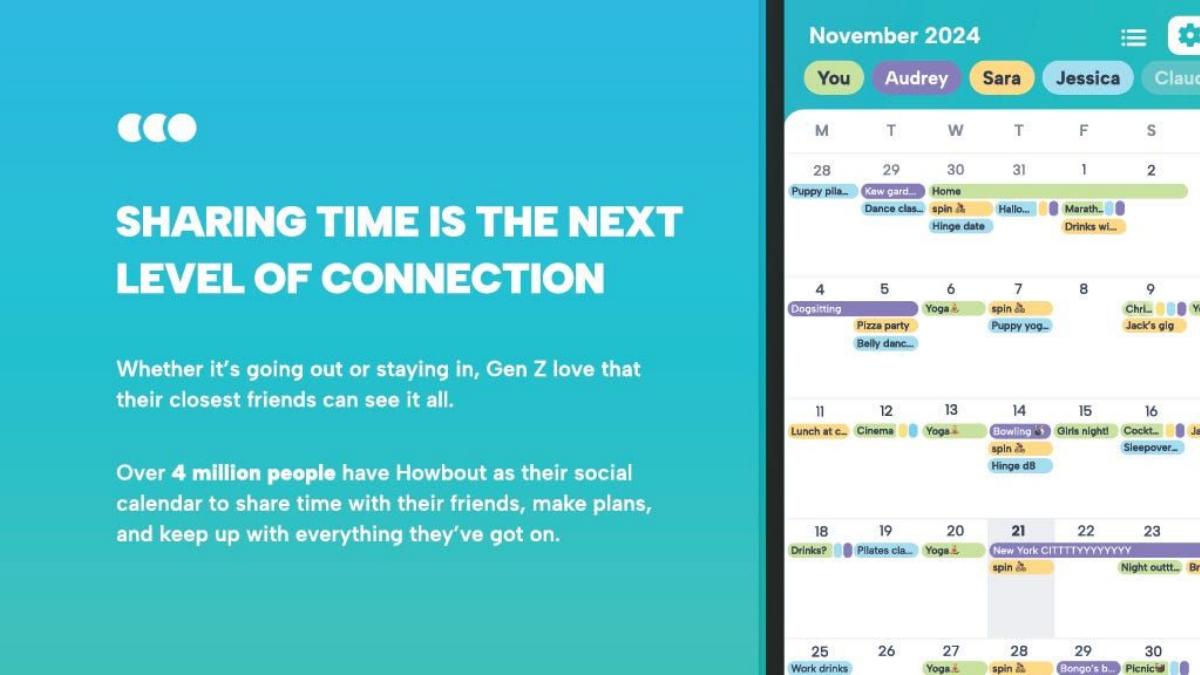
This slide introduces the core concept: 'Sharing time is the next LEVEL of connection.' It bridges the gap between the desire for connection and the utility of a calendar. Crucially, it introduces a major traction milestone: 'Over 4 million people have Howbout as their social calendar.' This immediately validates the product-market fit before the deck even explains the features.
Slide 4 & 5: Product and Features
These slides detail the 'Social Calendar' functionality. Slide 4 emphasizes that social features 'underpin everything,' listing shared views, event chats, polls, and groups. It also mentions integration with third-party calendars, addressing a common friction point for utility apps. Slide 5 uses three mobile mockups to demonstrate the UI, highlighting three pillars: 'Easily plan anything,' 'Instantly find when everyone’s free,' and 'Keep on top of everything.' The visual design is clean and targets a younger demographic with vibrant colors and social-centric imagery.
Slide 6: Engagement
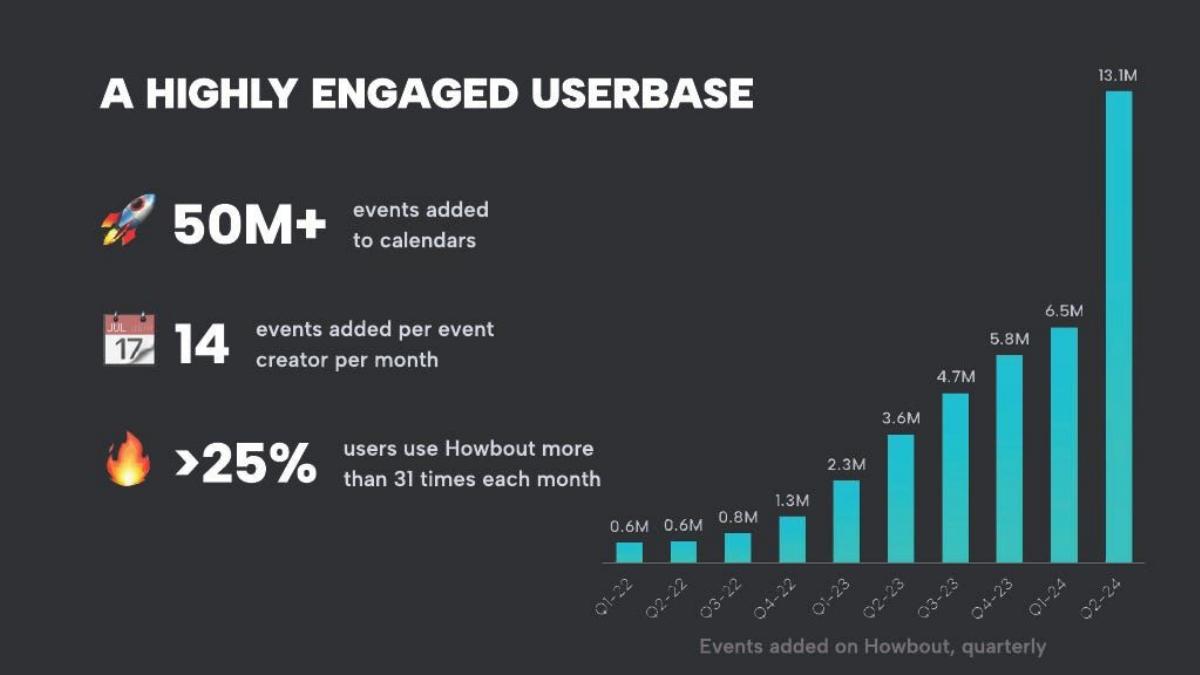
Slide 6 is a transition slide titled 'A HIGHLY ENGAGED USERBASE.' While the text provided is brief, it serves to pivot the deck from what the app does to how users are actually interacting with it.
Slide 7: The Viral Loop
This is arguably the most important slide for a consumer social investment. Titled 'Built on NETWORKS,' it claims that 90% of new users join via referral links and word-of-mouth. It introduces the 'Chief Friendship Officer' (CFO) concept—the idea that one person in a group coordinates the others. The slide illustrates a viral cycle where a user brings in a book club or tennis team, and members of those groups then become the 'CFO' of their own separate circles (family, running clubs), creating a self-sustaining growth engine.
Slide 8: Efficiency and Discovery
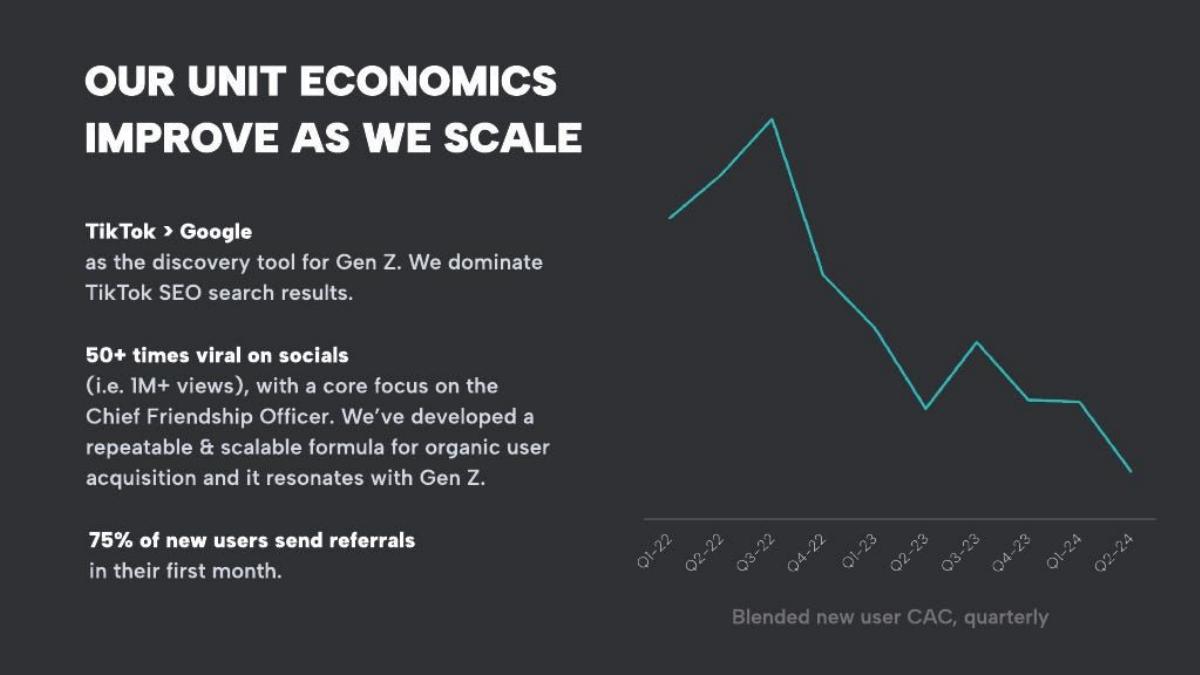
Slide 8 focuses on unit economics and discovery. It makes a bold claim that 'TikTok > Google' as a discovery tool for their target demographic. The company states they 'dominate TikTok SEO search results' and have gone viral over 50 times with 1M+ views. This reinforces the idea that their growth is organic and culturally relevant, rather than bought through expensive Facebook ads.
Slide 9: Geographic Distribution
The 'Global and expanding userbase' slide uses a donut chart to show MAUs by country. The USA is the largest segment at 41%, followed by the UK at 18%. The most striking metric here is the '£0 User acquisition spend outside UK & USA,' paired with the fact that 82% of MAUs are outside the UK. This demonstrates extreme capital efficiency in international scaling.
Slide 10: The Competitive Gap
Slide 10 addresses the 'Incumbent Players.' It contrasts the workplace, where 'seeing what your boss is up to is easy,' with the social sphere, where no multiplayer time-sharing tool exists. By framing Google Calendar or Outlook as 'workplace' tools, they position Howbout as the only player in the 'social' time management space.
Slide 11: App Store Performance
This slide provides further social proof, showing the Howbout icon alongside giants like Instagram, WhatsApp, and Facebook. It claims a top 10 social app ranking in 30+ countries and an average rating of 4.7 stars from over 45,000 ratings. This is a high-authority slide intended to show that they are already competing for screen time with the world's largest apps.
Slide 12: The Team
The deck concludes with a team slide, describing a 'LEAN and high-performing team' of 10 people. This emphasizes the efficiency of the operation—supporting 4 million users with only 10 employees is a strong signal of operational excellence and a high-leverage business model.
What Howbout Does Well
The Howbout deck excels at defining a new category: the 'Social Calendar.' By distancing themselves from 'productivity' and leaning into 'connection,' they tap into the high valuations associated with social networks rather than the lower multiples of utility apps. The focus on the 'Chief Friendship Officer' is a brilliant way to explain their go-to-market strategy; it shows they understand the psychology of group dynamics. Furthermore, the data regarding their £0 acquisition spend in international markets is a powerful 'hook' for Series A investors who are looking for efficient engines to pour capital into.
What is Missing from the Deck
Despite the strong growth metrics, the deck is notably silent on two major fronts: monetization and the 'Ask.' There is no mention of how the company intends to generate revenue—whether through subscriptions, advertising, or transactional features (like booking events directly through the app). Additionally, the deck does not specify how much capital they are raising or how they intend to deploy it. While this information might be reserved for a follow-up data room or a verbal pitch, its absence in the primary deck leaves the 'business' side of the startup under-explained. There is also a lack of detailed cohort retention data, which is usually a prerequisite for a Series A social app teardown.
Founder Takeaways
Define a New Persona: Howbout’s 'Chief Friendship Officer' is a great example of how to name a specific user behavior that drives your growth. It makes the 'viral loop' slide much more memorable. · Leverage Modern SEO: Mentioning TikTok SEO instead of traditional Google SEO shows that the founders understand where their specific audience (Gen Z) actually lives. · Show, Don't Just Tell, Efficiency: The '£0 spend' metric on Slide 9 is the strongest evidence of product-market fit in the entire deck. If you have organic international growth, highlight it as a standalone competitive advantage. · Contrast with Work Tools: If your consumer product looks like a B2B tool (like a calendar), explicitly state why the B2B incumbents cannot win the consumer space. Howbout does this effectively on Slide 10 by highlighting the 'multiplayer' nature of social time.
Frequently asked questions
- How does Howbout justify the need for a social calendar?
- On Slide 10, Howbout argues that while workplace time is 'multiplayer' (allowing employees to see a boss's schedule), no equivalent exists for personal lives. They position the social calendar as a way to bridge the gap between craving connection and the logistical difficulty of coordinating with friends, which traditional social media feeds no longer solve.
- What is the 'Chief Friendship Officer' mentioned in the deck?
- According to Slide 7, the 'Chief Friendship Officer' (CFO) is the person in every social circle who rallies the group to make plans. Howbout focuses its product and marketing on reaching these individuals, knowing that if one 'CFO' adopts the app, they will bring their entire network (friends, book clubs, sports teams) with them.
- What are the primary growth drivers for the app?
- Growth is driven by two factors: viral referral loops and TikTok SEO. Slide 7 states that 90% of users come from word-of-mouth, while Slide 8 highlights that the company has gone viral on social media over 50 times, dominating TikTok search results for Gen Z users.
- Is Howbout generating revenue according to the deck?
- The deck does not include a slide dedicated to current revenue, business models, or specific monetization strategies. It focuses almost entirely on user growth, engagement metrics, and the efficiency of their organic acquisition funnel, which is typical for early-stage consumer social apps prioritizing scale.
- Where is Howbout's largest user base located?
- Slide 9 shows that the USA is the largest market, accounting for 41% of Monthly Active Users (MAUs). The UK follows at 18%, with the remaining 41% spread across Canada, Germany, Australia, and the 'Rest of World.' Notably, 82% of their users are outside their home market of the UK.