Cloosiv’s 2019 Seed deck is a masterclass in identifying a market imbalance. By highlighting that independent coffee shops represent a $20B market yet lack the mobile convenience of Starbucks (which saw app volume grow from $0.25B to $5B in eight years), the founders established a clear 'why now.' The deck relies heavily on momentum, citing +40% monthly GMV growth and a tiered revenue model that incentivizes shop volume. While the team slide is minimalist and the financial charts in the appendix are anonymized with '$X' placeholders, the narrative of building 'the largest coffee chain in Amer…
Key takeaways
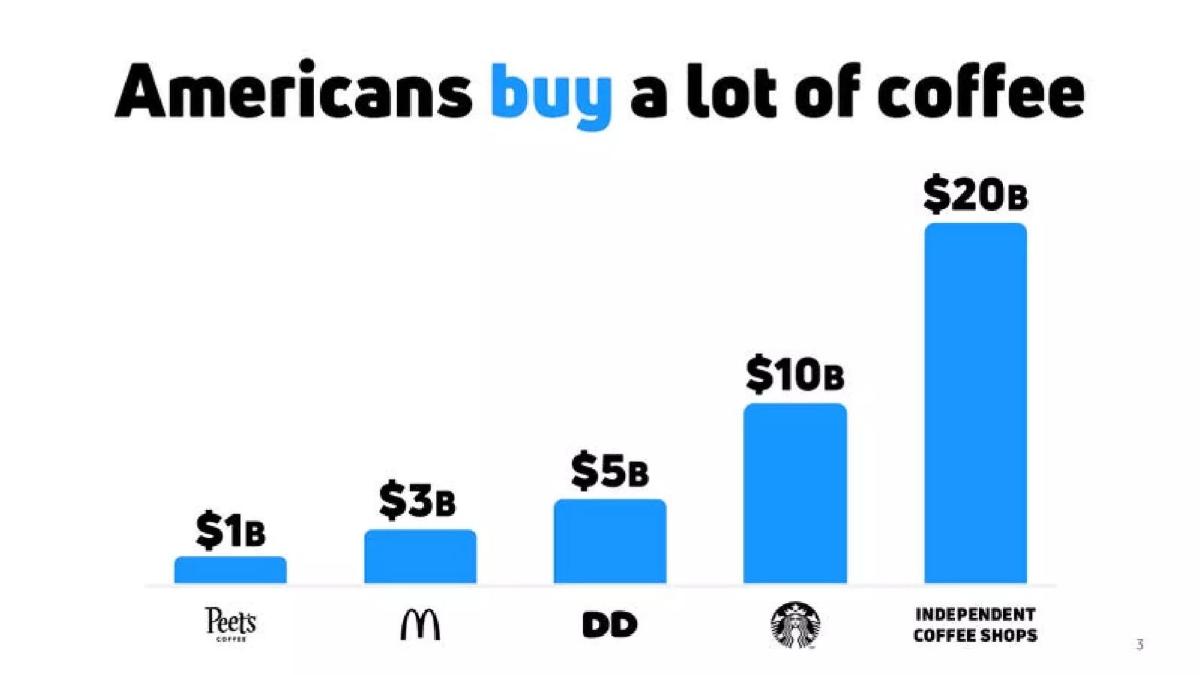
- Independent coffee shops represent a $20B market, larger than Starbucks, Dunkin', and McDonald's coffee segments combined (Slide 3).
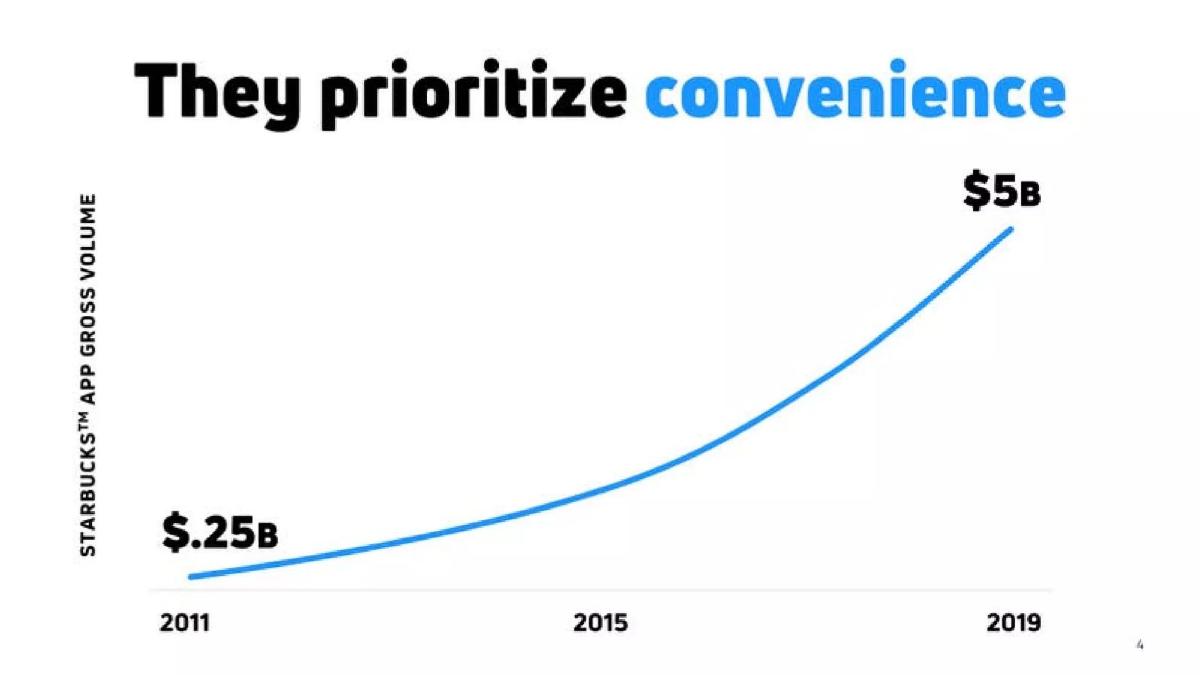
- Starbucks mobile app volume grew from $0.25B in 2011 to $5B in 2019, proving consumer demand for convenience (Slide 4).
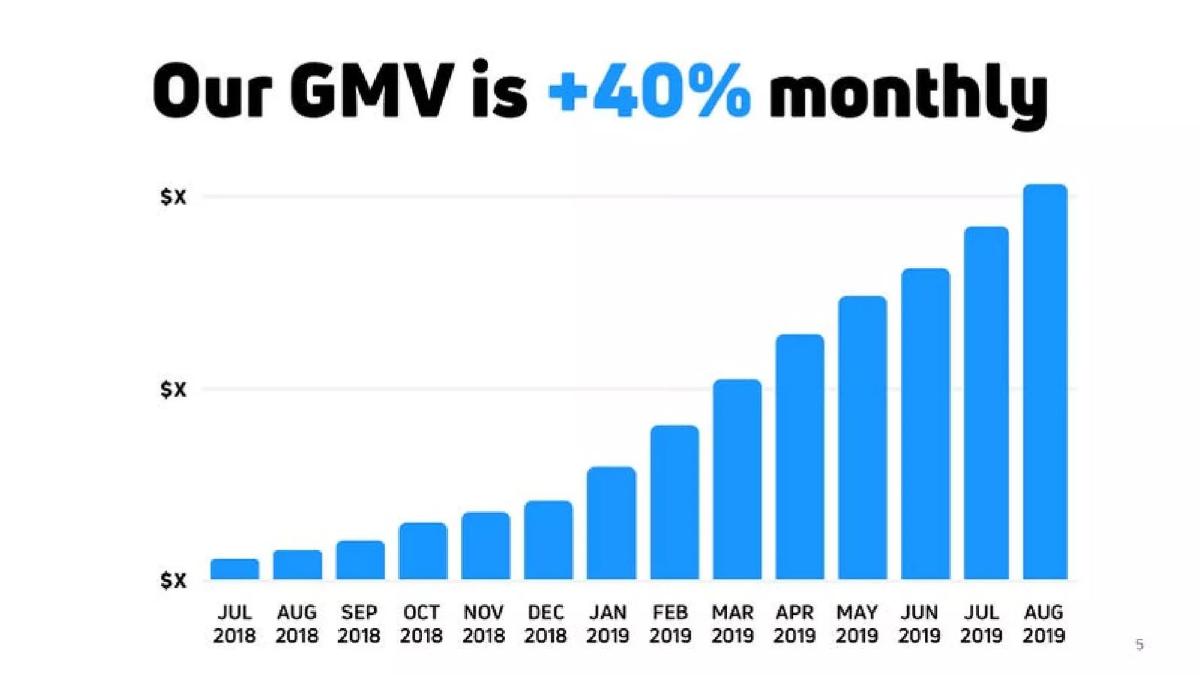
- The company reported +40% monthly GMV growth leading up to August 2019 (Slide 5).
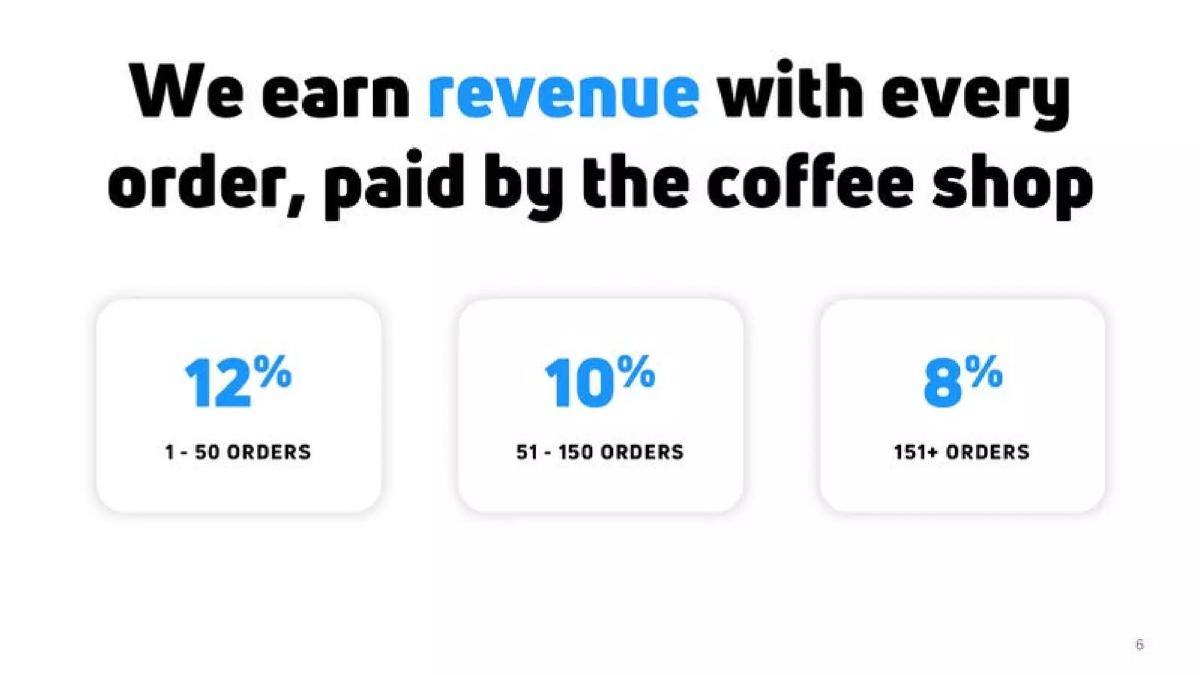
- Revenue is generated via a tiered commission model: 12% for the first 50 orders, scaling down to 8% for 151+ orders (Slide 6).
- Secondary revenue streams include a $499 optional merchant service upgrade and a $0.10 per-swipe user service fee (Slide 7).
- The go-to-market strategy targets mid-market chains with 10 to 52 locations for 2019-2020 (Slide 11).
- The $1M raise was intended to fund product, sales, and marketing to reach a goal of $60K+ monthly net revenue (Slide 16).
- A 'pivot to new pricing model' in August 2019 resulted in a significant spike in total monthly revenue (Slide 22).
The Narrative: Aggregating Fragmented Retail
In 2019, Cloosiv (which later merged with Odeko) presented a vision of a unified digital layer for the independent coffee industry. The deck is structured around a classic 'David vs. Goliath' narrative, where independent shops are the collective David, and the lack of technology is the only thing preventing them from capturing the convenience-seeking market currently dominated by Starbucks.
Slides 1-4: The Market Thesis
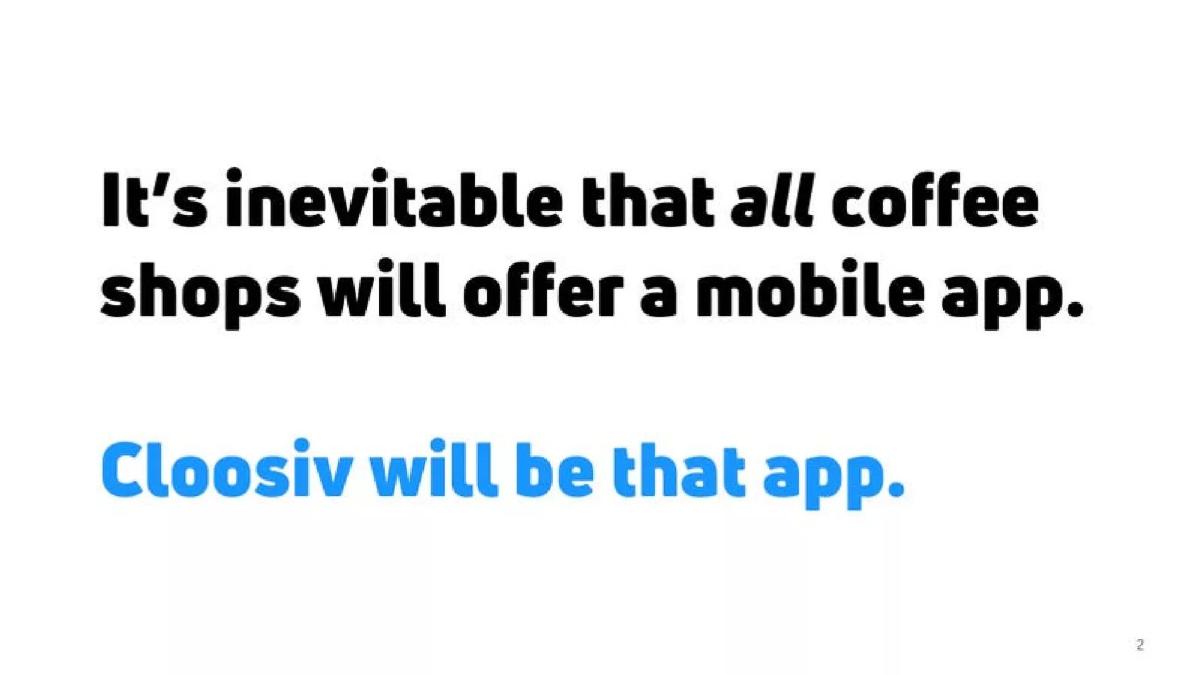
The deck opens with a bold claim on Slide 2 : "It’s inevitable that all coffee shops will offer a mobile app. Cloosiv will be that app." This sets the stage for a platform play rather than a single-vendor solution. Slide 3 provides the quantitative 'Why': independent coffee shops represent a $20B market. This is significantly larger than the $10B attributed to Starbucks or the $5B for Dunkin'.
Slide 4 introduces the 'Convenience Gap.' By showing Starbucks’ app volume skyrocketing from $0.25B in 2011 to $5B in 2019, the founders argue that consumer behavior has fundamentally shifted toward mobile ordering. The implication is that independent shops are leaving billions on the table because they cannot afford to build proprietary apps of Starbucks' caliber.
Slides 5-7: Traction and Monetization
Slide 5 is the primary 'hook' for investors, claiming a 40% monthly growth in Gross Merchandise Volume (GMV). While the Y-axis is anonymized with '$X', the bar chart shows a clear exponential trend from July 2018 through August 2019. This suggests the product-market fit had been established in a pilot phase.
The revenue model on Slide 6 is particularly interesting because it is counter-intuitive. Most SaaS platforms offer volume discounts, but Cloosiv’s take rate actually decreases as the shop does more volume (from 12% for the first 50 orders down to 8% for 151+ orders). This is likely a strategy to reduce friction for high-volume shops and encourage them to move all their mobile traffic through the app. Slide 7 adds 'Multiple service revenue streams,' including a $499 merchant upgrade and a $0.10 per-swipe fee, showing that the company isn't solely reliant on commissions.
Slides 8-11: Social Proof and Go-To-Market
Slides 8 and 9 use testimonials from shop owners (L. Burleson and A. Lemnes). Notably, the data boxes next to these quotes are filled with placeholders ('000' and '$00,000'), which is a strange design choice—it would have been more effective to show real impact numbers for those specific customers.
Slide 10 outlines user acquisition: in-store advertising, $3 off the first order, and $5 referral bonuses. This is a standard B2B2C playbook where the merchant helps acquire the consumer. Slide 11 defines the 'Mid-market' target. They aren't just going after the single-location mom-and-pop; they are targeting 'mini-chains' like Blue Bottle (52 locations at the time) and Philz Coffee (60 locations). This is a smart move for scaling, as one sales win brings dozens of locations.
Slides 12-14: The Vision
Slide 12 emphasizes a 'ubiquitous experience' that is point-of-sale agnostic. This is a critical technical moat—if Cloosiv can work with any POS system, the barrier to entry for a coffee shop is near zero. Slide 13 shows a map of the US with pins, claiming they are building 'the largest coffee chain in America.' This is the 'Uber for X' or 'Airbnb for X' pitch: owning the supply through software without owning the physical assets.
Slides 15-17: Team and The Ask
The team slide ( Slide 15 ) is surprisingly sparse. It uses illustrated avatars rather than photos and lists only three people: Tim Griffin (CEO), James Burkhardt (CTO), and Jessie Kolbenschlag (Sales). There are no logos of previous employers or universities, which usually suggests the founders are relying entirely on the current traction of the business rather than their resumes.
Slide 16 contains the 'Ask': $1 Million. The goals are clear: add 800+ coffee shops and reach $60K+ in monthly net revenue. Slide 17 provides a list of sources for their market data, which adds a layer of professional rigor to their $20B market claims.
Slides 18-22: The Appendix
The appendix provides deeper cuts of the data shown earlier. Slides 19, 20, and 21 show growth in Mobile Orders, Active Users, and Coffee Shops respectively. All three charts mirror the GMV growth, suggesting a healthy, balanced marketplace. Slide 22 is the most revealing: it shows 'Total Monthly Revenue' with a massive vertical spike in August 2019. A footnote attributes this to a 'Pivot to new pricing model.' This suggests that the previous year of growth was largely about proving the concept, and the new model (likely the one shown on Slide 6) was significantly more lucrative.
What Works
The 'Starbucks Proxy': Using Starbucks' success to prove a market for independent shops is a very effective way to de-risk the 'will people use this?' question. · Tiered Pricing: The pricing model shown on Slide 6 aligns the company’s success with the merchant's success while making the platform more attractive as the merchant scales. · Clear Milestones: The deck doesn't just ask for money; it says exactly what that money will buy (800 shops, $60k revenue).
What is Missing
Founder Pedigree: The team slide is very weak. Investors usually want to know why this team is the one to win. The lack of professional history is a notable omission. · Unit Economics: While we see GMV and revenue, we don't see Customer Acquisition Cost (CAC) or Lifetime Value (LTV). How much does it cost to get a coffee shop to sign up? · Competitive Landscape: There is no mention of other third-party delivery or ordering apps like Joe Coffee, Ritual, or even GrubHub/UberEats, which were all active in 2019.
What a Founder Should Copy
The Market Comparison: If you are in a fragmented market, find the 'Goliath' and show how much of the market they don't have. Slide 3 is a perfect example of this. · Visual Consistency: The deck uses a very clean, limited color palette (blue, black, white) and consistent iconography. It looks professional and is easy to digest. · The 'Why Now' Slide: Slide 4 perfectly captures the 'Why Now' by showing a 20x growth trend in a related sector over the last decade.
Frequently asked questions
- What was Cloosiv's core business model at the time of this deck?
- Cloosiv operated as a mobile ordering platform specifically for independent coffee shops. They earned revenue primarily through a tiered commission on orders paid by the coffee shop (8-12%) and a $0.10 per-swipe fee paid by the user. They also offered a $499 merchant upgrade for additional services.
- How did Cloosiv justify the market opportunity?
- The deck compared the $20B independent coffee market to major chains. It specifically used Starbucks as a proxy for success, showing that Starbucks' mobile app volume grew 20x over eight years, suggesting that independent shops were losing out by not offering similar mobile convenience.
- What were the primary growth metrics shown in the deck?
- The deck highlighted 40% month-over-month GMV growth. In the appendix, it provided charts for Mobile Orders, Active Users, and Coffee Shops, all showing consistent upward trends from July 2018 to August 2019, though specific numerical values were redacted.
- Who were the target customers for Cloosiv?
- While the platform was for 'local coffee shops,' the expansion strategy specifically targeted mid-market chains. Slide 11 lists targets like Blue Bottle, Joe & the Juice, and La Colombe, focusing on brands with roughly 10 to 60 locations.
- What was the stated goal for the $1M seed round?
- The funding was earmarked for three areas: Product, Sales, and Marketing. The specific milestones tied to this capital were adding 800+ coffee shops to the platform and achieving over $60,000 in monthly net revenue.