CloudCoffer’s pitch deck is a study in extreme brevity, consisting of only six slides. It targets the enterprise intranet security market, specifically addressing the threat of internal hacking. The deck relies heavily on two core pillars: a massive problem statement regarding internal security breaches and a sharp upward revenue trend. By highlighting a 68% gross margin and a jump to $300k monthly revenue in December, the founders attempt to prove product-market fit without diving into deep technical specifications. While the deck succeeds in showing momentum, it leaves significant gaps rega…
Key takeaways
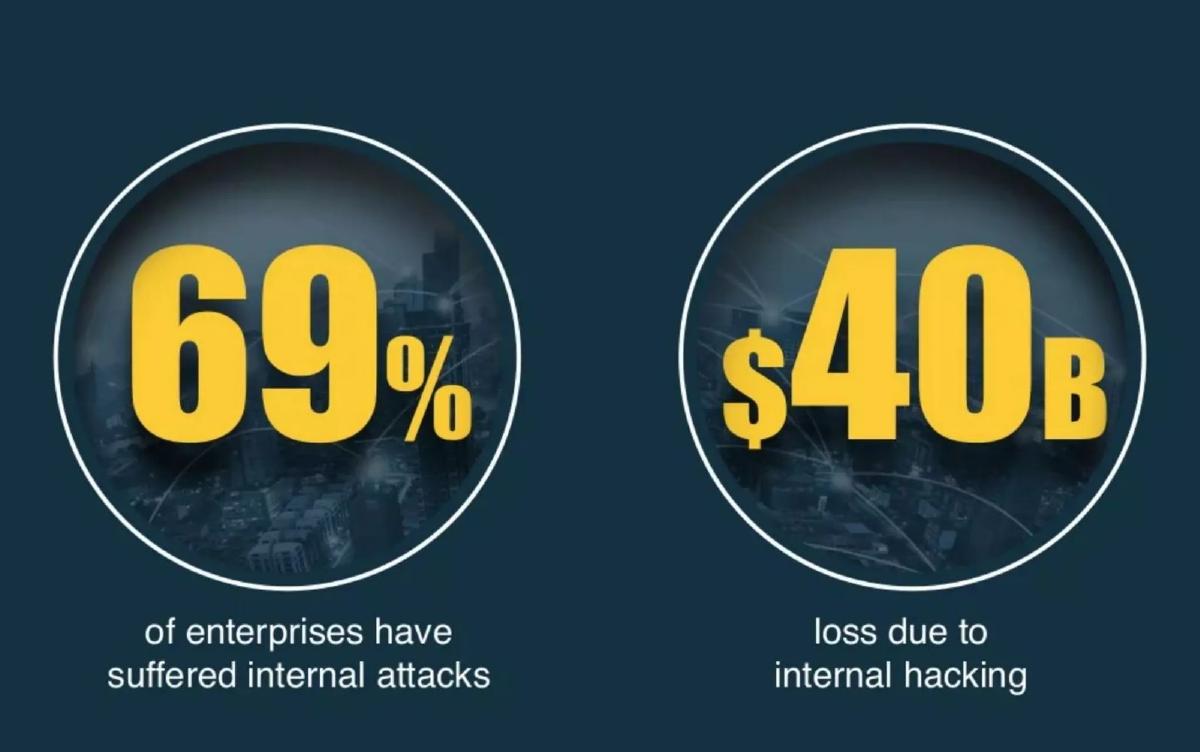
- The deck identifies that 69% of enterprises have suffered internal attacks, resulting in a $40B loss (Slide 2).
- CloudCoffer claims its solution is 10X faster and offers 10X better scale than existing options (Slide 3).
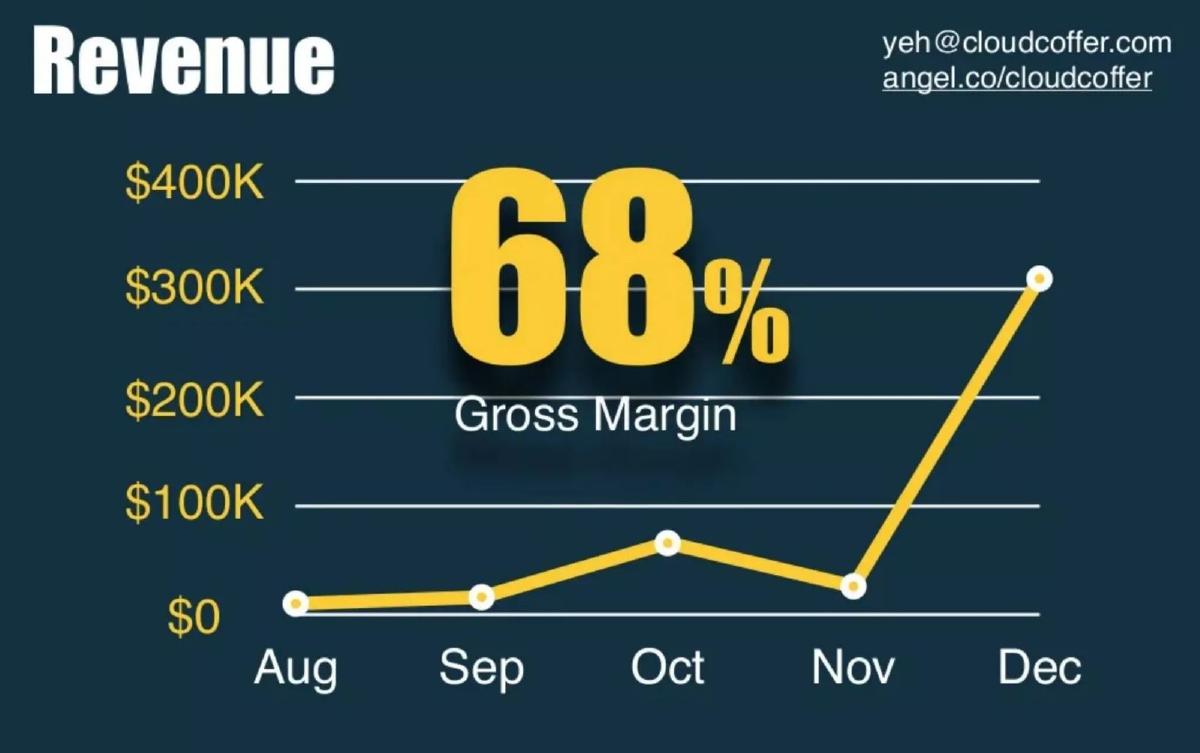
- Revenue traction is the central focus, showing a sharp increase from near-zero in August to $300k in December (Slide 4).
- The company maintains a consistent 68% gross margin across its growth phase (Slide 4 and Slide 6).
- The team consists of two primary leaders, Sandra Yeh (CEO) and Ray Chiang (President), with affiliations to RayAegis and Carnegie Mellon University (Slide 5).
- The business is concentrated, with $400,000 in total revenue coming from just 4 main customers (Slide 6).
- There is no slide dedicated to competition, market size (TAM/SAM/SOM), or the specific use of funds.
- The deck omits a product roadmap or a detailed explanation of how the hardware/software device actually functions.
The Minimalism of CloudCoffer
CloudCoffer’s pitch deck is an exercise in restraint. At only six slides, it bypasses the traditional narrative arc of most startup pitches—which usually include a long-winded 'vision' or 'market trends' section—and goes straight to the numbers. The deck is designed for a quick read, likely intended to secure a first meeting rather than close a round on its own. It focuses on a very specific pain point: the vulnerability of enterprise intranets to internal threats.
Slide 1: Title and Value Proposition
The cover slide establishes the brand identity with a hexagonal logo and a dark, professional color palette. The subtitle, "Securing Enterprises’ Intranet Systems in Minutes," is a clear, time-bound value proposition. It tells the investor exactly what they do (intranet security), who they do it for (enterprises), and what the primary benefit is (speed of deployment). Contact information, including an AngelList link, is placed in the top right corner, a practice maintained throughout the deck.
Slide 2: The Problem Statement
Slide 2 uses two large, high-contrast circles to present the 'Why' behind the company. It cites that "69% of enterprises have suffered internal attacks" and highlights a "$40B loss due to internal hacking." By focusing on internal hacking rather than general external threats, CloudCoffer carves out a specific niche. However, the slide lacks a source for these statistics, which is a common omission in early-stage decks but one that sophisticated investors will eventually question.
Slide 3: The Solution and Differentiation
This slide attempts to explain the product's superiority using a simple diagram and bold text. It claims the product is "10X Faster" and has "10X Better Scale." The diagram shows the CloudCoffer logo sitting between a server stack and a group of workstations, illustrating its role as a gatekeeper or monitor for internal traffic. While the '10X' claims are punchy, the deck provides no technical context or benchmarks to support how these metrics were calculated or what they are being compared against.
Slide 4: Revenue and Growth
This is the 'money slide' of the deck. It features a line graph showing revenue from August to December. The growth is relatively flat from August to November, followed by a massive vertical spike in December, ending at the $300K mark for the month. Overlaid on this graph is a large "68% Gross Margin" figure. This slide is intended to show that the company has moved past the experimental phase and is now in a high-growth scaling phase. The high gross margin suggests that even though there may be a hardware component (as mentioned in the company description), the business model retains software-like profitability.
Slide 5: The Team
The team slide is lean, featuring only two individuals: Sandra Yeh (CEO) and Ray Chiang (President) . The inclusion of the RayAegis logo and Carnegie Mellon University logo serves as a shorthand for credibility. RayAegis is an established cybersecurity firm, implying that the founders have deep domain expertise. Carnegie Mellon is globally recognized for its computer science and cybersecurity programs. However, the slide does not list specific titles held at previous companies or the number of years of experience, leaving the investor to do their own due diligence on the founders' backgrounds.
Slide 6: Summary and Traction Recap
The final slide functions as a summary of the company’s current standing. It reiterates the "$400,000 Revenue" and "68% Gross Margin." Most importantly, it discloses that this revenue comes from "4 Main Customers." This is a double-edged sword: it proves that the product can command high contract values (averaging $100k per customer if the revenue is cumulative), but it also highlights significant customer concentration risk. If one of these four customers leaves, a quarter of the company's revenue disappears. The slide ends with the company logo, serving as a closing frame.
What Works in the CloudCoffer Deck
The primary strength of this deck is its clarity of focus . By ignoring the broader cybersecurity market and focusing strictly on internal enterprise hacking, the founders avoid competing with every firewall and antivirus company on the planet. The decision to lead with revenue and margins is also effective; for a seed-stage company, showing $400k in revenue with nearly 70% margins is a strong signal of product-market fit.
The visual design is consistent and professional. The use of dark backgrounds with yellow highlights makes the key metrics pop, ensuring that even a distracted investor will walk away remembering the '68% margin' and the '$40B loss' figures. The contact information is also omnipresent, making it easy for an interested party to reach out immediately.
What is Missing from the CloudCoffer Deck
The most glaring omission is the Competitive Landscape . The cybersecurity market is incredibly crowded, with giants like Cisco, Palo Alto Networks, and Darktrace, as well as dozens of startups. CloudCoffer does not explain how it sits alongside these players or why a CISO would choose them over an established vendor's internal monitoring tools.
Furthermore, there is no Market Size (TAM) analysis. While the $40B loss figure suggests a large problem, it doesn't define the actual spendable market for intranet security devices. Investors need to know if this is a billion-dollar opportunity or a niche tool for a few hundred government agencies.
Finally, the deck lacks a Funding Ask . There is no mention of how much money they are raising, what the valuation expectations are, or what the milestones for the next 18 months look like. Without an 'Ask' slide, the deck feels more like a corporate brochure than a fundraising tool. It also fails to explain the '100X scaling' mentioned in the catalogue description, which is a significant technical claim to leave unsupported by data or explanation.
What a Founder Should Copy
Founders should emulate the metric-forward approach seen on Slide 4 and Slide 6. If you have revenue, show it clearly. Don't hide your traction in a tiny chart at the end of the deck. CloudCoffer makes their financial success the hero of the story, which is the most persuasive argument a startup can make.
Another takeaway is the minimalist slide count . While six slides might be too few for a final pitch, it is an excellent length for a 'teaser deck' sent via email to get a first meeting. It respects the investor's time and leaves them with enough questions to want to schedule a call. The focus on a specific, quantifiable problem (internal hacking losses) rather than a vague 'making the world safer' mission is also a best practice for technical founders.
Conclusion
CloudCoffer’s deck is a high-signal, low-noise presentation. It relies on the strength of its early revenue and the pedigree of its founders to carry the weight of the pitch. While it leaves many strategic questions unanswered, its ability to communicate a massive problem and a working solution in under two minutes is a feat of efficiency that many founders struggle to achieve. It is a deck built for a specific purpose: to prove that the company is growing, profitable, and solving a multi-billion dollar problem.
Frequently asked questions
- What is the primary problem CloudCoffer is solving?
- CloudCoffer focuses on internal network security. According to slide 2, 69% of enterprises suffer from internal attacks, leading to $40 billion in losses. The company positions itself as a way to secure these intranet systems in minutes, protecting against both external and internal hacking through traffic tracing and real-time blocking.
- How does CloudCoffer demonstrate its market traction?
- The deck uses a revenue chart on slide 4 to show rapid growth over a five-month period. Starting from August, revenue remains low until a significant spike in December, reaching the $300k mark for that month. Slide 6 reinforces this by stating a total revenue of $400,000, though it notes this comes from only four main customers.
- What are the key technical advantages claimed by the company?
- On slide 3, CloudCoffer claims its solution is '10X Faster' and has '10X Better Scale' than current market offerings. The company's self-description further elaborates that their design allows for 100X scaling in minutes, which is intended to help governments and large enterprises deploy security measures rapidly across complex network infrastructures.
- Who are the founders and what is their background?
- Slide 5 introduces Sandra Yeh as CEO and Ray Chiang as President. The slide prominently features the logo for RayAegis, a cybersecurity firm, and Carnegie Mellon University, suggesting a mix of industry experience and high-level technical education, though specific past roles or degrees are not detailed on the slide.
- What information is missing from this pitch deck?
- This deck is missing several standard components, including a competitive analysis, a detailed market size breakdown, a product roadmap, and a specific funding ask. It also lacks unit economics beyond gross margin and does not explain the sales cycle or customer acquisition strategy, which is particularly relevant given the high customer concentration.