Cloosiv's 2019 Seed deck focuses on the massive gap between corporate coffee giants and independent shops. While Starbucks proved that mobile ordering drives billions in revenue, smaller cafes lacked the capital to build proprietary tech. Cloosiv positioned itself as the universal solution for these 'mid-market' players. The deck is visually clean, relying on bold statements and aggressive growth charts. It effectively uses a tiered revenue model (12% to 8% based on order volume) to show scalability. However, the deck is notable for what it hides: nearly every financial chart in the main and…
Key takeaways
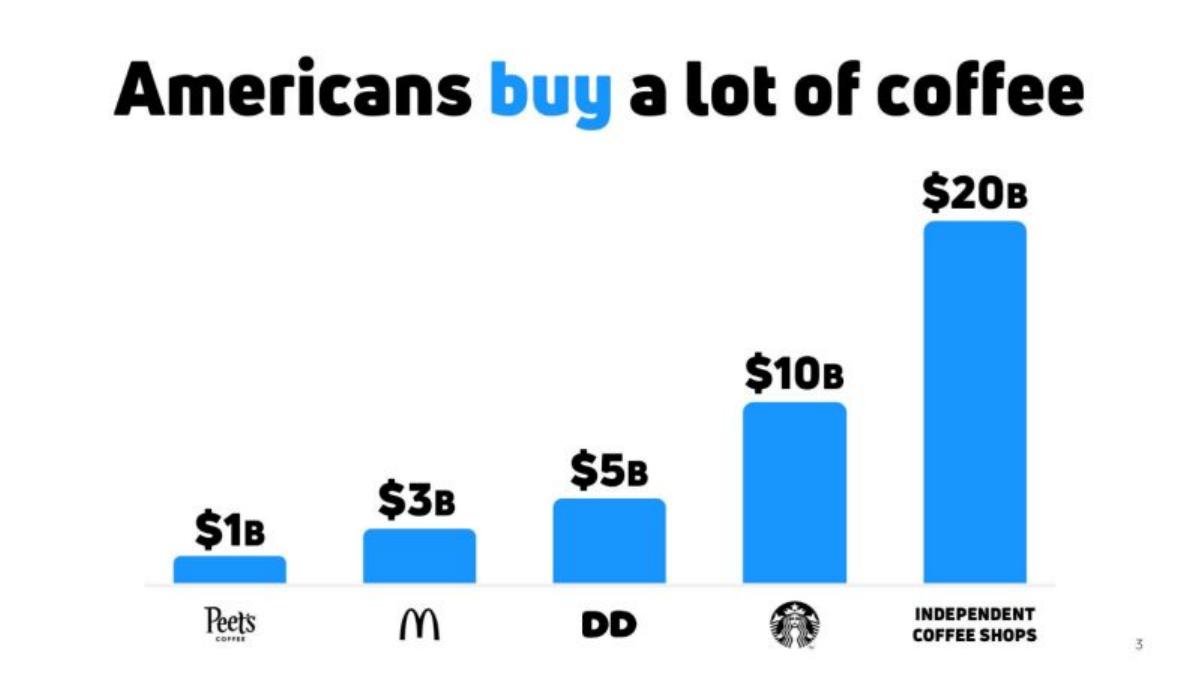
- Independent coffee shops represent a $20B market, larger than Starbucks and Dunkin combined (Slide 3).
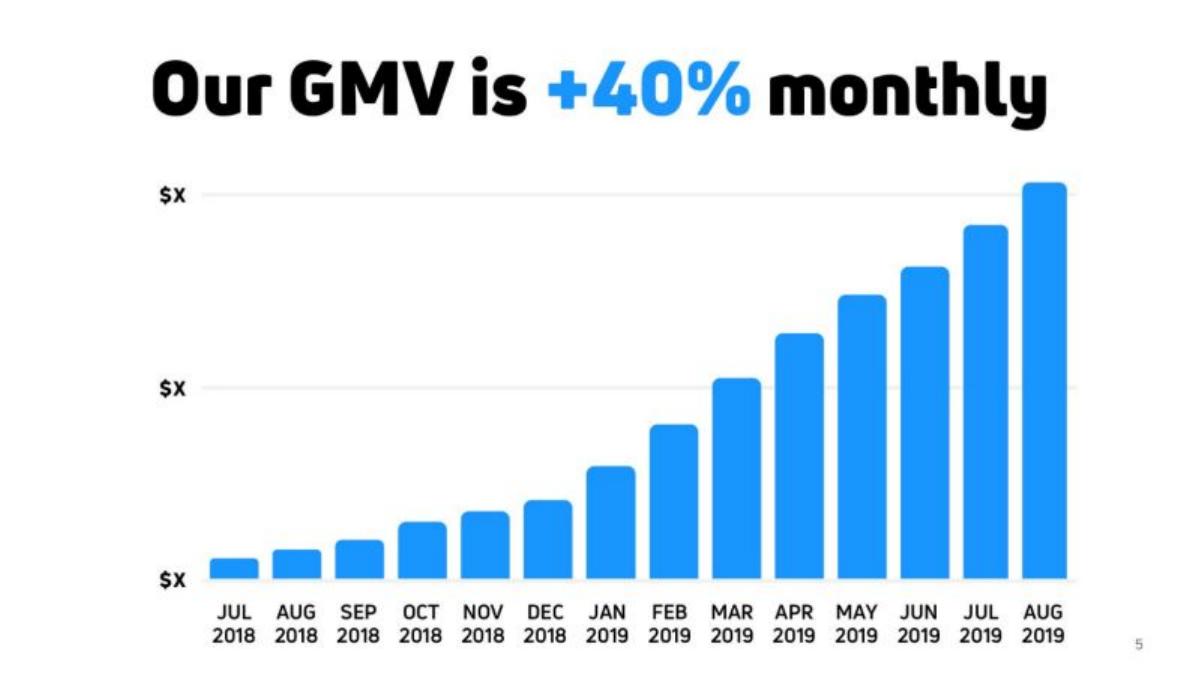
- The company claims a +40% monthly GMV growth rate from July 2018 to August 2019 (Slide 5).
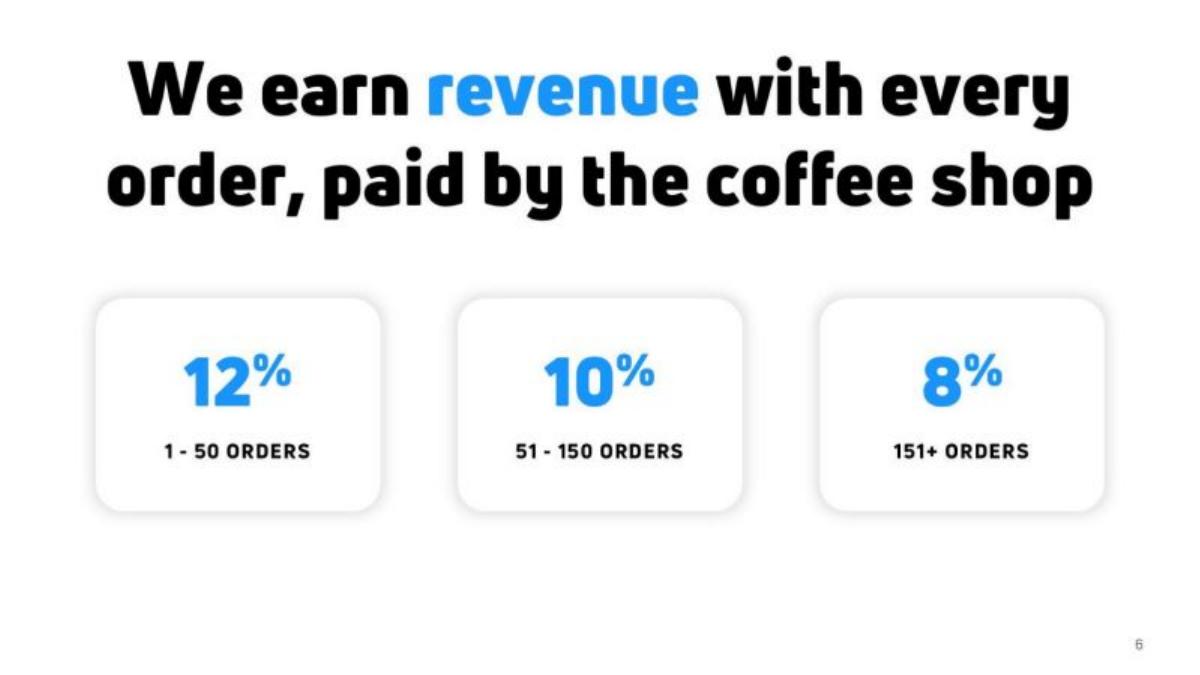
- Revenue is generated via a tiered take-rate: 12% for 1-50 orders, 10% for 51-150, and 8% for 151+ orders (Slide 6).
- Secondary revenue streams include a $499 optional merchant service upgrade and a $.10 per swipe user service fee (Slide 7).
- The go-to-market strategy targets mid-market chains with 10 to 52 locations, such as Blue Bottle and La Colombe (Slide 11).
- The 'Ask' is for $1 million to add 800+ coffee shops and reach $60k+ monthly net revenue (Slide 16).
- The deck uses an appendix to show growth trends in mobile orders, active users, and coffee shops, though all Y-axis values are redacted as 'X' (Slides 19-21).
- A 'pivot to new pricing model' in August 2019 resulted in a significant vertical spike in total monthly revenue (Slide 22).
The Narrative: Bringing the Starbucks Experience to the Masses
Cloosiv’s pitch deck is built on a single, powerful premise: the 'inevitability' of mobile ordering in the coffee industry. The deck moves quickly from a broad market observation to a specific solution, using the success of Starbucks as a North Star for what the rest of the market will eventually require.
Slides 1-4: The Market Thesis
Slide 1 introduces the brand with a simple tagline: "Order ahead from local coffee shops." The logo features an infinity-style loop, suggesting a seamless or continuous cycle of ordering.
Slide 2 makes a bold, declarative statement: "It’s inevitable that all coffee shops will offer a mobile app. Cloosiv will be that app." This sets a high-stakes tone for the rest of the presentation.
Slide 3 provides the quantitative backing for this ambition. It compares the annual coffee spend of major players: Peet's ($1B), McDonald's ($3B), Dunkin' ($5B), and Starbucks ($10B). Crucially, it identifies that "Independent Coffee Shops" represent a $20B market—double the size of Starbucks. This slide identifies the 'fragmented long tail' that Cloosiv intends to aggregate.
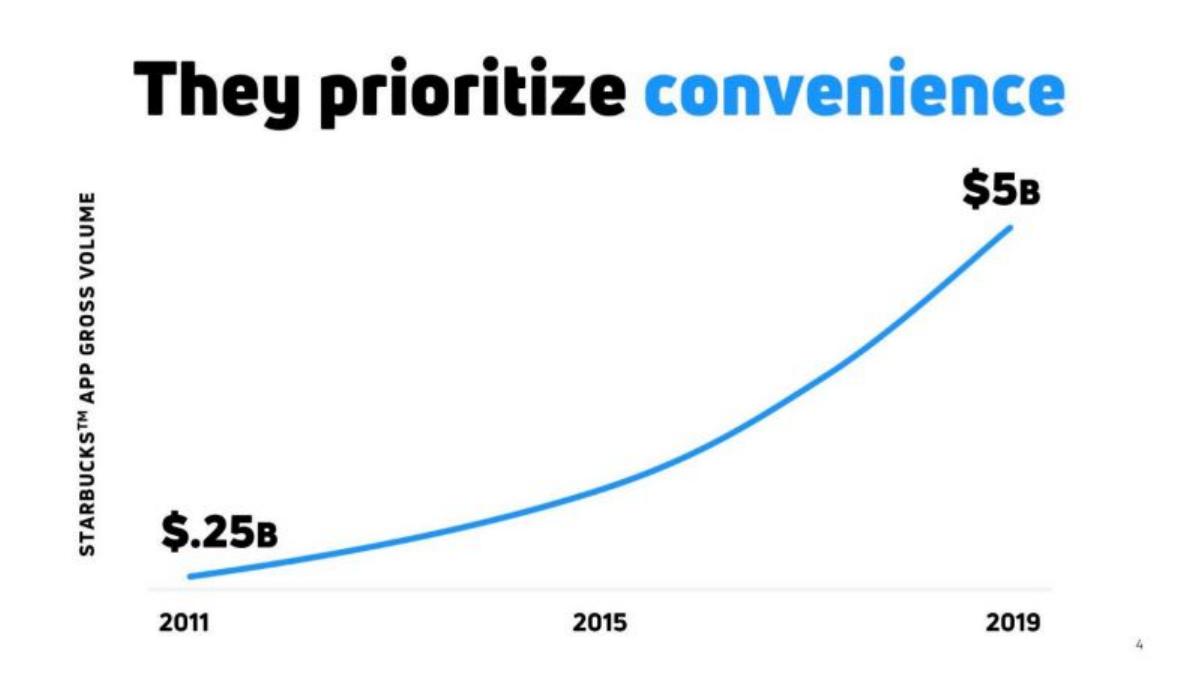
Slide 4 focuses on consumer behavior. It shows a growth curve for Starbucks App Gross Volume, rising from $.25B in 2011 to $5B in 2019. The takeaway is clear: coffee drinkers want convenience, and they are moving to mobile in massive numbers.
Slides 5-7: Traction and Business Model
Slide 5 is the 'money slide' for growth. It claims "Our GMV is +40% monthly." The bar chart shows 14 months of consistent growth from July 2018 to August 2019. However, the Y-axis is labeled only with "$X," hiding the actual dollar amounts. This suggests the company is prioritizing the demonstration of product-market fit and growth velocity over absolute scale at this stage.
Slide 6 explains the revenue model. Cloosiv uses a declining take-rate to incentivise volume: 12% for the first 50 orders, 10% for orders 51-150, and 8% for 151+ orders. This is a smart 'success-based' pricing model that lowers the barrier to entry for small shops while remaining lucrative as they grow.
Slide 7 introduces "multiple service revenue streams." These include a $499 optional merchant service upgrade and a $.10 per swipe user service fee. This indicates that Cloosiv isn't just a marketplace; they are also a SaaS and fintech provider for their merchants.
Slides 8-10: Social Proof and User Acquisition
Slides 8 and 9 provide testimonials from shop owners (L. Burleson and A. Lemnes). Interestingly, the data cards next to the quotes use placeholders like "000" for users and "$00,000" for volume. This is a missed opportunity to show real-world impact, though the quotes themselves emphasize that both employees and customers "love" the app.
Slide 10 outlines the growth engine. They use four pillars: In-store advertising (promotional kits), $3 off the first order, $5 per user referral, and in-app rewards. This is a standard B2B2C (Business to Business to Consumer) playbook where the merchant helps acquire the user for the platform.
Slides 11-14: Strategy and Expansion
Slide 11 is a detailed competitive and targeting map. It lists dozens of coffee chains by their number of U.S. locations. Cloosiv ignores the giants (Starbucks/Dunkin) and targets the "mid-market." They specify their 2019-2020 targets as brands with 10-52 locations, such as Blue Bottle, Joe & The Juice, and Stumptown. This shows a sophisticated understanding of their sales cycle.
Slide 12 defines their competitive advantage through a "ubiquitous experience." They list four key traits: Point-of-sale agnostic, tailored function, repetitive value, and network availability. Being POS-agnostic is a critical technical claim, as fragmented hardware is usually the biggest hurdle in this industry.
Slide 13 shows a map of the U.S. covered in blue pins with the claim: "We're building the largest coffee chain in America." This is a classic 'platform play' statement—owning the customer relationship without owning the real estate.
Slide 14 teases future product expansion: channel expansion, social engagement, loaded balances (similar to the Starbucks card), and targeted marketing. These are all high-margin features that increase stickiness.
Slides 15-17: The Team and The Ask
Slide 15 introduces the team. Tim Griffin (CEO), James Burkhardt (CTO), and Jessie Kolbenschlag (Sales) are presented via illustrations. The slide is light on details, omitting previous employers or educational backgrounds. In a Seed round, investors usually look for more 'pedigree' or specific 'why us' signals than what is provided here.
Slide 16 is the formal "Ask." Cloosiv is seeking $1 million to: 1) Increase velocity in product, sales, and marketing; 2) Add 800+ coffee shops; and 3) Reach $60k+ monthly net revenue. This provides a clear milestone for the next round of funding.
Slide 17 lists sources for the data used in the deck, lending credibility to the $20B market claims.
Slides 18-22: The Appendix
The appendix contains four additional charts. Slides 19, 20, and 21 show the growth of Mobile Orders, Active Users, and Coffee Shops respectively. All three show the same steady upward trend as the GMV chart, and all three have redacted Y-axes. Slide 22 shows "Total Monthly Revenue" with a massive vertical spike in August 2019, noted as a "Pivot to new pricing model." This suggests that the tiered pricing or service fees introduced earlier in the deck were a recent and highly successful change.
What Cloosiv Does Well
The deck excels at market positioning. By framing the problem as an 'inevitability' and using Starbucks as a proven model, they remove the question of whether the market exists. They also do a great job of identifying a specific niche (mid-market chains) rather than trying to sell to every 'mom and pop' shop simultaneously. The visual design is consistent, clean, and uses a limited color palette that feels modern and professional.
What is Missing from the Cloosiv Deck
The most glaring omission is the lack of absolute numbers. While percentage growth is great, an investor cannot determine if the business is doing $5,000 or $500,000 a month from these charts. Furthermore, the team slide is exceptionally weak; it tells the investor what the founders do now, but not why they are qualified to do it. There is also no mention of unit economics beyond the take-rate—we don't know the Customer Acquisition Cost (CAC) for a new coffee shop or the Lifetime Value (LTV) of a user.
What Other Founders Should Copy
Founders should emulate Cloosiv’s use of 'The Proxy Market' (Slide 4). If a giant in your industry has proven a digital behavior, use their public data to validate your startup's potential. Additionally, the tiered revenue model (Slide 6) is a fantastic way to show how you can capture small users today while building a path toward enterprise-level revenue. Finally, the clear 'Target List' on Slide 11 is a great way to show investors that you have a concrete, actionable sales plan rather than just a 'vague' marketing strategy.
Frequently asked questions
- What is Cloosiv's core business model?
- Cloosiv operates as a mobile ordering platform specifically for independent coffee shops and mid-market chains. They earn revenue primarily through a tiered commission on every order, ranging from 12% down to 8% as volume increases. They also monetize through a $499 merchant upgrade fee and a small per-swipe service fee charged to users.
- How does Cloosiv justify the market opportunity?
- The deck uses Starbucks as a proxy for consumer behavior, showing that Starbucks' app gross volume grew from $.25B in 2011 to $5B in 2019. Cloosiv argues that while consumers prioritize this convenience, the $20B independent coffee shop market lacks the technology to provide it, creating a massive opening for a third-party provider.
- Who are the target customers for Cloosiv?
- While the app works for single-location shops, Slide 11 explicitly states they target 'mid-market chains.' They list specific targets for 2019-2020, including brands like Blue Bottle, Joe & The Juice, and Stumptown, which typically have between 10 and 60 locations.
- What is the team's background according to the deck?
- The team slide (Slide 15) is minimal. It features illustrations of the three founders: Tim Griffin (CEO), James Burkhardt (CTO), and Jessie Kolbenschlag (Sales). It lists their functional responsibilities but omits any mention of prior companies, exits, or specific industry experience.
- Why are the numbers on the charts replaced with 'X'?
- This is a common tactic in decks shared publicly or in early-stage fundraising to protect sensitive data while demonstrating 'up and to the right' momentum. By redacting the absolute dollar amounts but showing the +40% growth rate, Cloosiv focuses the investor's attention on their velocity and the scalability of the model rather than the current small scale of the revenue.