Cloudian’s deck is a high-signal, low-noise presentation typical of a later-stage enterprise infrastructure company. It bypasses the emotional storytelling often found in seed decks to focus on hard metrics: a $19B TAM, a 90% win ratio, and zero customer churn to competitors over six years. The company positions itself as the bridge between on-premises necessity and the S3-standardized public cloud. By showcasing a management team with deep pedigree from Inktomi and Intel, alongside strategic partnerships with Cisco and HPE, the deck argues that the 'Product Excellence' phase is complete and…
Key takeaways
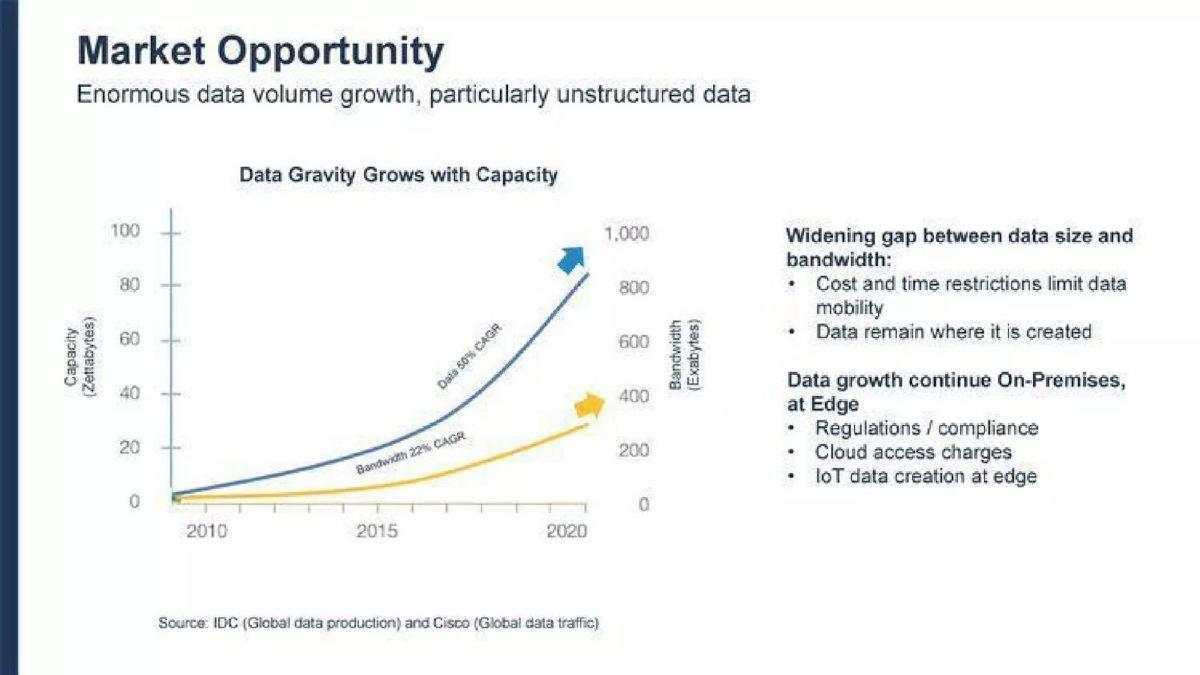
- The company identifies a massive gap between data capacity growth (50% CAGR) and bandwidth growth (22% CAGR) to justify the need for on-premises storage (Slide 2).
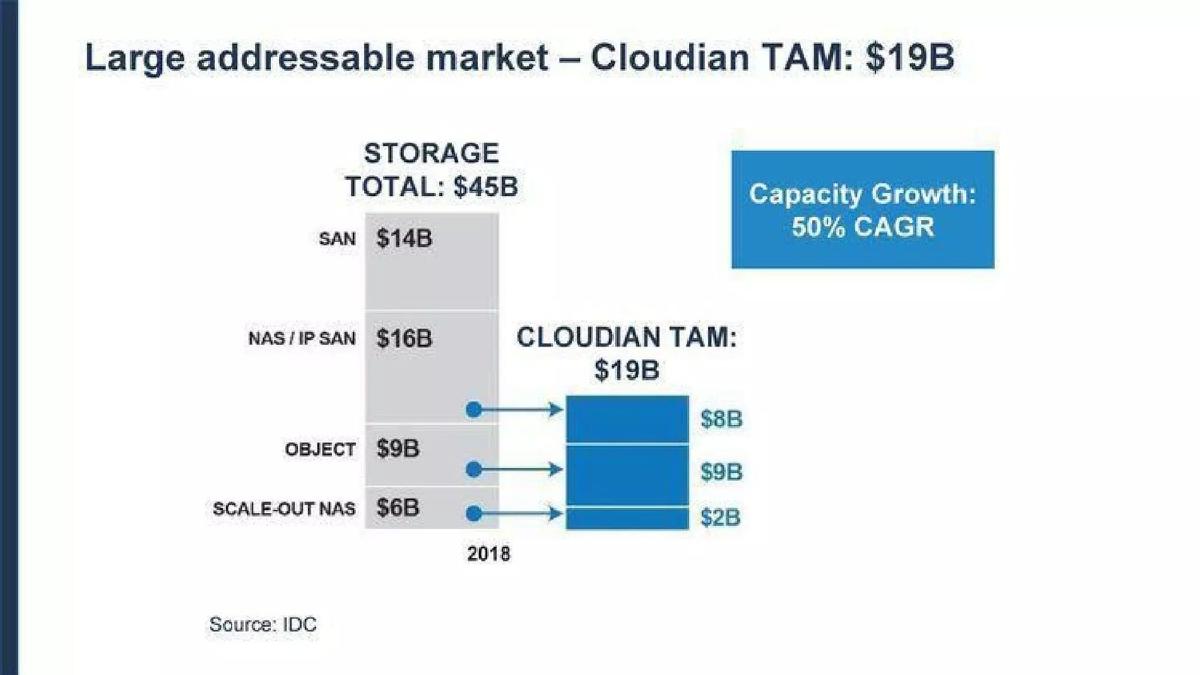
- Cloudian claims a specific Total Addressable Market (TAM) of $19B within a broader $45B storage market (Slide 5).
- The deck highlights a 90% win ratio and a 100% S3-compatible API as primary technical differentiators (Slide 7).
- Execution is proven through a 'Zero customer churn to competitors' claim over a six-year history (Slide 8).
- The Go-To-Market strategy is clearly phased, moving from Japan Telcos to global strategic partnerships with Cisco, HPE, and Lenovo (Slide 8).
- Third-party validation is used aggressively, citing a 94% recommendation rate on Gartner Peer Insights compared to 50% for Dell EMC (Slide 9).
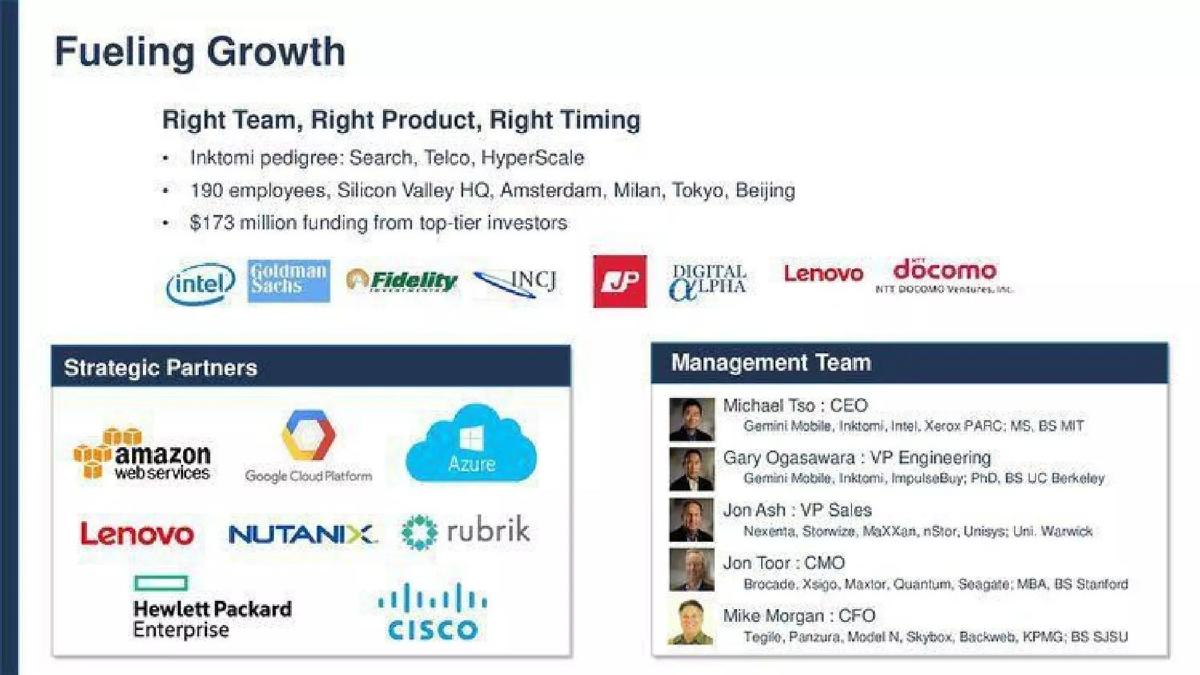
- The management team features deep technical pedigree from Gemini Mobile, Inktomi, and Intel (Slide 6).
- The deck omits a specific 'Ask' slide, financial projections, or a detailed breakdown of the use of funds.
The Cloudian Teardown: Scaling Enterprise Infrastructure
Cloudian is a US-based enterprise data storage company that has successfully navigated the transition from a startup to a major player in the object storage space. With a total of $173 million raised, including a $94 million Series E, the company’s deck reflects the confidence of a late-stage firm with a proven product and a clear path to market dominance. This 10-slide deck is notable for its focus on market dynamics and competitive win rates rather than the granular product walkthroughs typical of earlier rounds.
The Macro Opportunity: Data Gravity and AI
Slide 1: Title Slide The deck opens with a clean, professional title slide: "Enterprise Object Storage: Infinite Scalability, Infinite Possibilities." It establishes the brand immediately as an enterprise-grade solution.
Slide 2: Market Opportunity Cloudian begins by framing the problem through the lens of "Data Gravity." The slide features a chart showing a 50% CAGR for data capacity versus a 22% CAGR for bandwidth. The core argument is that as data grows, it becomes too expensive and slow to move, forcing it to remain where it is created (on-premises or at the edge). This creates a natural demand for Cloudian’s local storage solutions.
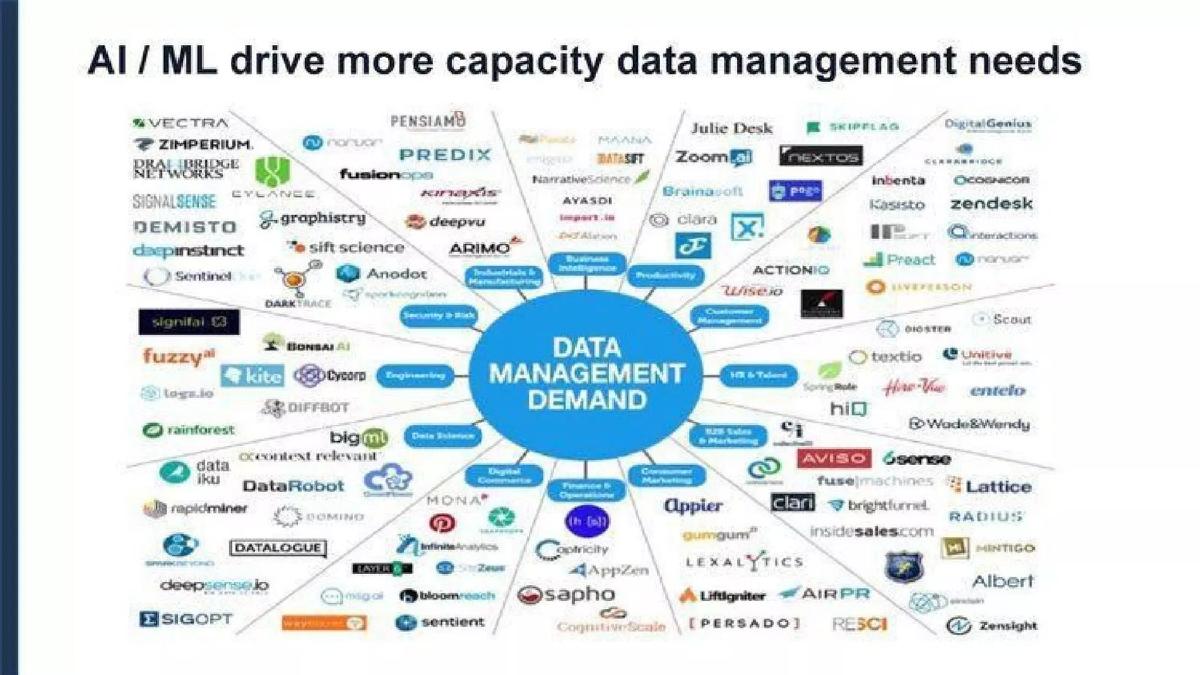
Slide 3: AI / ML Demand This slide uses a dense logo cloud of AI and ML companies to illustrate the explosion of data management needs. It positions Cloudian as the foundational layer for the modern AI stack, which requires massive capacity to function. The slide is visually busy but effectively conveys the scale of the ecosystem relying on storage infrastructure.
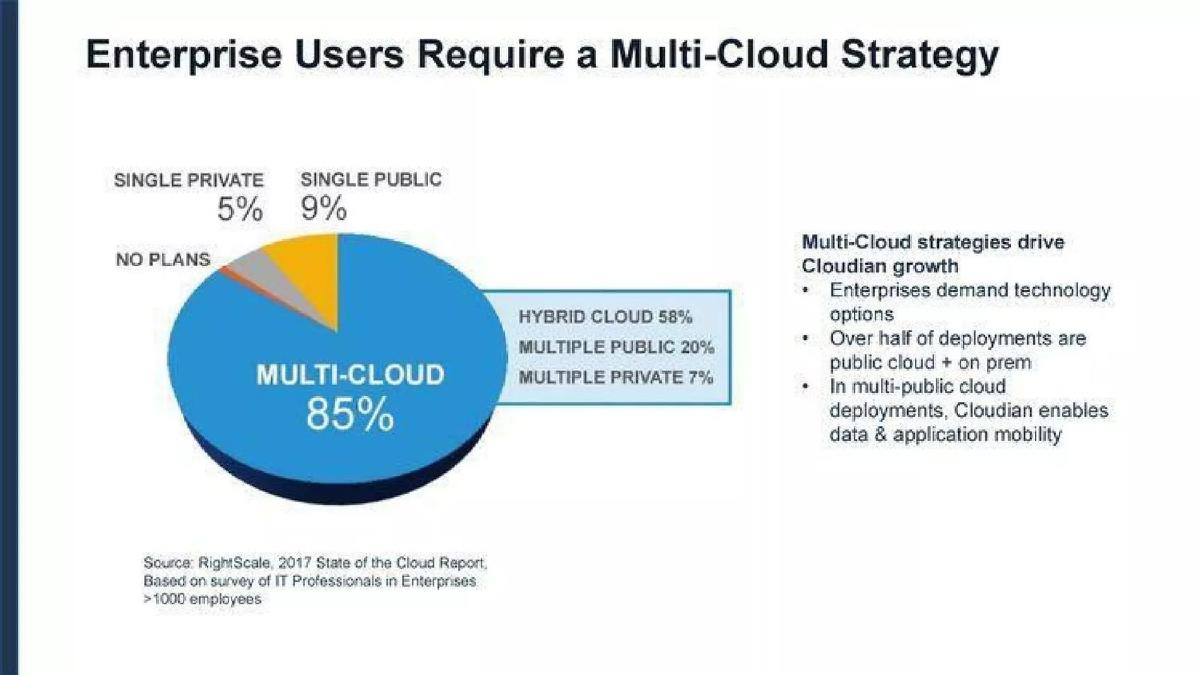
Slide 4: Multi-Cloud Strategy Citing a 2017 State of the Cloud Report, Cloudian notes that 85% of enterprise users require a multi-cloud strategy. The slide breaks this down into Hybrid Cloud (58%), Multiple Public (20%), and Multiple Private (7%). Cloudian positions itself as the "Multi-Cloud Enabler" that allows data and application mobility across these disparate environments.
Market Sizing and Competitive Positioning
Slide 5: Large Addressable Market Cloudian provides a specific TAM of $19B within a total storage market of $45B. They break their TAM down into three segments: Object ($9B), NAS / IP SAN ($8B), and Scale-out NAS ($2B). This level of specificity is excellent; it shows the company understands exactly which budgets they are competing for.
Slide 6: Fueling Growth (Team and Partners) This slide is a "credibility dump." It highlights an "Inktomi pedigree," 190 employees across global offices (Silicon Valley, Amsterdam, Milan, Tokyo, Beijing), and $173 million in funding from top-tier investors like Intel, Goldman Sachs, and Fidelity. The management team section lists executives with experience at Xerox PARC, Gemini Mobile, and NetApp, reinforcing the message that this is a seasoned group of industry veterans.
Product and Execution
Slide 7: Cloud Storage in Your Datacenter This slide acts as the product reveal and competitive matrix. It compares "Public Cloud" to "Cloudian" across several features, showing that Cloudian offers everything the public cloud does (scalability, availability, S3 compatibility) but adds the benefit of residing in the customer's data center. A key metric here is the "90% win ratio," a powerful claim for any enterprise sales organization.
Slide 8: Customer-First GTM Strategy Cloudian outlines a three-phase growth strategy. Phase 1 focused on product excellence with Japan Telcos. Phase 2 focused on repeatability and appliances. Phase 3 is about scale through strategic partners like Cisco and HPE. The slide includes two charts showing 80% customer growth and ~2x revenue growth over the past year. Most impressively, it claims a "Six-year history: Zero customer churn to competitors."
Slide 9: Gartner Peer Insights Reviews To remove any doubt about product quality, Cloudian includes a screenshot of Gartner Peer Insights. It shows a 94% recommendation rate, which they contrast against Dell EMC (50%) and NetApp (71%). Using third-party, un-biased data to shame larger incumbents is a highly effective late-stage tactic.
Slide 10: Once-in-a-Generation Opportunity The deck concludes by synthesizing the previous points: capacity growth, the S3 established standard, the necessity of on-prem storage, and multi-cloud complexity. It places the Cloudian logo at the center of these four forces, asserting they are in the "Right Place. Right Time. Right Products."
What Works in the Cloudian Deck
The Win Ratio: Claiming a 90% win ratio (Slide 7) is a bold, high-impact metric that immediately signals product-market fit to an investor. · Zero Churn: In the enterprise world, churn is the silent killer. Stating a six-year history of zero churn to competitors (Slide 8) is perhaps the strongest proof of product stickiness in the entire deck. · Third-Party Validation: Instead of just saying they are better than Dell, they show the Gartner Peer Insights data (Slide 9). This shifts the narrative from "founder hype" to "market reality." · Clear TAM Breakdown: Many decks provide a single, massive TAM number. Cloudian breaks theirs down by specific storage types (Slide 5), which makes the $19B figure much more believable.
What is Missing from the Cloudian Deck
The Ask: There is no slide stating how much money is being raised or the terms of the round. While this information is often handled in a separate document or conversation for later-stage rounds, its absence is notable. · Financial Projections: While they mention "2x revenue growth," there are no actual dollar amounts for ARR or projections for the next 3-5 years. · Unit Economics: There is no mention of Customer Acquisition Cost (CAC), Lifetime Value (LTV), or gross margins. For a company selling hardware appliances, understanding the margin profile is critical. · Use of Funds: The deck explains why the company is successful but doesn't explicitly state what the new capital will be used for (e.g., R&D, sales expansion, acquisitions).
What a Founder Should Copy
The Phased GTM: Founders should copy the way Cloudian describes their evolution (Slide 8). Breaking growth into "Product Excellence," "Repeatability," and "Scale" shows a disciplined approach to building a business. · The Problem of "Gravity": Using a macro trend like the gap between data growth and bandwidth (Slide 2) is a great way to make a local storage solution feel like an inevitable necessity rather than just another hardware play. · Strategic Partner Logos: If you have partnerships with giants like Cisco or HPE, feature them prominently. It signals to investors that the heavy lifting of building a distribution network is already underway. · The "Standard" Play: Cloudian leaned heavily into being "S3-compatible." By aligning with an industry standard (Amazon's S3 API), they reduced the friction for customers to adopt their technology. Founders should always highlight how they fit into existing, dominant ecosystems.
Frequently asked questions
- What is Cloudian's core value proposition?
- Cloudian provides S3-compatible object storage that resides within a customer's own data center. It bridges the gap between the flexibility of the public cloud and the security, compliance, and cost-efficiency of on-premises hardware. According to Slide 7, it offers the 'industry's best S3 compatibility' and allows enterprises to start small and scale to an exabyte.
- How does Cloudian differentiate itself from legacy storage providers?
- Cloudian uses third-party sentiment and win rates to differentiate. Slide 9 shows a Gartner Peer Insights comparison where Cloudian holds a 94% recommendation rate, significantly higher than Dell EMC (50%) and NetApp (71%). Additionally, Slide 7 highlights that while competitors handle 'Fast Data,' Cloudian specializes in the 80% of data that constitutes 'Capacity Data' (Media, Backup, AI/ML).
- What market trends are driving Cloudian's growth?
- The deck identifies three primary drivers: the widening gap between data size and bandwidth (Slide 2), the rise of AI/ML requiring massive capacity management (Slide 3), and the fact that 85% of enterprises now require a multi-cloud strategy (Slide 4). These trends make local, high-capacity storage essential for cost and performance.
- Who are Cloudian's key strategic partners?
- Cloudian has built a robust ecosystem of partners for both technology and distribution. Slide 6 lists Amazon Web Services, Google Cloud Platform, and Azure as cloud partners, while Slide 8 identifies Cisco, HPE, and Lenovo as key strategic partners for the 'Scale' phase of their Go-To-Market strategy.
- What is missing from this pitch deck?
- This is a high-level overview deck and lacks several standard fundraising elements. There is no slide detailing the specific amount of capital being raised in this round, no financial projections (revenue or EBITDA), no detailed unit economics (CAC/LTV), and no specific breakdown of how new funds will be allocated.