CMR Surgical’s Series D deck is a masterclass in demonstrating scale and defensibility in a high-barrier-to-entry market. Raising $600 million in 2021, the company moved beyond the 'cool robot' narrative to focus on clinical validation and a digital ecosystem. With over 1,000 procedures completed and a patent portfolio of 731 filings, the deck emphasizes that CMR is no longer a R&D project but a global commercial entity. The presentation effectively uses market tailwinds—such as an aging population and a 20% projected CAGR for robotic procedures—to justify its unicorn valuation. While it lack…
Key takeaways
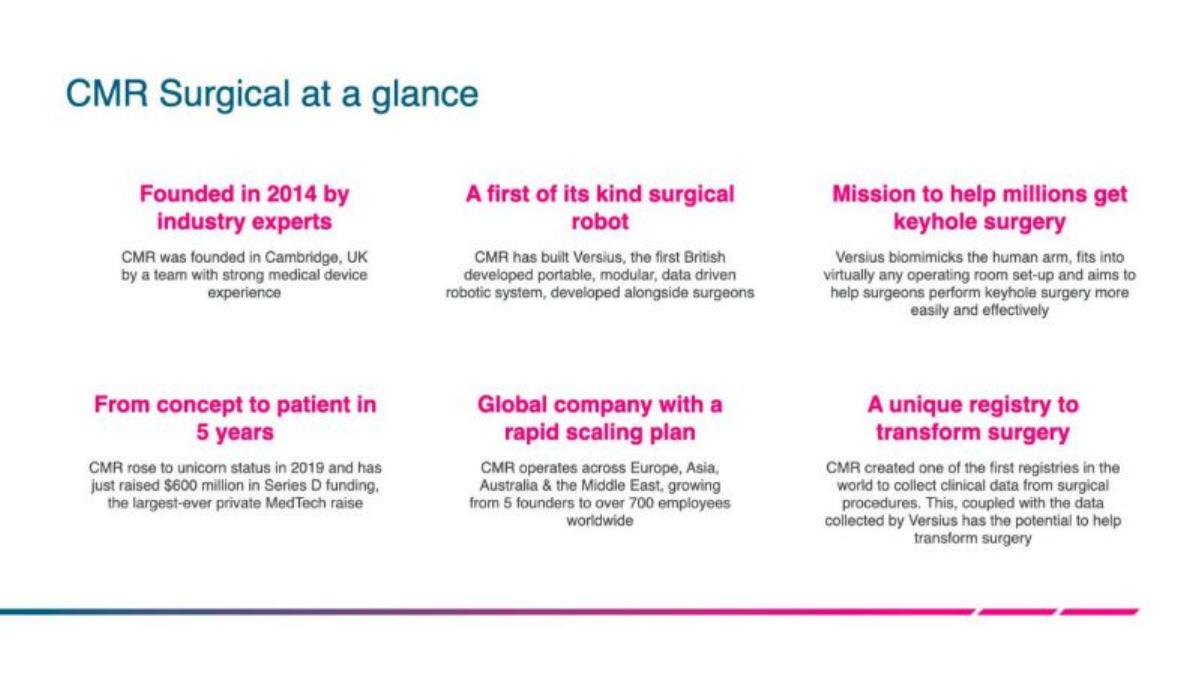
- CMR Surgical achieved unicorn status in 2019 and raised $600 million in Series D funding, cited as the largest-ever private MedTech raise on Slide 2.
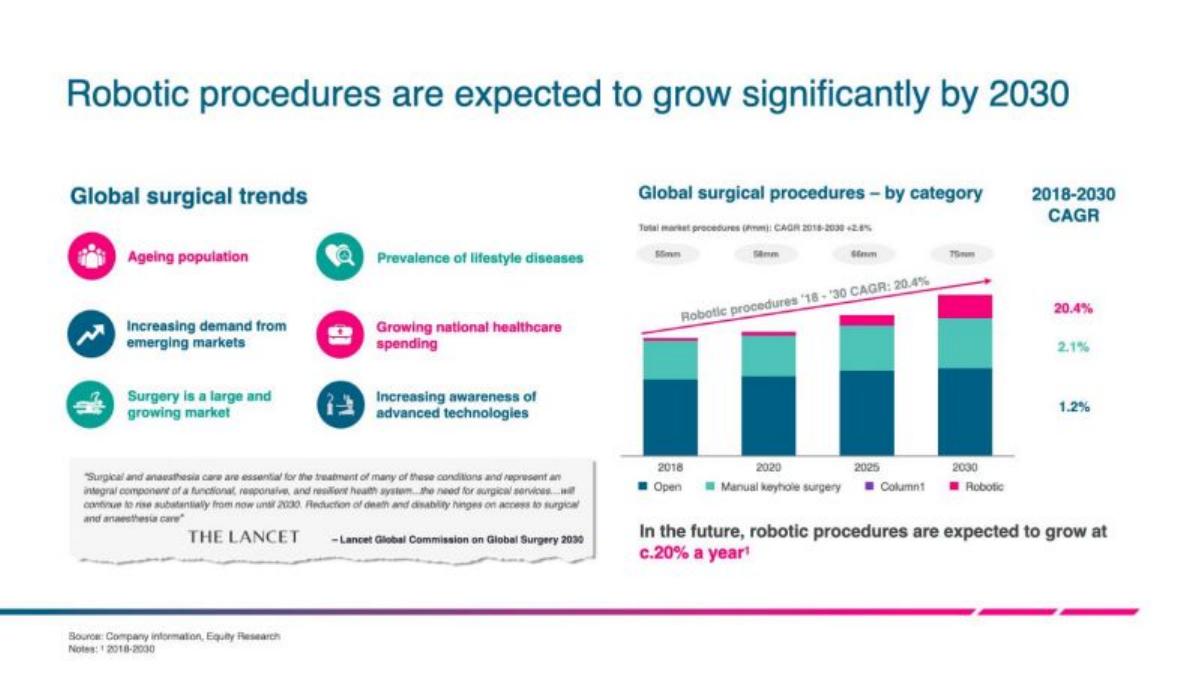
- The company projects that robotic procedures will grow at approximately 20% a year through 2030, according to Slide 5.
- Clinical validation is a core pillar, with Slide 9 reporting more than 1,000 procedures completed across gynaecology, colorectal, general surgery, hernia, and urology.
- The Versius system is positioned as a 'digital interface' rather than just a tool, creating a feedback loop from every procedure as shown on Slide 10.
- Defensibility is highlighted through an extensive IP family including 135 families of filings and 118 granted patents on Slide 13.
- The team slide (Slide 15) emphasizes deep industrial experience, featuring leaders from ABB, SpaceX, and Smith & Nephew.
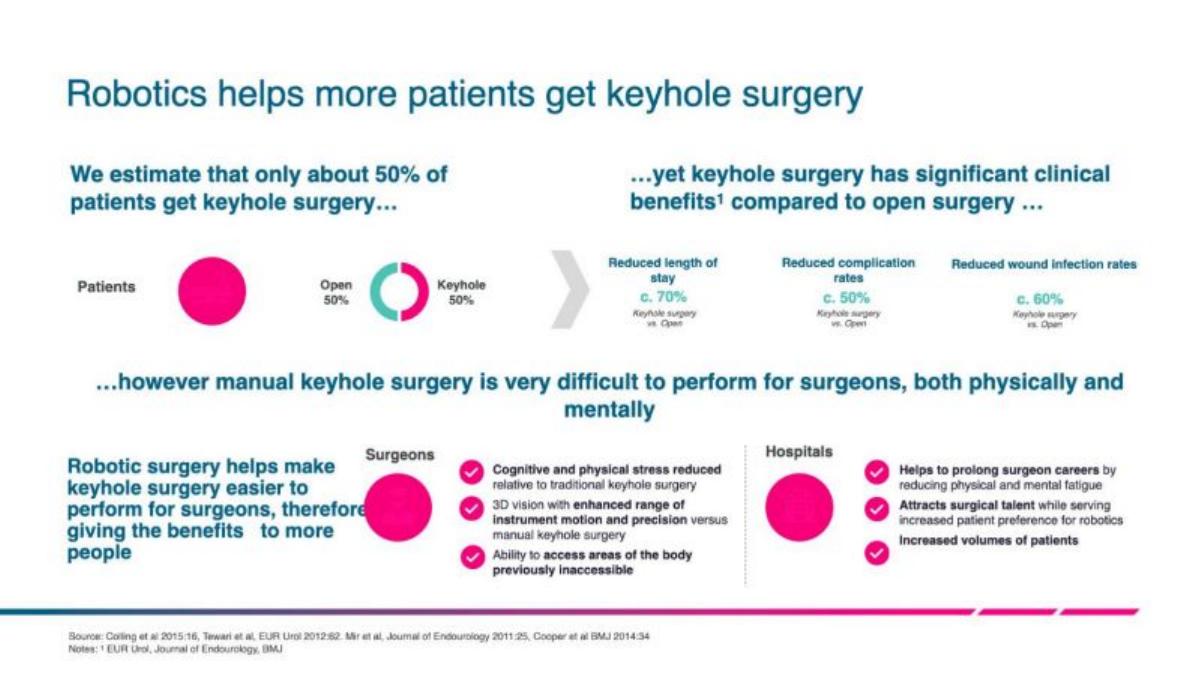
- The market opportunity is framed by the fact that only about 50% of patients currently receive keyhole surgery, despite its clinical benefits (Slide 4).
- The deck highlights a global footprint with operations across Europe, Asia, Australia, and the Middle East (Slide 9).
The $600M Series D Narrative
CMR Surgical’s Series D deck is a high-level strategic document designed for institutional investors. At this stage, the 'how it works' is less important than the 'how it scales.' The deck successfully transitions from the technical specifications of the Versius robot to the broader implications of a data-driven surgical ecosystem. By the time a company reaches a $600M Series D, the pitch is about market dominance, IP moats, and clinical ubiquity.
Slide 1: Title and Vision
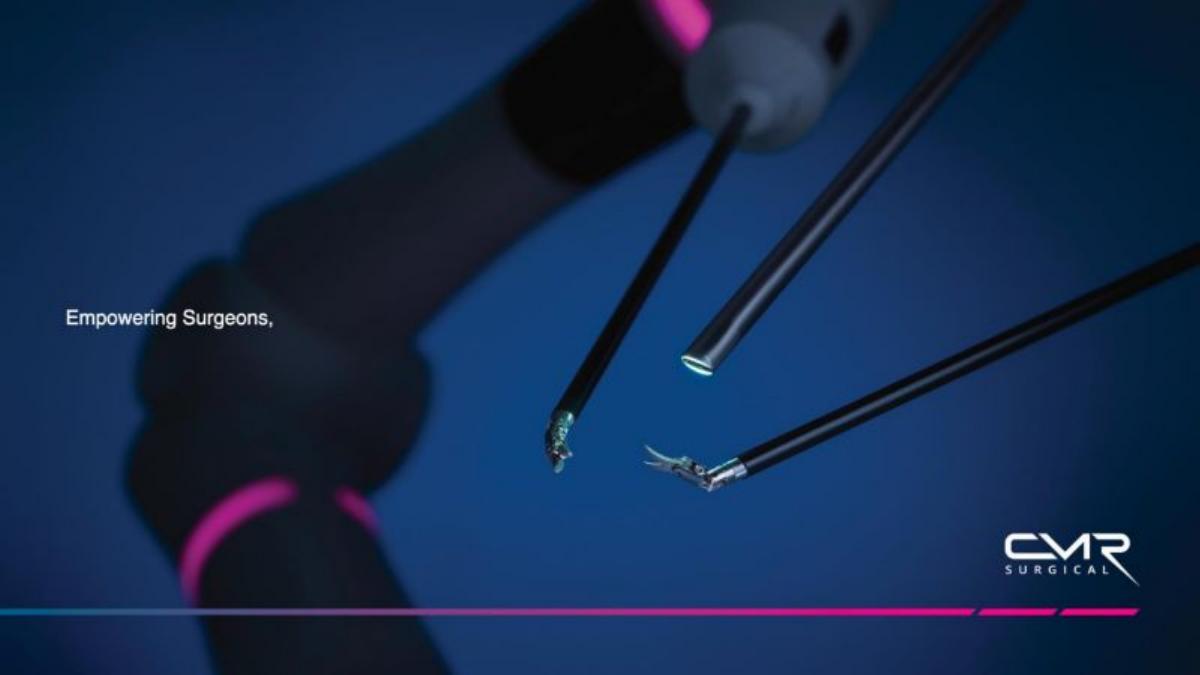
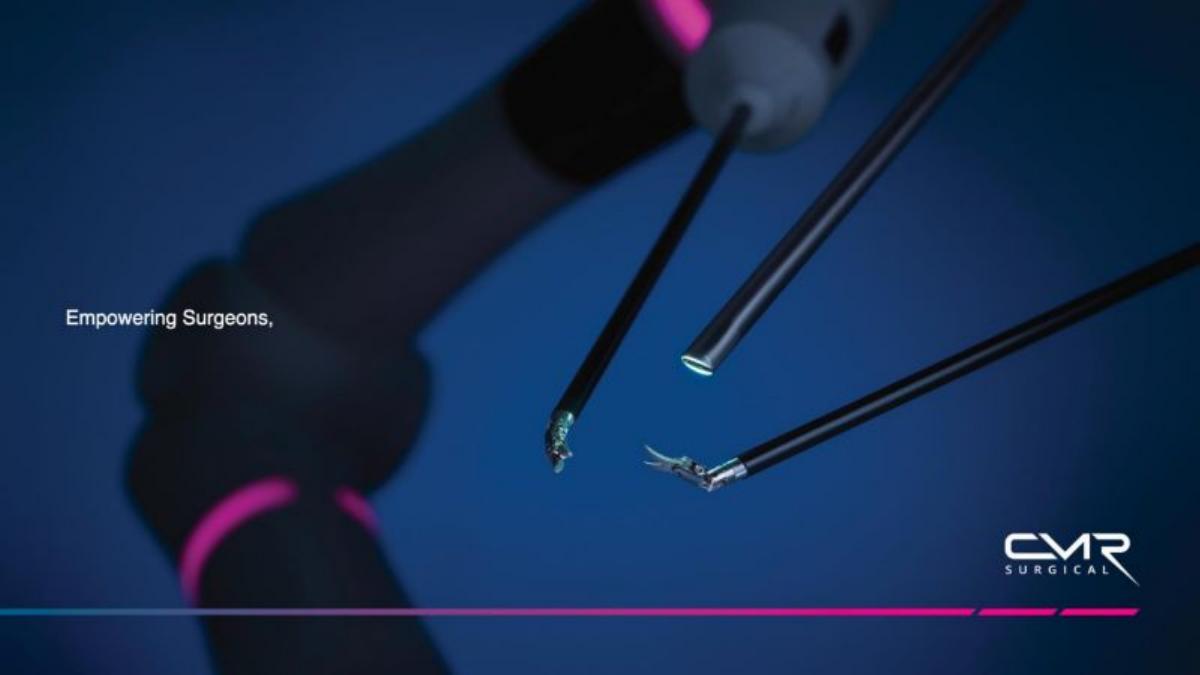
The deck opens with a high-resolution image of the Versius surgical instruments in action. The tagline 'Empowering Surgeons' immediately identifies the primary user and stakeholder. It is a clean, professional start that relies on the brand's visual identity rather than cluttered text.
Slide 2: CMR Surgical at a Glance
This is the 'traction' slide. It establishes the company's pedigree: founded in 2014, unicorn status in 2019, and the headline-grabbing $600 million Series D funding . It also mentions the growth from 5 founders to over 700 employees. This slide serves to de-risk the investment by showing massive historical growth and a proven ability to raise capital.
Slide 3 & 4: The Robotics Market and Problem Statement
Slide 4 identifies a massive gap in healthcare: only 50% of patients currently get keyhole surgery , despite it offering a 70% reduction in hospital stay length and a 60% reduction in wound infection rates. The problem isn't the lack of demand; it's that manual keyhole surgery is 'very difficult to perform' for surgeons. CMR positions robotics as the solution that makes these benefits accessible to more people.
Slide 5: Global Surgical Trends and CAGR
This slide provides the macro-economic justification for the valuation. It cites an ageing population and increasing demand from emerging markets. The most critical data point here is the 20.4% CAGR projected for robotic procedures through 2030, compared to just 1.2% for open surgery. This suggests that CMR is not just competing for a slice of the pie, but riding a massive wave of technological adoption.
Slide 6 & 7: Meet Versius
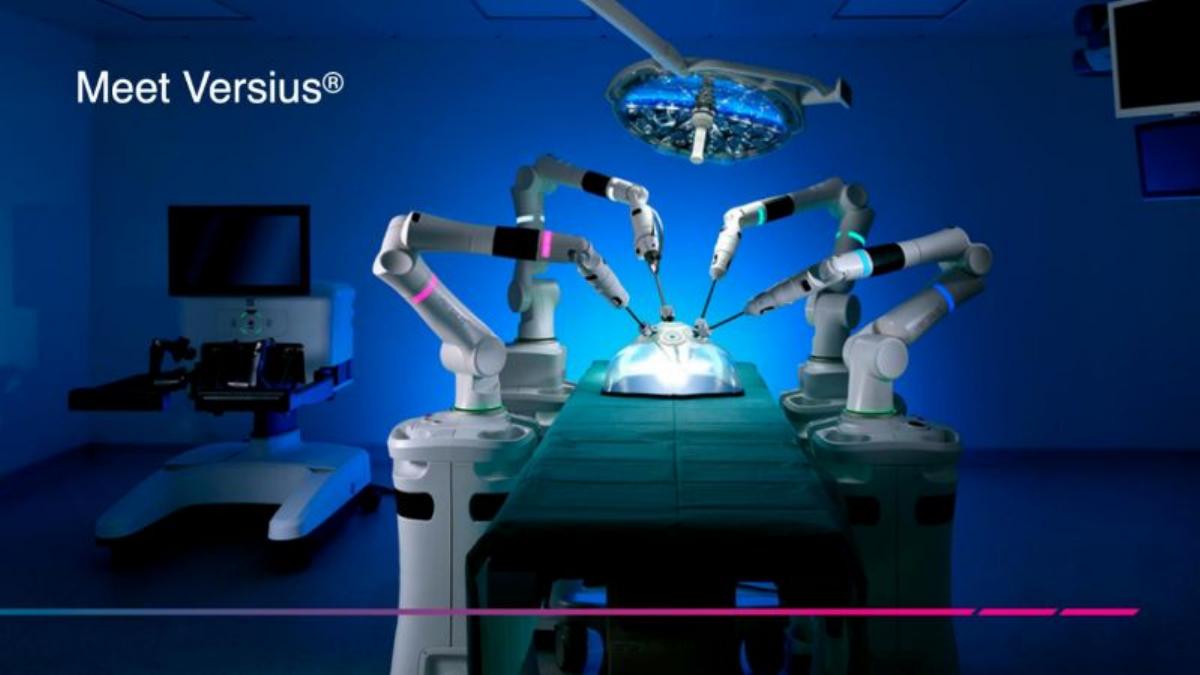
Slide 6 is a hero shot of the Versius system in an operating room. Slide 7 explains the 'Why.' The key differentiators are listed as: modular system , human scale , patient access , and a digital interface . By emphasizing 'human scale' and 'modular,' CMR is subtly contrasting itself with the large, fixed-base legacy systems that currently dominate the market.
Slide 8 & 9: Clinical Progress
For a MedTech company, clinical data is the ultimate currency. Slide 9 boasts more than 1,000 procedures across five different surgical specialties. It also lists a global footprint including Europe, Asia, Australia, and the Middle East. This proves that the robot isn't just a prototype; it is a commercially viable tool being used by surgeons worldwide.
Slide 10, 11 & 12: The Digital Ecosystem
These slides represent the 'Series D' shift. CMR is no longer just selling a robot; they are selling a digital ecosystem . Slide 10 shows a hierarchy of data, from the device up to hospital dashboards and the 'Versius Connect' app. Slide 11 lists features like 'Predictive maintenance' and 'Digital Logbooks.' This is a play for recurring value and software-like stickiness, which justifies higher valuation multiples than pure hardware sales.
Slide 13: Intellectual Property
In the world of surgical robotics, litigation is a constant threat. Slide 13 presents a formidable defense: 731 patent filings and 118 granted patents . For an investor, this slide represents the 'moat' that prevents competitors from easily replicating the Versius system.
Slide 14 & 15: Our People
The leadership slide is heavy on 'Big Corp' experience. CEO Per Vegard Nerseth is highlighted for his background at ABB , a global leader in industrial robotics. Other team members bring experience from SpaceX, Johnson & Johnson, and the NHS . This mix of high-tech engineering and deep healthcare expertise is exactly what institutional investors look for at this stage.
Slide 16, 17 & 18: Culture and Summary
The final slides focus on the 'soft' side of the business—culture and mission. Slide 16 mentions that 75% of employees love the 'great culture.' The deck ends on a mission-driven note: 'Transforming surgery. For good.' and 'make keyhole surgery available to everyone.'
What Works in This Deck
The Data-First Approach: CMR does an excellent job of framing their hardware as a data collection engine. By highlighting the 'Registry' and 'Versius Connect,' they appeal to investors looking for scalable, software-driven insights rather than just one-off capital equipment sales.
Clinical Breadth: Listing 1,000+ procedures across five distinct specialties (Slide 9) is a powerful way to show that the robot is versatile and not limited to a niche surgical application.
The IP Moat: Devoting an entire slide to the specific number of patent filings (Slide 13) is a standard but necessary move for a late-stage hardware raise. It quantifies the company's R&D efforts and legal defensibility.
What Is Missing
Unit Economics: There is no mention of the cost to manufacture a Versius unit versus its sale price or lease terms. For a Series D, investors would typically want to see the path to profitability or 'payback period' for each installed base.
Competitive Landscape: The deck mentions 'disrupting a market dominated by one player' (Slide 16), but it never names competitors or provides a feature-by-feature comparison. While the 'one player' is clearly Intuitive Surgical (Da Vinci), a more explicit competitive matrix is usually expected.
Use of Funds: While the catalogue facts state they raised $600M, the deck itself does not provide a breakdown of how that capital will be deployed (e.g., % to R&D, % to sales expansion, % to manufacturing scale-up).
What a Founder Should Copy
The 'At a Glance' Slide: Slide 2 is a perfect example of how to summarize a company's entire history and current status in six bullet points. It’s an immediate 'hook' for the reader.
Visualizing Market Shifts: Slide 5 uses a clear bar chart to show that while the total market is growing slowly, the 'Robotic' segment is exploding. Founders should always look for ways to show they are part of the fastest-growing sub-sector of their industry.
The Ecosystem Map: Slide 10’s pyramid diagram of the 'digital ecosystem' is a great way to show how various products (Versius, Trainer, Connect, Registry) fit together to create a unified value proposition. It turns a list of products into a cohesive strategy.
Frequently asked questions
- How much did CMR Surgical raise with this deck?
- CMR Surgical raised $600 million in Series D funding in 2021. According to Slide 2, this was the largest-ever private MedTech raise at the time. The company had previously reached unicorn status in 2019, and this round was intended to fuel global expansion and the commercial launch of the Versius system.
- What is the primary product CMR Surgical offers?
- The primary product is the Versius surgical robot. As described on Slide 2 and Slide 7, it is a portable, modular, and data-driven robotic system designed to biomimic the human arm. Unlike traditional bulky systems, Versius is designed to fit into virtually any operating room setup.
- What clinical evidence does the deck provide?
- Slide 9 states that CMR has completed more than 1,000 procedures across five specialties: gynaecology, colorectal, general surgery, hernia, and urology. The deck also mentions successful clinical trials in India and a unique registry created to collect clinical data from every surgical procedure.
- How does CMR Surgical protect its technology?
- The company relies on a massive intellectual property portfolio. Slide 13 details 731 patent filings, 135 families of filings, and 118 granted patents. This level of IP protection is a critical signal for Series D investors in the medical device space.
- What are the projected growth rates for this market?
- Slide 5 provides a market forecast through 2030. While open surgery and manual keyhole surgery are expected to grow at 1.2% and 2.1% CAGR respectively, robotic procedures are projected to grow at 20.4% CAGR, reaching a significantly larger share of the 75 million total estimated procedures by 2030.