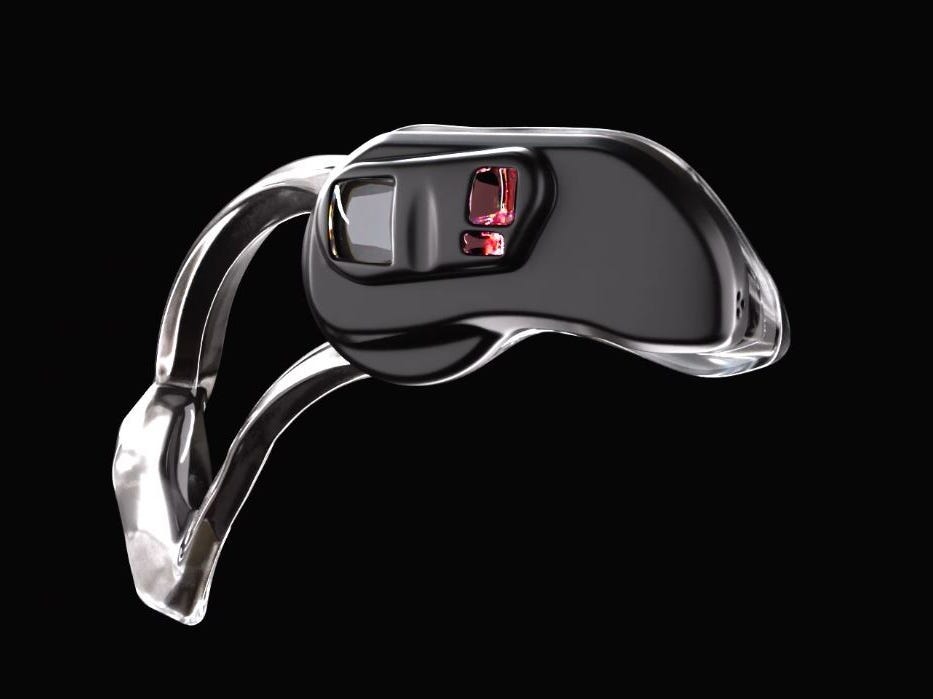
STAT Health’s 16-slide deck is a masterclass in establishing technical and clinical credibility for a consumer-facing medical device. By highlighting a founding team with a successful exit to Bose (Slide 2) and providing direct clinical evidence from Johns Hopkins (Slide 10), the company bridges the gap between 'gadget' and 'medical tool.' The deck identifies a massive addressable market of 56 million Americans suffering from chronic cardiovascular symptoms, representing a $221B cost to the US (Slide 6). While the specific financial ask was redacted in this version (Slide 14), the narrative s…
Key takeaways
- The founders leverage a 'we've done this before' narrative, showcasing their previous startup Hush and its acquisition by Bose (Slide 2).
- Cardiovascular disease is framed as the leading cause of healthy life years lost, totaling 393.11 million years globally (Slide 4).
- The deck targets a specific patient population of 56M+ Americans, including those with POTS, Long COVID, and Heart Failure (Slide 6).
- Cerebral Blood Flow (CBF) is identified as a critical missing metric that heart rate and blood pressure often fail to approximate accurately (Slide 8).
- Slide 10 provides hard data from a Johns Hopkins study showing the device successfully predicted a fainting event by tracking a drop in carotid blood flow.
- The product strategy outlines ten distinct 'STAT' sub-brands, ranging from Alzheimer's prevention (neuroSTAT) to fitness optimization (cardioSTAT) (Slide 12).
- The deck lacks a detailed business model, unit economics, or manufacturing timeline in the provided slides.
- The 'Ask' slide (Slide 14) is titled 'Fund Seed 2' but the specific dollar amount and milestones are redacted.
Executive Summary: The Bridge Between Consumer Tech and Clinical Diagnostics
STAT Health’s pitch deck for their $5.1M Seed round (as reported by Business Insider in 2024) is a focused, evidence-heavy presentation. The company, based in North America, operates at the intersection of healthcare and consumer electronics. The deck’s primary objective is to convince investors that a tiny in-ear wearable can solve a massive, underserved medical problem: the monitoring of cerebral blood flow (CBF). By positioning CBF as the 'missing vital sign,' STAT Health differentiates itself from the crowded field of wrist-based wearables that focus on heart rate and sleep tracking.
Slide 1-2: The Power of Pedigree
The deck opens with a high-fidelity render of the device (Slide 1), which appears as a sleek, transparent in-ear monitor. Slide 2, titled 'We’ve Done This Before,' is perhaps the most important slide for a Seed round. It introduces Co-Founders Daniel Lee and Paul Jin, highlighting their history at Bose and their previous venture, Hush . The slide explicitly shows the transition from the Hush product to a Bose-branded product, signaling a successful exit and integration. This establishes immediate credibility in hardware manufacturing and miniaturization. The slide also lists heavy-weight medical advisors from Harvard Medical School, MIT, and Duke Health , ensuring the 'Health' part of the name is as well-supported as the 'Tech' part.
Slide 4-6: Quantifying the Human and Economic Toll
Slide 4 uses data from the IHME Global Burden of Disease to show that cardiovascular diseases are the leading cause of healthy life years lost, accounting for 393.11 million years globally. This moves the conversation from a niche 'fainting' problem to a global health crisis. Slide 6 narrows the focus to the US market, identifying 56M+ Americans suffering from chronic cardiovascular symptoms. The deck specifically calls out POTS (2M+) and Long COVID (5M+) , which are high-growth patient populations currently seeking better management tools. The economic impact is stated as $221B , providing the 'why now' and 'why this matters' for venture-scale returns.
Slide 8-10: The Science of the 'Missing Vital Sign'
Slide 8 addresses a fundamental clinical gap. It argues that while heart rate (HR) and blood pressure (BP) are standard, they are 'secondary metrics' that 'frequently mislead' when it comes to brain health. The slide includes a quote from Duke Health stating that Cerebral Blood Flow is the key missing sign. Slide 10 provides the 'smoking gun' evidence: a chart from a Johns Hopkins Medicine study. The graph shows a unitless measure of external carotid blood flow dropping steadily until a patient faints. The earpiece-measured data (red dots) tracks the trend perfectly, proving that STAT’s hardware can detect the physiological precursors to syncope (fainting) in real-time.
Slide 12: The Platform Play
Slide 12, 'Product Strategy,' reveals the company's ambition to be more than a single-use device. It lists ten potential product lines, including neuroSTAT for Alzheimer's and strokeSTAT for post-stroke monitoring. This slide is designed to show investors that the initial go-to-market for fainting and dizziness is just the 'wedge' into a much larger ecosystem of brain-health monitoring. By using the 'STAT' suffix for everything from fitness (cardioSTAT) to inpatient care (hemoSTAT), they signal a brand architecture built for long-term expansion.
Slide 14: The Ask and Omissions
Slide 14 is titled 'The Ask: Fund Seed 2,' but the content is REDACTED in this public version. While we know from publisher reports that the round totaled $5.1M, the deck itself (in this form) omits the specific milestones this capital will achieve. Furthermore, the 16-slide deck is missing several standard components: there is no explicit Competitor Matrix , no Unit Economics (COGS vs. MSRP), and no detailed Regulatory Roadmap (FDA 510(k) status). For a medical device, the lack of a clear regulatory and reimbursement strategy is a significant omission, though these details may have been moved to a data room or supplemental slides.
What Works in the STAT Health Deck
1. Clinical Validation Over Marketing Fluff: The inclusion of the Johns Hopkins data (Slide 10) is the strongest part of the deck. In a world of 'wellness' gadgets, showing a direct correlation between your sensor data and a clinical event (fainting) is the ultimate de-risking mechanism for an investor.
2. Founder-Market Fit: The founders don't just have 'tech experience'; they have specific experience in in-ear hardware and exiting to a major player (Bose). This makes the technical challenge of building a tiny, accurate ear-sensor feel achievable rather than aspirational.
3. Clear Problem Definition: Slide 8 does an excellent job of educating the investor on why existing solutions (like the Apple Watch) aren't enough. By labeling CBF as the 'missing vital sign,' they create a new category that they alone own.
What is Missing from the STAT Health Deck
1. Business Model and Pricing: There is no mention of whether this is a direct-to-consumer (DTC) play, a prescription-based model, or a B2B play for hospitals. Without knowing the price point or the recurring revenue component (SaaS for data monitoring), it is hard to evaluate the commercial viability.
2. Manufacturing and Supply Chain: Hardware is notoriously difficult to scale. The deck lacks a timeline for mass production, information on manufacturing partners, or a discussion of the 'hardware-is-hard' risks.
3. Regulatory Path: For a device claiming to manage heart failure and Alzheimer's (Slide 12), the FDA pathway is critical. The deck does not state whether the device is currently a 'wellness' product or if it is pursuing Class II medical device clearance.
Founder's Guide: What to Copy
Use the 'Platform' Slide: If you are building a hardware product, copy Slide 12's approach to showing future verticals. It prevents you from being pigeonholed as a 'single-feature' company and shows the potential for a multi-billion dollar exit.
Lead with Credibility: If your team has a previous exit, put it on Slide 2, not Slide 15. STAT Health uses their Bose connection to buy immediate trust, which allows the investor to focus on the science rather than questioning if the team can actually build the product.
Visual Data: Don't just say your product works; show the graph. The Johns Hopkins slide (Slide 10) is a perfect example of how to use a complex chart to tell a simple, compelling story: 'Our line goes down before the patient falls down.'
Frequently asked questions
- What is the primary problem STAT Health is solving?
- STAT Health addresses the inability of current medical tools to easily measure cerebral blood flow (CBF) in a clinic or home setting. As noted on Slide 8, clinicians often rely on secondary metrics like heart rate and blood pressure, which can be misleading. By monitoring CBF continuously via an in-ear wearable, STAT aims to prevent fainting and manage chronic symptoms like dizziness and fatigue for 56 million Americans.
- How does STAT Health prove their technology actually works?
- The company relies on clinical validation rather than just marketing claims. Slide 10 features a graph from a Johns Hopkins Medicine study titled 'Monitoring Carotid Blood Flow Using In-Ear Wearable Device During Tilt-Table Testing.' The data shows a clear, measurable drop in blood flow preceding a patient fainting, proving the device's predictive capabilities.
- Who are the founders and what is their track record?
- The company was co-founded by Daniel Lee (CEO) and Paul Jin (COO). Their pedigree is a core part of the pitch (Slide 2), highlighting their experience at Bose and their previous startup, Hush, which was acquired by Bose. This 'repeat founder' status reduces perceived execution risk for investors.
- What is the total addressable market according to the deck?
- Slide 6 aggregates several conditions including POTS (2M+), Long COVID (5M+), Heart Failure (6M+), and Hypertension (37M+). Together, these represent over 56 million Americans and an estimated $221 billion annual cost to the US healthcare system in services, medication, and lost productivity.
- What is the long-term product strategy for STAT?
- Beyond the initial focus on orthostatic intolerance and fainting, Slide 12 outlines a broad roadmap. This includes 'neuroSTAT' for slowing Alzheimer’s, 'strokeSTAT' for post-stroke monitoring, and 'cogniSTAT' for optimizing human cognition, suggesting the hardware is a platform for multiple therapeutic and diagnostic verticals.