YuLife’s Series B pitch deck is a masterclass in shifting the narrative of a traditional financial product toward a lifestyle and wellness brand. Raising $70M in 2021, the company addressed a massive £3 trillion life protection gap in the UK by leveraging behavioral science and gamification. Unlike traditional insurers that focus on 'death and claims,' YuLife prioritizes 'rewards living,' boasting a 36% average daily active user rate—unheard of in the insurance sector. The deck relies heavily on social proof, including a 4.8 Trustpilot score and numerous industry awards, to validate its disru…
Key takeaways
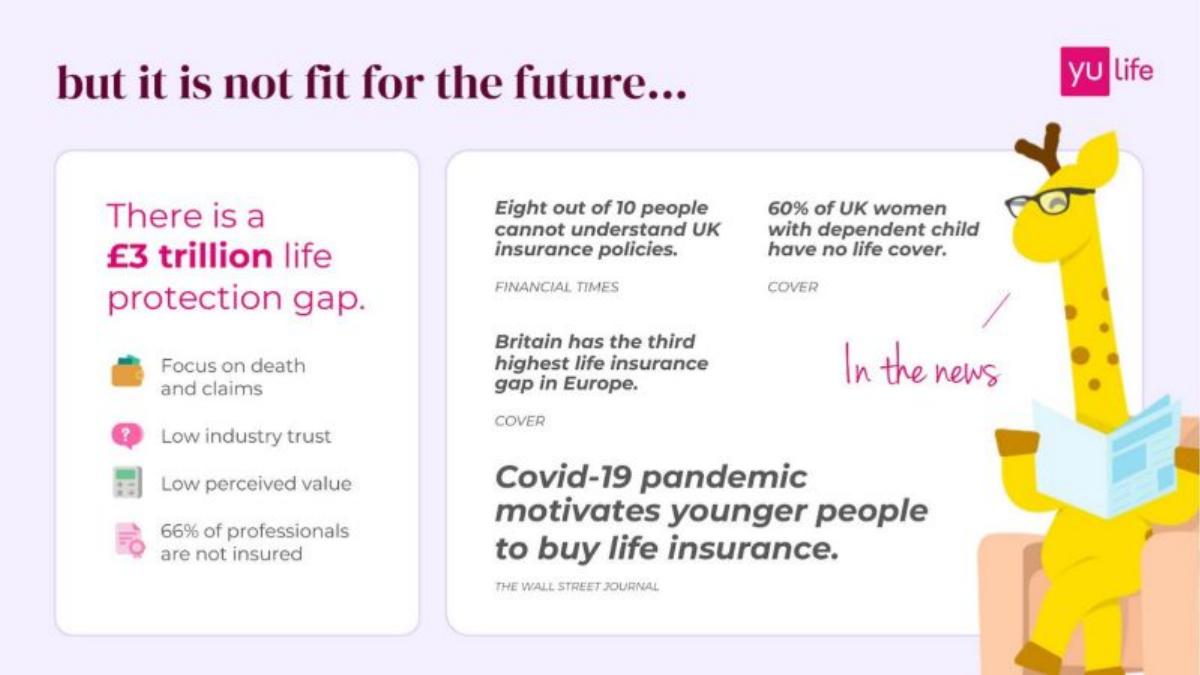
- The deck identifies a massive £3 trillion life protection gap in the UK market on Slide 2.
- YuLife differentiates itself from traditional insurers by moving away from a 'focus on death and claims' toward incentivizing healthy behavior (Slide 2 and 6).
- The product utilizes a 'Yumoji' personalized avatar and 'YuCoin' to gamify insurance benefits (Slide 5).
- Engagement metrics are exceptionally high for the sector, with 56% average monthly active users and 36% average daily active users (Slide 10).
- The company demonstrates strong long-term retention with a 47% rate at the 18-month mark (Slide 10).
- Social proof is a core pillar of the deck, highlighting a 4.8 Trustpilot score compared to Aviva UK's 1.6 (Slide 12).
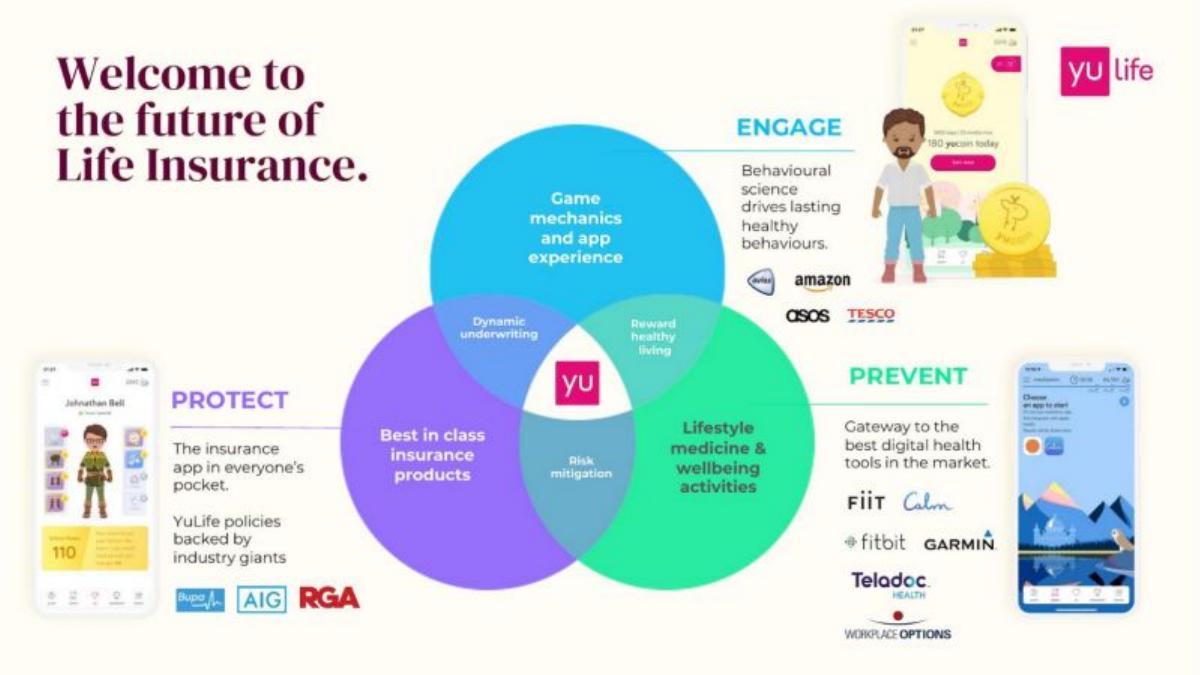
- The 'Engage, Prevent, Protect' framework serves as the structural backbone for the company's mission (Slides 4, 7, and 8).
- Internal culture is presented as a 'superpower,' backed by a survey where 100% of employees believe in the company's values (Slide 14).
Introduction and Mission
Slide 1: Title Slide
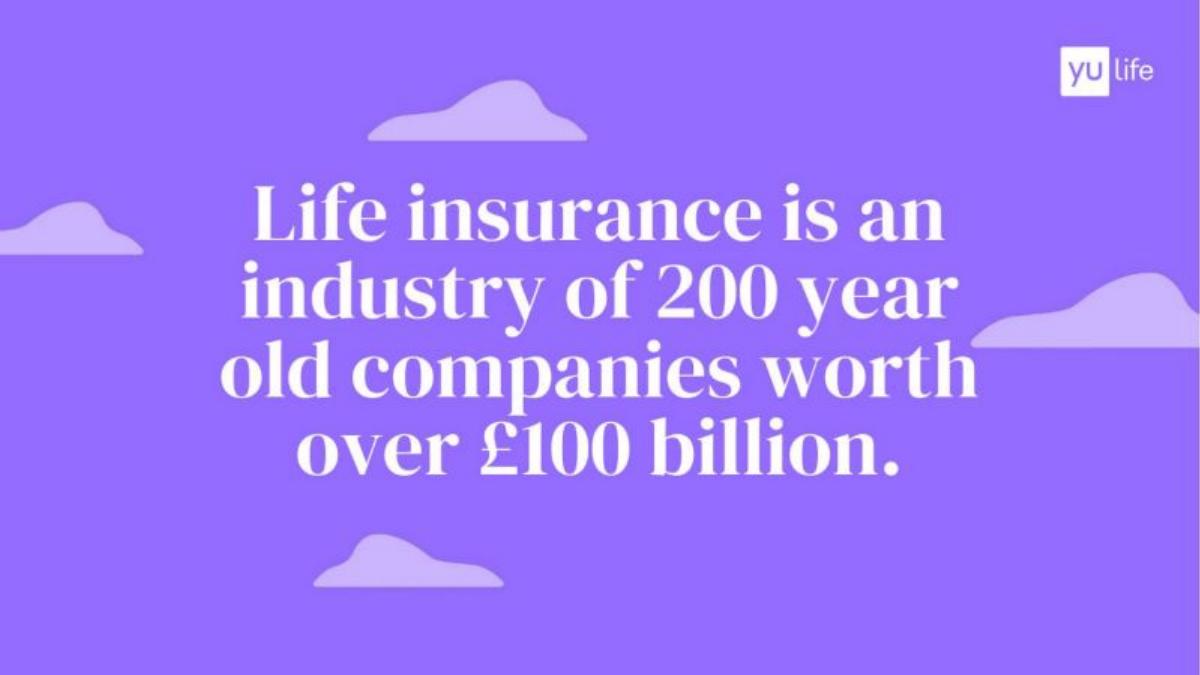
The deck opens with a clean, vibrant aesthetic that immediately separates YuLife from the corporate, somber branding typical of the insurance industry. The tagline "Protects lives. Rewards living. Inspires life." sets the tone for a product focused on the policyholder's daily wellbeing rather than just the eventual payout. The visual language uses bright colors and soft geometric shapes, signaling a consumer-tech approach to healthcare.
Slide 2: The £3 Trillion Gap
YuLife establishes the problem with a stark figure: "There is a £3 trillion life protection gap." This slide lists four critical industry failures: a focus on death and claims, low industry trust, low perceived value, and the fact that 66% of professionals are not insured. They support this with press clippings from the Financial Times and The Wall Street Journal, noting that the Covid-19 pandemic has motivated younger people to seek life insurance, yet 8 out of 10 people cannot understand current policies.
Slide 3: The Mission
A simple transition slide states: "We're on a mission to change insurance for good." This serves as the bridge between the identified market failure and YuLife's specific solution, emphasizing a permanent shift in the industry's business model.
The Product and Gamification
Slide 4: Engage
This is a section header for the first pillar of their strategy. It signals that the following slides will focus on how they capture and hold user attention in a category usually characterized by zero engagement.
Slide 5: Insurance that's all about Yu
This slide introduces the core app interface. It highlights three features: the "Yu screen" for accessing benefits, "Customising a Yumoji" (a personalized avatar), and "YuCoin Power" which represents the earning potential for in-app activities. A mockup shows a "Group Life Insurance" benefit described as "6x salary as lump sum," illustrating how traditional coverage is integrated into a gamified UI.
Slide 6: Incentivising healthy behaviour
YuLife details its rewards ecosystem here. The slide lists high-profile partners including Amazon, Nike, Tesco, ASOS, and Fitbit . Users can earn Avios Air Miles and gift vouchers. By listing "Exclusive Membership Discounts" for apps like Calm and Fiit, YuLife demonstrates how it embeds itself into the user's broader health and wellness stack.
Slide 7 & 8: Prevent and Protect
These two section headers complete the 'Engage, Prevent, Protect' framework. While the slides themselves are minimal, they represent the logical flow of the business: first, get the user to use the app (Engage); second, use that engagement to encourage healthier habits (Prevent); and third, provide the financial safety net (Protect).
Data and Implementation
Slide 9: HR Insights
This section header introduces the B2B value proposition. For the employers paying the premiums, YuLife provides data on workforce wellbeing, which is a significant upgrade over the 'black box' of traditional insurance policies.
Slide 10: We improve lives
This is the most data-dense slide in the deck, focusing on "Participation and Engagement." Key metrics include: 62% download rate , 56% Avg Monthly active users , and 36% Average Daily active users . They also claim 47% 18-month retention . A 'Power User Curve' shows a significant cohort of users accessing the app every single day of the month. On the wellbeing side, they cite a survey of 305 members where 87% feel happier and 85% feel more positive at work as a result of using YuLife.
Slide 11: A simplified digital implementation
This slide outlines a 5-step onboarding process for employees: 1. Claim your account, 2. Sign up in minutes, 3. Browse benefits and rewards, 4. Allocate beneficiaries, and 5. Access wellbeing. This addresses the 'complexity' pain point mentioned on Slide 2, showing that a policy can be managed entirely via a smartphone.
Social Proof and Culture
Slide 12: An app valued by employees
YuLife uses a Trustpilot TrustScore of 4.8 to validate its market position. The most effective part of this slide is the "Competitor TrustScores" table, which contrasts YuLife (4.8) against incumbents like Aviva UK (1.6) and Canada Life UK (2.5) . This visualizes the massive gap in customer sentiment between the startup and the established players.
Slide 13: A recognised industry leader
This slide is a 'wall of logos' for awards won in 2020 and 2021. Notable mentions include "Winner: Personnel Today Awards 2020 HR Tech Provider of the Year" and being ranked "Number 1: Startup to Work for 2021." This builds institutional credibility, essential for a Series B round where the company must prove it can win against established financial giants.
Slide 14: Culture and values are our superpower
The final content slide focuses on internal health. It features a group photo of the team and results from a Q1 2021 Engagement Survey on hibob.com. The results are near-perfect: 100% are proud to work at YuLife, 100% believe in the strategy, and 100% believe in the company's values. This is intended to show investors that the company has the internal alignment necessary to scale rapidly.
Slide 15: External Library Reference
This is a placeholder slide from the source library and not part of the original YuLife pitch.
What Works and What is Missing
What Works
The Engagement Narrative: In a sector where 'engagement' usually means filing a claim once a decade, YuLife's 36% DAU (Slide 10) is a staggering differentiator. · Direct Competitor Comparison: The Trustpilot table on Slide 12 is a devastatingly effective way to show that the incumbents are failing their customers. · The 'Engage, Prevent, Protect' Framework: This simple three-word strategy makes a complex insurtech model easy for an investor to memorize and repeat. · Visual Branding: The deck looks nothing like an insurance company. It looks like a high-growth consumer app, which supports the 'disruptor' narrative.
What is Missing
Financial Performance: There is no mention of Annual Recurring Revenue (ARR), Gross Written Premium (GWP), or loss ratios. For a Series B, these are usually mandatory. · Unit Economics: The deck does not show the Customer Acquisition Cost (CAC) or the Lifetime Value (LTV) of a policyholder. · The Ask: While the catalogue facts state they raised $70M, the slides provided do not specify how much they were looking for or how they planned to spend it. · Market Expansion: The deck is very UK-centric. There is no clear plan for how this model translates to the US or other international markets.
What a Founder Should Copy
Use Third-Party Validation: Don't just say you're better; show the Trustpilot scores and industry awards (Slides 12 and 13). · Visualize the 'Power User': The retention curve on Slide 10 is a powerful way to show that your product isn't just being downloaded, but is becoming a daily habit. · Lead with the 'Gap': Identifying a multi-trillion dollar 'protection gap' (Slide 2) immediately establishes the scale of the opportunity. · Humanize the Tech: Using avatars (Yumojis) and a focus on 'living' makes a morbid product feel accessible and positive.
Frequently asked questions
- What is the primary problem YuLife is solving?
- According to Slide 2, YuLife is addressing a £3 trillion life protection gap in the UK. They cite that 8 out of 10 people cannot understand UK insurance policies and 66% of professionals are not insured. The deck argues that the current industry is 'not fit for the future' because it focuses too heavily on death and claims rather than living and prevention.
- How does YuLife use gamification to drive engagement?
- YuLife uses a mobile app featuring 'Yumojis' (personalized avatars) and 'YuCoin' (an internal currency). As shown on Slide 5 and 6, users earn YuCoin for in-app activities and healthy behaviors. These coins can be redeemed for rewards from partners like Amazon, Fitbit, and Avios Air Miles, turning insurance into a daily interactive experience rather than a dormant policy.
- What are the key engagement metrics shown in the deck?
- Slide 10 reveals that 62% of eligible employees download the YuLife app. Once downloaded, the app sees 56% monthly active users (MAU) and 36% daily active users (DAU). Perhaps most impressively for an insurance product, they maintain a 47% retention rate after 18 months, which is illustrated by a 'Power User Curve' showing a spike in users who access the app 31 days a month.
- How does YuLife compare itself to traditional competitors?
- On Slide 12, YuLife uses Trustpilot scores to highlight the gap in customer satisfaction. YuLife leads with a 4.8 score, while traditional incumbents like Zurich Insurance (3.1), Unum UK (3.6), and Aviva UK (1.6) lag significantly behind. This comparison positions YuLife as a modern, consumer-centric alternative to 'staid' legacy providers.
- What is missing from this version of the pitch deck?
- The provided 15 slides omit several standard Series B requirements, including a detailed team slide (though a group photo is included), a clear financial breakdown of revenue or ARR, a specific funding 'ask' or use of proceeds, and a detailed roadmap for international expansion. These may have been contained in the 14 slides not included in this set.