YouTube’s 2005 Series A deck is a stark reminder of a different era in venture capital. With only 10 slides, the presentation is devoid of the complex financial modeling and high-fidelity graphics common today. Instead, it focuses on a singular technical bottleneck: the inability to easily share video online due to file sizes and format fragmentation. The deck’s strength lies in its 'PayPal Mafia' team—Steve Chen, Chad Hurley, and Jawed Karim—who were instrumental in building PayPal’s early infrastructure. By positioning YouTube as the 'primary outlet' for user-generated content and leveragin…
Key takeaways
- The deck identifies four specific pain points on Slide 3, including the fact that video files were too large to email or host.
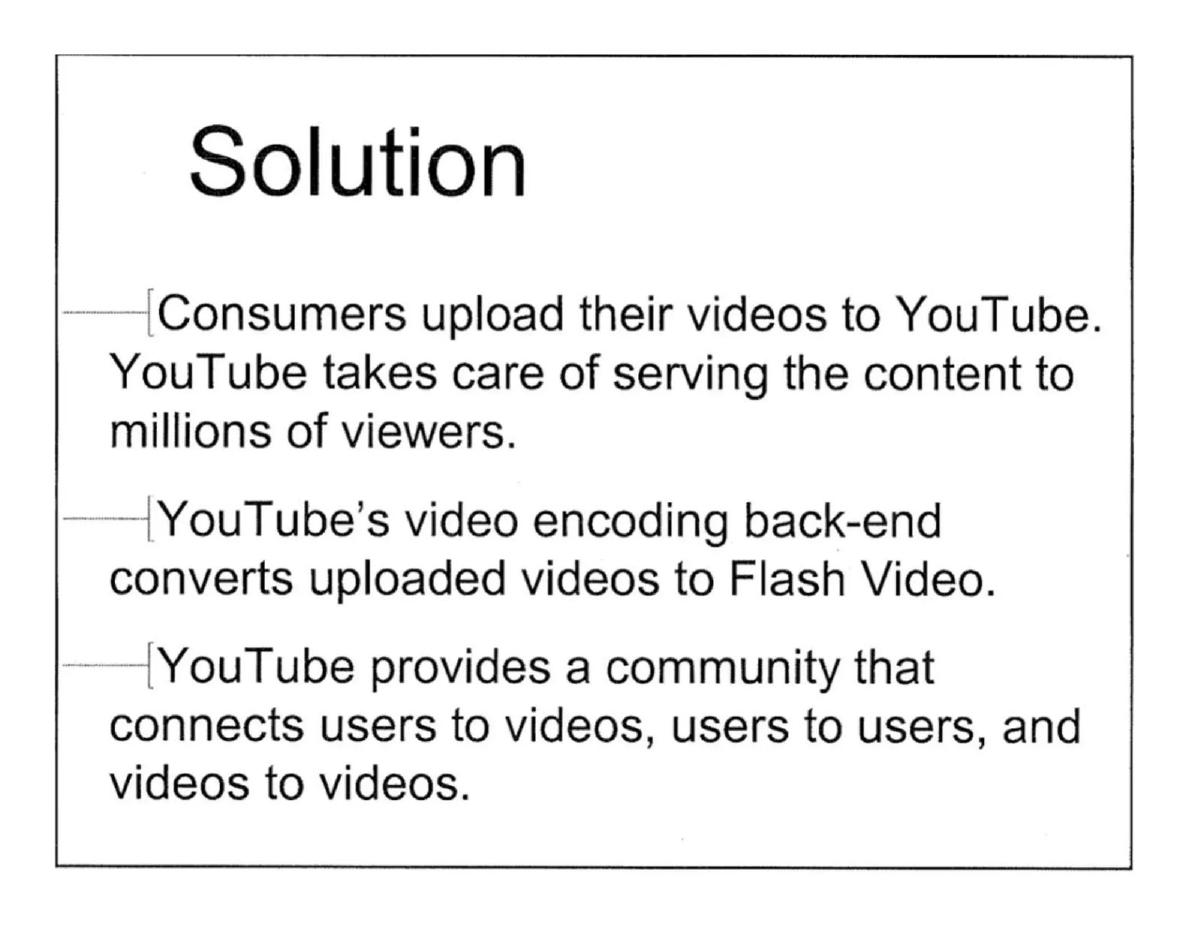
- YouTube’s core technical advantage was converting all uploads to Flash Video to solve format fragmentation, as stated on Slide 4.
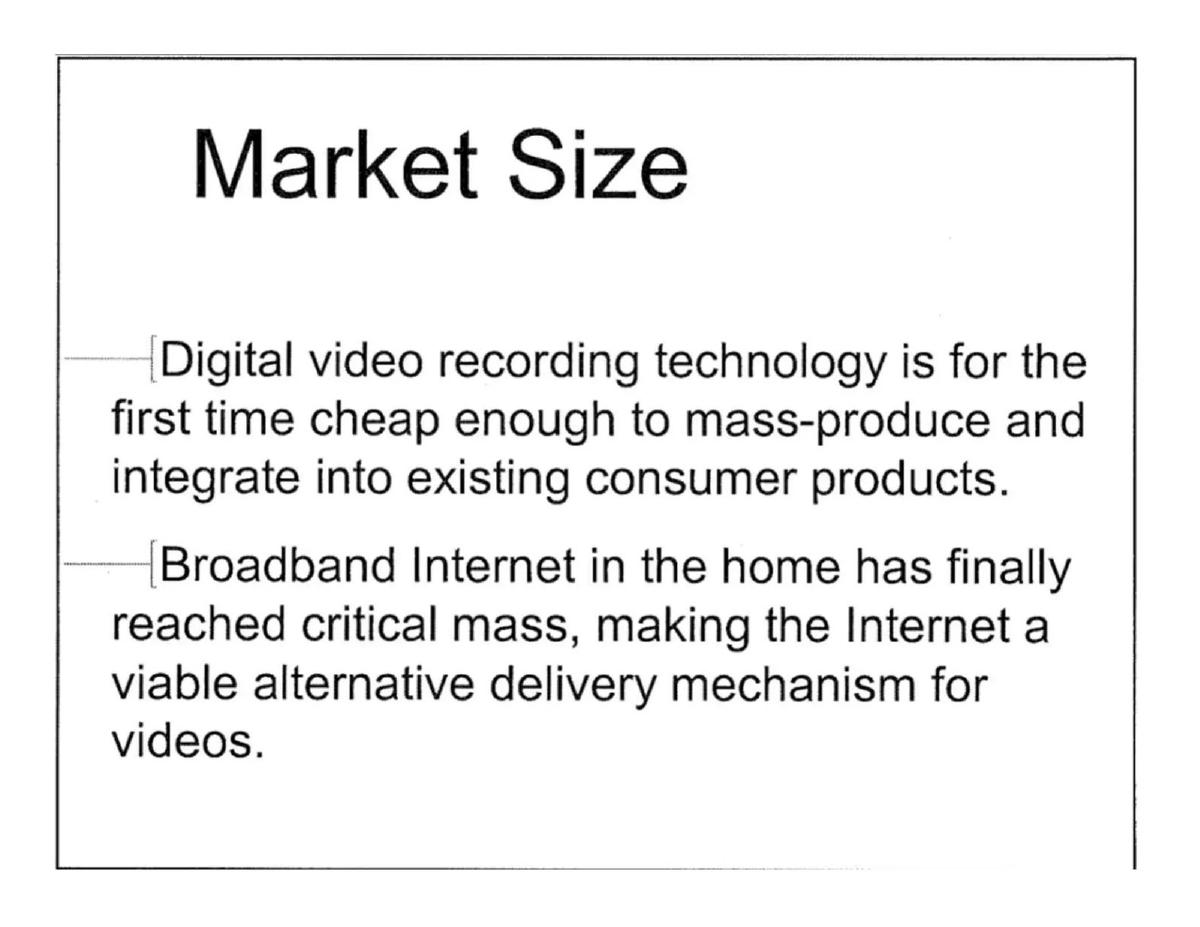
- The market size argument on Slide 5 is based on two macro trends: cheap digital recording technology and broadband reaching 'critical mass.'
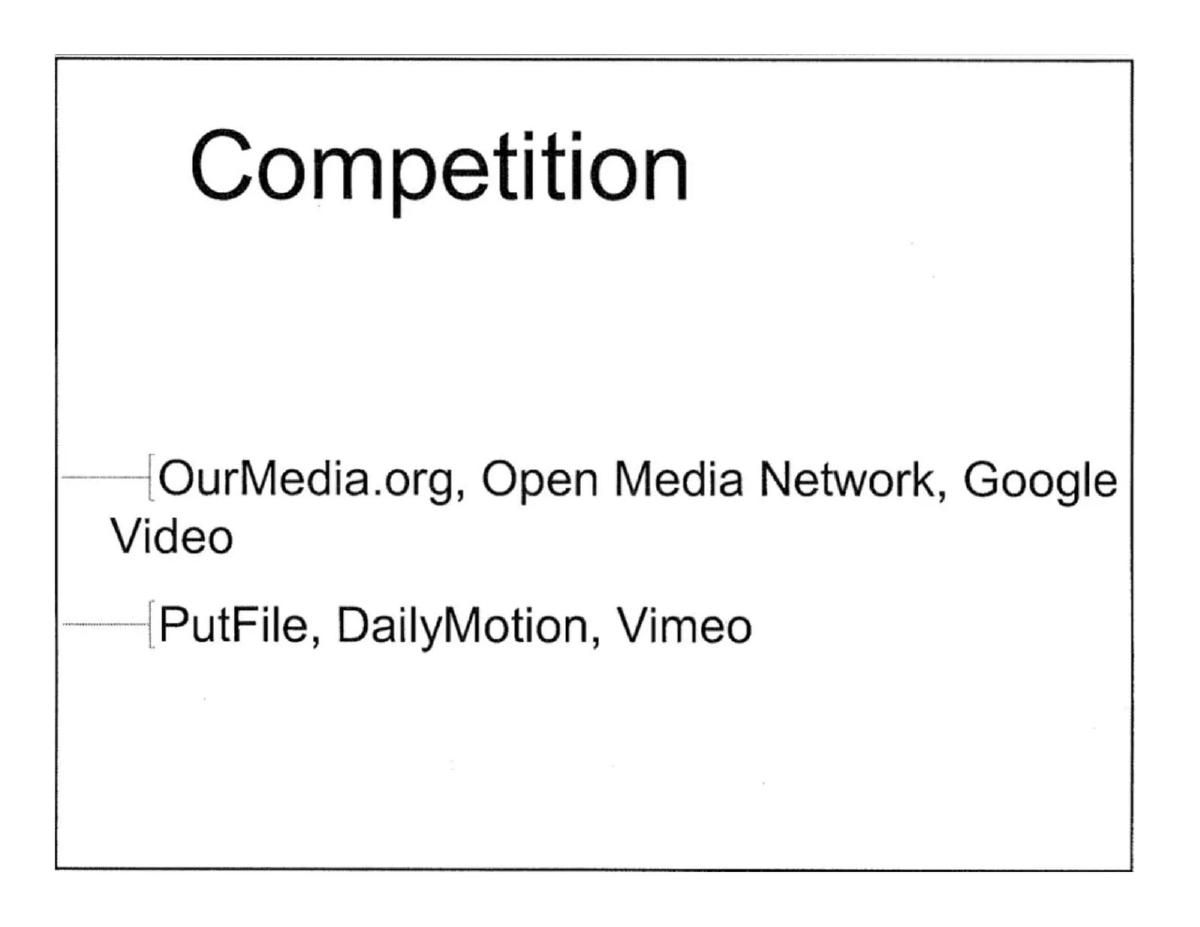
- The competition slide (Slide 6) lists Google Video as a rival, a company that would eventually acquire YouTube for $1.65 billion.
- The revenue model on Slide 8 was highly speculative, suggesting for-pay distribution and premium features alongside advertising.
- The team slide (Slide 9) is the deck's strongest asset, highlighting that all three founders were 'PayPal's first' engineers or designers.
- Despite the 'Metrics' heading on Slide 10, the deck provides zero hard numbers, claiming only to have 'overtaken all previously existing competitors.'
- The deck contains no 'Ask' slide, omitting the specific dollar amount or valuation being sought during the pitch.
The 10-Slide Foundation of a Media Giant
The YouTube pitch deck from 2005 is a historical artifact of the Web 2.0 era. It is remarkably simple, consisting of ten slides with basic black text on a white background. There are no fancy transitions, no embedded videos, and no complex charts. At this stage, YouTube was solving a fundamental infrastructure problem: the internet was not built for video. This teardown explores how the founders leveraged their professional history and a clear technical vision to secure $3.5M from Sequoia Capital.
Slide 1: Title and Slogan
The deck opens with the original YouTube logo and the slogan "Broadcast Yourself." This slogan is one of the most successful in tech history, immediately identifying the shift from professional broadcasting to user-generated content. The slide is minimalist, providing no contact information or date, which suggests it was intended to be presented in person rather than sent as a standalone document.
Slide 2: Company Purpose
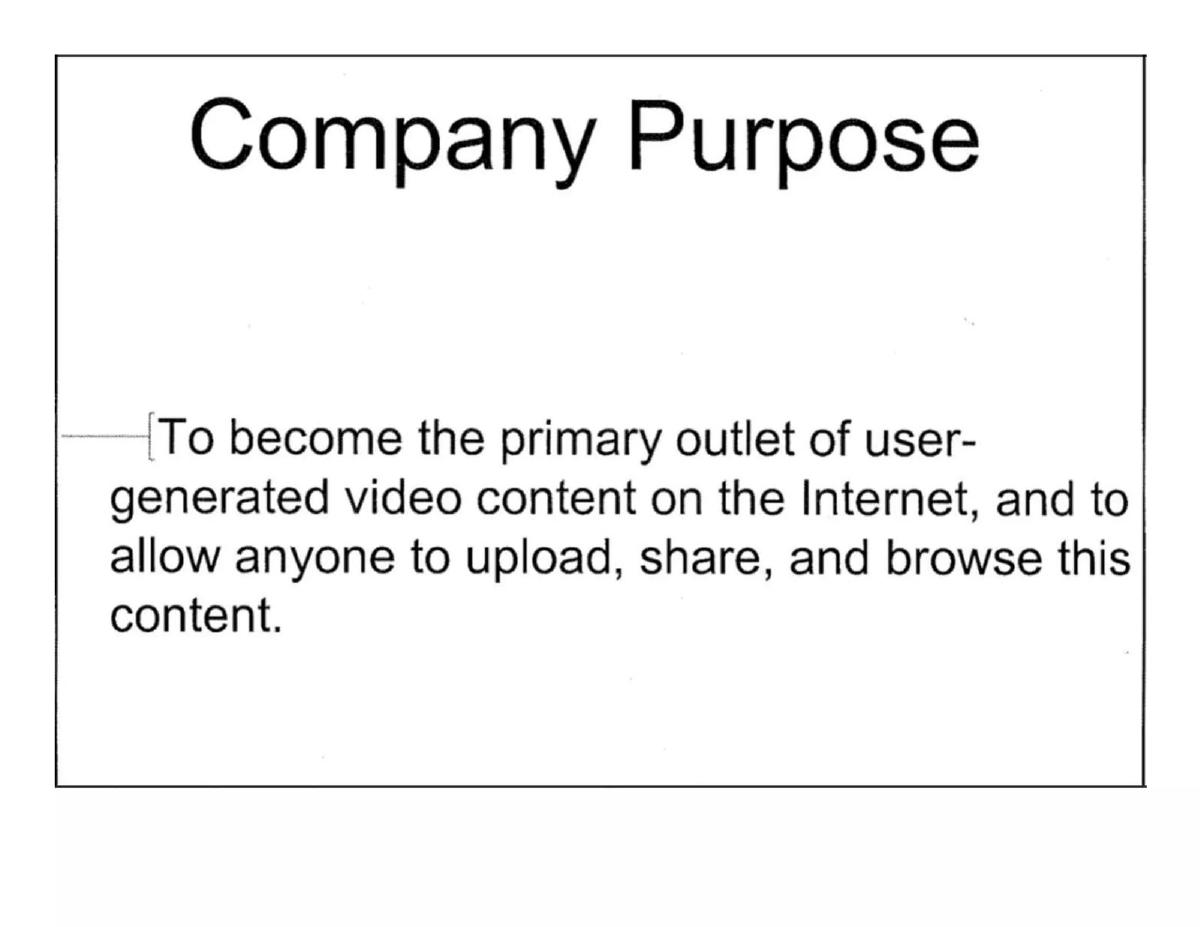
Slide 2 defines the mission: "To become the primary outlet of user-generated video content on the Internet, and to allow anyone to upload, share, and browse this content." This is a classic 'North Star' statement. It uses the word 'primary,' which signals intent for market dominance from the outset. It also breaks down the three core actions of the platform: upload, share, and browse.
Slide 3: The Problem
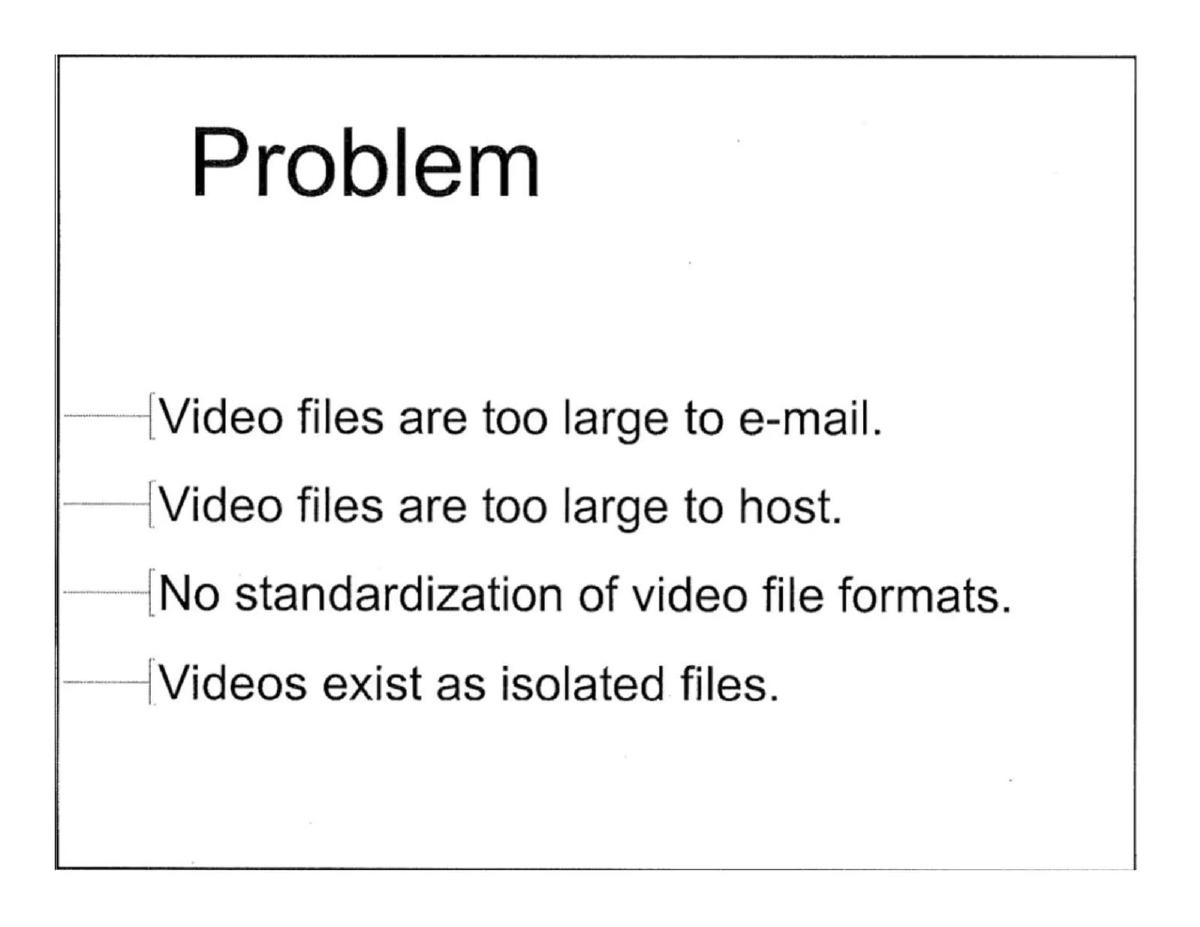
The problem slide (Slide 3) is a list of four technical and social hurdles that existed in 2005. The founders note that "Video files are too large to e-mail" and "too large to host." They also highlight the "No standardization of video file formats," which meant users often had to download specific players (like QuickTime or Windows Media Player) to view a single clip. Finally, they note that "Videos exist as isolated files," meaning there was no central discovery hub.
Slide 4: The Solution
Slide 4 presents YouTube as the infrastructure layer for video. The solution is three-fold. First, YouTube serves the content to "millions of viewers," taking the hosting burden off the user. Second, the "video encoding back-end converts uploaded videos to Flash Video." This was the 'secret sauce'—Flash was ubiquitous in browsers, so if YouTube could convert any file to Flash, anyone could watch it. Third, they mention a "community" that connects users and videos, addressing the 'isolated files' problem mentioned in the previous slide.
Slide 5: Market Size and Timing
Instead of a traditional TAM/SAM/SOM chart, Slide 5 focuses on 'Why Now?' The founders argue that "Digital video recording technology is for the first time cheap enough to mass-produce." This refers to the rise of digital cameras and early mobile phones with video capabilities. More importantly, they state that "Broadband Internet in the home has finally reached critical mass." Without broadband, the entire YouTube model would have been impossible due to buffering times.
Slide 6: Competition
The competition slide (Slide 6) is a simple list. It includes "OurMedia.org, Open Media Network, Google Video" and "PutFile, DailyMotion, Vimeo." It is notable that Google Video is listed as a competitor. At the time, Google was trying to build its own video service, but YouTube's focus on ease-of-use and community eventually led Google to abandon its own product and acquire YouTube instead.
Slide 7: Product Development
Slide 7 outlines the roadmap. It emphasizes "Community," "Open architecture," and targeting "vertical markets with a need for video content." The mention of 'open architecture' was a nod to the ability to embed YouTube videos on other sites (like MySpace), which was a major driver of their early viral growth. The slide is vague on specific features, simply stating "Features currently in development."
Slide 8: Sales & Distribution
Slide 8 addresses monetization. It is a 'buffet' of options rather than a singular plan. They list "Advertising," "for-pay distribution channel for promotional videos," and "Charge members for premium features." They even suggest "Charge viewers for premium content." This shows that in 2005, the ad-supported model that dominates today was not yet a certainty; they were keeping their options open for a subscription or pay-per-view model.
Slide 9: The Team
This is the most important slide in the deck. Slide 9 highlights the founders' backgrounds as "PayPal's first engineers" and "PayPal's first designer." Specifically, Steve Chen and Jawed Karim were "Recruited by Max Levchin as one of PayPal’s first engineers." Chad Hurley is credited with the "PayPal logo, main features, and design." For a VC like Sequoia, this was a massive de-risking factor. These were the people who built the infrastructure for one of the most successful fintech companies in history.
Slide 10: Metrics
The final slide, titled 'Metrics,' is surprisingly light on data. It states the platform "Launched June 11th" and claims it "Has already overtaken all previously existing competitors and is now the dominant player in this space." There are no charts for Daily Active Users (DAU), no upload volume stats, and no retention figures. In today's market, a Series A deck without a growth chart would be rejected, but in 2005, the combination of the team and the obvious market gap was enough.
What Works in the YouTube Deck
The deck's greatest strength is its clarity of purpose . By Slide 2, the investor knows exactly what the company wants to be. The technical solution (Slide 4) is also very strong; identifying Flash Video as the standardizing force was a brilliant insight that solved the 'it doesn't work on my computer' problem that plagued early internet video. Finally, the founder-market fit is undeniable. The team slide proves they have the technical chops to handle the massive scaling challenges that come with video hosting.
What is Missing from the YouTube Deck
By modern standards, this deck is missing almost everything a Series A investor expects. There is no 'Ask' slide , meaning the deck doesn't specify how much capital is being raised or how it will be spent. There are no financials —no burn rate, no projected revenue, and no unit economics. Most glaringly, the 'Metrics' slide contains no metrics . It is a purely qualitative statement of victory. The deck also lacks any visuals of the product , which is ironic for a company focused on visual media.
What a Founder Should Copy
Founders should emulate the problem-solution tight coupling found on Slides 3 and 4. Every problem listed on Slide 3 has a direct answer on Slide 4. This creates a logical flow that is hard to argue with. Additionally, the 'Why Now' logic on Slide 5 is excellent. Instead of just saying the market is big, they explain the specific technological shifts (cheap cameras and broadband) that make the business viable at this exact moment. Finally, the conciseness is worth noting; the deck doesn't bury the lead in 50 slides of fluff. It gets straight to the point: we are the PayPal guys, video is broken, and we have the fix.
Conclusion
The YouTube deck is a product of its time, relying heavily on the reputation of its founders and a massive, obvious gap in the market. While a modern founder would need significantly more data to raise a Series A, the core principles of identifying a technical bottleneck and presenting a credible team to fix it remain the foundation of any successful pitch.
Frequently asked questions
- How much did YouTube raise with this deck?
- According to the catalogue facts, YouTube raised $3.5M in a Series A round led by Sequoia Capital in 2005. This was followed by an $8M Series B in 2006, which was the final round of funding before the company was acquired by Google.
- Why is the team slide considered the most important part of this deck?
- Slide 9 lists Steve Chen, Chad Hurley, and Jawed Karim as early employees of PayPal. Chen and Karim were 'first engineers' and Hurley was the 'first designer.' In 2005, having the 'PayPal Mafia' pedigree was a massive signal of technical execution capability, which likely offset the lack of specific growth metrics in the rest of the deck.
- What was YouTube's original plan for making money?
- Slide 8 lists four potential revenue streams: advertising, acting as a for-pay distribution channel for promotional videos, charging members for premium features, and charging viewers for premium content. Interestingly, the deck does not commit to one specific model, showing that the early focus was entirely on user acquisition and content hosting.
- What technical problem did YouTube solve according to the deck?
- As detailed on Slide 3 and Slide 4, the problem was that video files were too large and existed in too many different formats. YouTube solved this by serving as a central host and using a back-end encoding system to convert all videos into Flash Video, which was the standard for web browsers at the time.
- What is missing from the YouTube pitch deck that modern decks usually include?
- The deck is missing several standard elements: a specific 'Ask' (how much money they wanted), a detailed financial forecast, unit economics, and actual data visualizations. Slide 10, titled 'Metrics,' contains a qualitative claim of dominance rather than a chart showing user growth or video views.