Hotels724 presents a thesis that the current Online Travel Agency (OTA) market is overly focused on room bookings, ignoring the 36% of hotel revenue generated by non-room sales like spas, fitness, and restaurants. The deck outlines a two-phase approach: first, launching as an Expedia affiliate to generate immediate 5% commissions, and second, building a native interface to facilitate direct booking of hotel amenities. While the team possesses strong technical backgrounds and connections to the Rixos Group, the deck lacks a clear financial ask, specific growth projections, or a detailed compet…
Key takeaways
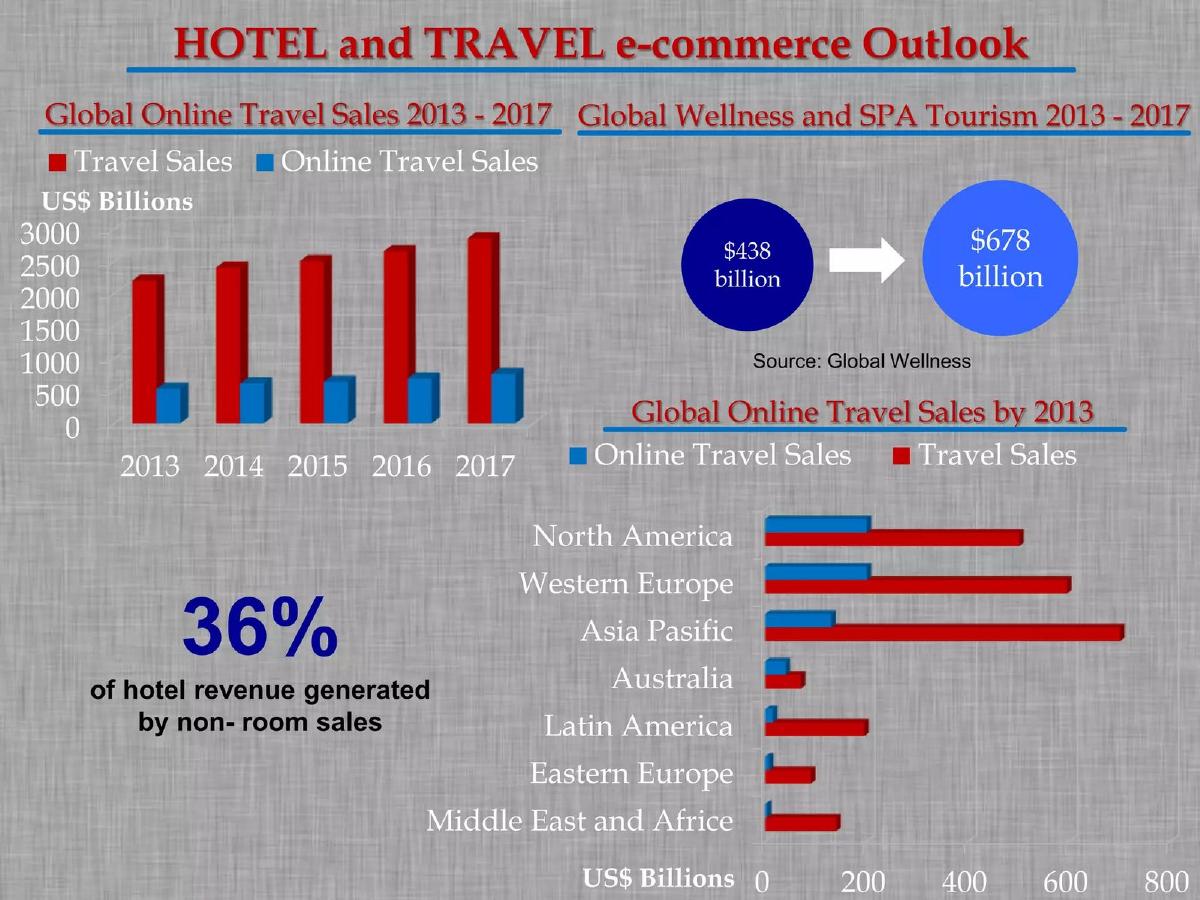
- The company identifies that 36% of hotel revenue is generated by non-room sales, which current OTAs largely ignore (Slide 3).
- The team has a direct industry link through Mikail Gürbüz’s 5-year internship and relationship with the Rixos Group (Slide 2).
- Hotels724 is currently operating as an official Expedia affiliate, earning a 5% commission on reservations (Slide 8).
- The product roadmap involves moving from a templated 'Chameleon' theme to a native interface using the Expedia API (Slide 8).
- The market opportunity is framed by global online travel sales projections reaching nearly $800 billion by 2017 (Slide 3).
- The platform intends to differentiate by offering service-specific reviews for amenities like spas rather than just general hotel reviews (Slide 7).
- The deck lacks a specific funding 'Ask' or a breakdown of how investment capital will be deployed.
- The technical team is heavily weighted toward .NET and front-end development, with specific mentions of jQuery, HTML5, and SQL (Slide 2).
Hotels724: The 'Beyond the Room' Strategy
The Hotels724 deck is a product-centric presentation that identifies a specific gap in the massive Online Travel Agency (OTA) market. While the giants focus on heads-in-beds, Hotels724 wants to monetize the rest of the hotel's footprint. This teardown explores their logic, their technical foundation, and the significant gaps in their pitch.
Slide 1: Title and Tagline
The deck opens with a simple logo and the tagline: "A Hotel is Greater than a Room!" (Slide 1). This immediately sets the stage for their value proposition. It is a clear, concise way to signal that they are not just another hotel booking site, but something that looks at the hotel as a multi-service entity.
Slide 2: The Team
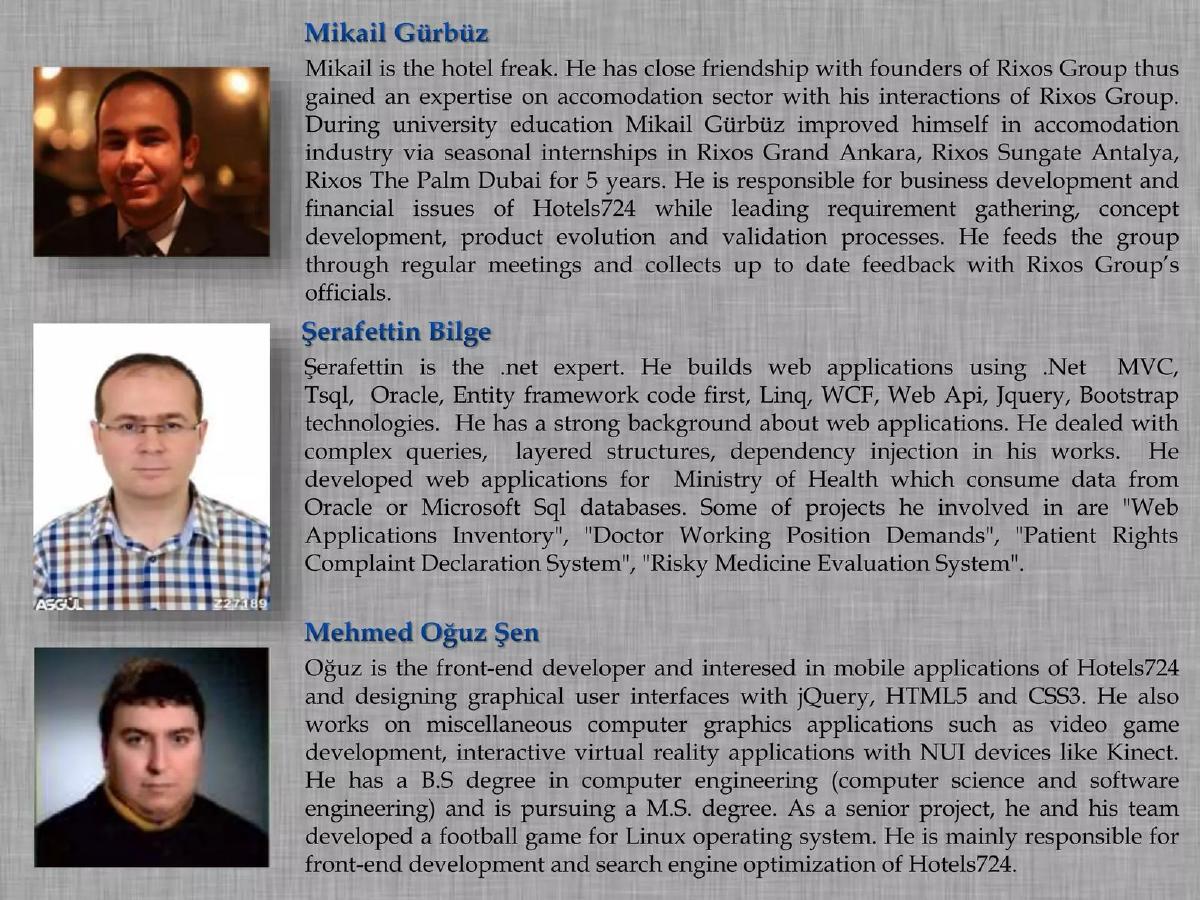
The team slide provides detailed biographies for three members. Mikail Gürbüz is positioned as the industry insider, citing a "close friendship with founders of Rixos Group" and five years of internships at Rixos properties in Ankara, Antalya, and Dubai. Şerafettin Bilge is the back-end lead, listed as a ".net expert" with experience in Oracle and SQL databases, specifically for government health projects. Mehmed Oğuz Şen handles front-end and SEO, with a background in computer engineering and game development. The team appears technically capable, though it lacks a dedicated sales or marketing lead, which is critical for a platform requiring two-sided marketplace growth.
Slide 3: Market Outlook
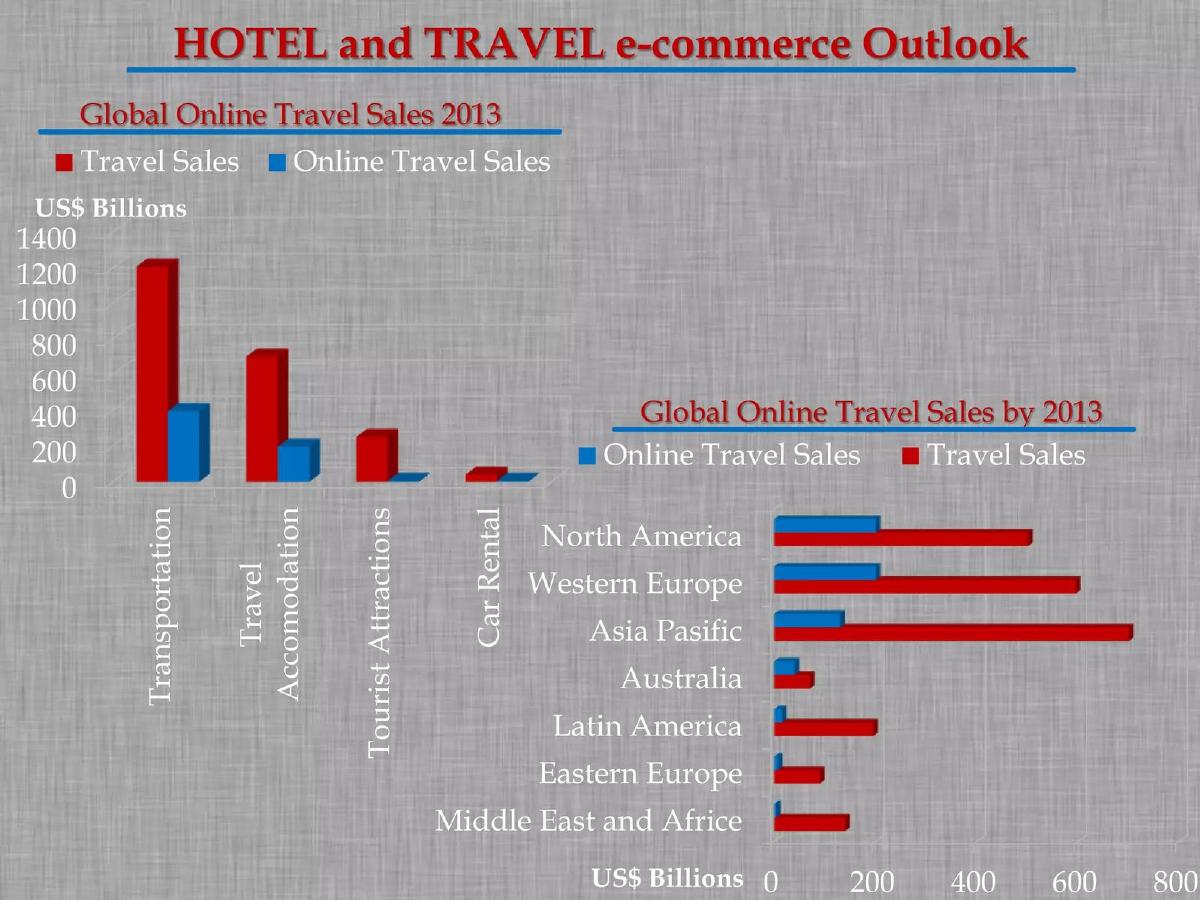
Slide 3 presents the macro environment. It uses data from 2013 to 2017, showing a steady climb in global travel sales. A key data point here is the "$678 billion" valuation for Global Wellness and SPA Tourism. Most importantly, the slide claims that "36% of hotel revenue [is] generated by non-room sales." This is the 'aha' moment of the deck, providing a quantitative basis for why their niche matters. However, the charts for regional sales (North America, Western Europe, etc.) are somewhat cluttered and don't provide a specific target market for the initial launch.
Slide 4: Revenue Benchmarks
This slide, titled "HOW MUCH DO THEY GENERATE?", compares annual revenue and revenue per second for various web services. It lists Google at $21.8 billion ($691.27/sec) and Amazon at $19.1 billion ($607.75/sec). It then highlights accommodation platforms like Priceline ( $1.88 billion ) and Expedia ( $1.44 billion ). While these figures show the scale of the industry, they are somewhat vanity metrics that don't directly relate to Hotels724's current stage or projected path. It serves more to prove that the sector is lucrative rather than explaining how Hotels724 will capture a piece of it.
Slide 5: The Problem/Opportunity Gap
Slide 5 reinforces the tagline. It visually contrasts a "Hotel" with a "Room" and lists the logos of major competitors like Booking.com, Expedia, and Hotel Tonight. The text explicitly states that these platforms "do not include booking of other services" such as SPA, Restaurant, Fitness membership, or Pool booking. This slide effectively defines their competitive moat: they are going where the big players have traditionally ignored the 'outside user' (someone not staying at the hotel who wants to use its facilities).
Slide 6 & 7: Benefits and Reviews
Slide 6 is a simple transition slide titled "Benefits." Slide 7 elaborates on a specific feature: service-specific reviews . The deck argues that general hotel reviews are insufficient for specific amenities. By allowing users to review just the spa or just the restaurant, the platform provides "better insight" for customers and "minimum response time" for hotel management to take action on feedback. This is a smart product feature, but the slide is text-heavy and lacks a visual mockup of what these reviews would look like.
Slide 8: Current Status and Roadmap
The final slide in this set provides the most concrete business information. It reveals that Hotels724 is currently an "official affiliate of Expedia.com" with access to 240,000 hotels. They earn a "5% commission" on reservations. The slide admits that their current version uses a standard "Expedia -chameleon theme-" which they feel lacks a "professional feel." The roadmap includes:
Developing a native room booking interface using the Expedia API. · Developing a system for hotels to create profiles for spa, fitness, and event services.
This shows a pragmatic approach to revenue (starting as an affiliate) while building toward their unique value proposition.
What Works in This Deck
The Core Thesis: The identification of the 36% non-room revenue gap is a strong hook. It takes a well-understood market (travel) and finds a specific, underserved segment that is large enough to be interesting to investors.
Industry Connections: Mentioning a relationship with the Rixos Group founders (Slide 2) gives the team immediate credibility. In the hospitality tech space, having a 'design partner' or a friendly hotel group to test a product is a significant advantage.
Pragmatic Launch: Starting as an Expedia affiliate (Slide 8) is a smart way to solve the 'cold start' problem of a marketplace. It allows them to offer inventory and earn revenue immediately while they build the more complex amenity-booking features.
What is Missing
The 'Ask': There is no slide indicating how much money the company is raising or what they intend to do with it. Without a clear financial request, this is a product presentation, not a fundraising deck.
Unit Economics: While they mention a 5% commission, there is no data on Customer Acquisition Cost (CAC) or Lifetime Value (LTV). In the highly competitive travel space, marketing costs often sink startups. The deck doesn't explain how they will acquire users cheaper than Expedia or Booking.com.
Competitive Analysis: While they list the big OTAs, they don't mention smaller niche players who might be doing spa or restaurant bookings (like OpenTable or ResortPass). A true competitive grid is missing.
Visual Mockups: The deck is very text-heavy. For a consumer-facing platform, investors want to see the user experience. The lack of screenshots or high-fidelity mockups of the 'native interface' mentioned on Slide 8 is a missed opportunity.
Founder Takeaways
Lead with the Gap: If you are entering a crowded market, find a specific percentage of revenue that the incumbents are ignoring. Hotels724 does this well with their 36% figure.
Technical Specificity: The team slide (Slide 2) is very specific about their tech stack (.NET, MVC, Tsql, jQuery). For early-stage investors, knowing exactly what the team can build without outside help is a plus.
Be Honest About the MVP: The founders were honest that their current site uses a generic theme and needs a professional upgrade. This transparency builds trust, provided it is followed by a clear plan to improve it.
Avoid Vanity Comparisons: Comparing a seed-stage startup's revenue-per-second to Google (Slide 4) rarely helps a pitch. It’s better to focus on the specific unit economics of a single transaction on your own platform.
Frequently asked questions
- What is the core problem Hotels724 is trying to solve?
- Hotels724 argues that major platforms like Booking.com and Expedia focus exclusively on room bookings. They highlight that a significant portion of hotel revenue—36%—comes from other services like spas, restaurants, and fitness centers. The platform aims to allow 'outside users' (non-guests) to book these specific amenities, which are currently difficult to access through traditional online travel agencies.
- How does the company currently make money?
- According to slide 8, the company is already live as an official affiliate of Expedia.com. They earn a 5% commission on every reservation made through their site. Currently, customer service and payments are handled by Expedia's infrastructure, allowing the startup to maintain a lean operation while they develop their proprietary features.
- What is the team's background?
- The team is composed of three primary members: Mikail Gürbüz, who provides the industry expertise through his long-term relationship and internships with the Rixos Group; Şerafettin Bilge, a .NET expert with experience building applications for the Ministry of Health; and Mehmed Oğuz Şen, a front-end developer and computer engineer focused on user interface design and SEO.
- What is the product roadmap described in the deck?
- The roadmap has three stages. First, the already-launched affiliate site using a standard Expedia theme. Second, the development of a 'native' room booking interface using the Expedia API to improve the professional feel of the site. Third, the development of a custom system that allows hotels to create profiles for their spa, pool, and event services for direct user booking.
- Does the deck include a financial ask or valuation?
- No. The provided slides do not include a specific funding request, a valuation, or a use-of-funds breakdown. It functions more as a product and market thesis presentation than a complete investment proposal. It also lacks detailed unit economics or customer acquisition cost (CAC) projections.