How to Present a Pivot in a Pitch Deck: 11 Real Examples
How founders show a change of direction on a pitch deck: what changed, why, when, and what happened next. Eleven real slides from private startups compared.
How to Present a Startup Pivot on Your Pitch Deck
Twelve slides from eleven real pitch decks show how founders present a change of direction. The best say what they stopped doing, why, when the change happened and what improved afterwards. The weakest mention a pivot in passing and leave the investor to wonder whether it worked.
TL;DR
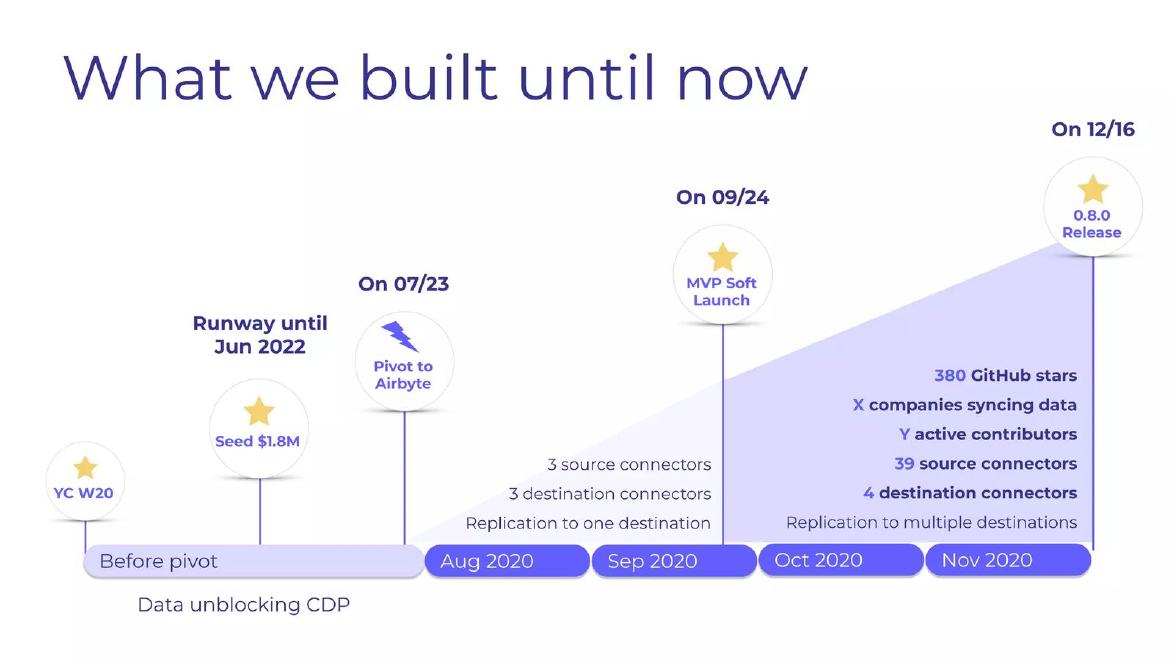
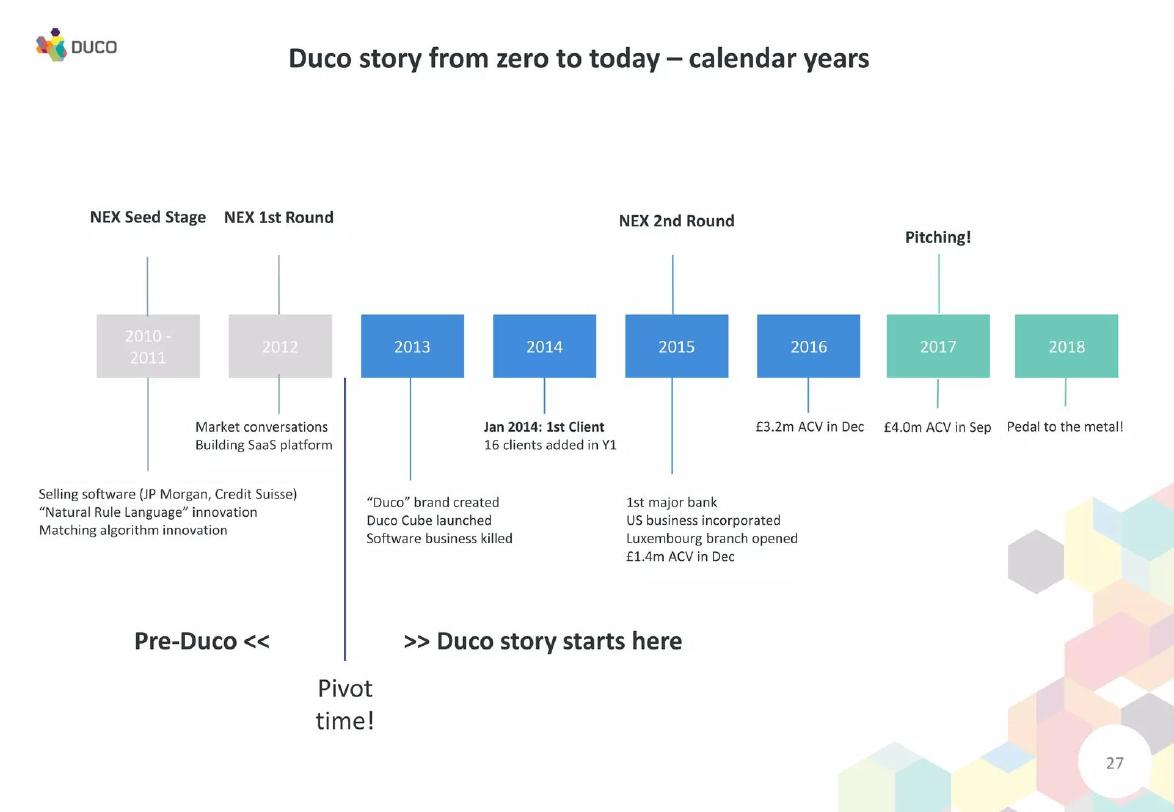
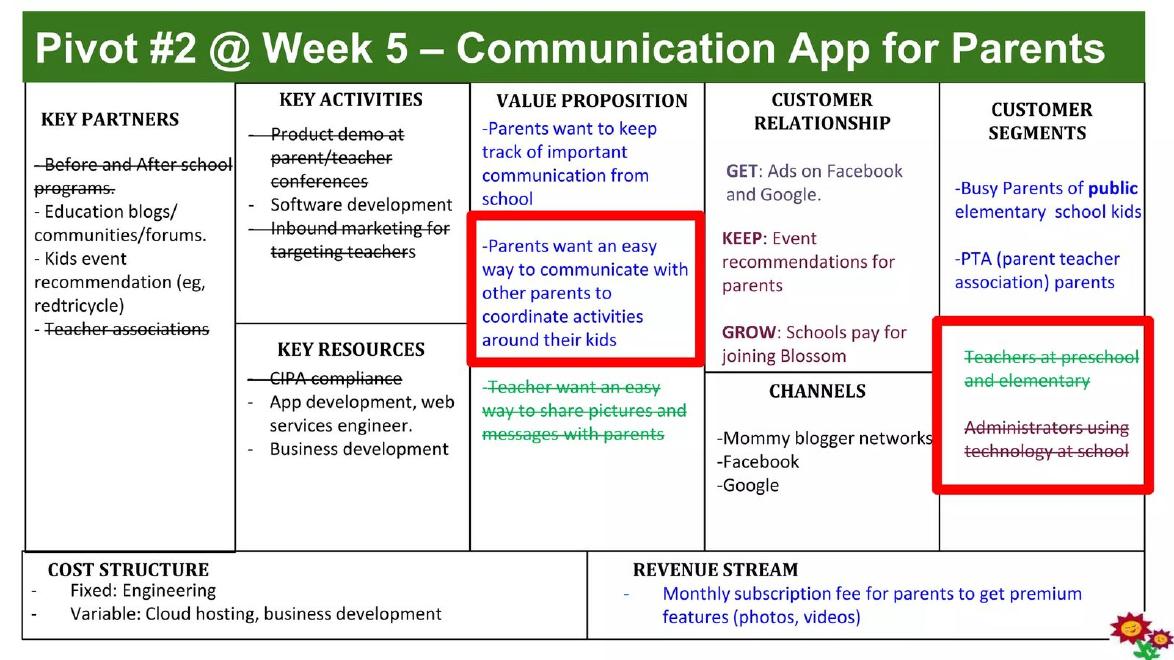
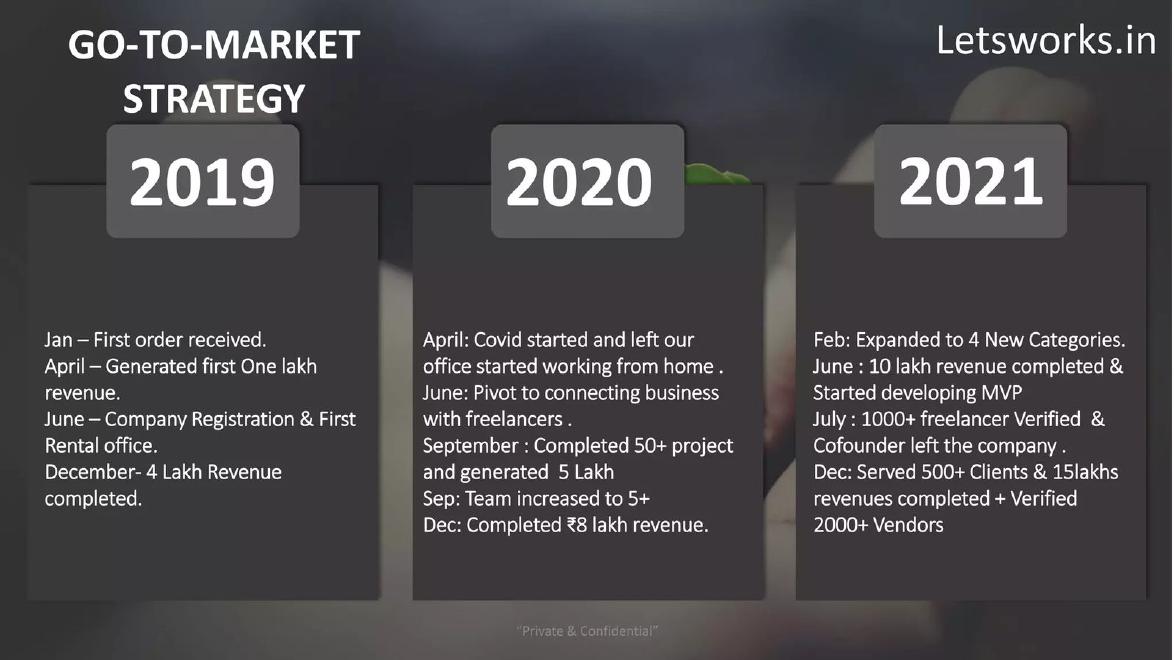
Present a pivot as a decision with evidence, not an apology. Give four facts: what you did before, why you changed, the date of the change, and the results since. Put the pivot on a dated timeline so the investor can see that the progress came after it. Airbyte's seed-stage deck marks "Pivot to Airbyte" on 07/23, a soft launch on 09/24 and, by 12/16, 380 GitHub stars and 39 source connectors. Duco draws a "Pivot time!" line between 2012 and 2013, notes "Software business killed", then shows annual contract value rising from £1.4m in 2015 to £4.0m in 2017. Blossom shows its business model canvas with the old customers struck through and the new ones added. Let's Works dates its June 2020 pivot to Covid and shows revenue of 4 lakh in 2019, ₹8 lakh in 2020 and 15 lakhs in 2021. Chillchat and Letsdoiter mention a pivot with no reason or result.
Pivot slides from real pitch decks
Each example shows the exact stored slide above its analysis and links to the full teardown. Stage and year are given only where the deck or public records state them. Figures are the company's own claims.
Airbyte company history slide — slide 8
Data integration; YC W20; deck after a $1.8M seed.
Airbyte deck, slide 8. Exact stored slide matched to this analysis.
Our analysis: Clear before and after, with every metric after the change.
Evidence and limitation: Leaving "X companies" on a sent deck.
What a founder can adapt: Add the one-line reason and fill or remove placeholders.
Supporting analysis
What the deck claims: Before pivot: data unblocking CDP. 07/23 pivot to Airbyte; 09/24 MVP soft launch; 12/16 0.8.0 release, 380 GitHub stars, 39 source and 4 destination connectors. Runway until Jun 2022.
Presentation choice: Clear before and after, with every metric after the change.
When it does not fit: Leaving "X companies" on a sent deck.
Duco deck, slide 28. Exact stored slide matched to this analysis.
Our analysis: Says what was shut down and starts the measured history at the pivot.
Evidence and limitation: Mixing pre-pivot revenue into growth figures.
What a founder can adapt: Add why the old model was dropped.
Supporting analysis
What the deck claims: 2010-11 selling software to banks; 2012 building SaaS; "Pivot time!"; 2013 Duco brand, software business killed; first client Jan 2014; ACV £1.4m (2015), £3.2m (2016), £4.0m (Sep 2017).
Presentation choice: Says what was shut down and starts the measured history at the pivot.
When it does not fit: Mixing pre-pivot revenue into growth figures.
Blossom deck, slide 5. Exact stored slide matched to this analysis.Blossom deck, slide 8. Exact stored slide matched to this analysis.
Our analysis: Crossed-out canvas shows old and new assumptions together.
Evidence and limitation: Deleting the old plan so nobody sees the learning.
What a founder can adapt: Add evidence that the new customer will pay.
Supporting analysis
What the deck claims: Pivot #1: communication app for schools. Pivot #2 @ week 5: teachers and administrators struck through; busy public-school parents and PTA parents added; revenue from parent subscriptions.
Presentation choice: Crossed-out canvas shows old and new assumptions together.
When it does not fit: Deleting the old plan so nobody sees the learning.
Let's Works deck, slide 16. Exact stored slide matched to this analysis.
Our analysis: Reason next to the pivot; revenue comparable year by year.
Evidence and limitation: Mixed currency labels.
What a founder can adapt: Show monthly revenue around the change.
Supporting analysis
What the deck claims: 2019: 4 lakh revenue. Jun 2020: pivot to connecting businesses with freelancers after Covid; ₹8 lakh in 2020. 2021: 500+ clients, 15 lakhs; cofounder left July 2021.
Presentation choice: Reason next to the pivot; revenue comparable year by year.
Dharma deck, slide 16. Exact stored slide matched to this analysis.
Our analysis: Honest about failure, specific about the insight.
Evidence and limitation: Burying the pivot under a team slide.
What a founder can adapt: Put a one-line version in the main story.
Supporting analysis
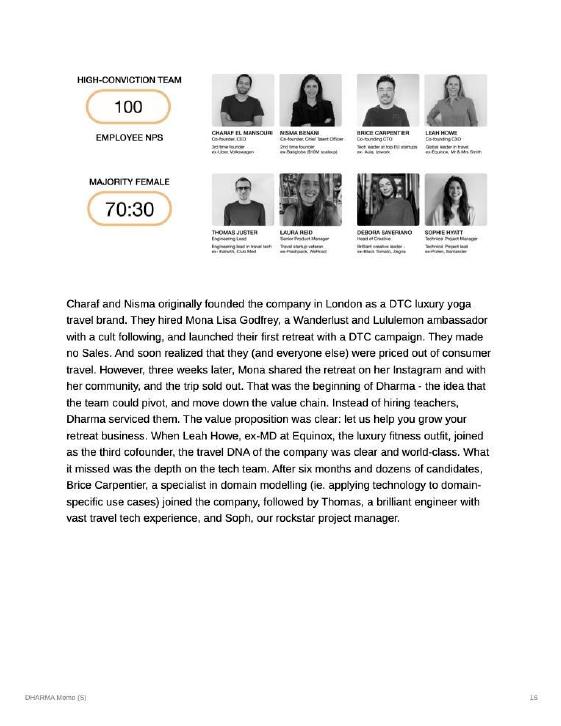
What the deck claims: Started as a DTC luxury yoga travel brand and made no sales; an ambassador's post sold out the retreat in three weeks; now serves retreat hosts.
Presentation choice: Honest about failure, specific about the insight.
When it does not fit: Burying the pivot under a team slide.
Griffin deck, slide 5. Exact stored slide matched to this analysis.
Our analysis: Explains why the founders are back and why now.
Evidence and limitation: Skipping a failed attempt investors will find anyway.
What a founder can adapt: Say what is different this time beyond the market.
Supporting analysis
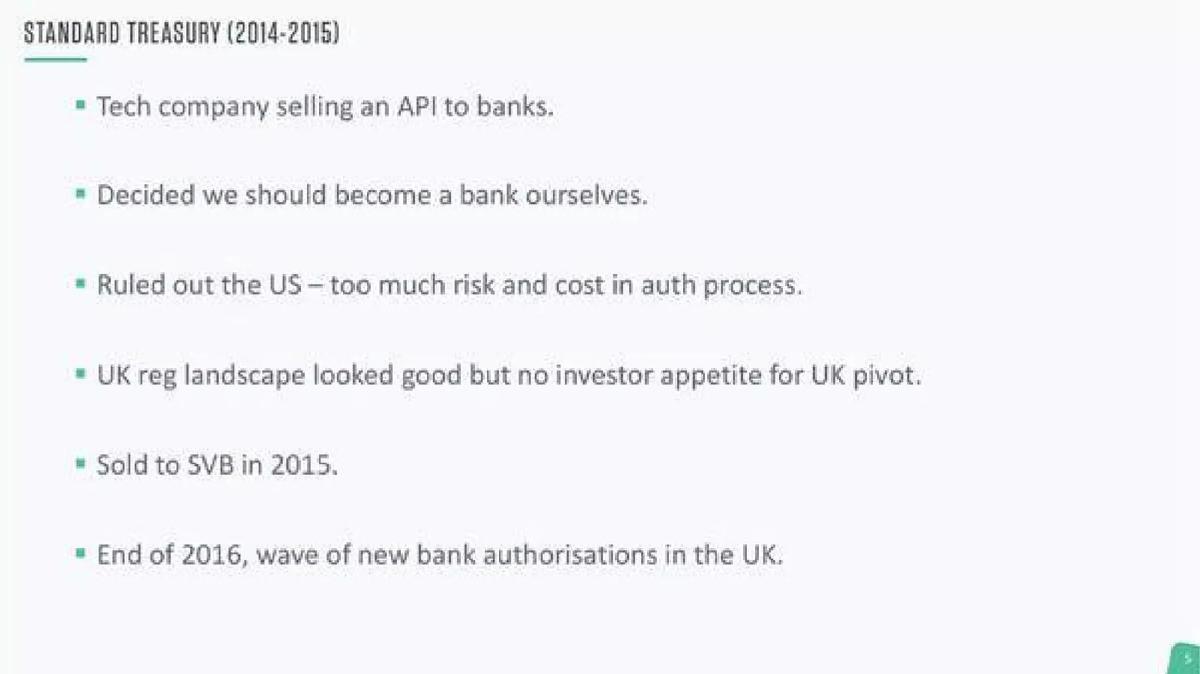
What the deck claims: Standard Treasury (2014-15): API to banks; decided to become a bank; ruled out US; no investor appetite for a UK pivot; sold to SVB 2015; wave of UK bank authorisations end of 2016.
Presentation choice: Explains why the founders are back and why now.
When it does not fit: Skipping a failed attempt investors will find anyway.
E-Contenta deck, slide 24. Exact stored slide matched to this analysis.
Our analysis: Dated pivot with results after it.
Evidence and limitation: Hinting at a second pivot without saying so.
What a founder can adapt: Give the reason; name further customer changes.
Supporting analysis
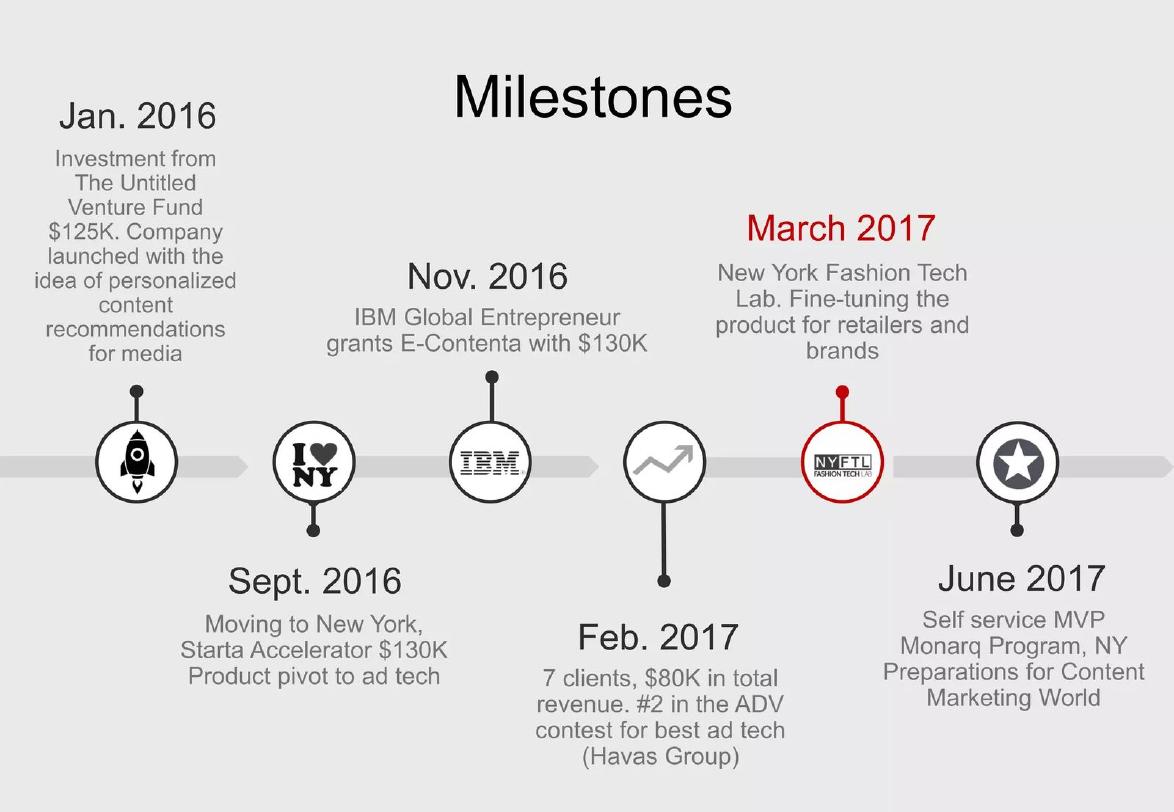
What the deck claims: Jan 2016 $125K, content recommendations for media; Sep 2016 Starta $130K, product pivot to ad tech; Feb 2017 7 clients, $80K revenue.
Presentation choice: Dated pivot with results after it.
When it does not fit: Hinting at a second pivot without saying so.
MocApp deck, slide 20. Exact stored slide matched to this analysis.
Our analysis: Before and after customers are clear.
Evidence and limitation: Launch dates as the only evidence.
What a founder can adapt: Add the reason and a result.
Supporting analysis
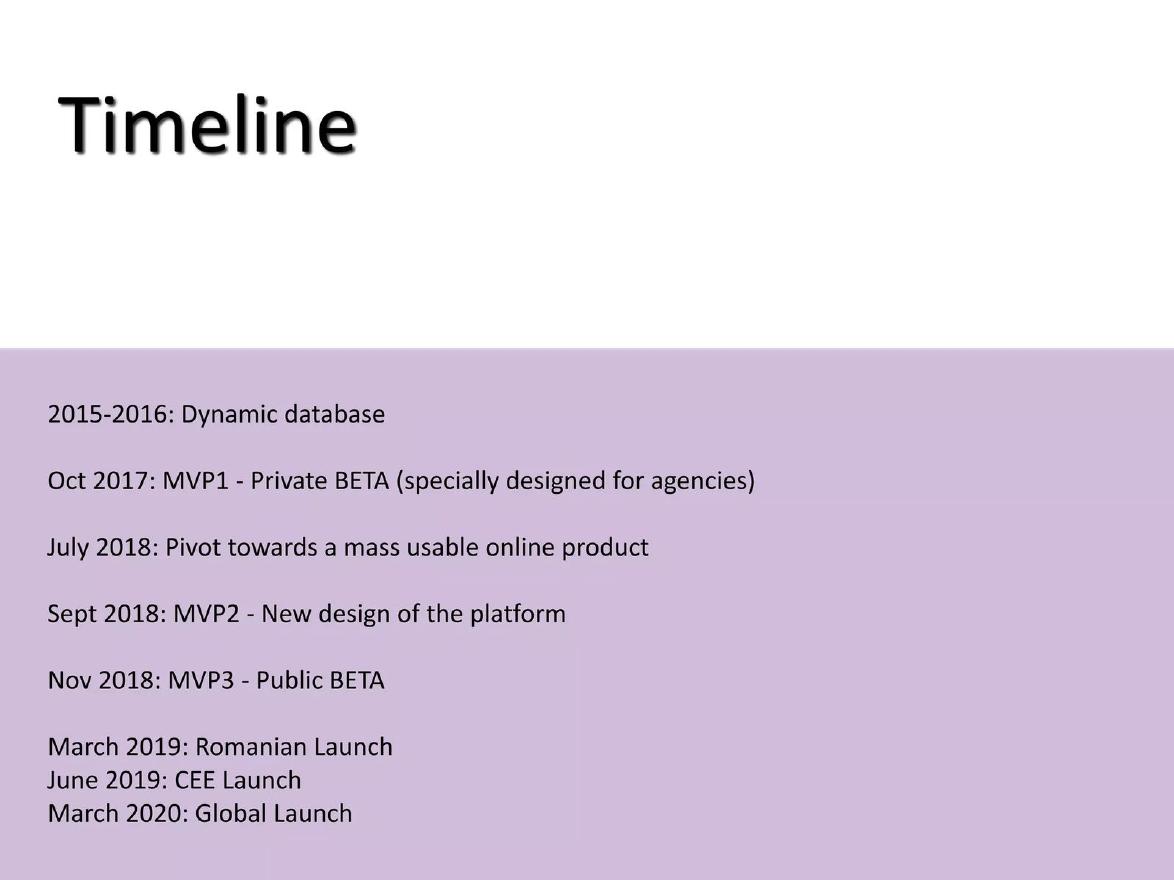
What the deck claims: Oct 2017 MVP1 for agencies; Jul 2018 pivot to a mass-usable online product; new design, public beta; launches Romania 2019, CEE 2019, global 2020.
Presentation choice: Before and after customers are clear.
When it does not fit: Launch dates as the only evidence.
Few slides give the reason and the result together.
Example
Before stated
Reason
Date
Result after
Airbyte
Yes
No
Yes
Yes
Duco
Yes
No
Yes
Yes
Blossom
Yes
Implied
Week 5
No
Let's Works
Yes
Covid
Yes
Yes
Cloosiv
No
No
Yes
Chart, redacted
Dharma
Yes
Yes
No
No
Griffin
Yes
Yes
Yes
Sold
E-Contenta
Yes
No
Yes
Yes
MocApp
Yes
No
Yes
Launches only
Chillchat
Yes
No
Yes
No
Letsdoiter
No
No
Planned
No
Key Takeaways
Say what you stopped doing, not only what you do now.
Give the reason in one line.
Date the pivot on a timeline.
Show results after the pivot, separately from before.
Treat it as learning, not failure, without hiding it.
Test your pivot line before you send it
Answer each in one line.
Before. What did you sell, and to whom?
Reason. What evidence made you change?
Date. When did the change happen?
After. What has improved since, with numbers?
Money. How much runway is left after the change?
Copyable framework: We started as [old product] for [old customer]. [Evidence] showed [problem], so in [month year] we moved to [new product] for [new customer]. Since then: [metric] grew from [x] to [y]
Illustrative example 1 — written by us
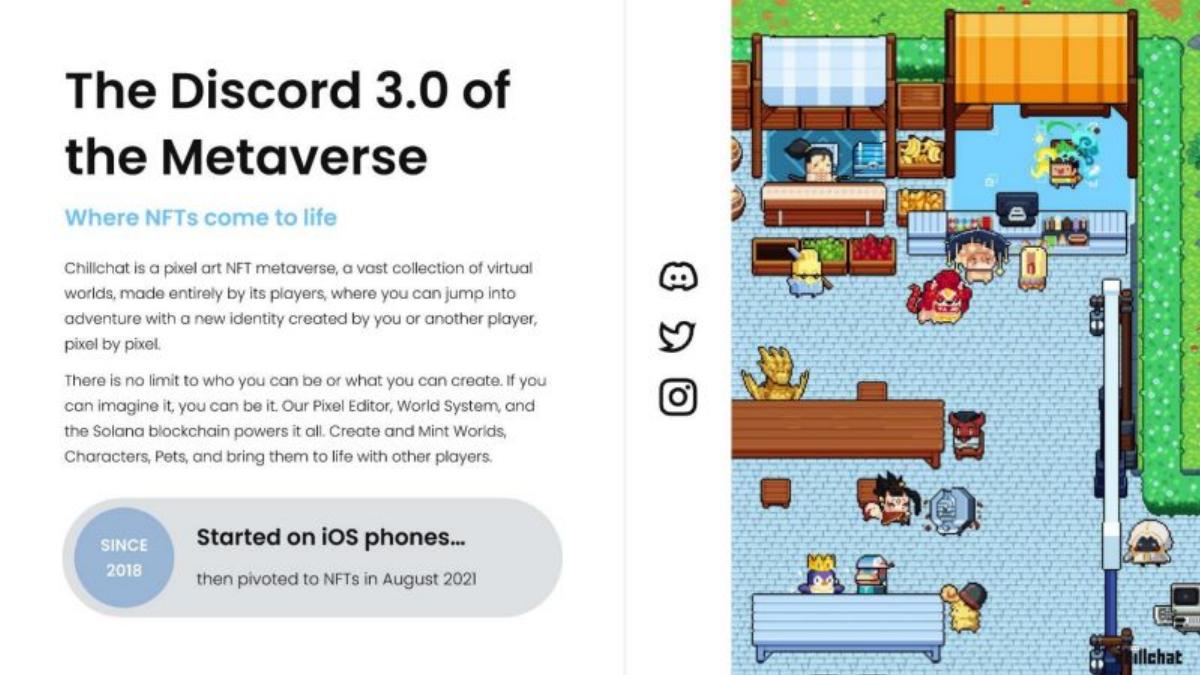
Before: Started on iOS phones... then pivoted to NFTs in August 2021.
After: Started on iOS; [evidence] showed [problem], so in August 2021 we moved to [new product]. Since then: [metric] from [x] to [y]
What improved: Our illustrative rewrite, not Chillchat's text. Bracketed parts are placeholders, not company facts.
What this guide covers
A pivot is a deliberate change in a startup's product, customer, business model or market, made because the original plan was not working well enough. Many successful companies pivoted early. Investors know this, so a pivot is not a problem in itself. What worries them is a pivot that is hidden, unexplained or so recent that there is no evidence the new direction is better.
Our company history slide guide covers founding stories and timelines generally, and mentions pivots only briefly. This guide focuses on the pivot itself. We searched the extracted text of the deck library for pivot and pivoted, removed listed companies and non-business meanings of the word, and read each remaining candidate from images of the original deck pages. We kept twelve slides from eleven private companies and dropped one slide that read like a course project rather than a company pitch.
The examples fall into three groups: dated timelines that put the pivot in context, slides that explain exactly what changed, and slides that mention a pivot without saying why or what happened next.
Put the pivot on a dated timeline
Airbyte, a data integration company, has a slide titled What we built until now. A timeline starts with YC W20, then Seed $1.8M with "Runway until Jun 2022", then on 07/23 "Pivot to Airbyte". The period before is labelled "Before pivot" with a note, "Data unblocking CDP". After the pivot come an MVP soft launch on 09/24 with 3 source and 3 destination connectors, and a 0.8.0 release on 12/16 with 380 GitHub stars, 39 source connectors and 4 destination connectors.
The slide works because it divides the story into before and after and shows that all the measurable progress came after the change, in about five months. It also reassures the investor about money: the seed round still gives runway to June 2022. Airbyte's own blog from July 2020 explains what the slide leaves out: it closed its seed round in mid-May, realised within weeks that its product was "a vitamin rather than a painkiller", and told its investors in its monthly update before pivoting. The deck would be stronger with that one-line reason on the slide. Two figures are left as placeholders, "X companies syncing data" and "Y active contributors", which should be filled in or removed before sending.
Duco, a data reconciliation company for banks, gives a longer history titled Duco story from zero to today. In 2010-2011 the founders were selling software to banks such as JP Morgan and Credit Suisse. In 2012 they held market conversations and began building a SaaS platform. A vertical line marked "Pivot time!" separates "Pre-Duco" from "Duco story starts here". In 2013 the Duco brand was created, the Duco Cube product launched and the "Software business killed". The first client arrived in January 2014, with 16 clients added in the first year; annual contract value reached £1.4m in December 2015, £3.2m in December 2016 and £4.0m in September 2017.
Two things make Duco's slide strong. It says plainly what was shut down, which tells investors the team was willing to stop something that worked partly. And it starts the company's measured history at the pivot, so every figure belongs to the business the investor is backing. The slide does not say why the founders changed direction; a line such as "selling installed software was slow; banks wanted cloud" would complete it.
Let's Works, an Indian business services company, puts its pivot on a three-year go-to-market timeline. In 2019 it received its first order and completed 4 lakh revenue. In April 2020 Covid started and the team left the office to work from home; in June 2020 it pivoted "to connecting business with freelancers", finishing 2020 at ₹8 lakh revenue with 50+ projects. In 2021 it expanded to four new categories, verified 1000+ freelancers and 2000+ vendors, served 500+ clients and reached 15 lakhs revenue. The slide also notes that a cofounder left in July 2021.
The reason, Covid, sits right next to the pivot, and revenue before and after is easy to compare. Including the cofounder's departure is unusually candid; investors will find out anyway, and it is better told by the founder. The slide mixes ₹ and plain lakh figures, and does not show monthly revenue, so the investor cannot see whether growth came before or after the change within 2020.
Show exactly what changed
Blossom, a parent communication app from Berkeley, uses two slides. The first, titled Pivot #1 - Communication App for Schools, shows the problem: many tools (phone, text, calendars, sign-up sheets, WeChat, Yahoo Groups, Shutterfly) and many topics (play dates, tutors, field trips, car pools), bracketed into "Blossom: Everything in One Place!". The second, Pivot #2 @ Week 5 - Communication App for Parents, is a business model canvas with the old plan crossed out. Teachers at preschool and elementary schools and administrators using technology are struck through as customer segments; busy parents of public elementary school children and PTA parents are added. Teacher associations, CIPA compliance and inbound marketing to teachers are also struck through. The new revenue line is a monthly subscription for parents to get premium features.
Crossing out rather than deleting is the clever part. An investor sees the old assumption, the new one and the reason in the same picture. Red boxes draw the eye to the two changes that matter most: the value proposition and the customer. "@ Week 5" says how quickly the team learned. What the slides do not show is evidence that parents will pay, such as sign-ups or a trial price, which a deck would need before asking for money.
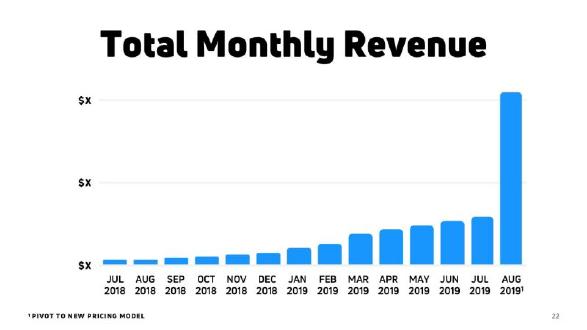
Cloosiv, a coffee ordering app, shows a pivot in a different place: the revenue chart. Monthly revenue bars run from July 2018 to August 2019, rising steadily, then jump in August 2019. A footnote on that month reads "Pivot to new pricing model". The pivot here is in the business model, not the product, and the chart is the evidence. The axis labels in the version in our library are replaced with $X, so the size of the jump cannot be read. Still, footnoting the change on the chart answers the question an investor would otherwise ask: why did revenue suddenly rise?
Tell the pivot as a story
Dharma, a travel company, tells its pivot in a paragraph under a team slide. The founders started in London as a direct-to-consumer luxury yoga travel brand and launched their first retreat with a campaign; "They made no Sales." Soon they realised they were priced out of consumer travel. Three weeks later a yoga ambassador posted the retreat to her community and it sold out. "That was the beginning of Dharma": serving retreat hosts rather than travellers, moving "down the value chain".
The story is honest about failure, specific about the moment of insight and clear about the new customer. It is also long, and it sits under a team slide rather than in the history. A one-line version near the top of the deck ("We sold no retreats direct; a host sold one out in three weeks, so we now serve hosts") would make the point faster, with the paragraph kept for the appendix.
Griffin's deck, from a UK company building a bank, includes a slide on the founders' earlier company, Standard Treasury (2014-2015). It was a technology company selling an API to banks; the founders decided they should become a bank themselves, ruled out the US because of the risk and cost of getting authorised, found the UK rules attractive but "no investor appetite for UK pivot", and sold the company to SVB in 2015. The last line notes a wave of new UK bank authorisations at the end of 2016.
This is a pivot that did not happen, told to explain why the founders are trying again now. It is a useful pattern for second-time founders: it shows the idea is not new to them, why it stalled and what has changed. The slide would be stronger with one line saying what is different this time beyond the market, such as the team or capital plan.
Pivots in a list of milestones
E-Contenta's milestones run from January 2016, when it raised $125K from The Untitled Venture Fund and launched with "personalized content recommendations for media", to September 2016, when it moved to New York, joined the Starta Accelerator with $130K and made a "product pivot to ad tech". By February 2017 it had 7 clients and $80K in total revenue. The pivot is dated and the results after it are given, which is the minimum a pivot needs. There is no reason, and the next milestone, "fine-tuning the product for retailers and brands", hints at another change of customer without saying so.
MocApp's timeline lists "Oct 2017: MVP1 - Private BETA (specially designed for agencies)", then "July 2018: Pivot towards a mass usable online product", followed by a new design, a public beta and launches in Romania, the CEE region and globally. The before and after are clear: agencies, then everyone. But there is no reason and no figure showing that the wider product did better, so the launches read as plans carried out rather than evidence the pivot worked.
The weak version: a pivot without a reason or result
Chillchat's opening slide calls the company "The Discord 3.0 of the Metaverse" and adds, in a small box, "Started on iOS phones... then pivoted to NFTs in August 2021". That is all. A reader does not learn why the team left phones, what it learned there, or whether anything improved after. A pivot into a fashionable area with no reason can look like chasing a trend; one line of evidence would change that impression.
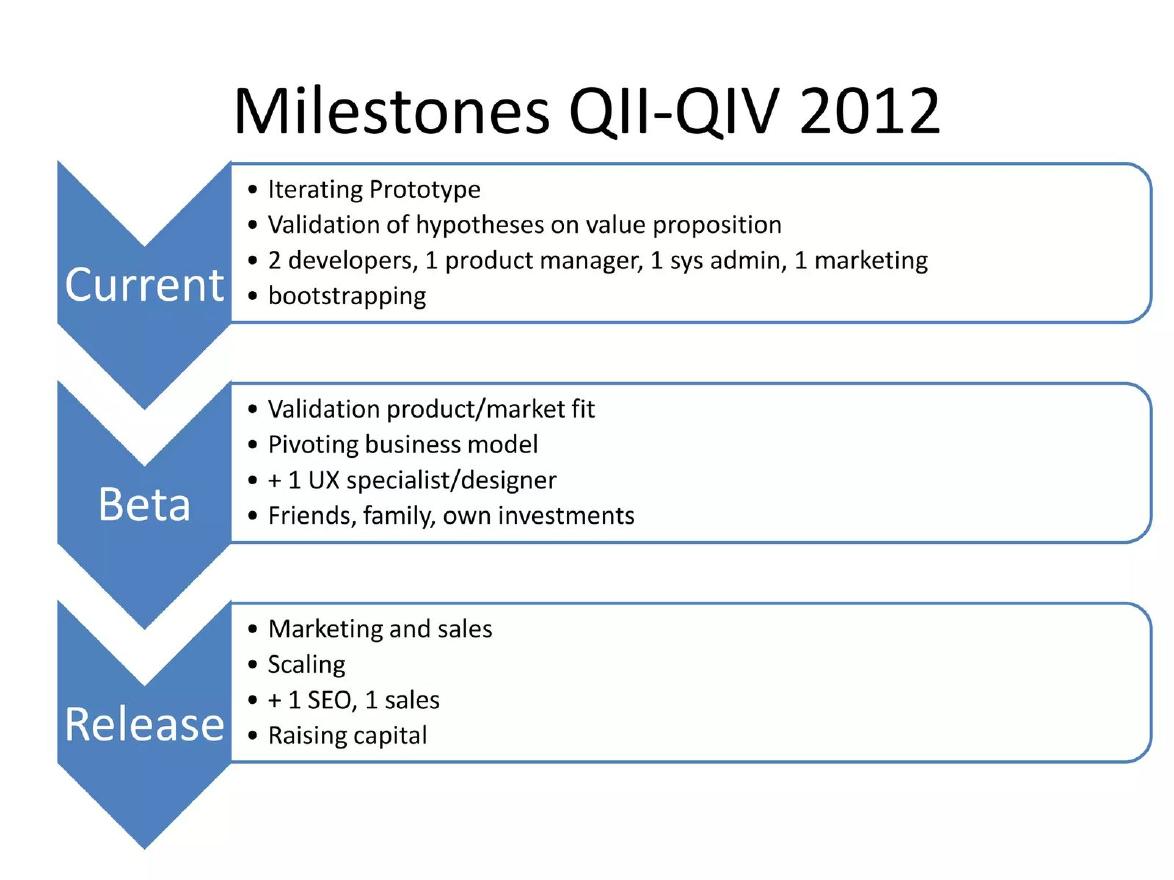
Letsdoiter's Milestones QII-QIV 2012 slide puts "Pivoting business model" in the beta phase, alongside validating product/market fit. Planning a pivot in advance, before knowing what the evidence says, reads oddly. If the team means it will test pricing or revenue models, it should say which ones and what result would decide between them.
Common mistakes
Hiding the pivot. Investors find out; tell it first.
No reason. Give the evidence in one line.
No date. Put it on a timeline.
Blended metrics. Separate before from after.
Pivot as plan. Pivot on evidence, not a schedule.
Diagnostic checklist
What you did before.
Why you changed.
When you changed.
Results since, with numbers.
Runway after the change.
Frequently asked questions
How we chose these examples
Corpus: published pitch deck teardowns on StartupFundraising.com. Founder-uploaded private decks are excluded.
Selection (2026-10-01): we searched extracted slide text for pivot and pivoted, excluded listed companies and uses of the word unrelated to a business change, and read each remaining candidate from images made from the original deck files. One candidate deck file was unavailable and one slide (a course-style presentation history) was dropped.
Eligibility: each company was private when its deck was made. Airbyte, Duco, Griffin and Cloosiv were checked against public records (Airbyte's July 2020 blog; Duco's 2018 funding round; Griffin's 2020 and 2024 funding; Cloosiv's 2020 merger with Odeko). Blossom, Let's Works, E-Contenta, MocApp, Dharma, Chillchat and Letsdoiter rest on their own decks, with no sign of a listing.
Slide numbers are PDF page numbers; Duco's page shows the printed number 27.
Overlap check: the company history slide guide mentions pivots once; no guide covers pivots. None of these slides appears in another guide.
Review: all twelve slide images were inspected on 2026-10-01 and matched to company, deck and slide number (AI editorial model review). No person has yet completed an editorial review of this page. The worksheet uses placeholders, not company data.
Figures are the companies' own claims; we did not verify underlying data. We make no claim that any slide caused a fundraising outcome.