How pet startups present the solution in a pitch deck: show what the owner does step by step, what changes for the animal, and why the owner trusts it.
Pet Startup Solution Slide: Real Pitch Deck Examples
Seven solution slides from pet startups, shown in full, compare whether each slide shows what the owner actually does, what changes for the animal, and why an owner would trust it.
TL;DR
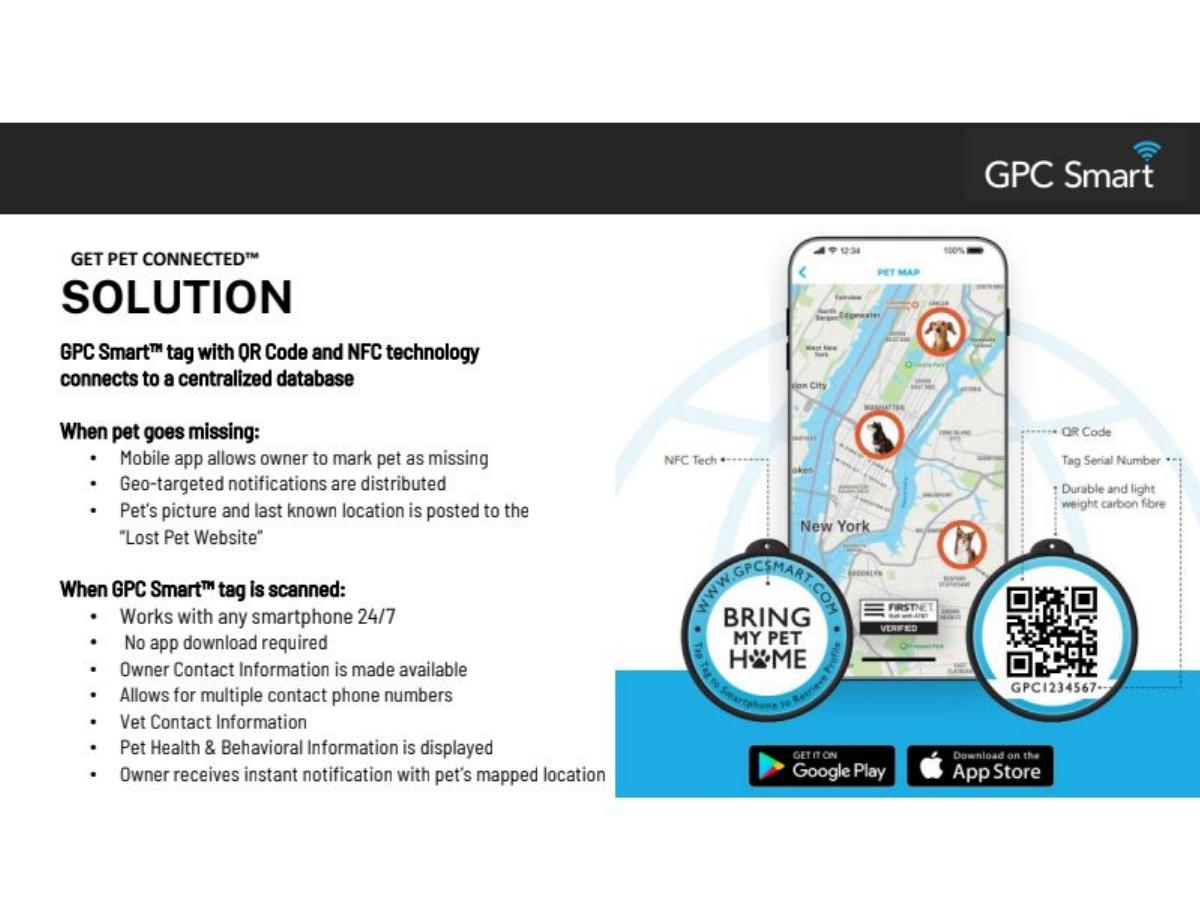
A pet solution slide has to show what the owner does and what changes for the animal. The stronger slides walk through a moment. GPC Smart splits its slide into "When pet goes missing" and "When GPC Smart tag is scanned", with steps such as "Mobile app allows owner to mark pet as missing" and "No app download required" for the person who finds the dog. Puptimize answers its own problem slide (owners lacking "preparation and education") with "Free training and education", "Expert-recommended products" and "Trusted, vetted local services". Petmates' bullet list, "Find the perfect partner of your pet" and "Meet new friends", with no product shown, is the weaker pattern.
Pet startup solution slides from real pitch decks
Each example shows the exact stored slide above its analysis and links to the full teardown. Claims are as shown on the slides; we have not verified them.
Smart pet tag. Step lists on the left; the app's lost-pet map and two tags on the right.
GPC Smart deck, slide 4. Exact stored slide matched to this analysis.
Our analysis: The strongest slide here: it follows the owner and the stranger who finds the dog through the moment the product exists for.
Evidence and limitation: No figures; app store badges shown.
What a founder can adapt: Split your slide by the moments that matter and list what each person does in each.
Supporting analysis
What the deck claims: "Get Pet Connected. Solution." "GPC Smart tag with QR Code and NFC technology connects to a centralized database." "When pet goes missing: Mobile app allows owner to mark pet as missing; Geo-targeted notifications are distributed; Pet's picture and last known location is posted to the 'Lost Pet Website'." "When GPC Smart tag is scanned: Works with any smartphone 24/7; No app download required; Owner receives instant notification with pet's mapped location."
Presentation choice: "No app download required" answers the obvious objection: the finder won't install anything.
When it does not fit: Eleven bullets in small type; cut to the four steps that get the dog home.
Marketplace for new dog owners. A three-part wheel around a phone screen.
Puptimize deck, slide 5. Exact stored slide matched to this analysis.
Our analysis: It answers its problem slide directly: owners who lack "preparation and education" get free education first, then products and services.
Evidence and limitation: No figures.
What a founder can adapt: Name the cause from your problem slide in the headline ("guesswork") and show what replaces it.
Supporting analysis
What the deck claims: "Puptimize eliminates the guesswork." "An intelligent marketplace that makes it easy to be a great dog owner." "Free training and education." "Expert-recommended products." "Trusted, vetted local services." "...tailored to you and your dog."
Presentation choice: The wheel shows the order: free help brings owners in, products and services earn the money.
When it does not fit: "Intelligent" and "tailored" are never shown; one screen of a recommendation would prove them.
Dog park pub. Four arrowed steps above three photos.
Mutts and Mugs deck, slide 5. Exact stored slide matched to this analysis.
Our analysis: The four steps answer its problem slide (buying food elsewhere, no one watching for aggressive dogs) as one visit.
Evidence and limitation: No figures.
What a founder can adapt: Show one visit as steps, ending with how the owner feels.
Supporting analysis
What the deck claims: "Solution." "Create an outdoor space where customers can:" "Drive or walk to Mutts and Mugs" → "Order food and beverage" → "Members can unleash their dog" → "Relax." "On-leash Area", "Off-leash Area", "Enjoy." "Mutts and Mugs is a community space featuring an outdoor dog-centric park pub that will serve food and beverages accompanied with an off-leash dog area for members."
Presentation choice: A customer can picture the afternoon from the arrows alone.
When it does not fit: Say who watches the off-leash area; that was the safety worry on the problem slide.
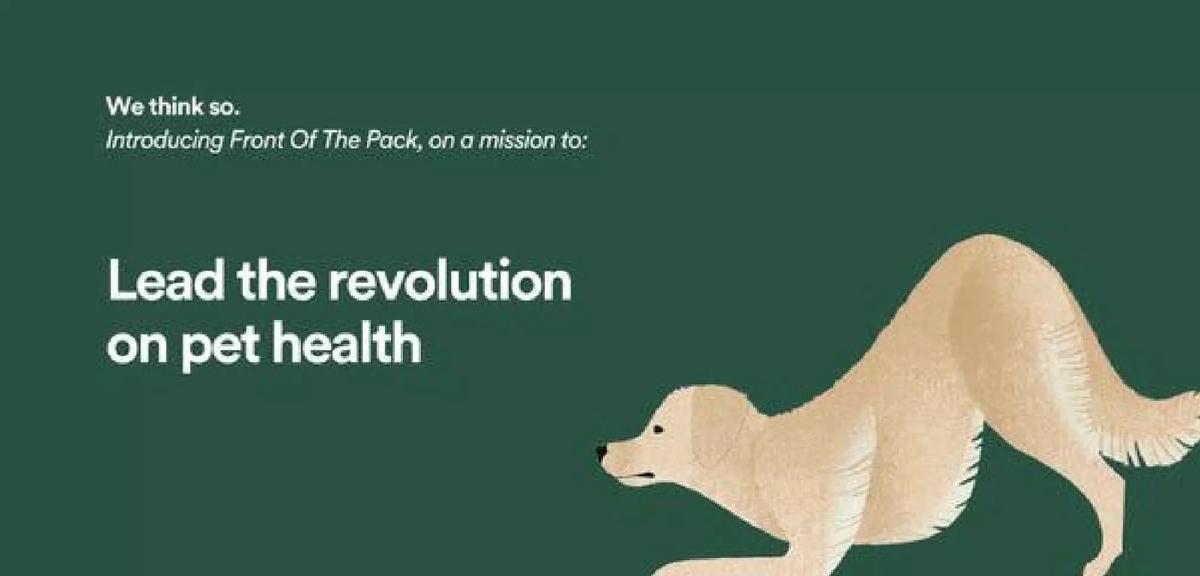
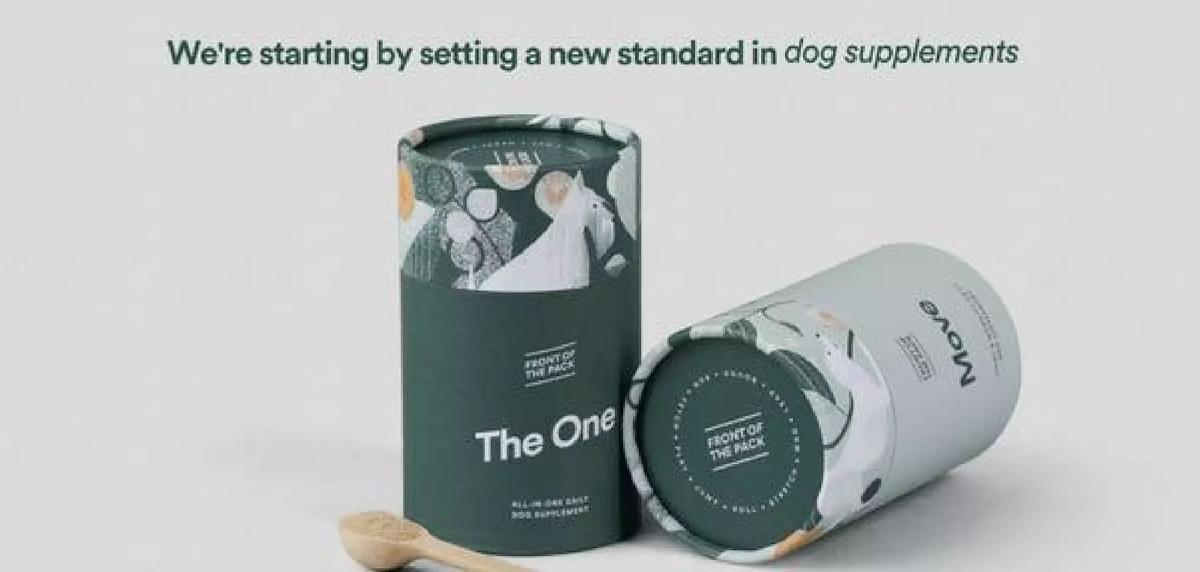
Dog supplements. Two slides: a mission statement, then a product photo.
Front of the Pack deck, slide 5. Exact stored slide matched to this analysis.Front of the Pack deck, slide 6. Exact stored slide matched to this analysis.
Our analysis: Partial: the product is clear, but neither slide says which of the six conditions on its problem slide it helps, or how.
Evidence and limitation: No figures.
What a founder can adapt: Label the product with the problem it fixes: "Move — for joint stiffness in older dogs".
Supporting analysis
What the deck claims: Slide 5: "We think so. Introducing Front Of The Pack, on a mission to: Lead the revolution on pet health." Slide 6: "We're starting by setting a new standard in dog supplements." Tubs labelled "The One" and "Move".
Presentation choice: Starting with one product line ("We're starting by") shows focus.
When it does not fit: "Lead the revolution" is a mission, not a solution; the investor still doesn't know what the dog gets.
Pet data app for retailers. An overview paragraph and a two-column table.
Kriddr deck, slide 4. Exact stored slide matched to this analysis.
Our analysis: Partial: pairing each challenge with a fix is useful, but it's told as goals, and the pet owner and the animal don't appear.
Evidence and limitation: No figures.
What a founder can adapt: Keep the paired columns, but make each fix something the store does on a Tuesday.
Supporting analysis
What the deck claims: "B2B: Omni-Channel Retail Support." "Retailer Challenges: Loss of revenue due to e-commerce and increased competition; Reduced impact of loyalty programs and other discount measures; Lack of customer data." "Kriddr's Solutions: Increase revenue per employee by increasing customer engagement; Introduce a concierge and highly personalized service; Store data about animals to market new products and services."
Presentation choice: The two columns make the pairing easy to check.
When it does not fit: Say who pays: this is a second customer after the owner app on the previous slide.
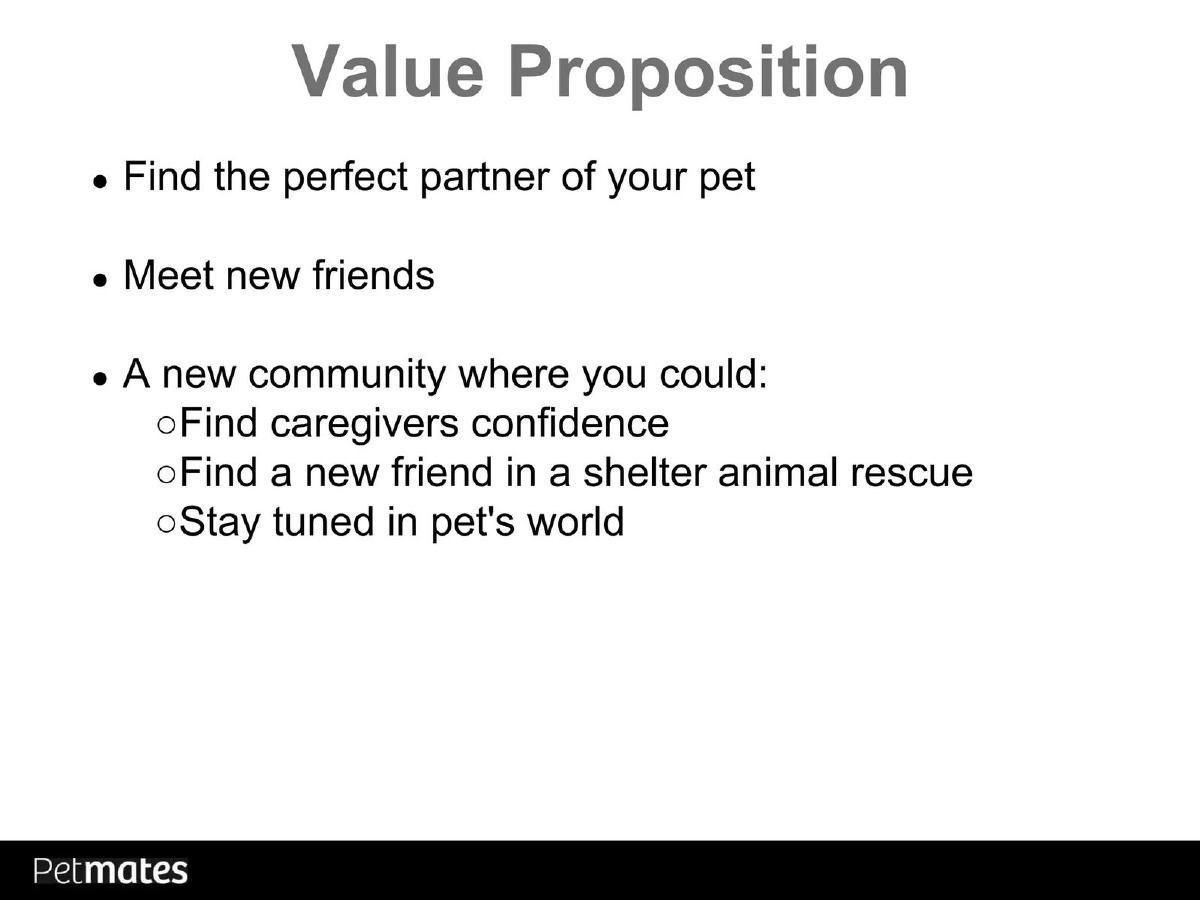
Petmates deck, slide 5. Exact stored slide matched to this analysis.
Our analysis: Weak on purpose: six different uses, no product shown and no step an owner takes.
Evidence and limitation: No figures.
What a founder can adapt: Pick the one use from your problem slide and show the screen where it happens.
Supporting analysis
What the deck claims: "Value Proposition." "Find the perfect partner of your pet." "Meet new friends." "A new community where you could: Find caregivers confidence; Find a new friend in a shelter animal rescue; Stay tuned in pet's world."
Presentation choice: Kept as a contrast; the problem slide was about breeding partners, and that's only one bullet here.
When it does not fit: Listing everything the community could do.
Whether each slide shows what the owner does, what changes for the animal, and why the owner would trust it.
Example
What the owner does
Change for the animal
Trust signal
GPC Smart
Yes (two step lists)
Yes (lost pet found)
Partly (app stores)
Puptimize
Partly (three offers)
No
Yes (vetted services)
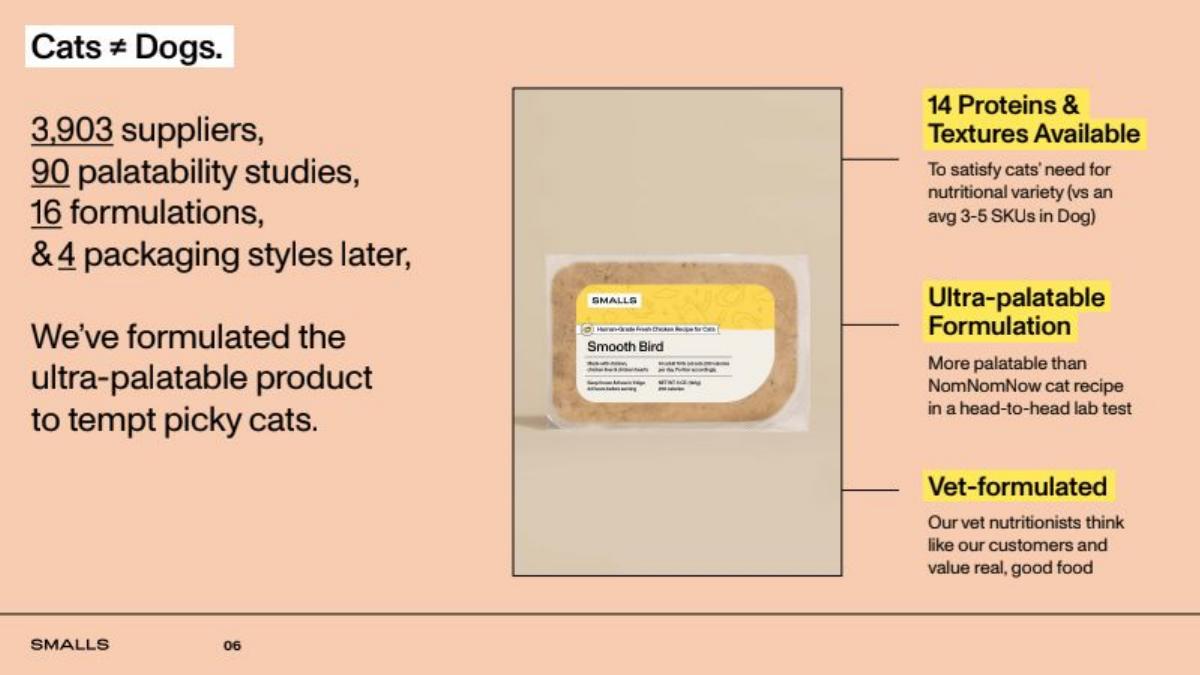
Smalls
No
Yes (picky cats eat)
Yes (vet, lab test)
Mutts and Mugs
Yes (four steps)
Partly (off-leash)
No
Front of the Pack
No
No
No
Kriddr
No (store goals)
No
No
Petmates
No
No
No
Key Takeaways
Walk through one moment: the lost dog, the picky cat, the first puppy week.
Answer the cause you named on the problem slide, not a new one.
Say what changes for the animal, not only for the owner.
Give the owner a reason to trust you: vet-formulated, vetted providers, head-to-head tests.
A product photo with a headline is a product slide, not a solution; say what it fixes.
Build your pet solution slide
One moment, the change for the animal, one trust signal.
Moment. Which moment does the owner reach for your product in?
Steps. What does the owner do, in three or four steps?
Animal. What changes for the pet?
Trust. Why would an owner trust it: a vet, a test, a vetting process?
Copyable framework: When [moment], the owner [steps]. The [pet] [change]. [Trust signal].
Illustrative example 1 — written by us
Before: A revolutionary platform for happier, healthier pets.
After: When an older dog starts limping, the owner answers five questions and gets one daily chew; 7 in 10 owners report easier walks within six weeks. Formulated with two vets.
What improved: Our illustrative rewrite; the figures are invented for the example. It names the moment, the steps, the change for the dog and a trust signal.
What this guide adds
This guide follows the pet startup problem guide: Puptimize, Front of the Pack, Smalls, Mutts and Mugs and Kriddr appear in both, so you can see whether each solution answers its own problem slide.
The slides range from a lost-pet tag (GPC Smart) and an owner marketplace (Puptimize) to cat food (Smalls), dog supplements (Front of the Pack), a dog park pub (Mutts and Mugs), retail software (Kriddr) and a pet social network (Petmates).
Three things a pet solution slide proves
What the owner does: GPC Smart's two step lists, Mutts and Mugs' "Drive or walk to" → "Order food and beverage" → "Members can unleash their dog" → "Relax".
What changes for the animal: a lost dog is found (GPC Smart), a picky cat eats (Smalls).
Why the owner trusts it: "Vet-formulated" and "More palatable than NomNomNow cat recipe in a head-to-head lab test" (Smalls), "Trusted, vetted local services" (Puptimize).
Common mistakes
A product photo as the solution. Say which problem the product fixes.
Answering a different problem. Return to the cause on your problem slide.
Forgetting the animal. Owners buy for the pet; show what changes for it.
No trust signal. Owners worry about safety; a vet or test answers that.
A list of every use. Pick the moment; the rest can wait for the product slide.
Diagnostic checklist
It shows one moment the owner reaches for it.
It lists what the owner does.
It says what changes for the animal.
It gives a reason to trust it.
It answers the problem slide's cause.
Frequently asked questions
How we chose these examples
Corpus: published pitch deck teardowns on StartupFundraising.com. Founder-uploaded private decks are excluded.
Selection (2026-09-25): we looked at slides 3–7 of the decks in the pet startup problem guide, then searched slides 3–6 for solution slides mentioning pets, dogs, cats, pet owners or vets. Fifteen stored images were inspected. Dutch's product slide is slide 7, which has no stored image, and its slide 5 is a telemedicine comparison; Smalls slide 6 and HelloBello slide 6 already appear in the product and solution guides; DoggyHut slide 4 appears in the marketplace solution guide; Holidog's stored slides are metrics and an illustration. With no eighth qualifying slide, this guide has seven examples rather than a padded eighth. Front of the Pack and Kriddr are marked partial; Petmates is kept as a weaker contrast.
Overlap check: none of these slides appears in another guide.
Review: all eight stored slide images (Front of the Pack has two) were inspected on 2026-09-25 and matched to company, deck and slide number (editorial model review). No person has yet completed an editorial review of this page.
Claims are as shown on the slides; we have not verified them. We make no claim that any slide caused a fundraising outcome.